
Sheet Metal Fabrication with Threaded Inserts
Sheet metal fabrication with threaded inserts is used when thin sheet metal parts need reliable threaded mounting points for screws, components, brackets, covers, panels or internal assemblies.
We install rivet nuts and clinch hardware to support heavy loads. Read about our methods as a metal mounting bracket fabrication manufacturer.
We install rivet nuts and clinch studs for structural mounting. Read about our methods as a custom sheet metal chassis manufacturer.
In many custom sheet metal projects, cutting and bending the part correctly is only the beginning. The part must also assemble correctly. That often means adding threaded inserts, rivet nuts, PEM nuts, self-clinching nuts, studs, standoffs, weld nuts or other threaded hardware into the sheet metal part.
MSTFAB manufactures custom sheet metal parts with threaded inserts according to customer drawings, STEP files, STP files, PDF drawings, DXF files, DWG files, assembly drawings and BOMs.
For projects requiring complete fabrication through final mechanical assembly, see our guide on custom metal fabrication with final assembly.
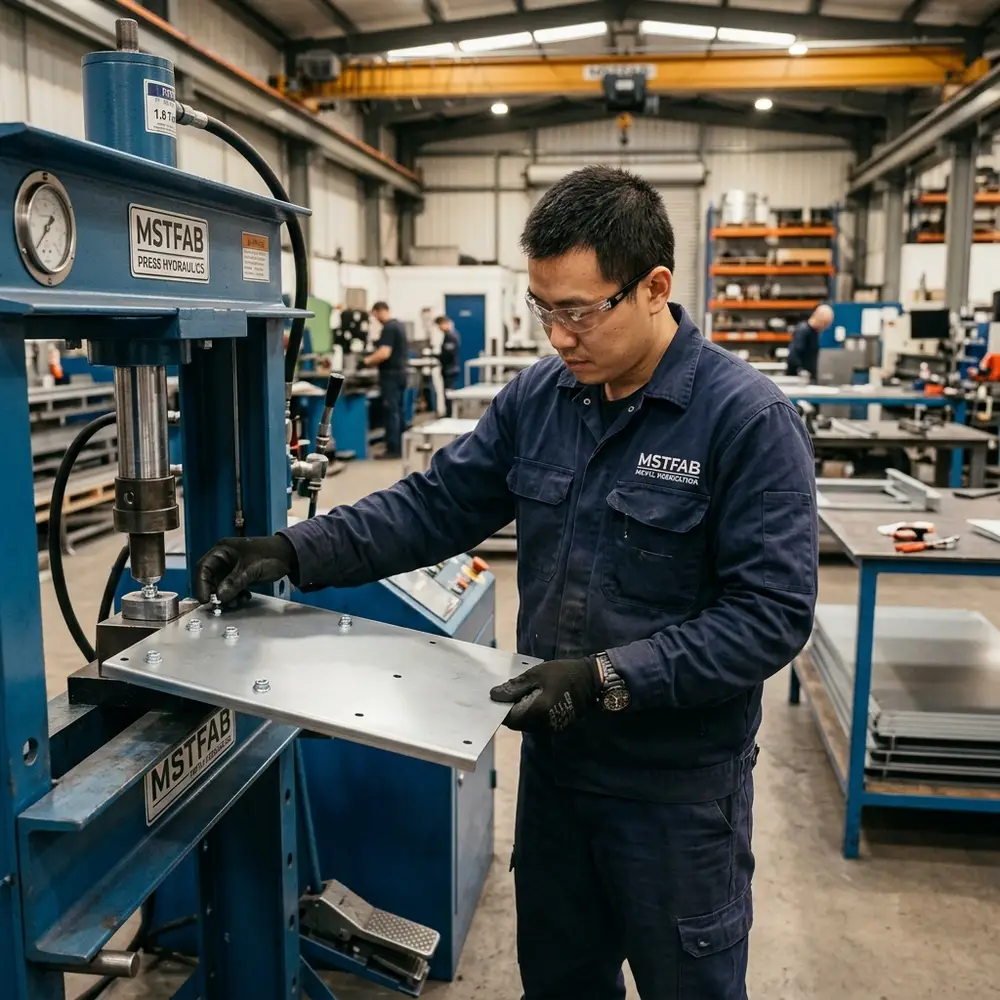
We support custom sheet metal parts such as sheet metal enclosures with threaded inserts, electrical boxes with rivet nuts, control cabinet panels with PEM nuts, mounting plates with self-clinching standoffs, brackets with threaded inserts, machine guards with rivet nuts, equipment covers with installed nuts, telecom cabinet parts with threaded hardware, network cabinet panels with grounding studs, EV charger enclosure parts with installed inserts, battery cabinet panels with threaded fasteners, powder coated sheet metal parts with protected threads, and OEM sheet metal components with assembly-ready threaded points.
A powder coated part with blocked threads is not finished. It is rework with a nice color. That is why threaded insert installation must be reviewed with material, thickness, hole size, bend sequence, coating, masking and assembly requirements before production starts.
Why Threaded Inserts Are Used in Sheet Metal Parts
Thin sheet metal usually does not provide enough thread engagement for direct tapping. For many sheet metal parts, tapping a thin plate may result in weak threads, poor durability or screw failure during assembly.
Threaded inserts solve this problem by adding a stronger threaded feature into the sheet metal part. They help with stronger screw connection, faster assembly, repeatable fastening, component mounting, panel installation, door and cover attachment, electrical grounding, PCB or internal component mounting, service access and OEM product assembly.
Threaded inserts are commonly used in electrical enclosures, control cabinets, telecom cabinets, network cabinets, EV charger enclosures, battery storage cabinets, industrial automation housings, machinery covers, machine guards, brackets, mounting plates, access panels and welded assemblies.
If the installer needs a drill, grinder, and emotional support, the part was not ready.
Common Threaded Inserts for Sheet Metal Fabrication
Different projects require different types of threaded hardware. The correct choice depends on material, sheet thickness, load requirement, access, coating and final assembly.
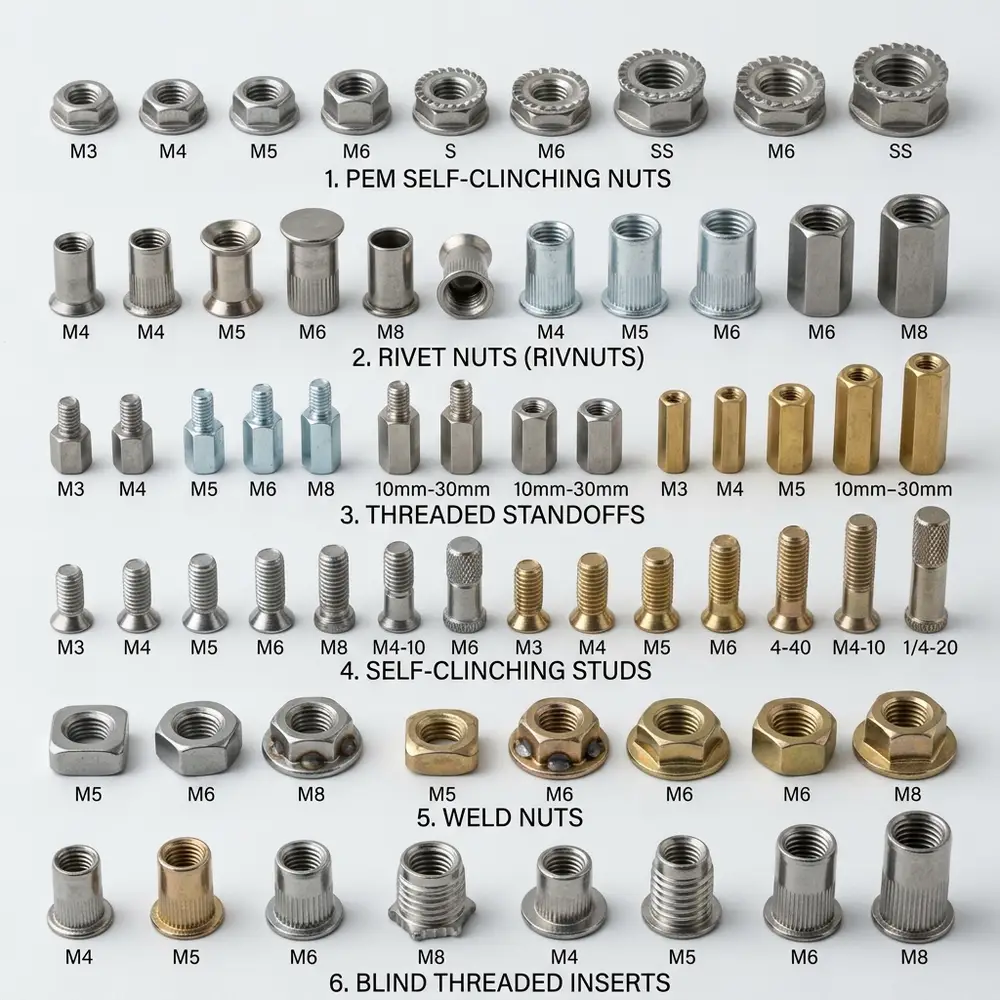
PEM Nuts and Self-Clinching Nuts
PEM nuts and self-clinching nuts are pressed into prepared holes in sheet metal. They are commonly used for enclosure panels, control cabinet parts, mounting plates, brackets, door panels, equipment covers and internal mounting structures.
Rivet Nuts and Blind Threaded Inserts
Rivet nuts are often used when access is limited or when the part geometry does not allow self-clinching hardware. They are commonly used for tubes, closed sections, machine guards, covers, brackets, enclosures and outdoor equipment parts. Rivet nuts can be useful, but they must match sheet thickness, hole size and assembly load.
Threaded Studs
Threaded studs provide external threaded mounting points. They are often used for grounding points, component mounting, cable clamp mounting, bracket assembly, internal electrical parts and PCB support. A stud installed on the wrong side can make the whole part unusable. Installation side must be clearly marked.
Standoffs
Standoffs provide spacing and threaded support. They are commonly used for PCB mounting, internal component spacing, electronic equipment housings, control boxes and telecom equipment parts. Standoff height, thread size and position must match the customer’s final assembly.
Weld Nuts
Weld nuts may be used when the application requires welded threaded hardware. They can provide strong fastening points, but welding can create distortion, heat marks and surface cleanup requirements.
Threaded Insert Selection Must Match Material and Thickness
Threaded inserts cannot be selected randomly. They must match the sheet metal material, thickness and hardness. Important review points include material grade, sheet thickness, material hardness, insert type, thread size, hole diameter, edge distance, hole-to-bend distance, installation side, installation method, pull-out requirement, torque requirement, final assembly load, coating requirement and thread protection requirement.
Some self-clinching inserts require the sheet metal to be softer than the fastener. If the material is too hard, the insert may not clinch properly. If the sheet is too thin, the insert may not hold. If the hole is too large, the insert may spin or pull out. If the hole is too small, the sheet may deform during installation.
Hole Size Is Critical for Threaded Inserts
Hole size is one of the most important details for threaded insert installation. The prepared hole must match the insert manufacturer’s requirement. Wrong hole size may cause loose inserts, spinning inserts, poor clinching, pull-out failure, thread misalignment, sheet deformation, coating cracks, assembly failure and rework during final assembly.
The drawing or BOM should define insert type, insert part number, thread size, hole diameter, hole tolerance, material thickness, installation side, quantity, position and inspection requirement. A CAD model may show a round hole. But a round hole does not automatically define the correct threaded insert. Hardware notes must be clear.
Edge Distance and Hole-to-Bend Distance
Threaded inserts need enough material around the hole. If the insert is too close to an edge, slot, bend line or weld area, installation may fail. Important design checks include hole-to-edge distance, hole-to-bend distance, hole-to-slot distance, insert-to-insert distance, insert-to-weld distance, installation tool access, screw access after assembly and coating clearance.
A rivet nut too close to an edge may deform the sheet. A PEM nut too close to a bend line may distort during forming. A stud too close to a wall may block tooling. CAD has no tool access problem. Real manufacturing does. That is why threaded insert location should be reviewed with DFM before laser cutting, bending, welding and coating.
Installation Sequence Matters
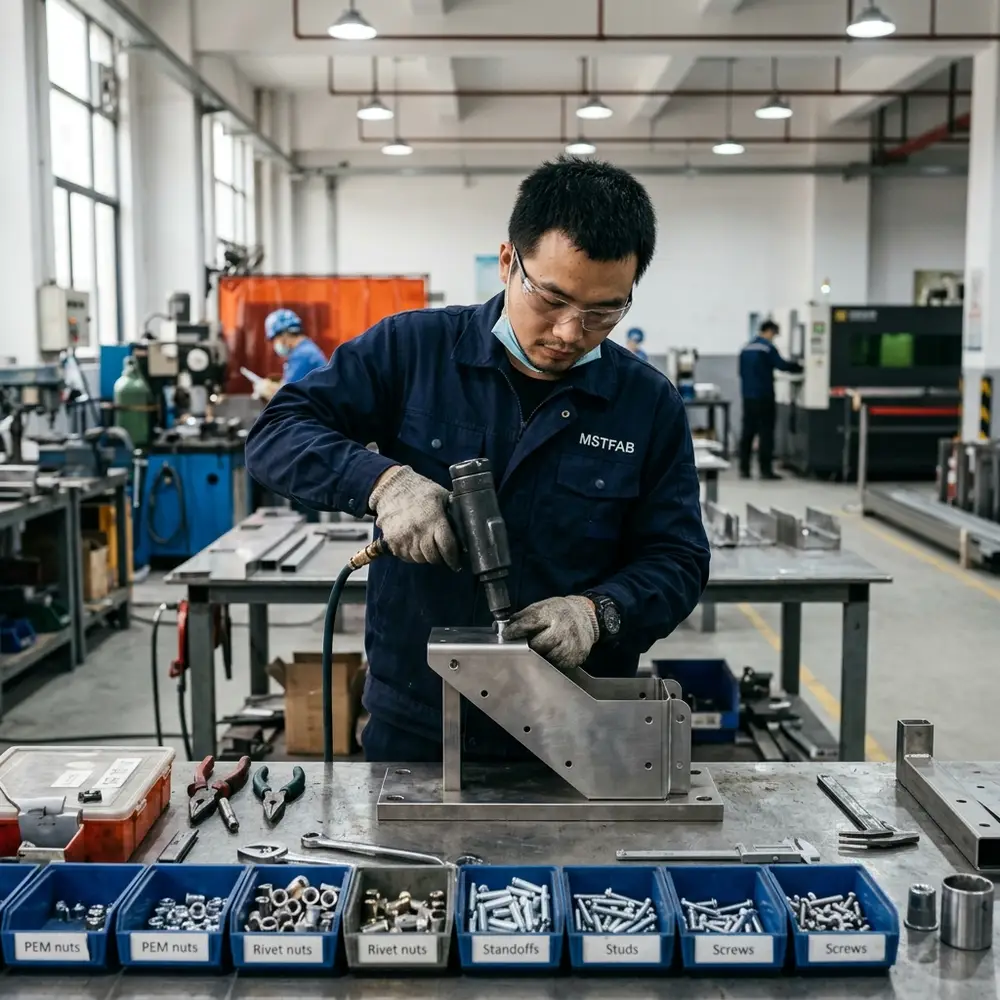
Threaded insert installation must be planned in the correct process sequence. The sequence may include laser cutting, deburring, CNC bending, welding, grinding, insert installation, thread inspection, powder coating, masking, final mechanical assembly and packaging.
To prevent back-side hardware distortion on cosmetic faceplates, read our tips as a brushed stainless sheet metal panels manufacturer.
When using rivet nuts or inserts on stainless panels, read our guide as an SS304 sheet metal fabrication supplier.
Some inserts should be installed before bending. Some inserts must be installed after bending. Some inserts should be installed before powder coating. Some inserts should be installed after powder coating. Some threads must be masked. Some grounding studs must remain uncoated. Some inserts may interfere with bending tools if installed too early. Some inserts may be impossible to install if left too late.
A correct insert installed at the wrong stage can still become a problem.
Threaded Inserts and Powder Coating
Whether threaded inserts should be installed before or after powder coating depends on the insert type, part geometry and coating requirement.
Installed before coating may be suitable when hardware must be fixed before finishing, insert position must be locked before coating, and threads can be protected with masking. Installed after coating may be suitable when threads must remain clean, coating thickness may affect thread function, or insert installation may damage coating if not controlled.
The drawing should define which inserts are installed before coating, which inserts are installed after coating, which threads require protection, which areas require masking and which grounding areas must remain conductive.
Thread Protection and Masking Areas
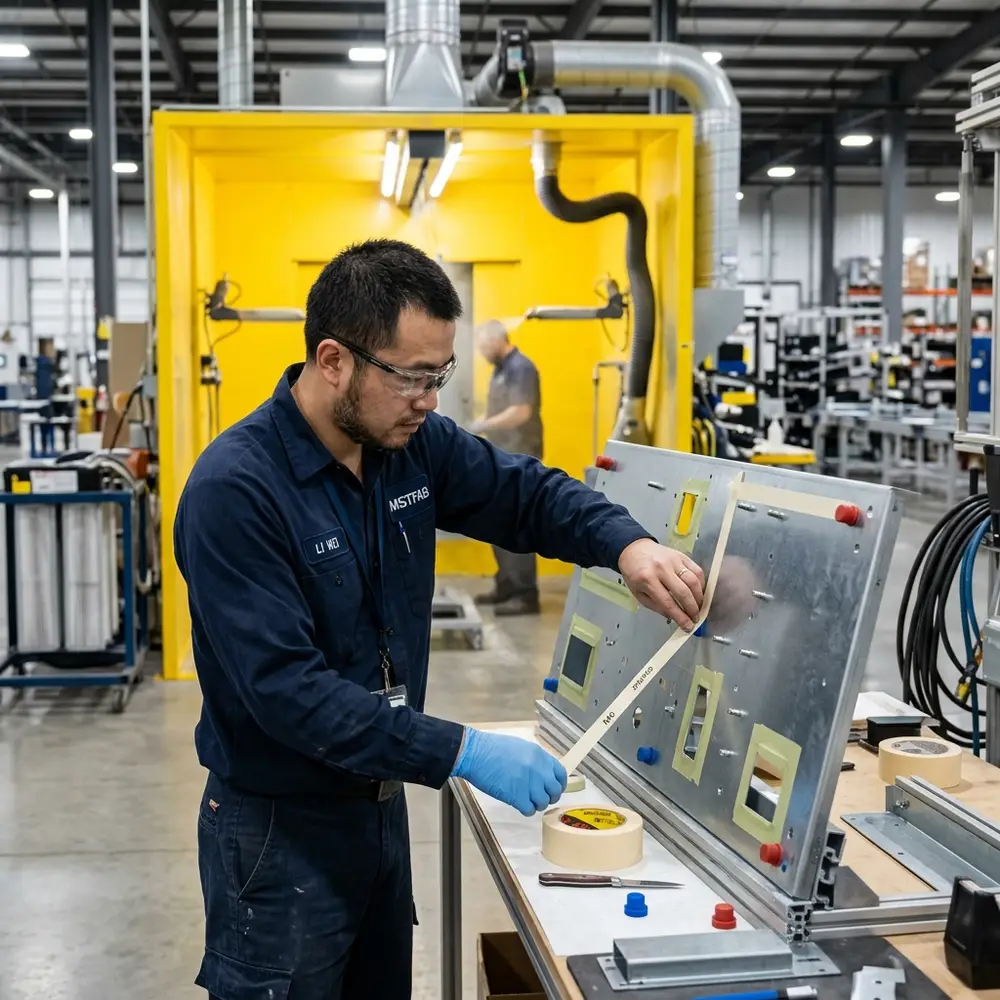
Thread protection is critical for powder coated sheet metal parts with inserts. Powder coating can affect internal threads, external studs, rivet nuts, PEM nuts, standoffs, grounding studs, mounting holes, hinges, locks and assembly contact surfaces.
If coating enters threads, assembly may require cleaning, tapping or replacement. That creates rework. If a grounding area is coated, electrical contact may fail. A grounding point covered beautifully with powder coating is not useful. It is a decorative problem.
For parts with threaded inserts, drawings should clearly mark no-coating zones, thread masking areas, grounding points, conductive contact areas, critical assembly surfaces, insert installation side and insert inspection points.
Trust Comparison: Standard Job Shop vs. MSTFAB Threaded Insert Installation
| Feature | Standard Job Shop | MSTFAB Manufacturing Standard |
|---|---|---|
| Insert Selection Review | Installs whatever is cheapest without checking material hardness or sheet thickness compatibility. | Reviews insert type, material hardness, sheet thickness and hole size before quoting. |
| Hole Size Control | Cuts holes from DXF without verifying insert manufacturer’s hole diameter requirement. | Cross-checks insert datasheet hole diameter with STEP model and drawing before cutting. |
| Installation Method | Presses inserts manually with a hammer or vise; inserts sit crooked or loose. | Uses calibrated hydraulic presses with controlled tonnage for flush, perpendicular seating. |
| Sequence Planning | Installs all inserts at one stage regardless of bending, welding or coating conflicts. | Plans insert installation sequence around bending, welding and powder coating stages. |
| Thread Protection | Powder coats entire part; threads arrive clogged. Your team spends hours cleaning. | Masks threads, grounding studs and assembly surfaces with silicone plugs before coating. |
| Grounding Points | Coats grounding areas; electrical contact fails during commissioning. | Marks and protects grounding zones per drawing; verified before packaging. |
| Inspection | Counts inserts by eye; no thread check, no torque verification. | Performs go/no-go thread check, flush inspection and position verification per approved spec. |
| Export Packaging | Stacks parts loose; installed studs get bent, threads get damaged in transit. | Uses foam separation, thread caps and reinforced crates to protect installed hardware. |
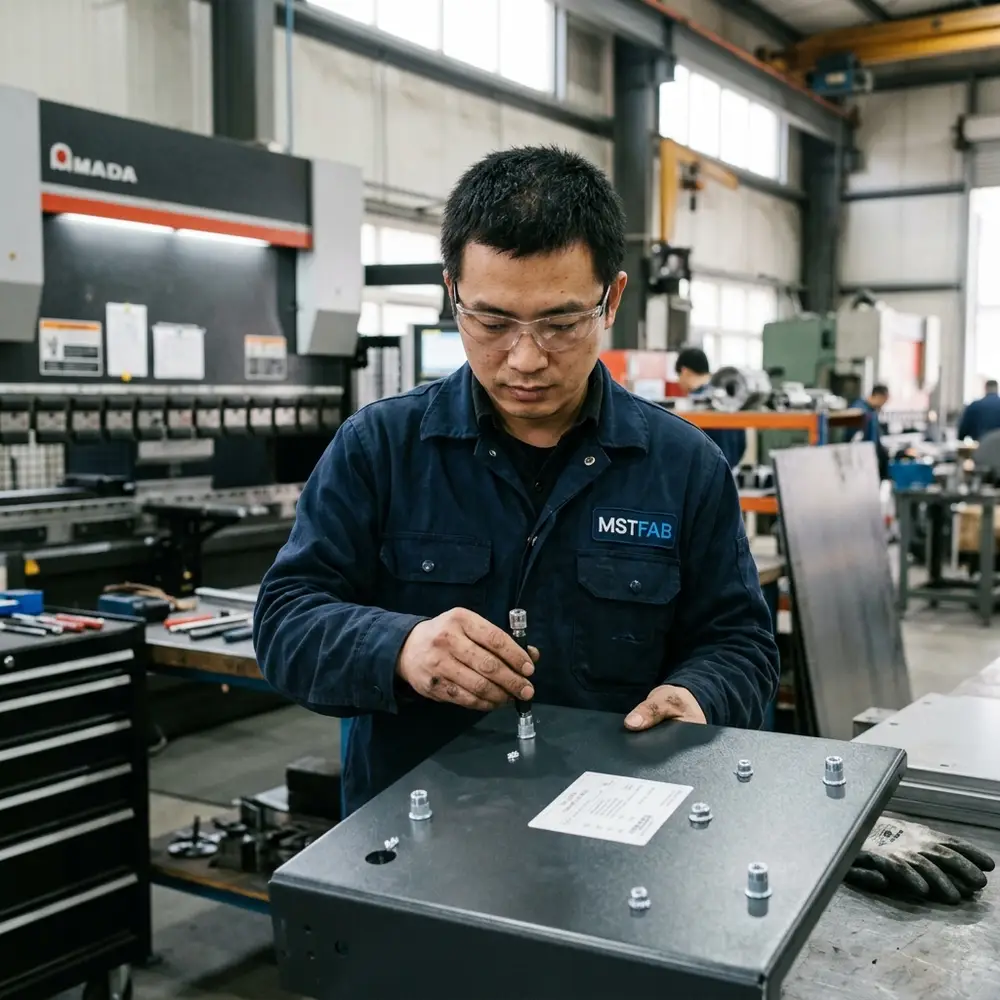
Sheet Metal Enclosures and Cabinets with Threaded Inserts
Threaded inserts are commonly used in custom sheet metal enclosures and control cabinets. They may be used for mounting plates, internal brackets, DIN rails, grounding wires, door hardware, hinges, locks, cable entry plates, ventilation panels, service covers and component mounting.
An enclosure is not just a box. It must protect, mount, open, close, wire, ventilate, ground, assemble and ship correctly. Threaded inserts help make the enclosure assembly-ready. But only if they are installed correctly.
A good enclosure should not require drilling and tapping after delivery. It should be ready for the buyer’s assembly process.
Materials for Sheet Metal Parts with Threaded Inserts
Material selection affects threaded insert performance. MSTFAB can review threaded insert installation for common sheet metal materials:
- Mild Steel and SPCC: Commonly used for powder coated enclosures, brackets, panels and cabinets. Often suitable for self-clinching inserts when thickness and hardness are compatible.
- Galvanized Steel (SGCC): Used for mounting plates, cable entry plates and internal cabinet parts. Insert installation should consider coating behavior and local deformation. Galvanized steel is useful. It is not magic.
- Stainless Steel (304, 316): Requires careful insert selection because material hardness affects self-clinching performance. Stainless steel is corrosion-resistant. It is not scratch-proof. Hardware compatibility must be confirmed before production.
- Aluminum (5052, 6061, 6063): Lightweight and corrosion-resistant, but softer than steel. Insert selection and installation force must be reviewed carefully. Aluminum is not lightweight steel. It bends differently, scratches more easily and needs its own DFM review.
DFM Review for Threaded Insert Installation
DFM means Design for Manufacturability. For sheet metal fabrication with threaded inserts, DFM review may check material suitability, sheet thickness, insert type, thread size, hole diameter, hole tolerance, edge distance, hole-to-bend distance, insert-to-weld distance, installation side, installation sequence, tool access, pull-out risk, spin-out risk, torque requirement, powder coating masking, grounding points, thread protection, assembly clearance, packaging protection and future batch repeatability.
When using rivet nuts on lightweight panels, confirm thread masking steps for powder coated aluminum sheet metal parts.
To secure heavy hardware in corrosive assemblies, see how we function as an SS316 metal fabrication manufacturer.
To prevent thread stripping in structural alloys, learn how we operate as a sheet metal parts manufacturer using 6061 aluminum.
For aluminum parts requiring threaded hardware, material softness and insert compatibility must be reviewed. Learn more about aluminum sheet metal parts manufacturing.
DFM does not mean changing the customer’s design without approval. It means identifying manufacturing risk before production starts. A design issue found before insert installation is a question. A design issue found after powder coating becomes rework, delay and cost. That is not cost saving. That is cost relocation.
Quality Inspection for Threaded Inserts
Threaded insert installation should be inspected because it directly affects final assembly. Inspection may include insert type confirmation, thread size check, quantity check, position inspection, installation side check, flushness check, perpendicularity check, visual deformation check, thread condition check, coating masking check, grounding point check, assembly fit check and packaging inspection.
A spinning insert found at the customer’s assembly station is too late. Inspection is not paperwork. It is how buyers avoid discovering threaded insert problems on their own assembly line.
Packaging Protection for Parts with Threaded Inserts
Sheet metal parts with installed threaded inserts need careful packaging. Installed studs, standoffs and threaded parts can be damaged during transport. Packaging should protect powder coated surfaces, installed inserts, studs, standoffs, threads, grounding points and visible panels.
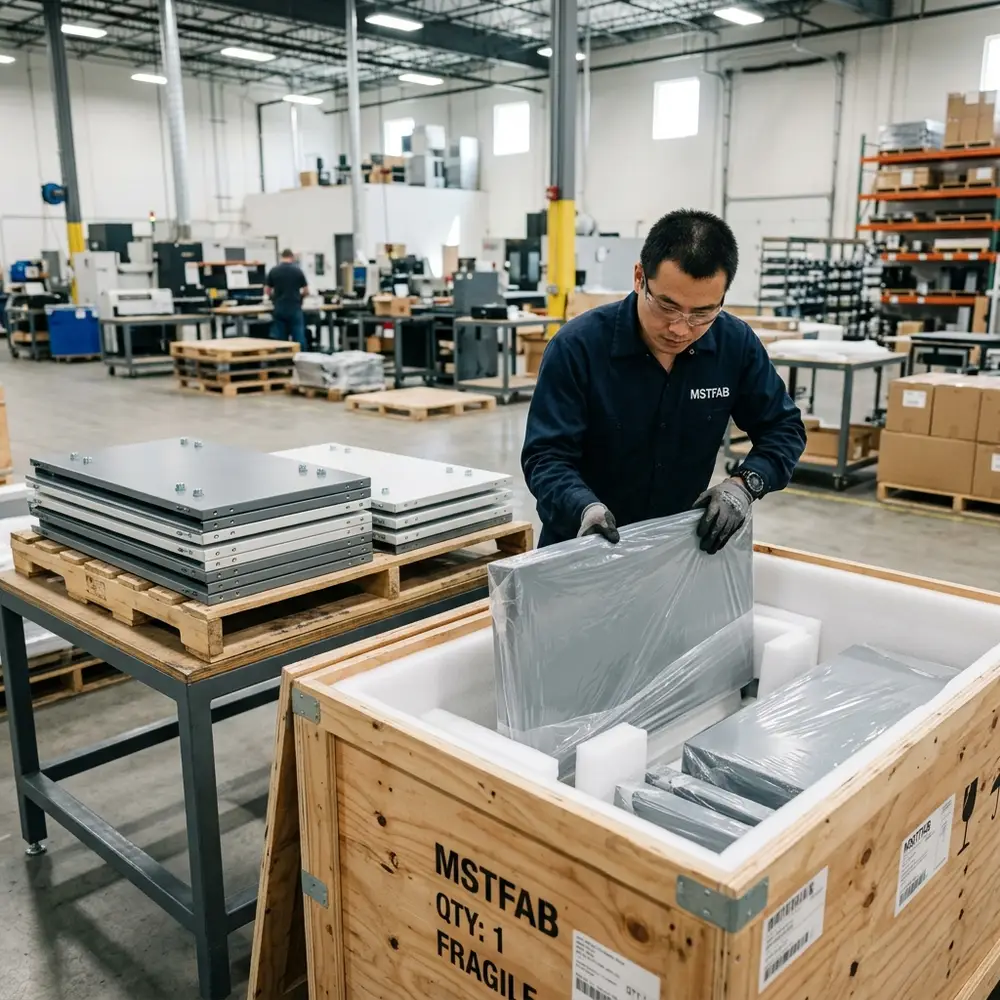
A perfect sheet metal part with damaged threads after shipping is no longer perfect. It is a packaging failure. Packaging is not decoration. It is the last manufacturing process before the buyer receives the part.
Drawing Requirements for Quotation
For accurate quotation, buyers should send a complete drawing package including STEP or STP file, PDF drawing, DXF or DWG file, assembly drawing if applicable, BOM, material grade, sheet thickness, quantity, insert type, insert part number, thread size, hole size, installation side, critical dimensions, surface finish requirement, powder coating color, masking areas, grounding points, thread protection requirement, welding requirement, inspection requirement, packaging requirement and shipping destination.
A STEP file shows the shape. A PDF drawing defines the requirements. A DXF file helps with cutting and hole patterns. A BOM confirms threaded insert scope. A screenshot is not a manufacturing file. A hole without insert notes is not a complete requirement. A good threaded insert quote starts with clear specifications. Not guesswork.
Why Choose MSTFAB for Sheet Metal Fabrication with Threaded Inserts?
- Sheet Metal Parts with Threaded Inserts: We manufacture custom sheet metal parts with rivet nuts, PEM nuts, self-clinching nuts, threaded inserts, studs, standoffs, weld nuts and grounding studs.
- Complete Fabrication Process: We support laser cutting, CNC bending, welding, grinding, deburring, insert installation, powder coating, inspection and export packaging.
- Made to Customer Drawings: We manufacture parts from STEP files, PDF drawings, DXF/DWG files, assembly drawings and BOMs.
- Practical Insert DFM Review: We help review material, thickness, hole size, insert type, installation side, edge distance, bend distance, powder coating masking and assembly clearance.
- Prototype to Batch Production: We support sample production, prototype fabrication, first article review, low-volume production and repeat batch manufacturing.
- OEM and Industrial Applications: We fabricate enclosures, cabinets, brackets, panels, covers, guards, mounting plates, welded assemblies and powder coated parts for industrial equipment.
A good sheet metal fabrication supplier should not only cut and bend metal. It should help buyers receive assembly-ready parts with threaded inserts that fit, hold, thread and survive real production.
Request a Sheet Metal Fabrication Quote with Threaded Inserts
Send MSTFAB your drawings and threaded insert requirements. We can review material, sheet thickness, laser cutting, CNC bending, welding, insert type, rivet nuts, PEM nuts, studs, standoffs, weld nuts, grounding studs, hole size, installation side, powder coating masking, thread protection, inspection and packaging for your project.
Upload Threaded Insert Drawings →Frequently Asked Questions
What is sheet metal fabrication with threaded inserts?
It means manufacturing custom sheet metal parts and installing threaded hardware such as PEM nuts, rivet nuts, self-clinching nuts, studs, standoffs or weld nuts according to customer drawings.
Why are threaded inserts used in sheet metal parts?
Threaded inserts provide stronger and more reliable threads than direct tapping in thin sheet metal. They help with component mounting, panel assembly, grounding and repeated screw installation.
What threaded inserts can MSTFAB install?
MSTFAB can review and install PEM nuts, self-clinching nuts, rivet nuts, threaded inserts, studs, standoffs, weld nuts, grounding studs and related sheet metal hardware based on the drawing and BOM.
Why is sheet thickness important for threaded inserts?
Threaded inserts must match material thickness and hardness. If the sheet is too thin, too hard or incorrectly prepared, the insert may not hold properly.
What happens if the hole size is wrong?
Wrong hole size can cause loose inserts, spinning inserts, poor clinching, panel deformation, thread problems or assembly failure.
Should threaded inserts be installed before or after powder coating?
It depends on the insert type, part design and coating requirement. Threads, grounding points and masking areas should be clearly defined before production.
Can powder coating block threaded inserts?
Yes. Powder coating can fill threads or affect insert function if thread protection and masking are not planned correctly.
What files are needed for a quote with threaded inserts?
The best RFQ includes STEP or STP files, PDF drawings, DXF or DWG files, BOM, material grade, thickness, insert part numbers, thread sizes, installation side, quantity, surface finish and packaging requirements.
Can MSTFAB provide DFM feedback for threaded inserts?
Yes. MSTFAB can review hole size, sheet thickness, edge distance, hole-to-bend distance, insert side, installation sequence, powder coating masking and assembly clearance via DFM review.
Does MSTFAB provide complete electrical assembly?
MSTFAB focuses on physical sheet metal fabrication and sheet metal-related mechanical assembly. Complete electrical assembly, wiring, software, functional testing and final certification are outside standard scope unless separately agreed.
MSTFAB manufactures custom sheet metal enclosures, electrical cabinets, control boxes and industrial metal housings for OEM buyers.
 WeChat Contact
 WhatsApp Me Directly