
Clean panel alignment
Bend sequencing, weld control and assembly checks help keep skins, doors and bezels visually aligned.
Custom medical aesthetic equipment enclosures from MSTFAB are unpopulated sheet metal shells and panels built from buyer drawings, not finished devices.
Custom medical aesthetic equipment enclosures are unpopulated sheet metal shells, panels, doors, frames and brackets built around an OEM's mechanical design. They protect buyer-installed components, create the visible product form and provide accurate interfaces for displays, ventilation, service access and internal mounting.
MSTFAB fabricates the physical enclosure from released CAD and drawings. Your team retains control of electronics, clinical function, validation and regulatory approval, while we control cutouts, bends, welds, installed hardware, cosmetic finish and protected packing.
These six areas usually decide whether a medical aesthetic equipment enclosure feels production-ready or still feels like a prototype.
Bend sequencing, weld control and assembly checks help keep skins, doors and bezels visually aligned.
Laser-cut openings are reviewed against CAD, corner radii, hardware clearance and finishing allowance.
Louvers, perforations and fan patterns are fabricated to the buyer's airflow layout without selecting the cooling system.
Brackets, studs, threaded inserts and mounting plates support repeatable downstream installation.
Surface preparation and inspection focus on visible faces, edges, weld areas and color consistency.
Doors, removable panels and fastener locations are checked for practical assembly and maintenance access.

There is no universal "medical metal." The right choice depends on appearance, cleaning exposure, corrosion risk, weight, stiffness, production quantity and cost. We review the drawing and finish stack together because coating thickness, grain direction and weld cleanup can change the final fit.
MSTFAB can fabricate a single outer cover or a coordinated enclosure set that includes skins, base frames, internal mounting plates, access doors, brackets and removable service panels. Parts can be delivered loose, hardware-installed or mechanically pre-assembled according to the drawing package.
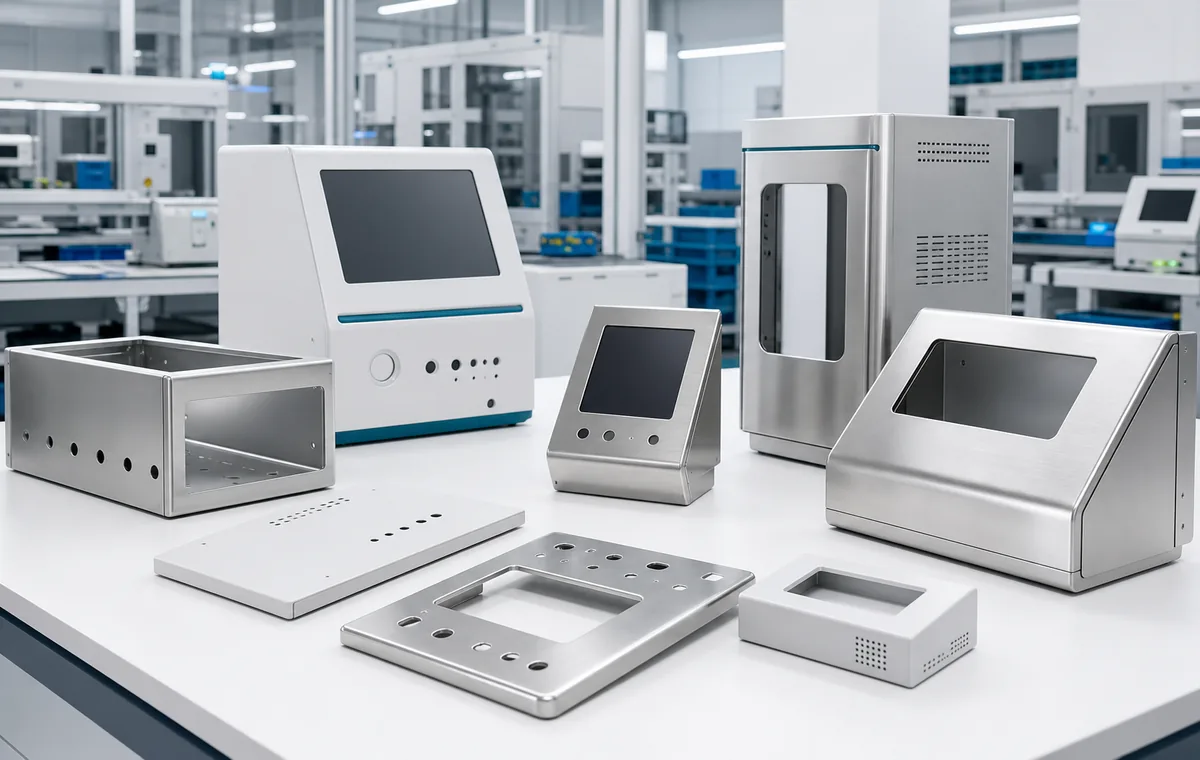
The handoff points matter as much as the machines. Drawing revision, bend strategy, fixture logic and inspection evidence are kept connected to the same production package.

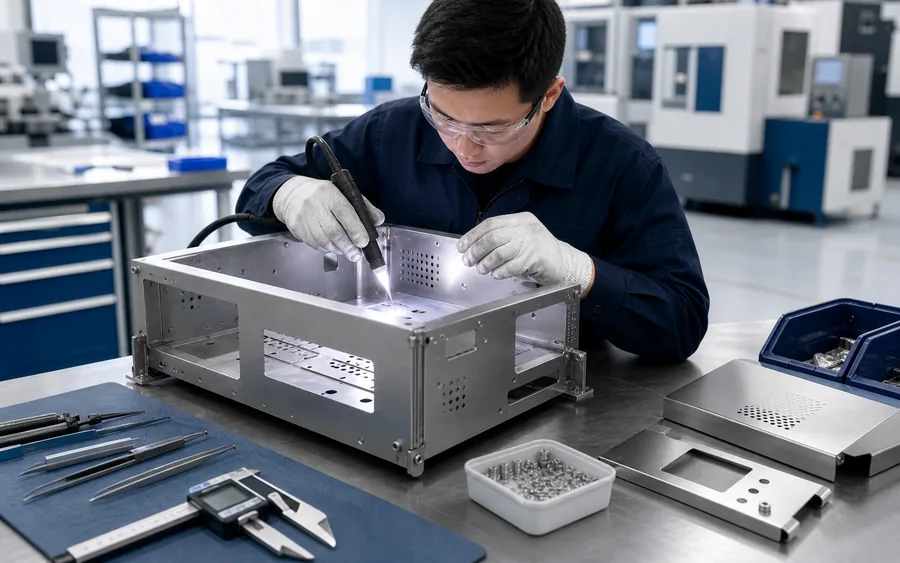
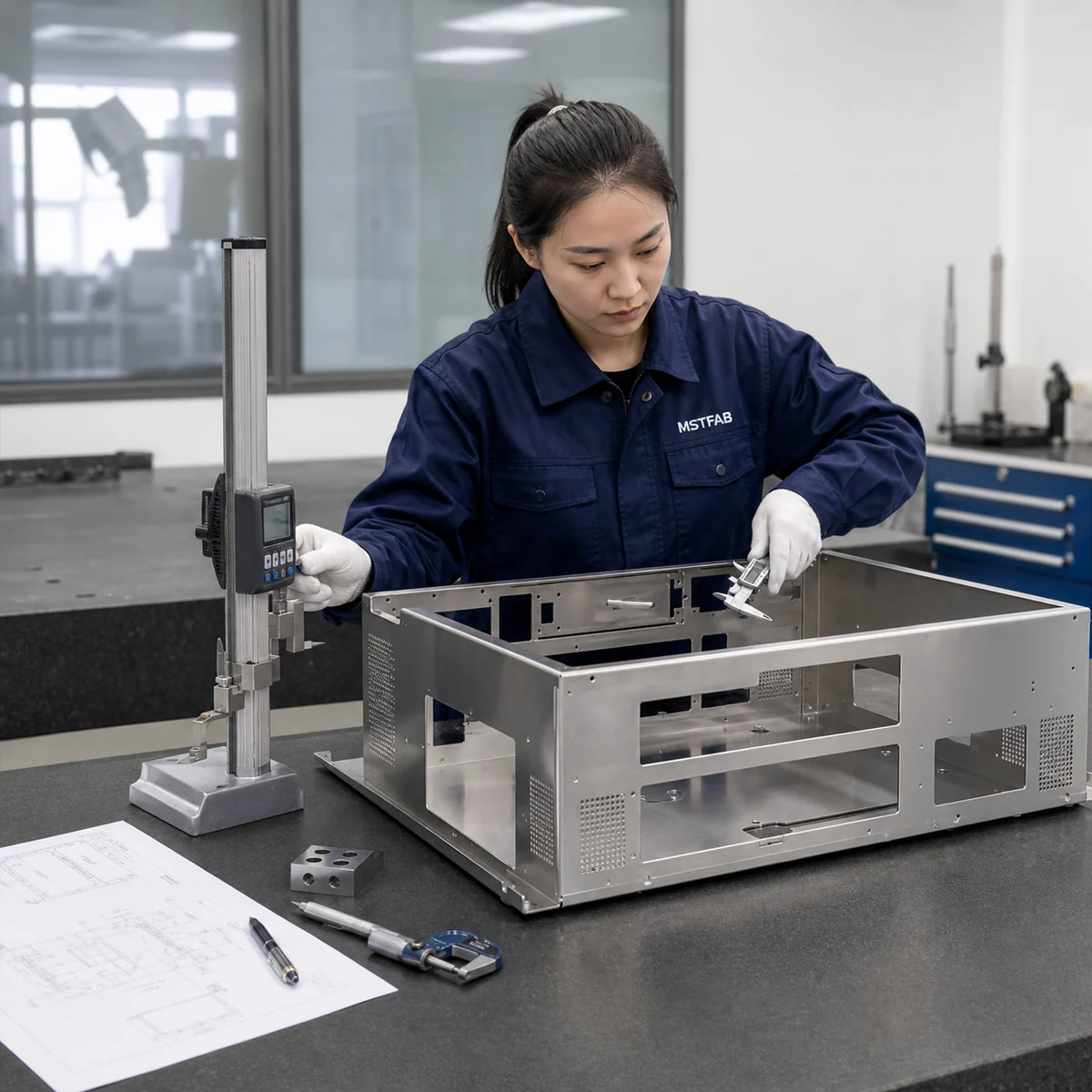
Exterior panels, base structures, display openings, access doors and internal brackets built to the buyer's thermal and optical layout.
Custom chassis, covers and wheeled housing structures prepared for buyer-installed electronics and functional systems.
Compact stainless, aluminum or coated-steel housings with precise interfaces, ventilation and service access.
Start with the drawing package, not a vague product description. Each gate below shows what your purchasing or engineering team provides, what MSTFAB returns, and what must be approved before the empty enclosure shell moves forward.

Give both teams the same starting point before cost and lead-time assumptions multiply.
Close manufacturability questions before anyone starts cutting the wrong revision.
Use the first shell to expose fit and appearance issues while changes are still manageable.
Repeat the approved mechanical route with documented inputs and in-process checks.
Match evidence to the drawing risks that matter to assembly and visible quality.
Prevent cosmetic damage from becoming the final and most expensive inspection surprise.
MSTFAB supplies drawing-based physical sheet metal enclosures, panels, brackets and mechanical assemblies. The buyer installs electronics and remains responsible for final-device validation, labeling and medical or electrical compliance.
Checks are tied to the released enclosure drawing, agreed first-article requirements and shipment handover. For each control point, define the record your team needs before production begins.

Current CAD model, 2D drawing, finish and hardware notes under the released revision.
Revision reference on the production traveler or agreed order record.
MSTFAB manufactures drawing-based physical sheet metal enclosures, panels, brackets, covers and mechanically assembled housings. The buyer remains responsible for electronics, software, clinical performance, electrical safety, final-device validation, labeling, regulatory approval and end-use compliance.
Use these focused resources for material, process and program-specific details. Each link has been checked before publication.
We manufacture unpopulated sheet metal shells, covers, panels, brackets, frames, doors and mechanically assembled housings from buyer drawings. We do not supply the finished medical device or its electronic and clinical systems.
Send a STEP file and PDF drawing when available, plus material, thickness, finish, quantity, tolerance notes, hardware requirements, visible-surface requirements and packaging expectations.
Yes. The normal path is drawing review, prototype or first-article approval, then repeat production under the approved revision. Quantity and complexity determine the most practical tooling and fixture approach.
Cold-rolled steel with powder coating, aluminum and stainless steel are common. The right choice depends on weight, stiffness, corrosion exposure, cleaning, appearance, welding and cost.
Protection can include removable film, foam, separators, corner protection, individual bags, cartons or export crates. The packing plan should be agreed around visible faces, weight and transport route.
For a medical aesthetic OEM program, useful proof is tied to the approved enclosure drawing and your actual order, not a generic quality claim. These checks help define what to review before repeat production.
Ask for current, site-specific photos or a live walkthrough of the operations relevant to your design. Confirm which fabrication steps MSTFAB performs and whether a long-term partner will complete any specified finishing work.
Confirm the released STEP/STP assembly and controlled PDF, DXF or DWG files, including revision, openings, service access, hardware positions, cosmetic faces and finish. MSTFAB supplies the empty metal enclosure, not the electronics or finished device.
Identify the critical dimensions, opening fit, panel alignment and appearance checks for this design. Agree in advance which inspection records and photos are needed at the first-article approval point.
Specify coating, masking, surface protection and transit packing. If a finishing partner is involved, record that route in the approved scope and agree on the finished-part checks before shipment.

 WeChat Contact
Scan to connect with MSTFAB for OEM sheet metal fabrication support.
[email protected]
 WhatsApp Me Directly
Scan or click for sheet metal fabrication quotes and drawing review.
+86 173 2831 6456