Choose Sheet Metal by Service Conditions, Not Habit
Start with the service conditions: indoor or outdoor exposure, corrosion, cleaning chemicals, weight, stiffness, grounding, appearance and expected life. Then choose the grade, thickness and finish together. A metal name by itself is not a complete specification.
MSTFAB fabricates drawing-defined enclosure shells, panels and parts. We can flag manufacturing trade-offs before quotation; the buyer approves the final material and performance requirements. Confirm the proposed material and finish against the approved drawing before production.
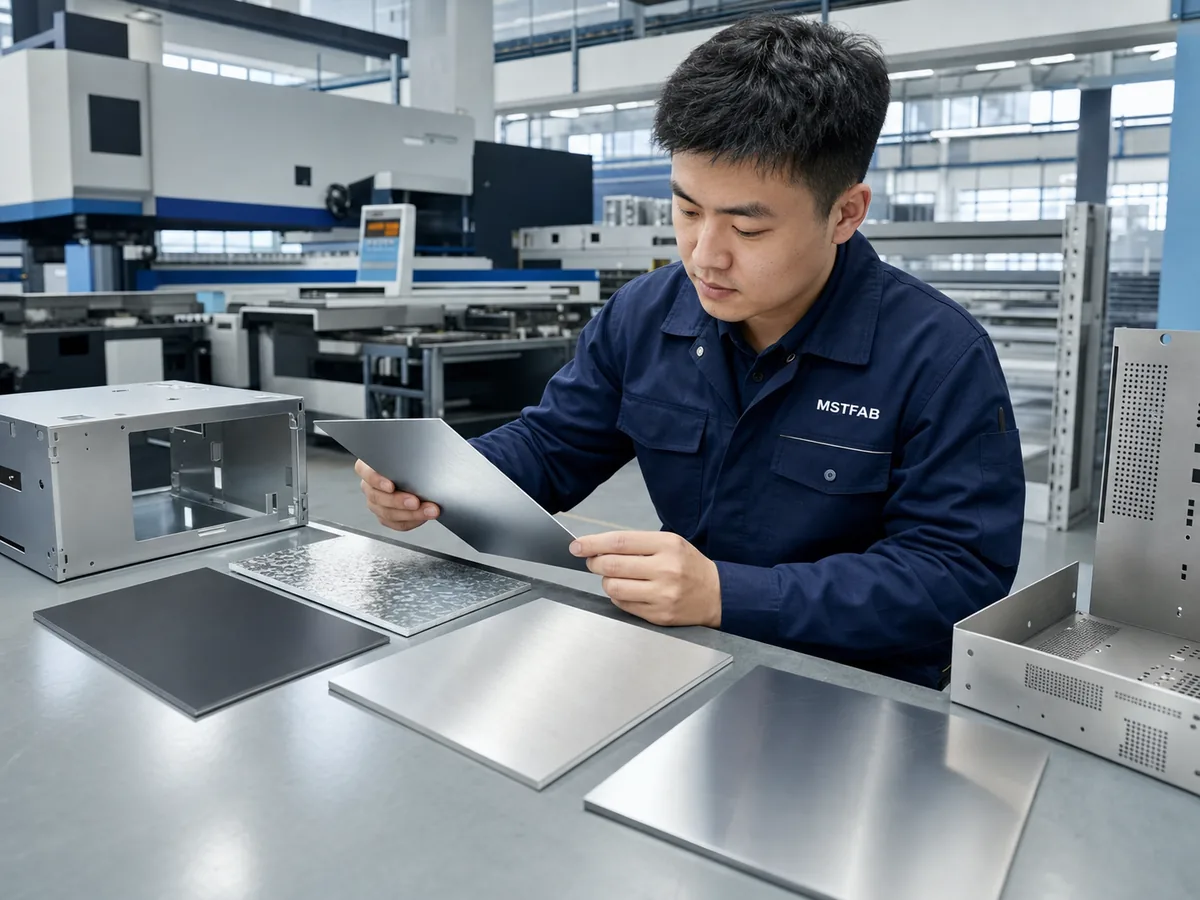
Quick Answer: Which Sheet Metal Fits the Service Conditions?
Start with the service conditions, not a familiar alloy name. Cold-rolled low-carbon steel is common for painted indoor enclosures. Zinc-coated sheet plus a defined finish can suit moderate corrosion exposure. Formable aluminum such as 5052 is useful when weight matters. For frequent cleaning or corrosive service, compare stainless 304 and 316 against the actual chemicals and chlorides. Then confirm grade, temper, thickness, bend radius, welding, finish, grounding and packaging with the fabricator.
Indoor + painted
Start with SPCC or mild steel. It is available, bendable, weldable, and easy to powder coat.
Outdoor + cost control
Look at galvanized steel plus coating, or aluminum if weight and corrosion risk matter more.
Washdown + harsh environment
Compare 304 and 316 against the actual chemicals, chlorides, temperature and cleaning conditions.
Why New Buyers Get Material Selection Wrong
They ask for a material name, not a working condition
“Use stainless” sounds clear, but it is not enough. A supplier still needs to know indoor or outdoor use, humidity, salt spray, load, grounding, appearance, cleaning, and expected life.
They compare raw sheet price instead of total risk
A cheaper sheet can become expensive after coating failures, shipping dents, rust claims, springback, or rework. The cheapest material is only cheap if it survives the real environment.
Sheet Metal Material Selection Matrix
Use this table as a first filter before RFQ. The final decision should still be reviewed against drawings, thickness, bend geometry, surface finish, annual volume, and target cost.
| Material | Good Starting Use | Buyer Pain Point It Solves | Watch Before RFQ |
|---|---|---|---|
| SS400 / mild steel | Frames, brackets, machinery guards | Lowest cost with good strength | Needs coating; bare steel outdoors is a rust countdown |
| SPCC cold rolled steel | Indoor painted panels and cabinets | Flat, clean, easy to powder coat | Not corrosion-resistant unless finished properly |
| SECC / galvanized steel | Electrical boxes, telecom panels, rack parts | Better corrosion resistance without jumping to stainless | Cut edges and welded areas still need protection |
| Aluminum 5052 | Lightweight bent enclosures | Weight saving and natural corrosion resistance | Softer than steel; thread inserts and thickness need review |
| Aluminum 6061 | Machined plates and structural parts | Higher strength when machining matters | Can crack on tight bends; do not treat it like 5052 |
| Stainless 304 | Clean, washdown, food-adjacent, medical-adjacent metalwork | Corrosion resistance without paint | Costs more; forming and welding need more control |
| Stainless 316 | Coastal, marine, chemical, salt exposure | Better chloride resistance | Confirm suitability for the actual exposure; grade alone is not approval |
| Copper / brass | Conductive, grounding, decorative or thermal parts | Conductivity and appearance | Usually a special-purpose choice, not a default enclosure material |
Compare Four Common Sheet Metals
Use these comparisons as an RFQ starting point. Images do not establish material grade or batch traceability; confirm the drawing, service conditions and required records before ordering.

Carbon Steel
Strong, economical, and fabrication-friendly when the enclosure will be painted or powder coated.
- Typical grades
- SPCC, CRS, SS400
- Corrosion
- Specify corrosion protection
- Weight
- Standard baseline
- Cost drivers
- Grade, thickness and finish
Best fit: indoor cabinets, frames, brackets, guards, and powder-coated OEM shells.

Galvanized Steel
A practical step up from bare steel when buyers need economical corrosion protection.
- Typical grades
- SECC, SGCC
- Corrosion
- Review coating and exposed edges
- Weight
- Similar to steel
- Cost drivers
- Coating, cut edges and finish
Best fit: electrical boxes, telecom panels, rack parts, and indoor-to-sheltered outdoor applications.
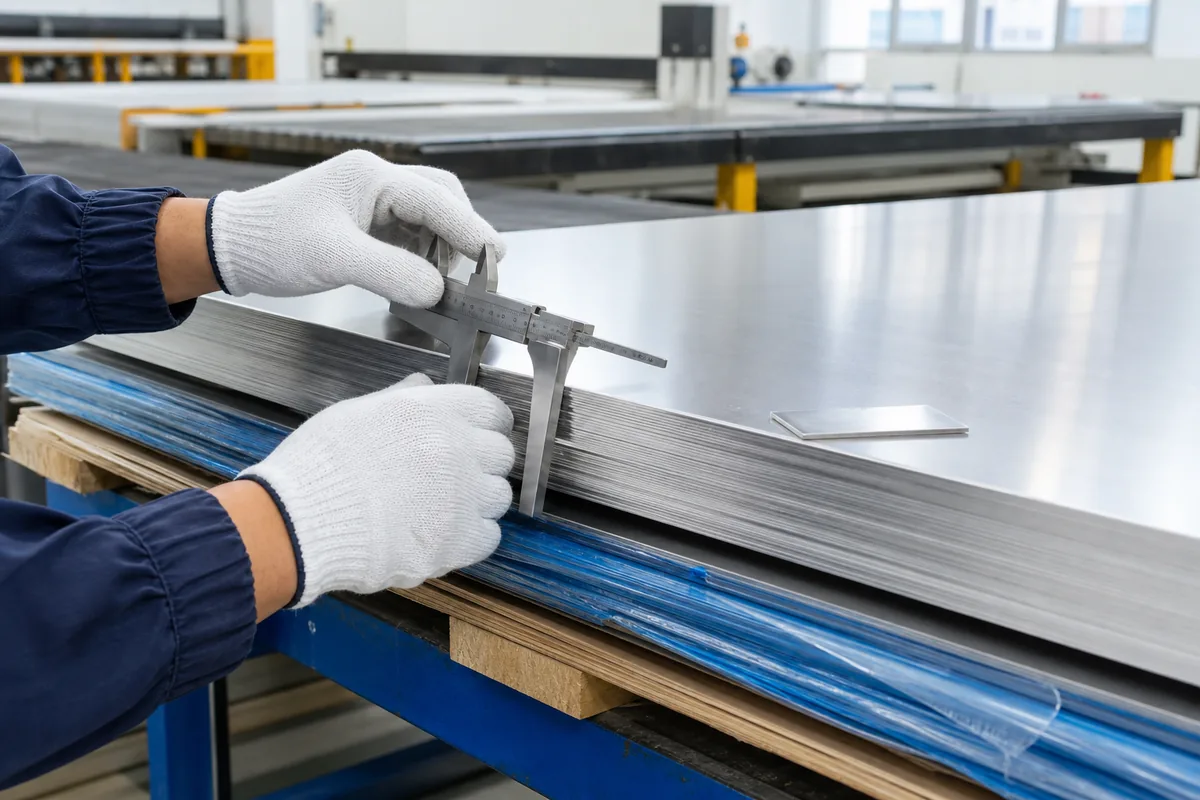
Aluminum
Choose it when lower shipping weight, portability, or natural corrosion resistance earns back the material premium.
- Typical grades
- 5052, 6061
- Corrosion
- Confirm alloy and environment
- Weight
- Low density; verify finished-part mass
- Cost drivers
- Alloy, temper and forming
Best fit: portable equipment, lightweight covers, outdoor housings, and anodized cosmetic parts.
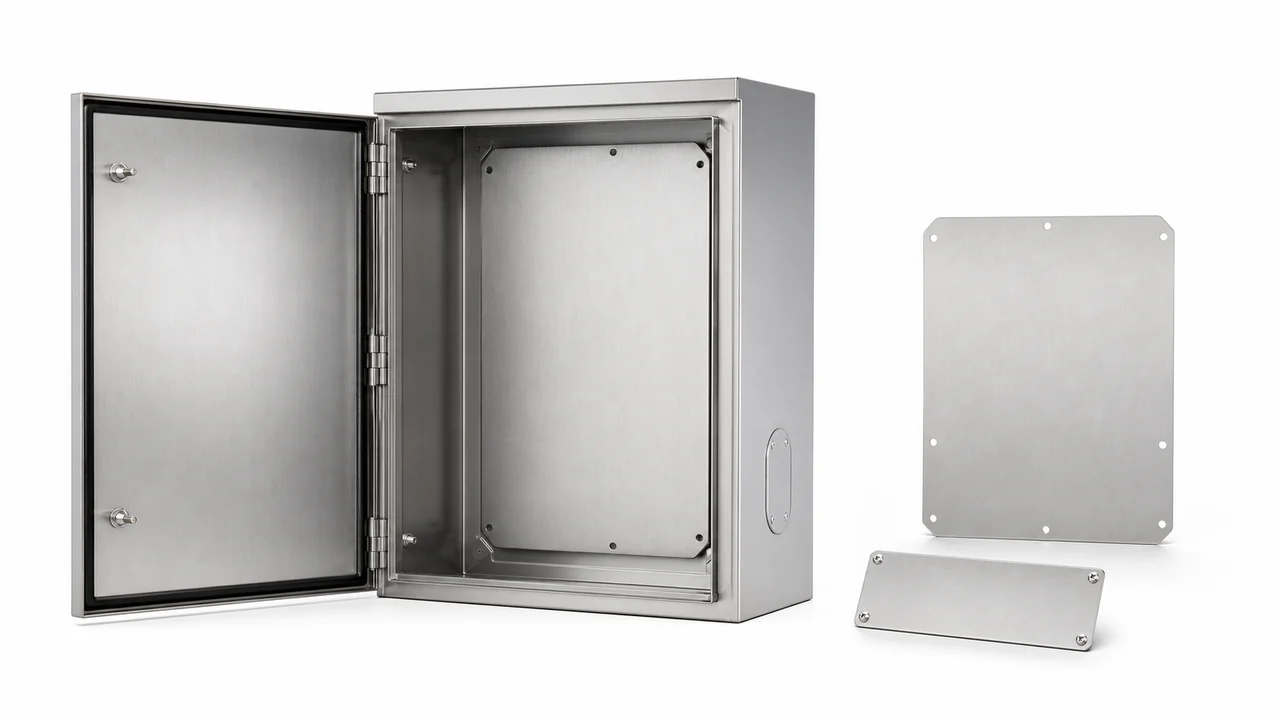
Stainless Steel
Use stainless for a real washdown, chloride, chemical, hygiene, or unpainted appearance requirement.
- Typical grades
- 304, 316
- Corrosion
- Verify grade for actual exposure
- Weight
- Similar to steel
- Cost drivers
- Grade, finish and fabrication
Review for: cleanable or unpainted shells, with grade suitability checked for the actual exposure.
Steel and Galvanized Steel: The Safe First Question
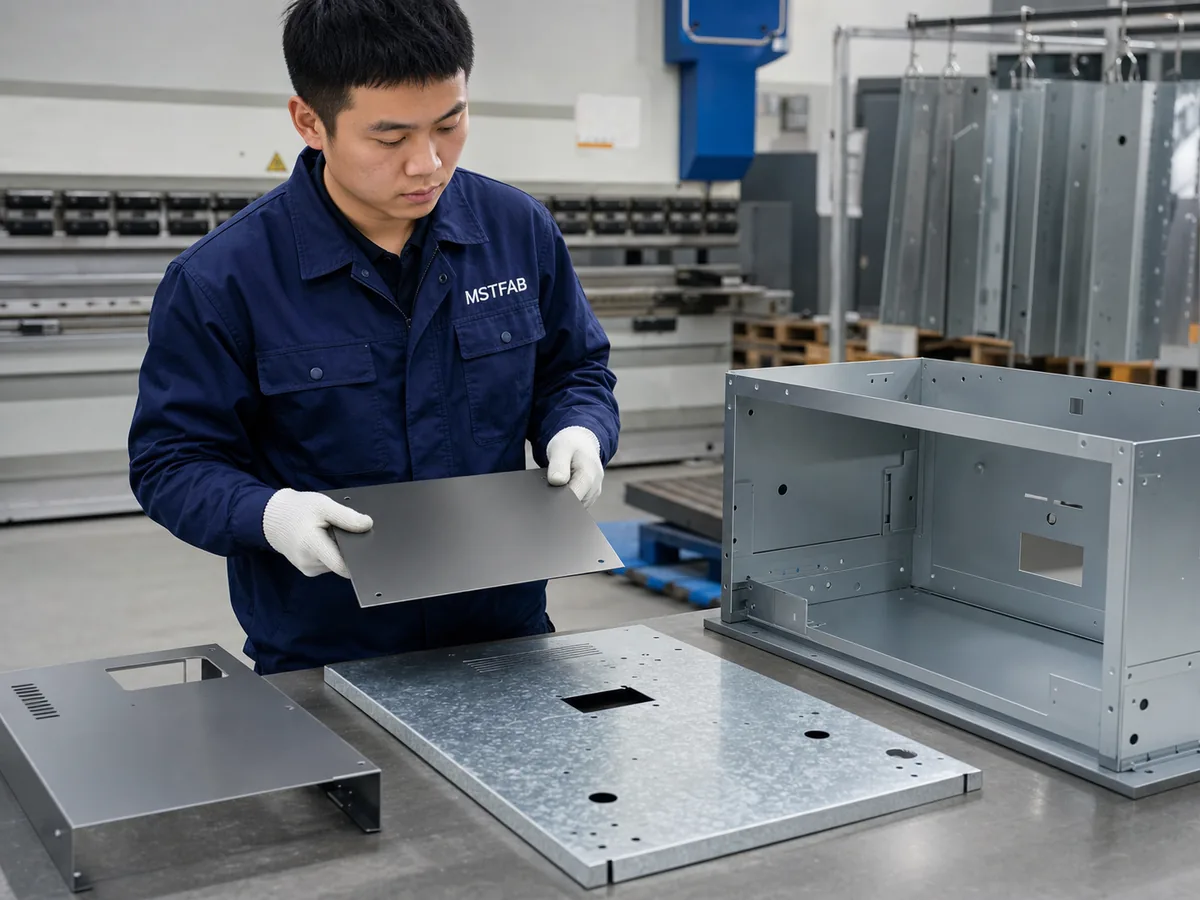
Best when cost, strength and coating matter
For many indoor OEM enclosures, SPCC or mild steel is the practical first option. It bends well, welds well, is widely available, and works nicely with powder coating.
Galvanized steel helps when you need more corrosion protection without paying for stainless. It is common for electrical boxes, telecom panels, industrial cabinets, and rack components.
- Choose it when: indoor use, cost control, painted surface, strong brackets or cabinet bodies.
- Be careful when: outdoor rain, cut edges, welded galvanized areas, scratched coating, export packaging.
Aluminum: Use It When Weight Is Expensive
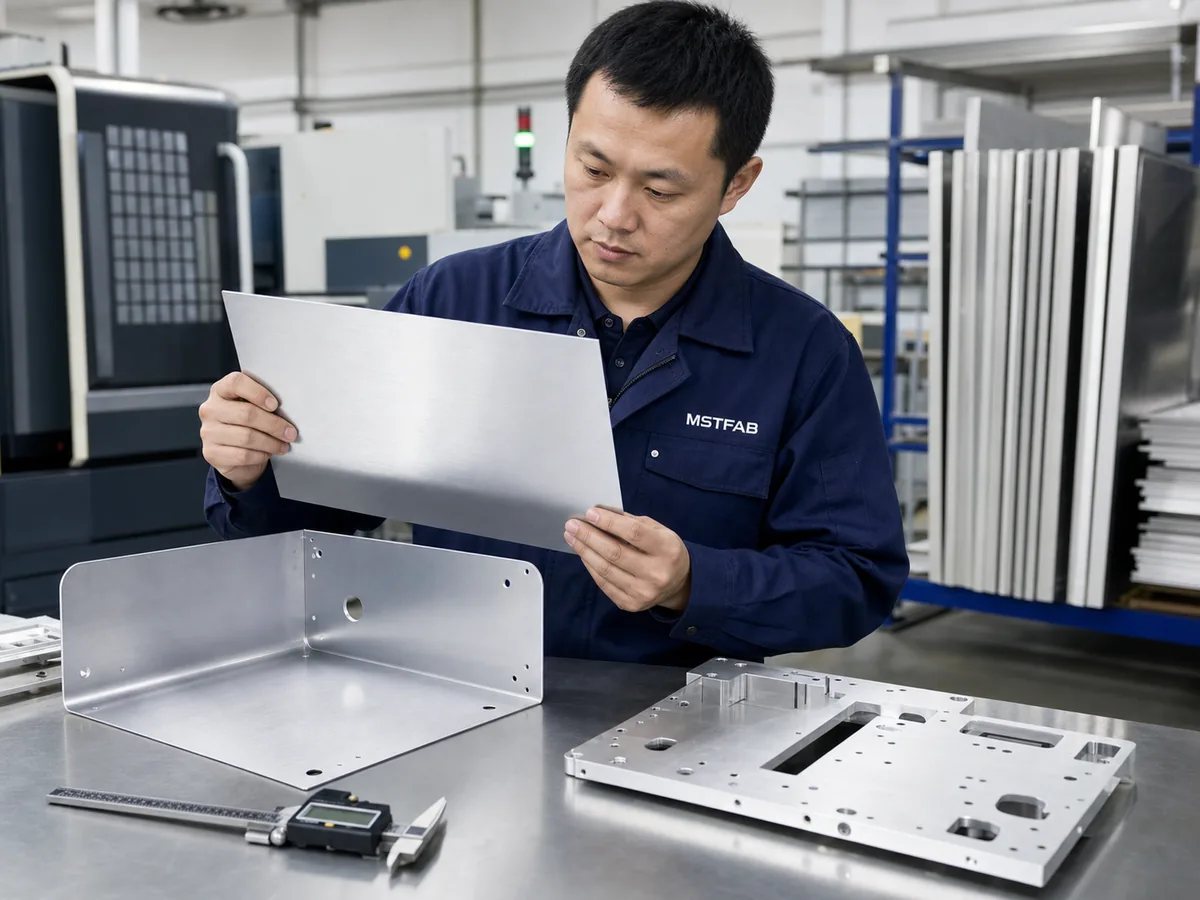
5052 for bending, 6061 for machined strength
Aluminum is not just “light steel.” It is lighter, naturally corrosion-resistant, and good-looking after anodizing, but it is softer and usually costs more per kilogram.
For bent enclosures, 5052 is usually easier to form. For machined plates or stronger structural components, 6061 can be useful, but tight bending needs review.
- Choose it when: portable equipment, outdoor weight reduction, premium brushed or anodized look.
- Be careful when: thin threaded holes, dent risk, tight bend radius, mixed steel-aluminum assemblies.
Stainless Steel: Buy It for Real Corrosion Risk
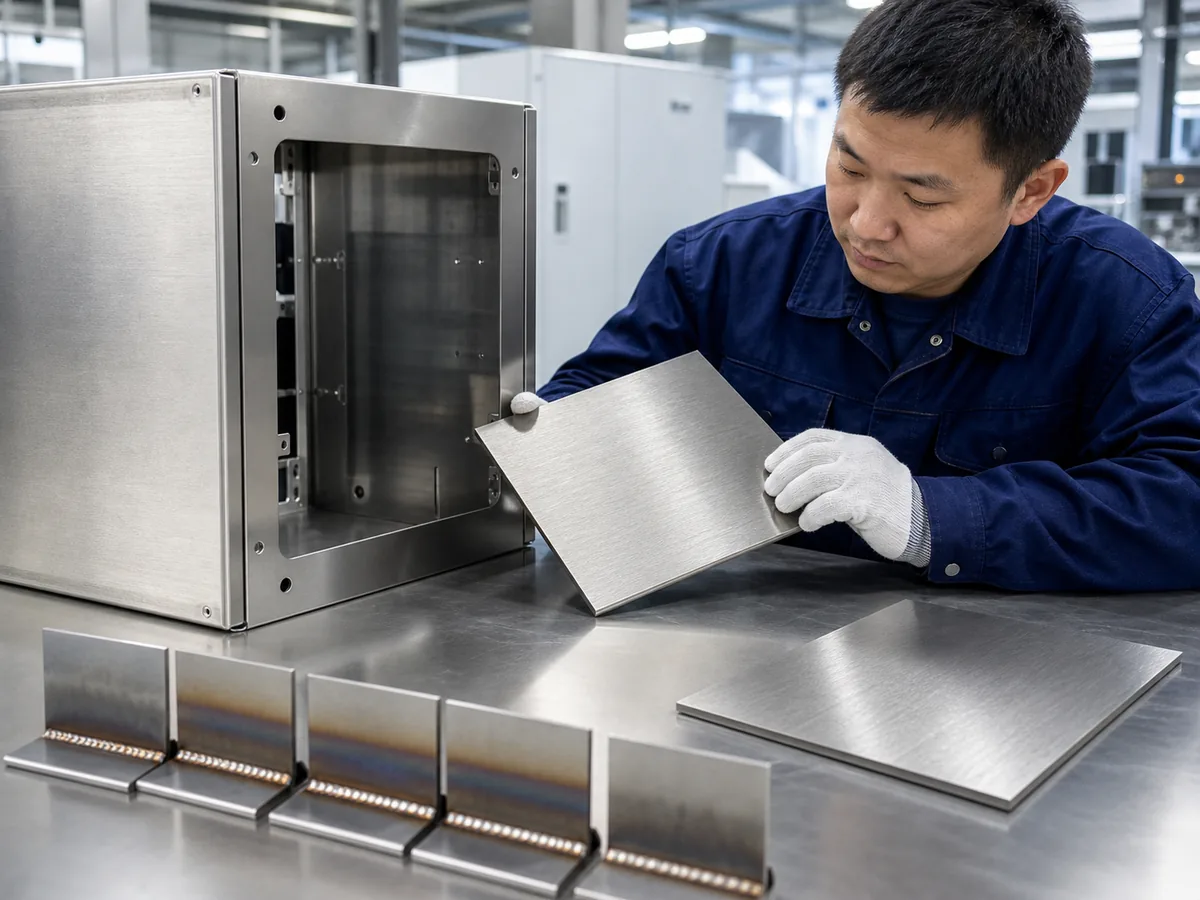
Compare grades against the actual exposure
For stainless enclosures, confirm the chemical environment, concentration, temperature, surface condition and cleaning process before selecting the grade.
A 316 designation is not blanket approval for chloride or chemical service. The buyer approves compatibility for the intended conditions.
- Specify: the grade, finish and intended service conditions.
- Confirm: any application-specific testing or acceptance evidence before ordering.
Reference: Outokumpu corrosion tables. Laboratory data need to be assessed against the actual service conditions; they are not a project approval.
Thickness and Bend Radius: The Quote Killer Nobody Warned You About

More thickness is not automatically more professional
Beginners often make parts thicker “to be safe.” Sometimes that is right. Sometimes it adds weight, increases bend force, slows fabrication, raises freight cost, and makes the part harder to form.
A drawing should define material grade and thickness together. A 1.5 mm SPCC panel, 2.0 mm aluminum panel, and 1.5 mm stainless panel do not behave the same during bending or welding.
- Ask the supplier to review bend radius before production.
- Keep holes away from bend lines where possible.
- Use greater thickness only where stiffness, vibration or mounting loads require it.
Material and Finish Must Match

The finish is not decoration; it is part of the material choice
Powder-coated steel, anodized aluminum, brushed stainless, and galvanized steel all solve different problems. A finish that looks good on a website may be wrong for grounding, outdoor exposure, tight threads, masking, or cosmetic inspection.
If you are comparing quotes, make the finish explicit: color, gloss, texture, coating thickness, masking areas, salt spray target if needed, and cosmetic standard.
- Powder coat is common for steel and aluminum enclosures.
- Anodizing is mainly for aluminum and has limited color range.
- Brushed or passivated stainless works when paint is not desired.
RFQ Checklist: What a Beginner Buyer Should Send

Do not make the supplier guess; guessing is where rework grows
A good material RFQ is short but specific. It gives the supplier enough information to flag risks before pricing, instead of discovering the problem after your purchase order is already wearing shoes.
- 2D drawing and STEP file if available.
- Expected material grade and thickness, or ask for recommendation.
- Indoor, outdoor, washdown, coastal, chemical, heat or vibration environment.
- Surface finish requirement: powder coat, anodize, brushed, passivation, plating.
- Annual volume, prototype quantity, and target production quantity.
- Critical dimensions, mating parts, grounding, inserts, threads and sealing points.
- Packaging and shipping destination if the parts are exported.
MSTFAB Material Review Table
Use these points to request a drawing-specific material review. Availability, proposed substitutions and the scope of any requested records should be confirmed in the quotation and order.
| Review Point | Why It Matters to Buyers | What We Check Before Quote |
|---|---|---|
| Material availability | Out-of-stock material quietly extends lead time | Grade, thickness, sheet size, substitute risk |
| Forming risk | Wrong alloy or radius can crack or distort | Bend radius, hole-to-bend distance, springback |
| Finish compatibility | Wrong finish causes corrosion, fit, or cosmetic complaints | Coating thickness, masking, color, surface direction |
| Assembly function | Material affects inserts, threads, welds, grounding and sealing | PEM hardware, weld sequence, gasket and mating features |
| Total cost | Raw material price is only one part of the bill | Scrap rate, finishing queue, packaging, freight weight |
Common Beginner Mistakes
Choosing stainless because it sounds premium
Good for harsh environments, wasteful for many painted indoor panels. Premium is not a strategy.
Using 6061 for tight bends
6061 is strong, but not as bend-friendly as 5052. Ask before you turn a bend line into a crack line.
Forgetting coating thickness
Powder coat can close threads or tight slots if masking and tolerance allowance are ignored.
Specifying “steel” only
Steel is a family, not a purchase order. Name SPCC, galvanized, mild steel, or ask for recommendation.
Comparing quotes with different material assumptions
One supplier may quote SPCC, another galvanized, another stainless. The unit price comparison becomes a little circus.
Ignoring freight weight
Heavy material can save factory cost and lose the money back in shipping, especially on export projects.
Material Approval Checklist
Confirm the grade, condition, finish and required evidence in the RFQ. A material family is not an approved purchase specification, and proposed alternatives need buyer approval before production.
| RFQ item | What to specify | Confirm before production |
|---|---|---|
| Grade and condition | Material designation and applicable standard, temper or condition, nominal thickness and required thickness tolerance. | Confirm the proposed supply specification against the controlled drawing. Similar trade names are not automatic equivalents. |
| Availability and substitution | Prototype and production quantity, required delivery date, and whether an alternative grade may be proposed. | Confirm availability and order-specific timing. A proposed change needs buyer approval in writing before production; availability is not established by this guide. |
| Material records | State the document type required, the properties or composition to report, and how supplied material must link to the order or batch. | Agree on document availability, scope and any added cost before the order. A material certificate or heat-level traceability is not included automatically. |
| Finish and final acceptance | Define cosmetic faces, grain direction where relevant, masking, weld/edge protection and the final inspection criteria. | Approve material and finish together. Agree on any sample or test requirement; material grade alone does not establish finished-enclosure performance. |
For a bent enclosure, carry the approved condition and geometry into the CNC bending review. Define coating and masking in the surface finishing scope, or request a combined route through custom sheet metal fabrication. Prepare the controlled drawing and any supporting files using the RFQ file handoff checklist.
Related Buyer Guides
These are useful next steps once you have a starting material in mind.
Frequently Asked Questions
What material should I choose for an indoor sheet metal enclosure?
For a painted indoor enclosure, compare cold-rolled carbon steel with galvanized steel against the drawing, finish, corrosion exposure and cost. Confirm grade, thickness, forming requirements and acceptance criteria before quotation; the buyer approves the final specification.
What material is best for outdoor sheet metal parts?
There is no universally best outdoor metal. Specify exposure, cleaning, chlorides, temperature, finish and expected service conditions, then compare the proposed grades against those requirements. The buyer approves the material and any necessary application-specific verification before production.
Should beginners always choose thicker sheet metal?
No. Thicker material may improve stiffness, but it also adds cost, weight, bending force, and shipping expense. Choose thickness by load, mounting points, vibration, and flatness needs, not fear.
Why did two suppliers recommend different materials?
They may be assuming different environments, finishes, tolerances, or stock availability. Ask each supplier to explain the reason, not just the price. A clear recommendation should connect material choice to the job condition.
Can MSTFAB choose the material for me?
MSTFAB can discuss manufacturing options after reviewing your drawings, service conditions, finish, quantity and critical requirements. Your engineering or procurement team approves the final specification. Any proposed material substitution needs buyer approval in writing before production; agree on the required material documents in the RFQ.
For sourcing decisions that extend beyond alloy selection, use the sustainable sheet metal procurement evidence checklist to compare material, yield, finish, service assumptions, packing and change control on the same boundary.
Need a Material Recommendation Before RFQ?
Send your drawing, STEP file, expected environment, target finish, quantity and any known cost limit. MSTFAB will review whether SPCC, galvanized steel, aluminum, stainless, copper or brass makes sense for the part before quoting.
Related material comparisons: Compare Brass C260 vs C360 for forming and machining, and SUS304 vs SUS316 for corrosion and chloride exposure.
 WeChat Contact
 WhatsApp Me Directly