Custom Sheet Metal Welding Services for OEM Assemblies
MIG, TIG and spot welding for drawing-defined enclosures, frames and brackets. Weld access, distortion control, visible seams and inspection requirements are reviewed for each RFQ.
Certified Quality System
Fit & Inspection Criteria
OEM Export Experience
Markets We Serve
Welding Routes for Sheet Metal Parts
We review material, thickness, joint access and appearance requirements before confirming a suitable welding route for your project.
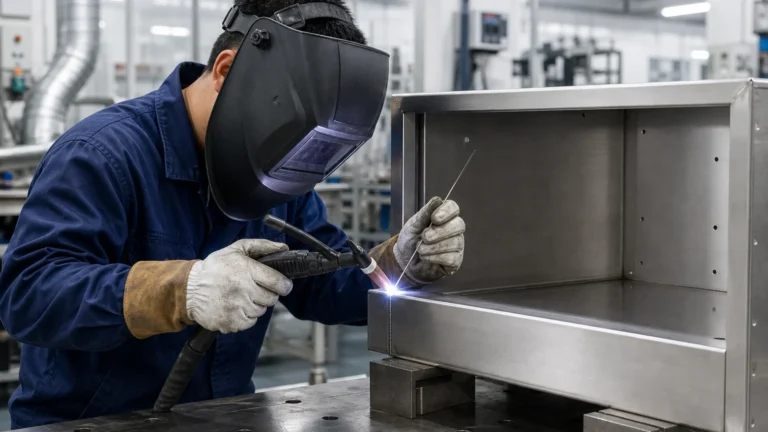
TIG Welding (GTAW)
TIG welding can be reviewed for stainless steel and aluminum seams where joint access and appearance are important. Material grade, thickness, joint design and inspection requirements are confirmed for the drawing.

MIG Welding (GMAW)
MIG welding can be reviewed for steel frames, brackets and welded assemblies. The quotation confirms the material, joint details, fixture route and inspection scope rather than applying one thickness range to every part.

Spot / Resistance Welding
Resistance spot welding can be reviewed for overlapping sheet joints. Confirm the material and coating, combined sheet thickness, electrode access, spot locations and acceptance checks before selecting the route.
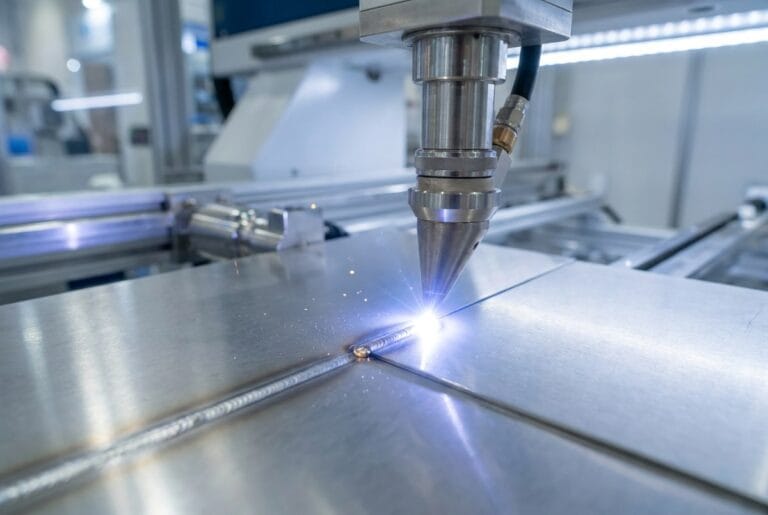
Fiber Laser Welding
Ultra-precise, low-distortion welds with narrow heat-affected zones. Delivers near-invisible seams on stainless steel for premium export-grade products.
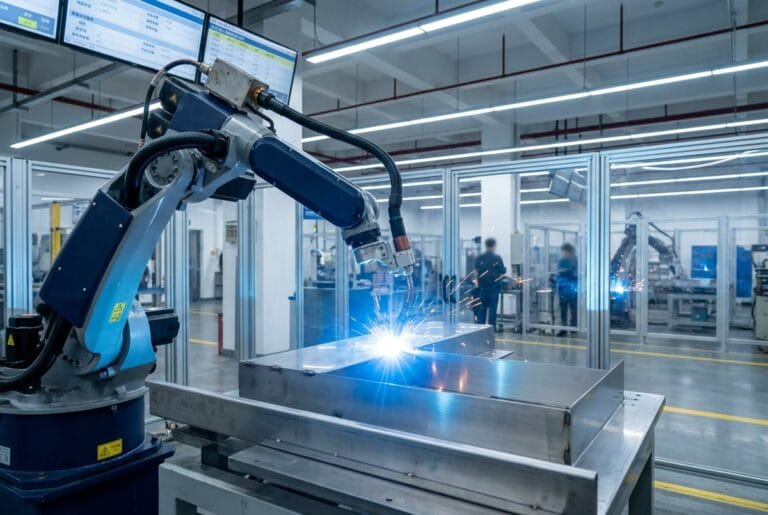
Robotic / Automated Welding
Repeatable, high-consistency welds for medium-to-large production runs — stable quality part after part, with full process traceability.

Brazing & Stud Welding
Specialized joining for dissimilar metals, threaded studs and weld nuts — supporting complex assemblies and downstream fastening needs.
Not Sure Which Metal You Need? Start Here
New to sourcing welded parts? Here are the four metals we weld most — in plain language, so you can pick the right one for your product, budget and environment. Unsure? Send us your part and we will recommend the best fit for free.
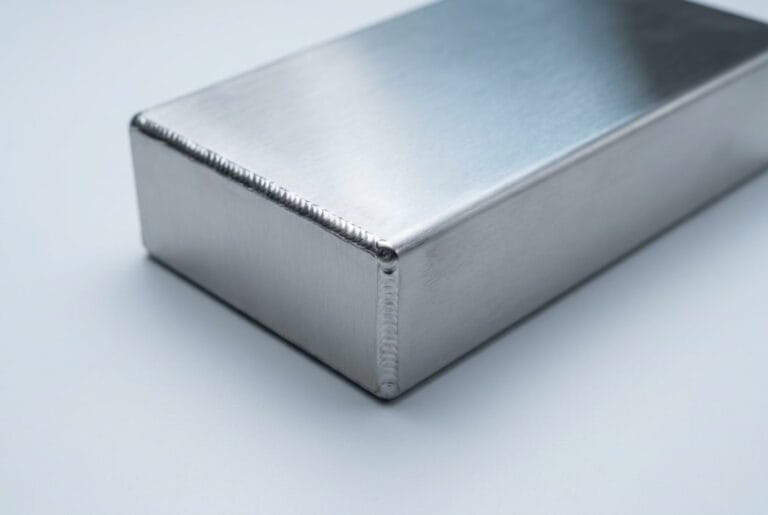
Stainless Steel (304 / 316)

Carbon / Mild Steel

Aluminum

Galvanized Steel
Welding Routes and Fit Checks
These illustrative process images show possible welding routes for sheet metal enclosures. Confirm the method and inspection evidence that apply to your project.
See cutting, bending and welding in sequence in our sheet metal fabrication workflow video.

Programmable Laser Welding
For a laser-welding route, confirm joint access, material thickness and parameter control against the part drawing before production.
Mirror-Clean Weld Seams
Narrow, uniform beads with minimal heat distortion — the finish your customers see and judge.

Handheld Laser Flexibility
Handheld laser welding may help reach cabinet corners and brackets when the material and joint access are suitable.
Automated Welding Option
For suitable repeat parts, confirm fixture access, weld sequence and inspection points during RFQ review.
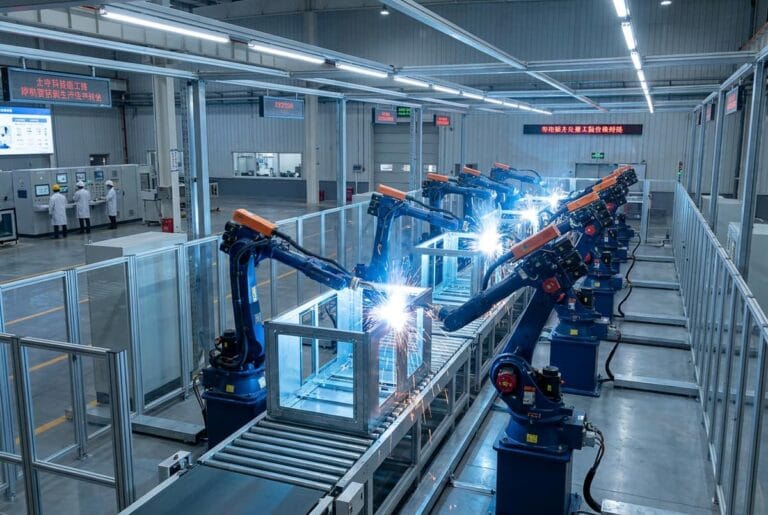
Repeat-Order Welding Setup
For repeat orders, agree on fixtures, reference samples and checks for the approved weld details.

Enclosed Laser Workstation
Safety-enclosed CNC laser cells protect operators while running high-consistency production batches.
Drawing-Based Custom Welding, Without the Guesswork
Send drawings, STEP files, a sketch or a sample part. MSTFAB reviews weld fit-up, material, finish and tolerance risk before quoting, so your buyer does not discover the “fun part” after the shipment arrives.
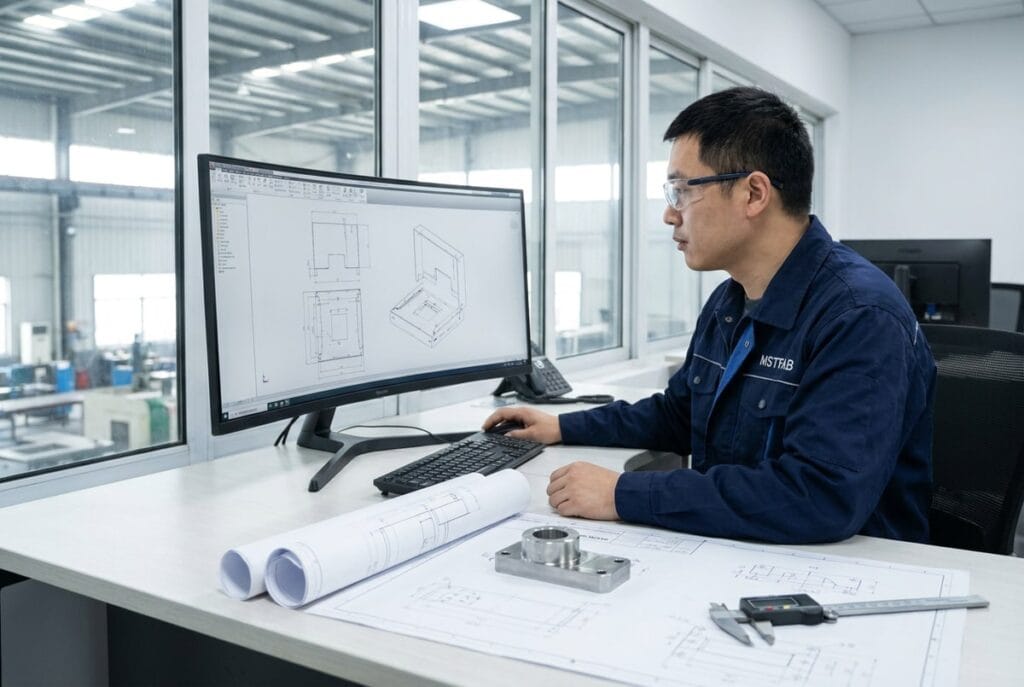
Send Your Drawings
Email us your 2D drawings, 3D files (STEP / IGES / DWG / PDF) — or even a hand sketch or sample photo. Drawing-based custom is what we do best.
Tell Us Material & Finish
Let us know your preferred metal and thickness (or ask us to advise), plus surface finish — powder coat, anodize, brushing or plating.
Quantity & Tolerances
Share quantity (prototype or production), key tolerances and any critical dimensions. We confirm what is achievable in a free DFM review.
Get a Project-Specific Quote
We review your drawings, quantities and finish requirements before confirming price, lead time and manufacturing questions.
- ✓Drawings / 3D files / sketch / sample photo
- ✓Material & thickness (or ask us to advise)
- ✓Surface finish (coating / anodize / brushing)
- ✓Quantity & target lead time
- ✓Key tolerances / critical dimensions
RECENT WELDING PROJECTS
Custom Welded Sheet Metal Parts We Build Daily
From stainless brackets to welded rack chassis and enclosure bodies, our welding services support OEM assemblies that need clean seams, controlled distortion, and export-ready finish quality.

Welded Aluminum Chassis
TIG-welded aluminum housing with clean seams, internal ribs, and precision mounting features.

Control Enclosure Box
Powder-coated steel enclosure with welded corners, hinged door, and gland plate preparation.
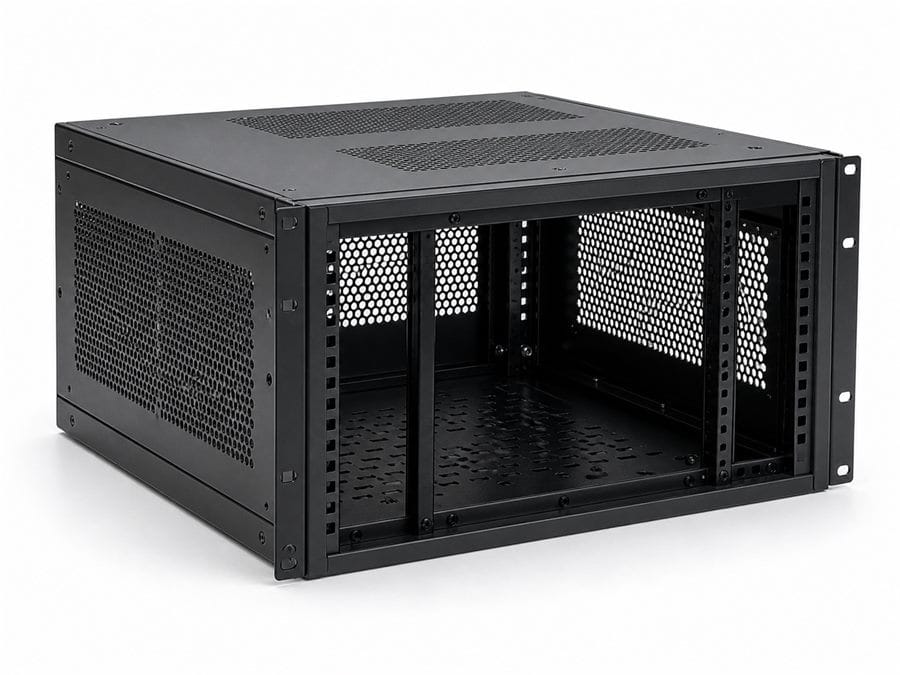
Server Rack Chassis
Black powder-coated welded rack structure with perforated panels and reinforced corners.
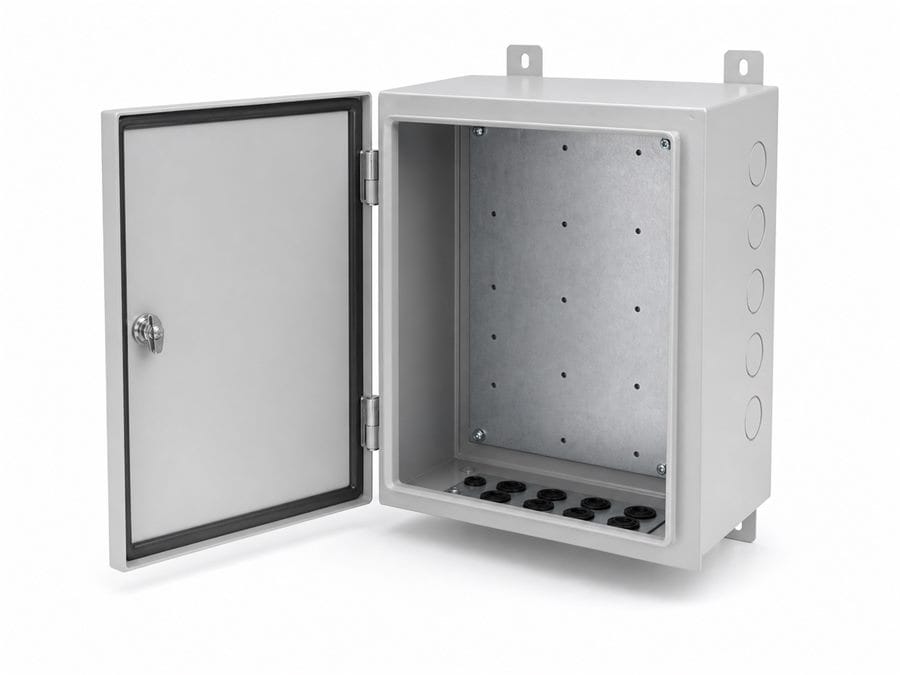
Outdoor Electrical Enclosure
Welded cabinet body prepared for gasket sealing, wall mounting, and outdoor installation.

Machine Base Frame
Fixture-welded steel frame with cross braces, mounting holes, and stable geometry control.
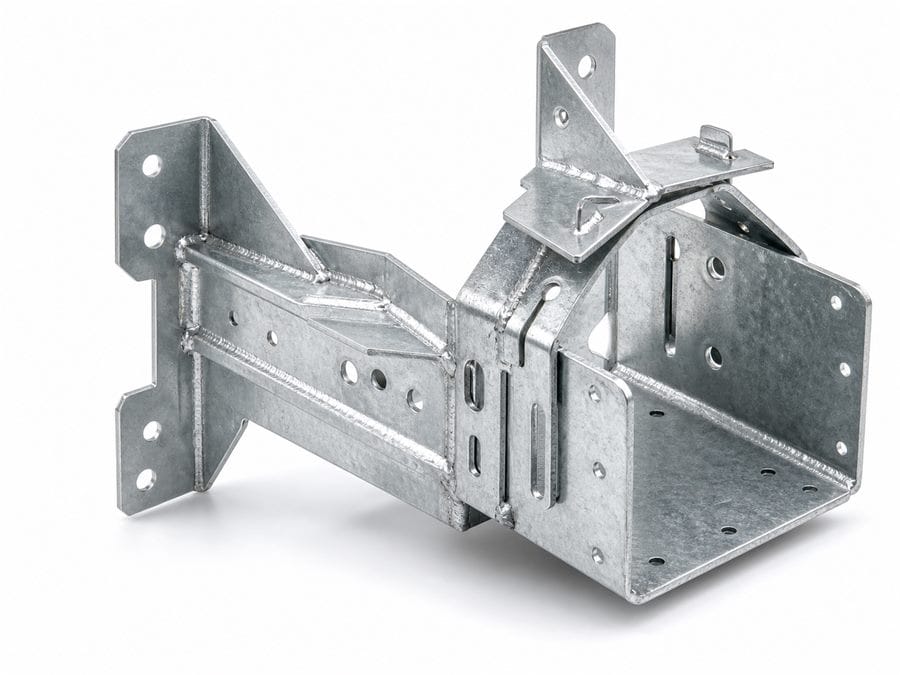
Galvanized Support Bracket
Multi-angle galvanized bracket with welded reinforcement tabs for industrial equipment.
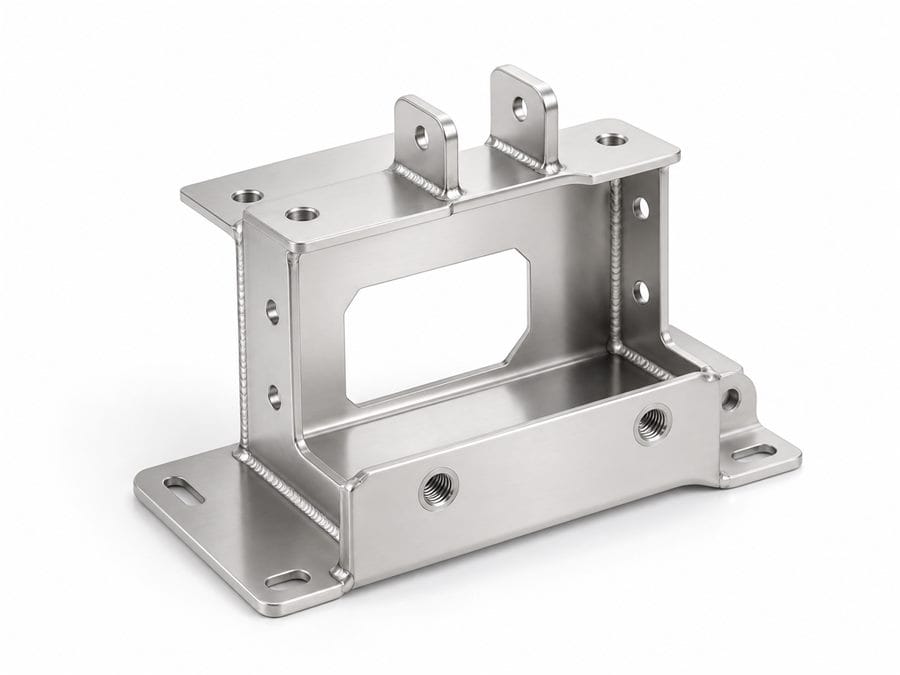
Stainless Mounting Bracket
TIG-welded stainless bracket for medical devices, instrumentation, and clean assemblies.
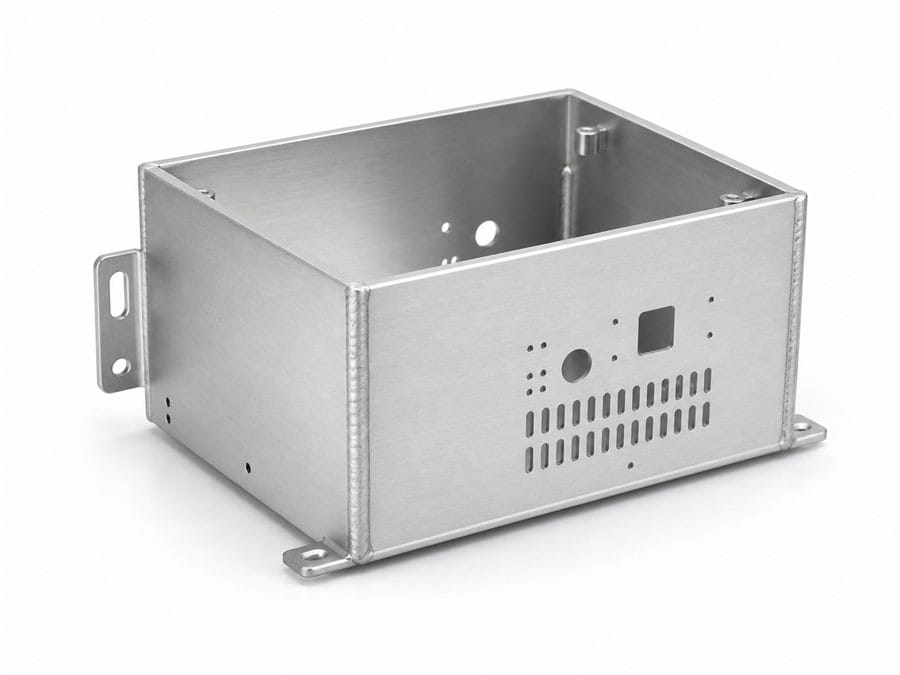
Electronics Housing
Compact stainless welded housing with ventilation cutouts, mounting ears, and cosmetic finish.
How We Control Quality on Every Welded Part
A transparent, four-stage workflow built so overseas buyers know exactly what happens between your drawing and your finished assembly.
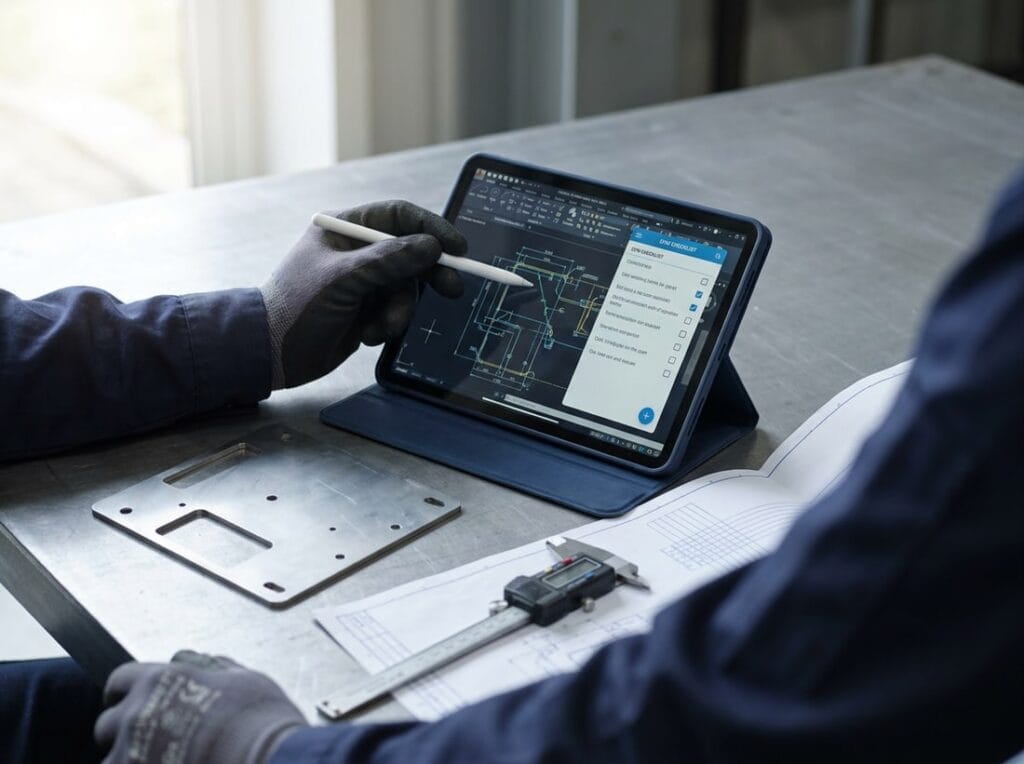
Drawing & DFM Review
Fixture Fit-Up & Tacking
Parts are clamped in precision welding fixtures and tack-welded to lock geometry. Controlled fit-up is how we hold assembly tolerances and keep panels flat — the difference between a part that fits the enclosure and one that does not.
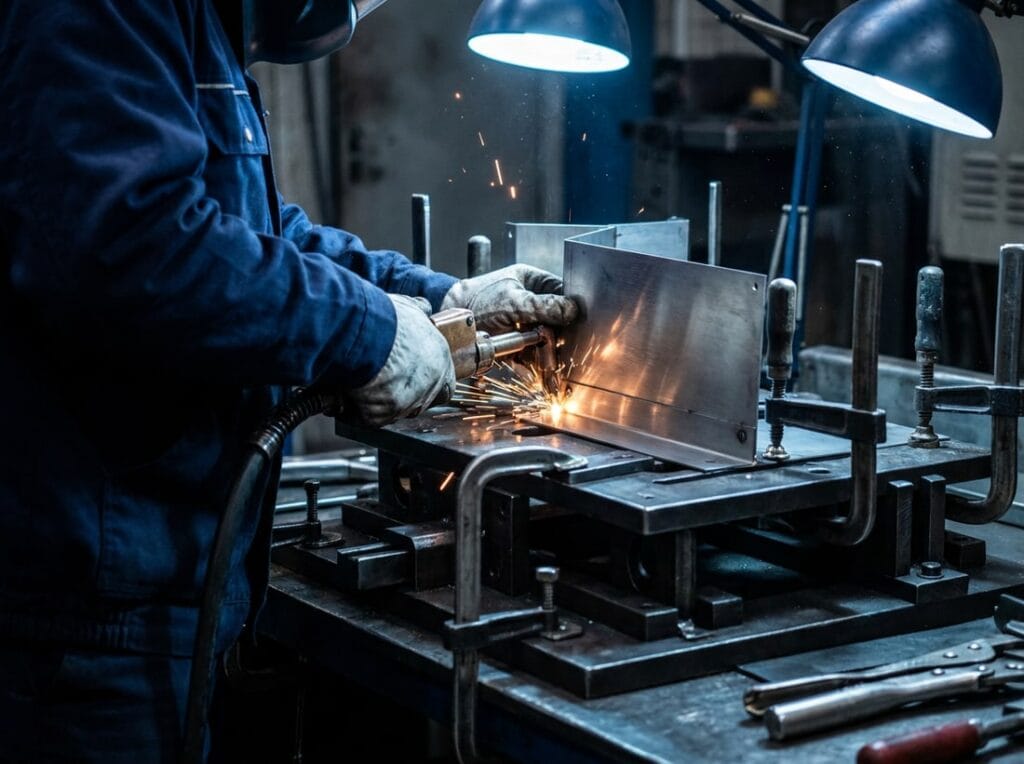

MIG / TIG / Spot Welding
Dimensional & Weld Inspection

Welding Quality Checkpoints You Can Ask For
Quality is not a promise — it is a checklist. Here is exactly what we inspect, and what each checkpoint protects you from.
| Inspection Stage | Typical Checkpoint | Why It Matters to You |
|---|---|---|
| Incoming Material | Material grade, thickness and mill certificates when specified | Supports verification of the material specified in your drawing. |
| Fit-Up | Joint gap, alignment, fixture seating before welding | Helps catch fit problems before welding. |
| In-Process Weld | Weld appearance, joint access and distortion against agreed criteria | Helps identify visible weld issues before the next process. |
| Post-Weld Finish | Grinding, spatter removal, surface prep for coating | Finish preparation can be confirmed before coating. |
| Final Dimensional | Critical dimensions vs. drawing, weld gauge, go/no-go | Agreed measurement records support your incoming QC. |
Weld Quality You Can Verify Before Shipment
Agree on weld locations, enclosure fit, critical dimensions and packing protection before production. The approved drawing and RFQ should also state which inspection photos or measurement records you need.
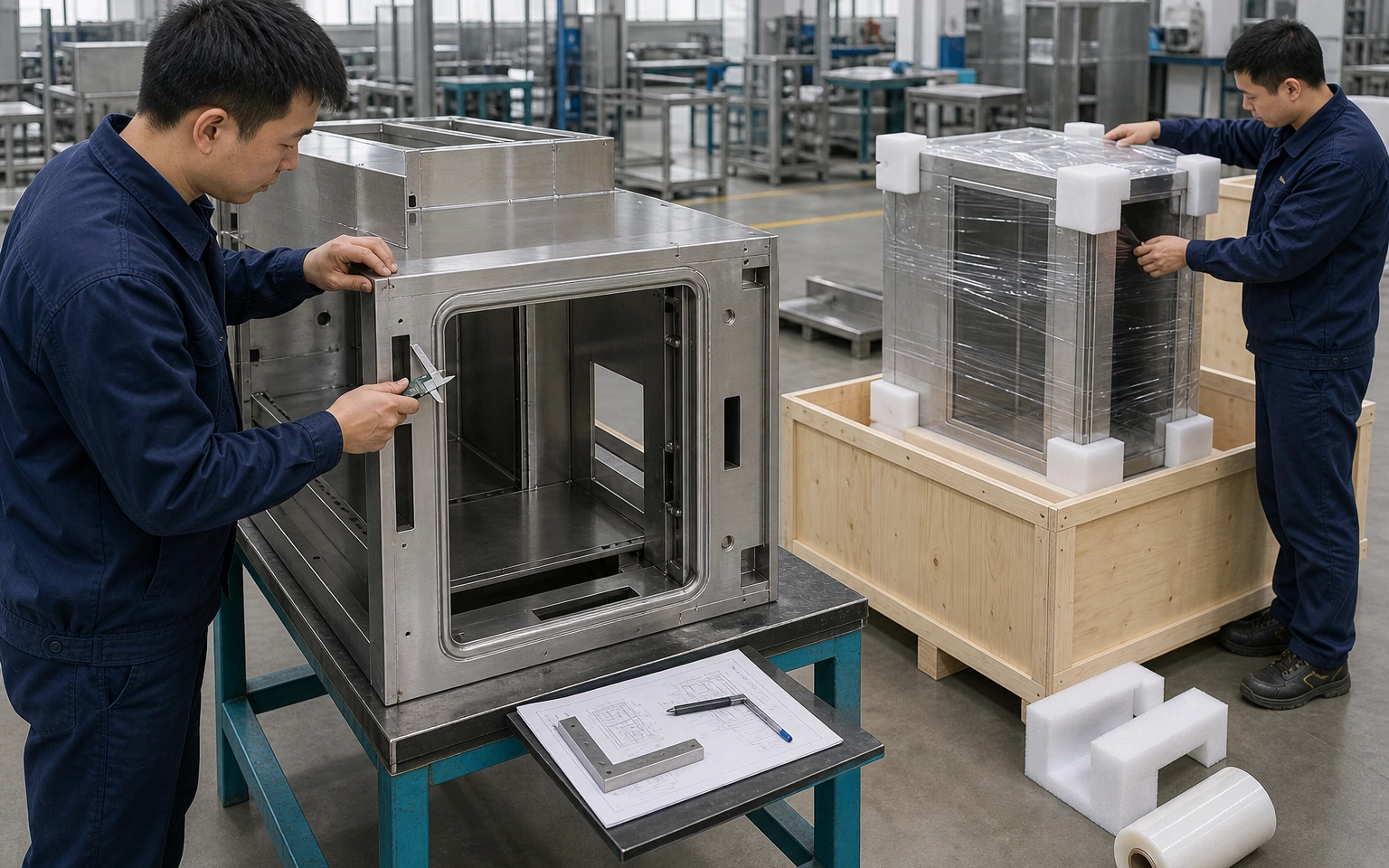
Illustrative process scene. For your order, agree on weld checks, inspection evidence and packing before production.
Defined Weld Scope
Mark joint locations, material, visible faces and fit-critical features on the approved drawing.
Fit After Welding
Agree how door gaps, mounting features and mating surfaces will be checked after welding.
Inspection Evidence
Specify the weld photos, dimensional results or first-article records you need in the RFQ.
Packing Protection
Specify surface protection, separators, labels and crate or pallet requirements for the shipment route.
Welding Questions Buyers Ask Before Ordering
What welding processes does MSTFAB offer?+
MIG, TIG and resistance spot-welding routes are reviewed for drawing-defined sheet metal parts. Material grade, thickness, joint access, appearance and inspection requirements determine the suitable process; one route should not be assumed for every material combination.
Can you weld stainless steel and aluminum to a clean, export finish?+
Specify the material grade, weld locations, visible seams, grinding level and required finish on the drawing. Agree the visual standard and any reference sample before production. Appearance alone does not establish weld strength, sealing performance or final equipment compliance.
How do you control warping and distortion on thin sheet metal?+
Fixture fit-up, tack sequence, weld sequence and distortion risks are reviewed for the actual assembly. Identify the mating features and agree dimensional acceptance after welding and, where required, after finishing. The inspection route is confirmed for the order.
Will I receive inspection documentation with my order?+
Identify required weld photos, dimensional records, first-article checks and any procedure or personnel qualification evidence in the RFQ. The quotation should confirm which inspections and records are included, their acceptance criteria and when they are supplied.
What are your MOQ and lead times for welded assemblies?+
Prototype and repeat-production requirements can be reviewed. Material availability, joint design, fixtures, finishing, inspection and quantity affect the quotation and schedule. Send the target delivery date and destination; MOQ and lead time are confirmed for the specific order.
Do you handle export packing and shipping to the USA, EU and Australia?+
Include the destination, transport requirements, package quantities and visible-surface protection in the RFQ. The quotation should confirm packing, shipment responsibility and any requested pre-shipment records for the agreed mechanical scope.
Review welds and interfaces before production
Send your welding RFQ
Send your requirements through the MSTFAB contact form. The quotation confirms the mechanical scope, price and schedule after drawing review.
- Released drawings, material grade, thickness and quantity.
- Weld locations, joint details, visible seams and mating features.
- Finish, inspection records and packing requirements.
- Target delivery date and any confidentiality restrictions.
The contact form accepts one optional attachment up to 10 MB. See the drawing package checklist for a multi-file RFQ. Agree NDA or access requirements before sharing controlled drawings.
 WeChat Contact
 WhatsApp Me Directly