Drawing review
Check revision, material, bend access, openings and interface risks before release.
We build empty outdoor cabinet shells to your drawings. Your team validates the finished equipment and its protection rating.

Illustrative shell. Final details follow the drawing.
An outdoor enclosure quote is useful only when it reflects what the shell must hold, seal and survive. We make the metalwork to your approved drawings. Electrical parts, wiring, software and final equipment certification stay with the OEM unless separately agreed in writing.
Give the fabricator the interfaces that cannot move without causing trouble later.
An IP or NEMA target belongs to the complete, tested configuration. A picture of an empty box is not a rating certificate.
Choose the structure around your equipment, not the other way around. These are representative mechanical shell types; dimensions and interfaces come from the buyer-approved design.
Welded or assembled bodies with doors, covers and internal mounting provisions for field equipment.
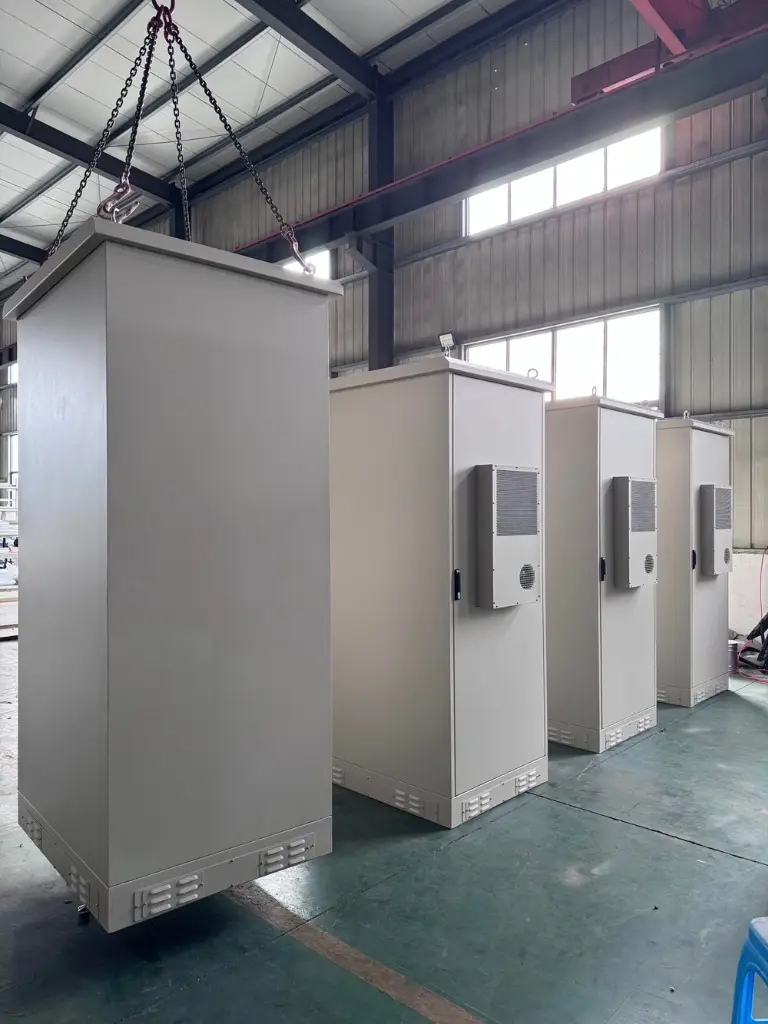
Control housings with defined gasket lands, cable entry and door hardware interfaces. The final system rating is buyer-validated.
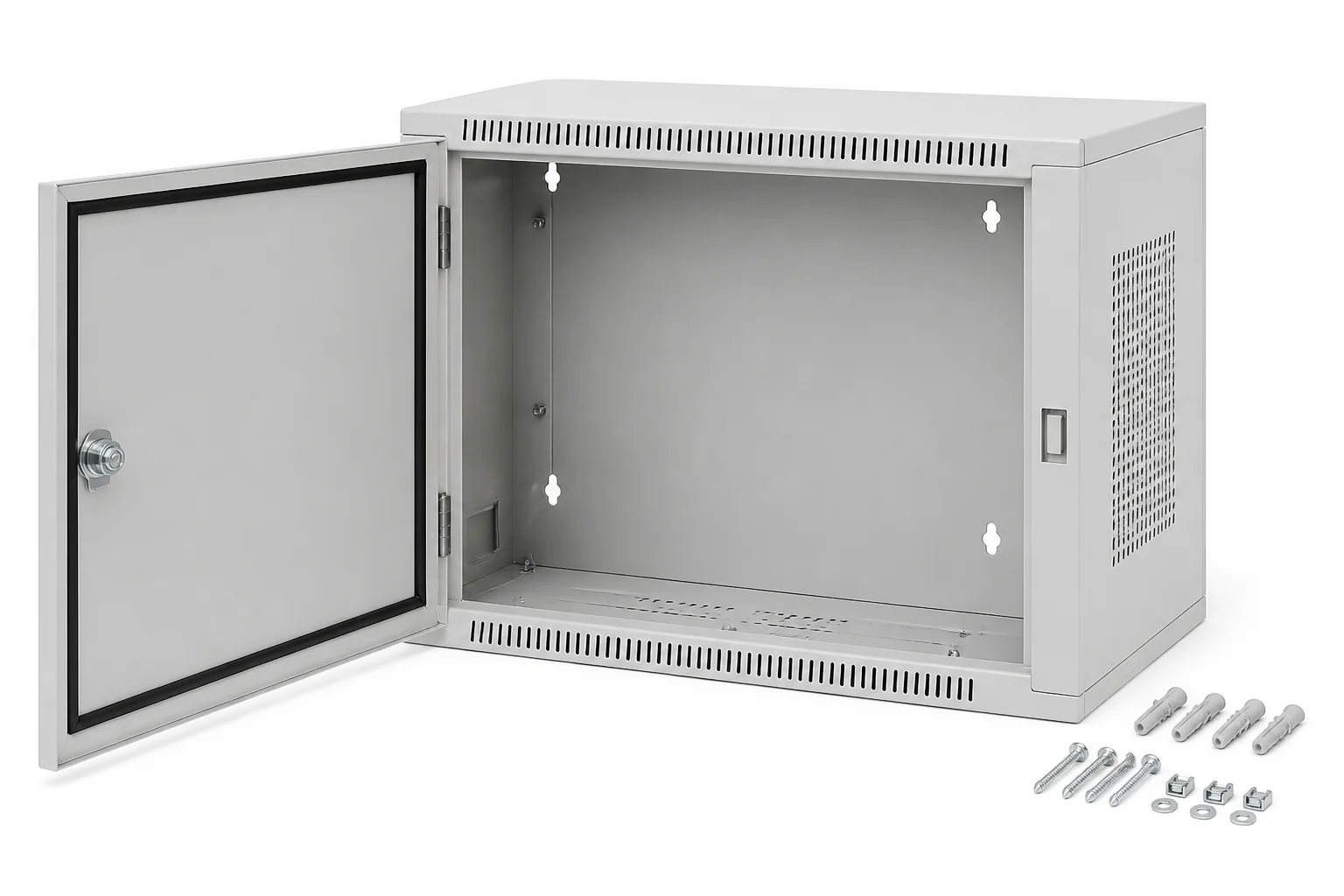
Compact wall-mounted shells with mounting patterns, service access and buyer-specified sealing geometry.

Mechanical housings for buyer-installed power equipment, with space for routing, access and ventilation.
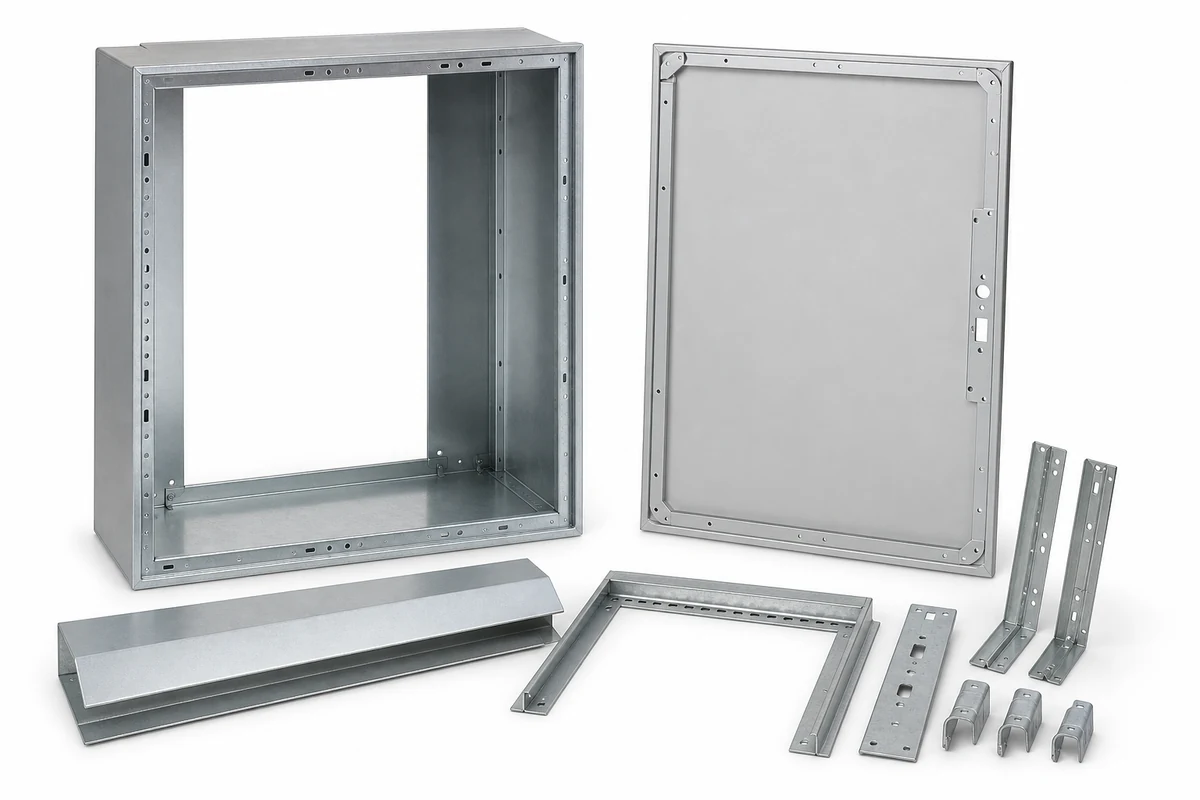
Removable covers and access panels with specified fasteners, hinges, locks and finish surfaces.

Bent and welded frames, rails and brackets made around the cabinet load path and assembly datum.
The awkward questions come first: Can the flange be bent? Will the door still close after welding? Are coated faces protected during assembly? The route is set against the drawing and the agreed inspection scope.
Check revision, material, bend access, openings and interface risks before release.
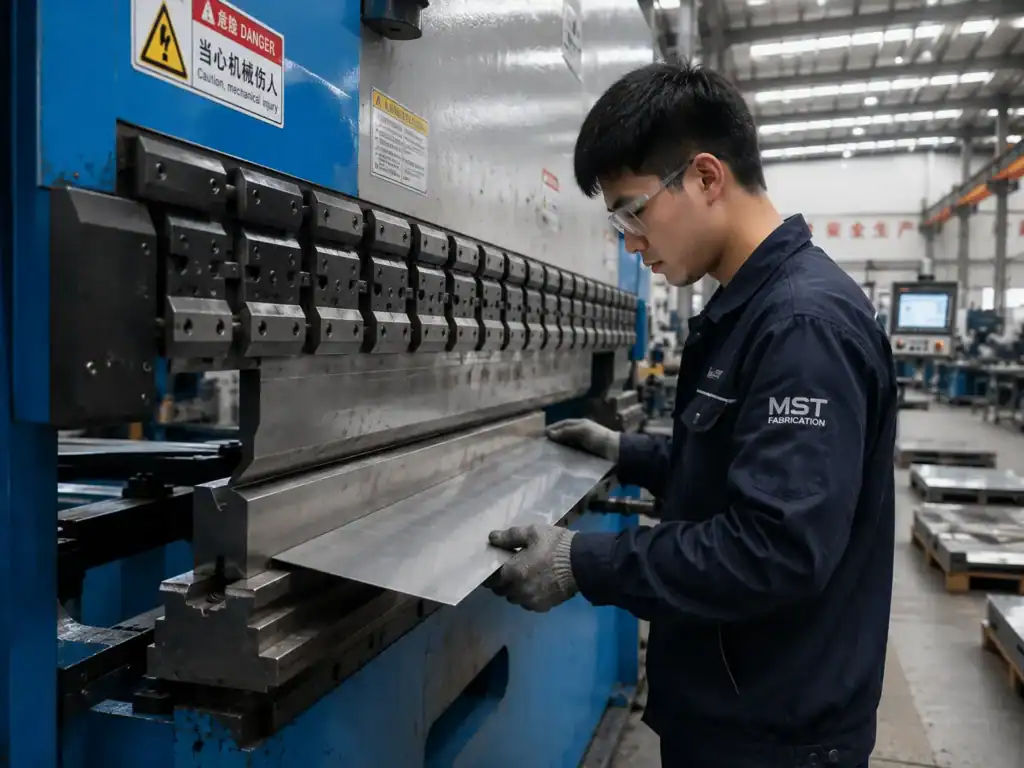
Laser-cut patterns and form panels, doors, rails and brackets to the approved geometry.
Control weld sequence and fit; install the specified studs, nuts, hinges or latches.
Inspect critical features and protect interfaces. Specified surface finishing may be coordinated with long-term partners.
No single metal is right for every outdoor installation. Exposure, galvanic contact, drainage, coating repair and maintenance access all matter. Agree the material grade and finish in the drawing package, then confirm any outsourced treatment in the quotation.
| Material | Why buyers consider it | What to confirm |
|---|---|---|
| Galvanized steel | Structural cabinet bodies and panels with a corrosion-control plan. | Cut-edge protection, weld repair and coating compatibility. |
| Stainless steel | Corrosive or appearance-sensitive settings, subject to grade selection. | Grade, finish, mixed-metal contact and cleaning conditions. |
| Aluminum | Lower weight for doors and equipment housings. | Thickness, stiffness, fastener inserts and isolation details. |
| Coated steel | Painted surfaces and specified color or texture. | Coating specification, masked areas and partner finishing scope. |
A bigger gasket is not a magic answer. The enclosure works as an assembly of door geometry, compression, cable entries and ventilation, with the installed equipment and site conditions defined by the OEM.
Check flatness, hinge alignment, compression points and rain-shedding geometry.
Locate gland plates, knockouts and drainage without undermining the agreed sealing path.
Coordinate louvers, fan or heat-exchanger openings with the OEM thermal plan.
Confirm load paths, lifting points, access clearances and the hardware the field team will use.
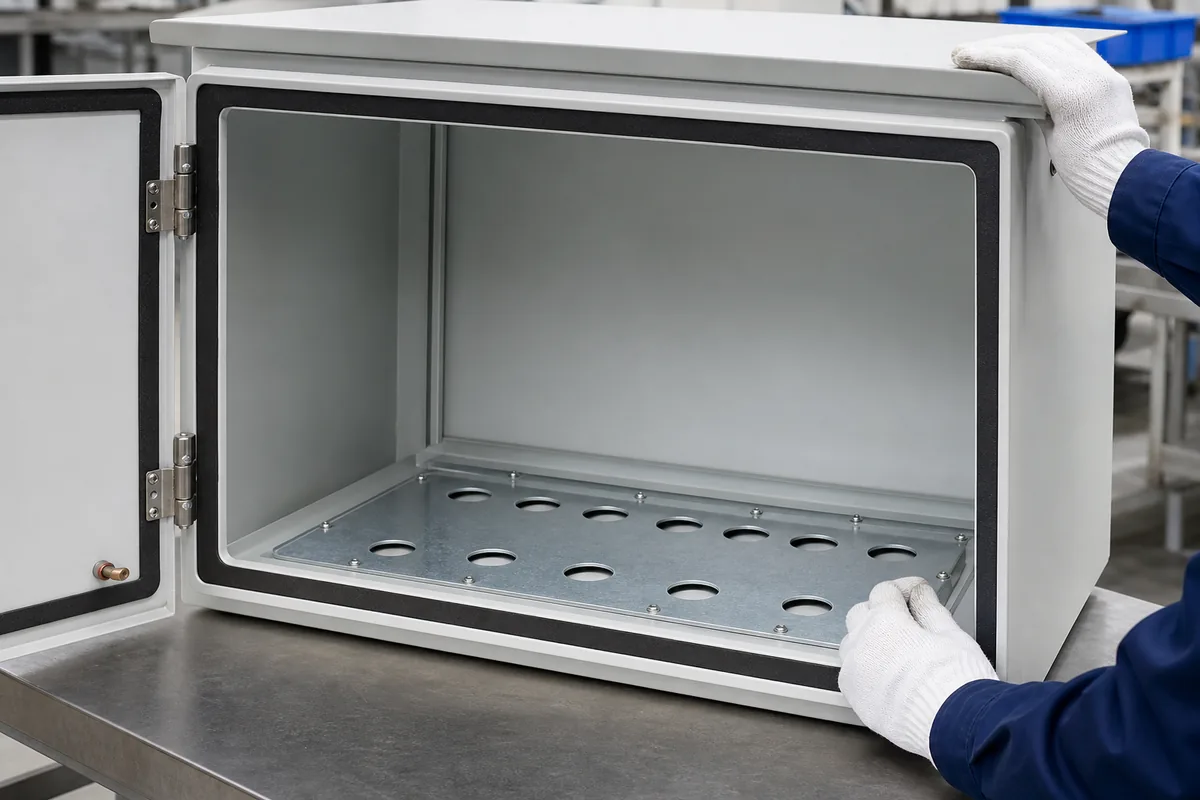
Inspection is tied to the approved drawing and agreed control plan. Ask for the measurements that would stop installation if they were wrong, then define the evidence needed for your order.
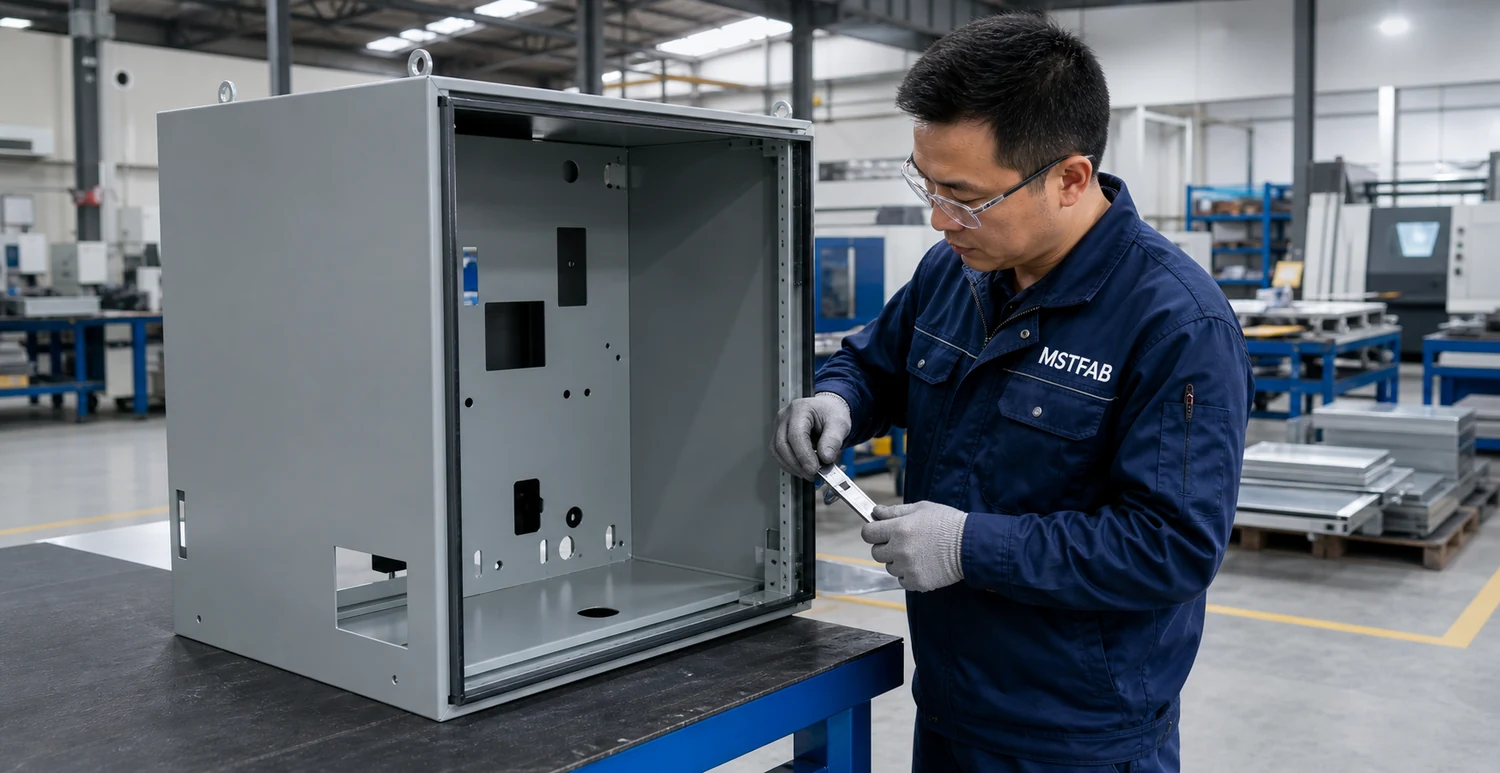
Quoting a cabinet from one front-view photo is mostly creative writing. A complete RFQ lets us review the interfaces before material is cut.
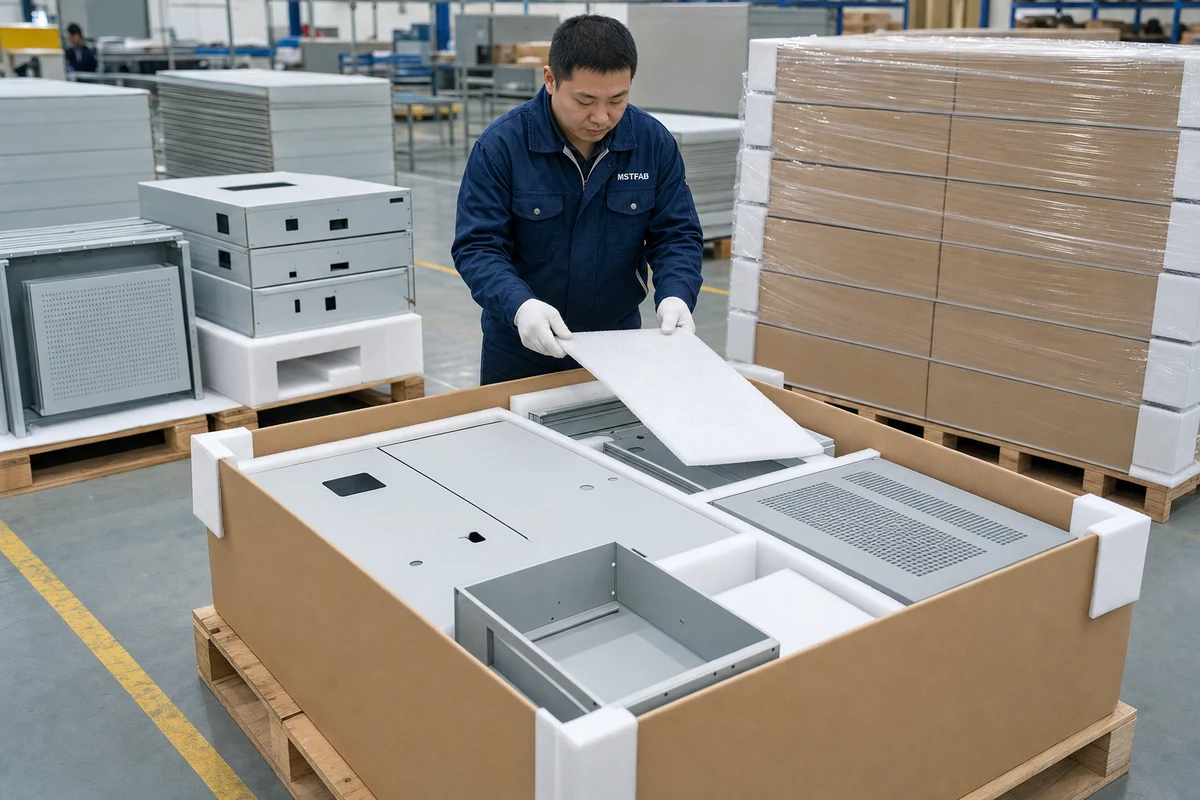
Cabinet corners, doors, coated faces and removable parts need separation and restraint in transit. The packing method follows the product geometry, order size and agreed delivery route.
It is the fabrication of drawing-defined cabinet bodies, doors, panels and mechanical interfaces for equipment the buyer installs and validates.
Yes, we can fabricate drawing-defined sealing lands, openings and hardware interfaces for those separate project targets. The OEM determines the applicable standard and validates the completed configuration with installed glands, cooling equipment and hardware; an empty shell is not a certified finished system.
The drawing may specify galvanized or coated steel, stainless steel or aluminum. The suitable grade and finish depend on the actual exposure, joining details and approved corrosion plan.
Send the current STEP/STP assembly and dimensioned drawings, revision, material, thickness, finish, installed environment, protection target, hardware, quantity and required inspection evidence.
Attach one file, up to 10 MB (STEP/STP, DXF/DWG, PDF, ZIP, or an image). Include material, quantity, and finish details for an accurate quote.
 WeChat Contact
Scan to connect with MSTFAB for OEM sheet metal fabrication support.
[email protected]
 WhatsApp Me Directly
Scan or click for sheet metal fabrication quotes and drawing review.
+86 173 2831 6456