
Buyer summary
C26000 cartridge brass is commonly used for formed sheet and strip, while C36000 free-cutting brass is commonly selected for machined components. Choose the product form, temper, thickness and manufacturing route together. Neither alloy guarantees crack-free bending, electrical suitability or regulatory compliance without project-specific review.
C26000 and C36000 Selection Checklist
| Property | C26000 | C36000 |
|---|---|---|
| Typical selection reason | Forming of suitable sheet or strip. | Machining of suitable stock forms. |
| Bending decision | Review temper, grain direction and a feasible radius. | Do not assume it can replace a formed-sheet grade. |
| Machining decision | Confirm tooling and cutting behavior. | Known as a free-cutting brass; confirm the supplied specification. |
| Electrical use | Validate geometry, contacts and duty. | Validate the complete component, not just a conductivity value. |
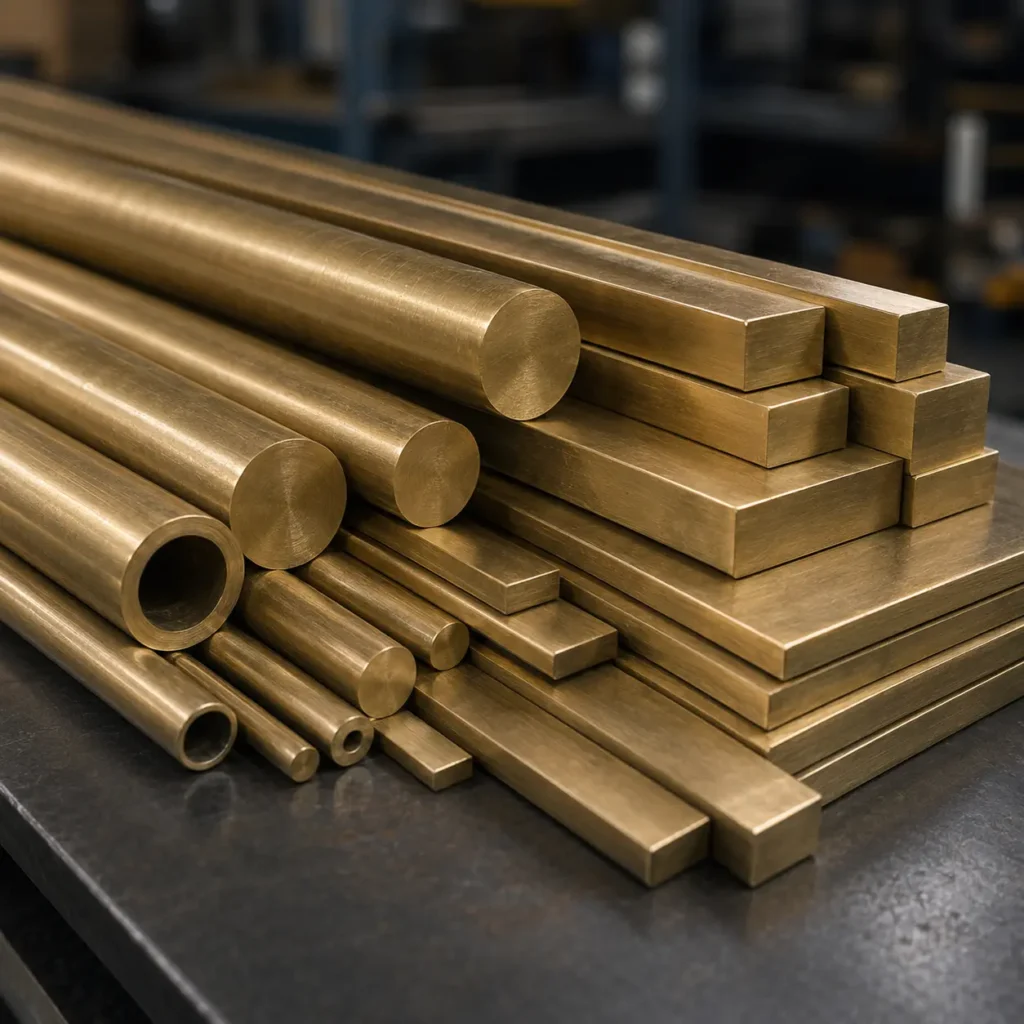
C26000 and C36000: select grade, product form and temper together
C26000 cartridge brass is commonly considered for formed sheet and strip. C36000 is a leaded free-cutting brass commonly used for machined components. Neither an alloy name nor a nominal composition guarantees a particular bend radius or compliance status.
| Decision | C26000 | C36000 |
|---|---|---|
| Forming | Review temper, thickness, rolling direction and bend trials. | Do not substitute for formed sheet without a feasibility review. |
| Machining | Possible, but cutting behavior differs from free-cutting grades. | Commonly selected for machining; confirm product specification. |
| Material verification | Specify the required grade, form and certificate. | Verify the actual composition and product designation. |
| Compliance documentation | Check the complete supplied material and finish documentation. | Assess lead restrictions and any applicable exemption for the actual product and date. |
Do not label either alloy inherently RoHS-compliant based only on its name. The buyer should confirm applicable requirements with the responsible compliance specialist. Agree laser feasibility, heat treatment or plating separately; there is no universal gas-pressure or stress-relief recipe for all brass parts. For conductive components, validate the complete geometry, contact surface and intended electrical duty rather than relying only on a handbook conductivity value.
Review Your Drawing and Manufacturing Scope
Send the available drawings, material, quantity, finish and delivery destination. MSTFAB will clarify the mechanical fabrication scope, inspection requirements and timing for your project before quotation.
Buyer Questions
What should buyers check about stress-corrosion cracking?
Residual stress and the service environment can affect formed brass. Identify exposure, temper and forming severity, then ask the responsible material specialist to review any heat treatment or protective finish. MSTFAB does not promise a universal annealing recipe.
 WeChat Contact
 WhatsApp Me Directly