
304 vs 316 Stainless Steel for Sheet Metal Parts: OEM Selection Guide
Choose the stainless grade from the real exposure, fabrication route and cleaning conditions, not from the comforting idea that a higher number automatically solves every corrosion problem.
Start with exposure, not the grade label
Stainless is a family name, not a complete purchase specification. A useful decision begins with the chemicals, salts, humidity, temperature, cleaning method and service life that the part must face. It also considers whether water can drain, whether deposits can collect and whether dissimilar metals will touch the assembly.
316 commonly contains molybdenum and generally provides better resistance than 304 in many chloride-bearing environments. That advantage is valuable, but it is not immunity. Warm salt deposits, tight crevices and poor maintenance can still create trouble.

| Service condition | Typical starting point | Questions to resolve before release |
|---|---|---|
| Dry indoor equipment | 304 or 304L is frequently considered. | Will the part see condensation, cleaning chemicals, trapped dirt or cosmetic handling? |
| Outdoor, non-coastal use | Either grade may be appropriate after exposure review. | How severe are humidity, industrial fallout, drainage and maintenance conditions? |
| Coastal or chloride-bearing air | 316 or 316L often deserves evaluation. | What is the salt concentration, temperature, shelter, cleaning interval and crevice risk? |
| Repeated washdown | Select from the actual chemical and temperature profile. | Which cleaner, concentration, contact time and rinse method will be used? |
| Regulated or hygienic equipment | Buyer specification and validation control the choice. | Which material standard, finish, cleanability and documentation requirements apply? |
304, 304L, 316 and 316L are not interchangeable notes
The “L” grades have lower carbon limits. They are often selected where welding and the corrosion behavior of heat-affected areas matter, but the right choice still depends on the joint, thickness, service and governing specification. Do not replace one grade with another because the names look similar on a purchasing screen.
Fabrication details can change field performance
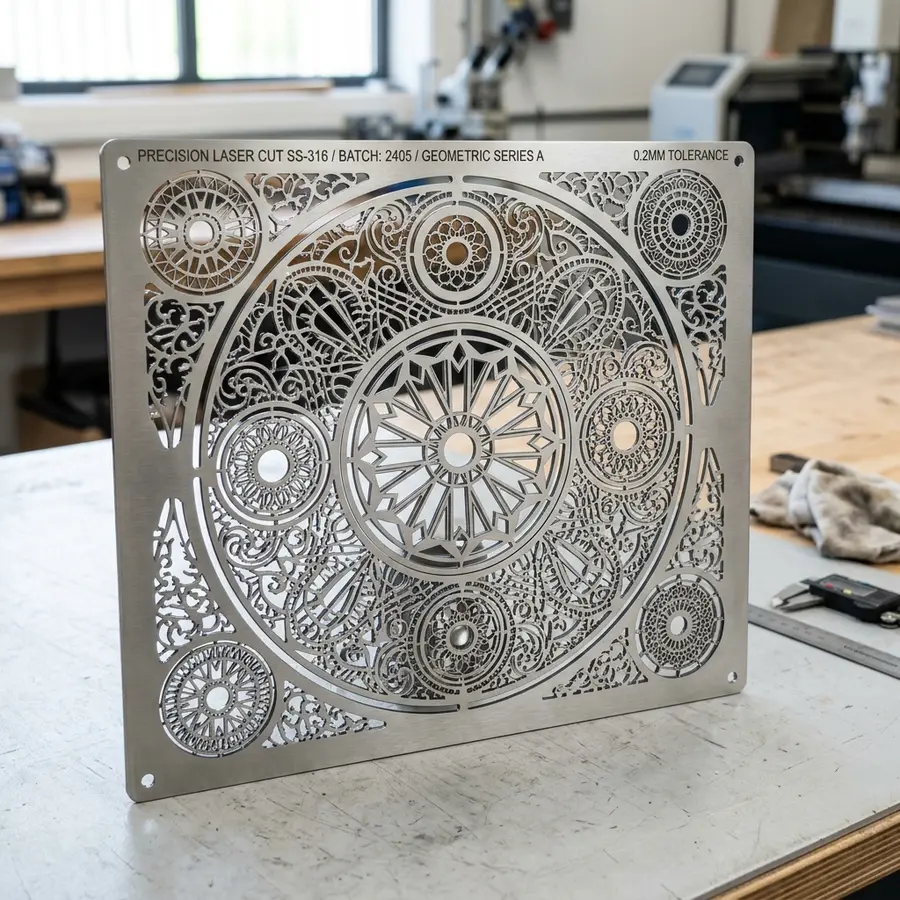
Grade choice receives most of the attention because it fits neatly into a bill of materials. Real failures are less tidy. Crevices, weld heat tint, embedded carbon steel, rough finishing, trapped moisture and mismatched hardware can undermine an otherwise sensible material choice.
| Fabrication area | Control to define | Why it matters |
|---|---|---|
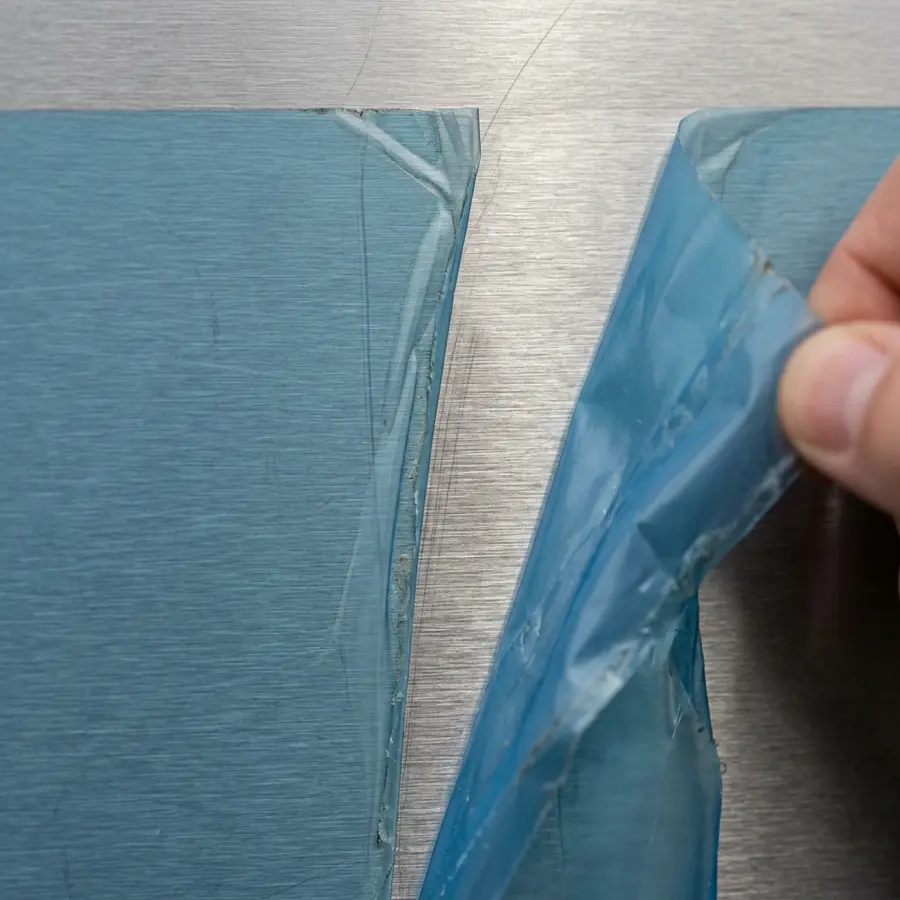
| Cutting and deburring | Edge condition, burr limit, protective film and dedicated handling where required. | Sharp edges and damaged cosmetic faces create assembly, cleaning and appearance problems. |
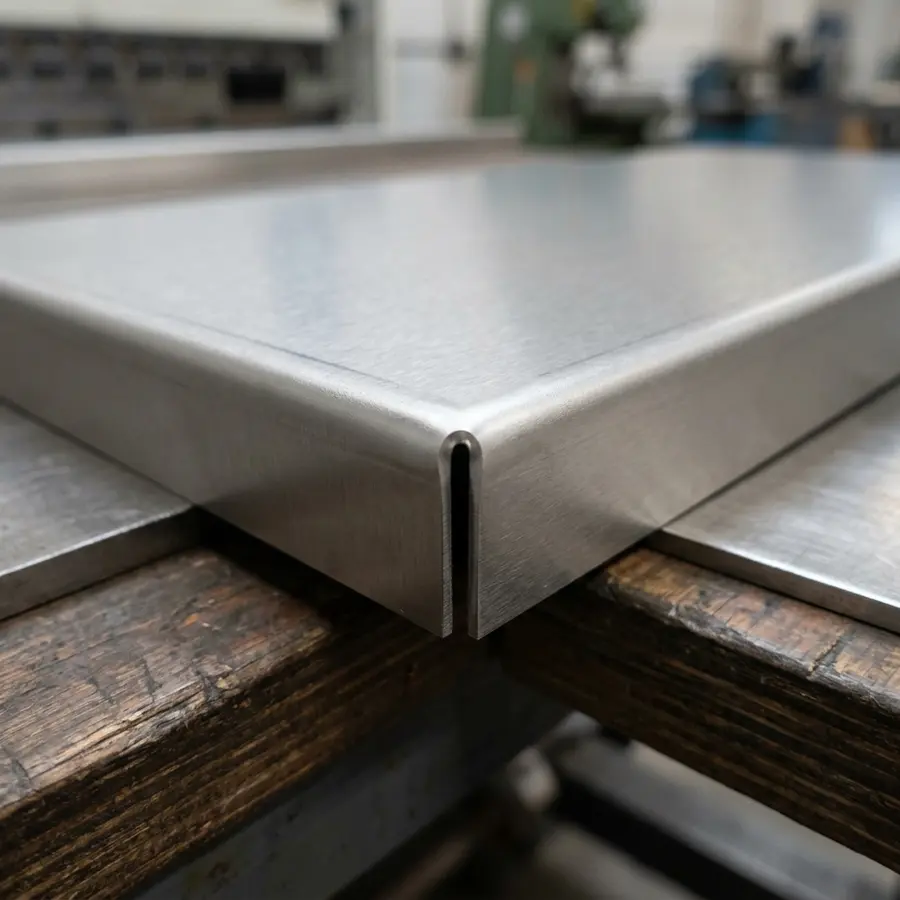
| Bending | Inside radius, grain direction where visible, springback allowance and tool protection. | The grade and condition affect forming response; blanket bend assumptions invite rework. |
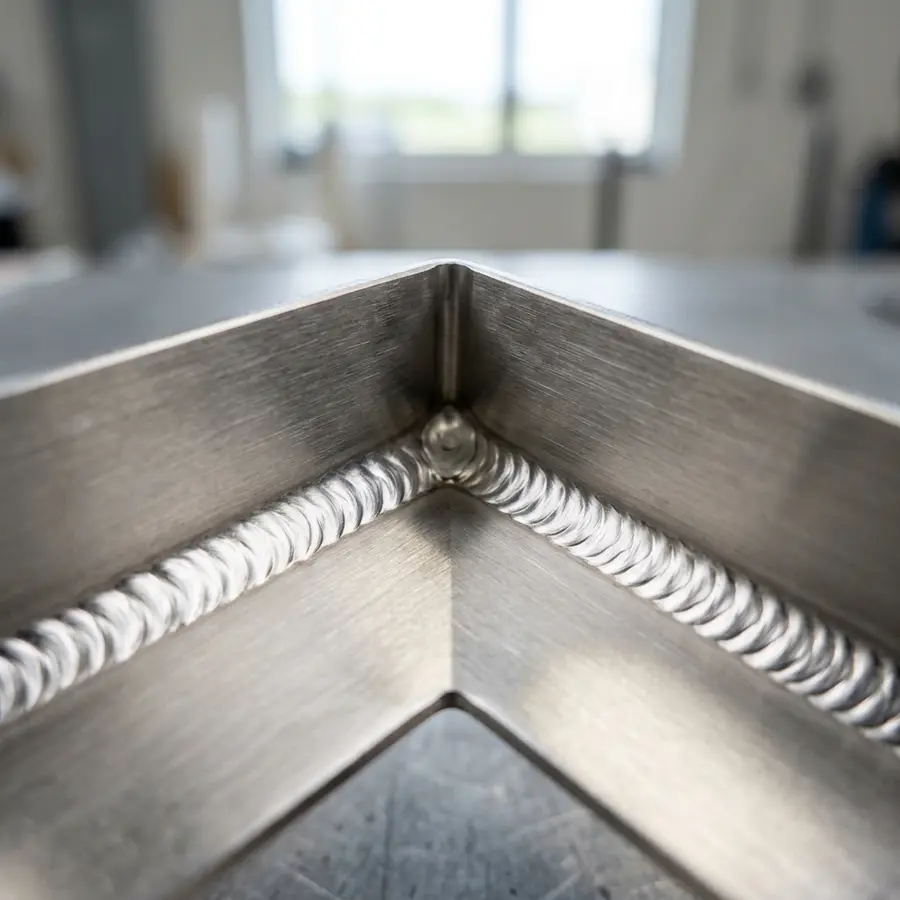
| Welding | Joint access, weld extent, distortion plan, heat-tint acceptance and post-weld finish. | Heat input and cleanup influence fit, appearance and corrosion-sensitive surfaces. |
| Contamination control | Tool, bench, brush and storage separation appropriate to the project risk. | Embedded carbon steel or residue can create staining that buyers may mistake for base-metal failure. |
| Hardware and interfaces | Material pairing, isolation, weld stud location, drainage and accessible cleaning. | A sound stainless panel can still sit inside a poor galvanic, crevice or water-trap design. |
Weldability is a drawing issue too
A grade can be weldable while the part remains difficult to weld well. Narrow access, long cosmetic seams, poor fixture points and heavy local grinding can increase distortion or change the visible finish.
Mark functional datums and cosmetic faces. Define whether welds must be continuous, intermittent, sealed, ground, blended or left as welded. Where corrosion risk warrants a post-weld treatment, put that process and its acceptance evidence in the quotation scope.
Specify finish with a sample, direction and acceptance limit
A finish name does not fully describe appearance. Two suppliers can both write “brushed” while producing different grain size, direction, reflectivity and weld-transition quality. For visible panels, identify the cosmetic faces, grain direction, sample or reference, viewing condition and defect limit.
Passivation can support removal of free iron and restoration of a clean passive surface when correctly specified; it does not hide scratches, repair poor weld geometry or turn an unsuitable design into a corrosion-proof product. Electropolishing is another distinct process with its own dimensional, appearance and validation considerations. Treat each as a controlled operation, not a magic adjective.
Put the decision into the RFQ
A buyer should be able to trace the grade decision from the environment to the drawing, quotation, first article and repeat order. If the requirement lives only in an email from six months ago, it is already looking for a place to get lost.
| RFQ item | Minimum useful instruction | Evidence to agree |
|---|---|---|
| Controlled files | STEP or STP model, 2D drawing, revision and change notes. | Quotation and inspection record identify the released revision. |
| Material | Recognized specification, exact grade, thickness and approved equivalents. | Material record, lot link or additional verification proportional to risk. |
| Environment | Indoor/outdoor use, chloride or chemical exposure, temperature and cleaning method. | Buyer approval of the selected material and any treatment route. |
| Finish | Finish reference, grain direction, visible faces, film and defect criteria. | Approved sample, photographs or first-article visual review. |
| Inspection | Critical datums, dimensions, assembly checks and reporting scope. | First-article inspection results and disposition of any deviation. |
| Packing | Surface separation, wrapping, edge protection, crate or pallet and destination. | Packing approval or photographs when cosmetic risk is high. |
For a deeper 304-focused fabrication checklist, see the 304 stainless steel sheet metal fabrication guide. Use the stainless fabrication quality plan to translate surface, weld and inspection risks into production controls. When comparing factories, the stainless steel supplier audit guide provides a practical RFQ and evidence framework.

Frequently asked questions
Is 316 stainless steel always better than 304 for sheet metal parts?
No. 316 generally offers improved resistance in many chloride-bearing environments, but it costs more and is not immune to corrosion. The correct choice depends on exposure, geometry, fabrication, finish, cleaning and buyer validation.
When should an OEM consider 316 or 316L?
Consider it when coastal air, chlorides, aggressive cleaning or another defined exposure creates a corrosion risk that 304 may not satisfy. Review the actual concentration, temperature, deposits, crevices and maintenance rather than relying on the outdoor label alone.
What is the difference between 304 and 304L, or 316 and 316L?
The L grades have lower carbon limits and are often considered for welded work where the corrosion behavior of heat-affected areas matters. The drawing should name the exact approved grade and applicable material specification.
Does passivation make 304 perform like 316?
No. Passivation is a surface-treatment process, not a grade conversion. It can support removal of free iron and restoration of a clean passive surface when properly specified, but it does not add the alloy composition of 316 or correct poor design.
What should I send for a stainless steel fabrication quote?
Send the STEP or STP model, controlled 2D drawing, exact grade and thickness, finish and grain direction, visible faces, critical dimensions, weld requirements, quantity, inspection evidence, packing and delivery destination. State the operating exposure when it affects material selection.
Send a stainless RFQ with fewer hidden assumptions
Share the controlled files, approved material, exposure, finish, critical features, quantity and evidence requirements. MSTFAB will review the drawing-based fabrication scope before quotation.
 WeChat Contact
 WhatsApp Me Directly