Drawing-based sheet metal fabrication for telecom OEMs
Custom Telecom Enclosures & Telecommunications Cabinets
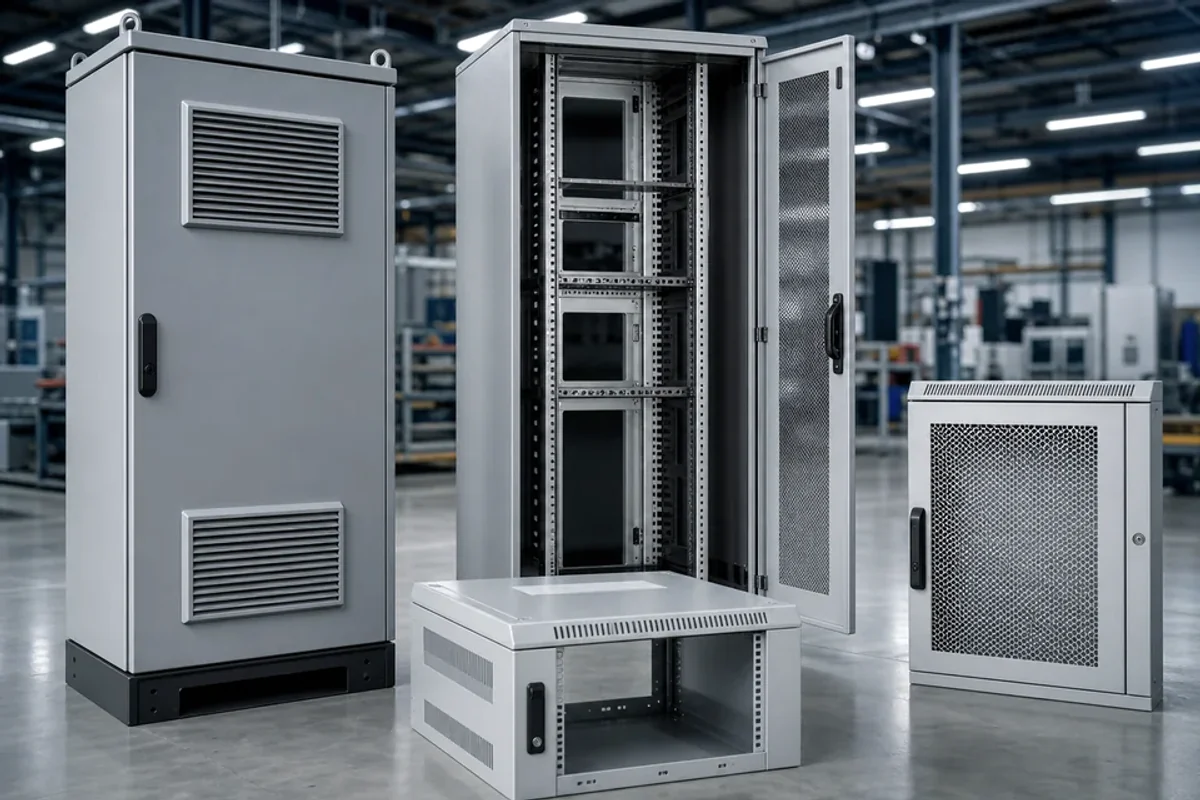
MSTFAB fabricates empty cabinet shells, frames, doors, panels, rack structures and brackets from customer drawings for indoor, outdoor, 5G and network infrastructure projects.
Scope matters: we manufacture the sheet metal enclosure and mechanical structure. We do not supply routers, radios, batteries, wiring, cooling units or finished telecom equipment.
A practical answer for buyers
Telecom Cabinet Metalwork That Fits the Equipment Plan
A telecommunications cabinet is not useful because it is rectangular. It is useful because rails align, doors close, cable entries land in the right place, airflow openings do not weaken the panel, and the structure stays square after welding and coating.
MSTFAB works from 2D drawings, STEP files and approved specifications to manufacture custom telecom enclosure metalwork for OEMs, equipment integrators and engineering teams. Typical parts include cabinet bodies, removable doors, 19-inch rack structures, mounting plates, internal partitions, fan and filter panels, gland plates, brackets, plinths and welded frames.
What MSTFAB manufactures
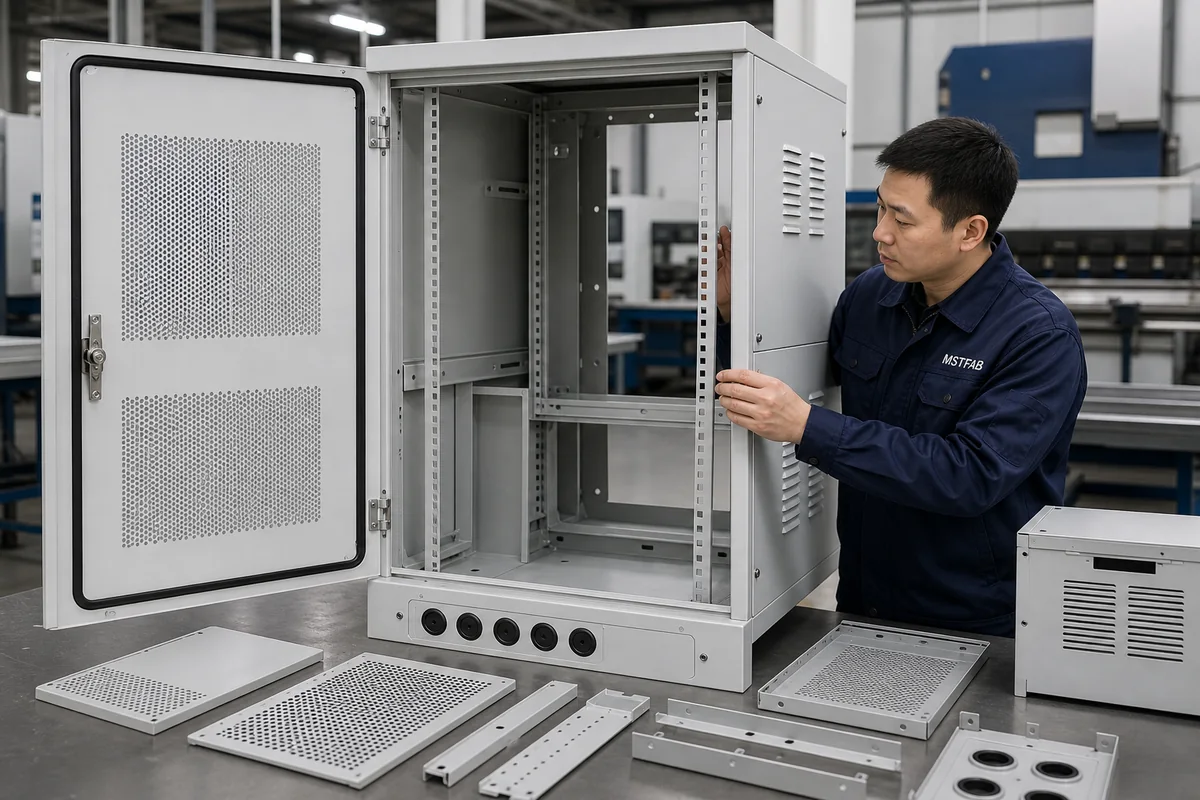
Empty Cabinet Shells, Rack Structures and Sheet Metal Parts
The project can be one enclosure or a multi-part cabinet kit. We fabricate the mechanical structure ready for the buyer to install network, RF, power, thermal or monitoring components.
- Indoor and outdoor cabinet shells
- 19-inch rack rails and supports
- Doors, side panels and access covers
- Mounting plates and internal partitions
- Cable-entry and gland plates
- Fan, filter and louver panels
- Base frames, plinths and brackets
- PEM hardware and mechanical assembly
For rack-focused projects, compare our network cabinet fabrication capability and the engineering details in our 19-inch wall-mounted cabinet guide.
Application selector
Which Telecom Enclosure Structure Do You Need?
Start with where the cabinet will live and how a technician will access it. Equipment depth, cable entry, thermal strategy and service clearance usually eliminate the wrong structure before the product name does.
Outdoor cabinets
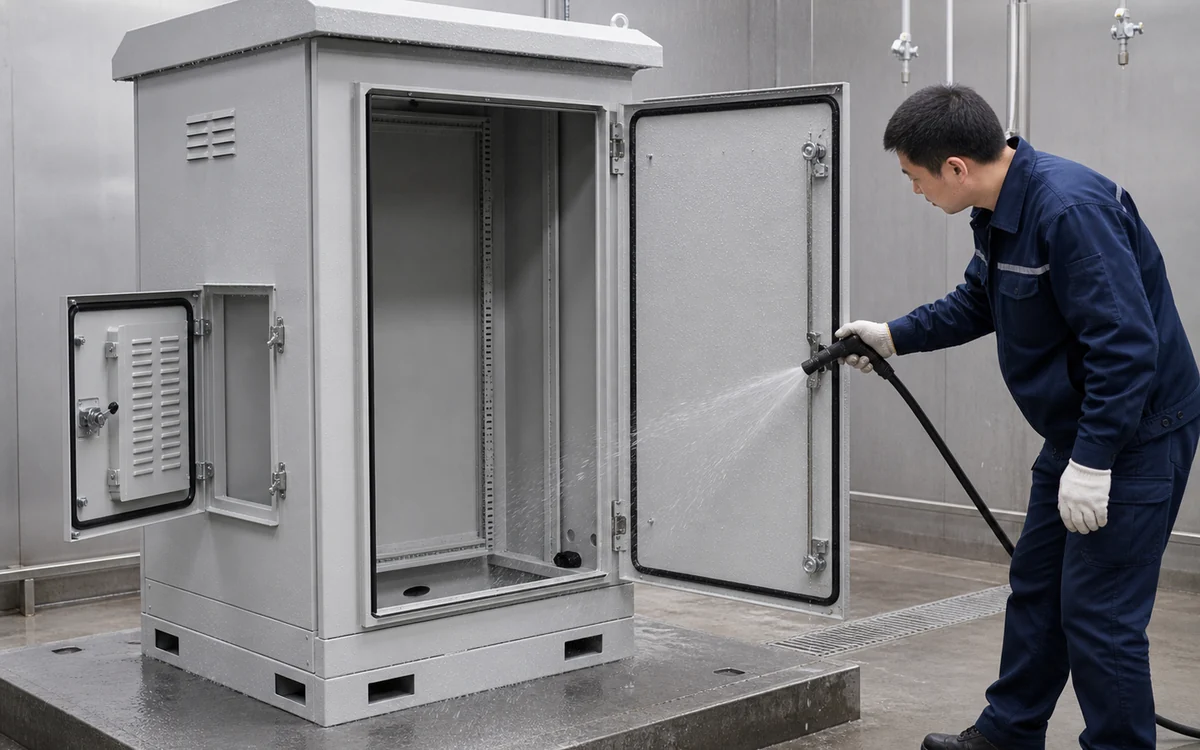
Rain edges, gasket lands, compression latches, corrosion-resistant materials, cable glands and service access. Review our outdoor telecom enclosure fabrication page.
19-inch rack cabinets
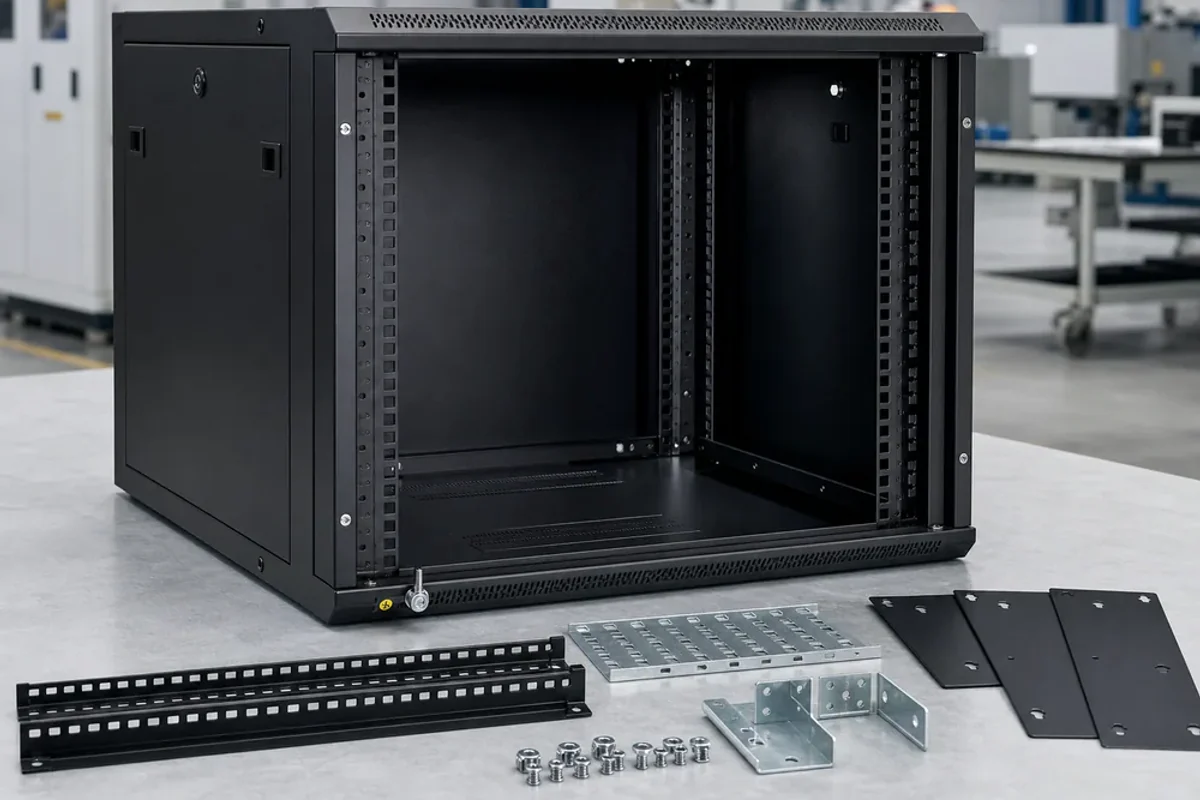
Rail spacing, equipment depth, mounting-hole position, removable panels, cable routing and door clearance for buyer-installed hardware.
5G equipment shells
AAU/RRU brackets, BBU rack zones, thermal cutouts, grounding features and weather-protected mechanical interfaces. See 5G telecom enclosure solutions.
Backup cabinet structures
Reinforced shelves, ventilation openings and separated mechanical zones for customer-installed batteries and controls. MSTFAB supplies the battery cabinet sheet metal shell, not the battery system.
Structures we fabricate
Custom Telecom Enclosures and Cabinet Structures
Compare nine common mechanical configurations, then send the drawing, equipment envelope and installation requirements for a focused DFM review.

Outdoor Telecom Cabinet Shells
Gasket lands, rain edges, latches, louvers and plinth geometry for weather-exposed cabinet programs.
Inquire now →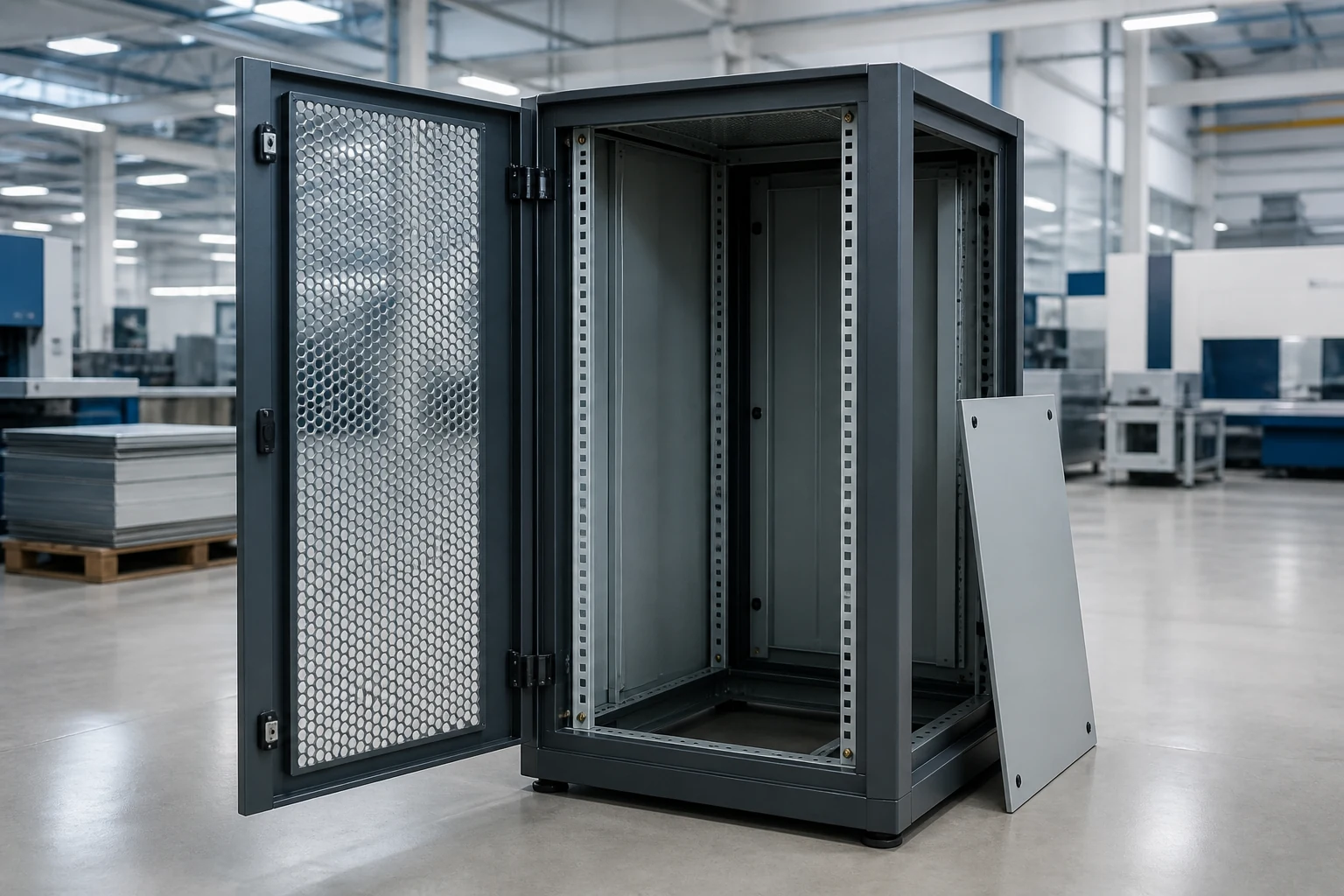
19-Inch Rack Cabinet Structures
Rack rails, removable panels, door clearance and usable depth prepared for buyer-installed equipment.
Inquire now →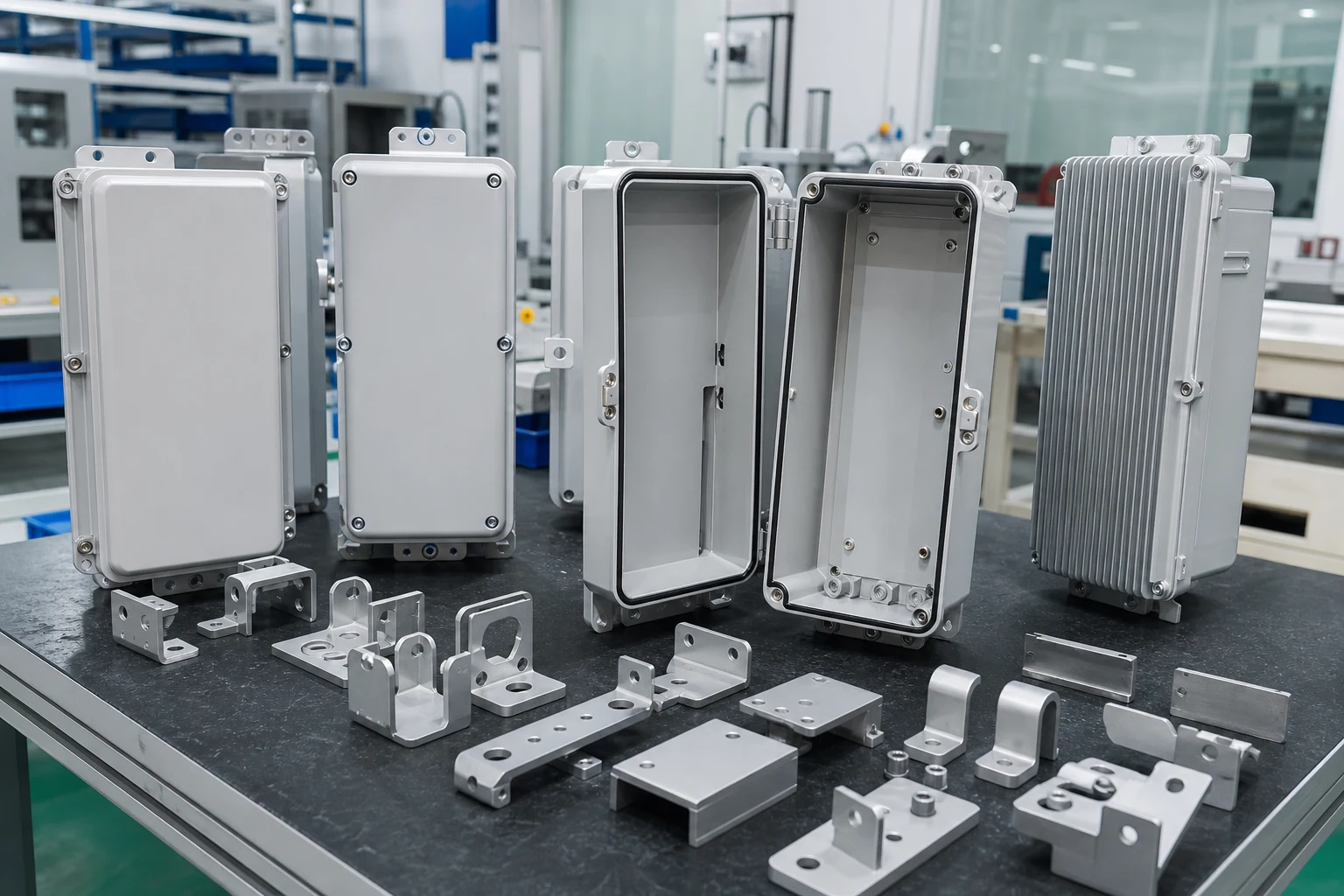
5G Equipment Enclosure Shells
Weather-protected shells, brackets and interface cutouts built around customer-defined 5G hardware.
Inquire now →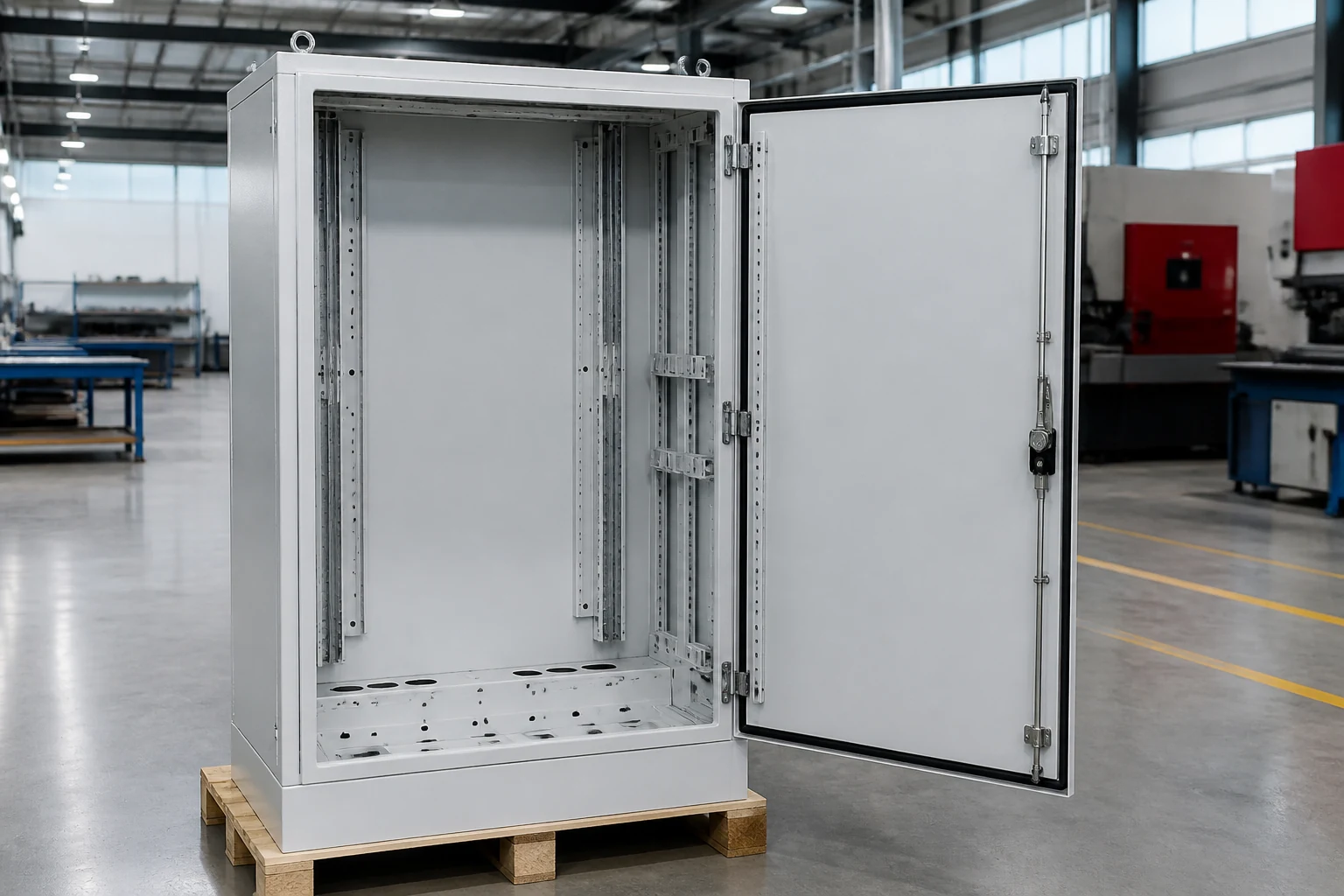
Fiber Distribution Cabinet Shells
Blank mounting zones, access doors and cable-routing features for buyer-installed fiber components.
Inquire now →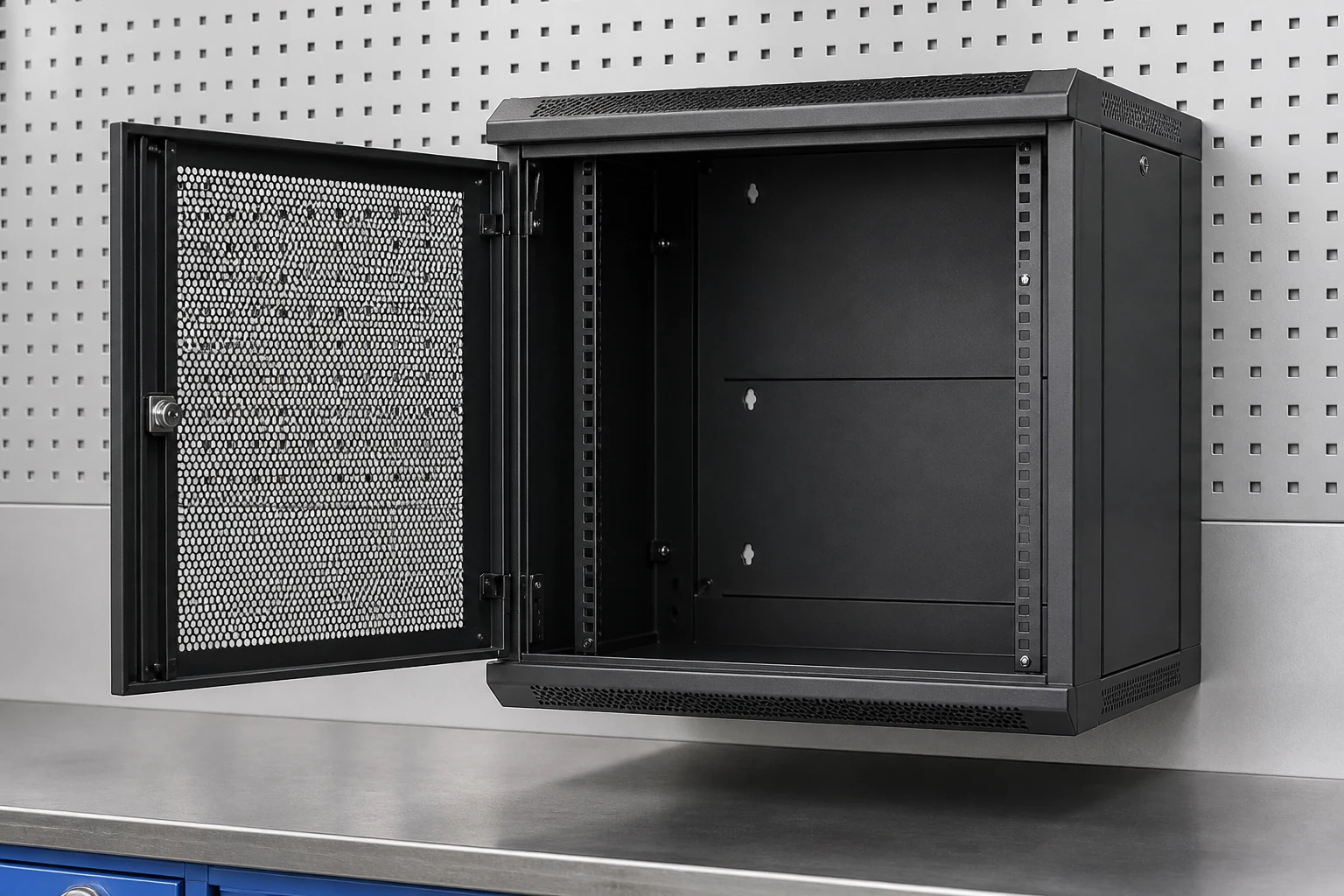
Wall-Mounted Network Cabinets
Perforated doors, rack rails and removable service panels for wall-mounted network projects.
Inquire now →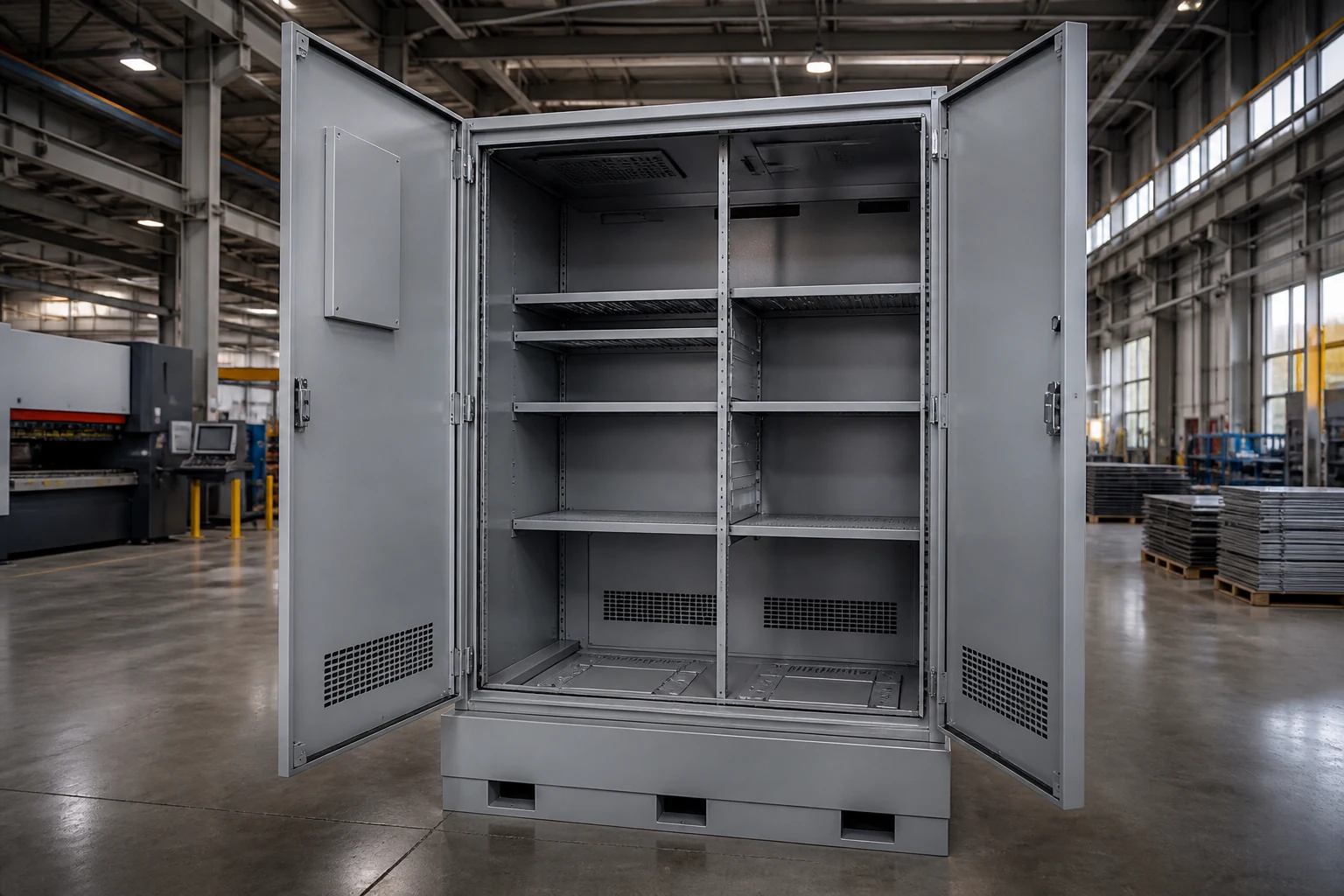
Telecom Backup Cabinet Shells
Reinforced shelves, separated zones and ventilation openings for customer-installed backup systems.
Inquire now →
Cable-Entry and Gland Plates
Removable plates with connector clearance, gland openings and service access matched to the cable plan.
Inquire now →
Ventilation and Fan Panels
Laser-cut louvers, perforations and fan or filter cutouts fabricated to the approved thermal interface.
Inquire now →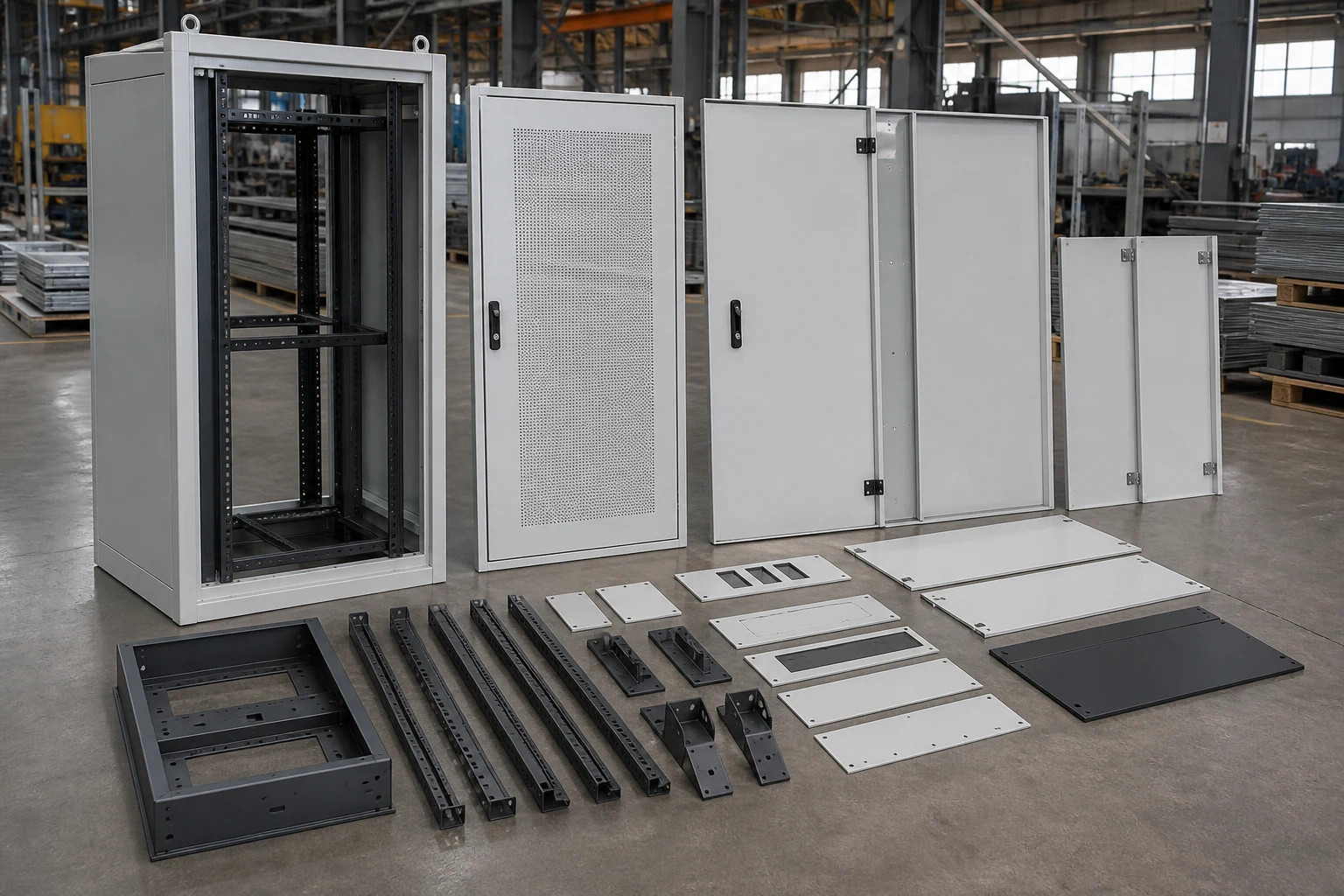
Custom Telecom Cabinet Kits
Frames, doors, rails, panels, brackets and plinths supplied as one revision-controlled mechanical kit.
Inquire now →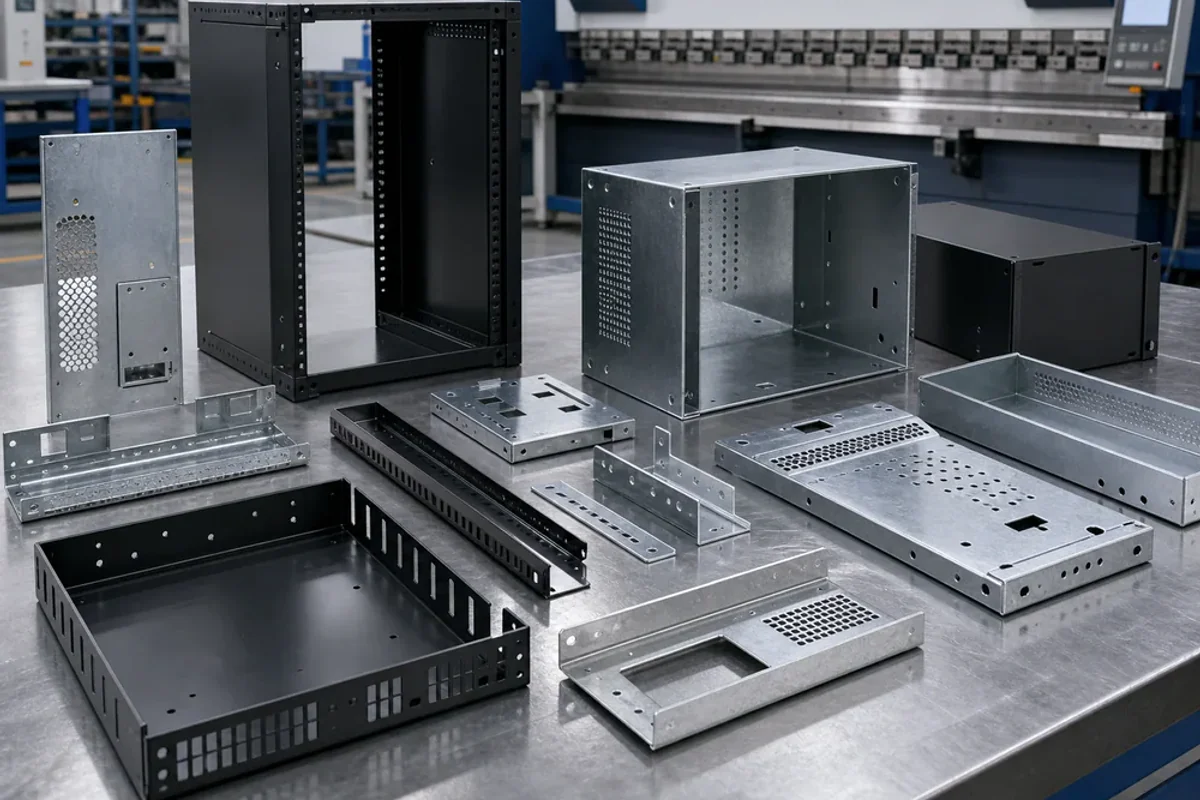
Design for manufacturability
Control Geometry Before the First Sheet Is Cut
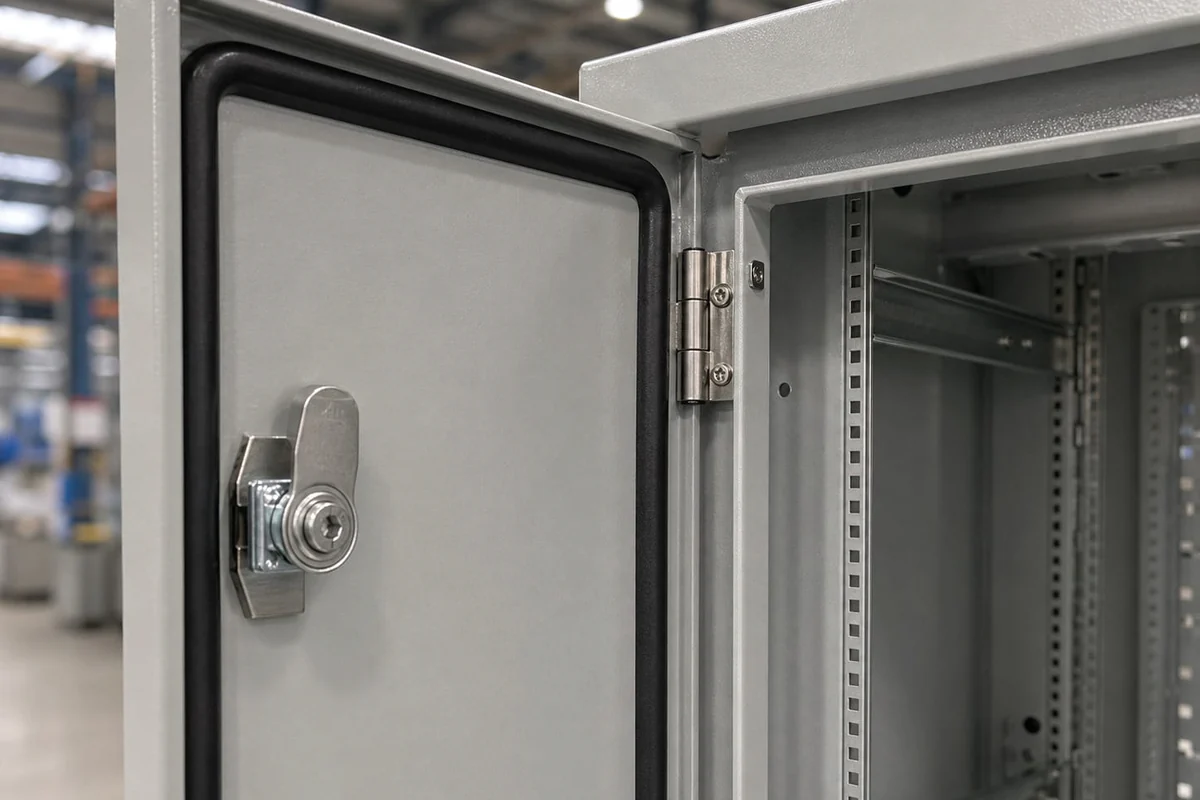
Telecom cabinet problems often begin at interfaces: a rail hole that moves after bending, a connector that cannot pass through the gland plate, a door that loses clearance after powder coating, or a welded frame that is strong but no longer square.
DFM review checks bend radius, minimum flange length, hole-to-bend distance, tooling access, weld sequence, fixture needs, hardware installation, coating buildup and assembly order. Suitable local features may support approximately ±0.1 mm after review, but a blanket tight tolerance on every cabinet dimension usually buys cost rather than function.
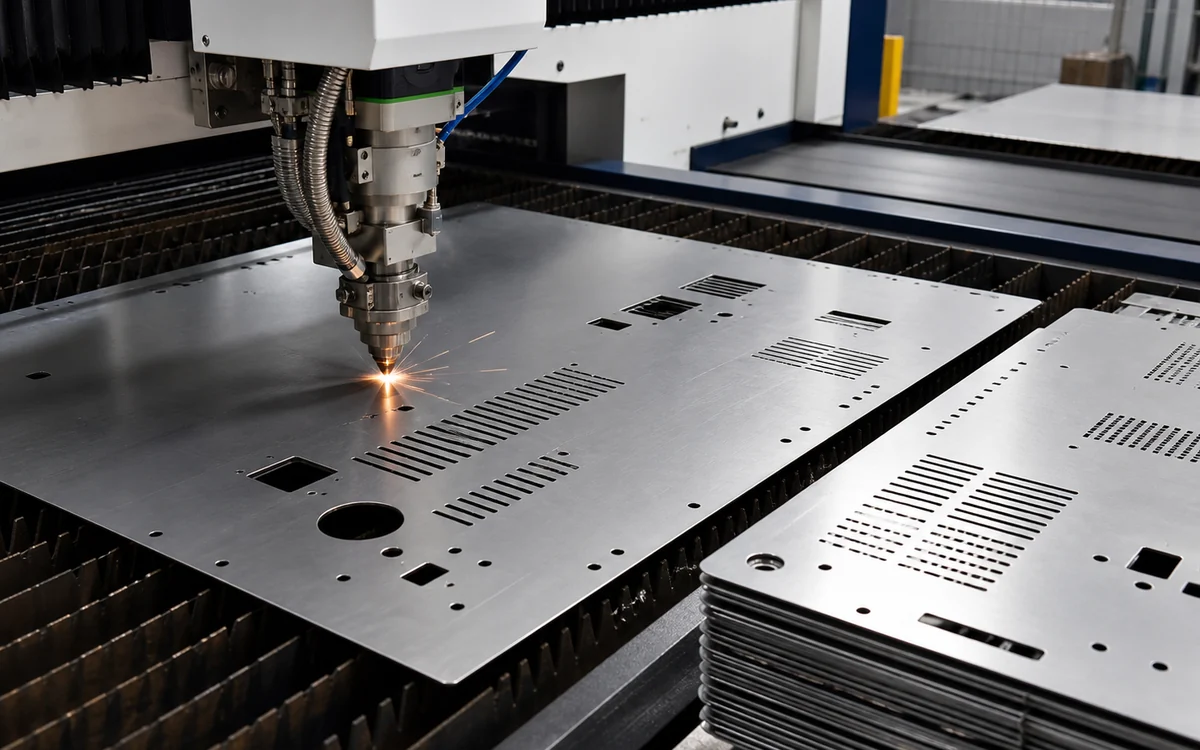
Our production route connects laser cutting, CNC sheet metal bending, TIG and MIG welding and surface finishing under one controlled drawing revision.
Fit, cooling and service access
Design Decisions That Matter After the Cabinet Reaches the Site
A cabinet can pass a simple width-and-height check and still be awkward to install. The buyer should identify which dimensions control the mounted equipment, cable path, door movement and field maintenance.
Rack and mounting geometry
Confirm: rail standard, usable depth, hole pattern, equipment clearance and tolerance datums.
Cable entry
Confirm: connector size, gland plate position, cable bend radius and removable access panels.
Airflow interfaces
Confirm: louver, fan, filter or heat-exchanger cutouts. MSTFAB fabricates the interfaces; thermal validation remains part of the finished system.
Grounding and shielding
Confirm: bonding studs, conductive contact zones, masked surfaces and seam requirements. Final EMC performance must be verified on the assembled equipment.
Drawing to delivery
How a Custom Telecommunications Cabinet Moves Through Production
Six stages keep the handoffs visible from quotation to packing. The route may look tidy here; the released drawing and project risk still decide the actual control plan.
Need recorded measurements with the shipment? Review our dimensional inspection report guidance.
- 01
RFQ and file review
Confirm 2D/3D files, revision, quantity, material, finish and functional interfaces.
- 02
DFM confirmation
Review bend access, rail geometry, weld distortion, hardware, gasket lands and coating allowance.
- 03
Cutting and forming
Laser cut flat patterns, then CNC bend doors, channels, frames, panels and mounting parts.
- 04
Welding and hardware
Fixture critical geometry, control heat input and install specified studs, nuts, hinges and latches.
- 05
Finish and inspection
Protect threads and grounding zones, verify coating appearance, critical dimensions and assembly fit.
- 06
Protected export packing
Separate finished surfaces, secure movable panels and prepare cartons, pallets or wooden cases.
Quality evidence
Inspection Should Follow the Cabinet Function
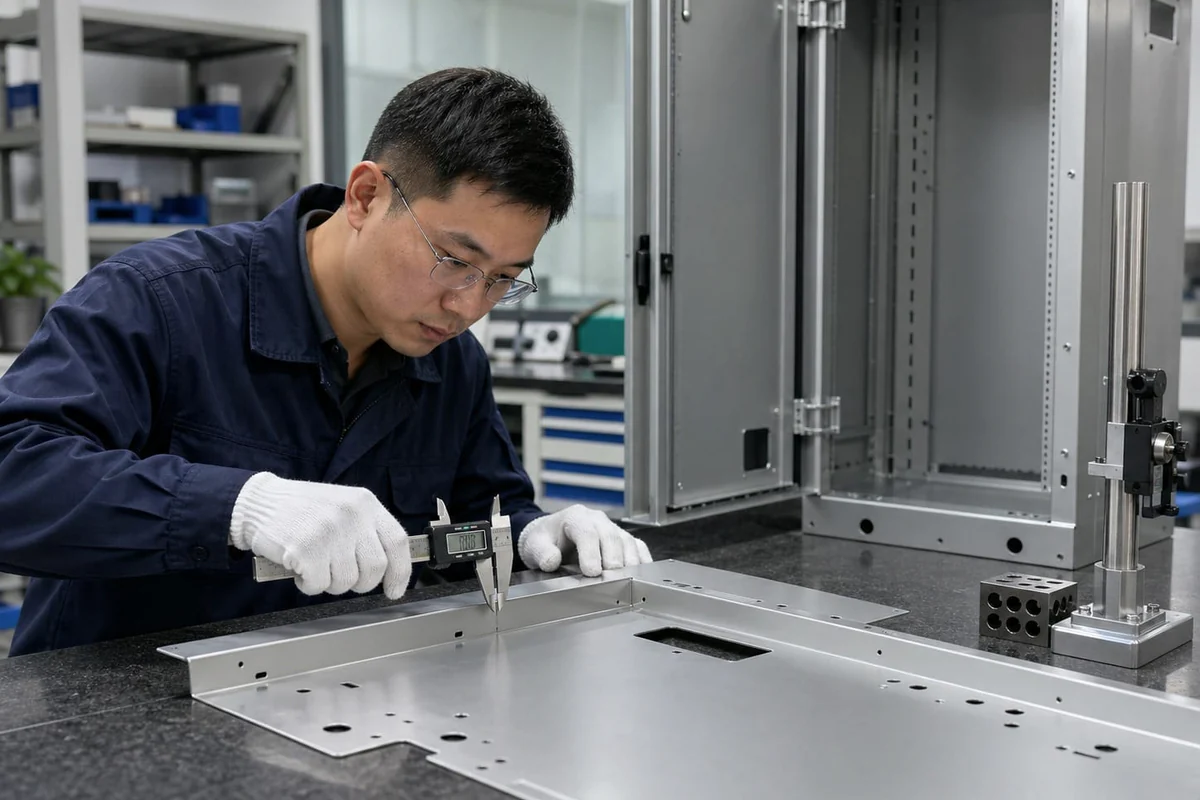
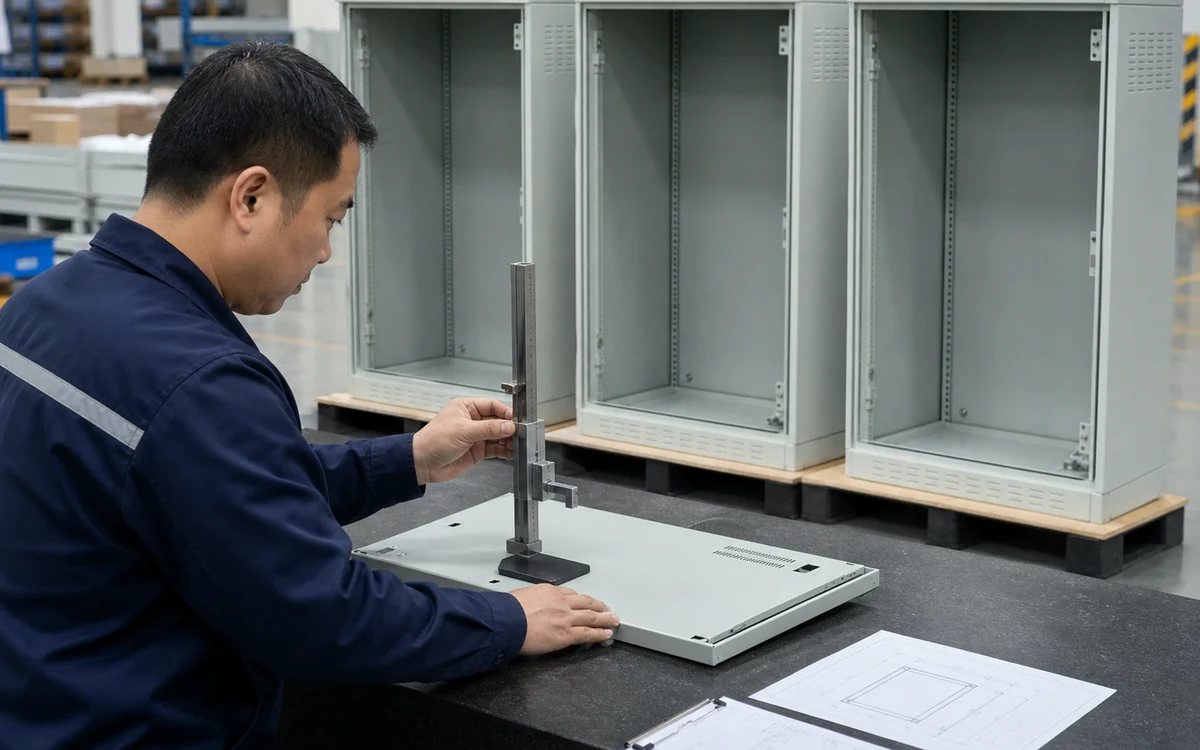
Not every dimension deserves the same inspection effort. The useful control points are the ones that decide whether the cabinet assembles and performs mechanically: datums, rack rails, door openings, hinge and latch locations, gland plates, mounting holes, frame squareness and visible surfaces.
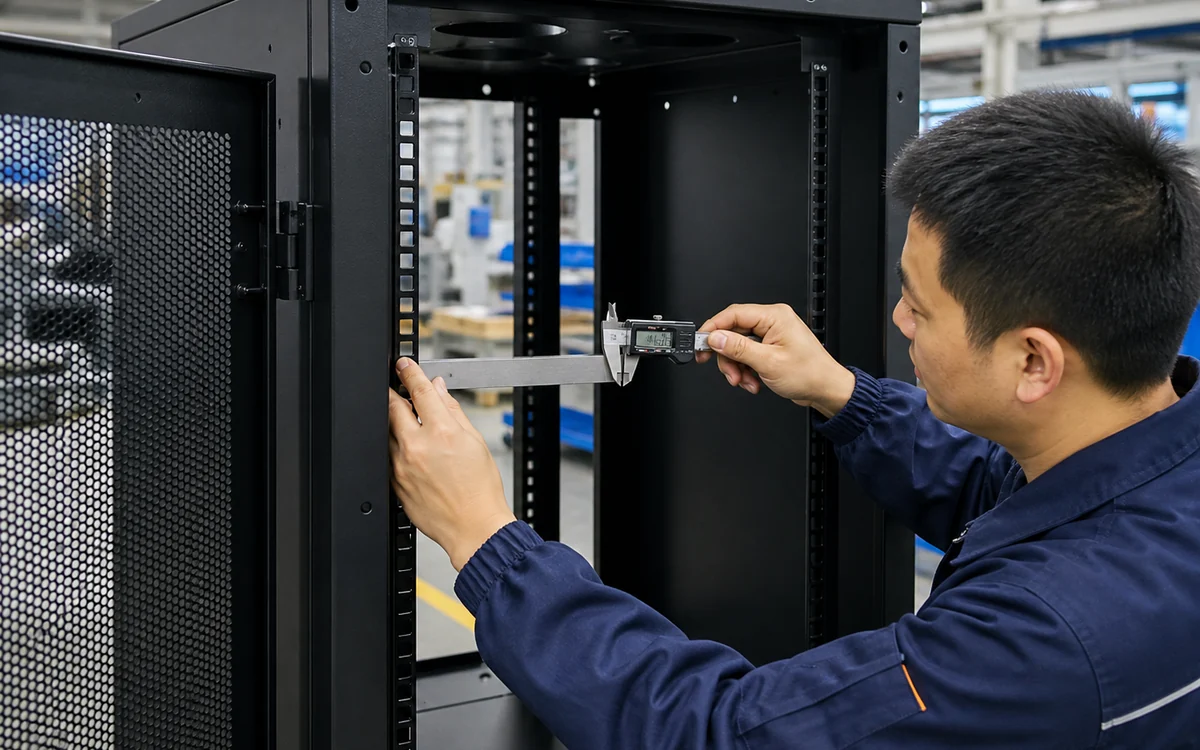
Depending on the drawing, inspection may use calipers, height gauges, angle gauges, thread gauges, surface checks, coating checks, assembly fixtures or CMM measurement. First-article and dimensional reports can be arranged when requested before quotation.
Buyer risk table
What to Control Before Releasing the Order
| Buyer concern | Manufacturing control | Useful evidence |
|---|---|---|
| Rack equipment does not align | Define datums, rail spacing, hole pattern and usable equipment depth before forming. | Approved drawing, first-article measurement and assembly fit check. |
| Door binds after welding or coating | Plan fixture points, weld sequence, door gap and coating allowance. | Frame squareness, door-gap record and latch/hinge function check. |
| Outdoor sealing target is unclear | Confirm gasket land, compression hardware, rain edge, cable penetrations and test responsibility. | Section details, material specification and assembled-product validation plan. |
| Finished panels arrive scratched | Identify cosmetic faces, protect surfaces and prevent part-to-part contact. | Finish standard, packing photos and final visual inspection. |
Materials and export handling
Select Material for the Environment, Then Protect the Finish
Cold-rolled steel is common for indoor powder-coated cabinets. Galvanized steel can support utility structures and corrosion-managed designs. Stainless steel 304 or 316 may be selected for humid, coastal or chemically demanding conditions. Aluminum 5052 is useful where lower weight and formability matter.
The final choice should consider strength, cabinet size, mounting load, corrosion exposure, weldability, surface finish and cost. For outdoor claims such as IP65 or NEMA 4X, the metal shell is only one part of the finished assembly. Gaskets, penetrations, hardware, wiring and final testing must be controlled at system level.
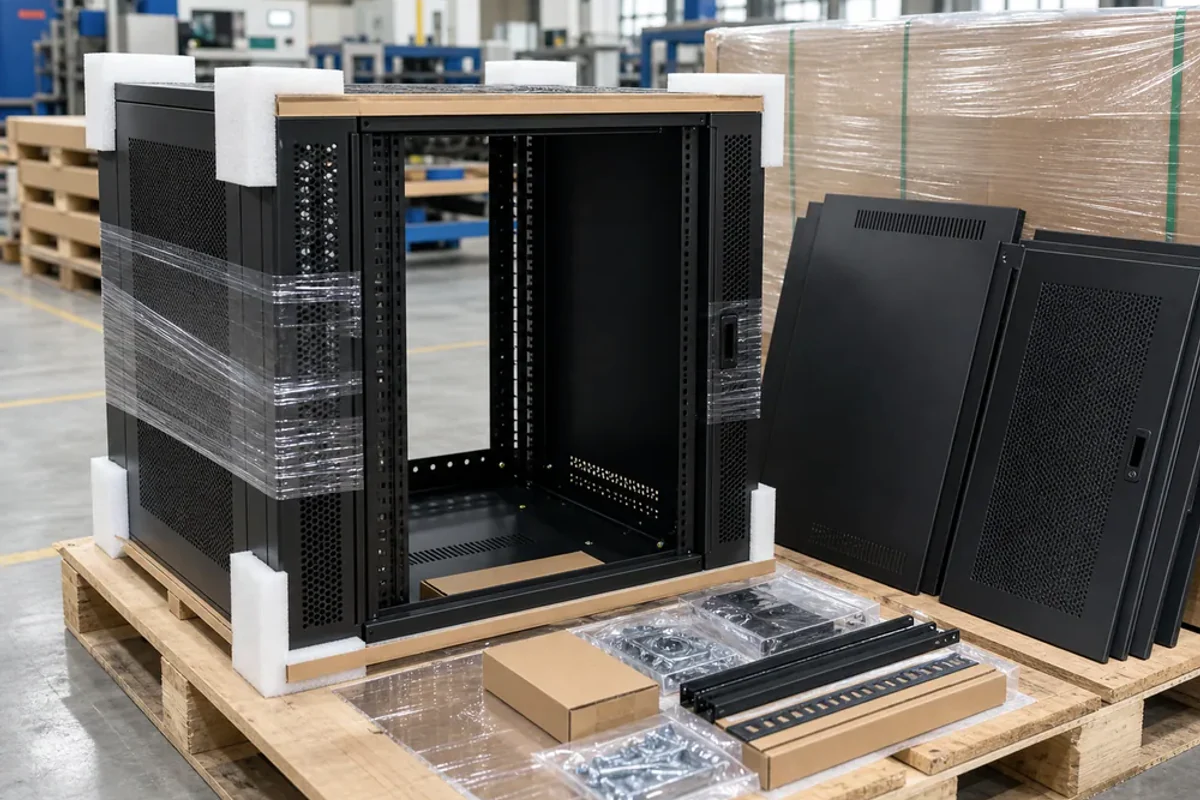
After finishing, foam separation, corner protection and rigid export support prevent a perfectly good cabinet from becoming a very expensive shipping lesson.
Topic map for telecom buyers
Continue With the Page That Matches Your Cabinet Project
This page covers the core sourcing decision. The supporting pages below go deeper where the application changes the design or inspection requirement.
Outdoor and weather exposure
For rain protection, corrosion, gasket interfaces, cable entry and outdoor service access.
Network and 19-inch rack
For rack rail alignment, usable depth, removable panels and network cabinet geometry.
Manufacturing processes
For profiles, bends, welded frames and corrosion-resistant surface finishes.
Quality and repeat orders
For critical dimensions, first articles, inspection records and controlled reorders.
Frequently asked questions
Custom Telecom Enclosure FAQs
Does MSTFAB supply finished telecommunications equipment?
No. MSTFAB supplies sheet metal enclosure shells and mechanical assemblies. Electronics, routers, radios, batteries, wiring, thermal components, software and network commissioning remain with the buyer or system integrator.
Can you fabricate cabinets for IP65 or NEMA 4X projects?
We can fabricate the customer-approved metal structure, gasket lands, rain edges, compression hardware and cable-entry interfaces. The final rating belongs to the complete assembled product and must be validated with its actual gaskets, penetrations, components and test method.
Which materials are available for telecom cabinets?
Common options include cold-rolled steel, galvanized steel, stainless steel 304 or 316 and aluminum 5052. Material and thickness should be selected from the environment, cabinet size, load, corrosion risk, finish and target cost.
Can you make prototypes and low-volume orders?
Yes. Prototype and low-volume fabrication can be used to verify cabinet dimensions, rail alignment, door movement, cable entry, hardware and finish before repeat OEM production.
Can MSTFAB install 19-inch rails and mechanical hardware?
Yes, when the rail standard, hole pattern, hardware specification and installation requirements are defined. We can install specified rack rails, hinges, latches, PEM hardware, studs and mechanical brackets, but not network electronics.
What files are needed for quotation?
Provide 2D PDF, DWG or DXF drawings plus STEP or STP files when available. Include material, thickness, quantity, finish, critical tolerances, hardware, weld notes, inspection needs, packaging and delivery destination.
RFQ checklist
Send Enough Information for a Useful Quote
A useful quotation starts with a controlled scope. Send these eight inputs so engineering can flag missing dimensions, conflicting notes and buyer-owned equipment before pricing.
- 2D drawings and STEP/STP files
- Material grade and sheet thickness
- Prototype and production quantities
- Critical dimensions and tolerance notes
- Finish, color and cosmetic surfaces
- Hardware, welding and assembly scope
- Inspection or first-article requirements
- Packing and delivery destination
 WeChat Contact
 WhatsApp Me Directly