OEM EVSE SHEET METAL ENCLOSURES
Custom EV Charger Enclosure Manufacturer
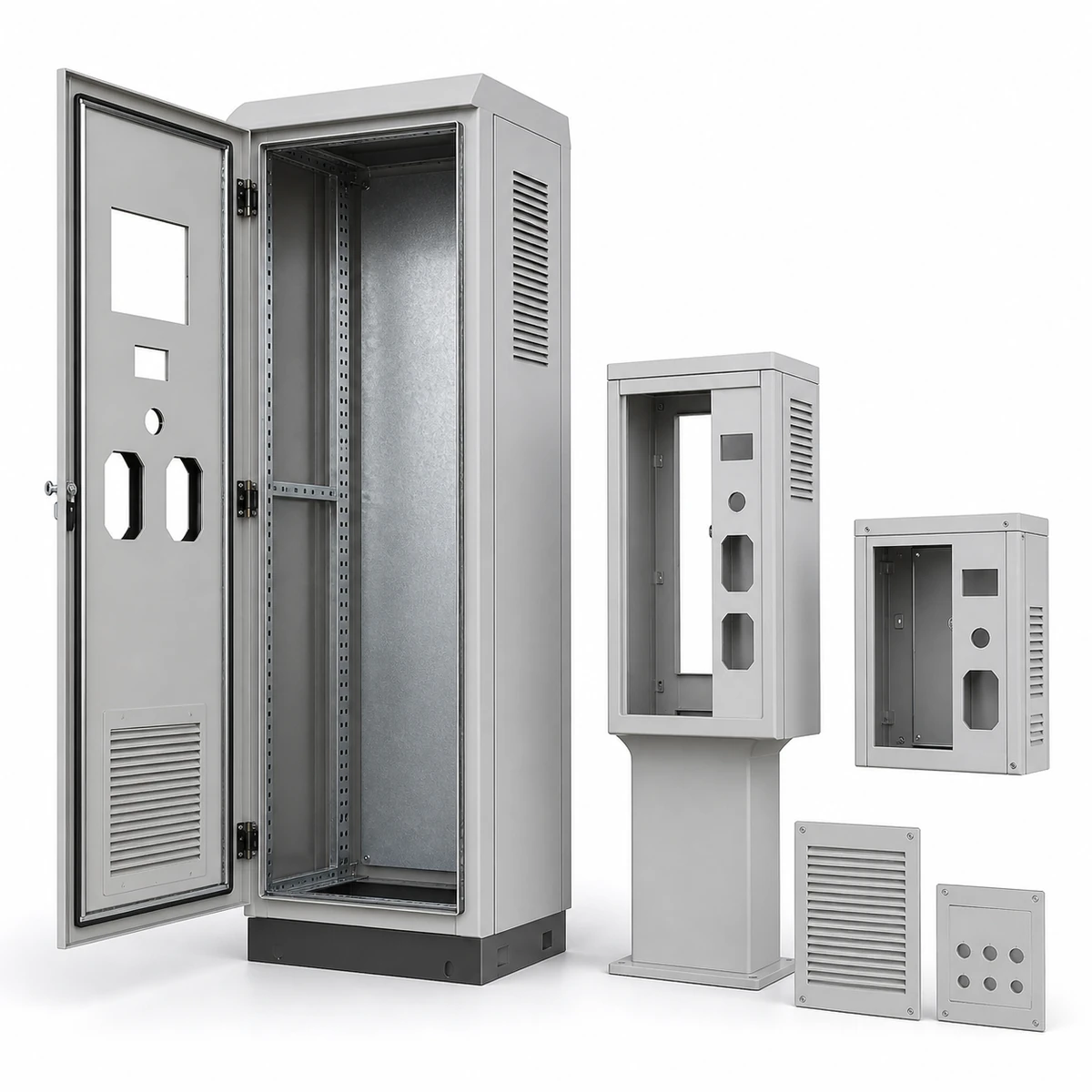
Drawing-based empty enclosure shells for AC wallboxes, DC fast chargers, fleet depots and commercial charging equipment. MSTFAB fabricates cabinet bodies, doors, louvers, brackets and cutouts; electrical equipment remains buyer-supplied.
- Custom sizes, front-panel cutouts, gasket paths and mounting interfaces controlled from drawings
- Prototype, pilot batch and repeat OEM production with revision control
- Cold-rolled steel, galvanized steel, stainless steel and aluminum options

DRAWING-BASED OEM FABRICATION
Why Choose MSTFAB for EV Charger Enclosure Manufacturing?
A useful enclosure supplier protects the interfaces your engineering and assembly teams must work with later, not only the outside dimensions.
- Laser cutting, CNC bending, welding and hardware installation are coordinated from the approved drawing package; the finishing route is confirmed per order
- DFM feedback for screen windows, charging ports, louvers, cable entries, doors and gasket compression
- Empty enclosure scope keeps your charging modules, wiring, software and system IP under buyer control
- First-article, coating and packing evidence defined by the approved quotation and inspection plan
YOUR EVSE SHELL SUPPLIER
Manufacturing Empty EVSE Cabinets From Your Drawings
MSTFAB is the international brand of Guangzhou Maisituo Sheet Metal Manufacturing Co., Ltd. in Guangzhou, China. We manufacture the mechanical enclosure around your equipment layout, not charging modules, connectors, software or final electrical integration. Powder coating and other selected finishes may be completed by qualified long-term partners under the approved order scope.
EV CHARGER ENCLOSURE TYPES
EVSE Enclosure Shells We Fabricate
Send a drawing, sample photo or equipment layout. Each enclosure is built around your installation, service-access and thermal requirements.
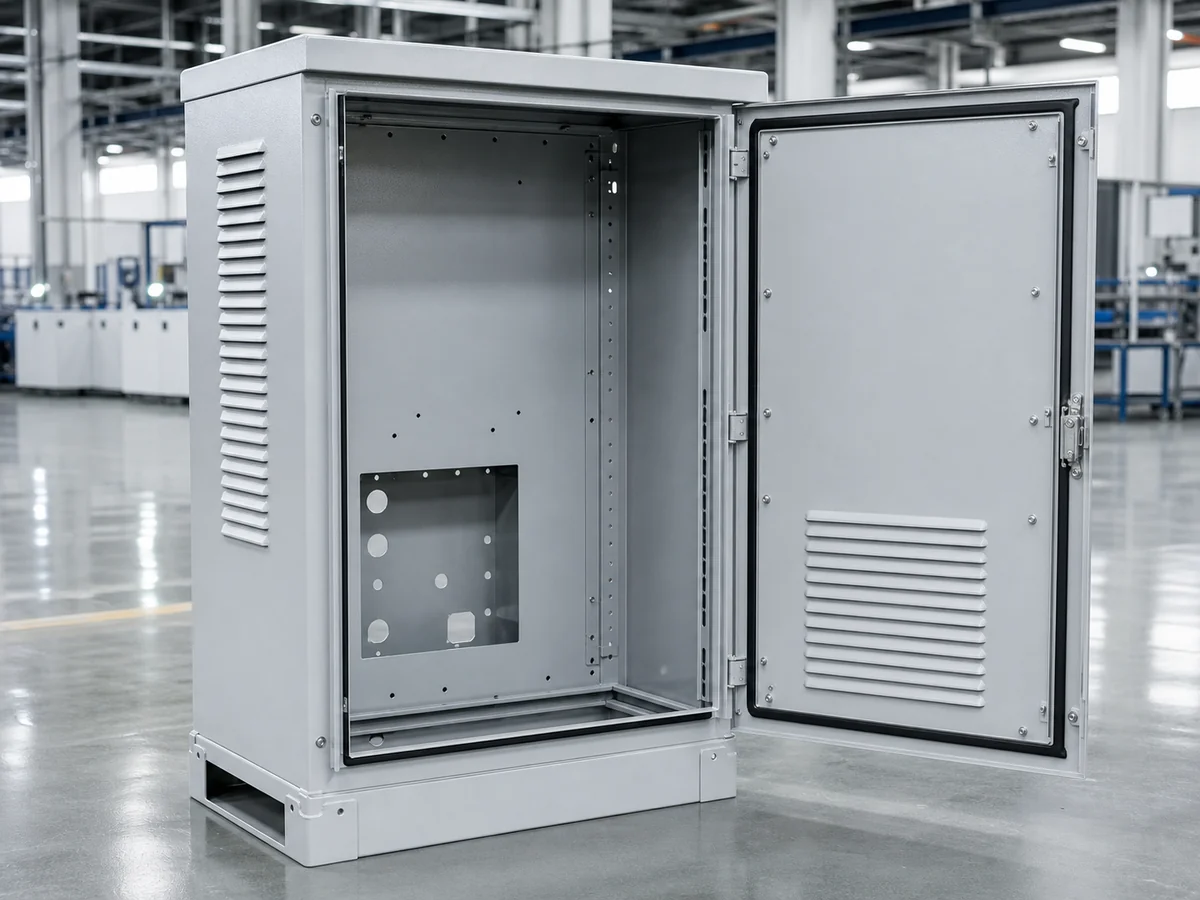
Outdoor AC Charger Enclosures
Wall-mounted and pedestal shells with gasketed doors, connector cutouts, cable-entry zones and weather-focused coating.
Inquire This Enclosure
DC Fast Charger Cabinet Bodies
Tall multi-door cabinets with defined power-module zones, screen openings, service access and reinforced bases.
Inquire This Enclosure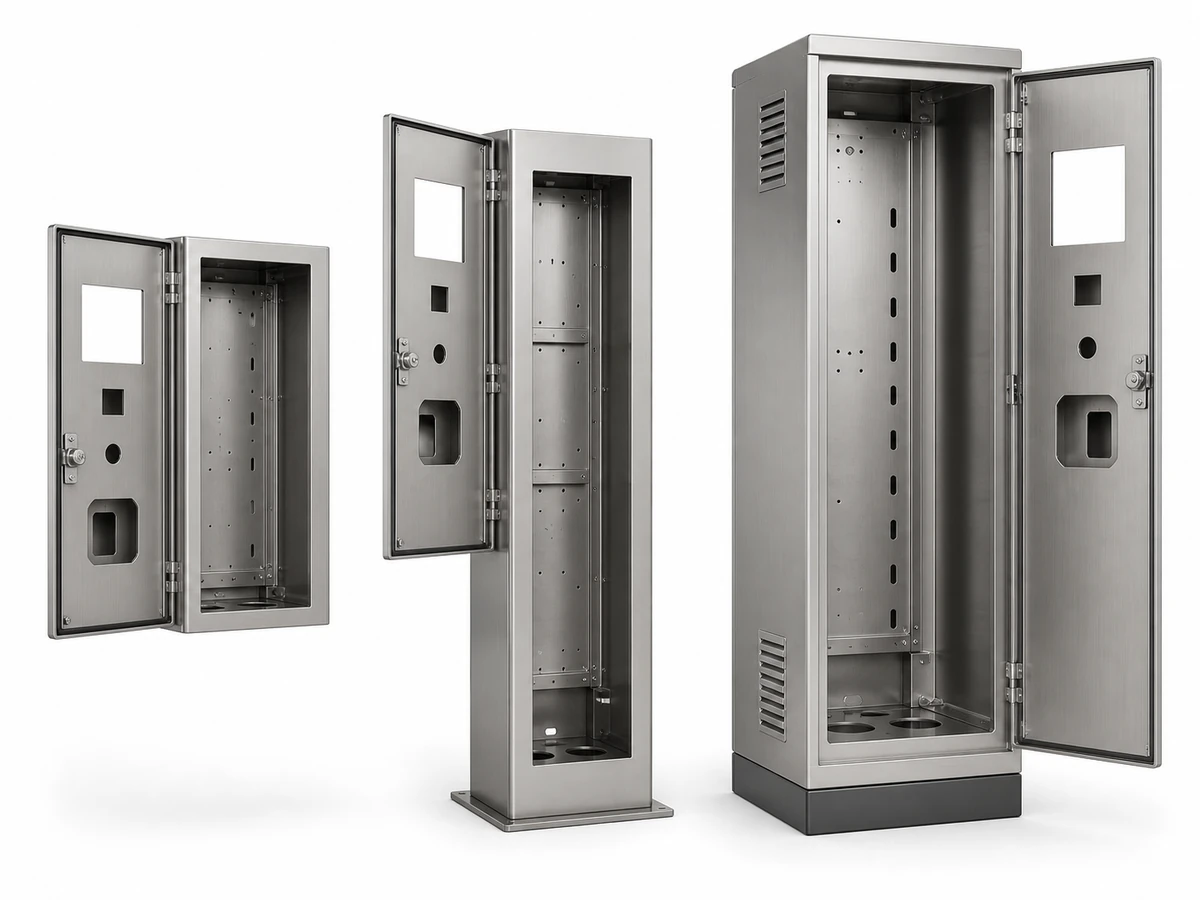
Stainless EVSE Housings
Brushed or fabricated stainless steel shells for corrosion-sensitive, coastal, public and premium charging installations.
Inquire This Enclosure
Internal Structures and Panels
Backplates, rails, brackets, gland plates, louvered panels and matched hardware supplied as revision-controlled sets.
Inquire This EnclosureOEM INTEGRATION-READY CABINETS
EV Charger Cabinet Sheet Metal Fabrication Supplier: Outdoor Shells for OEM Integration
An EV charger cabinet sheet metal fabrication supplier manufactures drawing-based empty cabinet shells, doors, mounting plates, cable-entry panels and mechanical hardware for OEM integration. The charger manufacturer remains responsible for electronics, electrical integration, thermal performance, final testing and certification.
For OEM buyers, the key requirement is straightforward: the finished metal cabinet must match the approved mechanical interfaces before electrical integration begins. MSTFAB manufactures these components from customer-approved drawings; we do not manufacture complete EV charging stations, power modules, wiring or charging software.
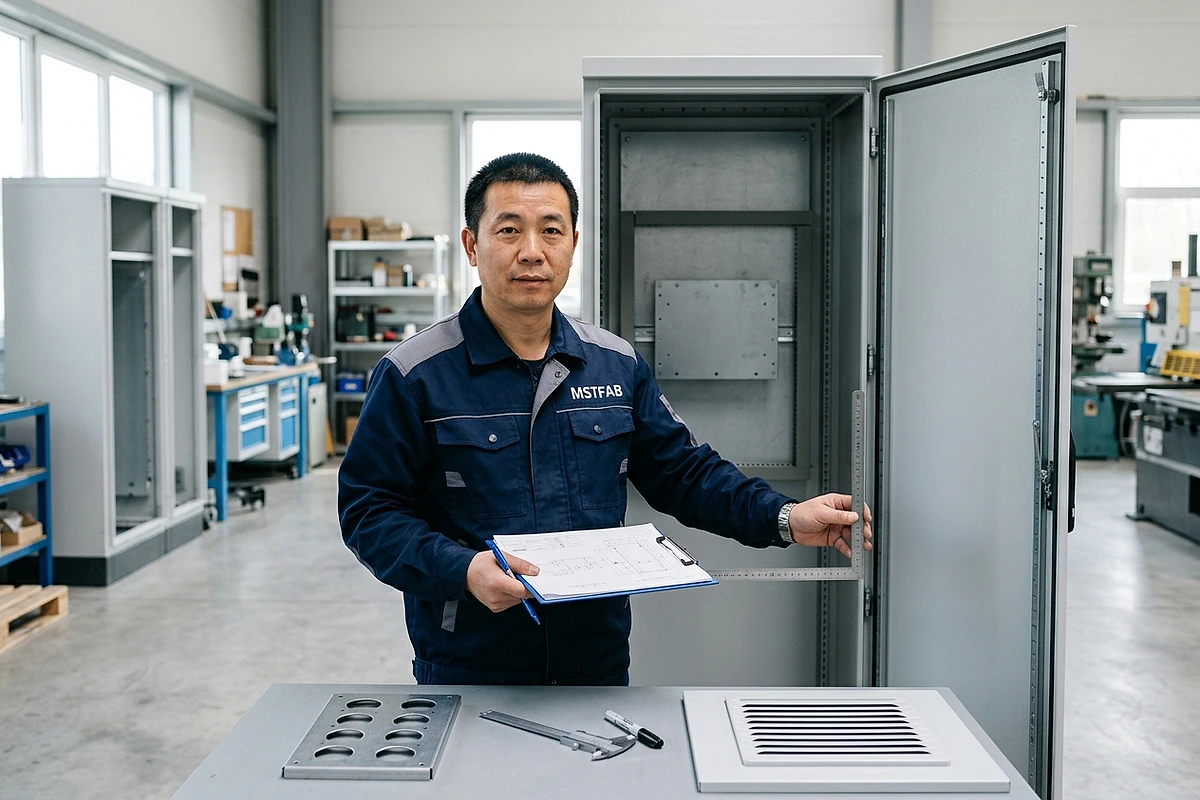
MECHANICAL HANDOFF
1. Define the Empty Cabinet Scope
Not every EV charger cabinet quotation includes the same components. Buying an empty cabinet shell is different from buying an operational EV charger, so confirm what each line item covers before the quotation is approved.
| Cabinet component | What OEM buyers should confirm |
|---|---|
| Cabinet body | Dimensions, squareness and mounting interfaces |
| Front and side panels | Cutouts, fit and cosmetic requirements |
| Service doors | Hinges, latches, gasket interface and door gaps |
| Mounting plates | Hole patterns, material and equipment mounting locations |
| Cable-entry plates | Approved gland openings and removable-panel fit |
| Ventilation panels | Louver geometry and buyer-defined cooling interfaces |
| Welded base frame | Approved dimensions and installation interfaces |
The quotation should state which components arrive installed, mechanically assembled, separately packed or excluded.
2. Confirm Electrical Integration Interfaces Before Cutting
The OEM's engineering team provides the mechanical requirements of the components it intends to install. The supplier reviews fabrication feasibility, hole positions and mechanical clearances. Electrical design and system validation stay with the OEM.
OEM provides
Mechanical interface information for the equipment going inside.
- Power-module mounting locations
- Display and RFID openings
- Cable-entry positions
- Cooling-fan mounting patterns
- Service-door access
- Grounding or bonding connection locations
- Internal brackets and support rails
MSTFAB reviews
Fabrication feasibility against the released drawing package.
- Hole positions and cutout spacing
- Bend and weld feasibility
- Mechanical clearances and fit
- Hardware and gasket interface details
- Inspection method for agreed features
OEM remains responsible for
System-level design and validation of the charger.
- Electrical system design
- Cooling performance
- Protective-earth validation
- Final equipment integration and testing
- Certification and regulatory compliance
Why it matters: an attractive powder-coated cabinet is not helpful if the charging modules cannot fit inside it. Interface errors found at integration are far more expensive than the same errors found at drawing review.
3. Outdoor Protection Requires an Approved Design
Outdoor charging cabinets may face rain, humidity, UV exposure, temperature changes and corrosive contaminants. Common fabrication features include folded rain lips, gasket lands, controlled door gaps, drainage details and protected cable-entry interfaces.
The OEM identifies the intended installation environment and protection target. IP65 or NEMA 4X cannot be guaranteed by selecting a sheet metal material or adding a gasket: final protection depends on the complete enclosure design, installed components, assembly and applicable testing.
MSTFAB fabricates the approved mechanical features; the OEM or responsible integrator defines and validates the protection requirement. See the outdoor EV charging cabinet RFQ and QC guide for the drawing and inspection details to include.
4. Check Door Fit After Welding and Finishing
An outdoor cabinet door must align with its frame. Welding distortion can affect cabinet squareness, hinge alignment and gasket contact surfaces, and coating build-up can affect critical interfaces. For new projects, useful inspection requirements may follow this order:
- Cabinet squareness
- Door gap
- Hinge location
- Latch alignment
- Mounting-hole pattern
- Specified finish condition
The buyer identifies which characteristics need first-article measurements or mechanical trial fitting. These checks support integration but do not replace system-level testing.
Door, hole-position and assembly tolerances are covered in the EV charger enclosure tolerance guide.
5. Finishing, an Integration-Ready RFQ and Repeat Orders
The enclosure material and finish should match the OEM's operating environment and approved specification. Possible materials include galvanized steel, stainless steel, aluminum and appropriately protected carbon steel. For powder-coated cabinets, define the color, gloss, texture, coating system, visible surfaces and masking requirements. MSTFAB can coordinate project-specific surface finishing through established external partners; the approved quotation should identify finishing responsibilities, inspection requirements and any additional costs.
| RFQ information | Buyer input |
|---|---|
| 3D model | STEP/STP cabinet or mechanical assembly model |
| 2D drawings | Controlled PDF drawings and revisions |
| BOM | Cabinet panels, brackets, doors and hardware |
| Material | Grade, thickness and approved finish |
| Interface drawing | Display, cable, cooling and mounting locations |
| Environmental requirement | Intended outdoor conditions and protection target |
| Quantity | Prototype and expected production volumes |
| Inspection | Functional CTQs, sample approval and required records |
| Delivery | Assembly condition, export packing and commercial terms |
MSTFAB can review the drawing-defined fabrication route before quotation. If a manufacturing change is proposed, OEM Engineering should approve it before release.
Repeat orders: EV charger OEMs often reuse one cabinet platform across several product revisions. For repeat purchases, control the approved drawings, mounting interfaces, material, hardware and finishing specifications. If the OEM changes a charging module, screen or cable-entry arrangement, confirm which metal components require revision — a small interface change should not silently become a new cabinet design on the production floor.
You design and integrate the EV charger. We fabricate the approved metal cabinet.
MSTFAB provides custom sheet metal fabrication services for overseas EV charging equipment manufacturers: drawing-based cabinet bodies, doors, panels, welded frames, internal mounting plates and other mechanical enclosure components. Charging electronics, wiring, software, thermal validation and certification remain with the OEM or responsible integrator.
PRODUCT AND INSPECTION BASIS
Connect each EVSE shell interface to a drawing and a check
An enclosure picture shows the shape; it does not prove that a specific order passed inspection. Agree the drawing revision, critical-to-quality features, sampling and record format in the RFQ. These are proposed checks, not results from an undisclosed customer order.
Door and gasket land
Buyer drawing inputClosed-door datum, gasket route, hinge and latch positions, target gap and finish condition.
Agreed recordFirst-article door fit, gap and gasket-land checks against the released drawing.
Cooling and service openings
Buyer drawing inputFan or filter envelope, louver direction, cutout datum and maintenance clearance.
Agreed recordCutout and mounting-pattern measurements plus access photographs; the OEM validates thermal performance.
Mounting and bonding details
Buyer drawing inputBackplate datum, stud or thread specification, contact-mask area and mating equipment envelope.
Agreed recordLocation, thread and masking checks on the finished shell; the OEM verifies protective-earth performance.
Cable-entry gland plate
Buyer drawing inputPlate thickness, gland pattern, edge clearance, gasket interface and removable-panel fit.
Agreed recordHole pattern and assembled fit check; any ingress test must be explicitly scoped and agreed.
Project photos, dimensional records, coating checks and packing images are supplied only as specified in the approved quotation. The empty shell is not a certified EV charging station.
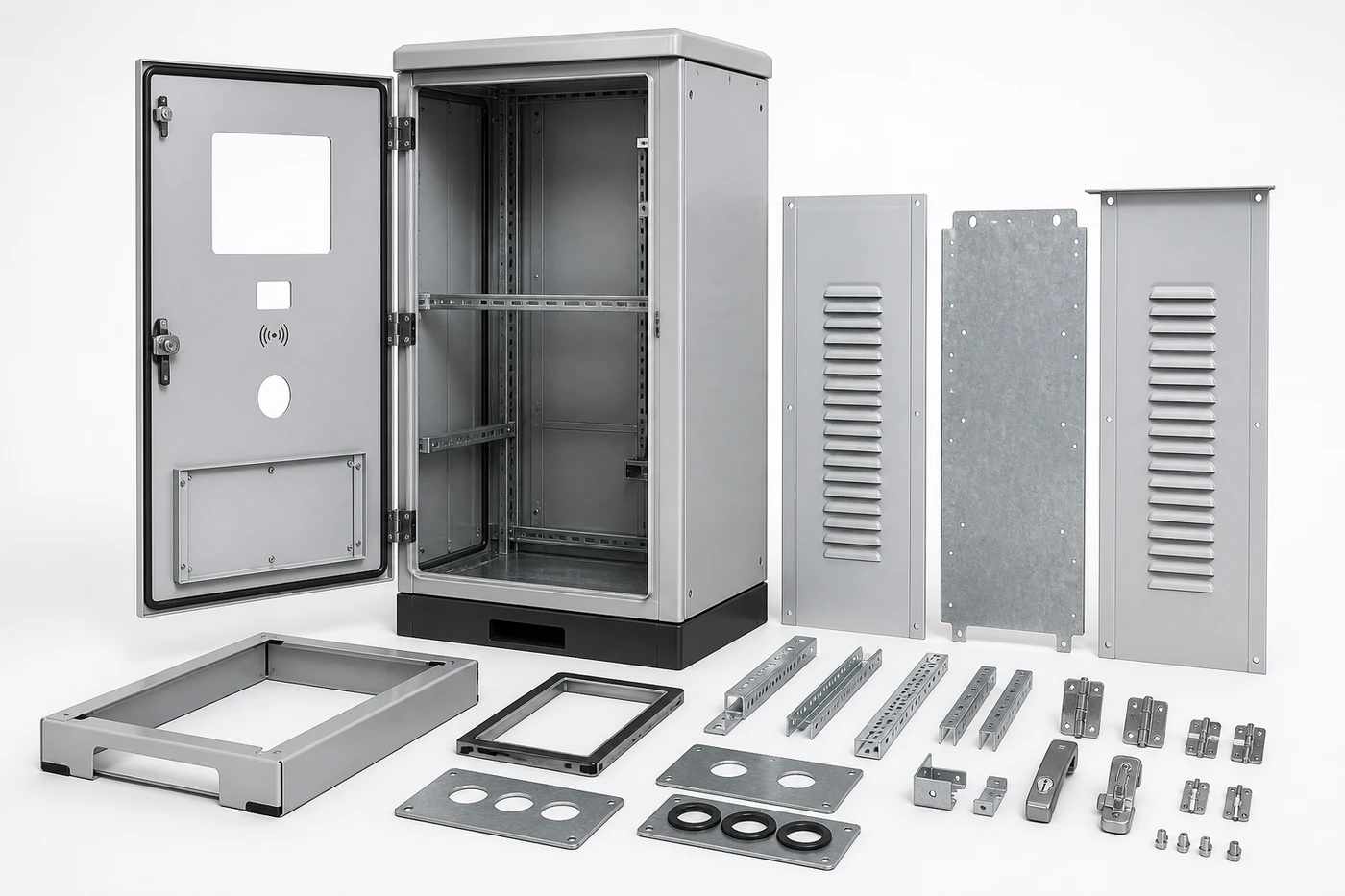
FIELD RELIABILITY STARTS IN SHEET METAL
Built Around Sealing, Cooling and Service Access
The enclosure should help your charger survive installation, field service and repeat production. DFM review focuses on the interfaces most likely to create rework or warranty risk.
APPLICATIONS
Where Custom EV Charger Enclosures Are Used
Fleet and Depot Charging
Large cabinets with service doors, reinforced bases, cable zones and thermal interfaces for repeat high-utilization charging.
Commercial Parking and Retail
Pedestal and wall-mounted housings with controlled front-panel appearance, connector access and weather protection.
Highway and Roadside Stations
Outdoor shells planned around rain, dust, heat, serviceability and long-distance shipment to project sites.
Public Infrastructure
Durable enclosures for municipal, workplace, campus and transit environments with buyer-defined access and finish.
OEM Charger Platforms
Revision-controlled mechanical shells for product families that share common frames, doors, panels and mounting interfaces.
FROM DRAWING TO EXPORT
One Accountable Enclosure Manufacturing Route
The production route is confirmed before cutting so engineering, finish, inspection and packing requirements remain connected.
Check interfaces, tolerances, folds, hardware, sealing and fabrication risk.
Control panel geometry, openings, door lips, louvers and repeatable hole positions.
Manage distortion, cabinet squareness, hinge alignment and matched panel fit.
Complete the approved finishing process, then install passive hardware and gaskets.
Confirm dimensions, finish, doors, accessories and export protection before shipment.
EVSE ENGINEERING & RFQ SUPPORT
Build a Buyer-Ready EV Charger Enclosure RFQ
Move from drawing review to material selection and shipment evidence with one clearly defined enclosure manufacturing scope.
01RFQ PACKAGE
Send the Drawing Package
Give engineering enough information to review the enclosure as one mechanical system, not a collection of isolated panels.
- Files: STEP or STP plus DWG, DXF or PDF drawings
- Specification: material, thickness, RAL finish and protection target
- Interfaces: display, RFID, emergency stop, connector and cable locations
- Commercial: prototype quantity, annual demand, destination and timing

02ENGINEERING REVIEW
Complete DFM Checks Before Cutting
MSTFAB reviews the interfaces most likely to create cabinet rework, assembly delays or sealing problems.
- Front panel: edge distance, hole spacing and bend clearance
- Door and gasket: flatness, hinges, latches and compression path
- Cooling: louver direction, fan openings and service clearance
- Installation: backplates, plinths, anchors and lifting points
03MATERIALS AND FINISHES
Match the Shell to Its Environment
Material and finish are selected around corrosion exposure, cabinet weight, appearance and the project cost target.
- Cold-rolled steel: indoor or sheltered powder-coated cabinets
- Galvanized steel: balanced corrosion protection for outdoor use
- Stainless 304 / 316: public, coastal or washdown installations
- Aluminum 5052: lightweight wall-mounted or outdoor enclosures
04QUALITY EVIDENCE
Confirm Inspection Before Shipment
Prototype and repeat orders can be documented with buyer-ready checks before export packing and release.
- Material and dimensions: grade, thickness and key CTQ measurements
- Fit: doors, panels, cutouts, gasket path and passive hardware
- Finish: coating appearance, thickness and specified color
- Delivery: accessory count, packing photos and export protection
 WeChat Contact
 WhatsApp Me Directly