
⚡ Direct Answer: What Tolerances Are Required for EV Charger Enclosures?
Precision EV charger enclosure sheet metal shells require tight geometric controls to maintain NEMA 3R / NEMA 4 (IP55/IP66) weather resistance, secure touchscreen display integration, and automated internal power module assembly. Critical tolerances include: ±0.15mm on laser-cut display bezel apertures and connector cutouts, ±0.30mm on overall shell height/width across 1,800mm pedestals (following ISO 2768-m), ≤ 0.8mm diagonal squareness deviation on access doors, and ±0.10mm on threaded internal PEM standoff mounting grids.
EV Charger Enclosure Critical Tolerance & Inspection Matrix
| Critical Feature | Nominal Tolerance Spec | Manufacturing Process | QC Verification Instrument |
|---|---|---|---|
| 1. Display & RFID Bezel Cutout | ±0.15 mm mm | High-precision Fiber Laser with Nitrogen assist gas | Optical Comparator / Calibrated Digital Vernier Caliper |
| 2. Gasket Channel Co-Planarity | ≤ 0.40 mm total runout | CNC Press Brake segmented forming + rigid fixture TIG | Granite Surface Plate + Dial Indicator height gauge |
| 3. Hinged Door Diagonal Squareness | |D1 – D2| ≤ 0.80 mm | Precision corner hem forming + tab-and-slot alignment | Laser Tracker / 3D Coordinate Measuring Arm |
| 4. Power Module PEM Standoff Grid | ±0.20 mm mm true position | Automated Haeger Insertion Press with load monitoring | Custom GO/NO-GO Pin Gauging Fixture |
| 5. CCS/NACS Holster Mount Holes | ±0.20 mm mm hole-to-hole | Single-setup CNC laser cutting on primary face blank | Dedicated CMM inspection scan |
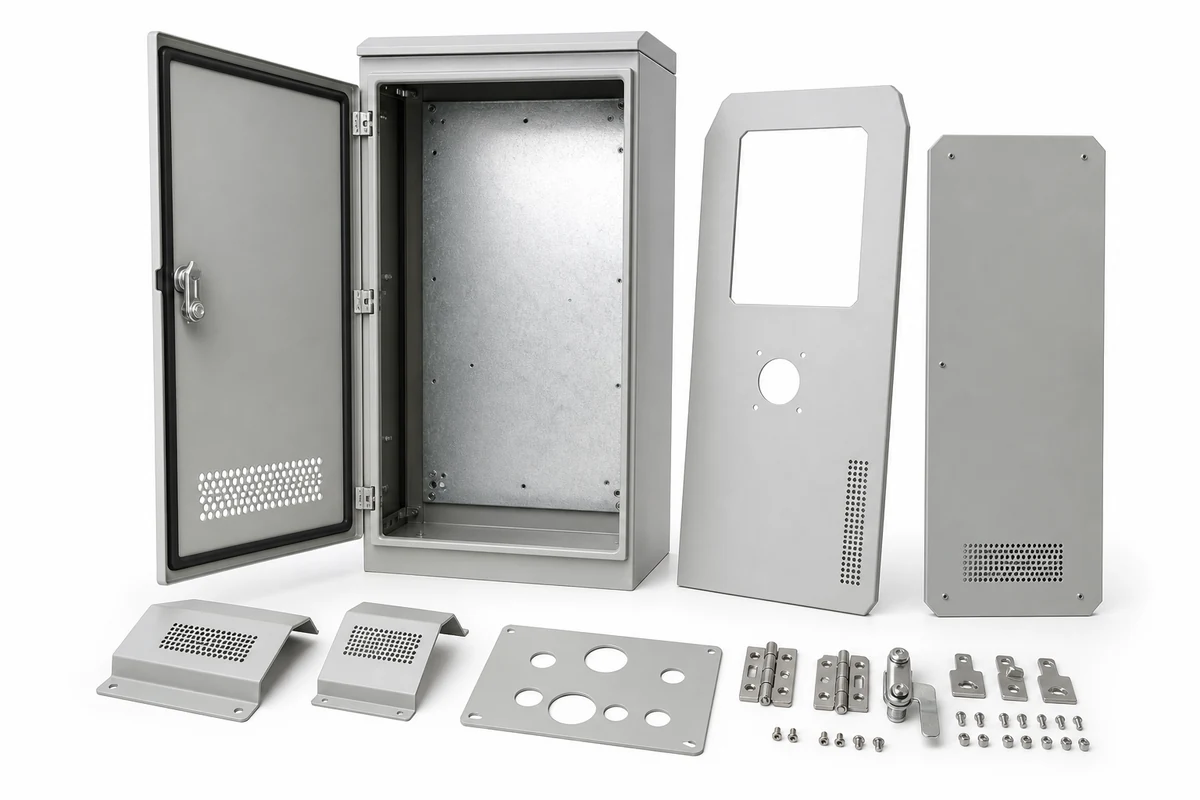
Why Gasket Sealing Tolerances Dictate NEMA 4 & IP66 Ingress Protection
Electric vehicle charging stations are permanently exposed to wind-driven rain, sleet, snow, and aggressive road salt spray. If the perimeter sealing lip of the enclosure body warps by as little as 0.6mm during corner welding, standard continuous-pour polyurethane (FIPFG) or EPDM sponge gaskets cannot maintain consistent 35–45% compression under door latch pressure.
At MSTFAB, we control gasket surface flatness through dedicated welding fixtures that clamp the entire flange perimeter during TIG welding, combined with controlled cooling cycles to eliminate localized thermal pull.
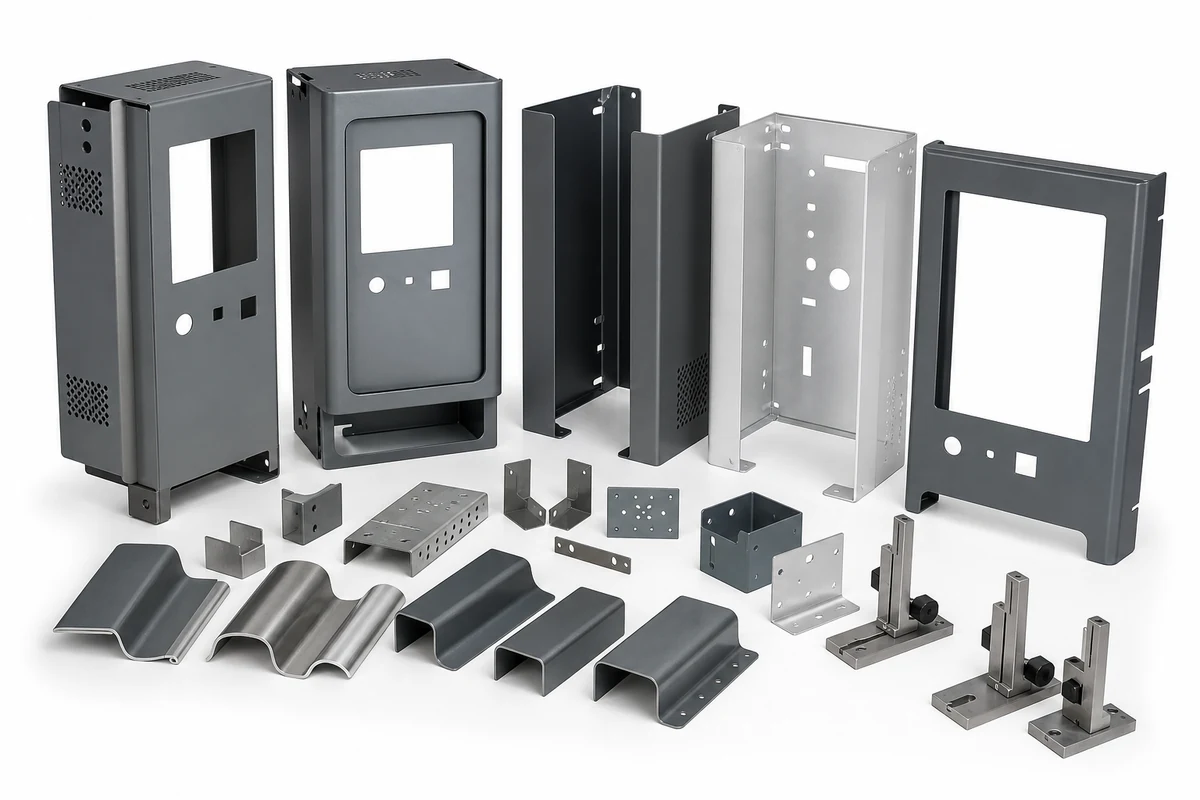
Controlling Thermal Distortion in High-Power DC Fast Charger Cabinets
Commercial 150kW–360kW DC fast charging stations incorporate heavy liquid-cooled power conversion modules and high-voltage busbars. Fabricating these enclosures involves heavy 2.0mm–3.0mm structural 5052-H32 aluminum or galvannealed steel sheet metal.
- Skip Welding & Heat Management: Welders utilize staggered 25mm weld stitches on alternating sides of the cabinet frame to balance thermal expansion vectors.
- Sub-Assembly Modularity: Designing the enclosure as a rigid internal frame wrapped by modular removable outer skin panels isolates structural load-bearing tolerances from cosmetic exterior panel alignments.
- Anti-Vibration Hardware Retention: Threaded PEM standoffs are pressed using automated tonnage-controlled presses with torque-out and push-out verification according to MIL-STD-1312 standards.
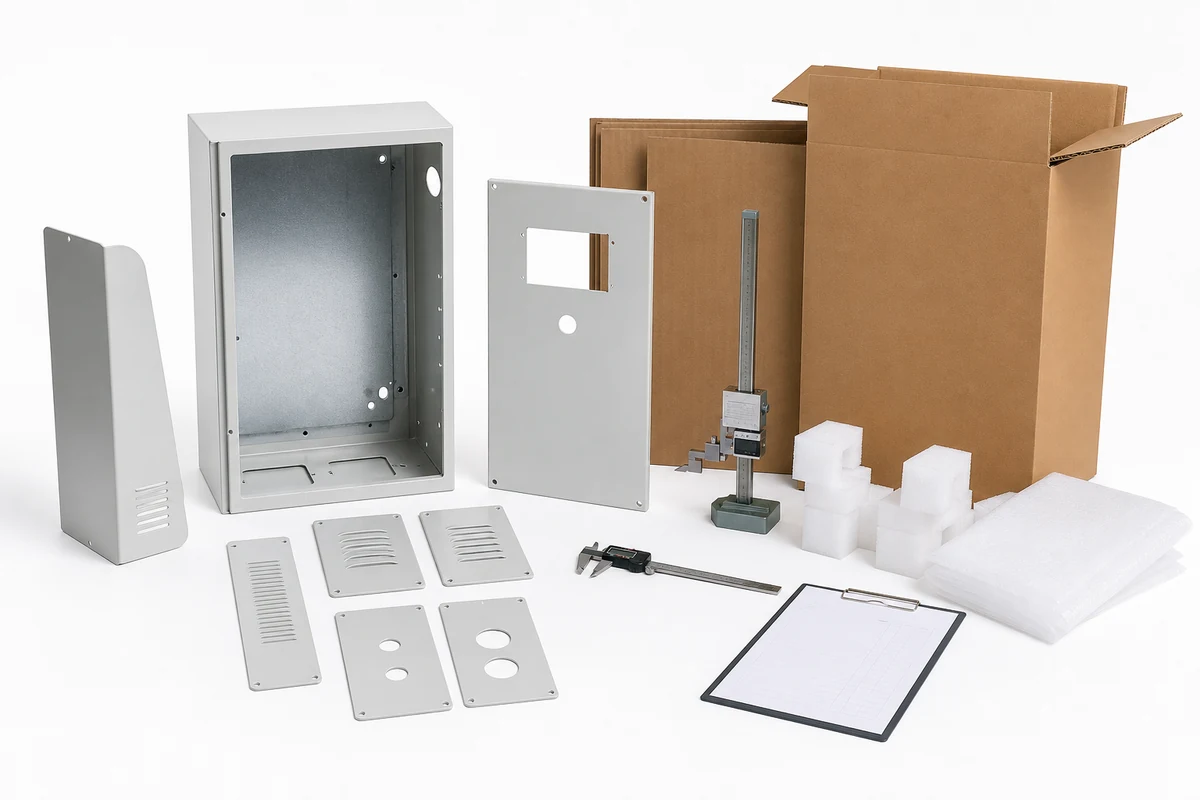
Partner with an Experienced EV Charger Shell Manufacturer
MSTFAB manufactures precision sheet metal enclosures for Level 2 and DC Fast Charging systems. Certified to ISO 9001:2015 with complete NEMA 3R/4/4X manufacturing capabilities.
Frequently Asked Questions on EV Charger Enclosures
Which material is best for outdoor highway EV charging pedestal shells?
Marine-grade 5052-H32 aluminum (2.0mm to 2.5mm thickness) finished with an architectural grade TGIC polyester powder coating provides the optimum combination of light weight, natural corrosion resistance, and thermal dissipation for outdoor highway charging stations.
How do you ensure proper fitment of heavy power cables through gland plates?
We fabricate removable modular bottom gland plates with CNC laser-cut knockout patterns holding ±0.15mm hole tolerances, allowing clean installation of brass or nylon IP68 cable glands without field modification.
 WeChat Contact
 WhatsApp Me Directly