BESS CABINET SHELLS
Battery Storage Enclosure Shells
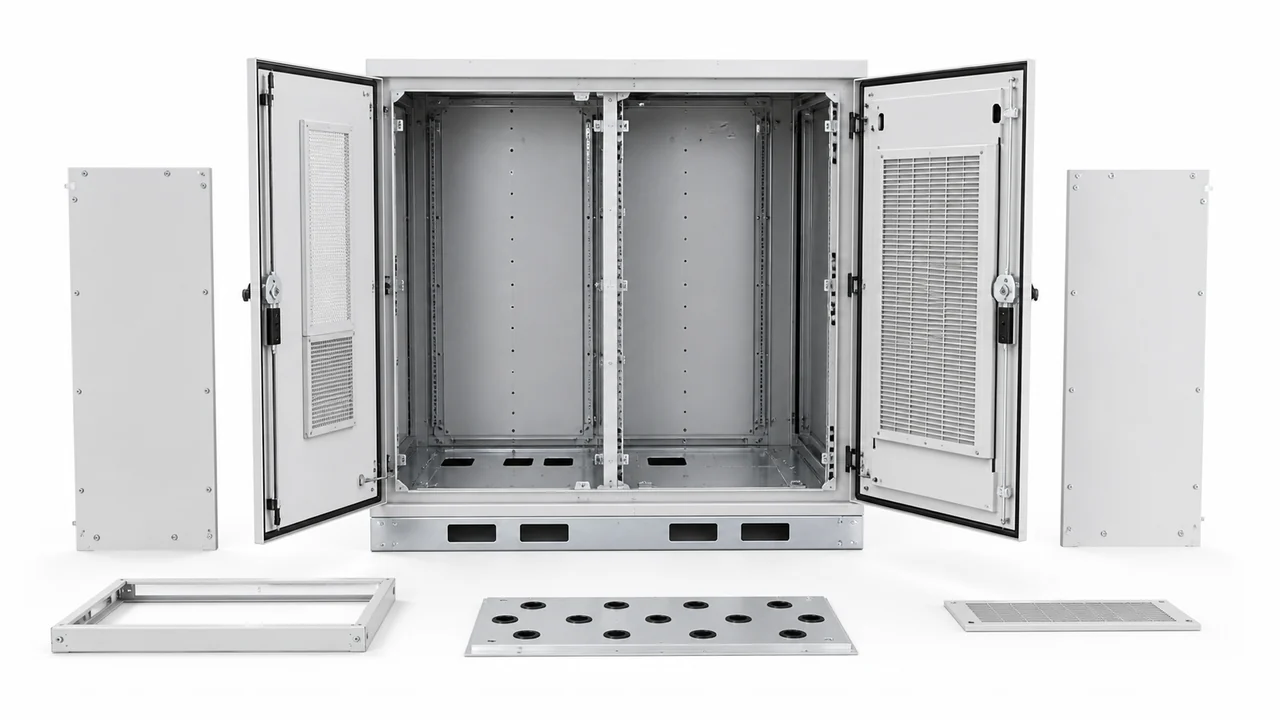
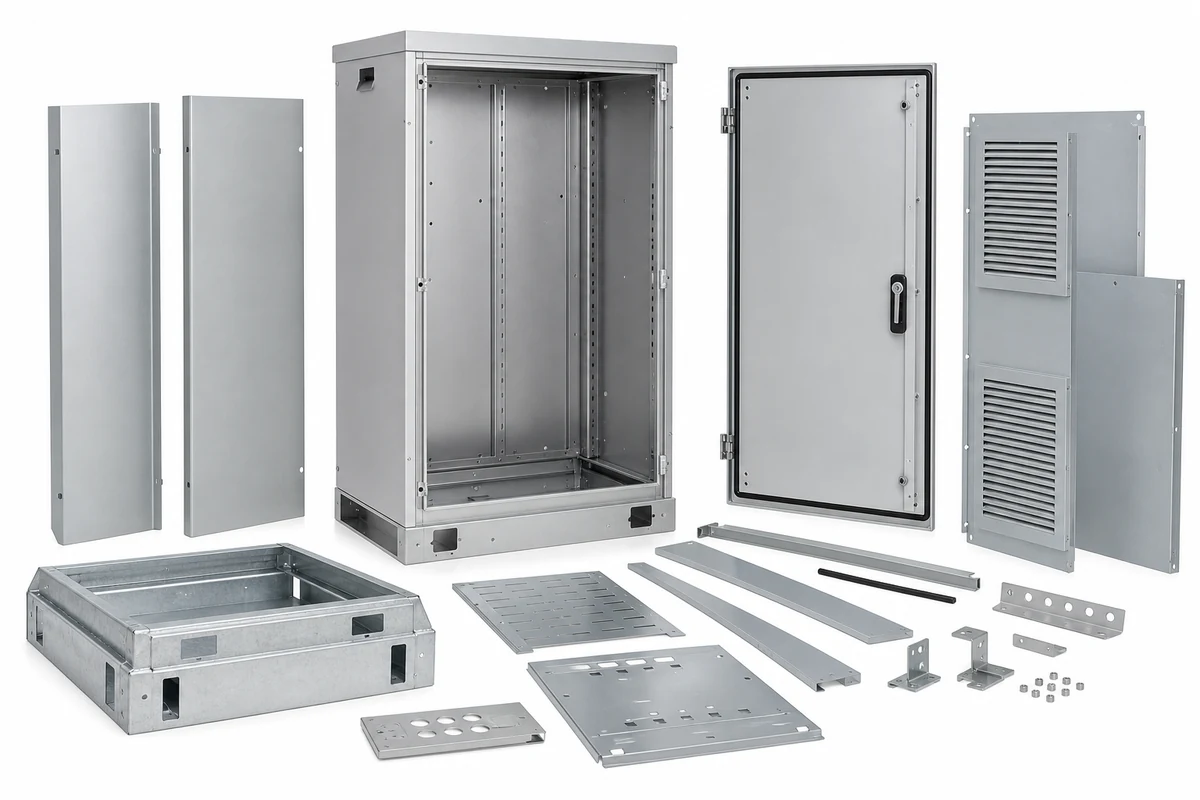
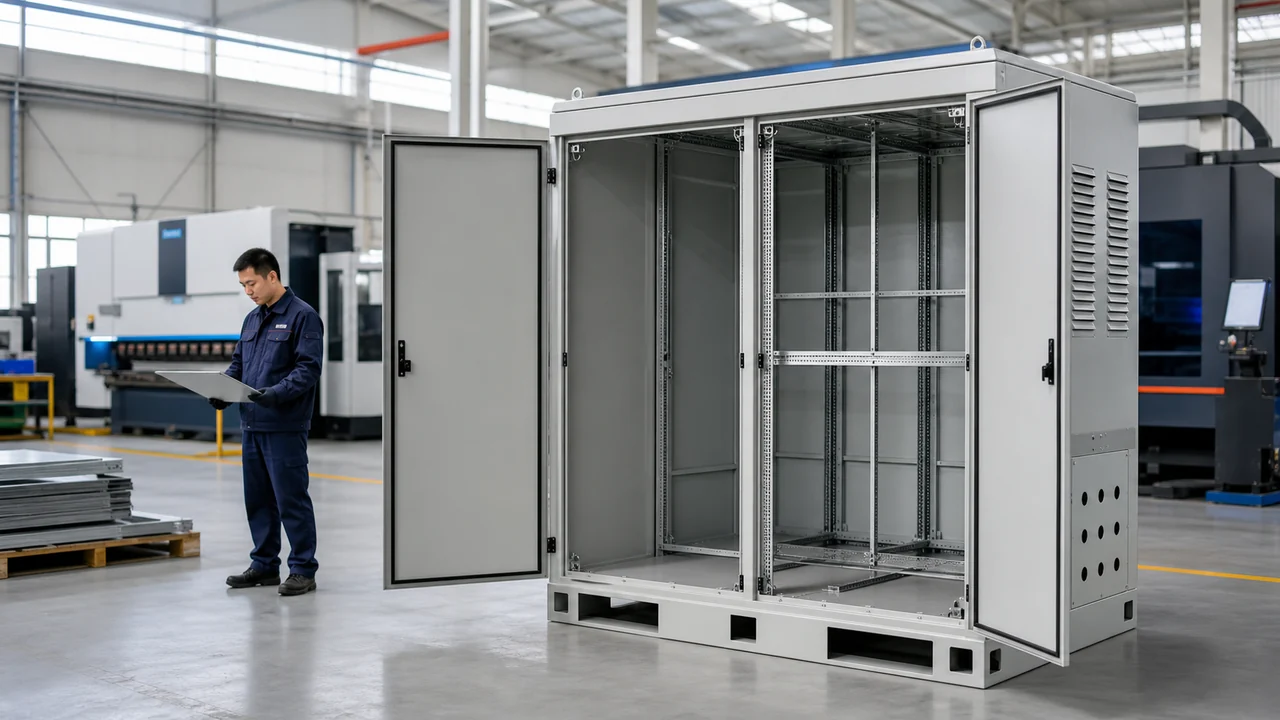
Full-height empty cabinet shells with reinforced bases, service doors, louver panels, mounting zones and cable entries.
For stationary BESS, industrial storage and backup power systems
Empty BESS cabinet shells built around the approved module layout, load case and service-access drawing.

A battery storage enclosure must carry defined static loads, hold module and electrical mounting datums, maintain door alignment, route cables and accept buyer-specified ventilation or thermal equipment. MSTFAB controls the empty sheet metal structure while the buyer retains responsibility for batteries, busbars, electrical protection, HVAC, fire-suppression components, wiring, controls and final system certification.

MSTFAB manufactures empty BESS cabinet shells, outdoor battery enclosures, solar storage cabinets, reinforced frames, vent and thermal-interface panels, cable-entry plates and revision-controlled mechanical kits for overseas OEM buyers. The buyer installs battery modules, busbars, electrical protection, HVAC or fire-suppression equipment, wiring and controls after the empty metal enclosure is approved.
Select a battery storage enclosure starting point, then send the dimensions, static load, battery and electrical zones, material, environmental target, thermal interface, cable-entry and quantity requirements. Every item below is a configurable empty mechanical shell manufactured to buyer drawings.

Full-height empty cabinet shells with reinforced bases, service doors, louver panels, mounting zones and cable entries.
For stationary BESS, industrial storage and backup power systems

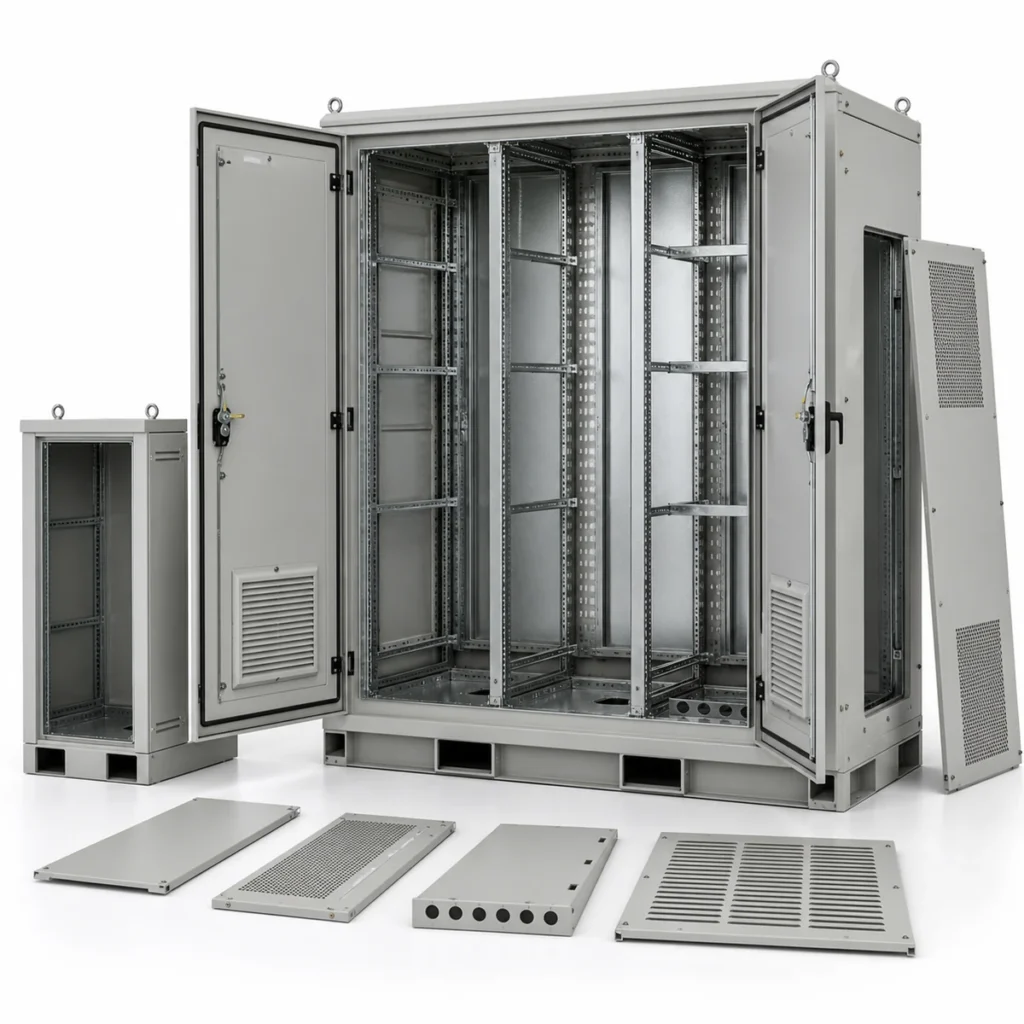
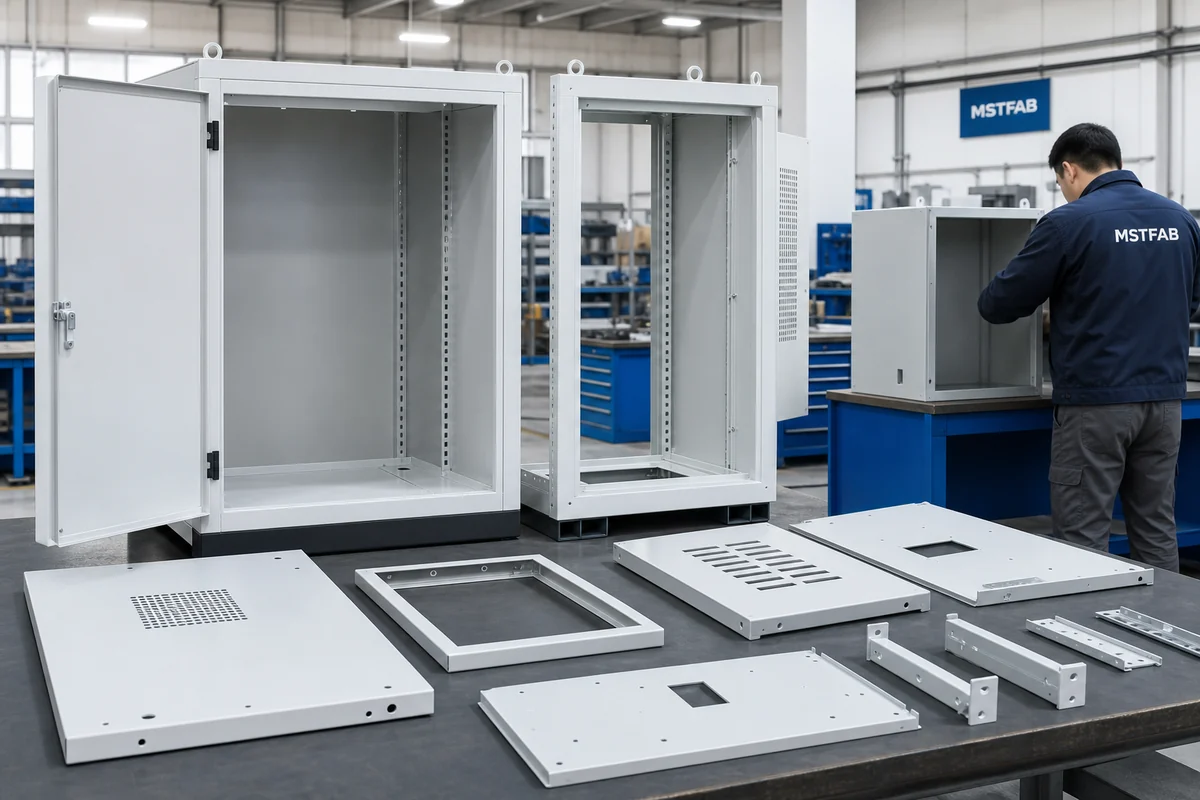
Matched doors, louvers, gland plates, panels, rails and brackets supplied as a controlled mechanical set.
For OEM assembly lines and revision-controlled cabinet programs

Empty weather-focused storage cabinet shells with doors, ventilation interfaces, mounting plates and reinforced frames.
For solar farms, microgrids and exposed energy infrastructure

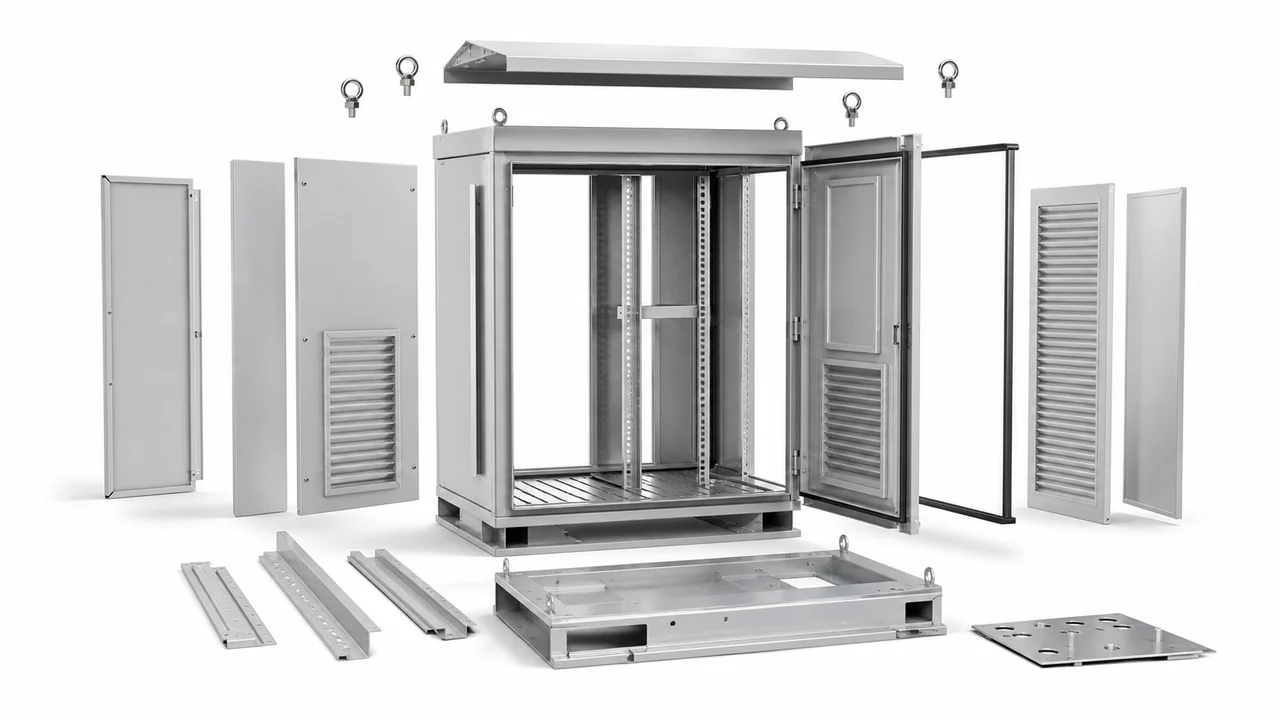
Drawing-based shell, door, rain hood, mounting rail, base and panel components arranged for mechanical integration.
For configurable battery and power-conversion platforms

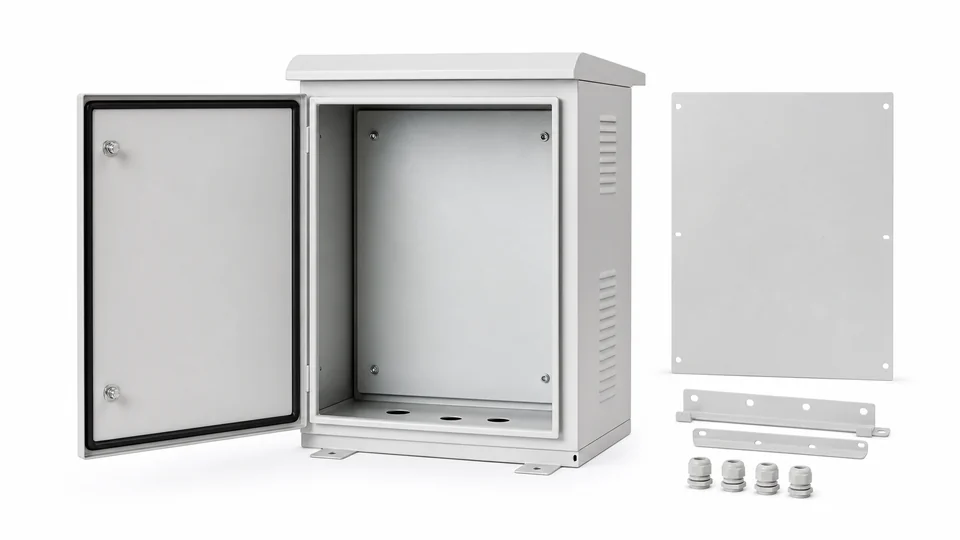
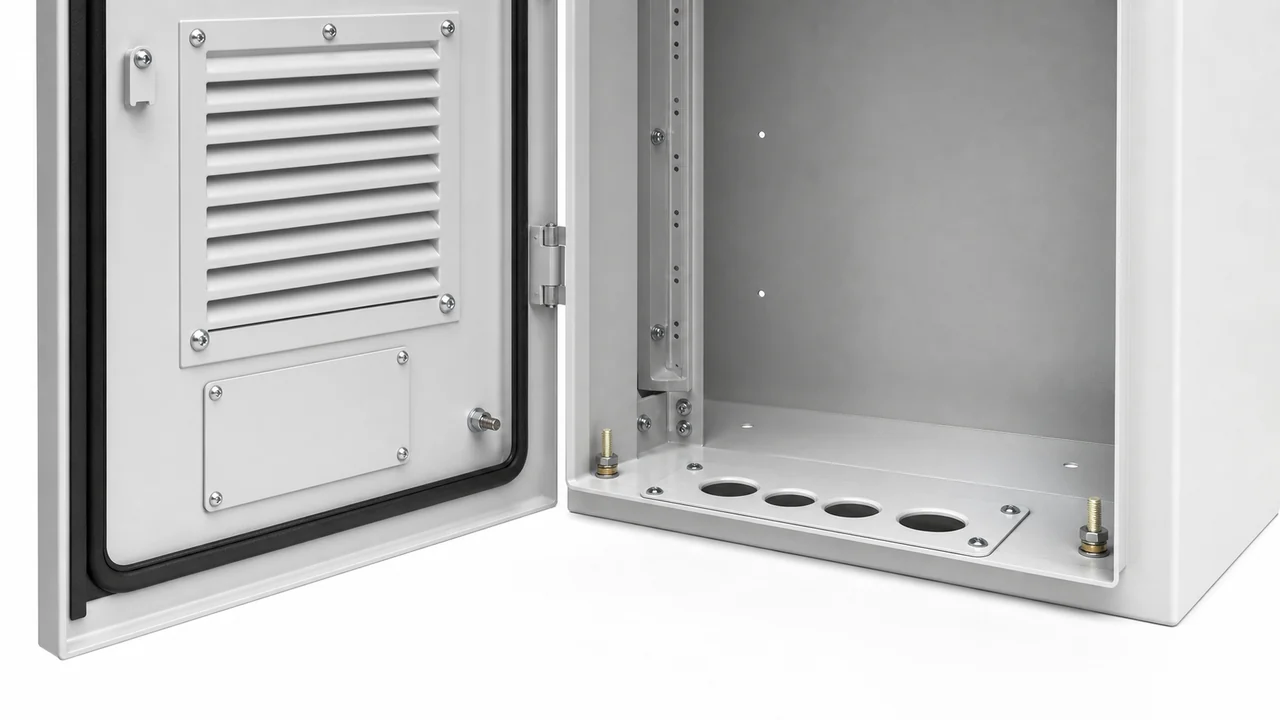
Compact battery cabinet shells with gasketed doors, blank mounting plates, gland holes and support brackets.
For photovoltaic storage, hybrid power and off-grid systems

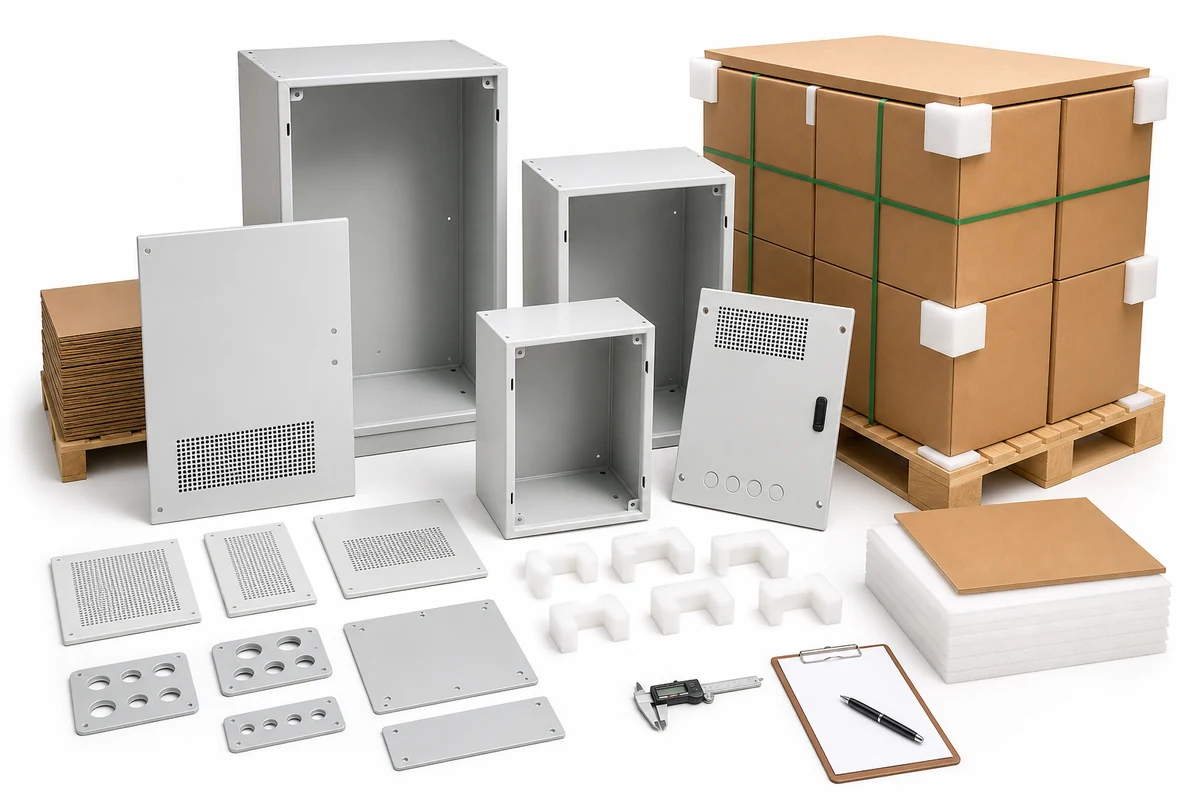
Product-only enclosure bodies, doors, vent panels, mounting plates and brackets for buyer review.
For private-label product ranges and sourcing comparisons

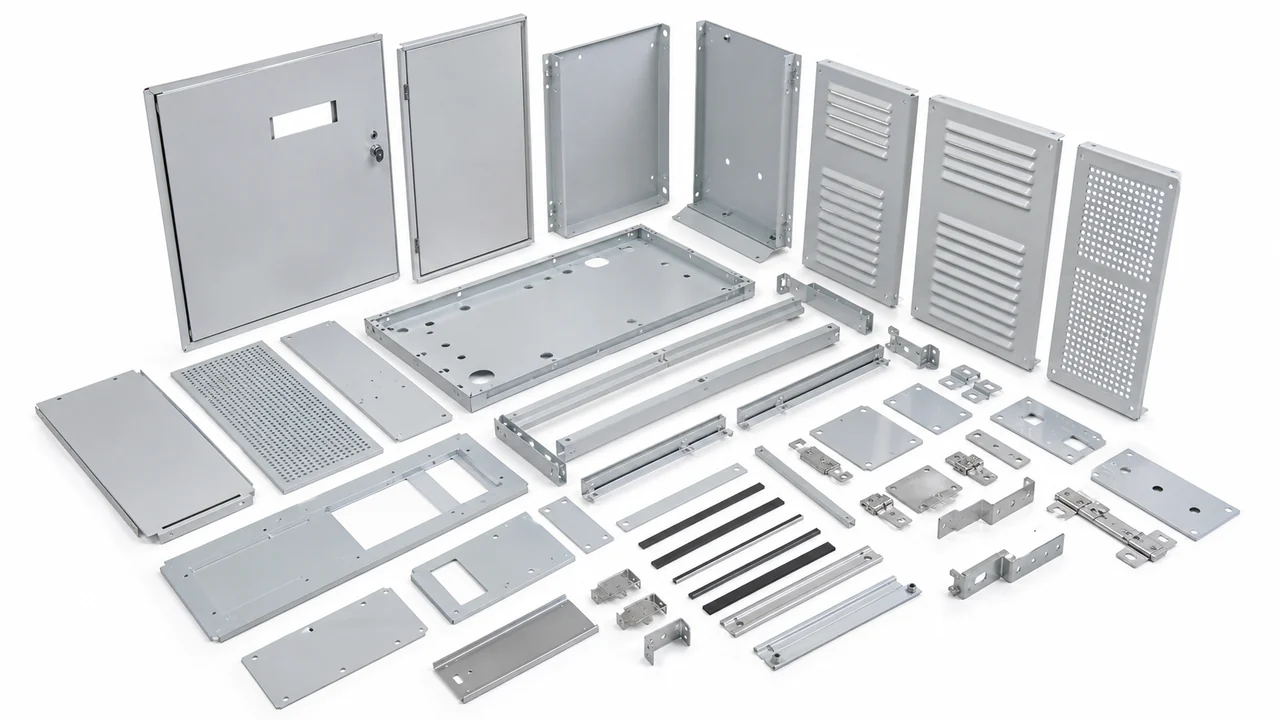
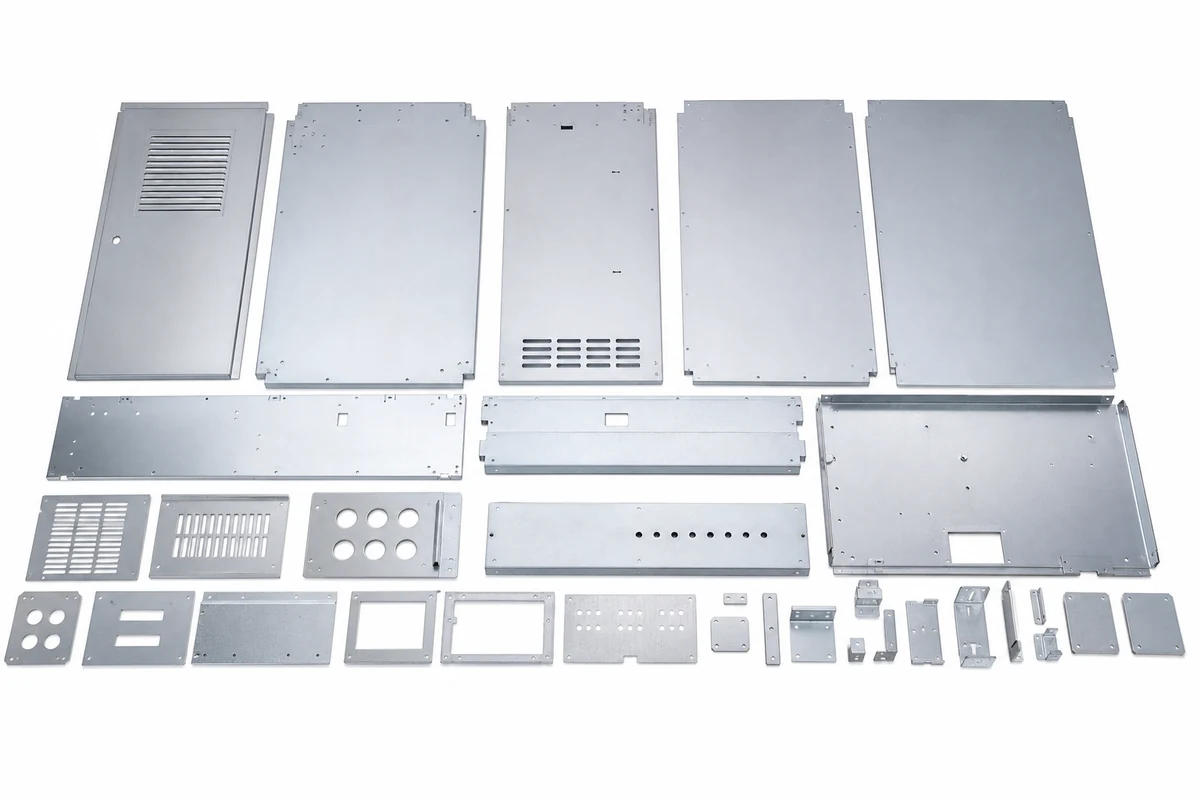
Laser-cut side panels, door blanks, ventilation plates, cable plates and brackets before forming.
For equipment-specific airflow, power and signal interfaces

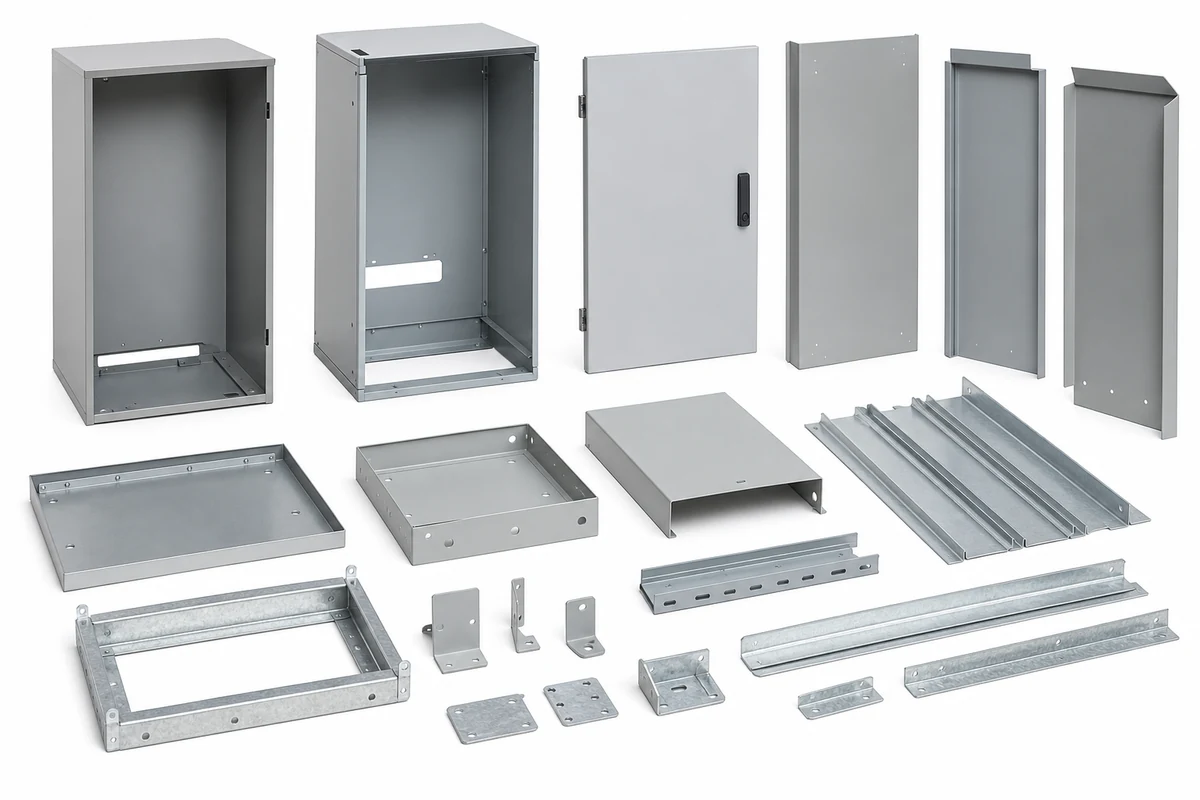
CNC-bent cabinet bodies, doors, rain lips, return flanges and internal support components.
For repeatable cabinet geometry and controlled assembly fit

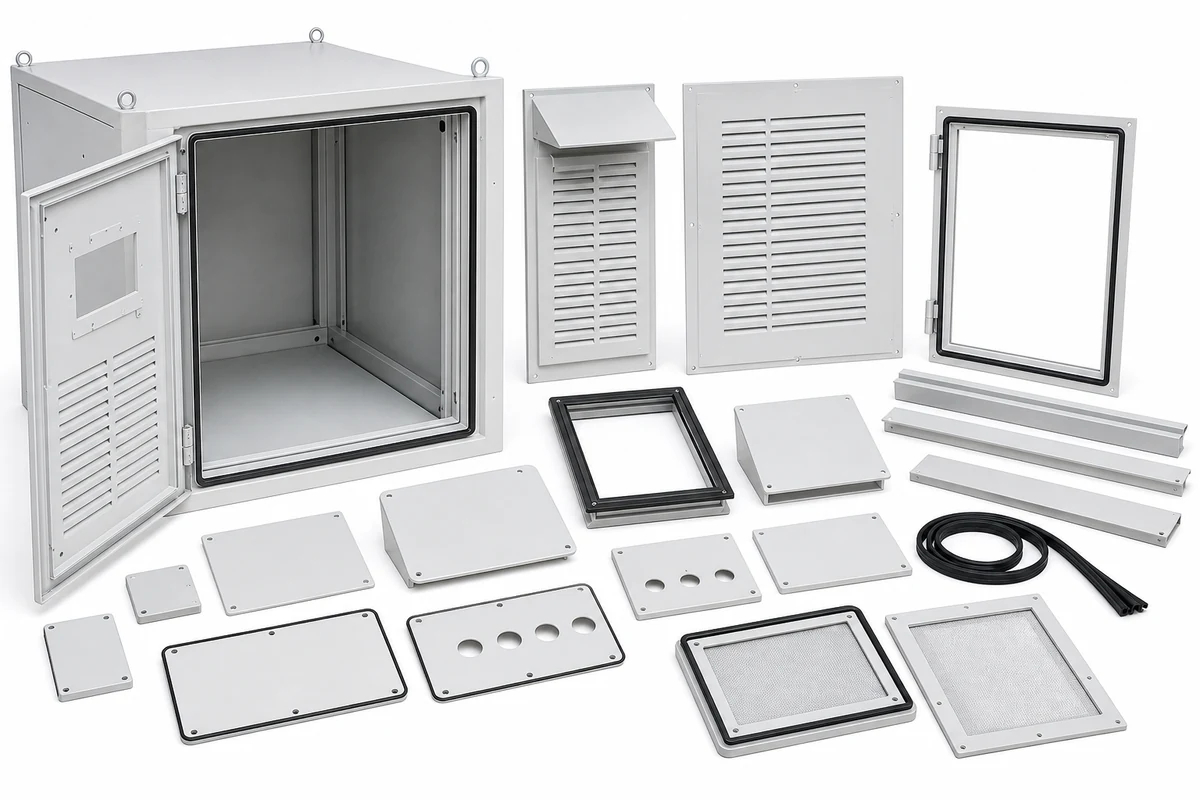
Enclosure shells with gasket channels, louver vents, rain hoods and cable gland interfaces.
For buyer-defined passive, forced-air and HVAC arrangements

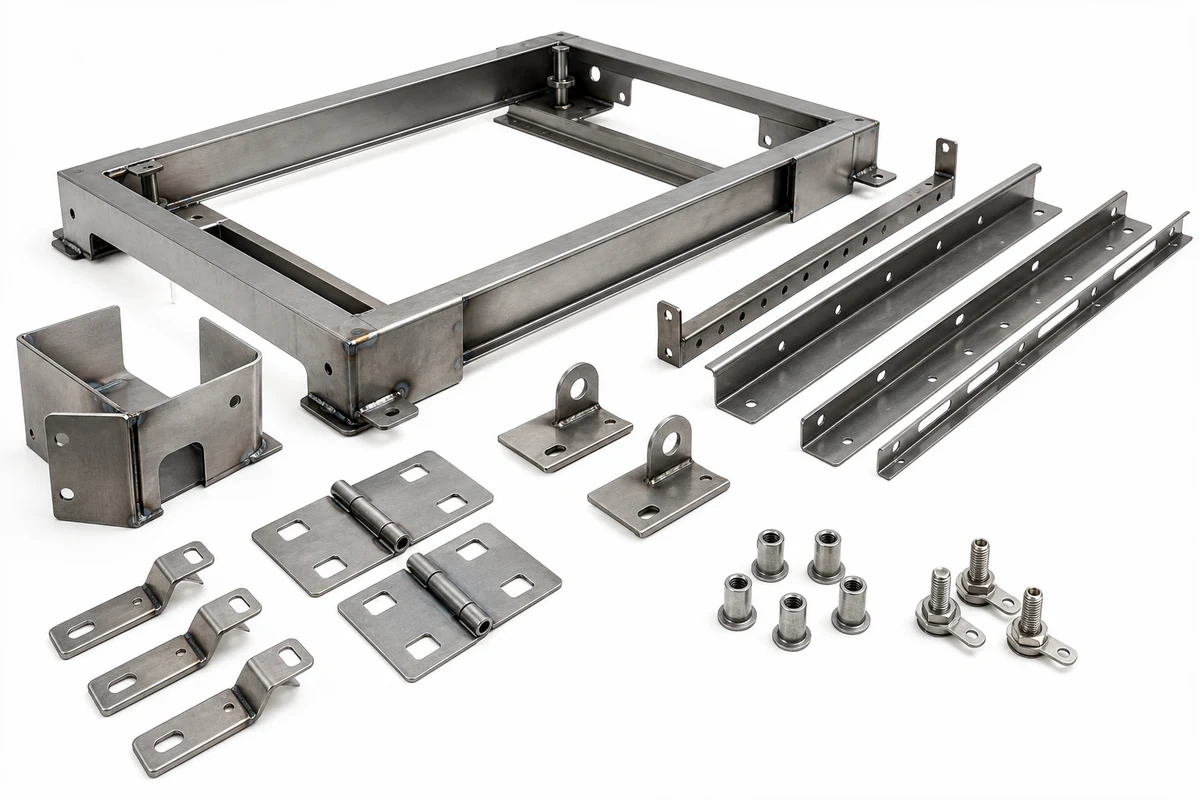
Welded bases, hinge plates, latch brackets, lifting lugs, support rails and installed hardware zones.
For high-load floor-standing cabinet structures

Empty outdoor cabinet shells, doors, mounting plates, rain hoods, bases and brackets on a white background.
For modular outdoor storage and power equipment projects

Empty BESS cabinet structures supplied without battery modules, wiring or electrical equipment.
For OEMs that retain system integration and certification responsibility
Eight manufacturing controls connect a released battery storage enclosure drawing to a cabinet shell that carries defined loads, closes, aligns and repeats across orders.
Checks load paths, battery zones, doors, ventilation, cable entries, thermal interfaces and service access.
Controls vent patterns, thermal openings, gland plates, mounting features and panel outlines.
Protects return flanges, door overlap, gasket lands, internal rails and repeat mechanical fit.
Balances battery cabinet load capacity, distortion control, mounting planes and door movement.
Finish requirements are confirmed per order; qualified long-term partners may complete specified powder coating or other treatments.
Hinges, latches, handles, studs, gaskets, grounding points and lifting hardware are position-controlled.
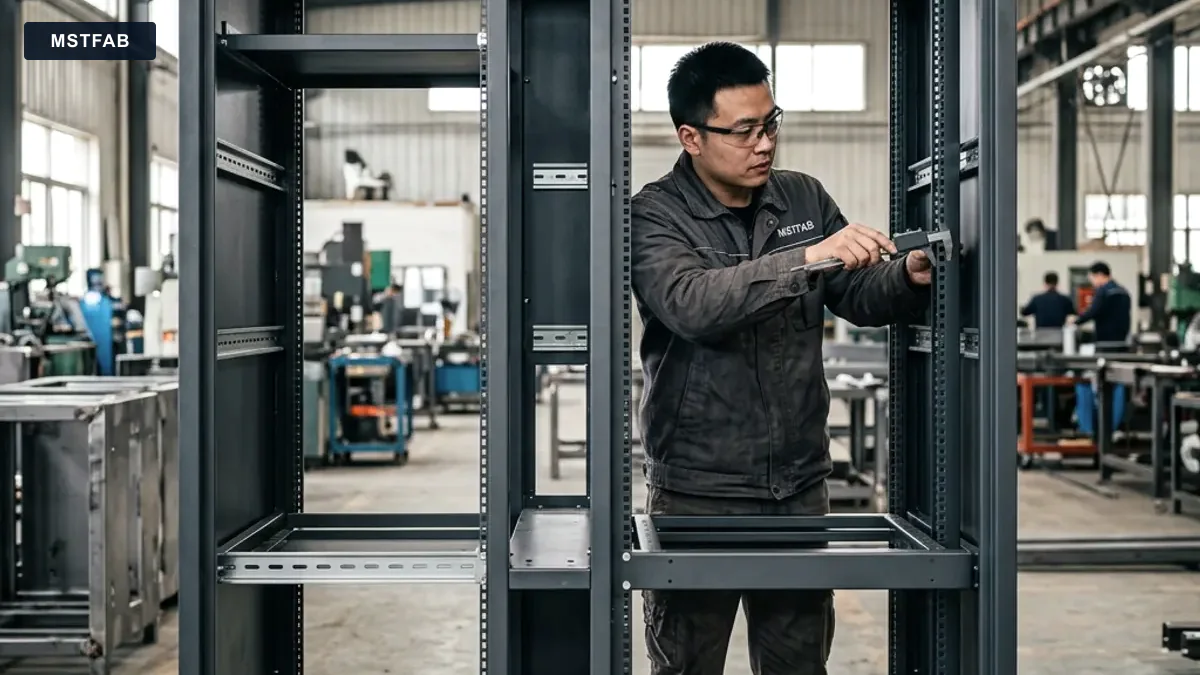
Frame datums, door gaps, module zones, gland plates and thermal interfaces are checked.
Heavy shells, loose panels, finishes and accessory kits are restrained and protected for overseas handling.

Battery cabinet material and finish must match static load, environment, corrosion risk, grounding strategy, thermal design, transport and cosmetic requirements.

Reliable battery storage enclosure fabrication begins with the mechanical interfaces the system integrator must assemble later. Load paths, module zones, door clearance, cable access and thermal hardware openings should be released before the first cabinet is cut.

The enclosure remains an empty mechanical structure, but structural load, battery zones, environmental protection, thermal interfaces, cable entry and service access change with each energy-storage application.

Reinforced empty cabinet shells with module zones, service doors, ventilation and cable interfaces.

Outdoor or protected battery cabinet shells for photovoltaic storage, hybrid power and off-grid systems.
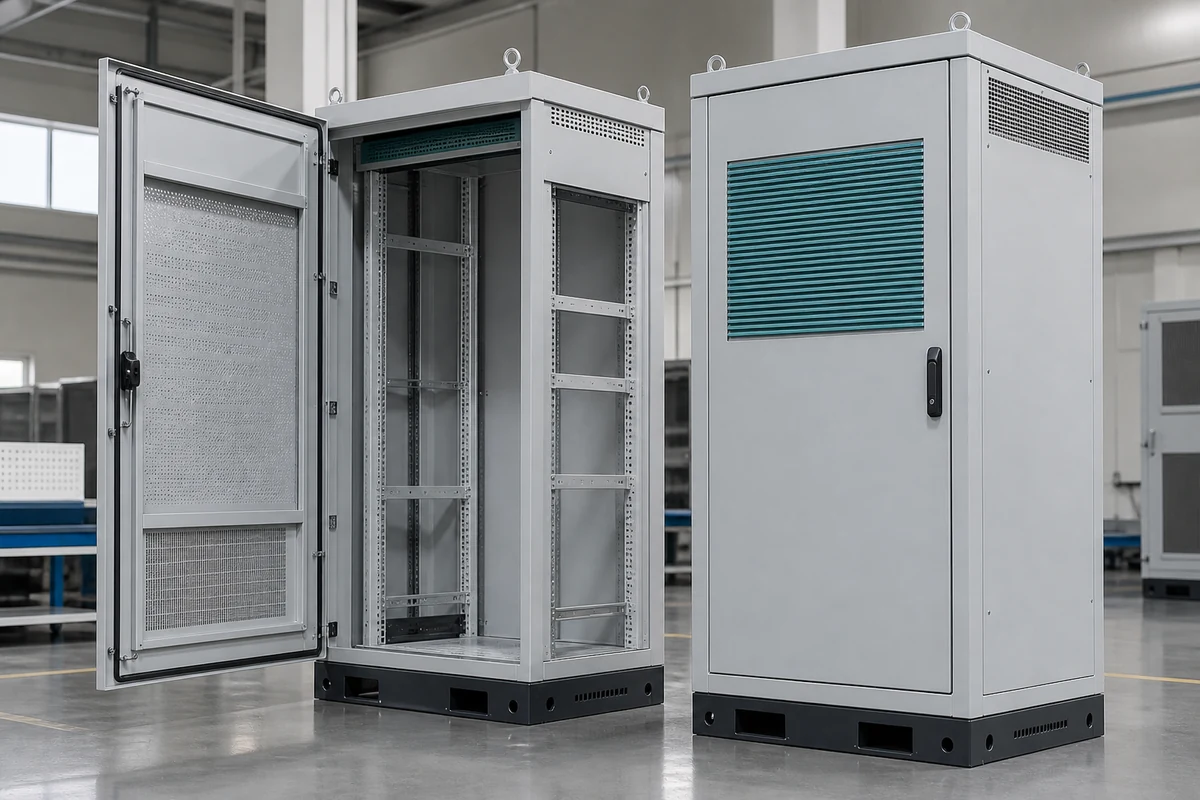
Powder-coated cabinet shells with ventilation, mounting zones and service-access panels for facility storage.
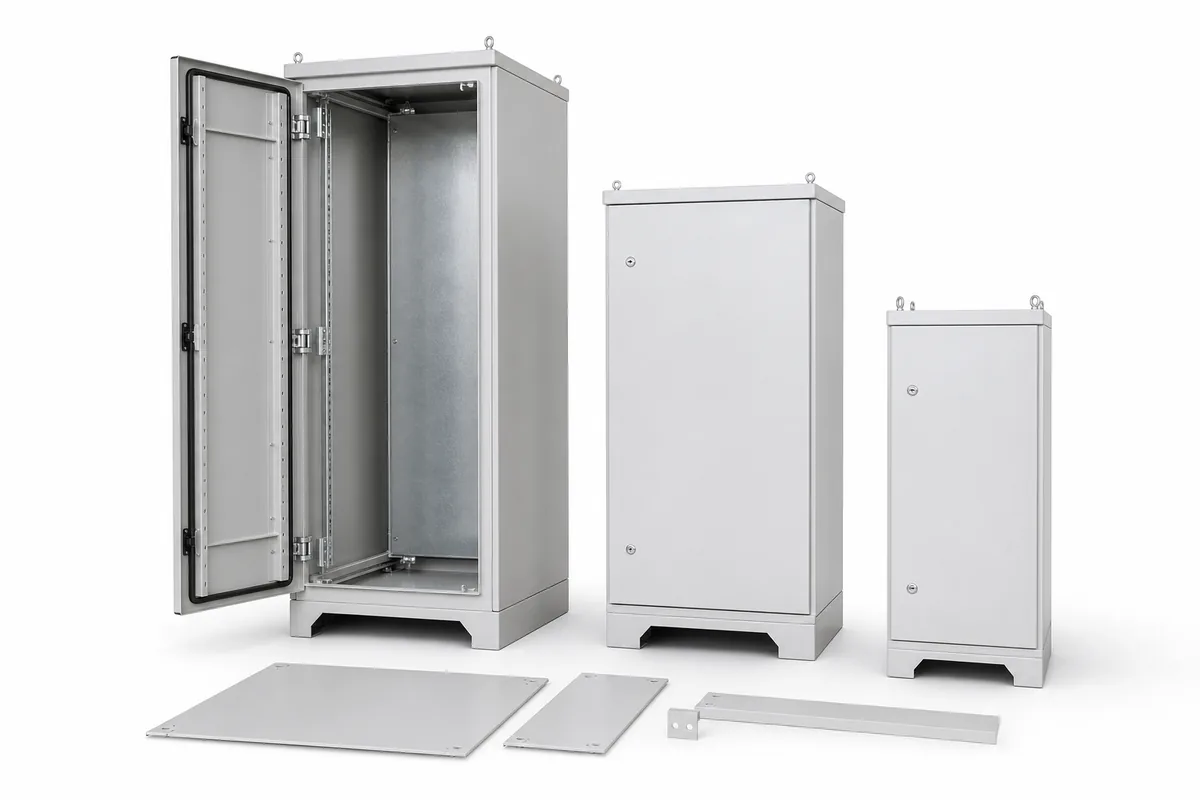
Families of cabinet shells with controlled common interfaces for scalable OEM product ranges.
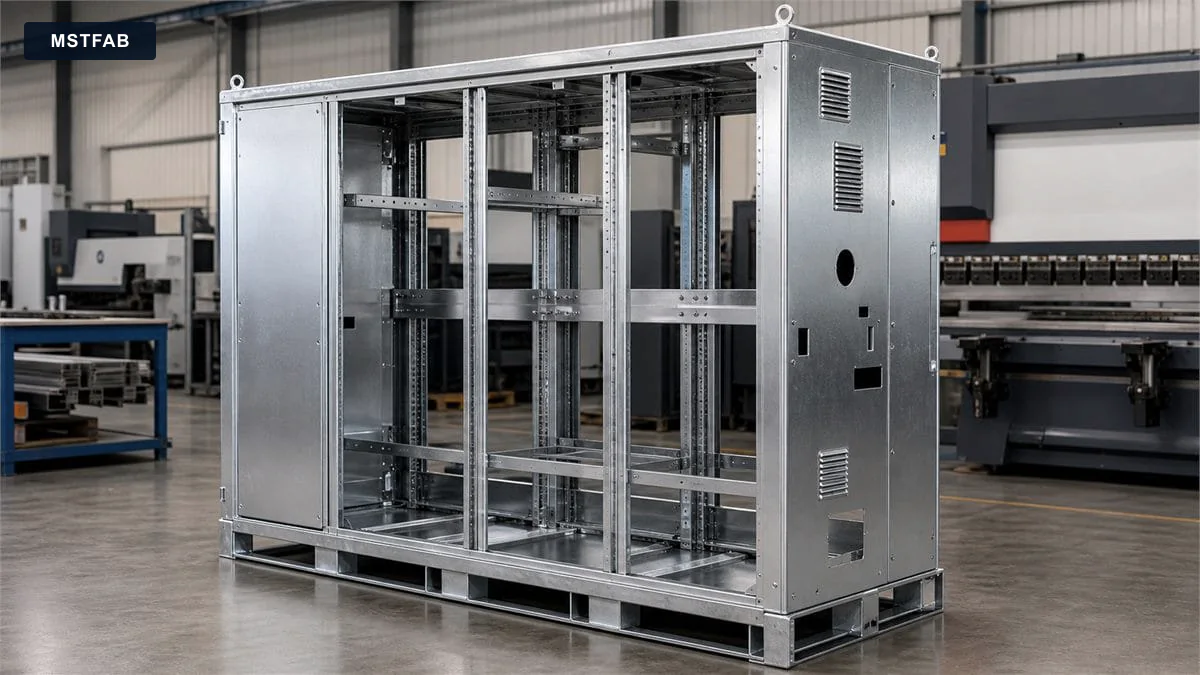
Bare structural skeletons with reinforced bases, rails and partitions for high-load cabinet assemblies.
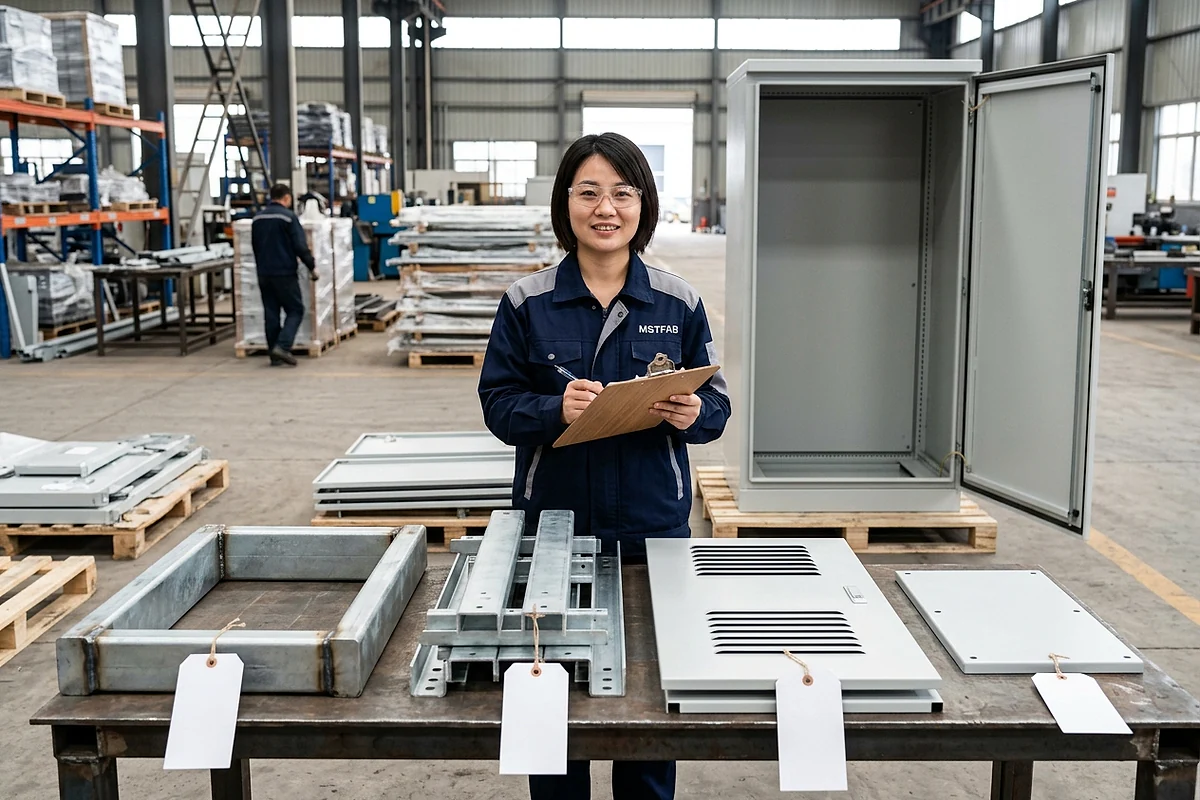
Battery storage enclosure shell fabrication converts a released mechanical design into an empty sheet metal cabinet structure for buyer-installed battery modules, electrical protection, thermal equipment, wiring and controls.
MSTFAB controls the cabinet body, doors, panels, frames, partitions, mounting structures, cable-entry features, ventilation or thermal openings, weldments, finish and specified mechanical hardware. The buyer controls batteries, electrical systems, HVAC or fire-suppression equipment, software, testing and final system certification.
Quick answer: BESS OEMs can buy empty cabinet shells, independent structural parts or replacement cabinet components, each in its own quantity. MSTFAB quotes, ships and repeat-orders them at part level from released drawings. Batteries, electronics and system integration stay with the buyer.
Not every energy storage manufacturer wants a complete cabinet. An OEM may need 50 empty cabinets for one line and 200 extra brackets for another, or replacement panels for equipment already in the field. Quoting everything as “one battery cabinet” makes prices hard to compare and parts hard to reorder.
| Purchasing scope | BOM lines | Inspect, pack and ship by |
|---|---|---|
| Empty cabinet shells | Body, doors, roof, base and specified hardware | Overall dimensions, squareness and door fit; protective supports for the shell |
| Structural parts | Welded base frames, rails, shelves, partitions and reinforcement brackets | Weld geometry and mounting hole patterns per the OEM drawing; bundled and labeled by part number |
| Cabinet panels and plates | Removable panels, doors, cable-entry plates and ventilation covers | Cutout positions and finish; surface-protected packing |
| Replacement and repeat items | Drawing-matched individual parts | Current drawing revision and the original approval baseline; shipped as separate lines |

Build the BOM at part-number level. For each line, state the part number and drawing revision, material grade and thickness, quantity per cabinet, order quantity, and finish, welding and hardware requirements. Mark which parts are shared across cabinet models.
Price, deliver and reorder in batches. Ask for separate prices on parts you expect to buy again, so one panel can be replaced without buying another cabinet. Deliveries can be split by part number or cabinet model as agreed in the quotation. Repeat orders should reference the approved drawing revision, finish standard and critical dimensions, and any revision change should be agreed before production. Large shells need protective supports and powder-coated panels need surface protection, so mixed shipments should be labeled by part.
Responsibility stays clear. Load ratings, structural validation, thermal management, electrical safety, ingress protection and system certification remain with the OEM. An empty metal cabinet does not carry an IP rating or system certification by itself. See our BESS cabinet shell scope matrix, the mechanical interface checklist and our custom sheet metal fabrication services.
Battery storage cabinet shells are large, load-sensitive assemblies that can twist, dent or lose door alignment during long-distance transport. Inspection verifies frame datums, squareness, door fit, mounting zones and thermal interfaces, while packaging restrains doors and panels, protects coating and keeps loose plates, fasteners and accessories labeled.

Related decisions
Compare the shell details that change with weather exposure, solar integration or power distribution.
It is the manufacture of custom empty sheet metal cabinet bodies, doors, panels, structural frames, mounting zones, cable and thermal interfaces, finish and mechanical hardware for buyer-installed battery and electrical systems.
Yes. MSTFAB manufactures custom BESS cabinet shells from 2D drawings, DXF files, STEP files, samples or technical specifications, with DFM review before production.
Overall size, load requirement, door count, battery and electrical zones, thermal interfaces and mounting style are drawing-based. Projects include indoor, outdoor, solar, modular and heavy-duty floor-standing cabinets.
Yes. Specified frames, rails, shelves, mounting plates, hinges, latches, handles, studs, grounding points, brackets, partitions, lifting hardware and gaskets can be installed when approved positions are defined.
Yes. MSTFAB can manufacture drawing-defined rain hoods, gasket channels, protected openings, sloped surfaces, drain paths, plinths and corrosion-focused materials. Final assembled protection rating remains with the responsible OEM or certification body.
MSTFAB uses drawing review, controlled cutting and bending, welding fixtures, datum and squareness checks, door-gap inspection and first-article approval before repeat production.
Send cabinet drawings, overall dimensions, static load, battery and electrical layout, material, finish, quantity, environmental target, thermal interface, cable-entry notes, hardware scope and delivery destination.
Yes. We manufacture custom empty sheet metal cabinet shells, doors, frames, panels and specified mechanical components according to customer drawings.
Yes. Individual structural and enclosure components can be reviewed and quoted separately based on drawings and quantities.
No. We do not supply finished battery storage systems, battery modules, BMS, PCS, inverters, electrical wiring or complete-system certification.
Attach one file, up to 10 MB (STEP/STP, DXF/DWG, PDF, ZIP, or an image). Include material, quantity, and finish details for an accurate quote.
WeChat Contact
Scan to connect with MSTFAB for OEM sheet metal fabrication support.
caroline@mstfab.com
WhatsApp Me Directly
Scan or click for sheet metal fabrication quotes and drawing review.
+86 173 2831 6456