
What critical quality control procedures govern precision stainless steel sheet metal fabrication?
A rigorous stainless steel (304, 316L) fabrication quality plan enforces six mandatory quality controls: (1) Preserving laser-grade PE protective film during CNC nitrogen-assist laser cutting to prevent dross and surface scratches, (2) Using non-marking polyurethane film or hardened stainless tooling on press brakes to eliminate carbon iron contamination and tool witness marks, (3) Controlling TIG welding heat input using rigid squaring fixtures and pulsed arc current to prevent heat-tint oxidation and thermal warping, (4) Blending external weld corners with dedicated non-ferrous ceramic/zirconia abrasives to restore uniform brushed grain direction, (5) Executing chemical passivation per ASTM A967 (citric or nitric acid treatment) to remove embedded free iron and rebuild the passive chromium oxide (Cr2O3) layer, and (6) Conducting non-destructive surface verification using ASTM A380 water-break and ferroxyl tests followed by non-abrasive protective crating.
Precision stainless steel sheet metal assemblies—such as medical chassis, semiconductor cleanroom enclosures, pharmaceutical processing tanks, and food machinery housings—are selected specifically for their superior corrosion resistance and pristine cosmetic appeal. However, stainless steel is notoriously unforgiving during fabrication. Microscopic carbon steel particles transferred from dirty shop tooling can cause surface rusting within days, while uncontrolled welding heat distorts thin panels. Implementing a dedicated stainless quality plan guarantees chemical passivity, tight mechanical tolerances, and flawless cosmetic grain alignment.
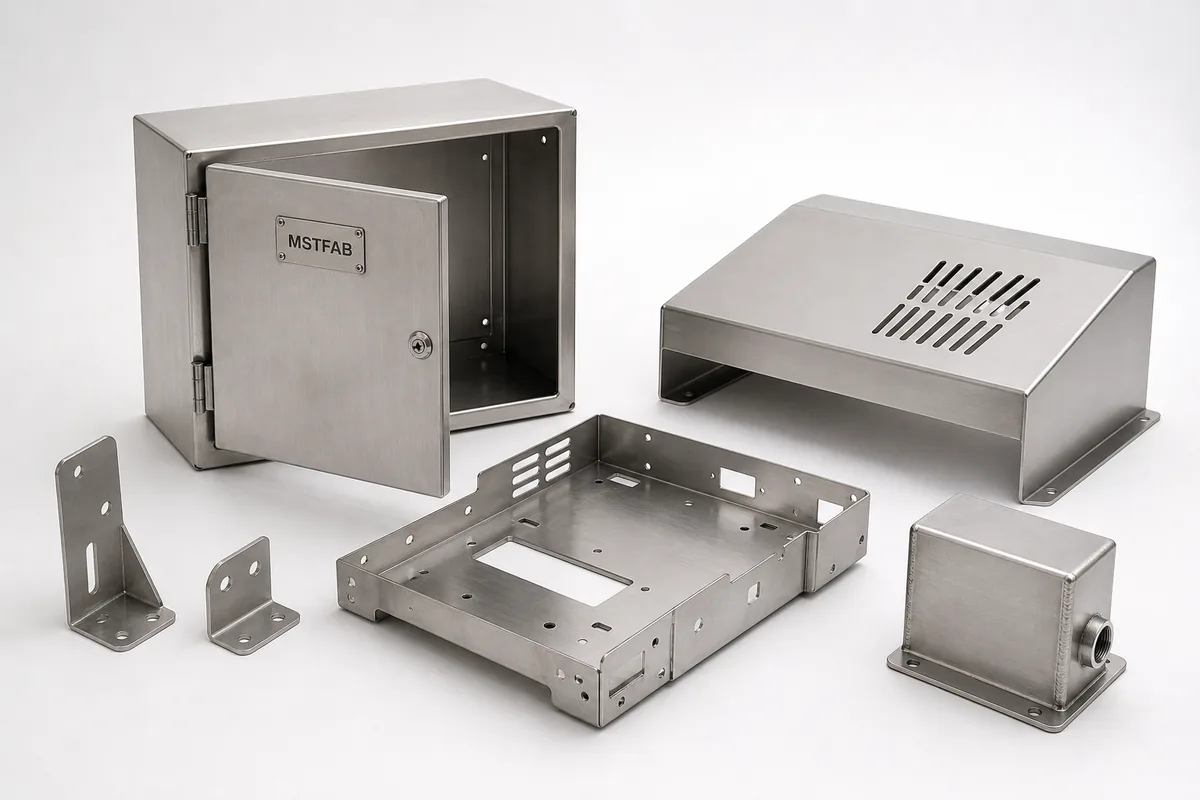
The 6 Quality Gates of Stainless Steel Sheet Metal Fabrication
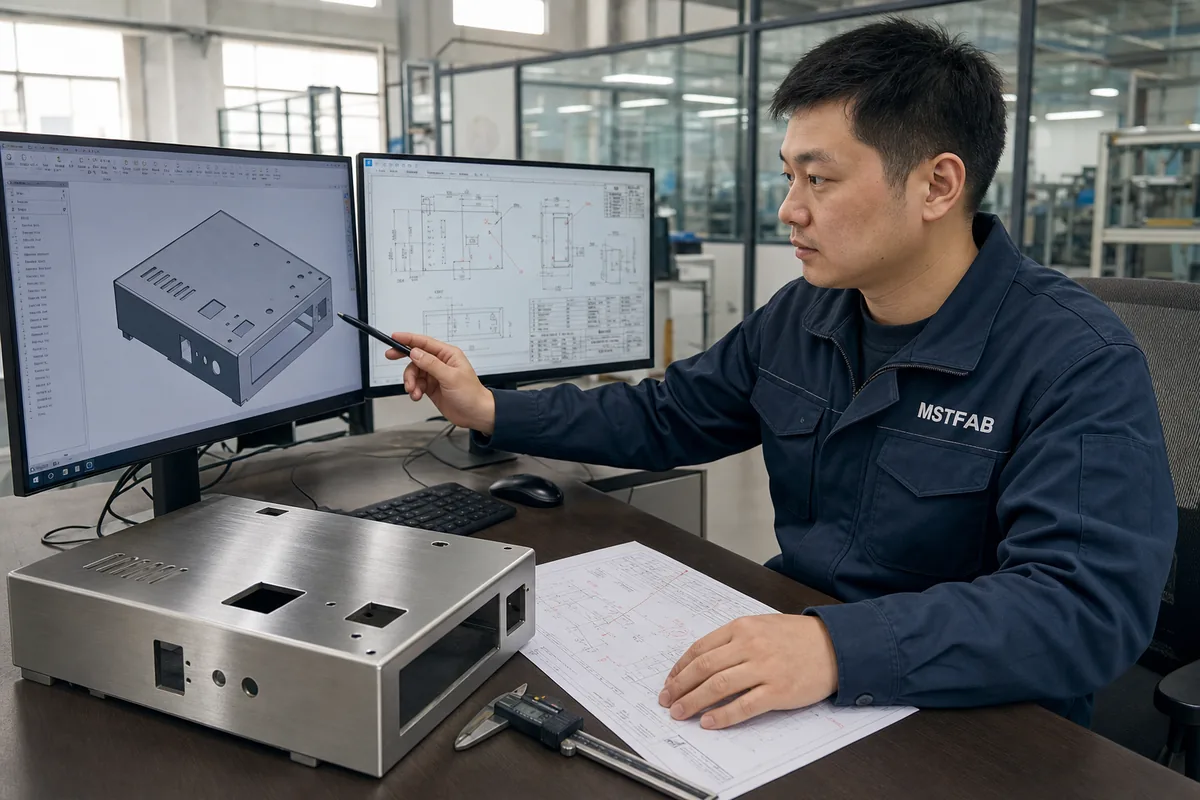
1. Pre-Production DFM and Grain Direction Alignment
Engineering drawings must explicitly define cosmetic surface classifications and grain direction callouts. When multiple panels mate together on a medical console or commercial appliance, misaligned brushing grain lines create an unprofessional visual mismatch. MSTFAB’s CAM nesting software aligns all flat blank geometries parallel to the sheet mill polish grain direction.
2. Laser Cutting Through Protective PE Surface Film
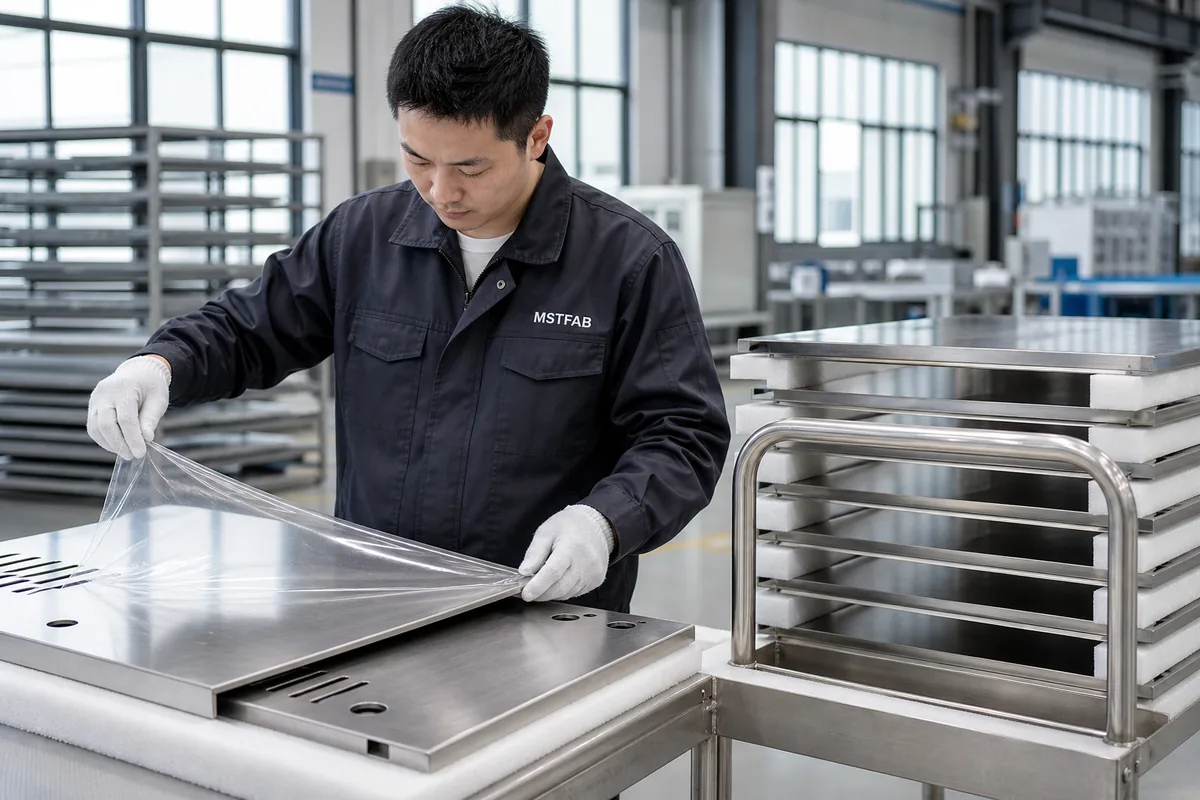
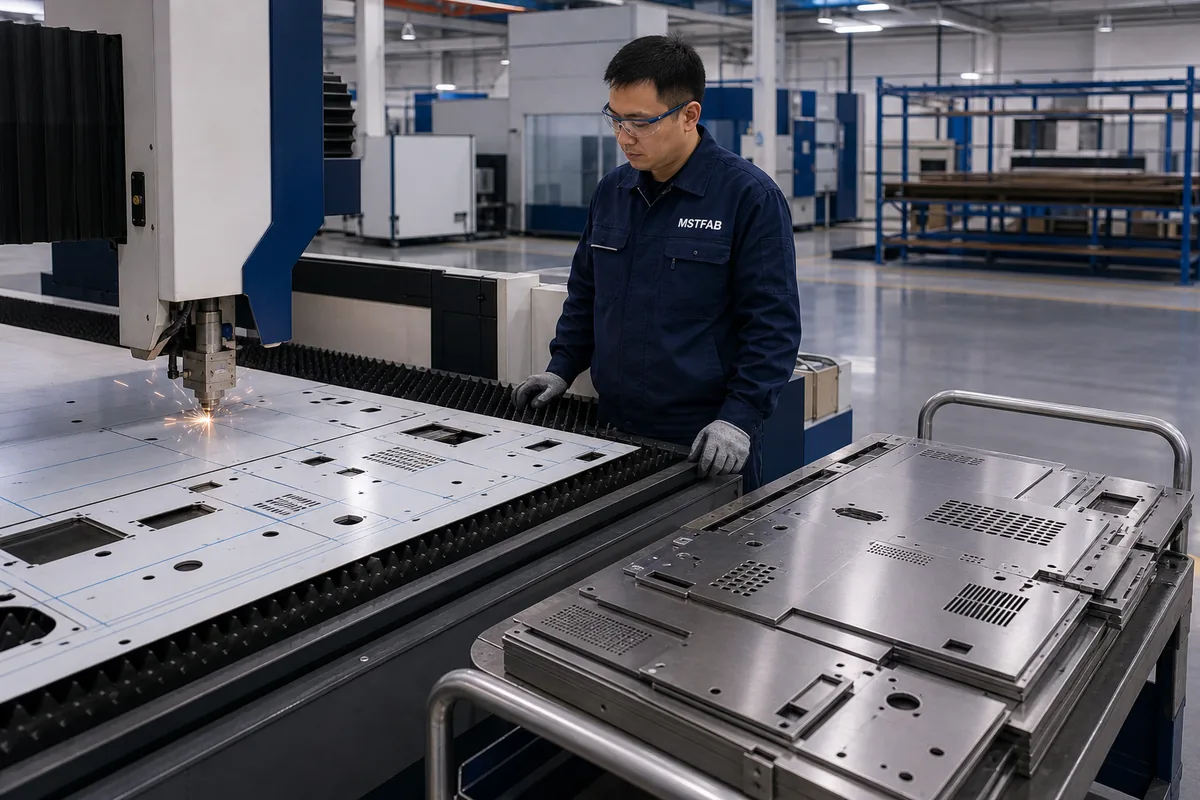
To protect delicate #4 brushed or 2B finishes, raw stainless sheets arrive with 100 μm heavy-duty laser-grade polyethylene (PE) protective film. CNC fiber lasers cut parts using high-purity nitrogen assist gas (99.999% N2) at 18–20 bar pressure. Nitrogen cutting prevents edge oxidation, ensuring clean, silver, dross-free edges that require zero secondary acid descaling before welding.
3. Tooling Protection During CNC Press Brake Bending
Direct contact between standard carbon steel press brake dies and stainless sheet embeds microscopic iron particles into the outer bend radius, which will later rust into unsightly brown streaks. MSTFAB uses dedicated stainless tooling dies or lays protective urethane tape over the V-die shoulders, eliminating tool witness lines and iron cross-contamination.
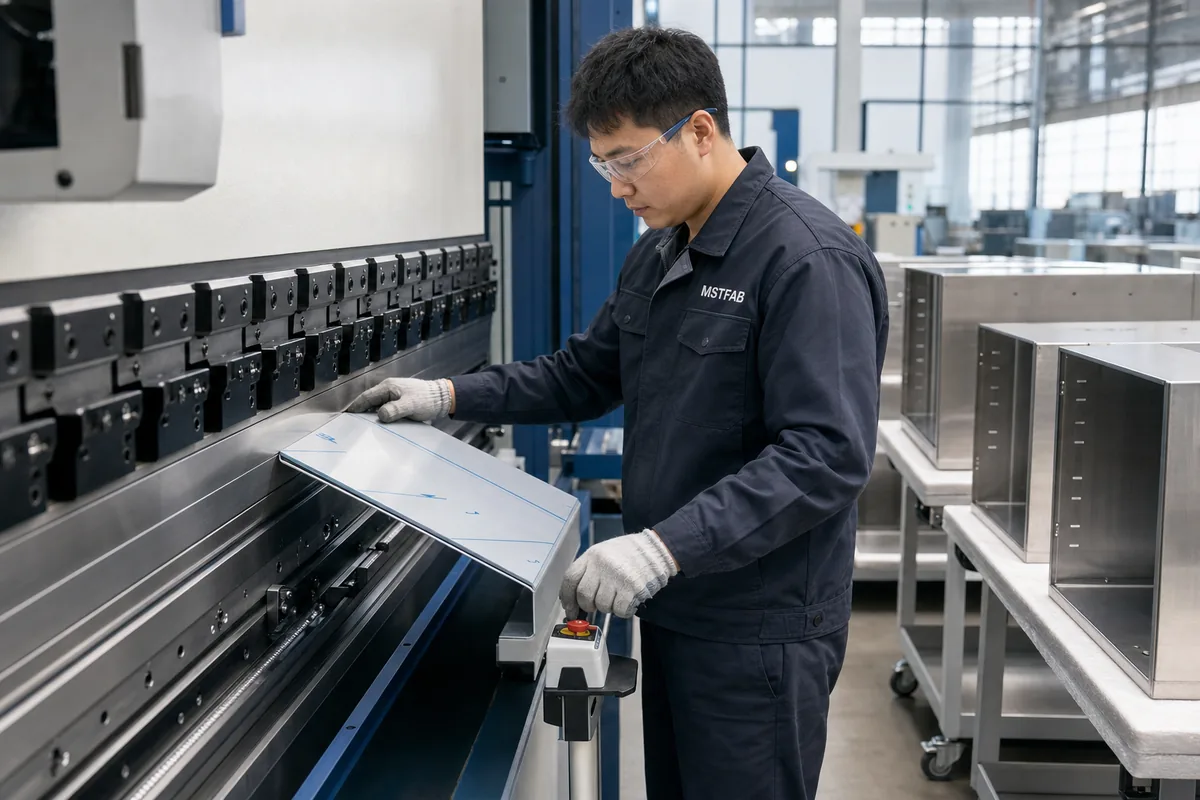
4. Fixture-Controlled TIG Welding and Heat Input
Stainless steel has high thermal expansion and low thermal conductivity compared to carbon steel, making it highly susceptible to heat warping. Our welders use rigid modular 3D squaring fixtures with copper backing chill bars. Copper rapidly draws heat away from the weld zone, minimizing the heat-affected zone (HAZ) and preserving diagonal frame squareness within ±1.0 mm.
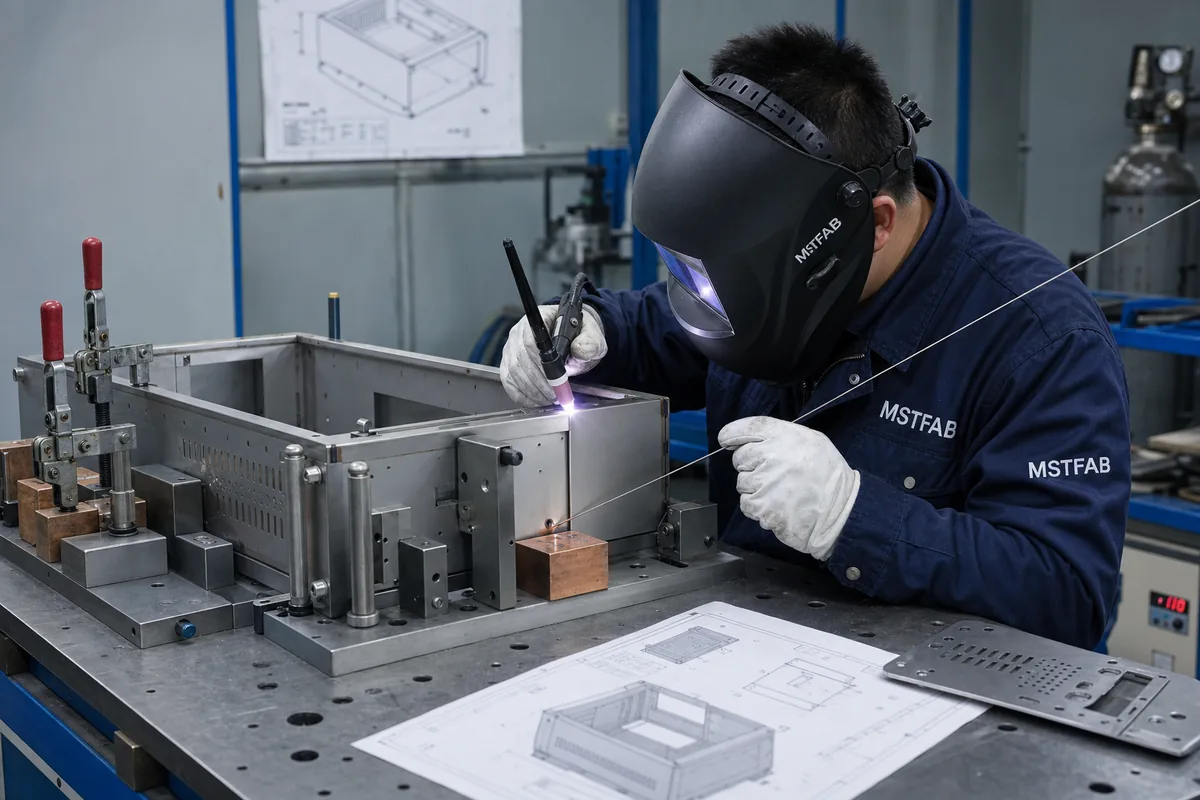
5. Weld Corner Blending and Grain Restoration
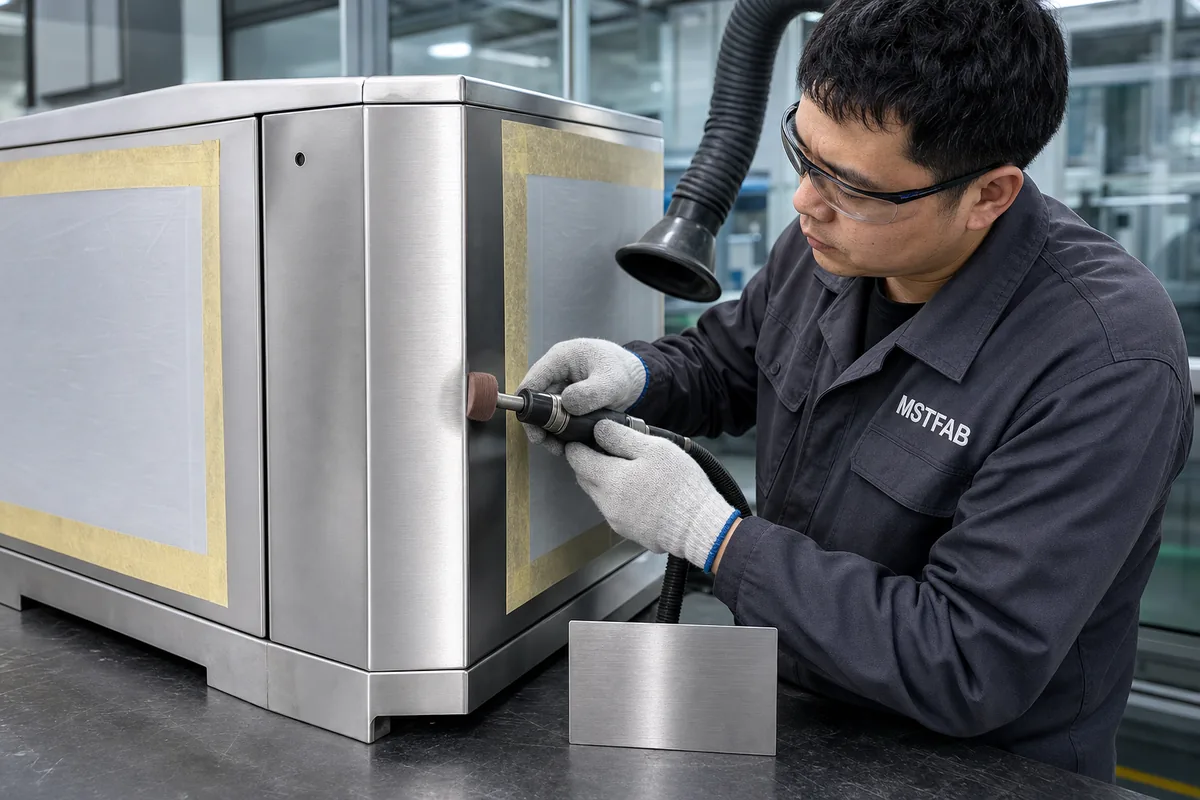
External corner welds must be blended seamlessly into adjacent sheet metal. Technicians grind weld beads flush using dedicated non-ferrous ceramic flap discs, then restore the linear brushed pattern using Scotch-Brite abrasive drums and linear graining tools, achieving an unblemished Cosmetic Class A surface.
6. Chemical Passivation (ASTM A967) and Metrology Sign-Off
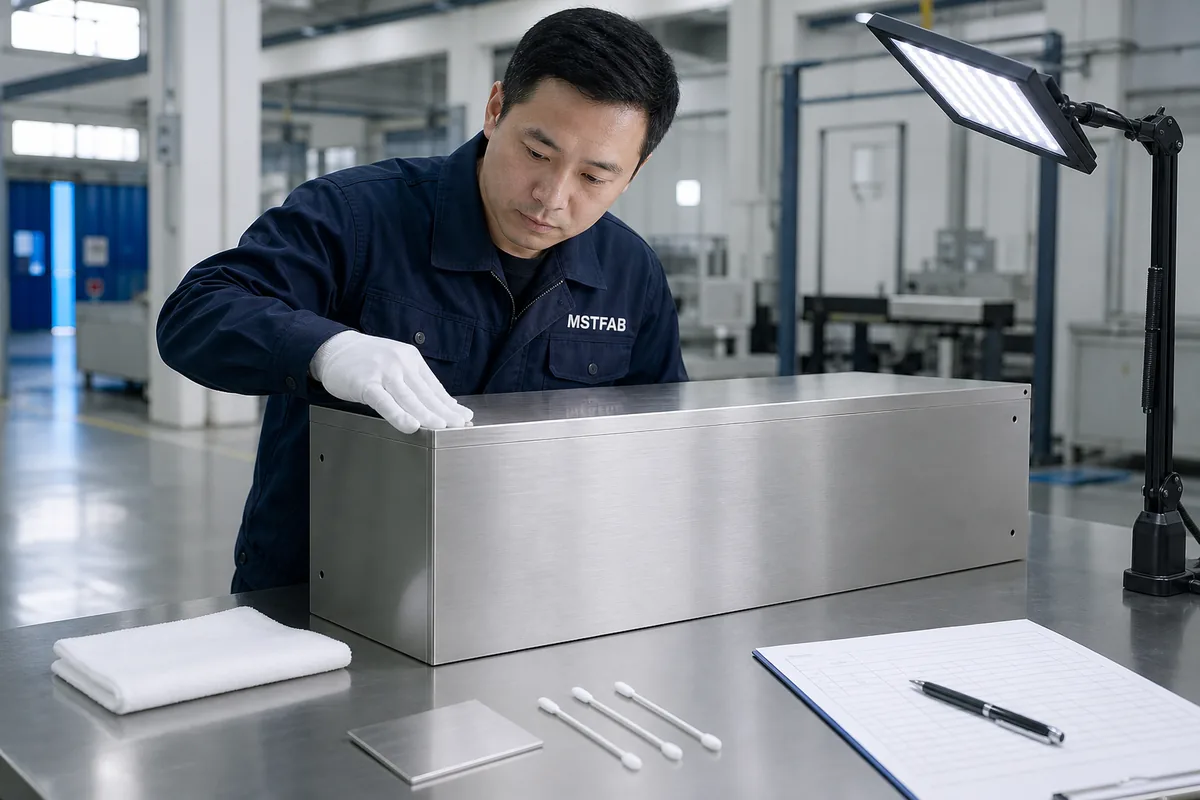
Welding and grinding deplete chromium at the surface. Completed parts undergo chemical pickling and passivation per ASTM A967 (citric acid formulation CitriSurf or nitric acid immersion). Passivation dissolves free iron and accelerates the formation of an enriched chromium-oxide passive barrier. Parts undergo water-break and ferroxyl testing before First Article dimensional sign-off.
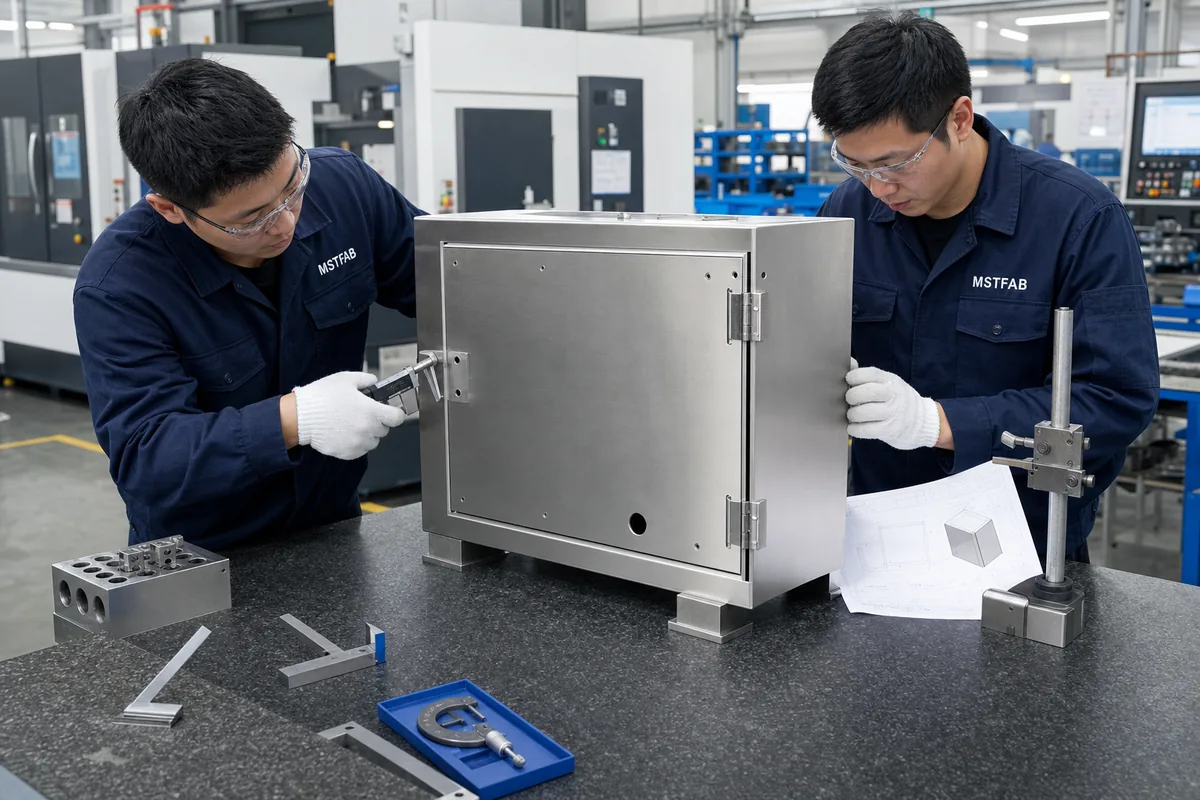
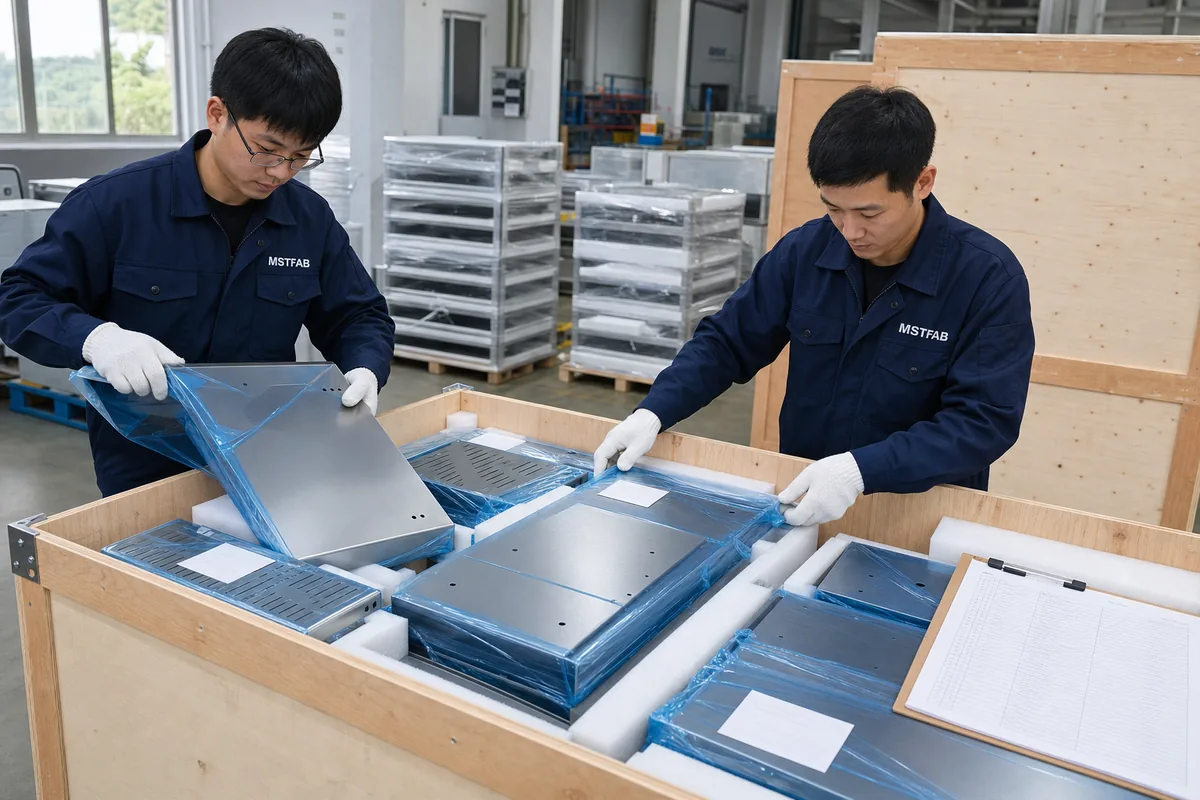
Stainless Steel Fabrication Quality Control Plan Matrix
The structured quality assurance plan below defines inspection checkpoints, test methods, and acceptance criteria:
| Fabrication Stage | Quality Control Activity | Governing Industry Standard | Acceptance Criteria | Inspection Frequency |
|---|---|---|---|---|
| 1. Incoming Material | Alloy chemistry & gauge thickness check | ASTM A240 / EN 10088-2 | MTR heat lot match; XRF ≥ 8.0% Ni (304) | 100% of received coils/sheets |
| 2. CNC Laser Cutting | Nitrogen-assist cutting edge inspection | ISO 9013 Range 2 | Zero oxide scale, dross-free, ±0.05 mm profile | First off + 1 part per nest |
| 3. Press Brake Forming | Bend angle & surface marring check | DIN 6935 | ±0.3° angle; zero die marks/iron embeds | 100% first piece, sampling per lot |
| 4. TIG Welding | Weld profile & frame squareness | AWS D1.6 Structural Stainless | Full penetration, zero porosity, ±1.0 mm square | 100% visual inspection |
| 5. Grain Blending | Surface roughness & grain alignment | Cosmetic Class A Standards | RA ≤ 0.8 μm; seamless transition | 100% external visible seams |
| 6. Passivation Verification | Free iron & water-break testing | ASTM A967 / ASTM A380 | Zero blue coloration in ferroxyl test; continuous water film | Test coupon per passivation lot |
Partner with MSTFAB for Precision Stainless Steel Fabrication
MSTFAB provides dedicated contract manufacturing for precision 304 and 316L stainless steel enclosures, medical consoles, and cleanroom chassis. Operating under strict contamination-control protocols, our facility features nitrogen-assist fiber lasers, non-marking press brakes, certified TIG welders, and ASTM A967 chemical passivation. Contact our stainless engineering team today.
 WeChat Contact
 WhatsApp Me Directly