

Guards and covers
Belt guards, drive covers, shields and removable access panels with safer edges and practical service access.
MSTFAB fabricates guards, panels, brackets, hoppers and welded assemblies from agricultural OEM drawings. We review load paths, bends, finishes and inspection requirements before production.
A clean purchasing path keeps quotation assumptions, first-article evidence and production revisions connected. That is usually more valuable than a heroic promise made before anyone has opened the CAD file.
An agricultural sheet metal parts manufacturer converts OEM drawings into cut, bent, welded and finished metal components used on farm machinery and material-handling equipment. Typical work includes safety guards, access panels, mounting brackets, chutes, hoppers, frames, shields and enclosure panels rather than complete tractors, harvesters or control systems.

The component geometry may be simple; the operating conditions rarely are. Each part family is reviewed around its mounting points, service access, coating coverage and the abuse it will meet in the field.
Belt guards, drive covers, shields and removable access panels with safer edges and practical service access.
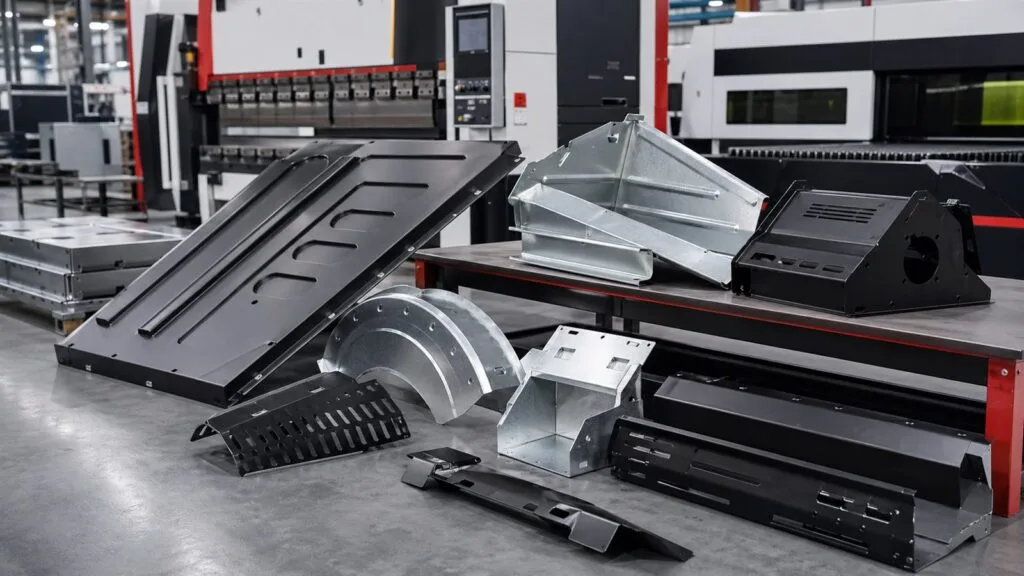
Side panels, service doors, shields, brackets and formed housings for combine and crop-handling equipment.

Mounting plates, reinforcement brackets, covers and formed channels built around repeatable hole location.

Transfer chutes, covers, supports and wear-area panels for grain and bulk material movement.

Pump covers, control-box shells, brackets and coated or stainless parts for wet and chemical exposure.

Fenders, supports, mounting plates, tool-box shells and fabricated panels for agricultural trailers.

Welded bases, supports and machinery modules reviewed for fit-up, distortion and load transfer.
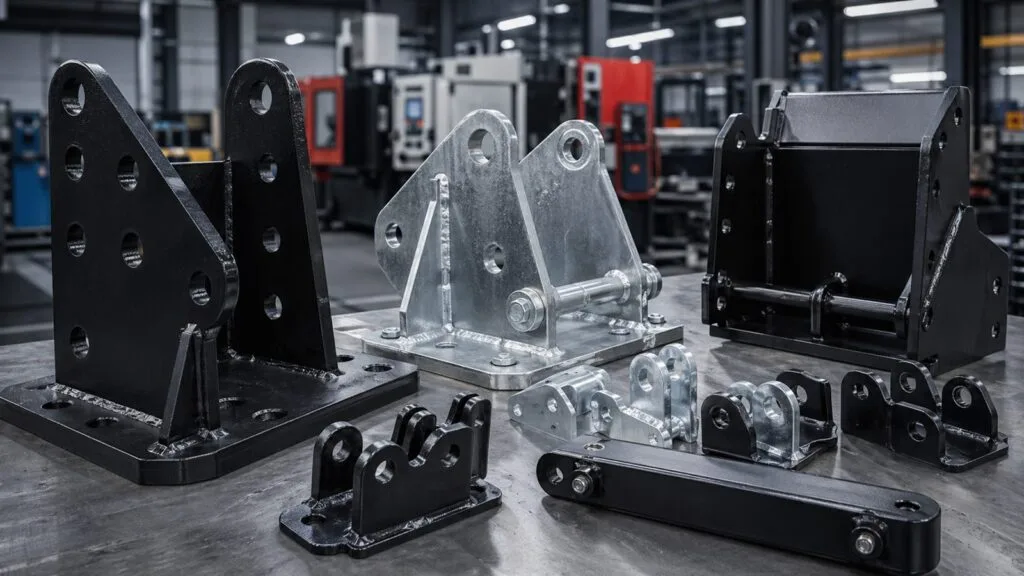
Connection plates, gussets, brackets and protective parts for OEM attachment and implement programs.
Agricultural equipment OEMs sourcing low-volume sheet metal parts should confirm manufacturing feasibility, prototype approval, functional fit and quantity-based pricing before repeat production. Subsequent orders should use controlled drawings, approved materials, critical inspection requirements and agreed finishing specifications.
MSTFAB manufactures drawing-based farm machinery guards, covers, mounting brackets, equipment panels and welded mechanical components. We supply the metal parts, not complete tractors, harvesters, sprayers or agricultural machines. The goal is to make the next batch as predictable as the approved first batch, not simply to produce one attractive prototype.

Picture an agricultural OEM developing a protective guard for a new seeding machine. Quotation basis, fixtures, sample approval and inspection evidence all shift between development and regular production.
| Purchasing stage | Example quantity | What buyers care about most |
|---|---|---|
| Prototype | 2–5 pcs | Can it be made to the drawing, and are the mounting holes in the right place? |
| Pilot Batch | 20–50 pcs | Sample confirmation, production method and quality consistency |
| Initial Production | 100–300 pcs | Tiered pricing, production scheduling and complete delivery |
| Repeat Orders | Per purchasing plan | Drawing revision, stable quality and delivery scheduling |
Quantities are purchasing-scenario examples, not MSTFAB minimum order quantities or lead-time commitments. For validation planning from sample to small batch, see our prototype and low-volume sheet metal fabrication guide. For mixed part numbers and recurring releases, see high-mix low-volume sheet metal fabrication.
Illustrative quantities only. These figures are planning scenarios for comparison. They are not MSTFAB minimum order quantities, capacity limits or delivery commitments. Actual quantities, pricing and lead times depend on the drawing, material, finish and inspection scope confirmed in the quotation.

An agricultural bracket may look correct while its mounting holes are slightly misaligned. A painted guard may look attractive while its flange interferes with the machine assembly. Before moving from samples to repeat orders, OEM engineering should confirm the functional requirements. Depending on the component, checks may include:
Where required, buyers can request first-article inspection records for the agreed critical characteristics. A successful sample should establish a controlled manufacturing baseline, not just a favorable first impression.
When planning a new agricultural product, share the expected order development instead of asking for a single unit price. For example, an RFQ might request quotation tiers for 20, 100 and 500 pieces. These are comparison quantities, not MSTFAB minimum order requirements.
A useful quotation states whether the price includes:
Special fixtures or dedicated tooling should be listed separately where required. A lower production unit price means little if essential operations have been excluded.
Agricultural OEM parts often change during product development. A mounting hole moves. A cover gains another flange. The finish changes for a different operating condition. Before repeat production, confirm each link in this chain:
Any proposed manufacturing change that affects approved requirements should follow the agreed change-control process. The next production order should not accidentally use a STEP model from Tuesday and a PDF drawing from last Friday.
Agricultural equipment makers often face seasonal demand and scheduled production peaks. Overseas buyers should discuss expected order quantities, forecast updates and shipment schedules before committing to repeat production.
For recurring programs, review material availability, production capacity, finishing lead time and export packing requirements. A supplier should confirm realistic delivery terms rather than promise that every future order will ship immediately. The OEM sets demand forecasts and stock levels. The fabricator confirms the manufacturing schedule it can support.
Guards, brackets and covers may be exposed to moisture, dust, vibration and agricultural chemicals, so the OEM should specify the material and finish for the actual application. MSTFAB can fabricate carbon steel, galvanized steel, stainless steel and aluminum components, depending on drawing requirements and feasibility.
Powder coating and other project-specific finishing may be coordinated through established external partners. For repeat batches, keep the approved finishing requirements, appearance references and inspection criteria. A change in color or coating should not silently become a change in corrosion-performance expectations.
This helps the supplier quote the actual purchasing stage instead of guessing the eventual production quantity.
| RFQ information | Prototype | Repeat production |
|---|---|---|
| STEP/PDF drawings | Current design | Released revision |
| Material specification | Confirm suitability | Maintain approved specification |
| Quantity | Sample requirement | Batch and forecast quantities |
| Critical dimensions | Functional fit checks | Controlled inspection plan |
| Hardware | Verify assembly | Approved parts and positions |
| Finish | Sample approval where needed | Approved finish specification |
| Packaging | Basic agreed protection | Repeatable export packing standard |
MSTFAB provides custom sheet metal fabrication services for overseas agricultural equipment OEMs: drawing-based covers, guards, panels, brackets, formed parts, welded frames and empty mechanical enclosure shells. Depending on the approved project, manufacturing may include laser cutting, CNC bending, welding, hardware installation, coordinated finishing, inspection and export packaging. MSTFAB manufactures the approved metal components. The OEM remains responsible for complete machine design, structural validation, field performance and regulatory compliance.
MSTFAB manufactures custom agricultural sheet metal guards, covers, brackets, panels and welded mechanical components from customer-approved drawings.
Whether you need a small pilot batch or recurring production orders, send us your STEP and PDF drawings, material requirements, quantities and critical dimensions.
We can review the fabrication route, prototype requirements, quantity-based pricing and inspection scope before quotation.
Email: [email protected] · Website: https://mstfab.com/
You design the agricultural equipment. We fabricate the approved sheet metal parts.
Send your drawings and production stageA guard or enclosure panel has to fit the machine and survive its working environment. Tell us where it mounts, which conditions it faces in the field and how it will be serviced before the fabrication route is agreed.
Identify mounting loads and critical interfaces so thickness, returns, gussets, welds and fastener retention can be reviewed against the drawing.
Mark likely buildup areas and clean-out access. Drainage, overlap direction and exposed edges can then be considered before cutting.
State the moisture, fertilizer or wash-down exposure so the base metal, pretreatment and specified finish can be evaluated together.
Show the service envelope, removable covers and tool clearance so the finished part remains accessible after OEM assembly.

The sequence is tailored to the released drawing. At each handoff, the next operation inherits the right revision, material and agreed inspection points.

Resolve revision, material, quantity and mating features before the first blank is cut.

Cut profiles, holes and slots to the released file and keep part identification clear.

Check bend sequence, tooling clearance and datums for repeatable assembly fit.
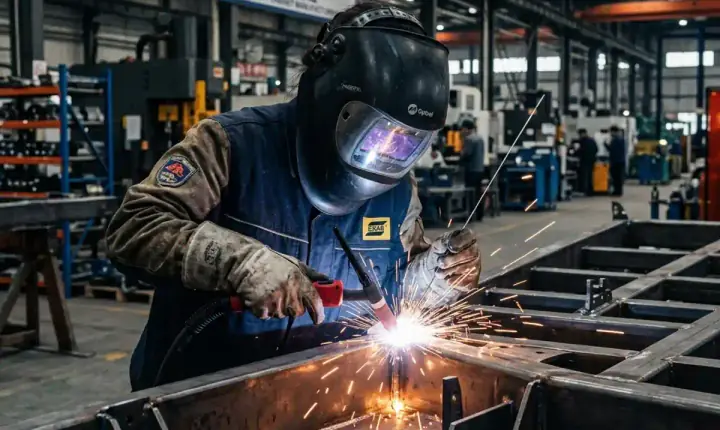
Review the fixture and weld sequence around critical interfaces and distortion risk.

Agree pretreatment, masking and coating requirements for the intended exposure.

Verify specified features and protect visible faces for the agreed shipping route.

There is no single "agricultural steel." A dry indoor grain-handling bracket and a fertilizer-exposed sprayer housing should not inherit the same material and finish by habit. MSTFAB reviews the drawing, environment and production quantity before recommending a practical route.
Inspection should follow the real assembly risk. The table gives practical items to identify on the drawing, quality plan or purchase order instead of asking every dimension to be treated as equally critical.
| Control point | Why it matters on agricultural equipment | Useful buyer evidence |
|---|---|---|
| Released revision | Prevents old hole patterns, materials or finish notes from returning to production | Revision reference on traveler and inspection record |
| Mounting datums | Protects interface alignment across frames, covers and attachment points | First-article dimensional report or agreed check sheet |
| Welded geometry | Controls distortion, squareness and fit of fabricated assemblies | Fixture check, dimensional report or fit-up photos |
| Hardware and threads | Supports service access and repeatable equipment assembly | Location, type and thread verification where specified |
| Finish coverage | Reduces exposed edges and premature corrosion in field use | Approved color/texture sample and coating checks by agreement |
| Packaging protection | Prevents coated panels and formed edges from arriving damaged | Packing standard and pre-shipment photos |
Buyer confidence comes from a released revision, known critical interfaces and records matched to the order. MSTFAB's engineering and quality team can review those needs with you before production.

Confirm the current drawing, manufacturability questions and the dimensions that protect installation fit.
Specify which datums, hole patterns, bends or welded interfaces need an agreed check sheet or dimensional report.
Agree visible-face condition, installed hardware and packing evidence for the approved order.
MSTFAB supplies drawing-based sheet metal parts and mechanical assemblies, not complete agricultural machines, electronics or hydraulic systems. The OEM remains responsible for end-product validation and regulatory compliance.
A useful quotation needs more than a screenshot and the word "urgent." Send the manufacturing intent along with the geometry so material, tooling, inspection and packing assumptions are visible before price comparison.
Best starting package: a STEP file plus a controlled PDF drawing. Add DXF files when your process requires buyer-controlled flat patterns.
Compare nine drawing-based product families for tractors, harvesters, sprayers and grain-handling equipment. MSTFAB manufactures custom agricultural sheet metal parts from your STEP, DWG or PDF files, with laser cutting, CNC bending, welding, finishing, assembly and export packing available under one project.
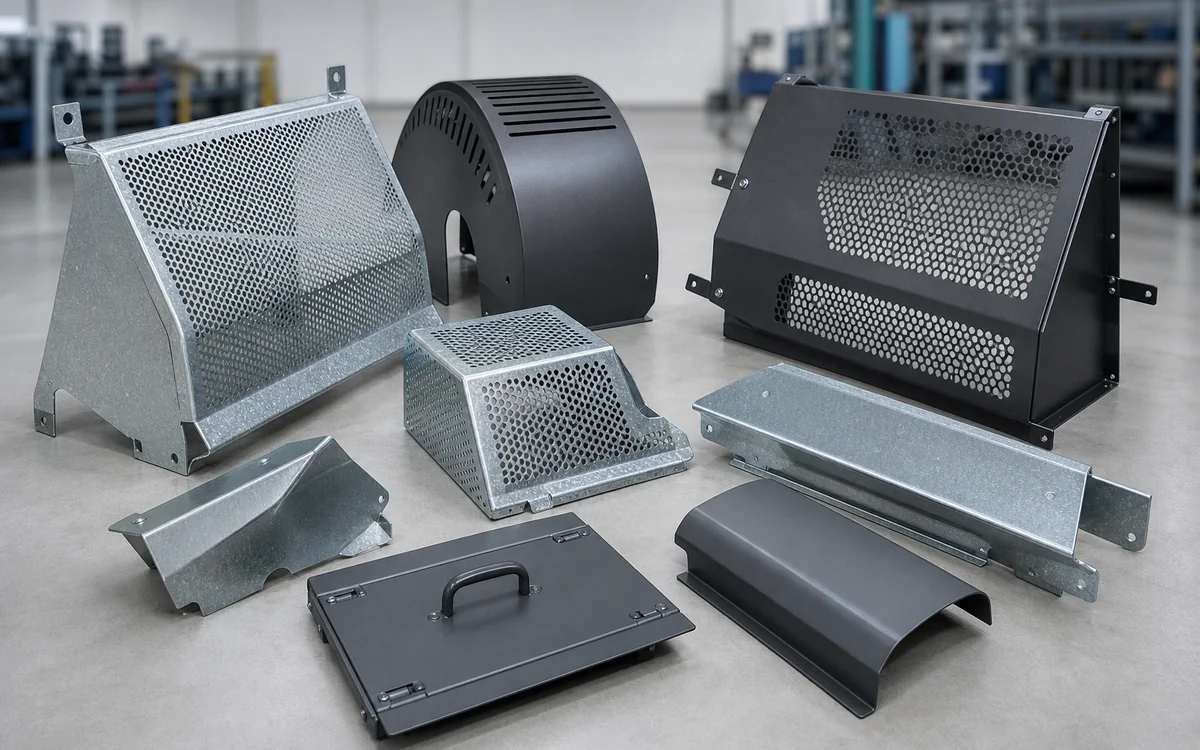
Perforated guards, removable covers and service panels for combine harvesters and crop-handling equipment. Available in mild steel, galvanized steel or stainless steel.
Typical build: laser cut, CNC bent, welded and powder coated
Drawing-based mounting brackets, gussets and reinforcement plates for agricultural machinery OEMs that need repeatable holes, stable fit-up and durable finishes.
Typical build: heavy-gauge steel, formed flanges and welded gussets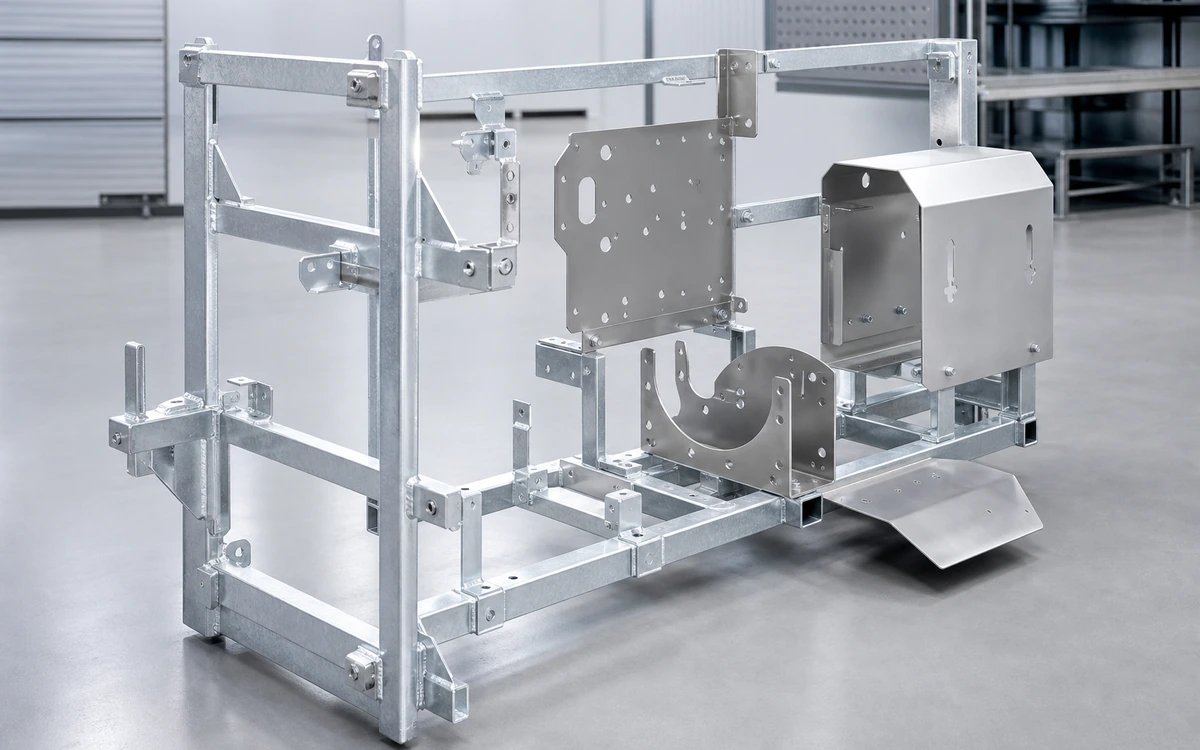
Fabricated sprayer frames, equipment brackets and protective panels planned for chemical exposure, outdoor service and straightforward field maintenance.
Typical build: galvanized or stainless steel with corrosion-aware finishing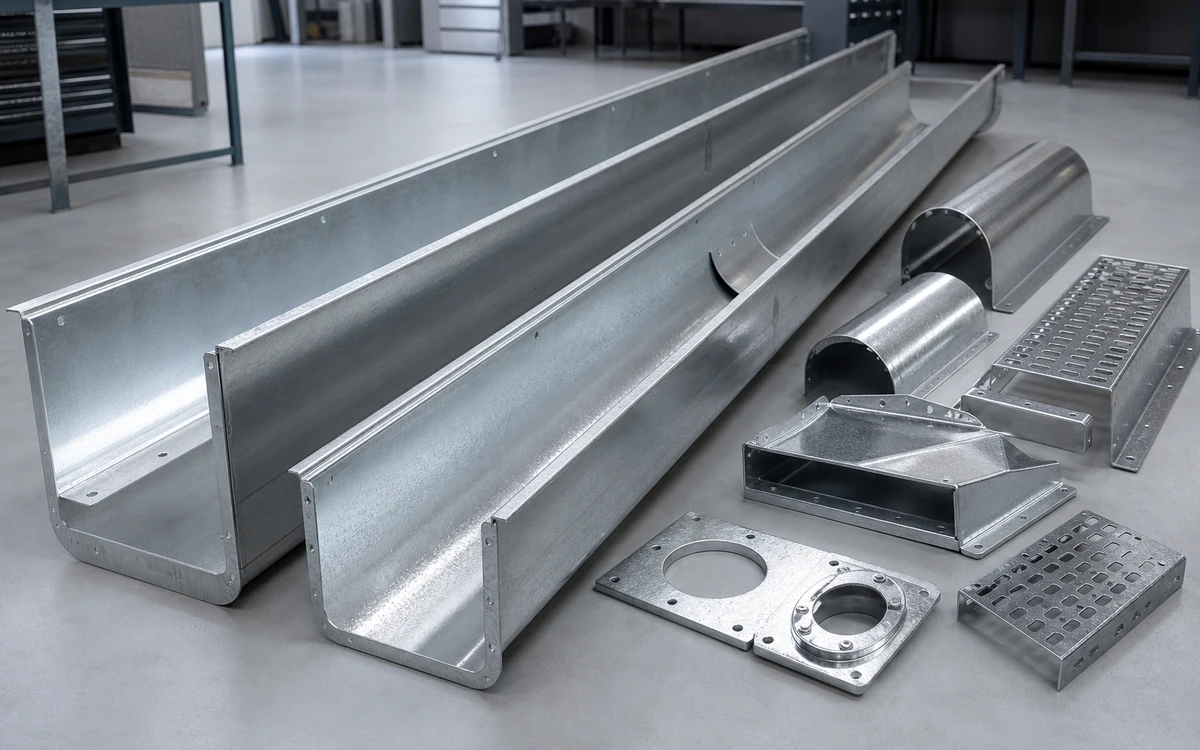
Custom auger covers, trough panels, channels, guards and bearing plates made to match your conveying layout and assembly datums.
Typical build: galvanized sheet, wear-aware details and repeatable mounting holes
Formed and welded hoppers, funnels and transition chutes for seed, grain and feed equipment, with flow path, clean-out access and seam placement reviewed before production.
Typical build: multi-bend panels, controlled weld sequence and smooth discharge paths
Machine bases, equipment supports and welded frame assemblies for farm machinery projects that need controlled geometry before panels and hardware are installed.
Typical build: fixture welding, dimensional inspection and outdoor coating
Hitch plates, connection brackets and structural gussets for tractor implements, manufactured to your hole pattern, material grade and load-path requirements.
Typical build: thick steel plate, precision holes and reinforced weldments
Transfer chutes, inspection covers, guards and support panels for storage and conveying systems, planned around product flow, service access and abrasion.
Typical build: galvanized panels, formed channels and replaceable wear areas
Custom formed panels, channels, covers and brackets for farm equipment, with bend radius, flange access and datum strategy reviewed before the first part is made.
Typical build: prototype-to-production press-brake forming with drawing controlMSTFAB manufactures drawing-based guards, covers, panels, brackets, mounting plates, hoppers, chutes, frames, shields and welded mechanical assemblies. We supply metal components, not complete agricultural machines or their electronic, hydraulic and power systems.
Send a STEP model and controlled PDF drawing when available, plus material, thickness, finish, quantity, critical tolerances, weld notes, hardware, visible surfaces and packaging requirements. DXF or DWG files can support flat-pattern work when appropriate.
Yes. A practical program normally moves from drawing review to prototype or first-article approval and then repeat production under the released revision. The right fixtures and inspection plan depend on geometry, quantity and risk.
Small pilot orders can be reviewed according to drawing complexity, material, manufacturing feasibility and quantity. Order requirements and pricing should be confirmed during quotation.
It may, because setup and manufacturing costs can be distributed differently. However, pricing also depends on material, tooling, finishing, inspection and the agreed production scope.
Prototype or first-article approval can help verify the agreed design and manufacturing requirements before further production. The specific approval process should be agreed with the OEM.
Yes, provided the drawings remain the currently authorized revisions and no approved changes have superseded them.
Carbon steel with a suitable finish, galvanized steel, stainless steel and aluminum are common choices. The right option depends on load, weldability, moisture, fertilizer or chemical exposure, weight, appearance and budget.
Yes, when the reporting scope is agreed during quotation. Buyers should identify the critical dimensions, datums, fit checks, finish checks and documentation needed instead of assuming every dimension requires a full report.
Protection may include film, foam, separators, corner protection, individual bags, cartons, pallets or crates. The packing method is selected around part size, visible faces, weight, coating sensitivity and shipping route.
Choose the field problem you are trying to prevent. These guides cover drawing control, load and vibration, enclosure protection and sourcing for the USA market.
Start here when the RFQ includes guards, panels, brackets, hoppers or welded assemblies and you need one practical overview of drawing review, materials, finishing and inspection.
Read buyer guide →Use this guide for reinforced brackets, thick plates and structural parts where load paths, fatigue, hole position and weld distortion matter more than surface appearance alone.
Read buyer guide →Review sealing interfaces, grounding, thermal openings, corrosion protection and field service access before an empty control-box shell reaches electrical integration.
Read buyer guide →A buyer-focused checklist for long service seasons, outdoor exposure, batch consistency, trans-Pacific packing and the cost of discovering fit problems during assembly.
Read buyer guide → WeChat Contact
Scan to connect with MSTFAB for OEM sheet metal fabrication support.
[email protected]
 WhatsApp Me Directly
Scan or click for sheet metal fabrication quotes and drawing review.
+86 173 2831 6456