
FIELD-LOAD DRAWING CHECKLIST
Agricultural sheet metal components should be specified from the real field condition: vibration, impact, mud, crop debris, washdown, corrosion exposure, operator contact, service tools and the loads transferred through brackets, guards, panels and welded frames.
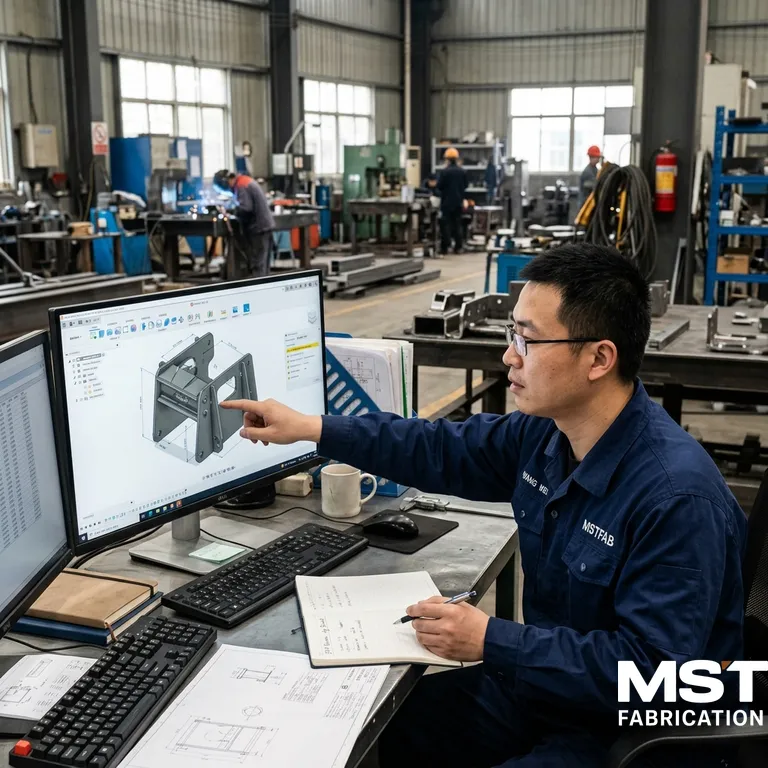
Translate Field Conditions Into Drawing Inputs
| Field condition | Drawing input | Review question |
|---|---|---|
| Vibration and cyclic load | Load path, mounting points, welds and fatigue-sensitive details | Where will movement concentrate? |
| Mud and crop debris | Drainage, open corners, cleanout and service access | Can material collect or block maintenance? |
| Impact and operator contact | Clearances, edge condition, stiffness and protected zones | What can be struck, touched or stepped on? |
| Outdoor exposure | Material, pretreatment, finish, masks and repair expectation | Which surfaces face moisture, chemicals or abrasion? |
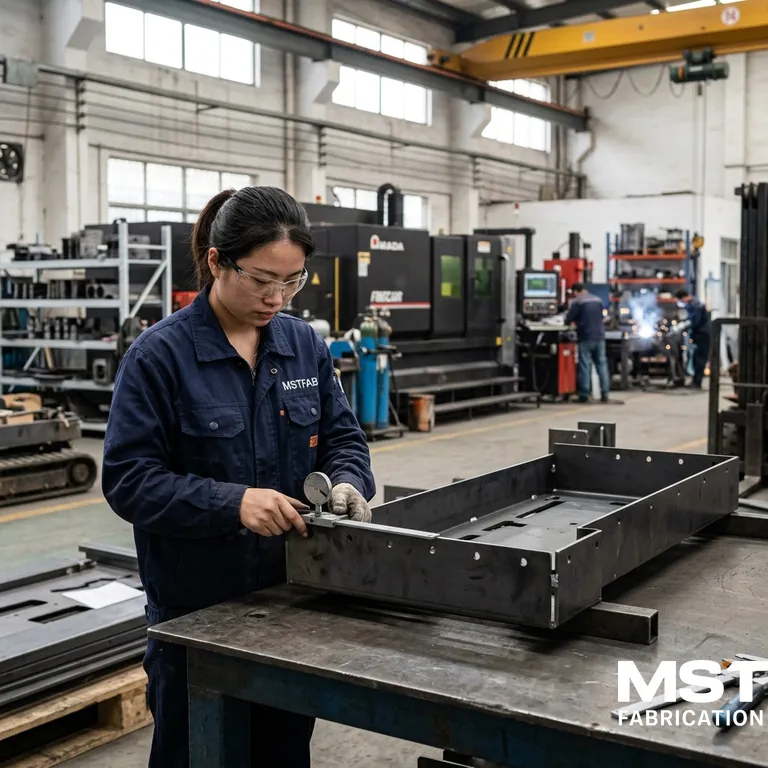
Control Holes and Bends From Assembly Datums
A bracket can match its overall width and still miss the machine if mounting holes, bends and weldments are referenced from unrelated edges. Identify the mating features, assembly direction, adjustment slots and tool access. Measure the completed part from functional datums after forming or welding.
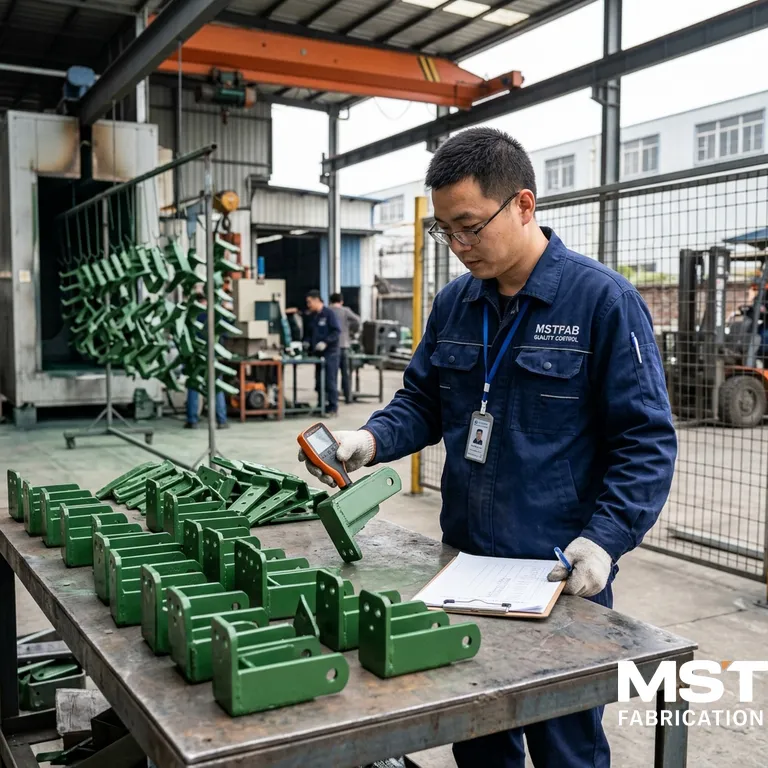
Specify Finish From Exposure and Maintenance
Choose material and coating from the actual environment, forming and welding route, abrasion risk and maintenance practice. Mark grounding or assembly masks, visible faces and areas that must remain free of coating. A color name alone is not a complete finish specification.
Buyer Trust Table
| Supplier statement | Evidence to request | Buyer value |
|---|---|---|
| “Heavy duty” | Defined load cases, material and approved geometry | Connects strength to a real condition |
| “Holes align” | Functional datum record or fixture check | Reduces installation rework |
| “Outdoor finish” | Named pretreatment, coating and acceptance criteria | Defines the finish route without a vague lifetime claim |
| “Guard complete” | OEM approval against machine-level risk and access requirements | Keeps final safety validation with the equipment owner |
Agricultural Component RFQ Checklist
- Assembly model and mating parts supplied
- Field loads and vibration described
- Impact and operator-contact zones marked
- Mud, debris and drainage reviewed
- Service tools and removal path shown
- Material and weld requirements controlled
- Functional datums and CTQs identified
- Finish and mask areas specified
- First-article fit check agreed
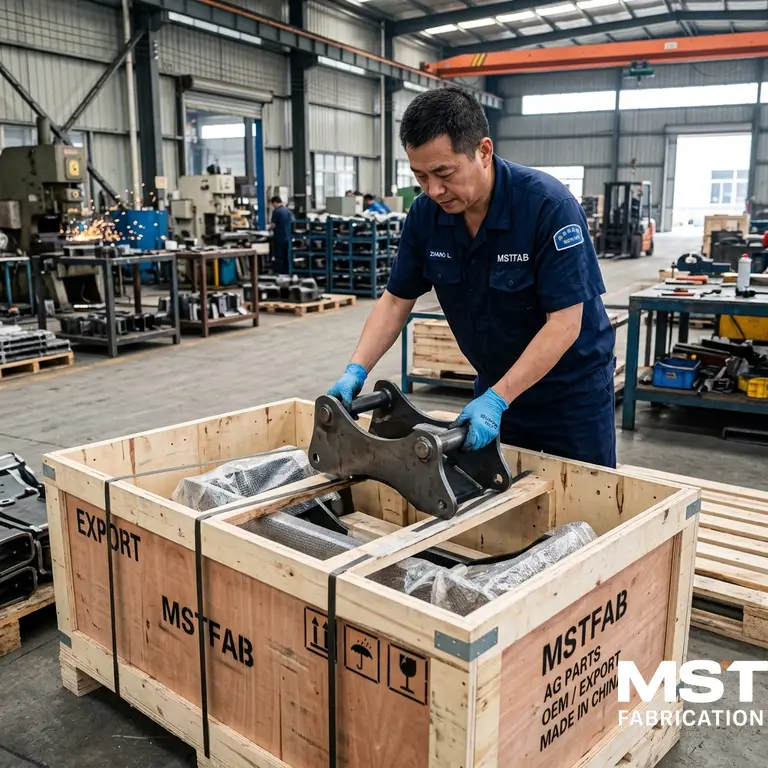
- Packing protects coated surfaces
Frequently Asked Questions
Which material is best for agricultural sheet metal parts?
There is no universal choice. Load, corrosion exposure, welding, forming, abrasion, finish and cost should be reviewed together.
Can the fabricator certify a machine guard as safe?
The fabricator can build and inspect the drawing-defined guard. The equipment OEM remains responsible for machine-level risk assessment, placement and final validation.
What should be checked on the first article?
Check mating-hole alignment, formed geometry, weldment fit, service access, edge condition, finish and any OEM-defined critical interfaces.
Send the Field Condition With the Drawing
Share the assembly, loads, material, finish, quantity and first-article requirements for a component review.
 WeChat Contact
 WhatsApp Me Directly