
Custom Harvester Sheet Metal Guards Built for Field Protection
Harvester sheet metal guards do not have an easy job. They protect belts, chains, shafts, motors, sensors, hydraulic lines, cables, access areas, crop handling mechanisms, and operators from dust, mud, crop residue, vibration, impact, and rough field use.
A harvester guard may look like a simple bent metal cover. Until it does not fit. Then the problems become very real.
The mounting holes are off. The guard rubs against a moving belt. The cover rattles during operation. The welded guard frame twists out of shape. The edge is sharp enough to damage a cable or hose. The powder coating chips during transport. The maintenance team removes the guard and quietly never puts it back.
That is not a successful harvester guard. That is a safety part pretending to be finished.
MSTFAB manufactures custom harvester sheet metal guards from customer STEP files, 2D PDF drawings, DXF files, samples, or project requirements. Our fabrication support can include DFM review, laser cutting, CNC bending, welding, grinding, deburring, powder coating, stainless steel finishing, inspection, prototype support, batch production, and export-ready packaging.
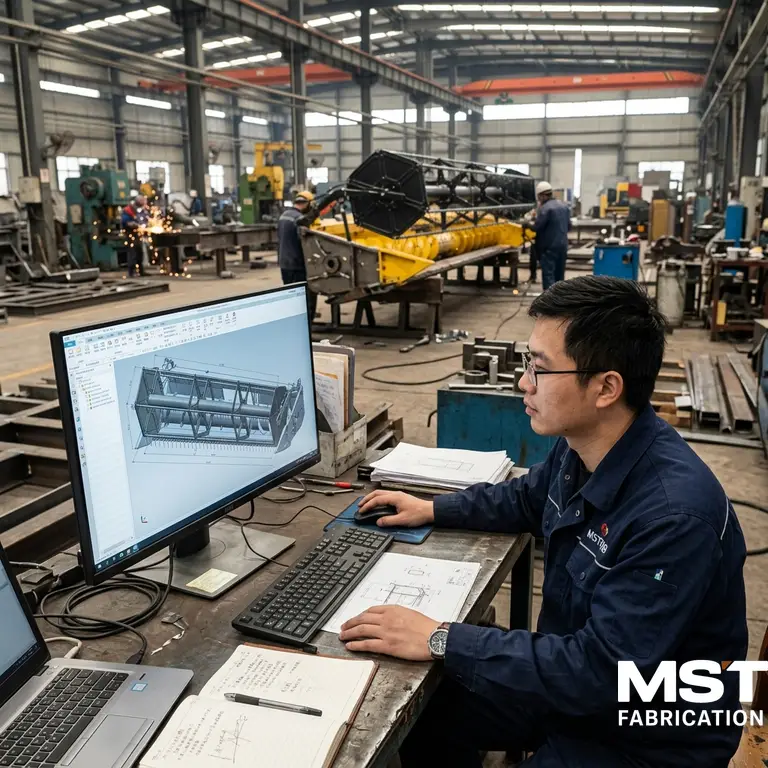
What Are Harvester Sheet Metal Guards?
Harvester sheet metal guards are protective metal covers, shields, panels, and structures used on harvesters and combine harvesters to protect people, components, and moving systems.
Common harvester guards include:
- Belt guards and chain guards
- Drive shaft guards and motor guards
- Header guards and grain handling guards
- Sensor protection covers and hydraulic line guards
- Cable protection covers and access covers
- Service panels and side protection panels
- Dust covers and crop residue shields
- Transmission area covers and rotor area protection covers
- Fan and ventilation guards
- Powder-coated harvester guards
- Stainless steel protection panels
- Welded sheet metal guard assemblies
A good guard should protect without blocking maintenance. Because a guard that needs three tools, two mechanics, and one bad mood to remove will eventually become “temporarily removed.” And “temporarily removed” often means the guard is gone until someone asks awkward questions.
Why Harvester Guards Need Custom Fabrication
Harvesters have many moving parts, tight clearances, service points, belt drives, chain systems, crop-contact areas, and exposed components. Standard guards often do not match the real machine structure.
Custom harvester sheet metal guard fabrication allows OEM buyers to control guard size and shape, material grade, sheet thickness, mounting hole positions, bend angles, slot direction, moving part clearance, ventilation openings, service access design, edge safety, welded reinforcement, and powder coating color.
For harvesters, “almost fits” is not good enough. A belt guard that almost fits may rub. A service cover that almost opens easily will annoy technicians every season. A guard that almost protects is not a guard.
Harvest season does not wait for rework. That is why custom fabrication should start with accurate drawings, real clearance review, and practical DFM feedback.
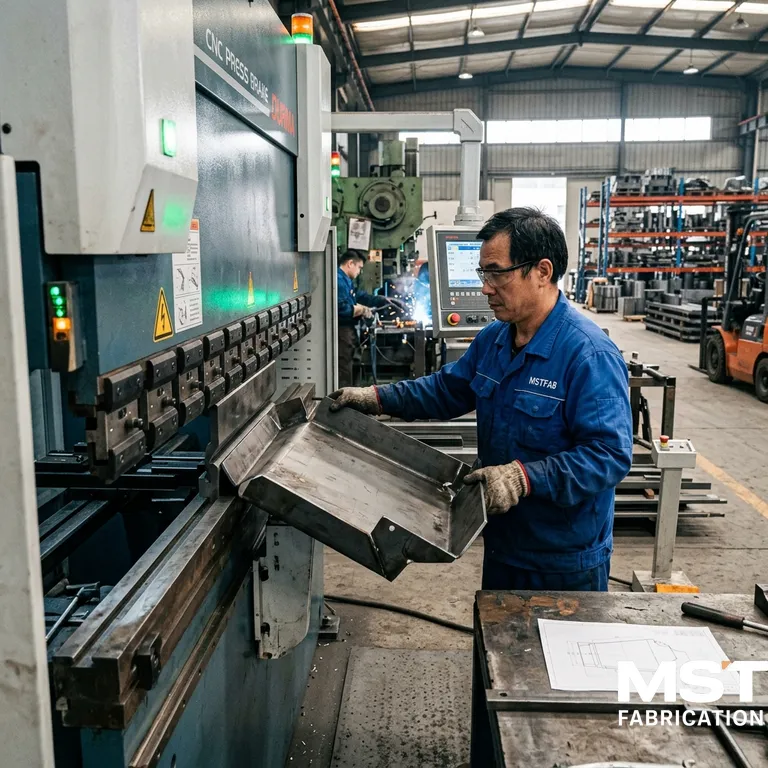
The Real Cost of Poor Harvester Guards
A low quote can look attractive during sourcing. Then the parts arrive.
| Assembly Defect | Low-Cost Job Shop Reality | MSTFAB (DFM-Led OEM Partner) |
|---|---|---|
| Sharp Edges Damage Cables | Skipped deburring causes slow wear on hoses and hydraulic lines. | Edges are smoothed and chamfered to protect lines and operators. |
| Guards Rattle & Rub | Ignored tolerances cause guards to hit moving belts or chains. | Precise CNC bending and DFM clearance review ensure quiet, safe operation. |
| Rust Starts Fast | Thin, cheap paint peels at the cut edges after one rain. | Thick, outdoor-grade powder coating over clean metal prevents early rust. |
| Drilling on the Assembly Line | Mechanics waste hours forcing misaligned holes to fit. | Laser-cut holes verified by inspection drop perfectly onto the machine. |
That is not cost saving. That is moving cost from the supplier’s quote to your assembly floor. And for harvesters, downtime is expensive. Harvest season is not a flexible meeting. It does not wait politely while someone fixes a guard that should have fitted correctly from the start.
A reliable harvester sheet metal guard manufacturer should help reduce these risks before production begins through drawing review, DFM feedback, controlled fabrication, inspection, and export packaging.
Designed Around Clearance, Protection, and Service Access
A harvester guard must protect without creating new problems. Before fabrication, the design should consider what component the guard protects, required clearance from moving belts or chains, mounting hole locations, service access requirements, crop residue buildup risk, and edge safety.
A guard that protects the component but blocks maintenance is only half successful. A guard that touches the belt, chain, shaft, fan, or motor is not a guard. It is a problem with powder coating.
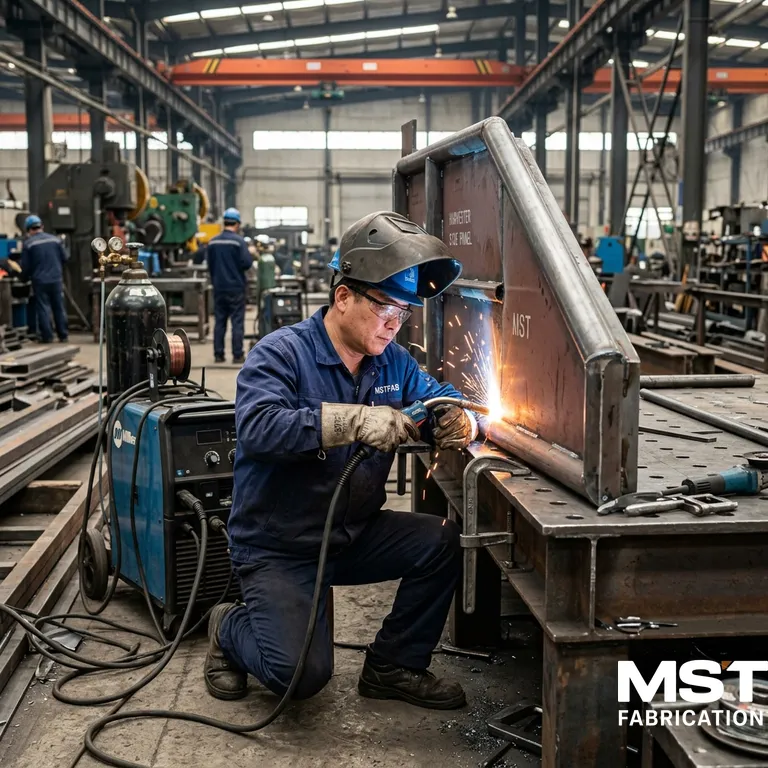
DFM Review Before Cutting Metal
DFM means Design for Manufacturability. For harvester sheet metal guards, DFM review helps identify risks before cutting, bending, welding, coating, and packing. A practical DFM review may check material suitability, sheet thickness, bend radius, hole-to-bend clearance, mounting hole accuracy, guard clearance, and crop residue clearance.
This matters because harvester guards often look simple but work in harsh conditions. A thin guard may vibrate and rattle. A powder-coated guard may rust early if edges are ignored. DFM review is not extra paperwork. It is how you stop the field from becoming your test lab.
Material Options for Harvester Sheet Metal Guards
- Carbon Steel: Commonly used for heavy-duty guards, belt guards, and side protection panels. Needs proper surface protection. Raw steel and farm weather are not friends.
- Cold-Rolled Steel: Useful for protected equipment guards, access covers, and powder-coated parts.
- Galvanized Steel: Provides better corrosion resistance. Cut edges, drilled holes, and welded zones still need protection. If an exposed edge is ignored, corrosion will still find it.
- Stainless Steel: Used when corrosion resistance, washdown performance, or chemical exposure matters.
- Aluminum: Lightweight and naturally corrosion-resistant. Aluminum is not soft steel. Treating it like steel is how nice CAD becomes annoying samples.
Sheet Thickness and Guard Strength
The correct sheet thickness depends on the guard’s real job. Thicker is not always smarter. Sometimes a smarter structure works better: add a flange, use ribs or returns, improve bend structure, or move holes away from bend lines.
Good guard design puts strength where it is actually needed. Hope is not a load-bearing feature. But unnecessary heavy steel everywhere is not smart sourcing either.
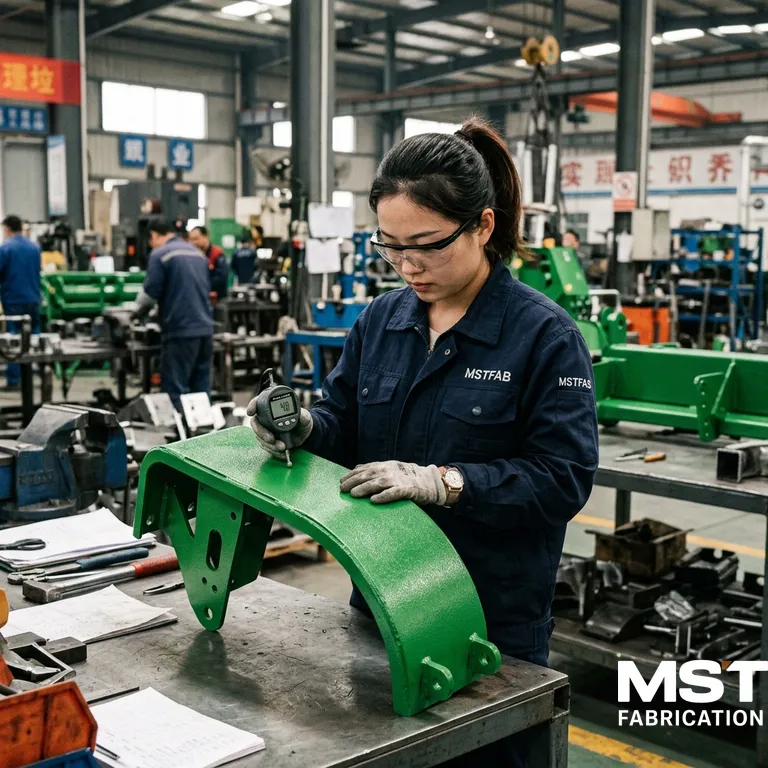
Laser Cutting, CNC Bending, and Welding
Laser Cutting
Laser cutting is used for harvester guard panels, mounting holes, ventilation slots, and custom shapes. A 1 mm error looks much bigger when the guard does not align with the machine or rubs against moving parts.
CNC Bending
CNC bending forms flat metal into guards, covers, shields, and panels. Poor bending can cause cracked corners, deformed holes, and rattling guards. Good bending looks boring. That is exactly why engineers like it.
Welding
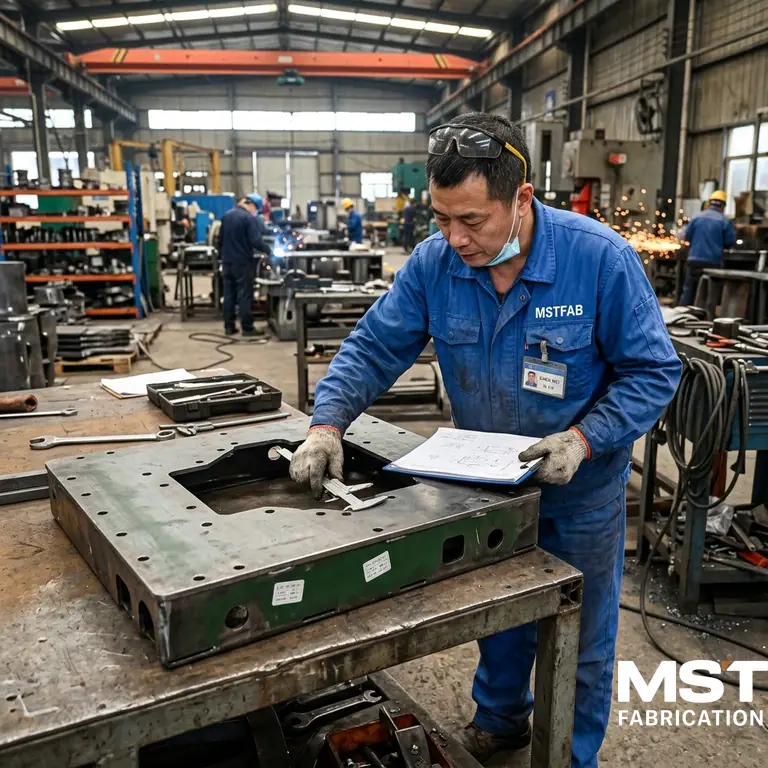
Some harvester sheet metal guards require welding for frames, brackets, supports, or multi-piece assemblies. Welding adds heat. Heat moves metal. A harvester guard should not come out of welding looking like a banana. Unless the harvester is working in a banana plantation.
Vibration, Rattle, and Edge Safety
Harvesters vibrate. A lot. Guards mounted near belt drives, chain systems, headers, motors, rotors, and grain handling sections may experience continuous vibration, shock loads, and crop impact. Vibration does not care about appearance. It cares about weak points. And it will find them.
Harvester sheet metal guards are often handled during assembly and maintenance. Sharp edges create problems. A sharp edge is not a small defect. It is a small defect with a talent for cutting hands, cables, hoses, and customer trust. A harvester guard should feel like a finished safety part. Not like a metal trap with mounting holes.
Powder Coating and Corrosion Protection
Harvester sheet metal guards often need finishing that can survive outdoor use, handling, storage, crop residue, dust, and field conditions. For harvester guards, powder coating is not just color. It may be part of the corrosion protection system.
A coated guard that rusts around cut edges after one season is not just a paint problem. It is a material, design, finishing, and quality control problem. Metal remembers shortcuts. Coating reveals them later.
Crop Residue, Dust, and Cleaning Considerations
Harvester guards often work near crop residue, dust, stalks, husks, straw, chaff, and other field debris. Guard design may need to consider smooth surfaces where residue should not collect, drainage or relief openings, cleaning access, and avoiding unnecessary dirt traps.
A guard that collects dust, mud, and crop residue in the wrong place can create maintenance problems. The guard should protect the machine. It should not become a storage box for everything the field throws at it.
Service Access and Maintenance
A harvester guard should protect, but it should also allow reasonable service access. A guard that blocks maintenance will eventually be removed and not reinstalled. That is not ideal. A good guard protects the harvester and respects the person who has to service it. Farm equipment maintenance is already hard enough. No need to add a metal puzzle.
Export Packaging for Harvester Guards
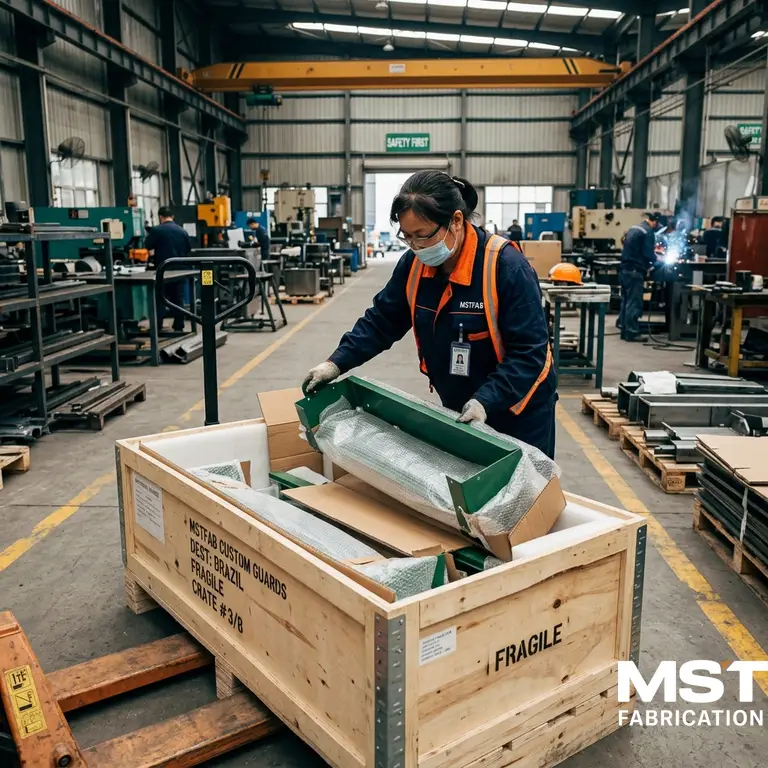
Harvester guards may be coated, irregular in shape, sharp-edged, or stacked. Poor packaging can damage parts before they reach the buyer’s warehouse. A perfect guard that arrives scratched, bent, or rusty is no longer perfect. It is a customer complaint with forklift marks. Packaging is not an afterthought. It is the last quality process.
Why Choose MSTFAB for Harvester Sheet Metal Guards?
MSTFAB is a custom sheet metal fabrication manufacturer in Guangzhou, China, supporting overseas OEM buyers with drawing-based manufacturing.
Fast Quotation from STEP/PDF Drawings: With complete drawings, our team can review harvester sheet metal guard projects faster.
DFM Review Before Production: We review material, bending, mounting holes, guard clearance, edge safety, vibration risk, and packaging before cutting metal.
Clear Manufacturing Scope: We manufacture the physical metal guards. We do not design harvesters or write control software. This keeps the project boundary clear and helps protect customer intellectual property.
Request a Harvester Sheet Metal Guard Quote
If you need custom harvester sheet metal guards for combine harvesters, grain harvesters, headers, belt drives, chain systems, motor protection, crop residue shielding, access covers, or OEM agricultural machinery, send us your STEP and PDF drawings.
FAQ
What are harvester sheet metal guards?
Harvester sheet metal guards are protective metal covers, shields, panels, and structures used on harvesters and combine harvesters to protect operators, belts, chains, shafts, motors, sensors, cables, hoses, and machinery components.
What types of harvester guards can be fabricated?
Common harvester guards include belt guards, chain guards, drive shaft guards, motor guards, header guards, grain handling guards, sensor covers, hydraulic line guards, access covers, service panels, and protective shields.
What materials are used for harvester sheet metal guards?
Common materials include carbon steel, cold-rolled steel, galvanized steel, stainless steel, aluminum, and coated steel. The correct material depends on strength, corrosion exposure, weight, finish, and working environment.
Does MSTFAB design harvesters or safety systems?
No. MSTFAB focuses on custom sheet metal fabrication. We manufacture physical metal guards, covers, panels, brackets, frames, enclosures, and welded structures. Harvester design, engines, hydraulics, software, and machine safety certification are outside our standard scope.
Can you fabricate harvester guards with ventilation openings?
Yes. Ventilation slots, fan openings, perforated areas, service holes, access windows, and inspection openings can be laser cut according to customer drawings.
Suggested Further Reading
- Custom Machine Guards for Farm Equipment
- Farm Equipment Metal Guards
- Agricultural Machinery Guards
- Custom Agricultural Sheet Metal Parts
- OEM Agricultural Sheet Metal Components
- Custom Agricultural Sheet Metal Parts Manufacturer
- Agricultural Equipment Metal Fabrication
- Agricultural Equipment Parts Fabrication USA
- Tractor Sheet Metal Brackets
- Irrigation Equipment Metal Enclosures
- Custom Metal Brackets & Frames for Farm Equipment
- Corrosion Resistant Agricultural Metal Components
- Custom Sheet Metal Bending & Welding Parts
- Custom Laser Cutting Service
- CNC Sheet Metal Bending
- Powder Coating for Sheet Metal Enclosures
- DFM for Sheet Metal Enclosures
- Sheet Metal Enclosure Manufacturing Process
- Sheet Metal Enclosure Factory
sheet metal welding services
MSTFAB provides TIG and MIG sheet metal welding services for structural assemblies, cabinets, frames and OEM metal components.
 WeChat Contact
 WhatsApp Me Directly