
A custom agricultural hopper is not simply a metal funnel welded into farm equipment.
Define the required material-flow behavior, panel geometry, outlet position and mating interfaces in the design package. A drawing-based metal structure alone does not establish reliable flow or equipment performance.
A hopper can look acceptable in a drawing and still create expensive trouble in production: the grain bridges inside the slope, seed catches on a rough laser-cut edge, fertilizer attacks the wrong material, the welded hopper body pulls out of square, or the discharge outlet does not line up with the buyer’s frame.
Review the released hopper geometry, material, welds and finish before fabrication. The buyer validates flow and equipment performance with representative material and operating conditions.
The practical manufacturing route is: Drawing Review → DFM → Laser Cutting → CNC Bending → Welding → Deburring → Surface Finish → Inspection → Export Packing.
Planning an RFQ? This guide covers hopper panel angles, outlet alignment and internal-edge requirements. For the fabrication scope, see agricultural sheet metal parts manufacturing.
Fabrication Checkpoints for Agricultural Hoppers
The process illustrations below show checks to discuss for the released drawing. They are not shipment-specific inspection records or evidence of flow testing. Agree on dimensional, edge-finish, weld and packing records before ordering.
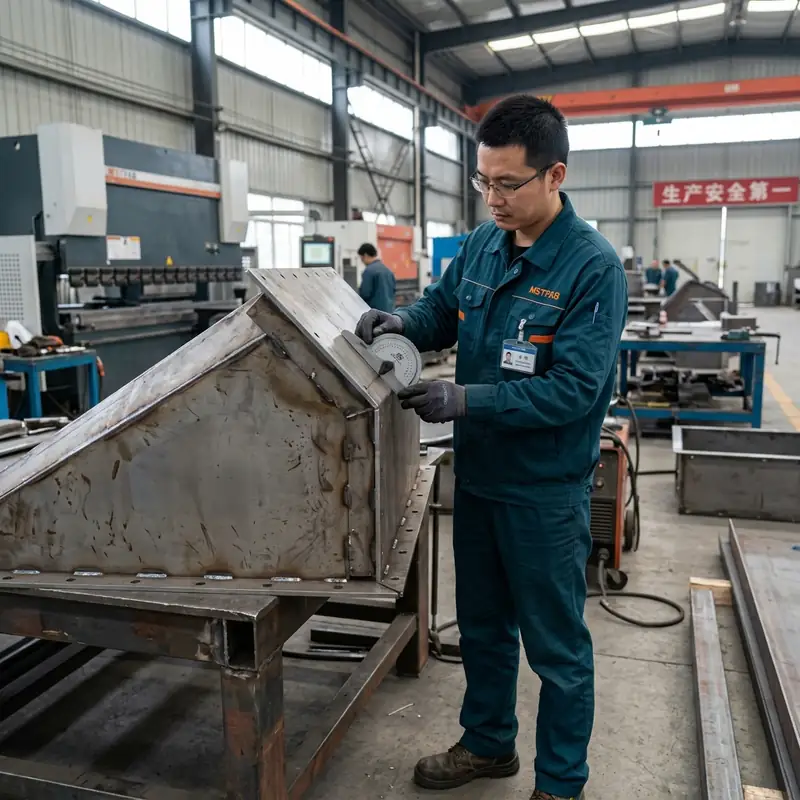
1. Bend Angle & Flow DFM
Check panel and bend angles against the released drawing before welding. The buyer validates flow using the intended material and operating conditions.
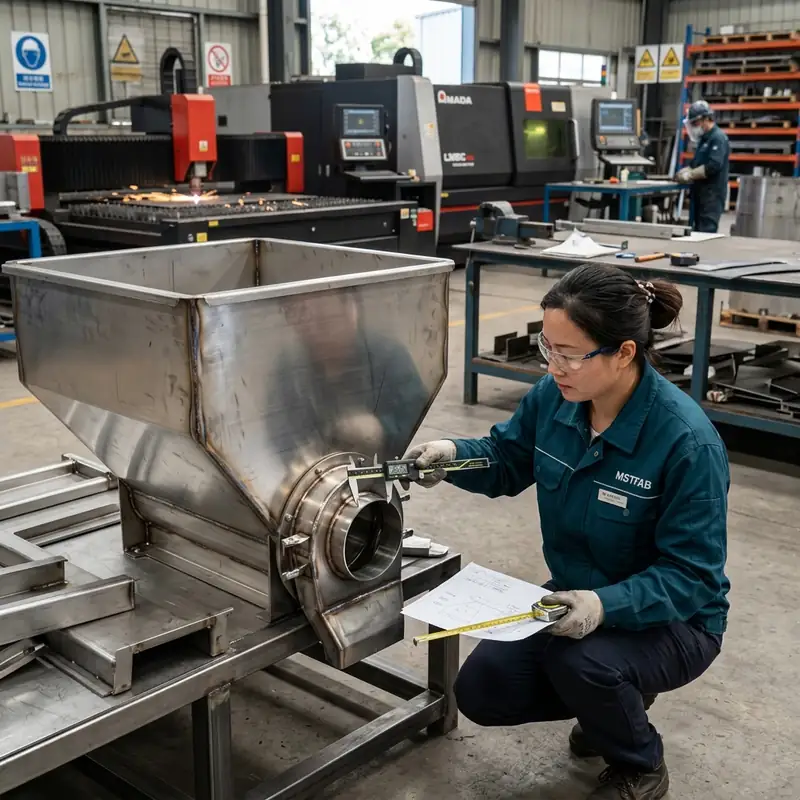
2. Outlet Alignment Check
Measuring discharge openings, flanges and mating positions so the hopper connects to equipment cleanly.
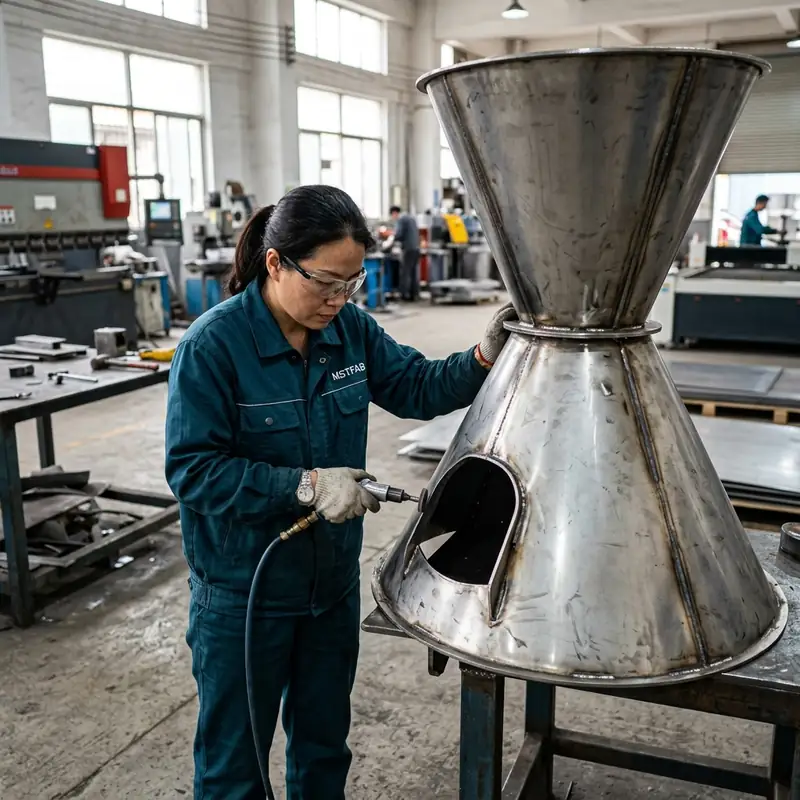
3. Internal Edge Deburring
Removing rough internal edges that can catch seed, hold residue, scratch material or create cleaning issues.
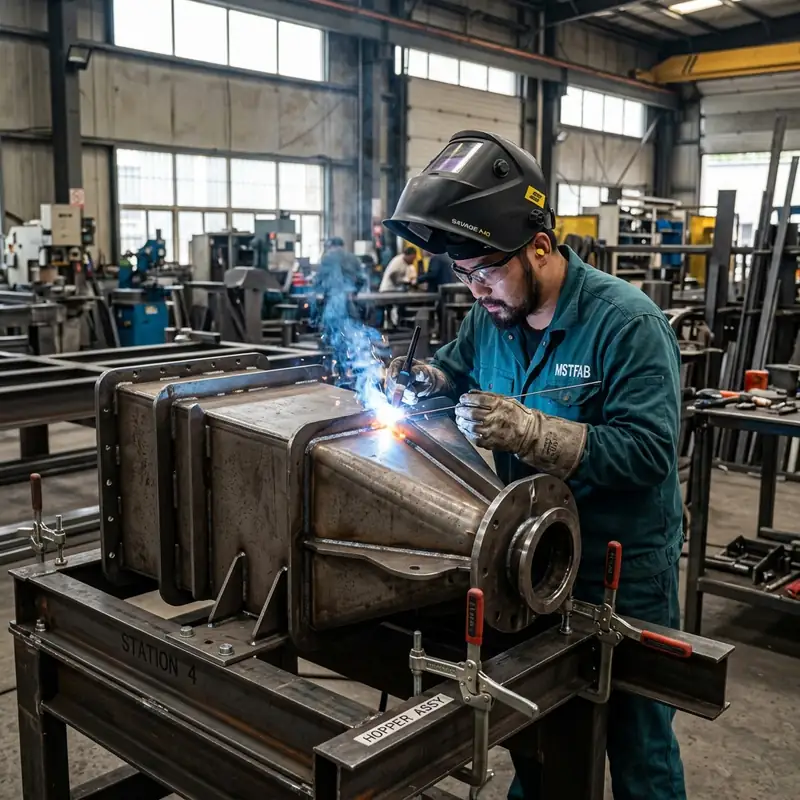
4. Controlled Hopper Welding
Review weld sequence and agreed dimensional checks to control distortion and maintain mating geometry.
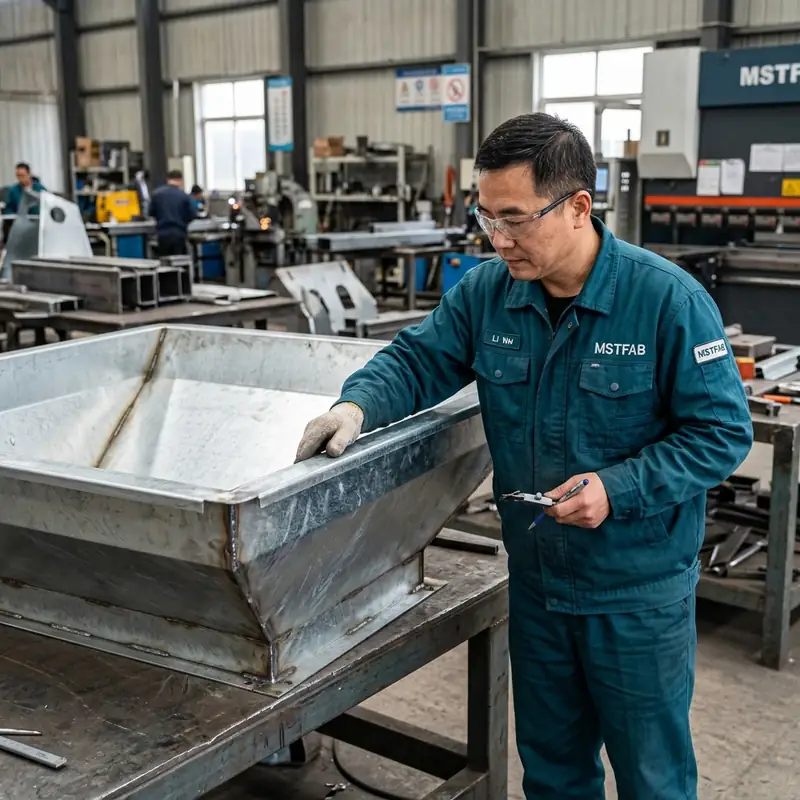
5. Finish & Export Review
Inspecting galvanized, stainless or coated surfaces before packing hopper parts for overseas shipment.
An Agricultural Hopper Is a Flow-Control Structure, Not a Simple Funnel
The metalwork must support the buyer’s material handling system without becoming the bottleneck.
A finished agricultural hopper may include angled sheet metal panels, discharge outlets, bolted flanges, welded seams, reinforcement ribs, inspection covers, mounting brackets, transition sections, chute interfaces, and coating or corrosion protection.
Specify outlet centerlines, flange holes and reference datums against the mating conveyor, chute or equipment frame.
Grain Hoppers, Seed Hoppers, Feed Hoppers and Fertilizer Hoppers
These hopper projects may look similar from the outside, but the agricultural material changes the fabrication focus.
| Hopper Type | Typical Use | Fabrication Focus |
|---|---|---|
| Grain Hopper | Grain handling, collection, discharge and transfer equipment | Smooth flow angle, corrosion protection, outlet accuracy. |
| Seed Hopper | Seed handling, planting equipment and metering-adjacent parts | Internal edge finishing, clean seams, reduced catching points. |
| Fertilizer Hopper | Fertilizer handling, spreading equipment and chemical exposure | Material selection, coating coverage, stainless or galvanized options. |
| Conveyor / Discharge Hopper | Chute, conveyor, auger or frame interface structures | Outlet alignment, flange fit, bracket location and assembly clearance. |
Material, Corrosion and Cleaning Interfaces
Farm equipment hoppers work around vibration, dust, moisture, cleaning, outdoor storage and repeated loading. Fertilizer hoppers can be especially unforgiving because corrosion risk depends on material, finish, exposed edges and how the equipment is cleaned after use.
MSTFAB fabricates hopper metalwork to the released material grade, thickness and finishing requirements. Coatings are specified separately from the base metal. The buyer confirms material compatibility, crop-contact and cleaning requirements, food-contact compliance and field performance.
Procurement Checks and Evidence to Agree
Agree on the drawing requirements and records needed for your hopper before placing an order. The table lists evidence to request, not proof of completed material-flow or field testing.
| Buyer requirement | Confirm before production | Evidence to agree |
|---|---|---|
| Panel and outlet geometry | Release panel angles, outlet centerlines, flange holes and mating datums. | Agreed dimensional results against the released drawing. |
| Internal edges | Define deburring, internal seams and edge acceptance requirements. | Agreed edge-finish checks and sample photographs. |
| Welded assembly | Specify joints, inspection points and post-weld geometry. | Measurements and approved dispositions for deviations. |
| Material and finish | Release grade, thickness, finish, exposure and compatibility requirements. | Material documentation and finish records agreed before ordering. |
| Packing | Protect outlet edges, corners and visible or coated faces for the shipment. | Packing photographs and approved packing instructions. |
What to Send for an Accurate Quote
A single outside dimension is not enough for custom agricultural hopper fabrication. The quote depends on geometry, material, outlet details, tolerance expectations, surface finish and quantity.
For an accurate quotation, please provide:
- STEP/STP & PDF Drawings: Show the hopper body, panels, outlet, brackets, covers and mating equipment points.
- Material & Thickness: Carbon steel, galvanized steel, stainless steel or coated sheet metal requirements.
- Application Details: Grain, seed, feed, fertilizer, conveyor discharge or other agricultural material.
- Assembly & Fit Notes: Outlet position, flange holes, bracket locations, mounting frame and clearance requirements.
- Finish & Packing: Powder coating, galvanizing, deburring, visible surface requirements and export packaging notes.
Approve the agreed outlet geometry, internal-edge finish and sample inspection records before repeat production.
Ready for a drawing review? Send hopper drawings, material requirements and quantities so the mechanical scope and inspection requirements can be confirmed before quotation.
Buyer Questions Before Ordering
What is a custom agricultural hopper?
It is a drawing-based metal structure used to hold, guide or discharge grain, seed, feed, fertilizer or other agricultural material. The fabrication scope covers the hopper body, panels, outlet, brackets and related metal parts, not the complete conveying or metering system.
Can MSTFAB fabricate grain hoppers and seed hoppers from drawings?
Send STEP or STP models and 2D drawings showing panel angles, outlet geometry, mounting datums, welds, material, thickness, finish and quantity. MSTFAB reviews the metalwork for fabrication; the buyer validates material flow and equipment performance using the intended product and operating conditions.
How should materials and finishes be specified for a hopper?
Specify the required metal grade and thickness separately from coatings or other finishes. Carbon steel, galvanized steel and stainless steel are options to review against the drawing. The buyer is responsible for confirming crop or chemical compatibility, cleaning requirements and any food-contact compliance requirements.
What information is needed for a hopper fabrication quote?
Provide the drawing revision, material, thickness, quantities, finish, panel angles, outlet centerlines, flange holes, mating equipment interfaces, weld requirements, internal-edge acceptance criteria, inspection records and packing needs. Identify any missing information before production approval.
 WeChat Contact
 WhatsApp Me Directly