
Custom Stainless Steel Enclosure Fabrication: OEM RFQ and DFM Guide
A stainless enclosure is useful only when the door closes square, the gasket has a flat landing surface, the cutouts meet the mating equipment and the visible finish survives production and shipping. The metal can be shiny while the project is still having a very bad day.
Make the application visible in the RFQ
“Stainless box, outdoor use” is not a complete requirement. A useful RFQ explains what the enclosure must fit, protect and survive. Indoor machinery, coastal telecom equipment, repeated washdown and a cosmetic medical housing may all use stainless steel, yet they create different decisions for material grade, drainage, seams, hardware and surface finish.
Show the mounted components, cable entries, service clearances, lifting points and field interfaces. Mark the faces that users see. Identify the surfaces that contact a gasket or another assembly. These details are less glamorous than a polished sample, but they prevent expensive surprises after bending and welding.
| Project input | Decision it controls | Useful evidence |
|---|---|---|
| Installed environment | Grade, drainage, finish, seam strategy and compatible hardware. | Exposure description, cleaning method and buyer approval of material suitability. |
| Mounted equipment | Backplate, rails, studs, brackets, loads and service space. | Interface drawing, component envelope and trial-fit record where required. |
| Door and seal concept | Gasket land, hinge axis, latch compression, flange flatness and gap. | Critical dimensions, approved gasket data and first-article fit check. |
| Cable and thermal interfaces | Gland plates, connector cutouts, louvers, fan openings and heat-exchanger mounting. | Controlled cutout locations and mating-equipment templates. |
| Cosmetic requirement | Grain direction, visible weld treatment, protective film and handling. | Marked cosmetic faces, approved sample or documented visual limit. |
Choose 304 or 316 from exposure, not habit
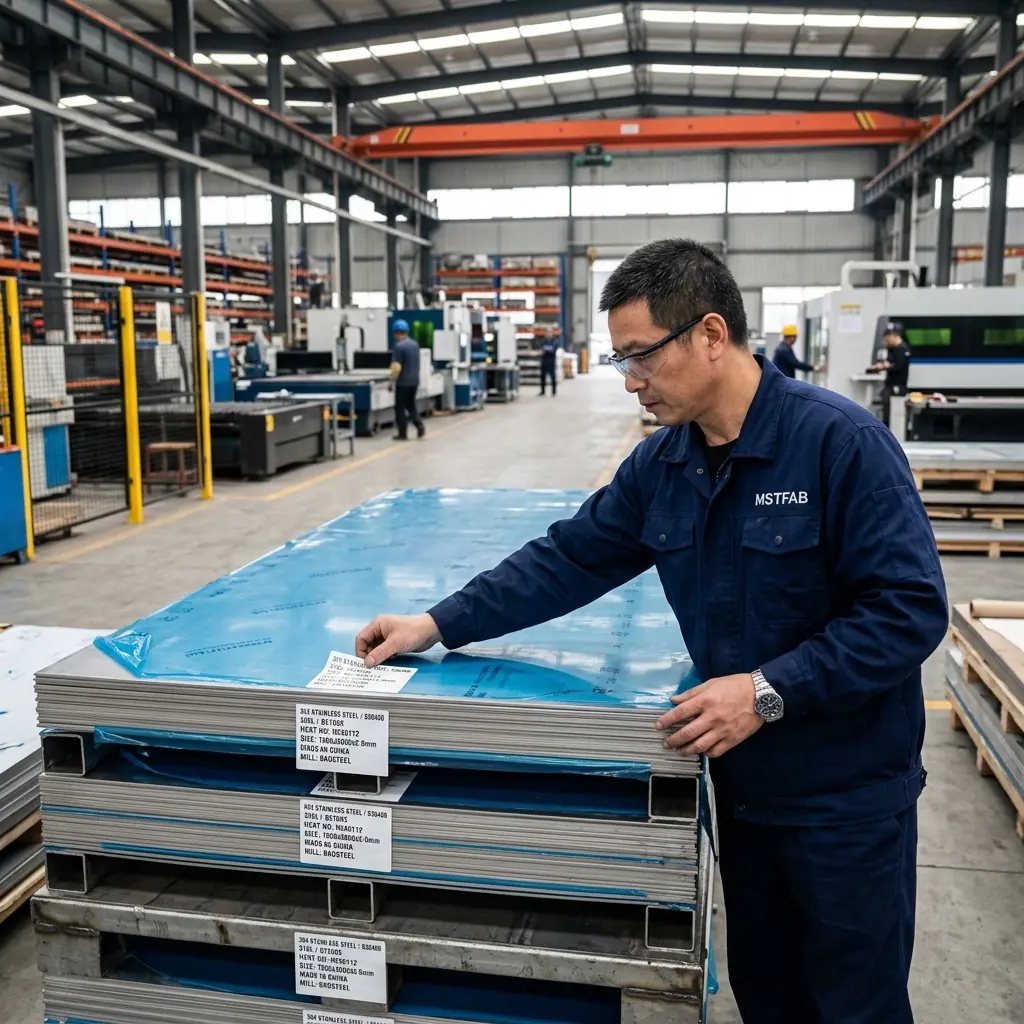
304 and 304L are common starting points for many indoor and controlled industrial applications. 316 and 316L are often evaluated when chlorides, coastal air or more aggressive cleaning increase corrosion risk. Neither family guarantees performance in every environment, and a higher grade does not repair trapped water, a crevice or embedded carbon-steel contamination.
The drawing should identify the recognized material specification, exact grade, thickness and any permitted equivalent. If grade selection still needs engineering approval, use the 304 vs 316 stainless steel material guide to organize the exposure questions before releasing the purchase order.
DFM checks that protect fit and sealing
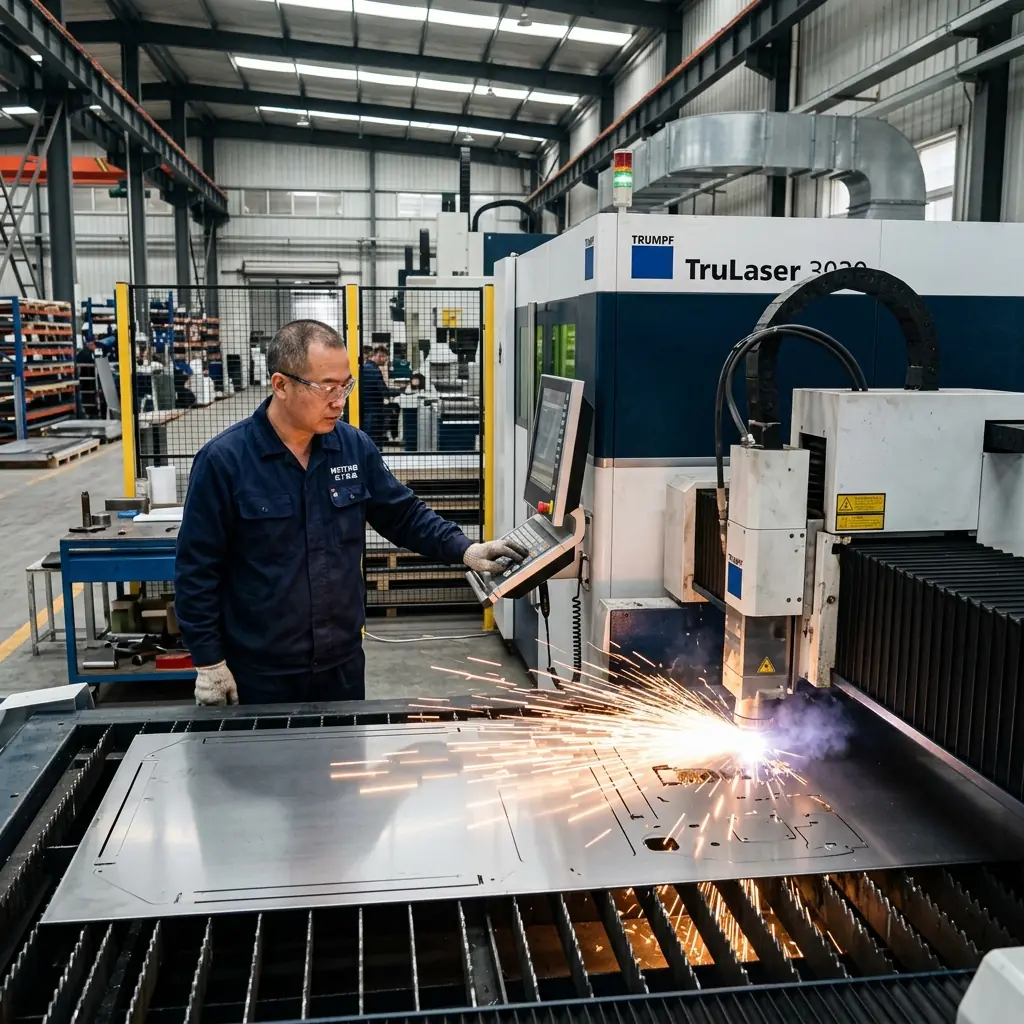
Enclosure DFM is mostly the discipline of finding conflicts while they are still inexpensive. A hole too close to a bend can distort. A return flange can block press-brake tooling. A long cosmetic weld can pull a door out of plane. A latch can be strong and still deliver uneven gasket compression when its position is wrong.
MSTFAB reviews fabrication access and drawing clarity before release. A proposed change is sent back for buyer approval; it should not quietly become the new design. This matters on repeat orders, where an undocumented “shop improvement” can turn a proven enclosure into a fresh first article.
| DFM risk | Drawing control | Check before batch production |
|---|---|---|
| Distorted openings | Hole-to-bend distance, bend relief and critical cutout datums. | Measure the formed first article from functional datums. |
| Door or frame twist | Weld extent, sequence, fixture locations and flatness requirement. | Verify door gap, diagonal dimensions and gasket-land flatness. |
| Uneven seal compression | Hinge axis, latch positions, gasket path and compression target. | Trial-fit specified seals and confirm closure without forcing the door. |
| Hardware interference | Stud, insert, rail and backplate locations with installation clearance. | Use a fixture, template or mating component for interface checks. |
| Finish mismatch | Grain direction, cosmetic faces, weld blending and defect limits. | Approve a sample or visual baseline under agreed viewing conditions. |
Bending must agree with the assembly
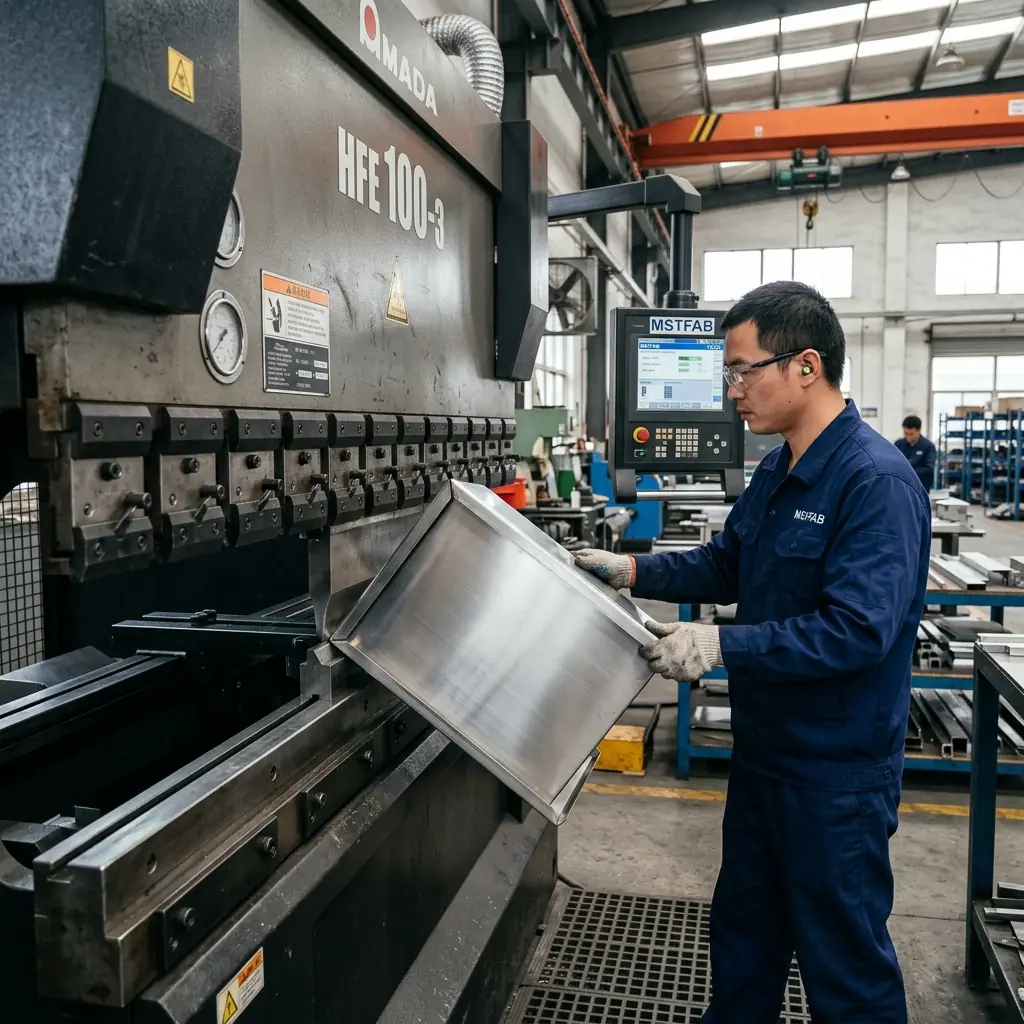
Stainless steel usually requires more forming force and springback control than mild steel. The practical question is not whether a bend can be made once. It is whether the bend sequence, radius and datum scheme support the complete enclosure and can repeat through the batch.
Mark critical flange heights and mating dimensions. Avoid applying a tight tolerance to every feature; that adds inspection and production cost without improving function. Project-specific tolerances should follow the drawing, process capability and assembly need rather than a universal website promise.
Welding and finishing need measurable acceptance rules
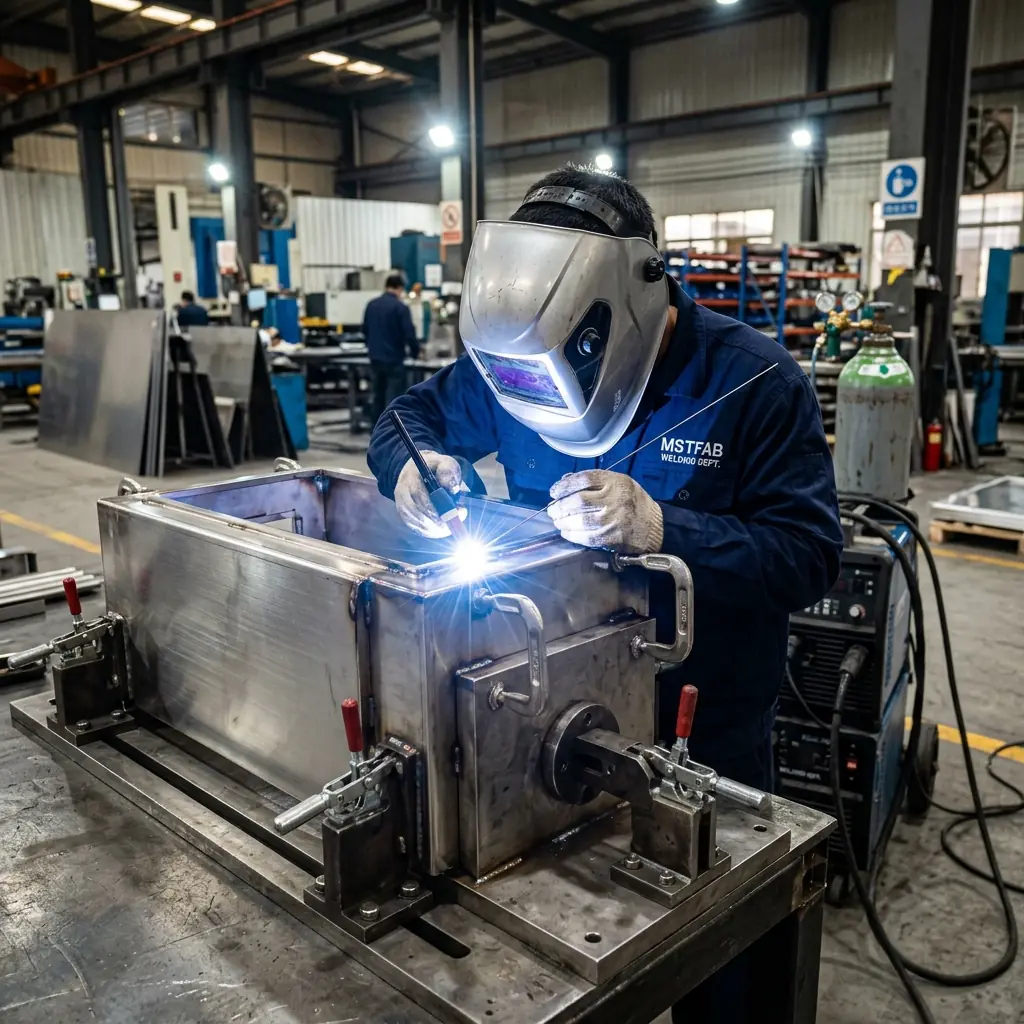
Weld heat can distort broad panels and gasket surfaces. Fixtures, balanced sequences and controlled heat input help, but the design still needs accessible joints and realistic weld requirements. State whether each seam is structural, sealed, intermittent, continuous, ground, blended or left as welded.
“Looks good” is difficult to inspect across an ocean. For brushed panels, define grain direction and visible surfaces. For weld areas, define acceptable profile and discoloration. Passivation, electropolishing and other specified treatments may be coordinated through qualified long-term partners when included in the approved process route. The quotation and inspection plan should identify who performs the operation and what evidence the buyer expects.
Do not treat NEMA or IP as a material label
An enclosure type or ingress rating depends on the completed construction: seams, doors, gaskets, latches, fasteners, cable entries, vents and installation. Stainless steel may support corrosion and hygiene goals, but it does not create a certified rating by itself. Use the stainless steel NEMA enclosure guide to define seal-path inputs and ownership without turning a fabricated shell into a certification claim.
Inspection should follow function, not page count
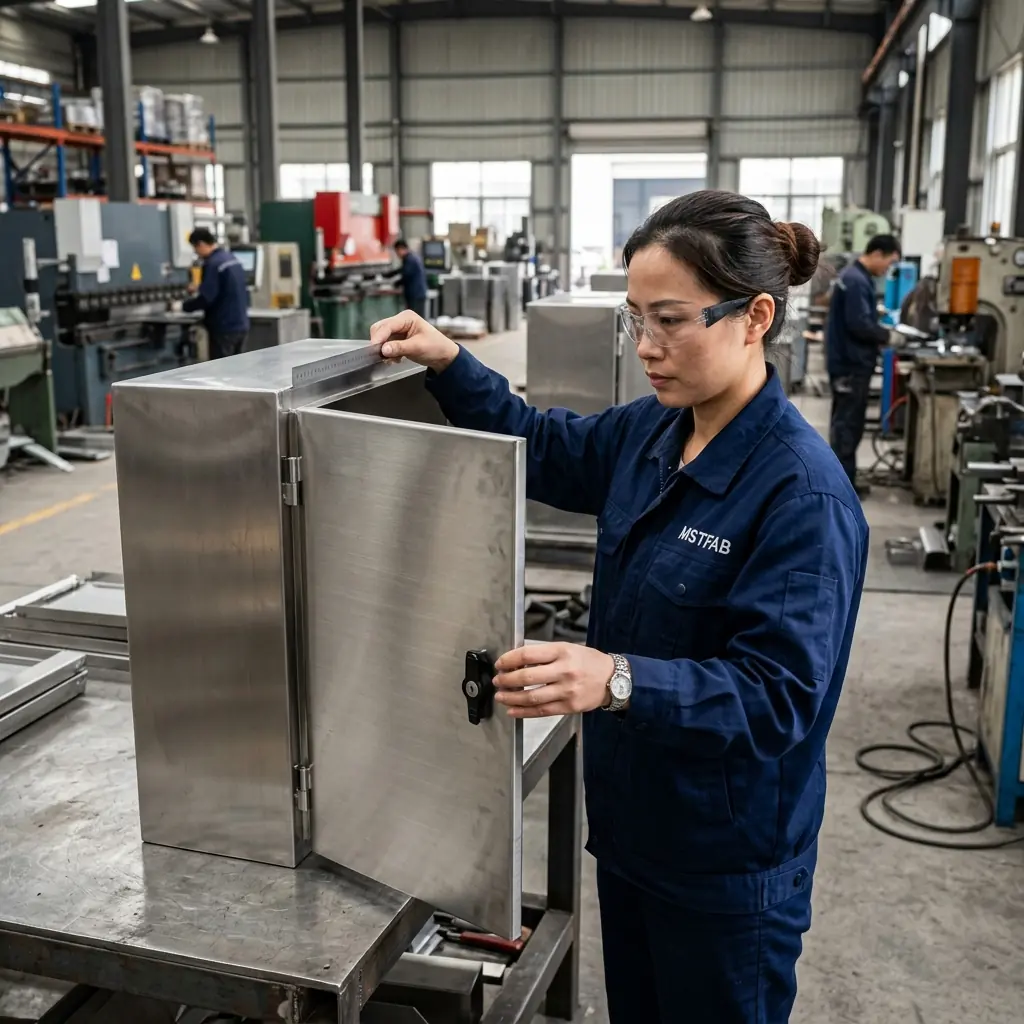
A useful inspection plan identifies the dimensions and conditions that decide whether the enclosure assembles and works as intended. That may include door gap, frame squareness, gasket-land flatness, mounting-hole position, removable gland-plate fit, hardware location, cosmetic appearance and protective packing.
First article inspection is especially useful when the part contains several bends, welded frames or buyer-installed interfaces. The approved result becomes a clearer baseline for repeat production. The stainless steel fabrication quality plan explains how scratch prevention, contamination control and inspection evidence can follow the part through production.
Send an RFQ that can be quoted without detective work
| RFQ item | What to define | Why the supplier needs it |
|---|---|---|
| Controlled files | STEP or STP model plus DXF, DWG or PDF drawings as applicable; include revision. | Connects geometry, tolerances, notes and change control. |
| Material and finish | Grade, specification, thickness, visible faces, grain and treatment. | Prevents substitution and appearance assumptions. |
| Functional interfaces | Door, gasket, cutouts, rails, studs, gland plates, thermal and cable interfaces. | Directs DFM and first-article checks toward assembly risk. |
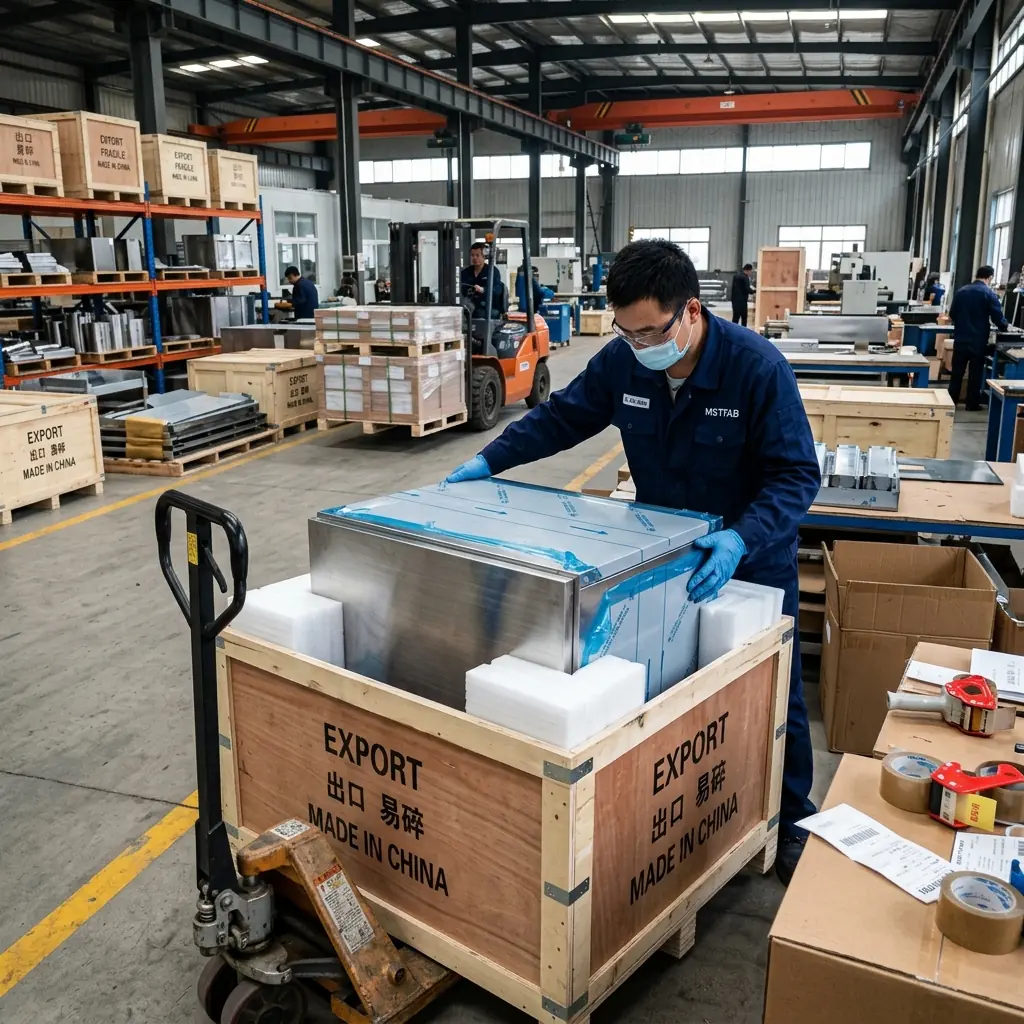
| Commercial context | Prototype quantity, batch quantity, expected repeat demand and destination. | Supports a realistic process route, inspection plan and packing method. |
| Acceptance evidence | Critical measurements, material records, photographs, samples or report format. | Prices the evidence the buyer actually needs, rather than paperwork for decoration. |
Frequently asked questions
Does MSTFAB supply complete electrical enclosures?
MSTFAB supplies drawing-based metal parts, welded assemblies and empty mechanical enclosure shells. Electrical components, wiring, software, system integration and finished-product certification remain with the buyer or responsible integrator unless an approved quotation explicitly includes another item.
Should I specify 304 or 316 stainless steel?
Select the grade from the installed exposure, cleaning chemicals, chloride risk, temperature, geometry and buyer validation plan. 316 or 316L is often evaluated for chloride-bearing conditions, but no grade corrects poor drainage, crevices or unsuitable maintenance.
Can an empty stainless enclosure be called NEMA or IP rated?
A rating applies to the completed, tested construction and depends on seams, doors, gaskets, latches, penetrations and installation. A fabricated empty shell should not be presented as a certified finished assembly unless the responsible certification program supports that claim.
What files should I send for a stainless enclosure quote?
Send a STEP or STP model and controlled 2D drawings in PDF, DXF or DWG as applicable. Include material, thickness, finish, tolerances, critical interfaces, weld notes, quantity, inspection evidence, packing and destination.
Can MSTFAB support prototypes and repeat batches?
Projects can be reviewed for prototypes, first articles and repeat production. Feasible quantity, timing, process route and tolerance depend on the specific drawing package and should be confirmed in the quotation rather than assumed from a universal promise.
Send the enclosure drawing before the assumptions multiply
Share the controlled files, application, approved stainless grade, interfaces, finish, quantity and inspection needs. MSTFAB will review the drawing-based fabrication scope before quotation.
 WeChat Contact
 WhatsApp Me Directly