
STAINLESS ENCLOSURE DESIGN
A stainless steel enclosure does not become NEMA Type 4X because the purchase order says “316” or the door looks watertight. The protection target belongs to the completed enclosure configuration, including seams, gasket compression, hardware, cable entries, vents and installed components.
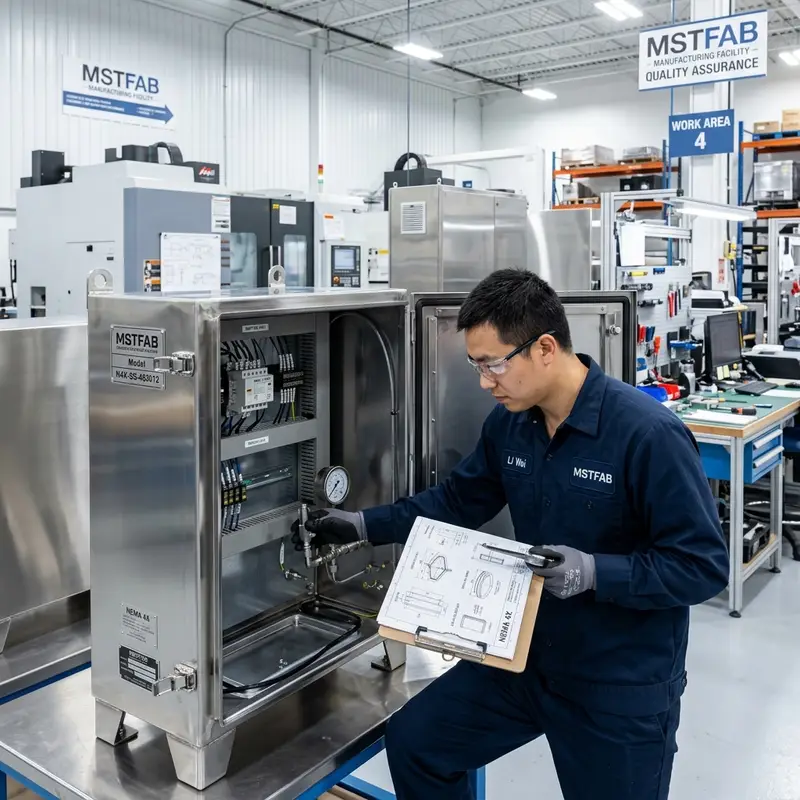
Start With the NEMA Type, Not a Material Shortcut
The official NEMA enclosure Type descriptions define environmental protection for complete enclosures. Type 4X includes the Type 4 water and dust conditions plus an additional level of corrosion protection. Stainless steel is often used, but material alone does not establish the Type.
NEMA Types and IEC IP codes should not be treated as interchangeable labels. If a project specifies both, record each requirement, applicable standard and verification route separately. The NEMA versus IP enclosure guide explains the purchasing distinction.
Type 3R target
Review rain shedding, openings, drainage and mounting orientation for the specified configuration.
Type 12 target
Control indoor dust, dripping, doors, knockouts or gland plates according to the exact requirement.
Type 4 target
Coordinate hose-directed water, windblown dust, gasket compression and every installed penetration.
Type 4X target
Add the specified corrosion-resistance requirement without assuming stainless grade alone closes the job.
304 vs 316: Define the Exposure First
304 stainless steel can suit many indoor, general industrial and inland outdoor applications. 316 or 316L is often considered where chloride, coastal air, washdown chemistry or marine-adjacent exposure raises corrosion risk. The correct choice depends on concentration, temperature, cleaning method, surface condition, expected life and maintenance.
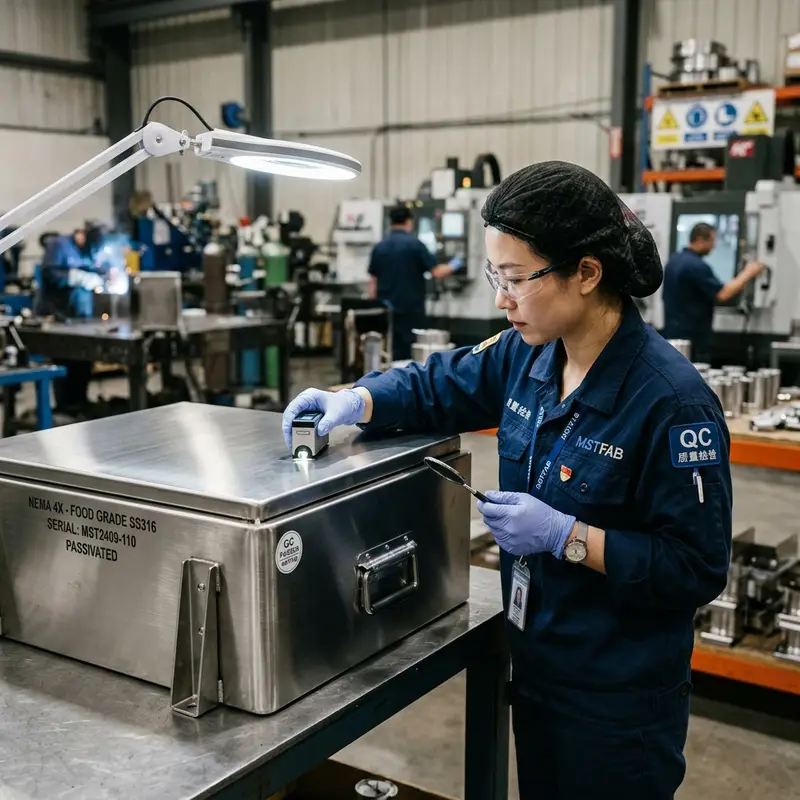
| Decision | Drawing or RFQ input | Evidence to request |
|---|---|---|
| Material | Grade, product form, thickness and permitted substitutions | Agreed material identification or certificate requirement |
| Appearance | Finish, grain, weld blending and protected surfaces | Approved sample and visual acceptance rule |
| Corrosion control | Exposure, cleaners, dissimilar metals and surface treatment | Approved material and process records |
| Protection target | NEMA Type, completed configuration and test owner | Applicable evaluation or test documentation |
Control the Door, Gasket and Latch as One Seal Path
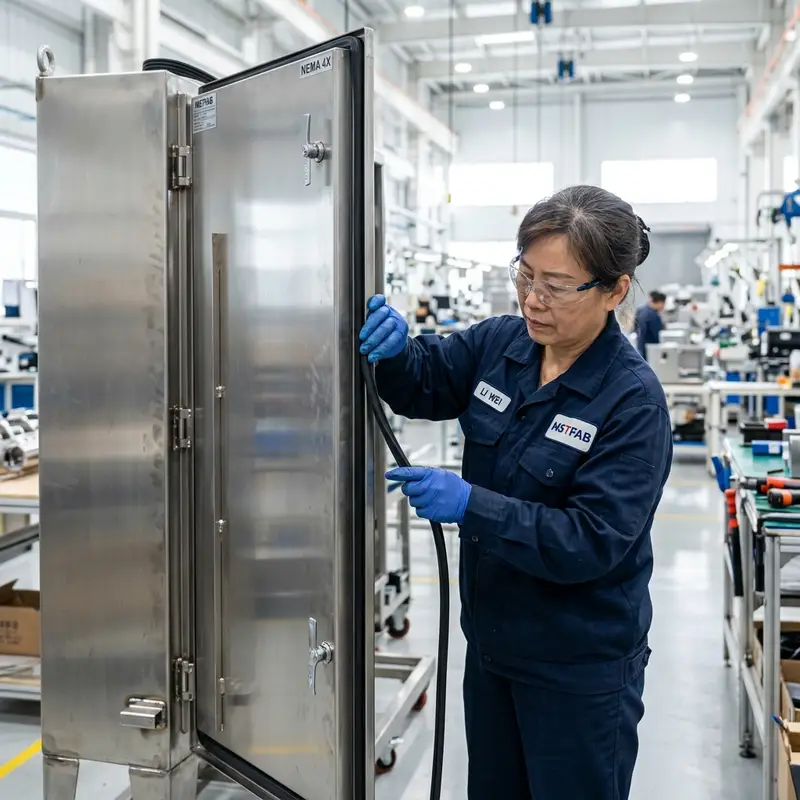
The door opening, gasket land, hinge axis and latch positions form one mechanical chain. A premium gasket cannot correct a twisted opening, poor corner joint or inconsistent latch engagement. Define gasket material and profile, retention method, corner treatment, target compression and finished mating surfaces.
Seams, Welds and Heat Distortion Need Drawing Control
Continuous welds can support selected enclosure designs, but weld extent and sequence must match material thickness, distortion risk, finish and verification needs. More weld is not automatically better. Corner geometry, heat input, grinding and passivation or cleaning requirements should be released before production.

Every Penetration Can Limit the Completed Assembly
Cable glands, gland plates, vents, windows, handles, fasteners and cooling devices interrupt the enclosure boundary. List each component or controlled interface, including its cutout, fasteners, gasket, mounting orientation and installation owner. The official NEMA enclosure FAQ notes that the overall field-installed assembly is limited by the least severe Type rating among its components.
Do not approve a generic “weatherproof vent” note. Use a part number, installation detail and responsibility for completed-system verification.
Buyer Trust Table
| Supplier statement | Evidence to request | Buyer value |
|---|---|---|
| “316 stainless” | Specified grade, thickness and agreed material record | Controls what is actually purchased |
| “NEMA 4X design” | Completed configuration, Type requirement and verification owner | Separates a design target from a product claim |
| “Sealed door” | Gasket path, compression, hinge, latch and flatness checks | Makes the seal path measurable |
| “Ready for outdoor use” | Exposure, finish, drainage, penetrations and installation assumptions | Prevents an undefined environment from becoming a warranty dispute |
Stainless NEMA Enclosure RFQ Checklist
- STEP model and controlled 2D drawings
- NEMA Type target and responsible test party
- 304, 316 or other specified grade
- Exposure, cleaning chemistry and service life
- Door, hinge, latch and gasket details
- Seam and weld requirements
- Glands, vents, windows and cooling devices
- Finish, grain direction and appearance sample
- Critical dimensions and first-article evidence
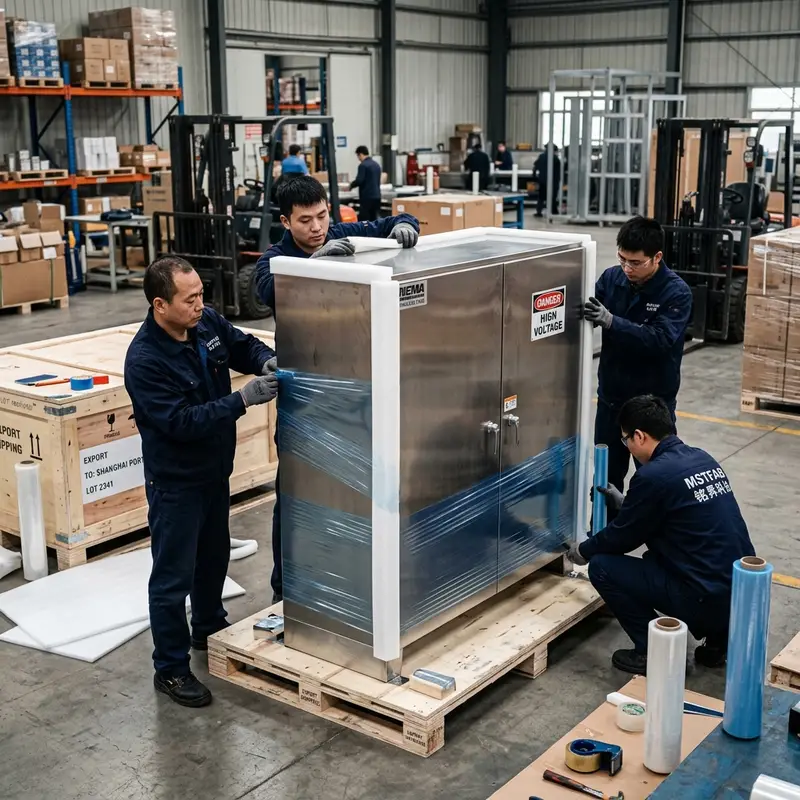
- Quantity, packing and change-control rules
Frequently Asked Questions
Does stainless steel automatically make an enclosure NEMA 4X?
No. The NEMA Type applies to a complete enclosure configuration and its performance. Material is only one part of the design and evaluation.
Is 316 always better than 304?
Not automatically. 316 often offers an advantage in chloride exposure, but grade selection should follow the actual environment, fabrication, finish, lifecycle and cost requirements.
Who owns the final NEMA claim?
The responsible manufacturer or conformity party for the completed product should control the applicable standard, configuration and evidence. Define that ownership in the RFQ and purchase documents.
Send the Exposure and Configuration, Not Just “Stainless 4X”
Share the drawings, grade, environment, seal-path details, installed interfaces, finish, verification plan and quantity. MSTFAB will review the drawing-defined empty-shell scope before quotation.
 WeChat Contact
 WhatsApp Me Directly