
Medical equipment requires more than standard metal fabrication. From diagnostic imaging carts to surgical control panels, custom medical equipment housings demand hygienic design, flawless aesthetic finishes, and rigorous EMI shielding. Any exposed weld seam or sharp edge can compromise sanitation and user safety.
At MSTFAB, a direct source factory with a 5,000 sqm facility in Guangzhou, we specialize in the precision sheet metal fabrication of medical device enclosures. With 23 years of engineering mastery, we deliver strict ±0.1mm CNC bending tolerances and sanitary welding processes for healthcare OEMs across North America and Europe.
Need production capability? This article focuses on medical equipment sheet metal parts. For manufacturing scope, process capability and drawing-based quotation support, review MSTFAB’s medical equipment enclosure manufacturing.
Precision Sheet Metal Capabilities for Medical OEMs
The medical industry accepts zero defects. We control the entire manufacturing process in-house to ensure your enclosures meet strict clinical and regulatory standards:
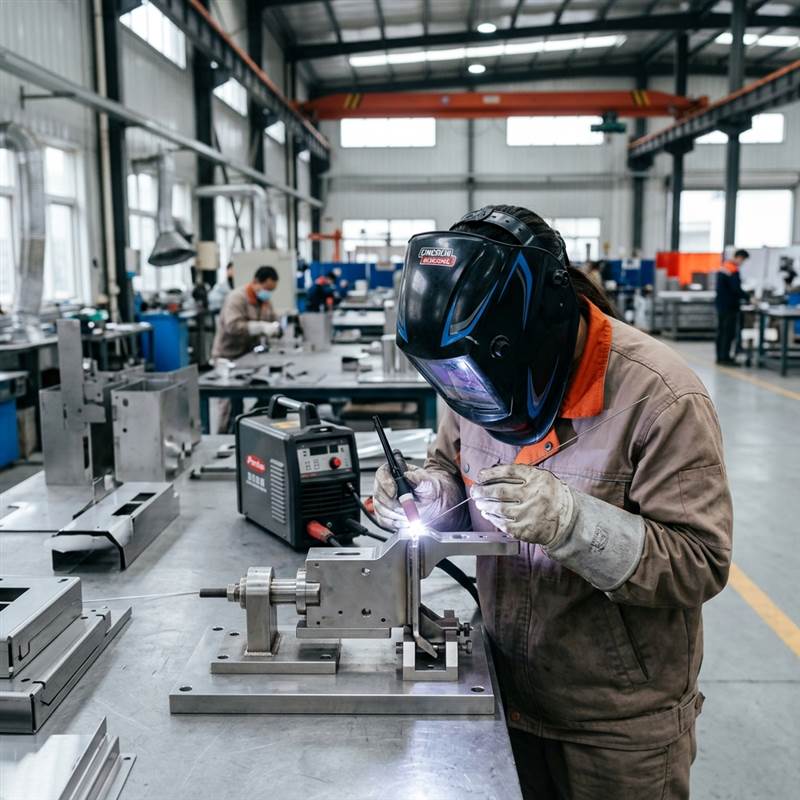
Sanitary TIG Welding & Seamless Grinding
Bacteria hide in crevices. Our certified welders provide continuous TIG welding, followed by meticulous robotic and manual grinding. We deliver perfectly smooth, flush metal transitions with zero burrs or sharp edges — a non-negotiable requirement for any enclosure destined for clinical environments.
Burr-Free Laser Cutting for Diagnostics
Medical touchscreens and diagnostic interfaces require exact fit-up. Our high-speed fiber lasers execute ultra-precise cutouts for HMI displays, fluid ports, and ventilation systems without distorting the surrounding metal.
High-Accuracy CNC Bending (±0.1mm)
Complex aesthetic curves and multi-part medical chassis must align perfectly. Our Amada press brakes ensure exact angular consistency, guaranteeing your external panels assemble seamlessly with uniform panel gaps.
Antimicrobial & Medical-Grade Finishing
We offer specialized hospital-grade powder coating and medical-grade anodizing. These highly durable finishes resist harsh chemical wipe-downs (including bleach, quaternary ammonium, and hydrogen peroxide solutions), UV sterilization exposure, and actively prevent bacterial growth on contact surfaces.
| Fabrication Process | Equipment / Method | Tolerance / Spec | Medical Relevance |
|---|---|---|---|
| Sanitary TIG Welding | Continuous seam, certified welders | Zero pinholes, flush ground | Eliminates bacteria-harboring crevices |
| Seamless Grinding | Robotic + manual multi-stage | Ra ≤ 0.8μm surface finish | Smooth, wipeable hygienic surfaces |
| Fiber Laser Cutting | IPG 4kW / 6kW | ±0.05mm | Burr-free cutouts for HMI & diagnostic ports |
| CNC Bending | Amada Press Brake | ±0.1mm angular | Seamless multi-panel aesthetic assembly |
| Antimicrobial Coating | Electrostatic powder / anodizing | 60–80μm, antimicrobial additive | Resists chemical wipe-downs & UV sterilization |
| EMI/RFI Shielding | Conductive gaskets, flanged joints | >40dB attenuation | Protects sensitive diagnostic electronics |
DFM Engineering for Medical Carts & Equipment
Our engineering team provides direct DFM (Design for Manufacturability) support to optimize your medical sheet metal designs for clinical environments:
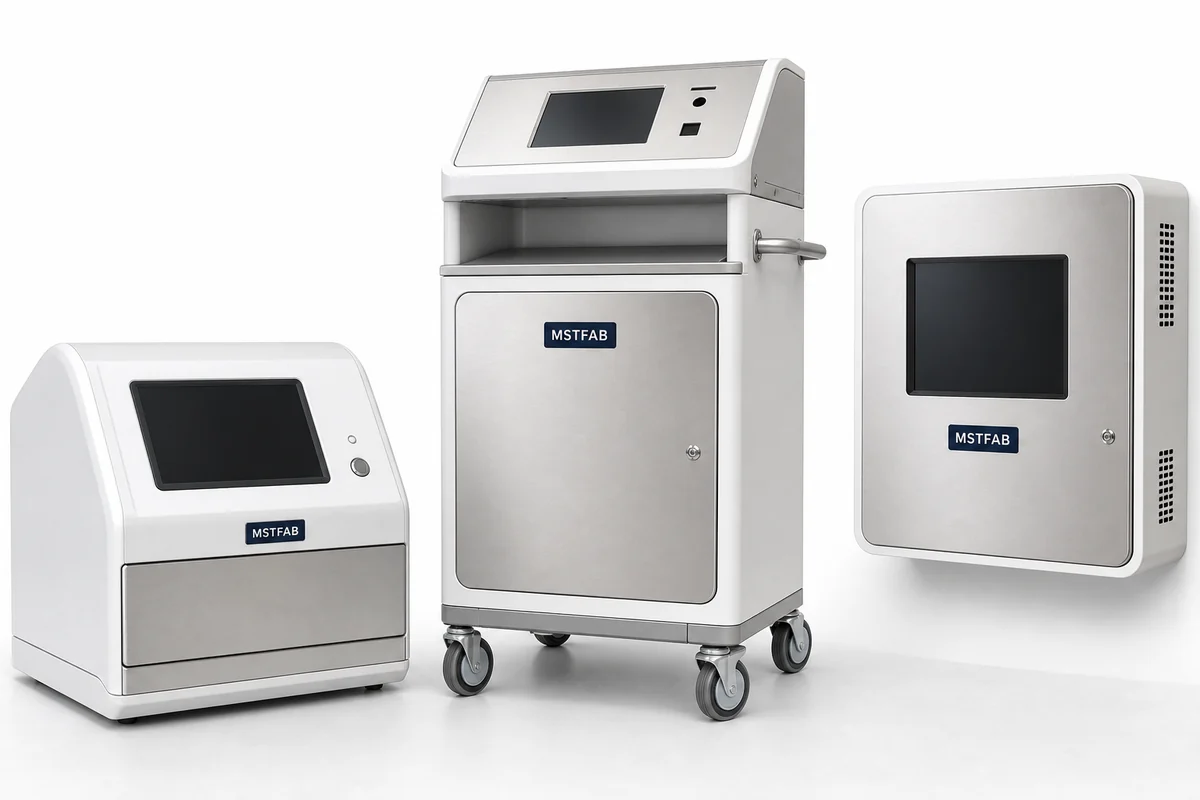
Ergonomics & Mobility
Fabricating lightweight, low-center-of-gravity aluminum chassis and reinforced caster-mounting bases for mobile medical carts and IV diagnostic stations. We optimize wall thickness to balance structural rigidity with portability. Learn more about our aluminum sheet metal fabrication services.
EMI/RFI Shielding
Engineering precise internal compartments and flanged joints that accommodate conductive gaskets, protecting life-saving diagnostic equipment from electromagnetic interference. Our sheet metal architecture achieves >40dB attenuation across critical frequency ranges.
Hygienic Design (Washdown Ready)
Designing slanted surfaces, eliminating recessed fasteners, and radiusing all exterior edges to ensure the enclosure can be easily and thoroughly cleaned with hospital-grade disinfectants without leaving any sanitation dead zones.
Clinical-Grade Materials
We process premium metals tailored to hospital and laboratory environments. For high-sanitation clinical settings, we offer custom 304 stainless steel fabrication and marine-grade 316 stainless steel fabrication, finished with premium brushed stainless steel finishing to ensure cleanable, washdown-ready surfaces. For internal structures and indoor enclosures, we utilize high-quality powder coated steel sheet metal fabrication to ensure durable protection.
We process premium metals tailored to hospital and laboratory environments:
| Material | Grades | Key Properties | Medical Application |
|---|---|---|---|
| Stainless Steel | SUS304 / 316L | Superior corrosion resistance, hygienic, non-porous | Surgical suites, lab washdown areas, sterile environments |
| Aluminum Alloys | 5052 / 6061 | Lightweight, excellent strength-to-weight ratio | Portable diagnostic devices, mobile medical carts |
| Cold-Rolled Steel | SPCC / DC01 | High rigidity, smooth surface, cost-effective | Internal chassis, floor-standing lab equipment |
Regulatory & Quality Compliance
Medical OEMs require fabrication partners who understand the regulatory landscape. MSTFAB supports your compliance journey with:
| Standard / Certification | Scope | How MSTFAB Supports |
|---|---|---|
| ISO 9001:2015 | Quality Management System | Full traceability, documented processes, SPC |
| ISO 13485 (Support) | Medical Device QMS | Material certs, FAI reports, change control |
| IEC 60601 (Enclosure) | Medical Electrical Safety | EMI shielding, grounding provisions, edge safety |
| RoHS / REACH | Hazardous Substance Restriction | Compliant materials and coatings only |
| 100% FAI | First Article Inspection | CMM dimensional reports per AS9102 / PPAP |
Custom Sheet Metal Fabrication for Medical Equipment OEMs: Finish, Fit and Controlled Repeat Production
A medical equipment housing can look perfect in a rendering and still cause trouble on the assembly line. The display opening may be slightly off, powder coating may make a removable panel too tight, or the first 20 parts may look great while the next 200 do not match them.
Quick answer: MSTFAB fabricates drawing-based housings, panels, chassis, brackets and welded structures for medical equipment OEMs. Fit, finish and repeatability are controlled through three approval gates: manufacturing review, first-article approval and repeat-batch verification. Electronics, software, clinical validation and regulatory approval remain with the OEM and its partners.
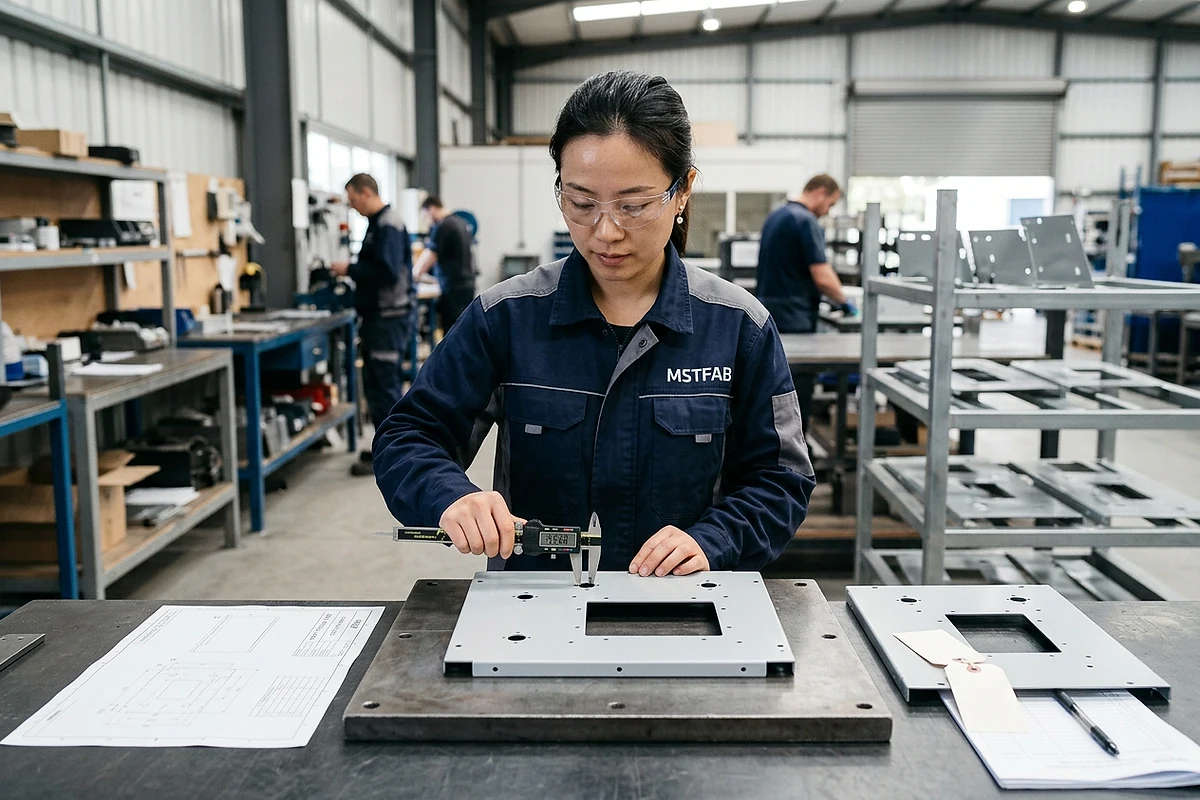
Fit: Identify the Mating Features, Not Every Dimension
A part can meet each drawing dimension and still cause assembly problems once several components come together. Mark the interfaces that decide fit before production:
- Display and control-panel openings
- Mounting holes for internal modules
- Hinges, latches and removable access panels
- Welded frames and supporting brackets
- Threaded inserts and fastener positions
Do not apply a tight tolerance to every dimension. Tighten only what affects assembly, and agree the checks for those features before production.
Finish: Separate Visible Surfaces From Hidden Structure
“Premium finish” means different things to different factories. A powder-coated front panel may need consistent color and texture, a brushed stainless cover may need a defined grain direction, and an internal bracket may need neither. Before approving a finish, confirm the color, gloss and texture reference, the visible cosmetic surfaces, acceptable marks and weld appearance, masking for threads and contact areas, and packaging protection for export. Project-specific finishing, including powder coating, is coordinated through established external finishing partners.
For how to quote and accept visible panels and internal structures as separate jobs, see sourcing cosmetic panels and empty metal structures for medical OEMs.
Controlled Repeat Production: What Must Stay Consistent
One good sample is a useful start. Repeat orders need an agreed reference package, so production follows approved specifications rather than factory memory.
| Control item | What should stay consistent |
|---|---|
| Drawings | Approved part revision |
| Material | Grade and thickness |
| Fabrication | Critical bends, welds and mounting features |
| Surface finish | Approved color and appearance reference |
| Inspection | Agreed dimensions and acceptance criteria |
| Packaging | Protection and identification method |
If a supplier changes the bending sequence or finishing process without reviewing the effect on critical features, the next batch may not match the approved sample, and “almost identical” rarely satisfies an assembly manager.
Three Approval Gates Before Repeat Orders
- Gate 1, drawing and manufacturing review: confirm the latest STEP and PDF files, material, critical dimensions, hardware and finish requirements. Review any proposed manufacturing change before production release.
- Gate 2, first-article approval: inspect the initial parts for critical fit dimensions, surface appearance, hardware installation and relevant assembly interfaces. The buyer approves the first article before the agreed production batch is released.
- Gate 3, repeat-batch verification: later orders follow the approved baseline. Changes to material, tooling, critical fabrication methods, finish or hardware may need review and renewed approval, and the inspection scope and records are agreed per project.
These checkpoints let purchasing teams manage quality without turning every small bracket into an engineering project. For panel-gap measurement, see the gap and flush DFM guide. For first-article and change-control detail, see the medical device enclosure fabrication guide. The medical equipment housing RFQ checklist lists what to send for quotation, and our custom sheet metal fabrication services page covers overall capabilities.
Scalable OEM Production for Healthcare
| Service Tier | Volume | Includes | Lead Time |
|---|---|---|---|
| Prototype & Validation | 1–5 units | Full DFM review, CMM report, surface samples | 5–7 business days |
| Pilot Production | 10–200 units | Custom fixtures, process validation, PPAP | 10–15 business days |
| Volume Production | 200+ units | Dedicated line, Kanban delivery, SPC monitoring | 15–25 business days |
From rapid prototyping of a single diagnostic enclosure to full-scale production runs of medical cart chassis, MSTFAB delivers zero-defect consistency with complete material traceability and documentation packages that satisfy even the most demanding medical device OEM audits.
Frequently Asked Questions
Can MSTFAB support prototypes and repeat production?
Yes. MSTFAB supports custom prototypes and repeat sheet metal production based on approved drawings, quantities and project-specific requirements.
Can exterior panels and internal brackets use different finishes?
Yes. Different components can have different finishing and cosmetic acceptance requirements, subject to the approved specifications.
Does MSTFAB manufacture complete medical devices?
No. We manufacture custom sheet metal housings, panels, frames, brackets and mechanical components. Finished medical-device integration and certification are outside our standard fabrication scope.
Request Your Medical Enclosure Quote
Engineering a medical device that demands flawless aesthetics, antimicrobial surfaces, and EMI protection? Upload your STEP or DWG files below, and our specialized medical fabrication team will deliver a comprehensive DFM analysis and competitive direct-from-factory quote within 24 hours.
sheet metal welding services
MSTFAB provides TIG and MIG sheet metal welding services for structural assemblies, cabinets, frames and OEM metal components.
 WeChat Contact
 WhatsApp Me Directly