
MEDICAL OEM FABRICATION
Quick answer: a medical device enclosure is a controlled mechanical component, not a medical-device approval by itself. A useful RFQ defines intended use, cleaning agents, materials and finish, human-contact surfaces, interfaces, load paths, EMC or ingress inputs, inspection evidence and who validates the completed device. MSTFAB fabricates buyer-designed empty sheet metal shells and mechanical parts from released drawings.

Translate Device Requirements Into Measurable Metalwork
The OEM should define the actual environment: cleaning chemistry, concentration, contact time, wipe frequency, temperature, exposed surfaces and acceptable residue. The word “medical” is not a finish specification, and “sanitary” is not an inspection method.
Choose continuous welds, sealed overlaps or accessible joints according to the buyer’s cleaning and structural requirements. Define where grinding is required and how the result will be inspected.
Name the substrate, pretreatment, coating or passivation route, color, gloss, texture, masking and acceptance tests. Any antimicrobial claim needs separate supplier evidence and OEM validation.
The fabricator can control seams, bonding lands, conductive contact zones and gasket grooves. The OEM owns EMC architecture and verification of the populated device.
For carts and operator-facing housings, define handles, caster interfaces, tip-stability inputs, service access, pinch-point clearances and proof-load requirements on the released drawing.
Material Selection for Medical Enclosures
Material selection should follow corrosion exposure, cleaning method, weight, forming, welding, finish, grounding and any magnetic restrictions set by the device manufacturer. The OEM should approve the complete material and finish system for the intended use.
| Material Choice | Useful Starting Point | Questions to Freeze |
|---|---|---|
| Stainless steel 304 / 316L | Exposed housings, carts and panels where corrosion resistance and cleanability matter. | Grade, sheet finish, weld cleanup, passivation if required, surface-roughness criterion and approved cleaning chemistry. |
| Aluminum 5052-H32 / 6061 | Weight-sensitive housings, panels, frames and machined interfaces. | Alloy and temper, joining route, anodize or coating, conductive masks, galvanic interfaces and any device-specific magnetic restriction. |
| Cold-rolled or galvanized steel | Internal frames, bases, brackets and coated structures where the approved environment permits them. | Steel grade, zinc route if used, cut-edge and weld repair, pretreatment, powder specification, hidden corrosion zones and service environment. |

DFM for Medical Equipment Enclosure Shells
A clean CAD render can still hide an inaccessible fastener, an unmeasurable finish note or a load path that ends in thin sheet. DFM should translate the OEM’s device inputs into buildable geometry; it does not certify medical compliance.
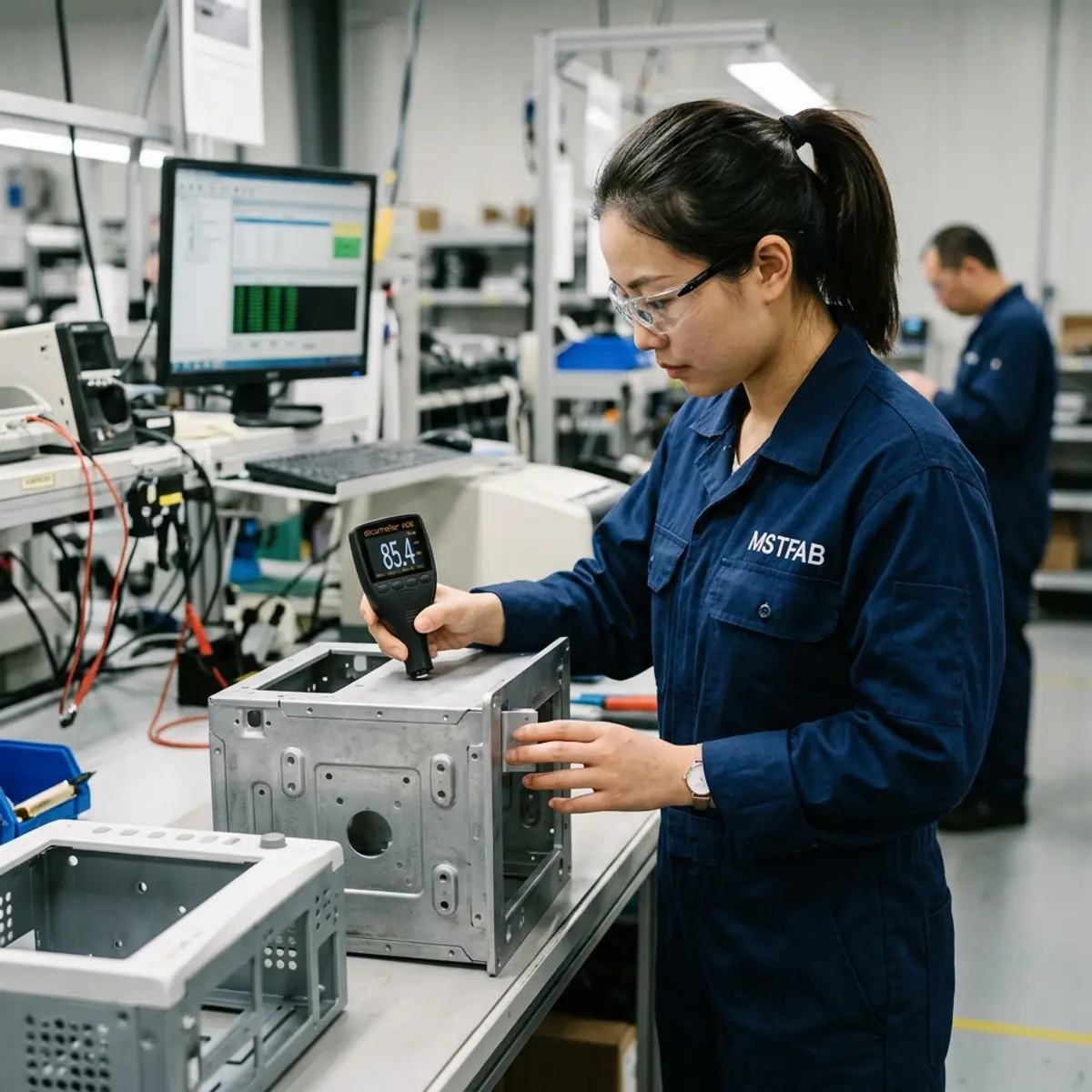
Quality Evidence the Device OEM Can Use
FDA’s Quality Management System Regulation (QMSR) became effective on February 2, 2026 and applies to finished-device manufacturers within its scope. An empty enclosure supplier supports the OEM through defined purchasing controls, released specifications, inspection records and change notification; the shell is not “FDA approved.”
- Released product definition: Match the part number, drawing revision, material, finish, hardware and approved supplier sources.
- First-article inspection: Report buyer-designated dimensions and functional interfaces in the finished condition.
- Finish evidence: Record coating thickness, appearance, roughness, adhesion or passivation evidence only where the specification requires it.
- Weld evidence: Use visual, dimensional or additional examination methods defined by the drawing and risk; no inspection method guarantees zero defects.
- Material traceability: Supply agreed certificates or lot records for the specified material. Do not claim that one document proves the finished device.
- Change control: Notify the OEM before changing material, finish chemistry, hardware, process, source or drawing-controlled geometry.

Frequently Asked Questions
Do you manufacture plastic covers for medical devices?
MSTFAB focuses on sheet metal parts. We can fabricate the drawing-defined chassis and interfaces that mate with buyer-supplied plastic bezels, but plastic molding is outside our standard scope.
Can stainless steel passivation be included?
If passivation is required, specify the applicable standard, chemistry or approved process, finish condition and acceptance evidence. The quotation should state whether it is included and how the approved source is controlled.
Do you assemble medical electronics or touch screens?
No. MSTFAB supplies the buyer-defined mechanical metalwork. Electronics, software, electrical assembly, device validation and regulatory approval remain with the medical-device OEM or responsible integrator.
What determines prototype lead time?
Lead time depends on drawing completeness, material and finish availability, tooling, welding, purchased hardware, inspection evidence and approval cycles. MSTFAB confirms timing after reviewing the released package and quantity.
Is an empty medical enclosure shell FDA approved?
No. FDA regulates finished devices and manufacturers within the applicable regulatory scope. The OEM should control the enclosure supplier through its quality system and verify the completed device.
Request a Medical Enclosure DFM Review
Send the 2D drawing, 3D model, intended environment, cleaning inputs, material and finish specification, loads, controlled interfaces, quantity and required evidence. MSTFAB will review the build-to-print metalwork and identify assumptions before quotation.
 WeChat Contact
 WhatsApp Me Directly