
By: Frank, General Manager
Technical Review: Michael Chen, Quality Manager
Last Updated: July 6, 2026
Medical equipment depends on more than electronics, optics, sensors, or software.
It also depends on the metal structure around those components.
A housing may protect internal modules. A front panel may hold a display, buttons, ports, or a control interface. A chassis may position sensitive components. A cart frame may support equipment weight. A removable cover may create service access. A bracket may hold a sensor, pump, screen, power module, or internal cable route.
When these fabricated parts are wrong, the problem can affect the entire equipment build.
A display opening may not match the actual screen frame. A panel gap may look uneven. A door may bind after coating. A mounting plate may interfere with internal components. A cable-entry panel may block connectors. A visible stainless steel cover may arrive scratched because it was packed like a hidden bracket.
That is why buyers need a custom metal parts manufacturer for medical equipment, not only a supplier that can cut sheet metal.
The real requirement is a controlled manufacturing route:
Layout review → DFM review → material confirmation → laser cutting → CNC bending → welding or mechanical assembly → surface finishing → inspection → protective export packing.
Need the fabrication scope? This article is the RFQ checklist. For material, cleanability, interface, finish, first-article and change-control guidance, review MSTFAB’s medical device enclosure fabrication guide.
Real Medical Equipment Parts Evidence
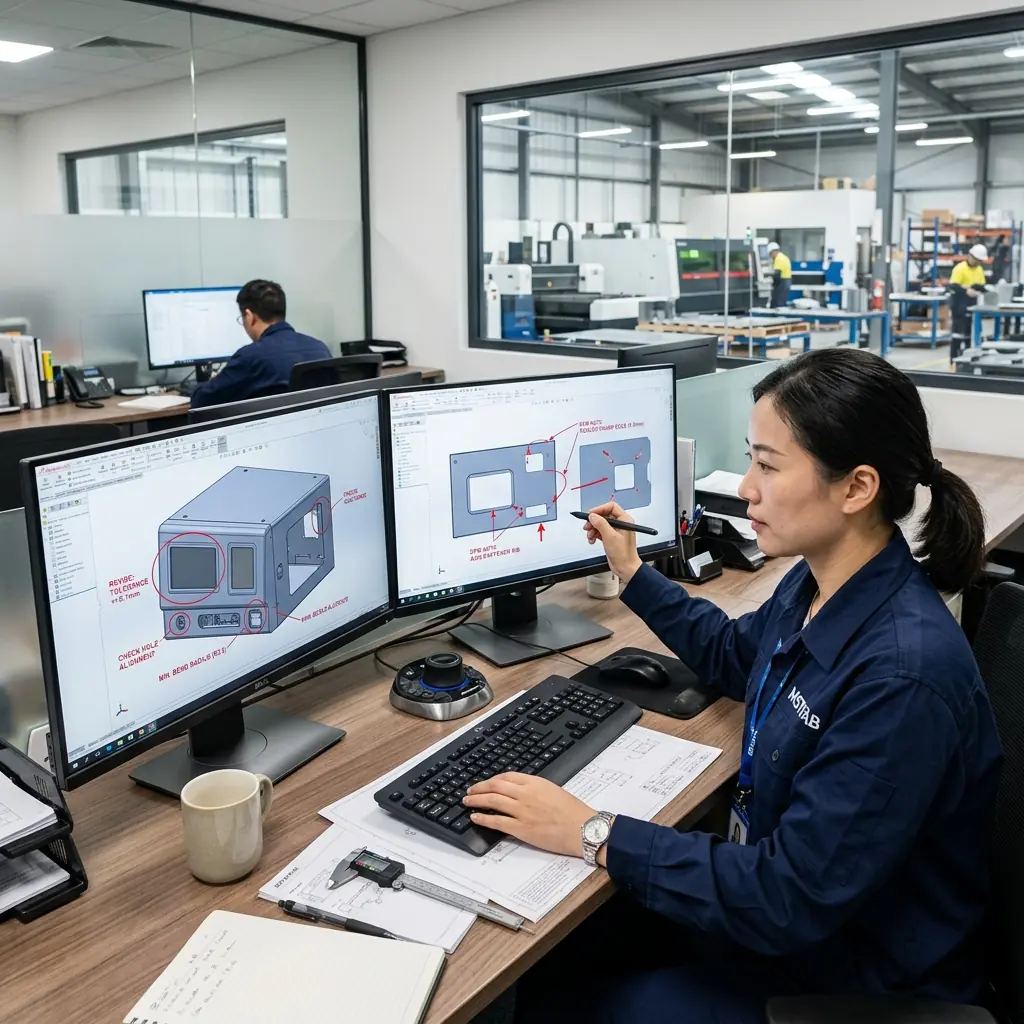
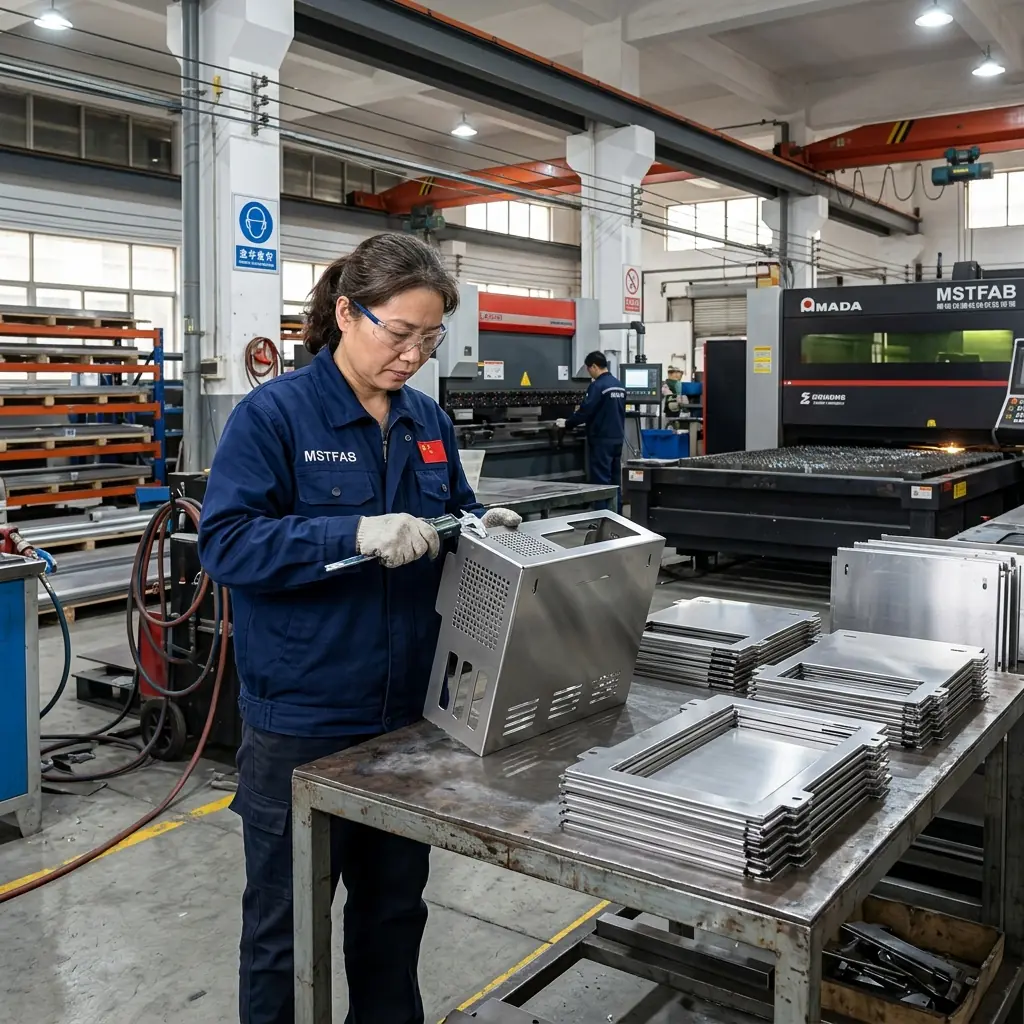
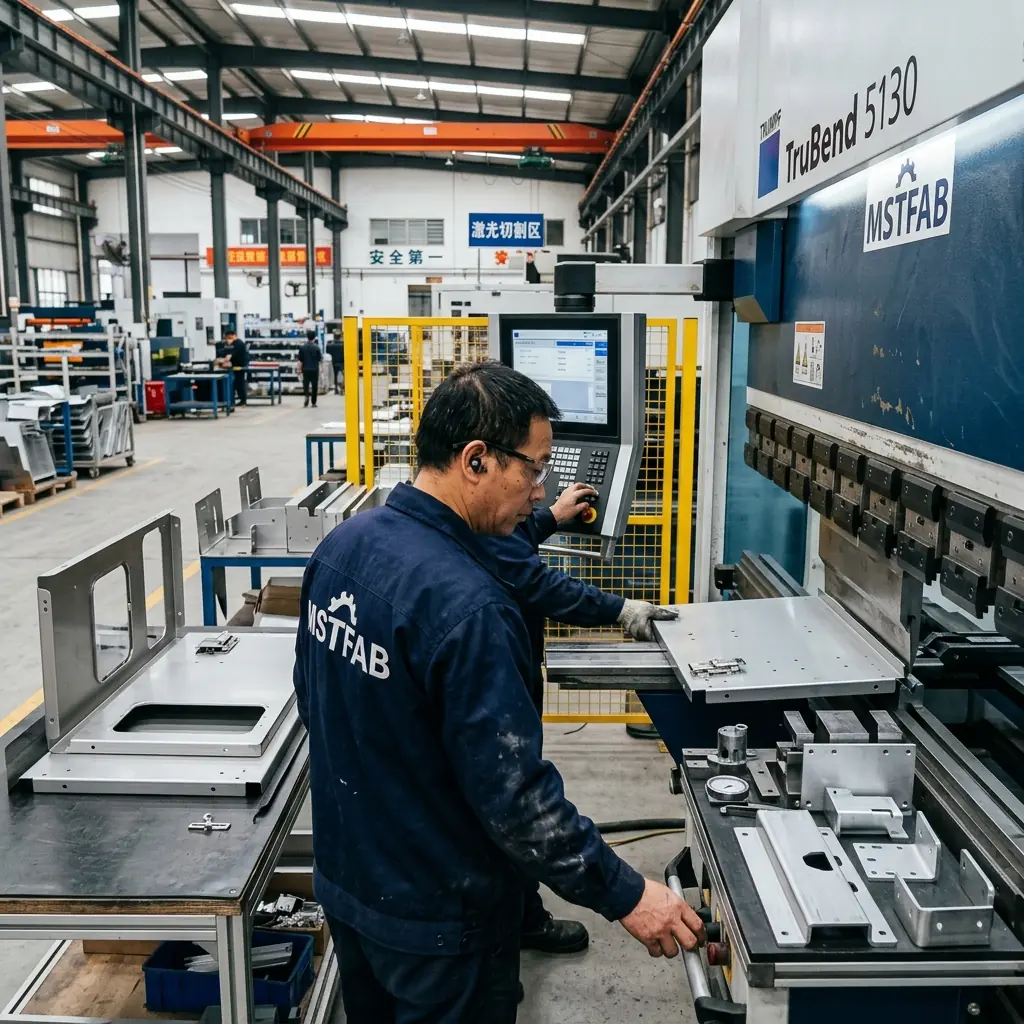
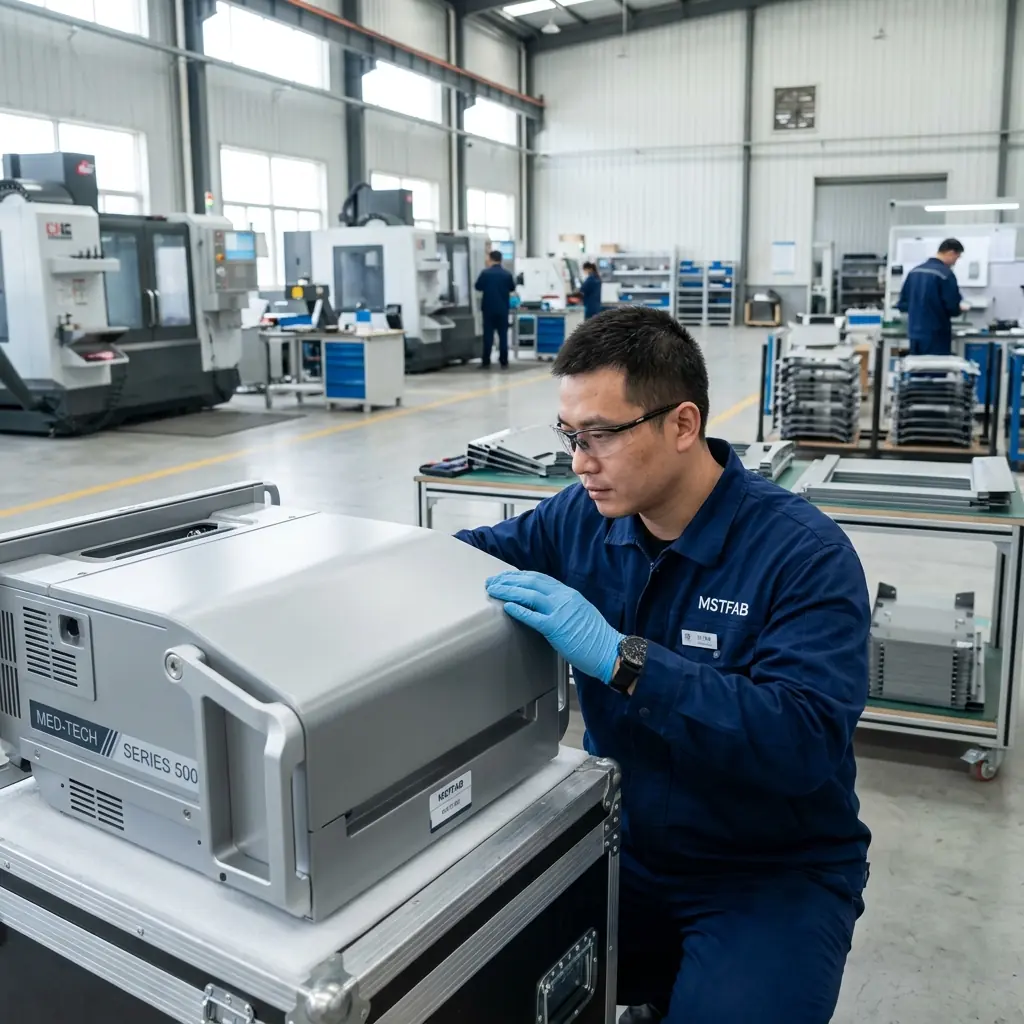
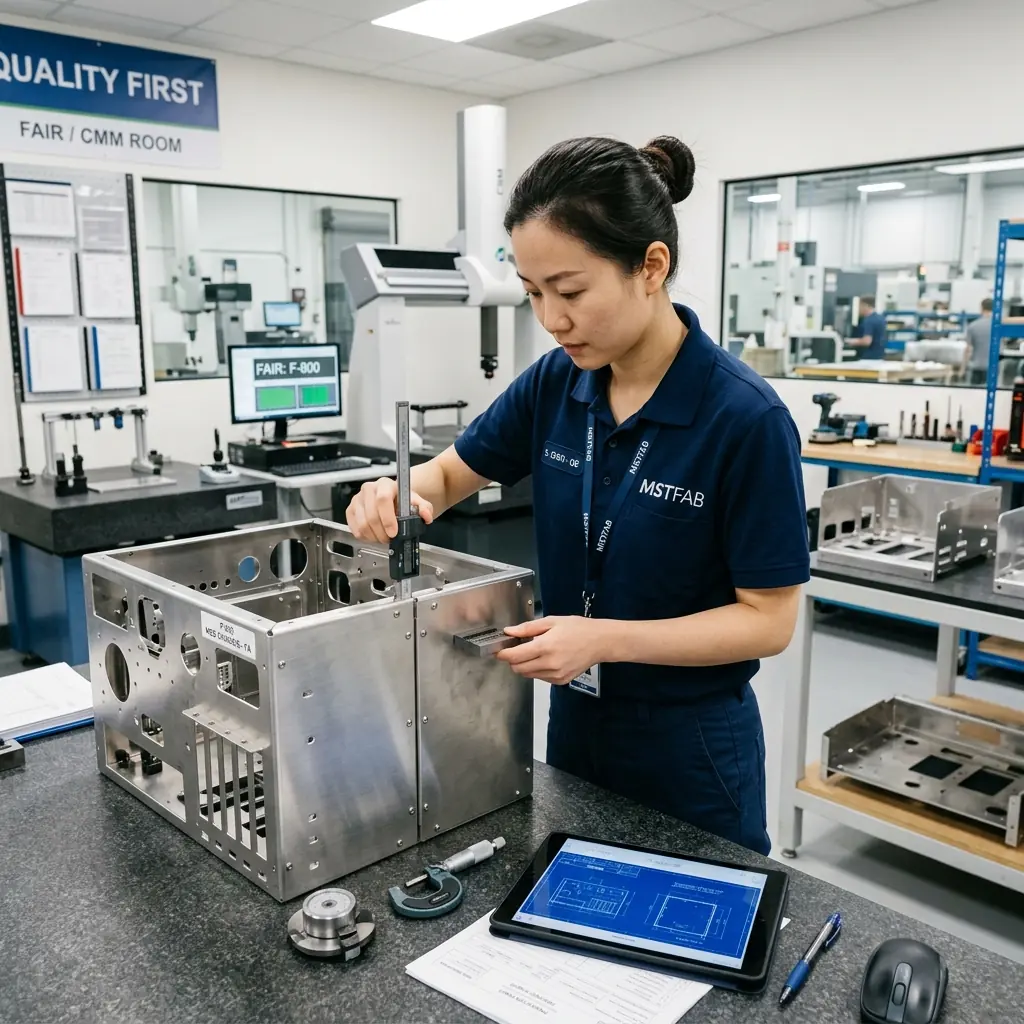
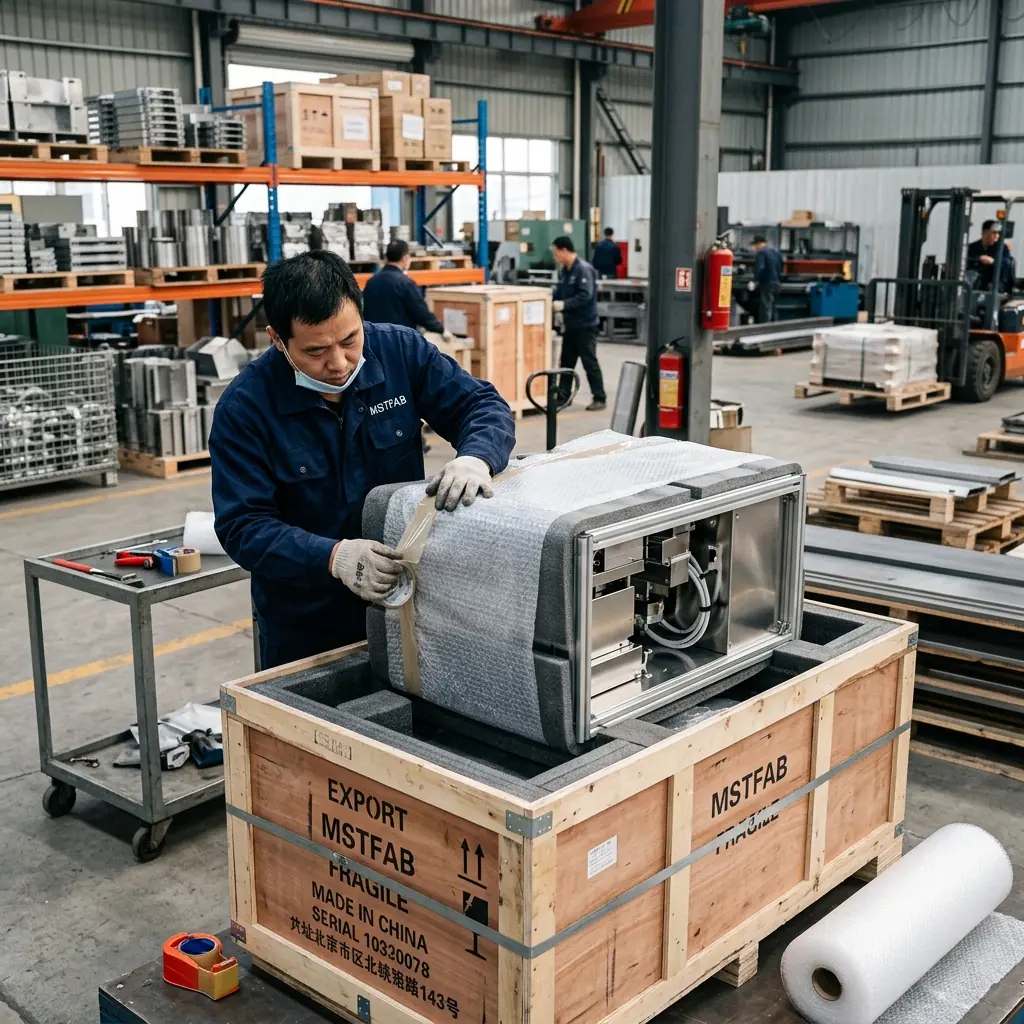
MSTFAB supports drawing-based sheet metal fabrication for medical, laboratory, diagnostic, aesthetic, analytical, and related equipment OEM projects.
Typical fabricated parts include medical equipment housings, device covers, front and rear panels, HMI panels, instrument chassis, mounting plates, internal support brackets, equipment carts, cable-entry panels, ventilation covers, access doors, service panels, welded frames, base structures, protective guards, hardware-installed assemblies, and multi-part fabrication kits.
The objective is straightforward:
Deliver metal parts that fit the equipment layout, support practical assembly and service, maintain controlled visible quality, and arrive ready for the buyer’s next production stage.
For broader OEM fabrication support, visit custom sheet metal fabrication for OEM parts.
Clear Manufacturing Boundaries
Medical equipment is a regulated and safety-sensitive category.
MSTFAB manufactures the physical metal structure.
Medical-device validation, electronics, software, wiring, clinical requirements, OEM regulatory compliance, and regulatory approval remain entirely buyer-controlled.
MSTFAB’s normal role is physical sheet metal fabrication and mechanical assembly based on buyer drawings and approved project requirements.
This may include metal housings, covers and panels, brackets, chassis sections, mounting plates, equipment carts, doors and access panels, hardware insertion, welding, surface finishing, mechanical assembly checks, inspection, and export packing.
The buyer remains responsible for final product-level requirements, including medical-device classification, electrical design, electronics, software, firmware, sensors and optics, wiring harnesses, sterilization requirements, biocompatibility requirements, EMC requirements, safety validation, clinical validation, regulatory submission, final compliance certification, and product-level functional testing.
A metal housing can be well fabricated while the buyer remains responsible for confirming that the complete medical device meets its intended technical and regulatory requirements.
Medical Equipment Housings, Medical Aesthetic Enclosures, and Premium Equipment Housings
These pages should serve different search intent.
- Medical Equipment Metal Parts: Broad mechanical fabrication for medical, lab and diagnostic equipment. Focuses on housings, chassis, panels, brackets, carts, internal structures and repeat supply.
- Medical Aesthetic Equipment Enclosures: Beauty, laser and aesthetic-device structures. Focuses on premium exterior appearance, display panels, ventilation and branding surfaces.
- Premium Equipment Housings: High-visible-quality equipment shells. Focuses on cosmetic finish, panel alignment, visible doors and premium appearance.
- Equipment Housings: General industrial and OEM equipment shells. Focuses on internal layout, doors, panels, ventilation and service access.
- Stainless Steel Fabrication: Material-focused stainless steel procurement. Focuses on grade, weld cleanup, brushing, corrosion environment and finishing.
For beauty-device and laser-equipment structures, visit medical aesthetic equipment enclosures. For high-appearance equipment shells, visit premium equipment housings. For material-focused stainless steel sourcing, visit custom metal parts manufacturer for stainless steel.
What Medical Equipment Metal Parts Can Be Fabricated?
Medical equipment can involve many types of fabricated metal components.
MSTFAB focuses on drawing-based sheet metal parts and mechanical assemblies, including equipment housings, outer covers, chassis structures, internal mounting plates, HMI panels, display surrounds, control panels, equipment doors, removable service covers, cable-entry plates, ventilation panels, fan covers, filter frames, equipment cart frames, base plates, support brackets, sensor brackets, internal cable supports, hardware-installed panels, and welded mechanical assemblies.
These fabricated parts may be used around diagnostic equipment, laboratory instruments, medical aesthetic equipment, analytical equipment, imaging-related equipment, testing systems, patient-support equipment, medical carts, device control modules, clinical-room equipment, portable instrument housings, and OEM medical-related devices.
The central requirement is not simply forming sheet metal. The part must fit the actual product, support assembly and maintenance, protect visible surfaces, allow practical installation, and remain repeatable for future orders.
Why Medical Equipment Metal Parts Need More Than Basic Cutting and Bending
Medical and laboratory equipment often has higher expectations for appearance, cleanability, panel fit, service access, hardware operation, and shipping protection.
A fabricated component may appear simple in a 2D drawing but create problems during product assembly.
For example, a display cutout may not fit the actual screen frame. A panel may flex around a large HMI opening. A door may bind after hinges, coating, and seals are installed. A mounting plate may block cable routing. A visible corner may show weld distortion. A brushed stainless steel panel may have inconsistent grain direction. A powder-coated thread may no longer accept its fastener. A gap between panels may look uneven under clinic lighting. A cart frame may lose squareness after welding. A finished cover may be damaged during export transport.
The useful question is not only: “Can you fabricate this metal medical equipment part?”
The better question is: “Can this part be installed, cleaned around, opened, serviced, finished, inspected, packed, and repeated without creating extra work for the product team?”
Start With the Medical Equipment Layout
A flat DXF file can show the cutting profile.
It may not show how the part works with the final device.
For medical equipment projects, the buyer should clarify what the part supports, protects, or covers, which components mount to it, which panel surfaces are visible, which openings are for screens, buttons, connectors, or cable glands, which areas need maintenance access, which parts must be removable, which holes control critical alignment, whether a gasket-contact surface is required, whether grounding areas are required, whether there is a ventilation or airflow requirement, whether the surface is frequently handled or cleaned, what finish appearance is required, and how the part should be protected during shipment.
A front panel may have the correct display opening but not allow sufficient fastening access. A rear cover may fit the housing but block a cable connector. A service door may open correctly in CAD but interfere with equipment after installation.
The strongest RFQ explains the component in its real product context.
DFM Review for Medical Equipment Metal Parts
DFM means Design for Manufacturing.
For medical equipment projects, DFM should review both part-level manufacturability and final equipment fit.
Important review points may include material grade and thickness, overall housing dimensions, panel proportions, display and HMI cutouts, hole and slot locations, hole-to-bend clearance, bend radius, minimum flange length, tooling access, door gaps, hinge and latch locations, hardware installation sequence, cable-entry positions, ventilation openings, internal mounting clearance, welding access, weld-distortion risk, grounding areas, gasket-contact surfaces, visible cosmetic faces, brushing direction, finish allowance, and packing support points.
For example, a large display opening may need formed returns or reinforcement to maintain panel stiffness. A mounting stud may need installation before powder coating. A removable service cover may need captive fasteners. A visible stainless steel panel may require controlled handling and protective film. A rear cable-entry plate may need enough connector clearance after bending. A welded cart frame may require fixture support to maintain squareness.
Materials for Medical Equipment Metal Parts
Material selection depends on equipment function, environment, cleaning routine, visible appearance, corrosion exposure, weight, finish requirement, and buyer specification.
- Carbon Steel: Internal structures, carts, frames, equipment bases, hidden supports. Verify thickness, welding, powder coating and corrosion protection.
- Galvanized Steel: Internal panels, cabinet structures and selected utility components. Verify surface condition, cut edges, bends and finish compatibility.
- Stainless Steel: Wash-down zones, visible panels, humid environments and cleanable structures. Verify grade, weld cleanup, brushing, passivation and packing protection.
- Aluminum: Lightweight covers, electronic-device housings, portable equipment and panels. Verify alloy, temper, bend radius, stiffness, anodizing or coating.
Material choice should match the real device requirement. A hidden mounting plate may need a different finish from an operator-facing front panel. A stainless steel cover may need more surface protection than a powder-coated carbon steel chassis.
Laser Cutting for Medical Equipment Components
Laser cutting creates the flat sheet metal profiles for housings, covers, panels, mounting plates, support brackets, ventilation panels, doors, cable-entry plates, and internal structures.
Typical laser-cut features include outer profiles, mounting holes, adjustment slots, display openings, HMI cutouts, push-button holes, connector cutouts, cable-entry openings, ventilation patterns, fan openings, filter-frame openings, hinge holes, handle cutouts, lock cutouts, hardware insertion holes, grounding holes, alignment tabs, bend reliefs, and part-identification marks.
The cut geometry should support the final device assembly. A display opening must match the actual frame and fastening pattern. A connector cutout should account for plug clearance and cable bend radius. A cable-entry opening should remain accessible after the panel is formed. A locating tab can support a welded or assembled structure. A hardware hole must remain accessible after bending.
CNC Bending Creates Equipment Geometry and Panel Stiffness
CNC bending converts flat metal blanks into covers, housings, front panels, access doors, chassis sections, equipment carts, support structures, and reinforcement features.
The final geometry can be affected by material type, material thickness, bend radius, flange length, tooling, bend sequence, hole-to-bend distance, springback, surface condition, hardware clearance, and required post-bend dimensions.
A flat DXF pattern may be correct while the finished panel still creates an assembly issue. Examples include a front panel becoming too narrow after bending, a flange blocking fastener access, a connector opening moving too close to an edge, a door gap becoming uneven, a mounting plate losing installation clearance, a visible panel receiving tooling marks, or a hinge moving out of alignment.
Critical post-bend checks may include panel width and height, bend angle, flange length, hole position after bending, panel flatness, squareness, door gaps, hardware access, internal clearance, display or HMI fit, and mating-panel alignment.
Welding, Frames, and Mechanical Assemblies
Some medical equipment parts are complete after cutting, bending, hardware insertion, and finishing. Others need welding to create support frames, equipment carts, structural bases, reinforced housings, welded chassis sections, or multi-part assemblies.
Welding adds strength. It also introduces heat. Heat can affect flatness, squareness, door gaps, panel alignment, hole position, mounting-plate fit, surface appearance, visible weld quality, and final assembly condition.
Before welding begins, clarify weld location, weld length, continuous or intermittent weld requirement, structural or cosmetic weld requirement, visible weld areas, grinding requirement, fixture requirement, flatness requirement, squareness requirement, critical post-weld dimensions, surface-finish route, and inspection requirement.
A welded structure should not only be strong. It should remain aligned enough for covers, mounting plates, internal components, doors, panels, cables, fasteners, and service features to fit correctly.
Smooth Edges, Visible Surfaces, and Cleanable Design
For medical and laboratory equipment, product appearance often affects buyer confidence.
Visible surface quality may depend on edge deburring, controlled bends, panel alignment, consistent door gaps, weld cleanup, brushing direction, powder-coat appearance, fastener placement, hardware alignment, scratch prevention, and packaging protection.
Potential visible-finish requirements may include powder coating, wet painting, brushed stainless steel, polished stainless steel, anodizing, passivation, protective film, and defined cosmetic-face standards.
Before fabrication, define which surfaces are visible, which direction brushed finish should follow, which areas need weld cleanup, whether protective film is required, which threads need masking, which grounding surfaces must remain bare, which panel gaps are visible to the end user, and what packing method will protect the finish.
A medical equipment front panel should not look like it won a fight with a pallet.
Hardware, Doors, and Service Access
Medical equipment often requires practical access for installation, calibration, maintenance, repair, and replacement.
Typical hardware requirements include PEM nuts, PEM studs, rivet nuts, threaded inserts, captive fasteners, hinges, handles, locks, latches, grounding studs, cable clips, mounting clips, removable service panels, and hardware kits.
Hardware affects the complete manufacturing route. PEM hardware may need installation before surface finishing. Threads may require masking before coating. A grounding point may require bare-metal contact. A hinge must remain aligned after bending and welding. A removable panel may need captive fasteners to prevent lost hardware. A service opening must allow normal tool access.
A housing is not complete merely because the parts fit together on a workbench. It must remain practical for the buyer’s assembly and service teams.
Ventilation, Cable Entry, and Internal Access
Medical and laboratory equipment may require physical provisions for airflow, cables, connectors, filters, fans, screens, power modules, and service access.
Possible fabricated features include ventilation panels, fan cutouts, filter frames, cable-entry plates, connector panels, removable rear covers, access doors, internal cable supports, equipment mounting plates, internal brackets, grounding plates, and cable-routing openings.
Before fabrication, clarify component heat requirements, fan and filter locations, cable direction, connector dimensions, tool-access requirements, service-access needs, panel removal sequence, gasket or sealing interfaces, mounting orientation, and visible-surface requirements.
MSTFAB can fabricate the physical metal structure according to approved drawings. Thermal design, airflow validation, electrical protection, system performance, and product-level validation remain buyer-controlled requirements.
Surface Finishing for Medical Equipment Parts
Surface finish affects more than appearance.
It can affect corrosion resistance, cleanability, visible quality, scratch resistance, thread function, grounding, door fit, and packaging requirements.
Common finish routes may include powder coating, wet painting, anodizing, brushed stainless steel, polished stainless steel, passivation, zinc-related protective finishes, protective film, and other agreed surface treatments.
Before finishing, define finish type, color reference, texture, gloss level, visible faces, brushing direction, thread masking, grounding areas, gasket surfaces, door-gap allowance, scratch-protection requirement, and packing requirement.
Inspection for Medical Equipment Metal Parts
Inspection should focus on features that affect fit, assembly, visible quality, service access, and delivery.
Depending on the project, checks may include material confirmation, material thickness, part number and drawing revision, overall dimensions, display and connector opening size, mounting-hole positions, bend angles, flange lengths, panel flatness, squareness, door gaps, weld condition, hardware position, thread function, hinge movement, lock and latch engagement, grounding-point access, mounting-plate fit, surface appearance, protective-film condition, assembly-fit checks, and packaging condition.
Not every feature requires the same inspection priority. A hidden internal edge may matter less than a display opening, a control-panel interface, a door gap, a cable-entry panel, a mounting-hole pattern, a visible front panel, a hinge position, a grounding point, or a critical internal equipment interface.
Packaging for Medical Equipment Metal Parts
A medical equipment component can pass inspection and still arrive damaged if the packaging does not protect visible surfaces, corners, hardware, doors, and structural panels.
This is especially important for powder-coated housings, brushed stainless steel covers, anodized aluminum panels, display surrounds, equipment carts, hardware-installed assemblies, welded frames, multi-part device kits, and customer-facing front panels.
Packaging may include protective film, foam separation, edge guards, bubble protection, divider cartons, individual wrapping, labeled hardware bags, part labels, reinforced cartons, pallets, wooden crates, moisture-control materials, and defined support points for larger frames and housings.
A visible front cover should not rub against another metal part during transport. A hardware kit should not move loose inside a housing. A cart frame should be supported so it does not shift or twist during export handling.
How to Compare Medical Equipment Metal Part Manufacturers
Do not compare suppliers only by material price, sheet weight, or unit cost. Compare whether they can control the finished part in the context of your product assembly.
| What to Compare | What Buyers Should Confirm |
|---|---|
| Layout Review | Internal components, display cutouts, mounting points, service access and revision control |
| DFM Support | Holes, bends, stiffness, finish compatibility, hardware access and assembly risks |
| Laser Cutting | Display openings, connector cutouts, vents, cable entries and edge condition |
| CNC Bending | Housing geometry, door fit, panel flatness and flange consistency |
| Welding | Fixture planning, distortion control, cleanup and frame alignment |
| Hardware | Hinges, captive fasteners, threaded inserts, grounding studs and kit packing |
| Surface Finish | Coating, anodizing, brushing, masking, cosmetic standards and scratch protection |
| Inspection | Cutout size, panel fit, hardware operation, door movement and visible quality |
| Packaging | Film, foam, labels, pallets, crates and support points |
| Repeat Orders | Revision control, approved samples, inspection plan and packing standard |
A lower quote may cover simple cutting and bending. Another quote may include DFM review, hardware integration, welding, finish coordination, inspection, mechanical fit checks, labeled packing, and repeat-order control. Those are not the same delivery scope.
Frequently Asked Questions
What medical equipment metal parts can be custom manufactured?
Suitable projects can include housings, covers, chassis sections, front panels, HMI panels, mounting plates, internal brackets, equipment carts, cable-entry panels, ventilation covers, access doors, welded frames, and multi-part mechanical assemblies.
Does medical equipment metal fabrication include electronics, software, or product certification?
The normal scope is physical sheet metal fabrication and mechanical assembly. Electronics, wiring, software, medical-device validation, clinical requirements, safety testing, regulatory approval, and final product certification should be separately defined and controlled by the buyer.
Can medical equipment parts include display openings and HMI panels?
Yes. Custom metal panels can include display openings, HMI cutouts, push-button holes, connector openings, cable entries, ventilation features, mounting studs, and other drawing-based interfaces.
Can stainless steel, aluminum, and powder-coated steel be used for medical equipment parts?
Yes. The suitable material depends on the equipment environment, weight requirements, visible appearance, cleaning routine, corrosion exposure, assembly design, and buyer specification.
Request Custom Metal Parts for Medical Equipment
A reliable medical equipment metal parts manufacturer should do more than cut and bend sheet metal.
They should help ensure the parts fit the equipment layout, support required displays and hardware, allow practical service access, protect visible surfaces, pass relevant inspection, and arrive ready for the next assembly stage.
Send your drawings, material requirements, quantity, internal layout, cutout details, hardware list, finish requirements, inspection needs, and packaging expectations through the MSTFAB quotation page.
Because the metal structure around medical equipment should support confidence in the product—not create uncertainty during assembly, service, or delivery.
 WeChat Contact
 WhatsApp Me Directly