
Laboratory equipment sheet metal parts include instrument housings, stainless steel panels, trays, brackets and internal support frames. Specify the mounting interfaces, cleaning exposure, surface condition and inspection requirements for each part. Material choice or an attractive finish alone does not establish cleanliness, chemical compatibility or finished-instrument performance.
This OEM sourcing checklist covers drawing-based mechanical parts for analytical instruments and laboratory equipment. MSTFAB reviews the metalwork scope from the supplied drawings; electronics, wiring, cleanliness certification and finished-equipment validation are not included unless separately agreed. Use the checks below to define what the quotation and acceptance records must cover.
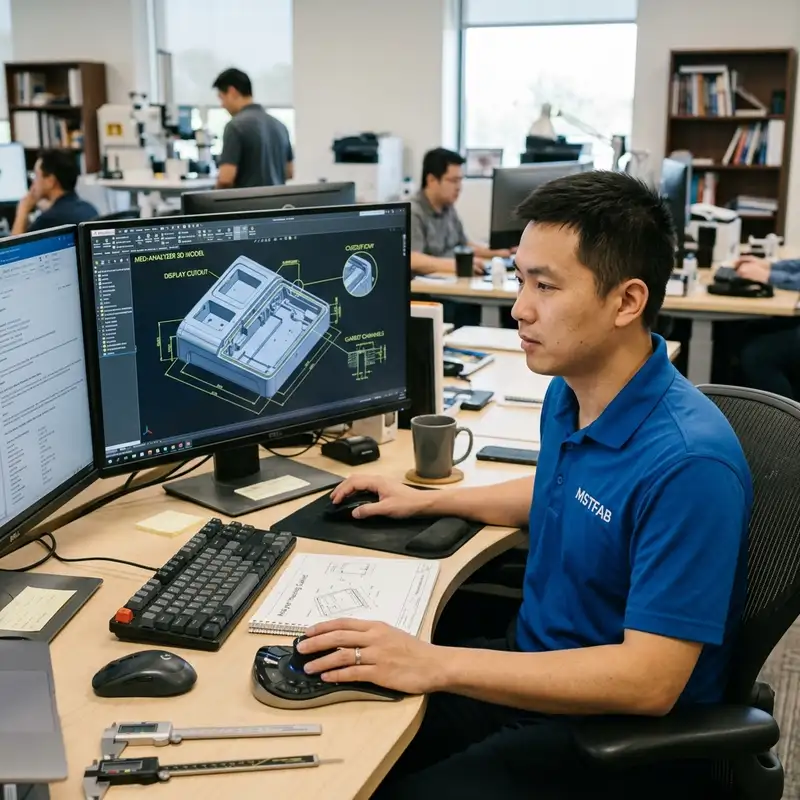
Define the service exposure: identify the cleaning agents, contact duration, temperature and surfaces involved before selecting material and finish. The sheet metal materials comparison is a starting point, not evidence of compatibility with a particular laboratory process.
Control the instrument interfaces: mark display cutouts, connector access, mounting datums and removable-panel clearances on the released drawings. The enclosure design checklist helps organize these mechanical requirements without replacing the instrument designer’s validation.
Agree on the finished condition: identify visible faces, permitted marks, protected threads and specified conductive contact areas. Use the chassis coating and assembly checklist when a coated frame or tray must fit other components after finishing.
Why Laboratory Equipment Needs High-Quality Sheet Metal Parts
Laboratory equipment may have different cleaning, appearance and assembly requirements for exterior covers and internal parts. Define those requirements with the custom sheet metal enclosure fabrication supplier rather than assuming one finish or inspection routine suits every instrument:
- Visual Cosmetics: Lab instruments are viewed in hospitals and research facilities. Gaps must be even, corners clean, and powder coatings defect-free.
- Assembly Precision: Parts must mount to displays, sensors, PCBs, and pumps without forcing. We review hole placements to avoid manual reworking.
- Corrosion Resistance: Lab environments involve sanitizers or chemical cleaning agents. We match your specifications with the correct materials.
Common Sheet Metal Parts We Manufacture for Laboratory Equipment
Laboratory Instrument Enclosures
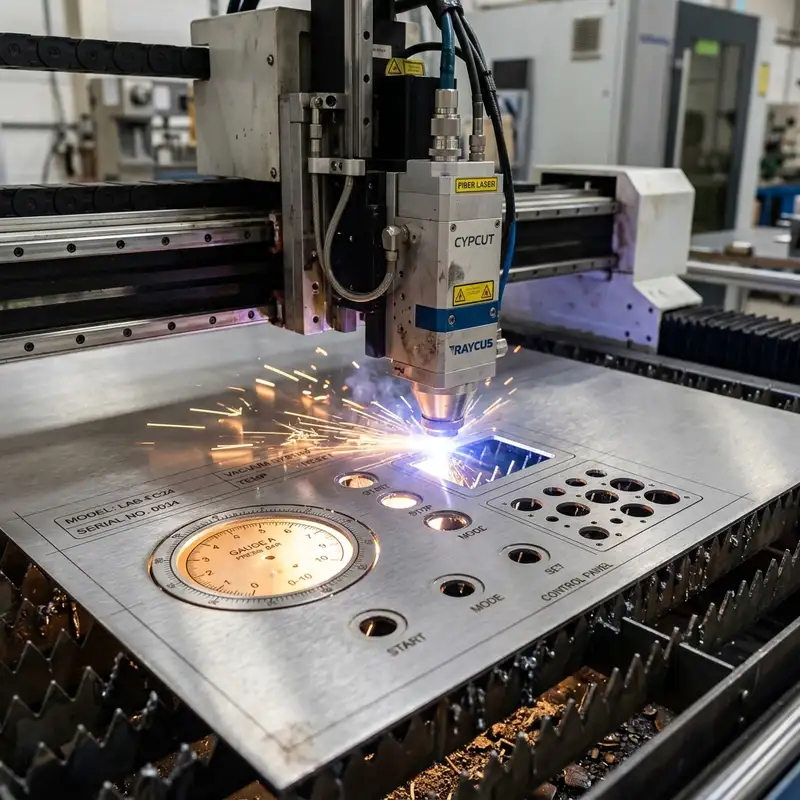
Instrument enclosures protect sensitive electronics and sensors from external contamination. We manufacture custom enclosures with integrated PEM standoffs for PCBs. Learn about our custom instrument enclosure fabrication.
Stainless Steel Laboratory Panels
For stainless panels, specify the grade, surface finish, weld treatment and relevant cleaning exposure. Stainless steel sheet metal fabrication does not itself prove resistance to every chemical or a contamination-control result. For related mechanical housing scope, see medical equipment enclosure fabrication.
Control Boxes & Operator Panels
Control boxes and consoles house screens, switches, and keyboards. Sourcing brackets from a specialist in CNC bending service ensures perfect keyboard tray folds. Read about custom PLC enclosure fabrication.
Laboratory Sheet Metal: Requirements and Acceptance Checks
Use this requirement-to-evidence checklist when comparing quotations. The entries are checks to agree for an order, not claims about an unnamed competitor or proof that a particular instrument has passed validation.
| Quality Metric | Requirement to Define | Acceptance Evidence to Agree |
|---|---|---|
| Aesthetic Appearance | Visible faces, grain direction, finish sample and permitted cosmetic marks. | Agreed appearance sample or defined visual acceptance record. |
| Hole-to-Bend Accuracy | Functional datums, hole locations and tolerances after forming. | Dimension results tied to the drawing revision and inspection condition. |
| Edge Deburring | Accessible edges, burr limits and the required edge treatment. | Inspection against the approved edge condition; do not rely on touch alone. |
| Weld Dressing | Weld locations, dressing requirements and any protected contact surfaces. | Specified weld and surface checks with the acceptance record agreed in advance. |
| Hardware Pull-Out | Fastener part number, installation side and any retention-test requirement. | Hardware identification and the agreed installation or test results. |
| Transit Packaging | Part separation, finish protection, handling and transport conditions. | Approved packing method, quantity check and packing photos where requested. |
Material Options for Laboratory Equipment
Material choices depend on hygiene, weight limits, and strength demands:
- Stainless Steel (SUS304/SUS316): Candidate materials for panels and housings where their grade and surface condition suit the specified exposure. Confirm cleaning compatibility and any required weld treatment; the alloy name alone is not acceptance evidence.
- Aluminum (5052-H32): Lightweight and easy to machine or anodize. Recommended for front panel bezels. Explore our aluminum sheet metal fabrication.
- Carbon Steel (SPCC): Rigidity and cost efficiency. Used for internal frames and base mounting assemblies. We apply durable finishes as an established powder coated metal parts manufacturer.
Core Manufacturing Operations
Laser Cutting & Operator Hand Safety
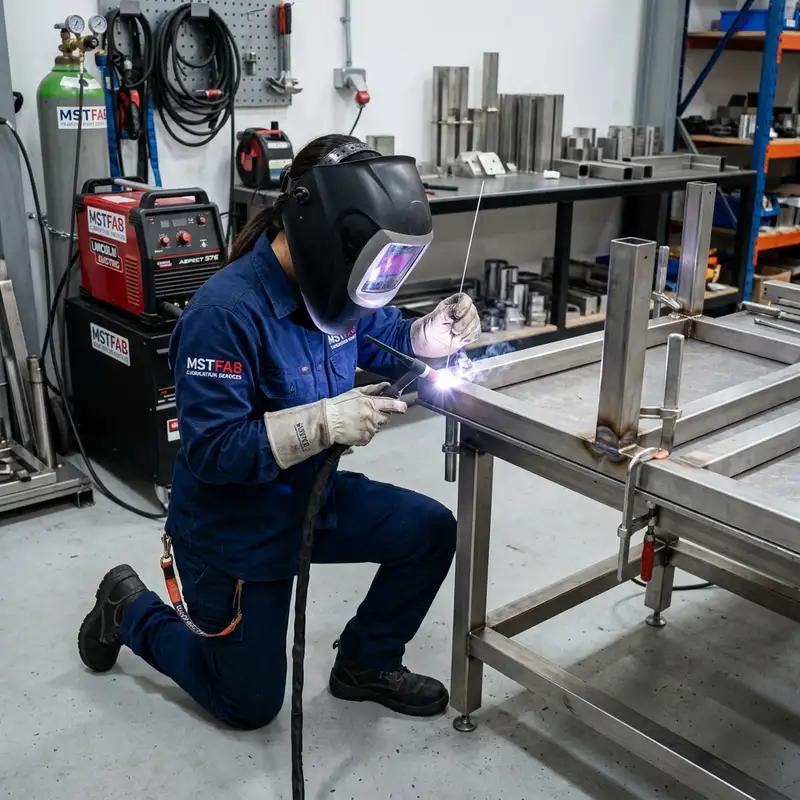
Define the edge condition for display ports, connector holes and accessible profiles. Review cutting and any secondary deburring operation against that requirement rather than assuming a specific automated tool or a universally burr-free result. Explore our laser cutting service.
Welding & Grinding of Enclosure Corners
Visible corner welds on instrument enclosures are TIG welded, ground flush, and blended to match the sheet finish, ensuring a clean, seamless look. Read details on our sheet metal welding service.
PEM Hardware and Grounding Masks
Specify nuts, standoffs and studs by part number, location and installation side. Mark threads and conductive contact areas that must remain uncoated, then agree on the installation sequence, masking method and inspection. An unpainted area alone does not prove electrical performance. Read details on sheet metal fabrication with PEM hardware installation.
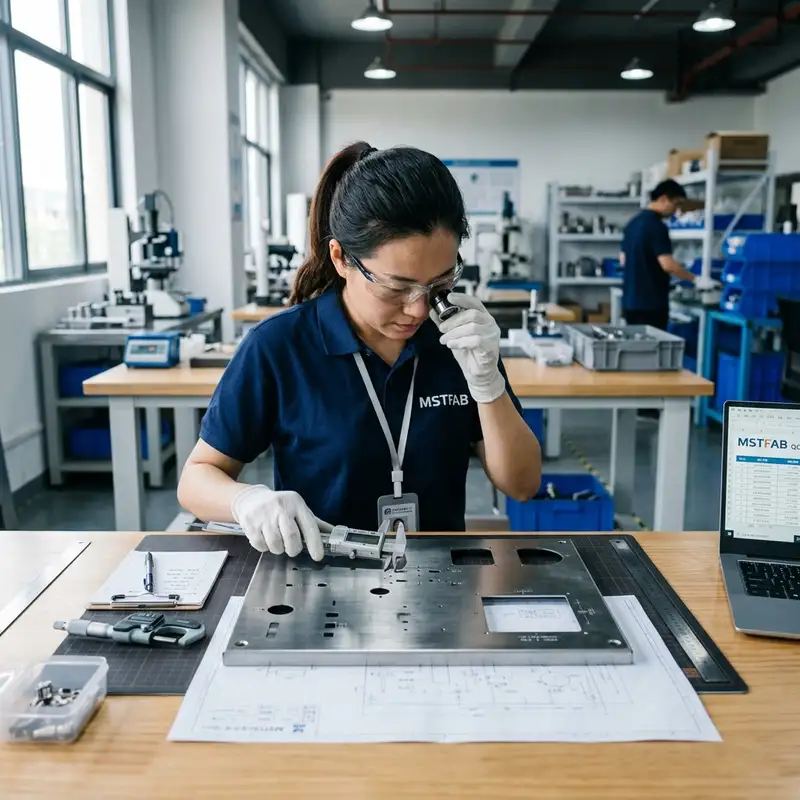
Rigorous DFM Checks Before Cutting
Before cutting metal, our engineers perform a complete DFM check on your designs. We verify:
- PEM Placement: Checking that PEM standoffs do not interfere with adjacent bend tools.
- Cutout Spacing: Verifying display windows do not warp during CNC folding.
- Gasket Clearances: Checking that flange dimensions allow rubber gaskets to compress evenly.
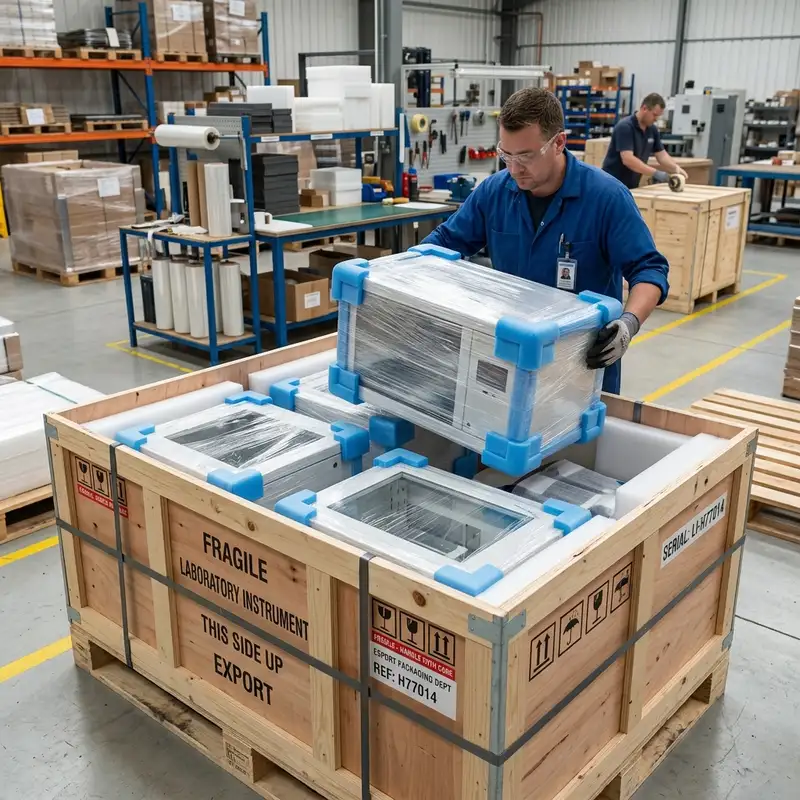
Transit Protection: Export Packaging
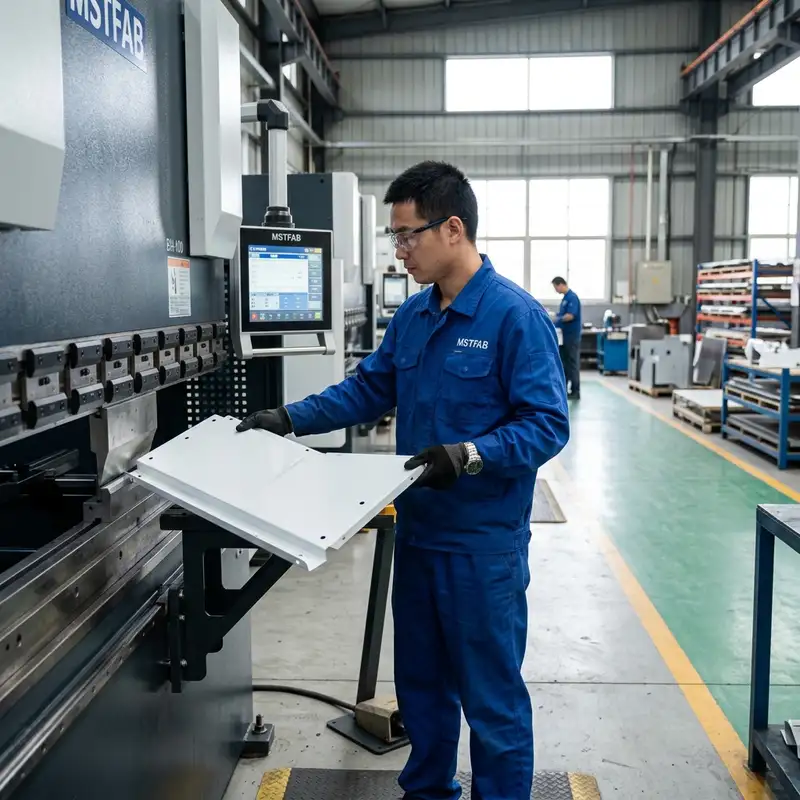
Laboratory sheet metal parts often feature delicate brackets, return flanges, and powder coated finishes. If they collide during transit, flanges bend and surfaces scratch. MSTFAB protects finished parts by wrapping them in protective film, inserting foam separators, buffering corners, and shipping them in reinforced wooden crates to ensure they arrive flat and ready for your assembly line.
Request a Custom Laboratory Equipment Sheet Metal Quote
Ready to source brackets and covers that actually fit your analytical instruments? Send MSTFAB your native 3D STEP files and 2D engineering drawings (PDF, DXF, or DWG). Our engineering team will review your drawings and prepare a competitive quote.
Send Your Laboratory Equipment DrawingsFAQ: Metal Fabrication for Laboratory Equipment
What files do I need to send for a laboratory metal quote?
Please send a 3D CAD model (STEP or STP file) for shape verification, along with 2D drawings (PDF, DXF, or DWG) defining tolerances, material grade, powder coating specifications, and hardware part numbers. Learn more about what files are needed for a sheet metal fabrication quote.
How do you control welding distortion on thin steel enclosures?
Review the material, joints, access, fixture plan and welding sequence for the specific housing. Agree on the finished-part datums and dimensional acceptance checks. Distortion must be evaluated on the actual geometry; a welding method alone does not guarantee flatness.
Can you mask grounding contact zones?
Specify the conductive contact areas and threads to protect on the drawing. The quotation should confirm the masking boundaries, method and acceptance check. Any required electrical continuity or finished-instrument testing must be separately specified and assigned.
Does MSTFAB integrate electrical components or cleanroom testing?
MSTFAB focuses on physical sheet metal fabrication according to customer drawings. PCB assembly, power module wiring, cleanliness certifications, and electrical testing must be managed by the customer’s engineering team.
MSTFAB manufactures custom sheet metal enclosures, electrical cabinets, control boxes and industrial metal housings for OEM buyers.
 WeChat Contact
 WhatsApp Me Directly