
Let’s be completely honest: industrial control enclosure fabrication is not just about making a metal box to house electrical components. As a core offering within our custom metal enclosure fabrication services, A good industrial control enclosure must protect sensitive control components, support complex wiring layouts, hold heavy internal mounting plates flat, allow clean cable entry, provide safe service access, manage ventilation openings, support grounding points, close properly with a perfect seal, and survive real, dusty factory environments. If your sheet metal manufacturer gets any of these wrong, your assembly line doesn’t save money; it simply relocates the cost. When a technician has to spend half an hour manually scraping powder coating off grounding studs, redrilling misaligned holes, or fighting a warped door, that is not “saving on unit cost.” That is buying a headache in advance.
MSTFAB acts as a specialized OEM sheet metal enclosure manufacturer and sheet metal enclosure fabrication manufacturer. We provide overseas OEM buyers with drawing-based manufacturing from our sheet metal enclosure factory, providing premium precision sheet metal fabrication services and custom sheet metal parts manufacturer support. We are a reliable partner for custom sheet metal enclosure fabrication, assisting you with both prototype runs and batch production of custom sheet metal enclosures and custom fabricated metal enclosures.
Need production capability? This article focuses on industrial control enclosure drawing package checklist. For manufacturing scope, process capability and drawing-based quotation support, review MSTFAB’s control cabinet enclosure fabrication.
What Is Industrial Control Enclosure Fabrication?
Industrial control enclosure fabrication is the process of manufacturing sheet metal enclosures, control cabinets, control boxes, operator panels, internal mounting plates, cable entry plates, doors, covers, and welded structures for industrial control equipment. A standard catalog box might seem cheaper at first glance. But once you add the labor for manual modifications—drilling non-standard entries, adding adapter brackets, scraping paint for grounding, or fixing warped door seals—the standard box turns out to be a very expensive starting point. Custom fabrication from a dedicated OEM sheet metal fabrication supplier ensures that the enclosure fits your product perfectly right out of the crate.
The standard process involves several key phases, starting with a thorough DFM review to identify manufacturing risks, followed by laser cutting services, CNC bending services, welding, grinding, and professional surface finishes like powder coating services. If you are sourcing custom metal boxes, working with an experienced sheet metal fabrication RFQ supplier helps prevent common manufacturing mistakes before they reach your assembly line.
Industrial Control Enclosures We Fabricate
Industrial Control Cabinets
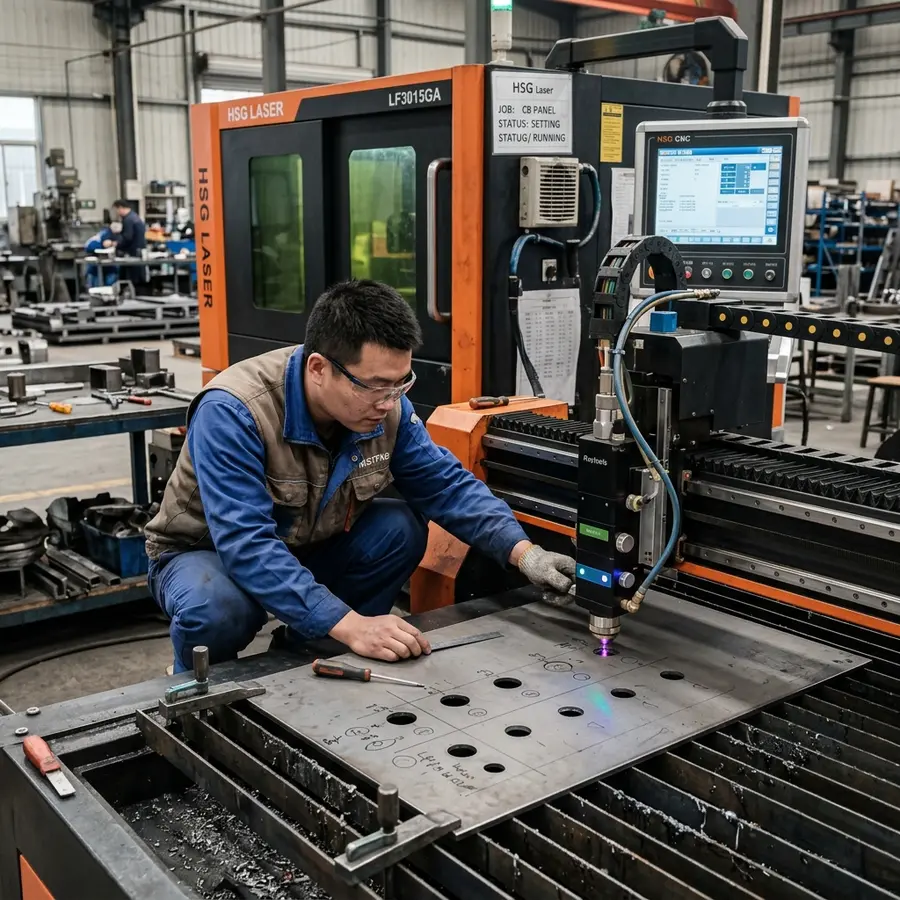
Industrial control cabinets are widely used in industrial automation, machinery, and production lines. They require precise alignment for floor-standing or wall-mounted structures, heavy-duty internal mounting plates, cable gland plates, fan/filter cutouts, and door reinforcement. A custom sheet metal cabinet with inaccurate mounting holes turns your assembly team into a manual drilling department. Good fabrication ensures that components mount easily and doors align perfectly. For detailed insights on cabinet designs, refer to control cabinet enclosure fabrication and custom electrical enclosure fabrication services.
Industrial Control Boxes
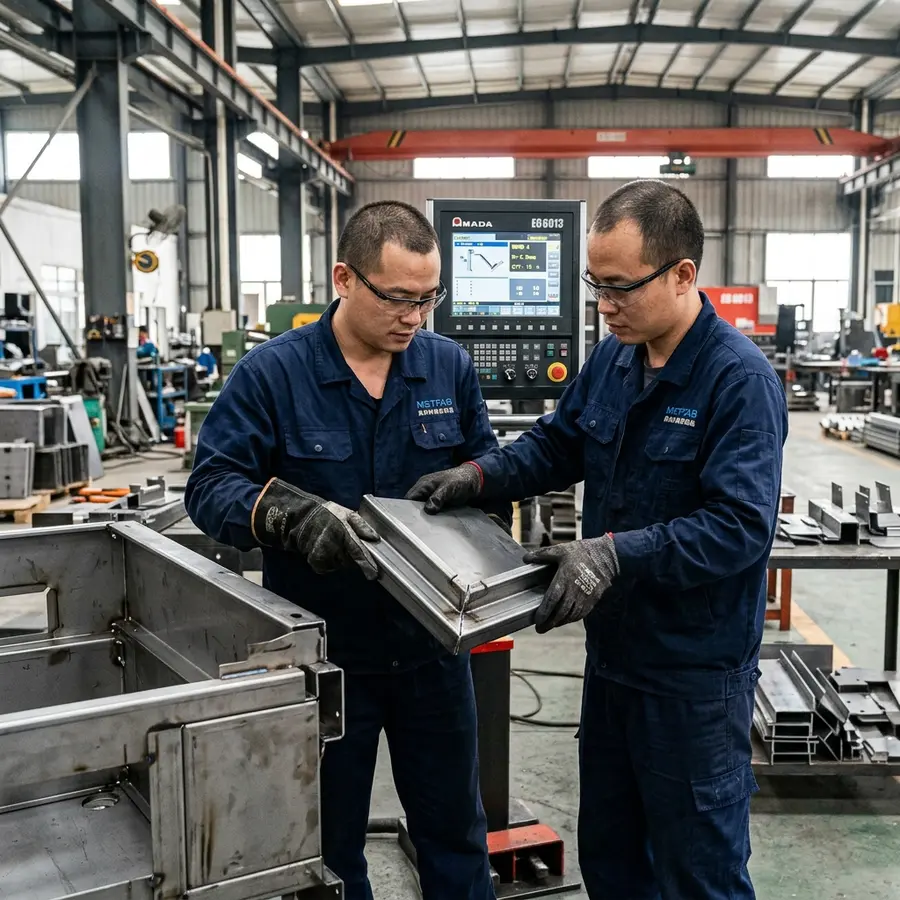
Small control boxes are often used for compact control units, switch boxes, terminal boxes, and relay boxes. Small control boxes can still create big problems when details are ignored. A wrong cable hole can delay installation, a sharp edge can damage cables, or a weak cover can vibrate under machine frequency. Even simple boxes need proper manufacturing care. We manufacture high-quality small boxes to keep your field installations trouble-free.
PLC Enclosures
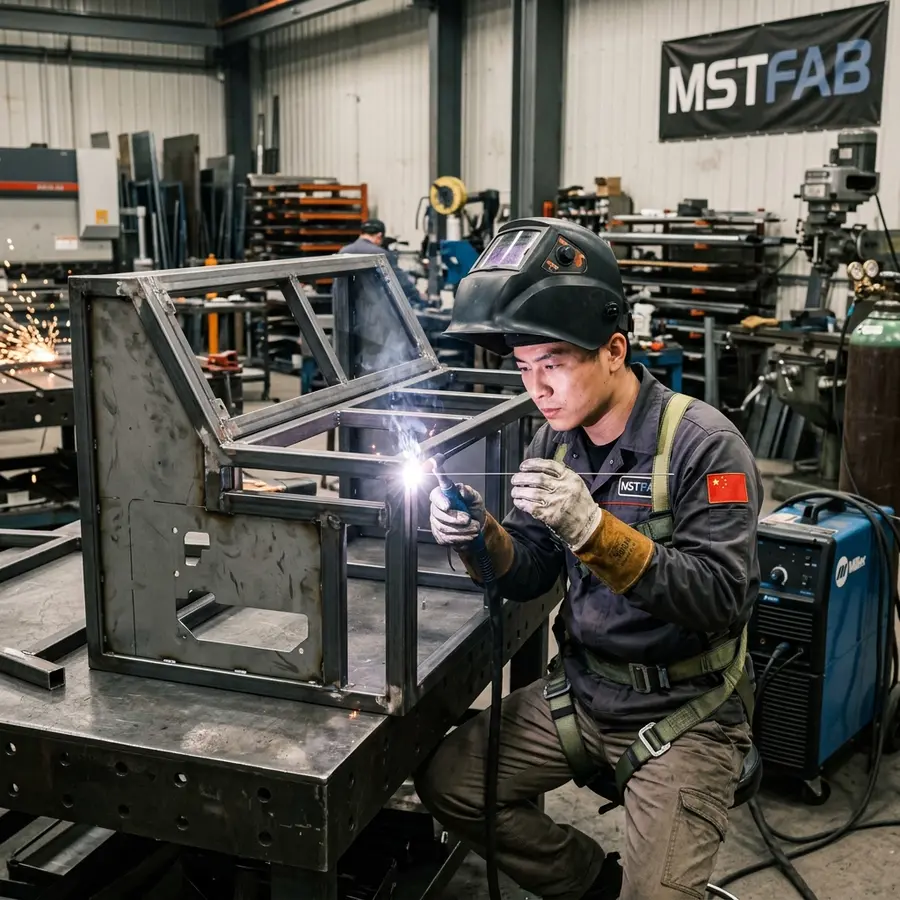
PLC enclosures are used to house programmable logic controllers, relays, terminals, power supplies, DIN rails, and related control components. They require accurate internal mounting plates, DIN rail mounting areas, cable entry plates, and ventilation openings. MSTFAB manufactures the physical PLC enclosure according to customer drawings. PLC programming, control logic, electrical circuit design, software, and final system validation are outside our standard fabrication scope. This protects your intellectual property and keeps the manufacturing scope clear. Learn more about these components in PLC enclosure fabrication.
HMI Enclosures and Operator Panels
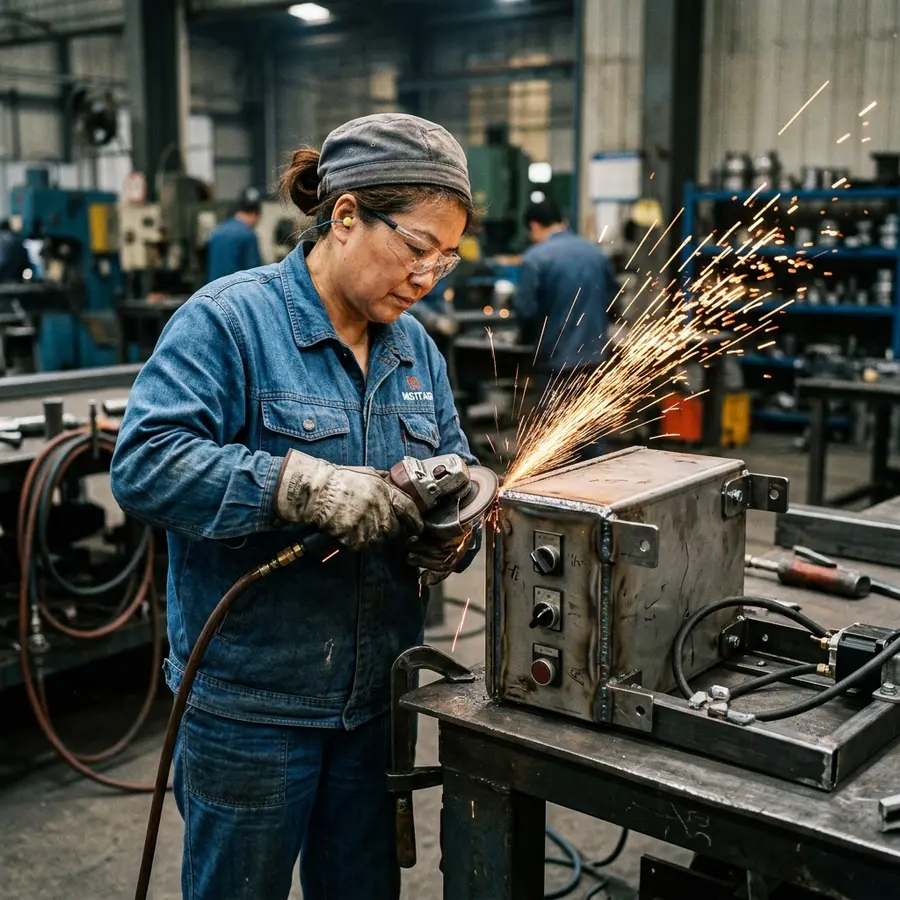
HMI enclosures protect critical logic controllers and operator interface screens. PLC boxes require organized internal space with DIN rail mounting areas and neat wiring clearance, while HMI panels demand flawless display cutouts and button openings. Because HMI panels are the primary interface for operators, the finish must be flawless. A rough edge, a visible weld seam, or a scratched surface will make your entire system look cheap, even if the electronics inside are world-class. Learn more about these components in HMI enclosure manufacturing.
Operator Console Enclosures
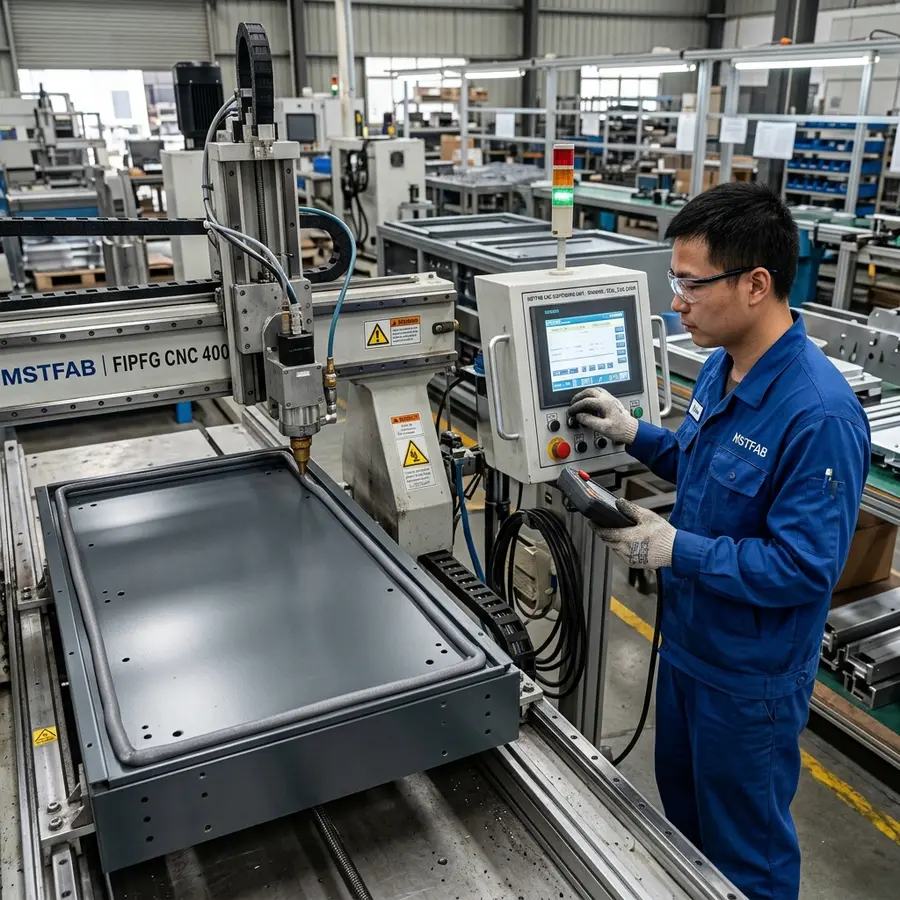
Operator console enclosures feature angled control panels, display cutouts, and rear access doors. An operator console is the interface between the operator and the machine. If the panel angle is slightly off, the cutouts are rough, or door access is difficult, the problem is visible every working day. Our CNC laser and bending tools ensure your console panels match the design angle perfectly.
Machine-Mounted Control Enclosures
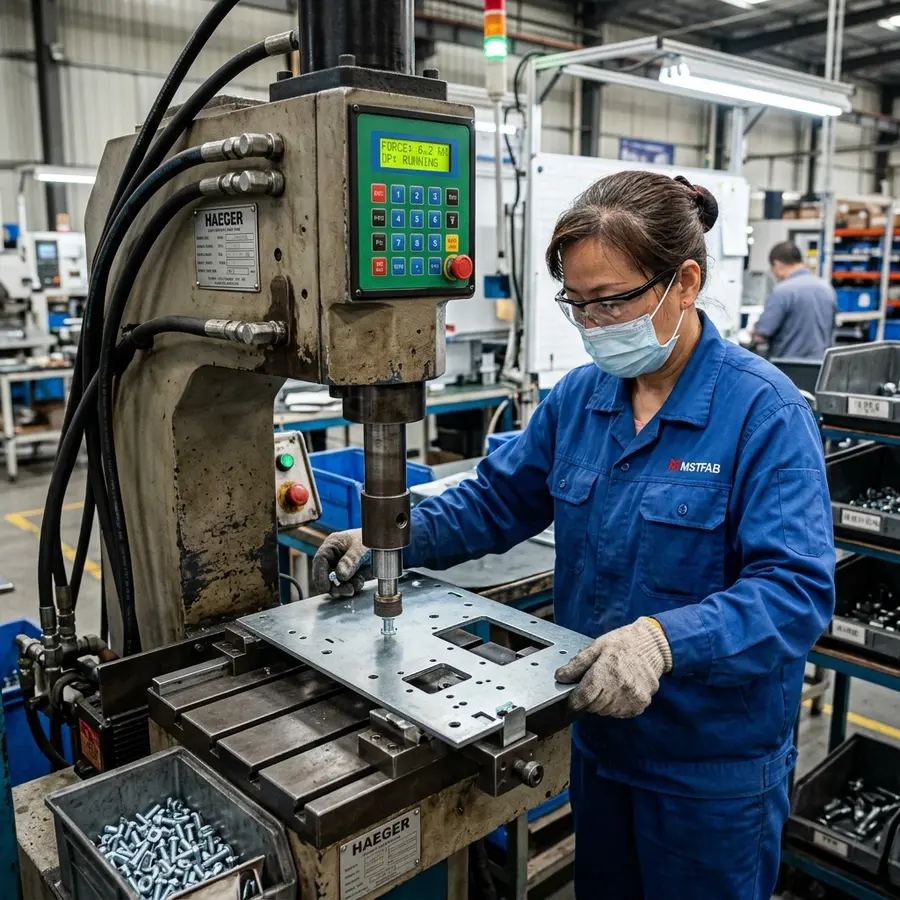
Machine-mounted enclosures are bolted directly onto vibrating production machinery. They require vibration-resistant sheet structures, strong mounting brackets, safe cable routing, compact designs, and robust lock systems. CAD has no vibration, but real factory floors do. We make sure all mounting holes, brackets, and joints are built to handle real-world operational stress. For other specialized applications, check out custom EV charger enclosure, outdoor EV charger enclosure, and battery storage enclosure fabrication.
Key Design Points for Control Enclosures
Internal Mounting Plates
The mounting plate holds the entire control system assembly—DIN rails, power supplies, terminals, and breakers. A warped mounting plate makes installation frustrating and causes components to misalign. MSTFAB uses thicker sheet steel (often 2.0mm to 3.0mm) for mounting plates to support heavy gear without flexing. Check out our technical guide on what is electrical enclosure fabrication and what is sheet metal enclosure fabrication.
Cable Entry and Gland Plates
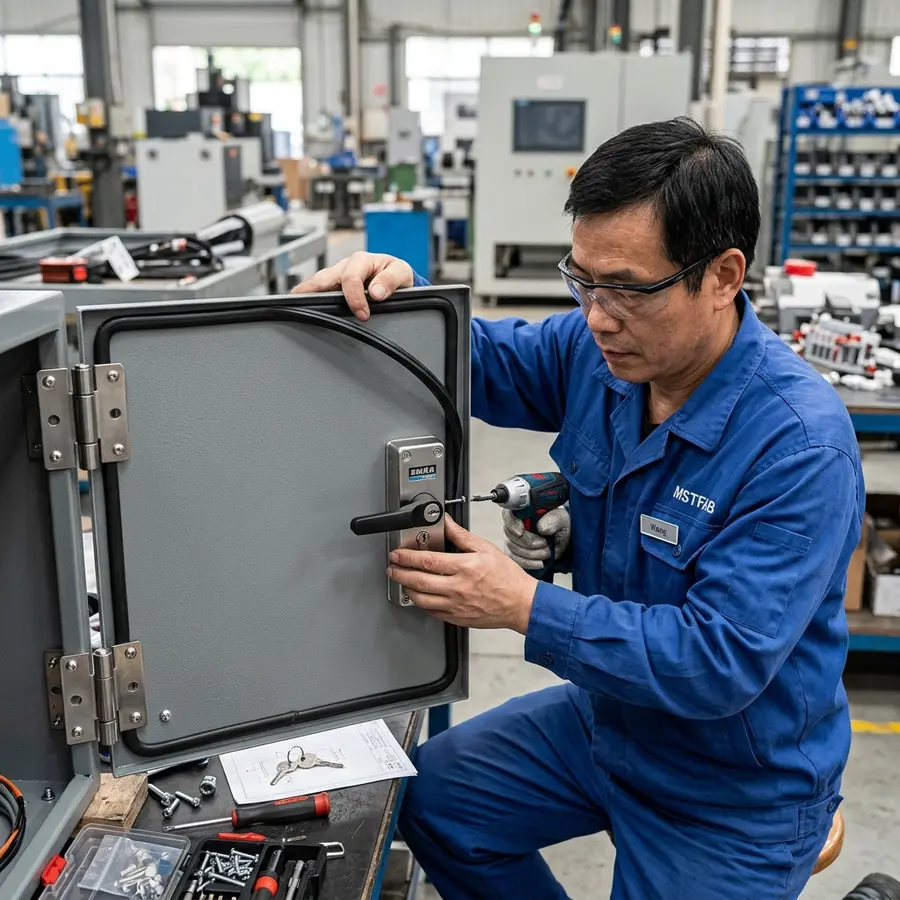
Cable entry points must be deburred perfectly. A sharp edge on a sheet metal cutout acts like a knife against insulation under vibration, creating a major electrical hazard. We ensure all cutouts are smooth, deburred, and positioned exactly according to your routing requirements, with removable gland plates for easier wiring.
Grounding Points and Conductive Areas
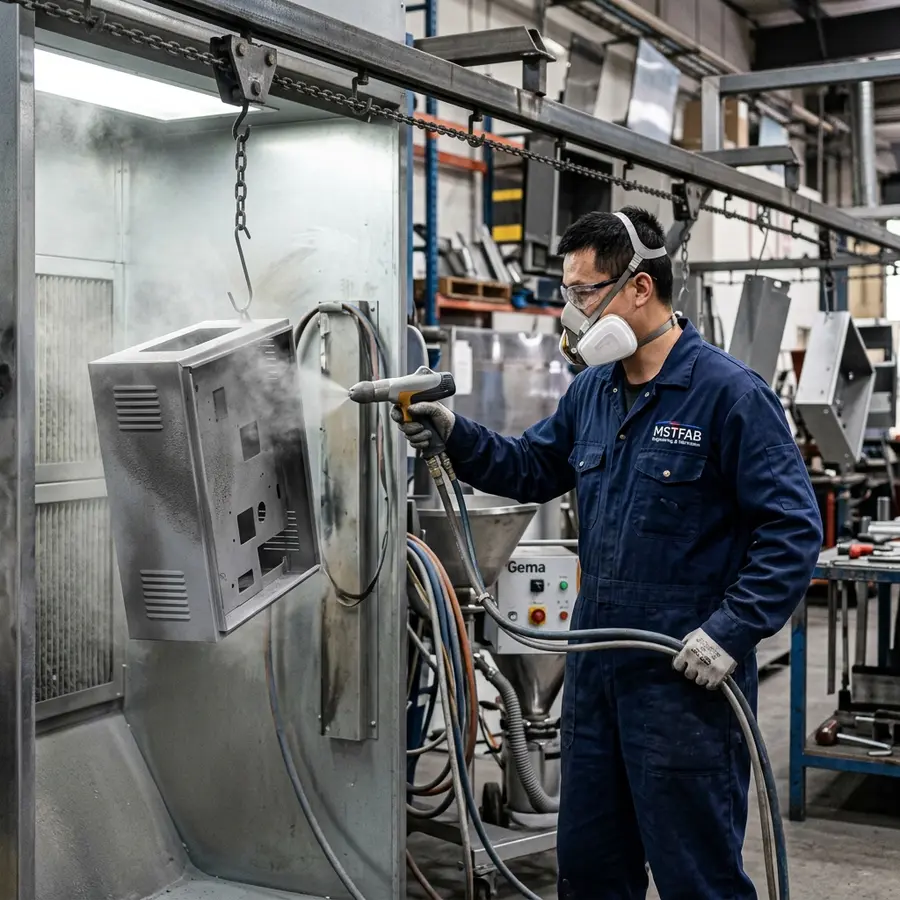
Electrical safety requires solid grounding. A grounding stud covered in beautiful, thick powder coating is completely useless—it acts as an insulator rather than a safety bond. We apply high-temperature silicone masking caps to all grounding studs and clean masking tape to contact areas before they enter the powder coating line, ensuring metal-to-metal electrical continuity.
Gasket Sealing and Door Alignment
A door that binds, rattles, or requires excessive force to lock is a sign of poor manufacturing. Flanges must be straight and flat to create a continuous seal with the door gasket. We use automatic CNC polyurethane foam gasket dispensing machines to apply a continuous liquid seal directly onto the door panel, providing robust IP and NEMA-style protection.
Materials for Industrial Control Enclosures
Choosing the right material depends on strength, weight, and application environment:
- Carbon Steel: Strong and cost-effective; requires high-quality powder coating to prevent rust.
- Galvanized Steel: Offers excellent corrosion resistance and is ideal for internal mounting plates, cable gland plates, and semi-outdoor boxes.
- Stainless Steel (304/316): Ultimate corrosion resistance for washdown environments, medical applications, and harsh marine exposure.
- Aluminum: Lightweight, naturally corrosion-resistant, and ideal for wall-mounted electrical boxes or portable enclosures.
Our team provides complete custom sheet metal bending and welding parts to construct these enclosures. If you need pricing for a specific material, request a custom sheet metal fabrication quote.
Quality Control and IP/NEMA Certification Scope
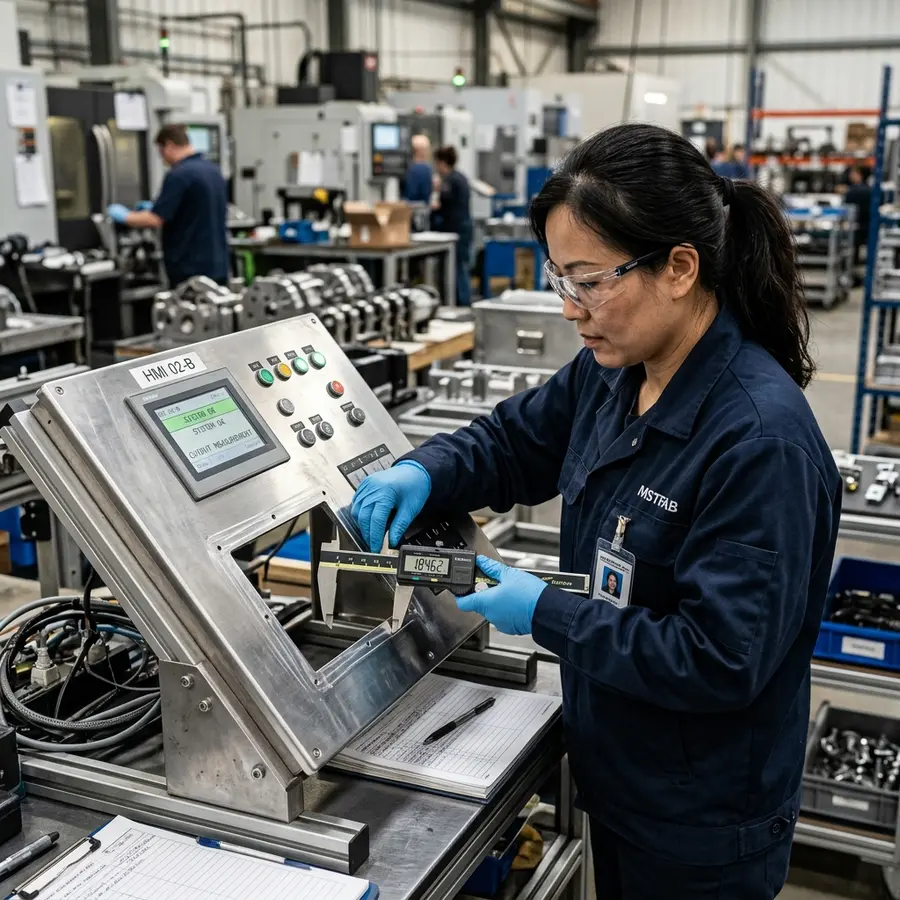
Our quality control team checks critical dimensions, door gaps, thread cleanliness, and powder coating thickness on every batch. While we can fabricate cabinet features to match NEMA or IP protection requirements (such as sloped rain shields, gasket tracks, and sealed cable entries), formal certification must be obtained through an accredited testing laboratory. MSTFAB supplies the physical metal structure; electrical integration and final product certifications are managed by the customer.
Packaging and Shipping Protection
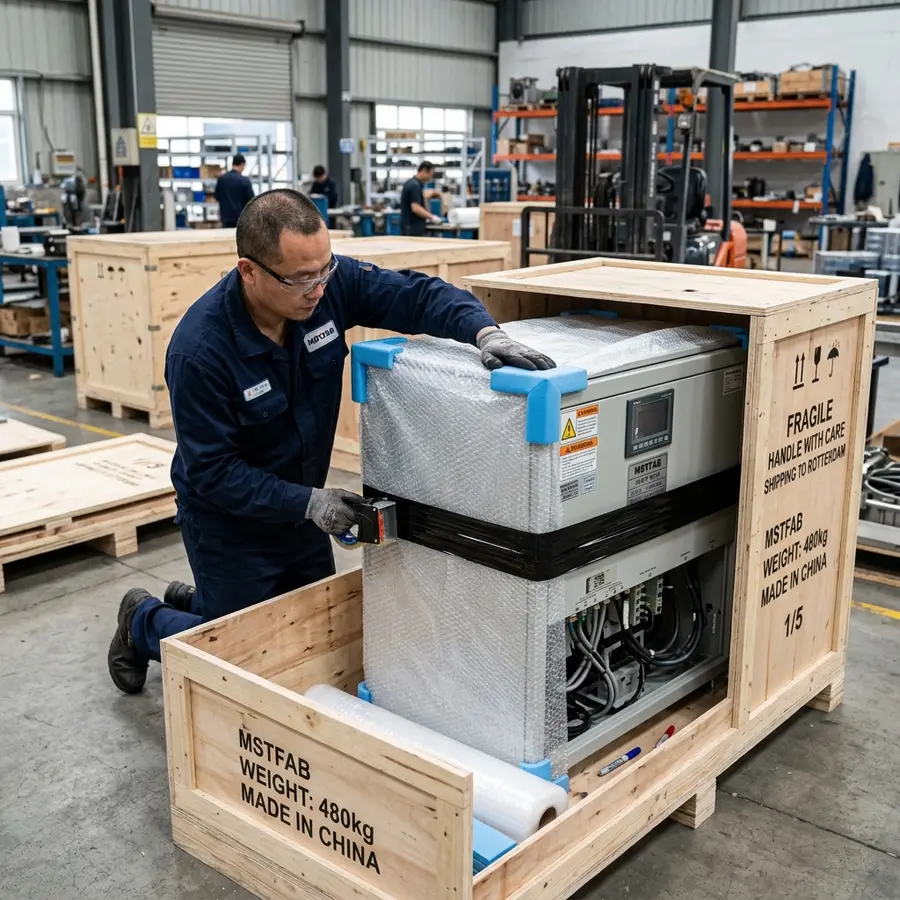
A beautifully fabricated enclosure that arrives dented or scratched is useless. We use multi-layer bubble wrap, dense foam edge protectors, and custom-built wooden crates to ensure your enclosures arrive in perfect condition, ready for electrical component assembly.
Sourcing Comparison: Red Flag Factory vs. Reliable Partner
Use this evaluation matrix to assess control cabinet manufacturers:
| Evaluation Parameter | Red Flag Factory | Reliable Partner (Like MSTFAB) |
|---|---|---|
| Grounding Studs | Coated in paint, requiring the buyer to manually scrape off powder coat during assembly. | Masked with heat-resistant silicone caps before painting, guaranteeing clean metal contact. |
| Thread Cleanliness | Clogged with paint, causing screws to cross-thread or strip during component installation. | Plugs threads before coating and runs a tap post-coating to ensure smooth screw insertion. |
| Cable Cutouts | Sharp, raw edges that risk cutting or damaging cables under operational vibration. | Completely deburred and smoothed edges with removable gland plates for safe routing. |
| Door Alignment | Warped doors that rattle, bind, or require significant force to lock. | CNC forming controls that maintain flat door panels and even gasket pressure. |
| Cabinet Squareness | Warped frames from poor welding jigs, making internal panels hard to insert. | Welded on specialized modular jigs to keep frame dimensions perfectly square. |
| Export Packaging | Cardboard boxes stacked on pallets without foam protection, leading to shipping dents. | Individual bubble wrapping, foam edge guards, and solid wooden export crate protection. |
FAQs: Industrial Control Enclosure Fabrication
What is the minimum recommended steel thickness for industrial cabinets?
For standard wall-mounted boxes, we recommend 1.2mm to 1.5mm. For large, floor-standing electrical cabinets, we recommend 2.0mm for the outer panels and a 2.5mm or 3.0mm mounting plate to support the heavy contactors, PLCs, and power supplies.
How do you protect grounding studs during powder coating?
We use high-temperature silicone sleeves to mask all grounding studs and threaded fasteners. This keeps paint out of the threads and ensures metal-to-metal continuity.
Can you match specific paint colors for our brand?
Yes. We match standard RAL or Pantone color codes and can accommodate specific gloss levels (from high-gloss to matte) and textures (such as fine sand grain or smooth finish).
Do you test-assemble enclosures before packing?
Yes. We mount the doors, locks, hinges, and internal plates on a sample part from each production batch to ensure proper clearance and door alignment before boxing.
custom sheet metal enclosure fabrication
MSTFAB manufactures custom sheet metal enclosures, electrical cabinets, control boxes and industrial metal housings for OEM buyers.
 WeChat Contact
 WhatsApp Me Directly