
Custom Metal Fabrication with Final Assembly
Custom metal fabrication with final assembly helps OEM buyers, engineering teams and industrial purchasing departments receive more complete sheet metal parts instead of loose unfinished components.
For many industrial projects, cutting and bending metal is only part of the job. The real purchasing problem is often: Who installs the hinges? Who installs the locks? Who installs the PEM nuts? Who protects the threads before powder coating? Who checks whether the door closes? Who assembles the mounting plate? Who packs the parts as a complete kit?
MSTFAB provides custom metal fabrication with final assembly support for sheet metal enclosures, cabinets, brackets, panels, covers, guards, mounting plates, welded assemblies and OEM metal components.
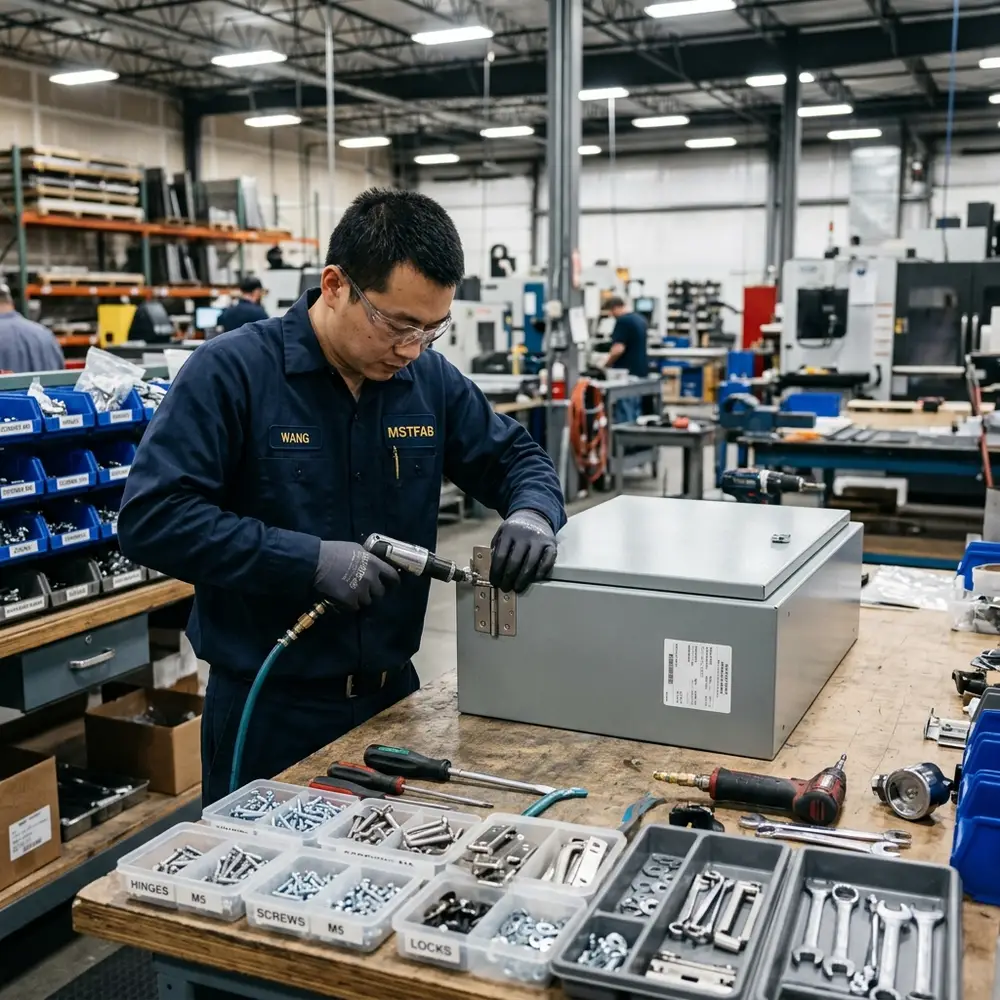
We manufacture parts from STEP files, STP files, PDF drawings, DXF files, DWG files, assembly drawings and BOMs. Our process can include drawing review, DFM feedback, material preparation, laser cutting, CNC bending, welding, grinding and deburring, PEM hardware installation, rivet nut and threaded insert installation, powder coating, surface finishing, sheet-metal-related mechanical assembly, inspection and export packaging.
For stainless steel projects requiring welding, weld grinding and surface finishing, see our dedicated guide on stainless steel metal parts fabrication.
A good fabricated part should not become a problem on the buyer’s assembly line. The goal is to receive metal parts that are cut, bent, welded, coated, assembled, inspected and packed correctly.
What Does Final Assembly Mean in Custom Metal Fabrication?
In custom metal fabrication, final assembly usually means the factory completes sheet-metal-related mechanical assembly before shipment. This may include installing hinges, locks, handles, latches, PEM nuts, PEM studs, PEM standoffs, rivet nuts, threaded inserts, grounding studs, captive fasteners, mounting plates, internal brackets, cable entry plates, ventilation panels, simple gaskets, rubber feet, labels, nameplates, screws and fasteners.
Final assembly may also include assembling fabricated parts into a subassembly, checking door opening and closing, installing access panels, packing parts as matched sets, labeling parts by project or batch, and preparing parts for the customer’s production line.
However, final assembly must be clearly defined. MSTFAB focuses on physical sheet metal fabrication and sheet-metal-related mechanical assembly. Complete electrical assembly, wiring, PLC programming, software, functional testing, safety certification and final product validation are different scopes and should be reviewed separately.
Why Buyers Need Fabrication with Final Assembly
Many buyers do not want to manage multiple suppliers for one custom metal project. If one supplier cuts the parts, another bends them, another welds them, another coats them, and another installs hardware, the buyer may face more communication work, more drawing interpretation errors, more shipping between suppliers, more lead time risk, more quality disputes, more rework, more missing parts and less responsibility control.
Custom metal fabrication with final assembly helps reduce these risks. An integrated supplier like MSTFAB can review the whole process: Will the part cut correctly? Will the bend sequence work? Will welding distort the assembly? Will hardware interfere with bending? Will powder coating block threads? Will grounding points remain conductive? Will the assembled part fit? Will packaging protect finished surfaces?
A cheap fabricated part that creates rework is not cost saving. That is cost relocation.
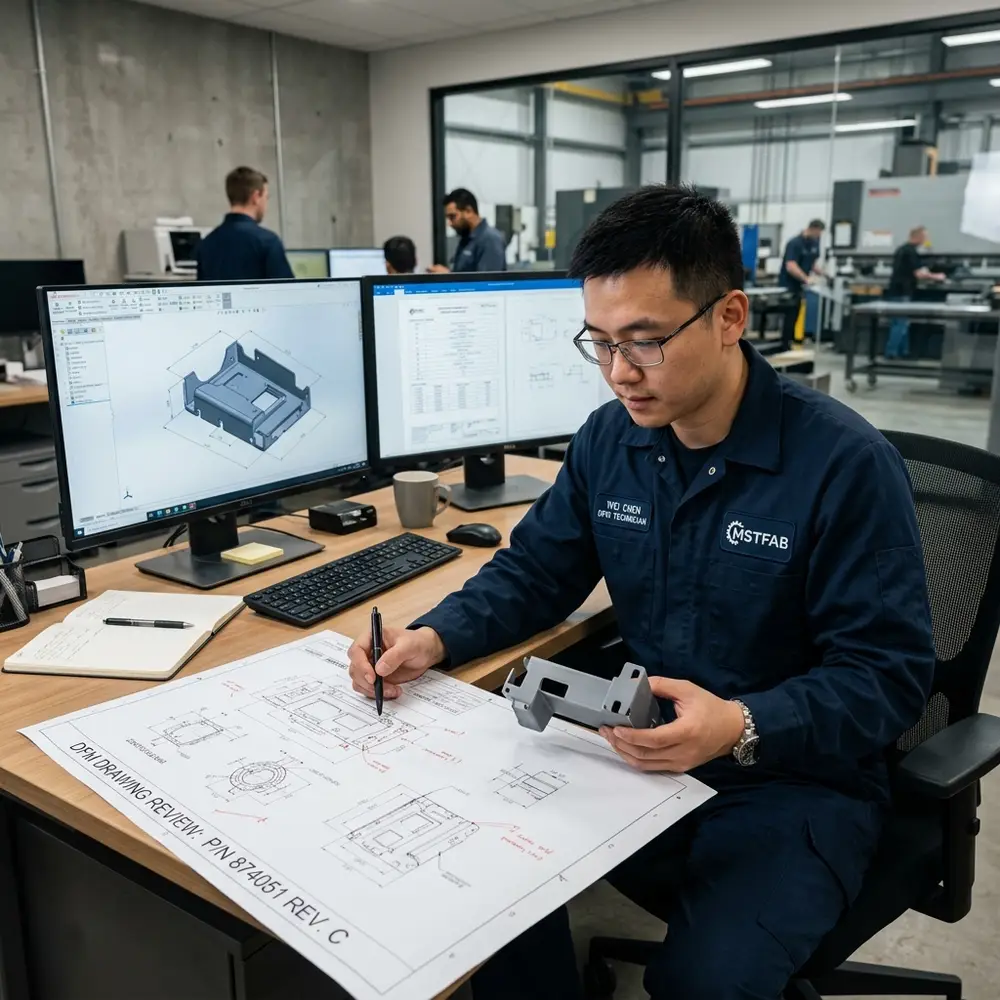
Custom Sheet Metal Enclosures with Final Assembly
Sheet metal enclosures are one of the most common products that need final assembly support. An enclosure may require body fabrication, door fabrication, hinge installation, lock installation, handle installation, mounting plate installation, grounding stud installation, cable entry plate installation, ventilation panel installation, gasket installation, powder coating, door fit inspection and packaging protection.
An enclosure is not just a box. It must protect, mount, open, close, wire, ventilate, ground, assemble and ship correctly. A good enclosure should arrive ready for the buyer’s next assembly step. Not ready for rework.
For enclosure projects, MSTFAB reviews material, sheet thickness, laser cut openings, bend structure, welded corners, door fit, hinge position, lock position, cable entry holes, ventilation openings, grounding points, powder coating masking, assembly clearance and packaging protection.
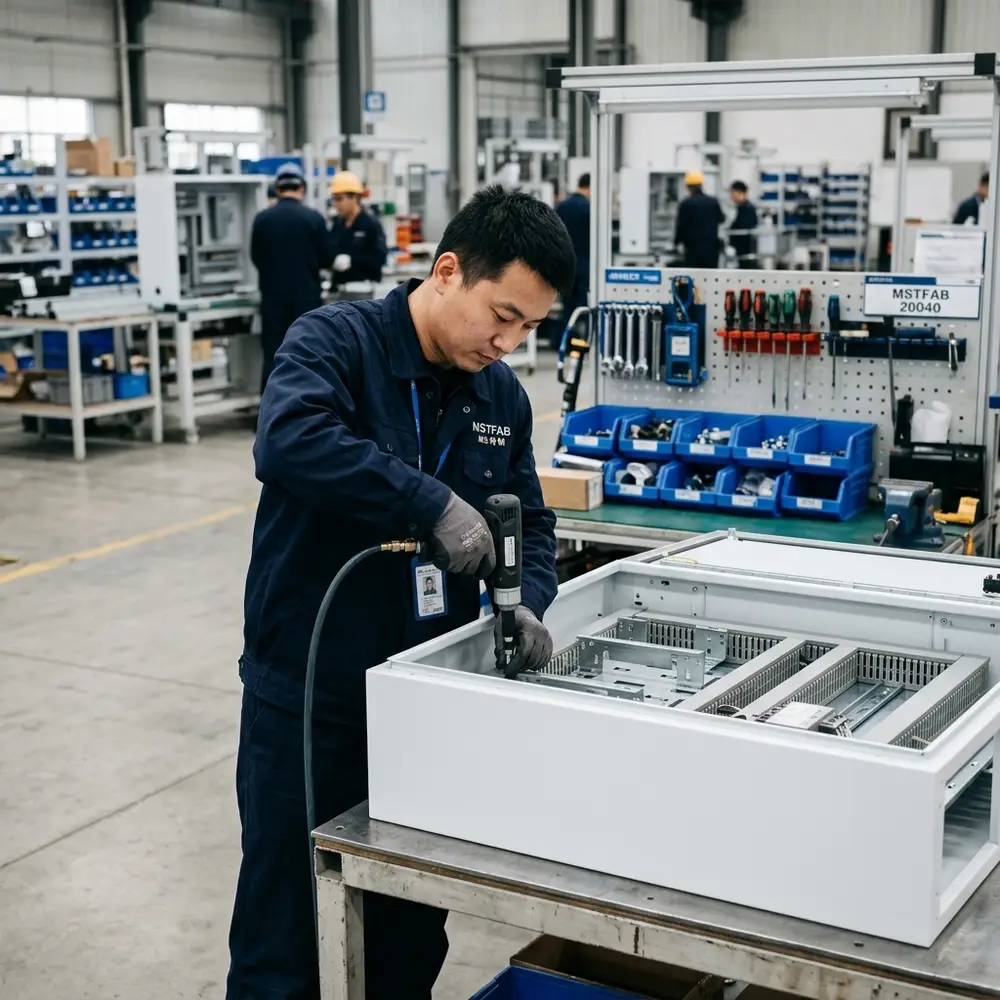
Laser Cutting, Bending and Welding Before Assembly
Laser cutting is often the first step. It creates outer profiles, holes, slots, cable entries, ventilation openings, hinge holes, lock openings and fastener holes. Laser cutting accuracy matters because assembly depends on correct hole positions and profiles. CAD has no burrs. Real cut metal does.
CNC bending turns flat blanks into formed parts for enclosure bodies, cabinet doors, brackets, covers, guard panels and mounting plates. Good bending looks boring. That is exactly why engineers like it. Boring means holes line up, doors close, panels sit flat and assembly does not require force. Force is not an assembly method. It is a warning sign.
Welding may be used for enclosure corners, cabinet frames, welded brackets and frames, machine guards and base structures. Welding adds heat. Heat moves metal. That is physics sending an invoice. A welded part can be strong and still be wrong. Strong but crooked is not engineering. It is a heavy problem.
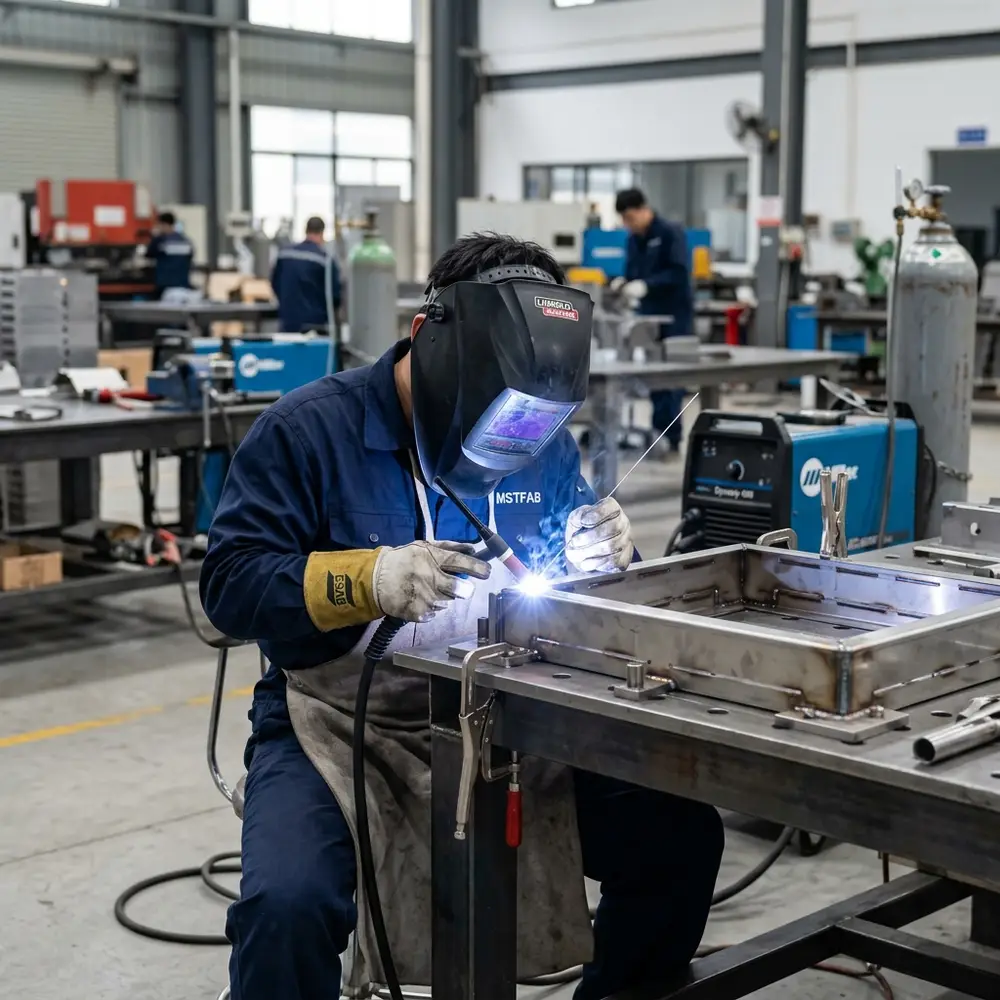
Hardware Installation Before Final Assembly
Many custom metal assemblies require installed hardware. Common hardware includes PEM nuts, PEM studs, PEM standoffs, rivet nuts, threaded inserts, weld nuts, grounding studs, hinges, locks, handles, captive fasteners, rubber feet, screws, washers and mounting brackets.
Hardware affects final assembly quality. A wrong insert is not a small mistake. It is a hidden failure point. A threaded insert filled with powder coating is not a finished feature. It is a delayed assembly complaint. A bracket with spinning inserts looks ready until the screw turns forever.
Hardware installation should review hardware type, thread size, hole diameter, sheet thickness, material compatibility, installation side, edge distance, hole-to-bend distance, assembly clearance, tool access, coating masking, thread protection and grounding points.
Powder Coating and Final Assembly
Powder coating is often applied before final mechanical assembly. However, coating affects part dimensions and function. A hole that fits before coating may become too tight after coating. A grounding point covered beautifully with powder coating is not useful. It is a decorative problem.
For powder coated assemblies, buyers should define color or RAL code, gloss level, texture requirement, indoor or outdoor application, masking areas, thread protection, grounding points, no-coating zones, visible surfaces and packaging protection. Powder coating is not just color. It must support the final assembly function.
Trust Comparison: Multi-Supplier vs. MSTFAB Integrated Fabrication with Assembly
| Feature | Multi-Supplier Approach | MSTFAB Integrated Manufacturing |
|---|---|---|
| Drawing Review | Each supplier reads the drawing independently; interpretation conflicts create rework at assembly stage. | Single DFM review covers cutting, bending, welding, hardware and coating before production starts. |
| Process Sequence | Buyer coordinates between cutting, bending, welding, coating and hardware suppliers; sequence errors cause delays. | Integrated process planning ensures bending before welding, hardware before coating, masking before finishing. |
| Hardware Fit | Hardware supplier receives parts from coating supplier; holes may be too tight or misaligned after coating. | Hole size, coating thickness and hardware fit reviewed together during DFM; masking controlled in-house. |
| Thread Protection | Coating supplier coats everything; threads arrive clogged. Buyer spends hours cleaning. | Threads, grounding studs and contact surfaces are masked with silicone plugs before powder coating. |
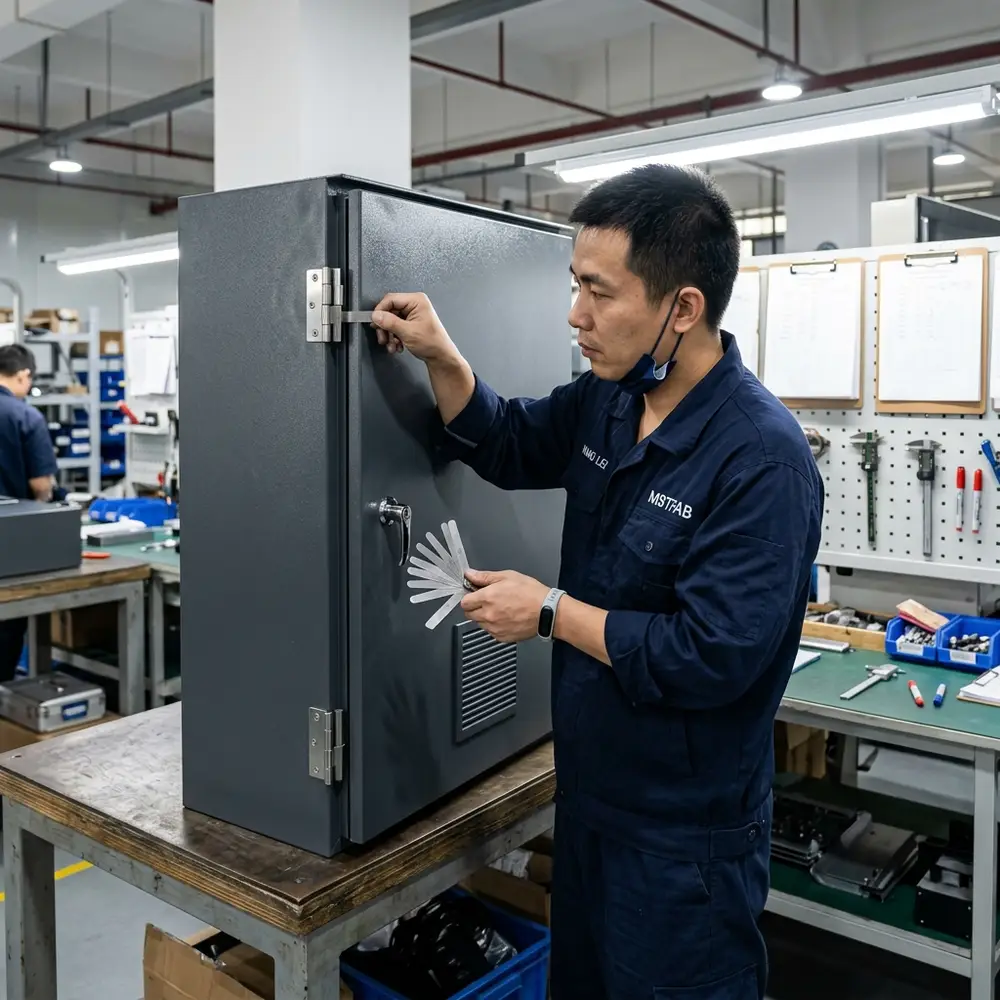
| Door and Panel Fit | Parts from different suppliers may not align; door gaps are uneven, panels need force-fitting. | Doors, panels and hardware assembled in-house with fit check before packaging. |
| Grounding Points | Coating supplier covers grounding areas; electrical contact fails during commissioning. | Grounding zones marked, masked and verified per drawing before assembly and packaging. |
| Quality Responsibility | Each supplier blames the previous one when assembly fails. Buyer becomes the mediator. | Single point of responsibility from cutting through assembly, inspection and packaging. |
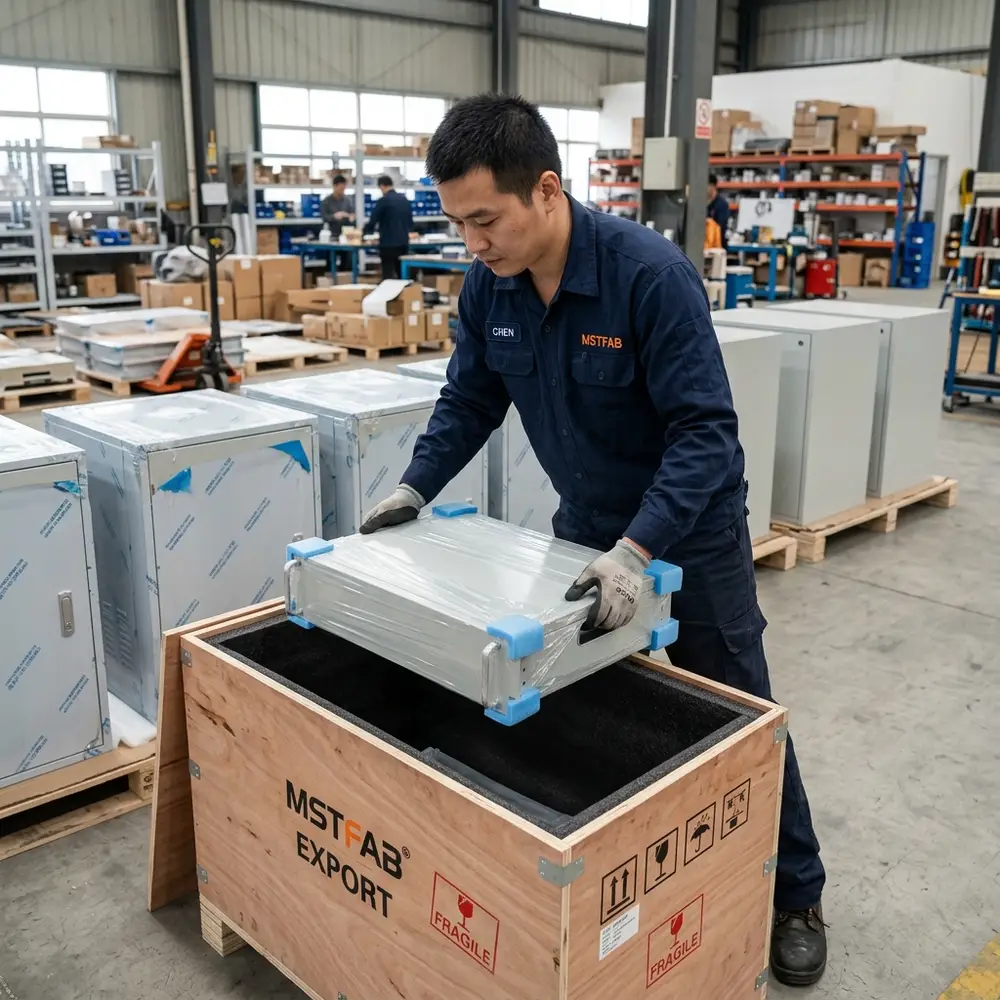
| Export Packaging | Last supplier packs parts loose; assembled hardware gets damaged in transit. | Assembled parts packed with foam, thread caps and reinforced crates to protect installed hardware. |
Materials for Custom Metal Fabrication with Final Assembly
Material selection affects cutting, bending, welding, coating, assembly and final cost. MSTFAB can manufacture parts using:
- Mild Steel and SPCC: Common for powder coated enclosures, brackets, panels and cabinets. Strong and cost-effective, but usually need surface protection. Raw steel and moisture are not friends. They are the beginning of a rust story.
- Galvanized Steel (SGCC): Used for mounting plates, internal cabinet parts and cable entry plates. Galvanized steel is useful. It is not magic. Cut edges and weld zones still need review.
- Stainless Steel (304, 316): For corrosion resistance or clean appearance. Stainless steel is corrosion-resistant. It is not scratch-proof.
- Aluminum (5052, 6061, 6063): Lightweight and corrosion-resistant. Aluminum is not lightweight steel. It bends differently, scratches more easily and needs its own DFM review.
DFM Review for Fabrication and Final Assembly
DFM means Design for Manufacturability. For custom metal fabrication with final assembly, DFM review is important because one design issue can affect several processes. DFM review may check material suitability, sheet thickness, cutting complexity, hole size, slot position, bend radius, bend sequence, hole-to-bend distance, welding access, welding distortion risk, hardware installation feasibility, insert hole size, hinge position, lock clearance, door gap, powder coating thickness, masking areas, grounding points, assembly sequence, packaging protection and batch repeatability.
For lightweight structures requiring mechanical assembly, we serve as a custom sheet metal parts manufacturer using 6061 aluminum.
For projects using aluminum material, see our dedicated guide on aluminum sheet metal parts manufacturing covering grade selection, bend radius review and surface finishing.
A design issue found before cutting is a question. A design issue found after cutting, bending, welding, coating and assembly becomes rework, delay and cost. The goal is not one lucky sample. The goal is a stable manufacturing route.
Quality Inspection for Final Assembly
Final assembly inspection is important because assembled metal parts may fail in ways that single parts do not show. Inspection may include material confirmation, sheet thickness check, cut dimension inspection, bend angle inspection, weld inspection, grinding review, hardware installation check, thread inspection, grounding area check, powder coating inspection, hinge operation check, lock installation check, handle installation check, door fit check, mounting plate fit check, gasket position check, assembly completeness check and packaging inspection.
Inspection is not paperwork. It is how buyers avoid turning their assembly line into the final quality department. A spinning insert found at the customer’s assembly station is too late.
Packaging for Assembled Metal Parts
Packaging is especially important for assembled metal parts because finished surfaces and installed hardware can be damaged during transportation. A perfect assembled enclosure that arrives scratched, dented or with bent studs is no longer perfect. It is a packaging failure. Packaging is not decoration. It is the last manufacturing process before the buyer receives the product.
Drawing and BOM Requirements for Final Assembly
For accurate quotation, buyers should provide STEP or STP files, PDF drawings, DXF or DWG files, assembly drawings, exploded views, BOM, material grade, sheet thickness, quantity, hardware list, fastener specifications, hinge and lock specifications, PEM hardware part numbers, gasket requirements, surface finish requirement, powder coating color, masking areas, grounding points, thread protection requirements, inspection requirements, packaging requirements and shipping destination.
A STEP file shows the shape. A PDF drawing defines the requirements. A DXF file helps with cutting. A BOM confirms the assembly scope. An assembly drawing explains how parts and hardware fit together. A screenshot is not a manufacturing file. A CAD model without BOM and assembly notes is not a complete final assembly RFQ.
Why Choose MSTFAB for Custom Metal Fabrication with Final Assembly?
- Fabrication and Assembly Support: We support laser cutting, CNC bending, welding, grinding, PEM hardware, threaded inserts, powder coating, mechanical assembly, inspection and export packaging.
- Made to Customer Drawings: We manufacture and assemble from STEP files, PDF drawings, DXF/DWG files, assembly drawings and BOMs.
- Practical DFM Review: We review cutting, bending, welding, hardware, powder coating, grounding points, assembly clearance and packaging risks before production.
- Hardware and Mechanical Assembly: We install PEM nuts, rivet nuts, threaded inserts, studs, standoffs, hinges, locks, handles, mounting plates, brackets, cable entry plates and ventilation panels.
- Prototype to Batch Production: We support sample production, prototype fabrication, first article review, low-volume production and repeat batch manufacturing.
- OEM Applications: Enclosures, control cabinets, telecom cabinets, EV charger enclosures, battery cabinets, industrial automation housings, brackets, panels, covers and guards.
Request a Custom Metal Fabrication Quote with Final Assembly
Send MSTFAB your drawings, BOM and assembly requirements. We can review material, cutting, bending, welding, hardware installation, powder coating, mechanical assembly, inspection and packaging for your project.
Upload Assembly Drawings →Frequently Asked Questions
What is custom metal fabrication with final assembly?
It means manufacturing custom metal parts and completing sheet-metal-related mechanical assembly before shipment, including laser cutting, CNC bending, welding, grinding, hardware installation, powder coating, inspection and packaging.
What final assembly can MSTFAB support?
MSTFAB can support sheet-metal-related mechanical assembly such as hinges, locks, handles, mounting plates, PEM nuts, rivet nuts, threaded inserts, studs, standoffs, cable entry plates, ventilation panels, simple gaskets and fasteners.
Does final assembly include electrical wiring?
Not as standard scope. MSTFAB focuses on physical sheet metal fabrication and mechanical assembly. Complete electrical wiring, software, functional testing and final certification must be reviewed separately.
What files are needed for a final assembly quote?
The best RFQ includes STEP or STP files, PDF drawings, DXF or DWG files, assembly drawings, exploded views, BOM, hardware list, material, thickness, finish requirements, inspection requirements and packaging requirements.
Can MSTFAB provide powder coated assembled parts?
Yes. MSTFAB can support powder coated metal parts with mechanical assembly when masking, thread protection, grounding points and assembly areas are clearly defined.
Can MSTFAB install PEM hardware and threaded inserts?
Yes. MSTFAB can install PEM nuts, studs and standoffs, rivet nuts, threaded inserts, weld nuts and grounding studs according to the drawing and BOM.
Can MSTFAB manufacture custom enclosures with final assembly?
Yes. MSTFAB can manufacture custom sheet metal enclosures with doors, hinges, locks, handles, mounting plates, grounding studs, cable entry plates, ventilation panels and powder coating based on customer drawings.
Can MSTFAB support prototype and batch production?
Yes. MSTFAB supports samples, prototypes, first articles, low-volume production and repeat batch manufacturing based on approved drawings and assembly requirements.
How does MSTFAB control assembly quality?
Assembly quality is controlled through drawing review, BOM confirmation, hardware inspection, thread checks, fit checks, coating inspection, door fit review, assembly completeness check and packaging inspection.
How does MSTFAB protect customer drawings and designs?
MSTFAB respects customer drawings, CAD files, artwork and intellectual property. NDA or confidentiality requirements can be reviewed before cooperation.
MSTFAB manufactures custom sheet metal enclosures, electrical cabinets, control boxes and industrial metal housings for OEM buyers.
 WeChat Contact
 WhatsApp Me Directly