
High-Precision Sheet Metal Fabrication from 3D CAD Models
A sheet metal fabrication supplier for STEP and STP files helps OEM buyers turn 3D CAD models into real, physical metal components. STEP and STP files are widely used in custom sheet metal fabrication because they allow the supplier to review part geometry, bend structure, assembly relationships, hole locations, enclosure layouts, and welded assemblies before production starts. MSTFAB manufactures custom sheet metal parts from customer STEP files, STP files, PDF drawings, DXF files, DWG files, assembly drawings, BOMs, and project specifications.
We support a broad range of custom sheet metal parts, including:
- Sheet metal enclosures & electrical enclosures
- Control cabinets & telecom cabinets
- Network cabinets & EV charger enclosures
- Battery storage cabinets & power distribution cabinets
- Medical equipment housings
- Machinery covers & machine guards (belt/chain/motor guards)
- Brackets & mounting plates
- Access panels & cable entry plates
- Ventilation panels & welded sheet metal assemblies
- Powder coated sheet metal parts
- Stainless steel panels & aluminum sheet metal components
- OEM custom metal parts
A STEP file can show the shape, but real manufacturing needs more than shape.
- CAD has no burrs.
- CAD has no springback.
- CAD has no welding distortion.
- CAD has no coating thickness.
- CAD has no assembly interference.
- CAD has no forklift damage.
Real manufacturing does. That is why STEP and STP files should always be reviewed together with material, thickness, tolerances, welding notes, finish requirements, hardware details, quantity, and packaging requirements.
What Are STEP and STP Files?
STEP and STP files are 3D CAD exchange formats used to share product geometry between different CAD systems. For sheet metal fabrication, STEP and STP files help the manufacturer understand overall part geometry, bend structures, flange layouts, hole positions, cutout locations, enclosure shapes, cabinet structures, assembly relationships, interference risks, welded layouts, bracket shapes, mounting plate positions, and door/panel fit. STEP and STP files are useful because different buyers use different CAD software. A neutral 3D format makes it easier for the fabrication supplier to review the part before quotation.
However, a STEP file is not always a complete manufacturing instruction. It shows the geometry, but it may not fully define the manufacturing requirements. That is why the best RFQ usually includes both a STEP/STP file and a 2D PDF drawing. The STEP file shows the shape, while the PDF drawing defines what matters. MSTFAB manufactures custom sheet metal parts from customer drawings. As a direct sheet metal parts manufacturer from CAD drawings and a specialized sheet metal job shop for industrial buyers, we can process digital data into finished enclosures, cabinets, and brackets smoothly.
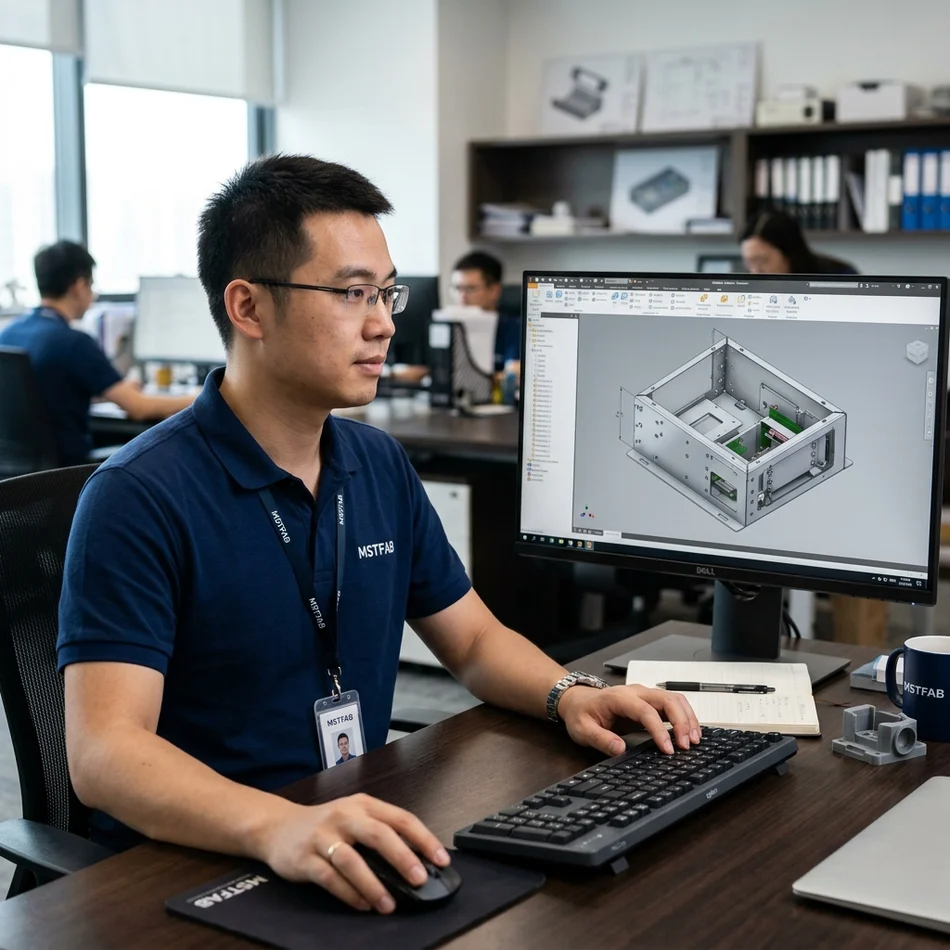
Can Sheet Metal Parts Be Quoted from STEP or STP Files?
Yes. MSTFAB can review STEP and STP files for custom sheet metal fabrication quotation. STEP and STP files are especially helpful for enclosures, cabinets, brackets, mounting plates, machine covers, guard panels, welded assemblies, control box bodies, door panels, cable entry plates, ventilation panels, and powder coated parts. We support direct-to-factory sheet metal fabrication from STEP files and provide custom sheet metal fabrication for OEM parts in low to high volumes.
However, if only a STEP or STP file is provided, the quotation may need assumptions. A 3D model may not clearly define material grades, sheet thickness, tolerance requirements, critical dimensions, bend radiuses, welding methods, hardware types, thread requirements, surface finishes, powder coating colors, masking areas, grounding points, visible surfaces, inspection requirements, packaging requirements, quantity, and shipping destinations. A quote based only on geometry can be preliminary. A production-ready quote needs complete manufacturing requirements. A good quote starts with clear files, not guesswork.
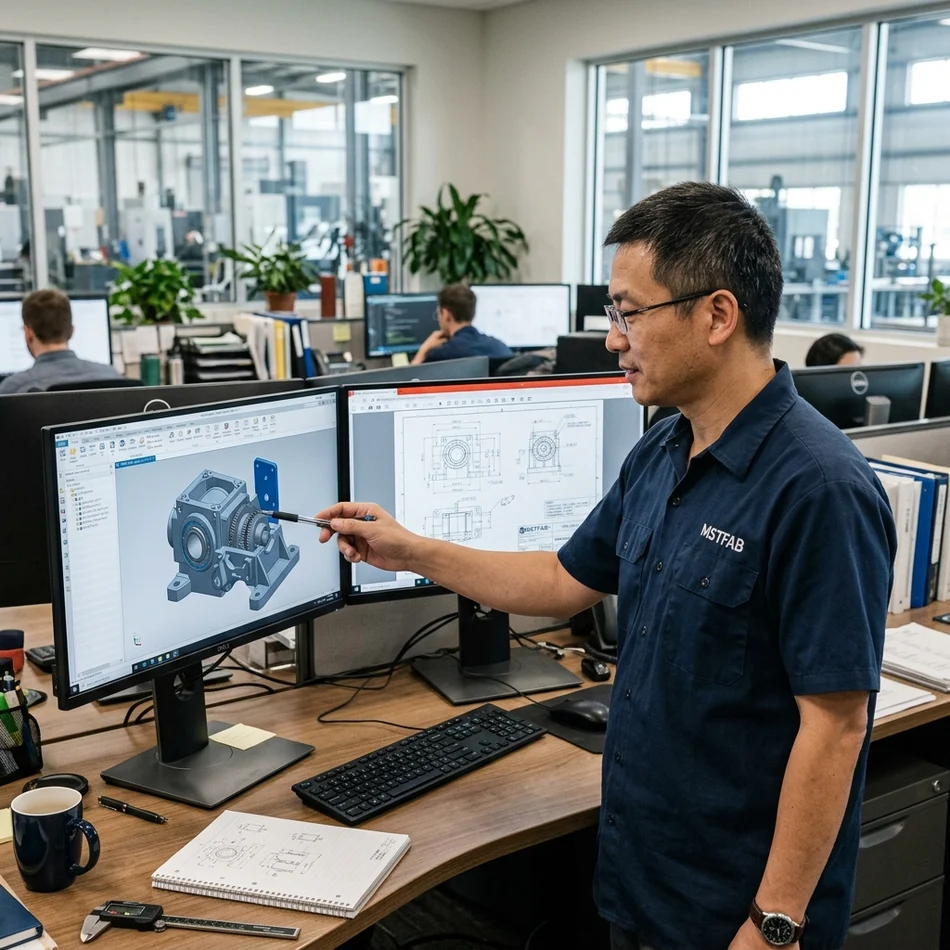
STEP/STP Files vs. 2D PDF Drawings
STEP/STP files and PDF drawings play different roles in sheet metal fabrication. A STEP file helps the supplier see the part, while a PDF drawing tells the supplier how the part must be made. For accurate quotation and production, MSTFAB recommends sending both. When submitting your package, selecting a dedicated sheet metal fabrication RFQ supplier will help you align engineering expectations early. Operating as a direct build-to-print sheet metal manufacturer, we build precisely to your engineering specs.
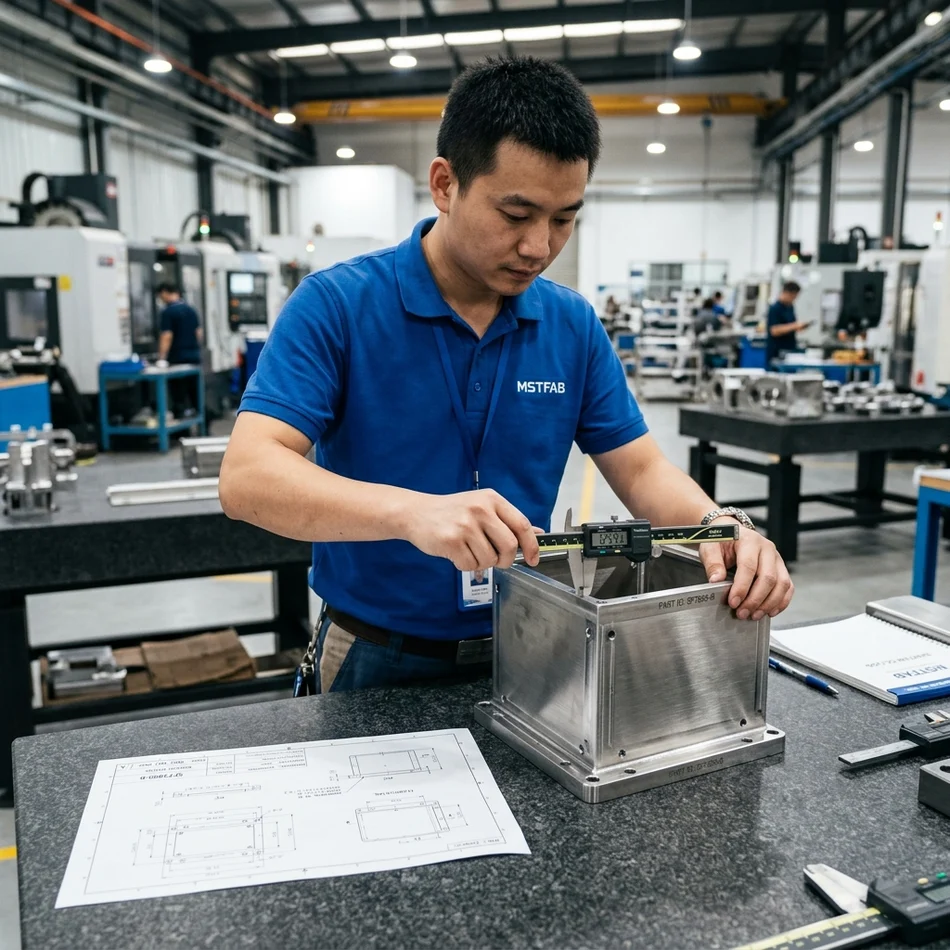
STEP/STP Files vs. DXF/DWG Files
STEP/STP files are useful for 3D geometry, whereas DXF and DWG files are useful for laser cutting flat patterns. A STEP file may help create or review flat patterns, but a confirmed DXF or DWG file can improve cutting accuracy and quotation speed. For complex parts, the best file package may include STEP/STP for 3D geometry, PDF for manufacturing requirements, DXF/DWG for laser cutting, and a BOM for assembly scope. This helps reduce quotation questions and production risk.
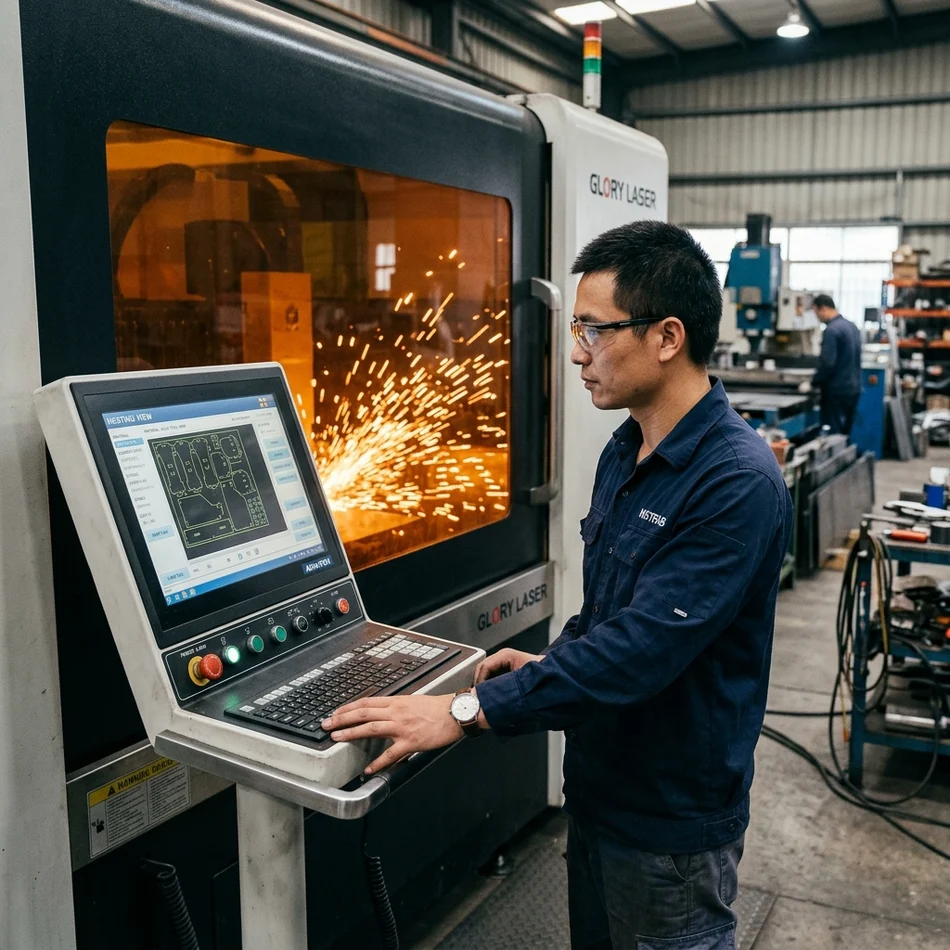
What MSTFAB Reviews in STEP and STP Files
When MSTFAB receives STEP or STP files, we review the project for manufacturability and quotation. Our review may include part geometry, sheet metal structures, bend directions, bend feasibility, minimum flange lengths, hole-to-bend distances, laser cutting complexity, welded assembly layouts, hardware positions, cabinet or enclosure structures, door and panel fit, mounting plate arrangements, cable entry openings, ventilation openings, surface finish areas, packaging risks, and batch repeatability.
The purpose of reviewing STEP/STP files is not only to see the shape. It is to identify manufacturing questions before production starts. A design issue found before production is a question. A design issue found after cutting, bending, welding, and coating becomes rework, delay, and cost. That is not cost saving—that is cost relocation.
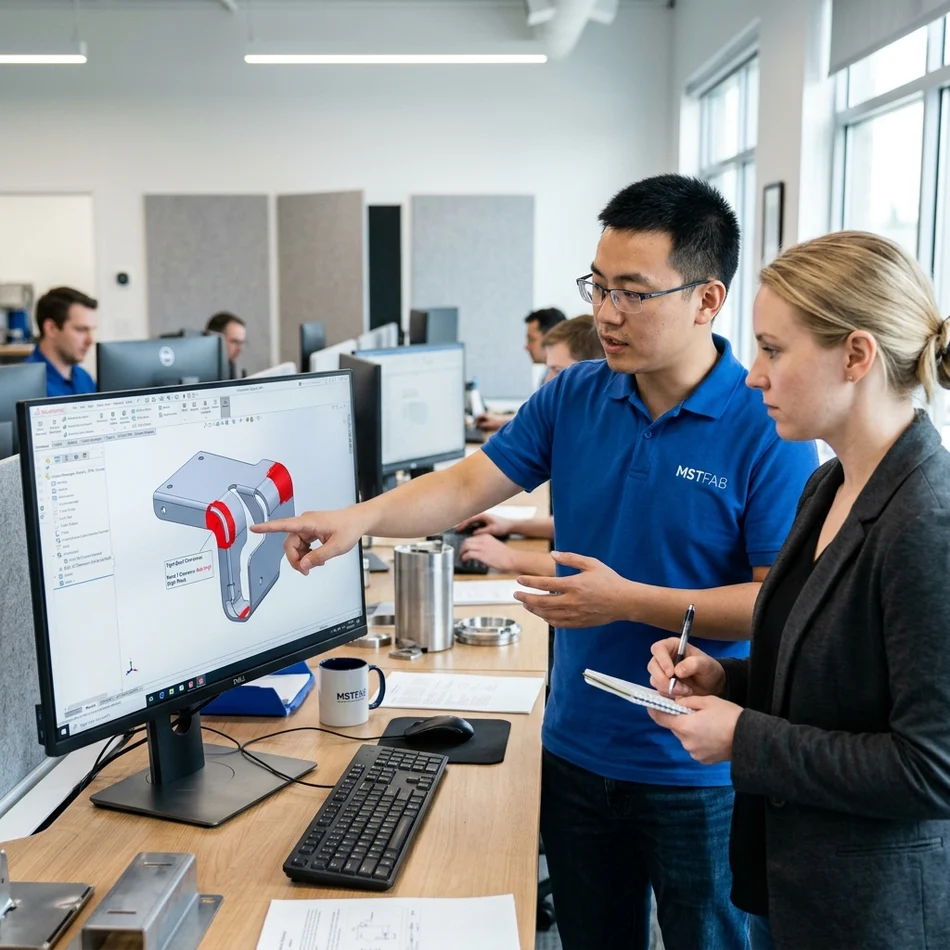
DFM Review for STEP and STP Sheet Metal Files
DFM means Design for Manufacturability. For STEP and STP sheet metal files, DFM review helps identify fabrication risks before production starts. DFM reviews may check material suitability, sheet thickness, bend radiuses, bend sequences, minimum flange lengths, hole-to-bend distances, laser cutting complexity, welding distortion risks, hardware insertion feasibility, powder coating clearances, masking areas, grounding points, assembly fit, packaging protection, and batch repeatability. Catching these risks early is a core part of our DFM for sheet metal fabrication review. DFM does not mean changing the customer’s design without approval. It means identifying manufacturability risks and confirming the production approach before cutting starts. A sample made with heroic manual correction is not manufacturing—it is a magic trick, and magic tricks do not scale.
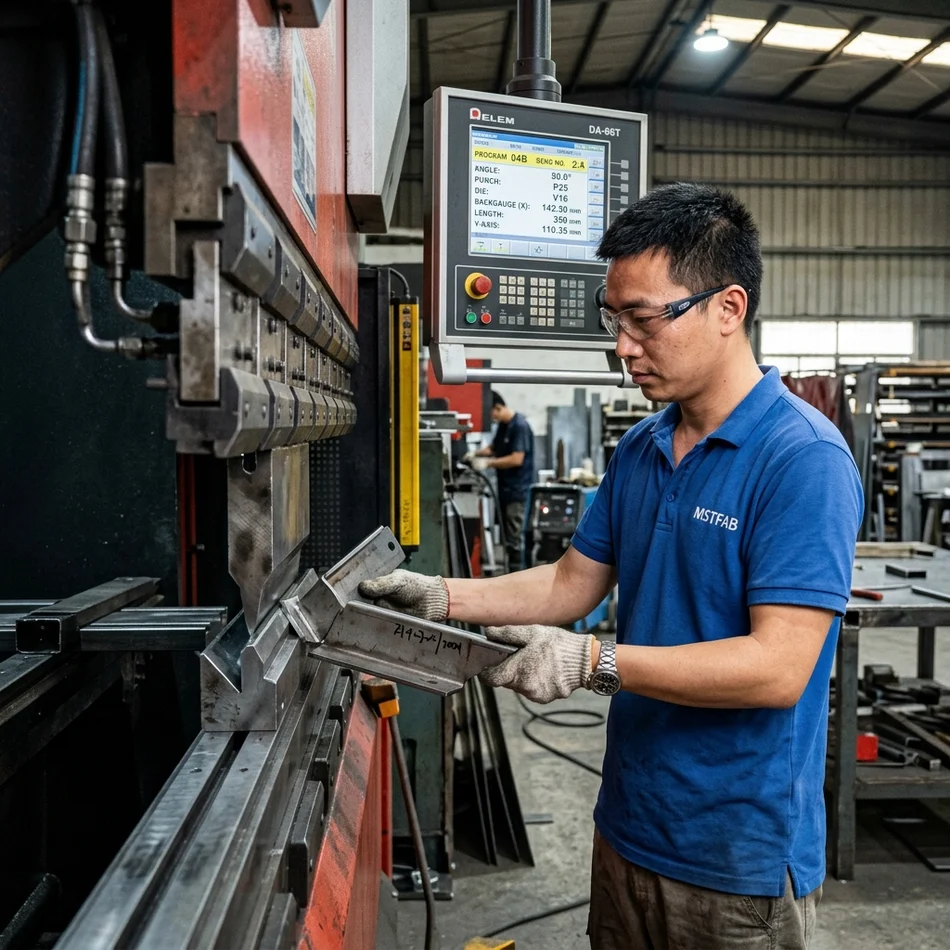
CNC Bending from STEP and STP Files
CNC bending turns flat laser-cut blanks into three-dimensional sheet metal parts. Bending quality affects final fit, alignment, and assembly. Important bending factors include material grade, sheet thickness, bend radiuses, bend angles, springback, bend sequences, minimum flange lengths, hole-to-bend distances, tooling access, and part handling. Good bending looks boring, and that is exactly why engineers like it. Boring means the holes line up, the panel sits flat, and the assembly team does not need a hammer. A STEP model may show a perfect bend, but real material has springback, which is why bend feasibility should be reviewed before production.
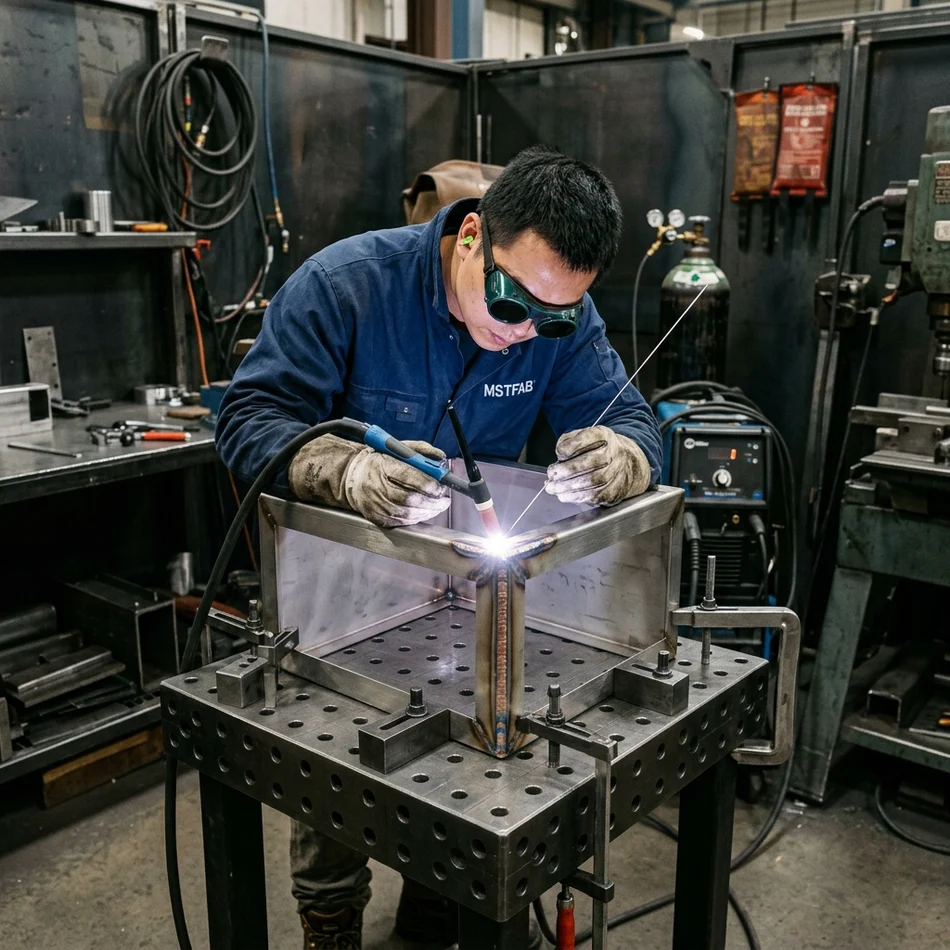
Welding Sheet Metal Assemblies from STEP and STP Files
Many STEP and STP projects are welded sheet metal assemblies. Welding adds heat, and heat moves metal—that is physics sending an invoice. Welding can cause distortion, shrinkage, warping, twisting, loss of squareness, extra grinding, and surface cleanup cost. A welded part can be strong and still be wrong. Strong but crooked is not engineering—it is a heavy problem. A STEP file may show that parts touch, but it may not define how they should be welded. For welded assemblies, please provide assembly drawings, individual part drawings, weld locations, weld lengths, weld types, full weld or spot weld requirements, visible weld areas, hidden weld areas, grinding requirements, post-weld critical dimensions, and inspection requirements.
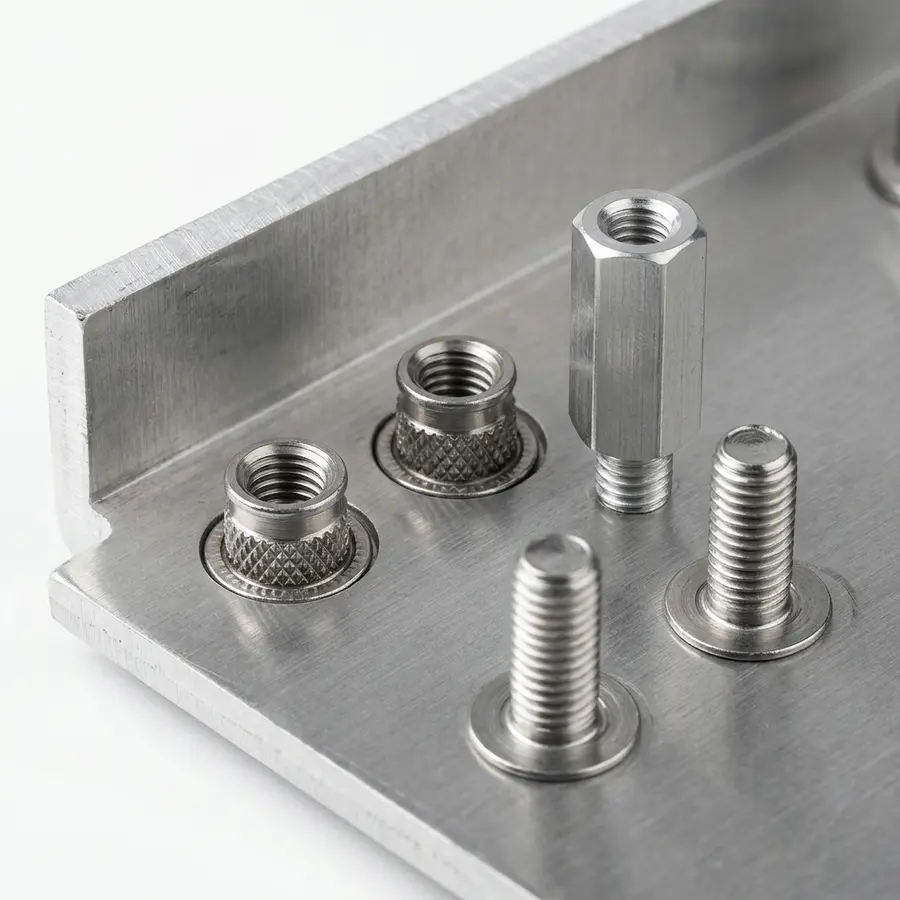
Hardware Insertion from STEP and STP Files
Custom sheet metal parts often require installed hardware such as rivet nuts, PEM nuts, PEM studs, standoffs, threaded inserts, hinges, locks, handles, captive screws, grounding studs, and fasteners. Hardware affects final assembly quality. A wrong insert is not a small mistake; it is a hidden failure point. A STEP file may show a hole or a boss, but it may not clearly define the required hardware. The drawing package or BOM should confirm hardware type, thread size, quantity, installation positions, installation directions, hole sizes, sheet thickness compatibility, edge distances, bend distances, coating masking requirements, supplier part numbers, and whether hardware is customer-supplied or factory-supplied.
Powder Coating and Surface Finishing for STEP/STP Projects
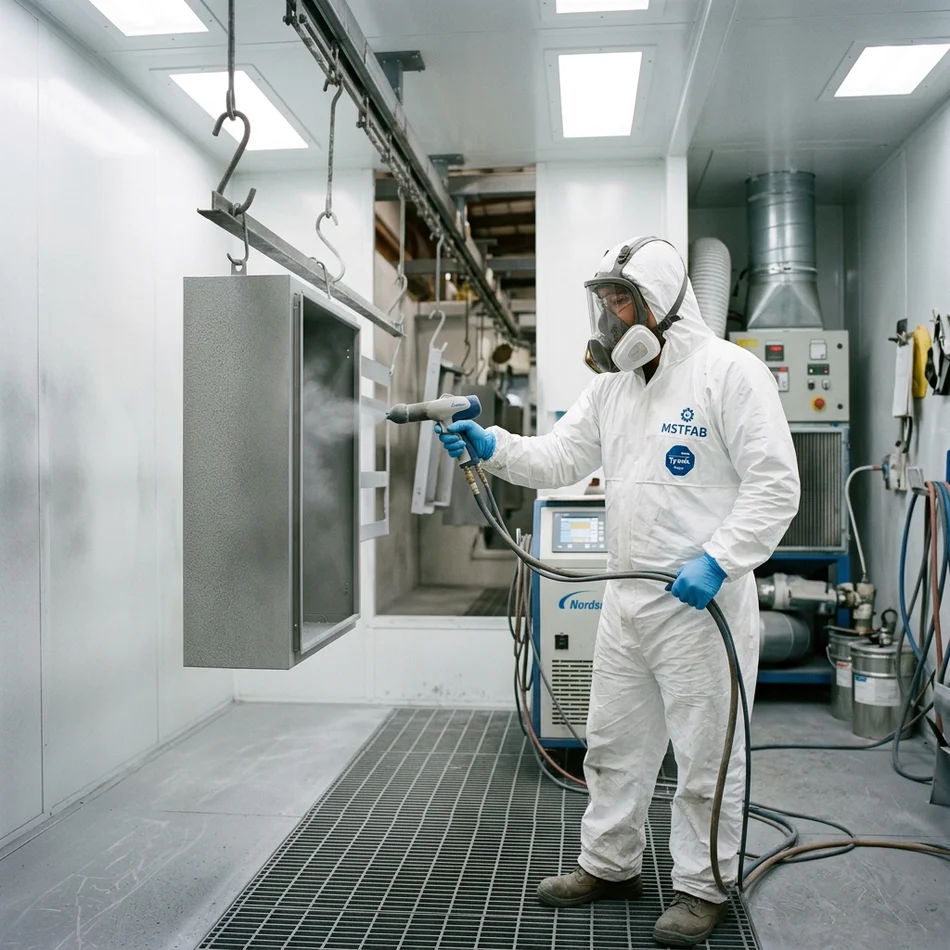
Surface finishing affects corrosion resistance, appearance, handling, and assembly fit. Powder coating is widely used for enclosures, cabinets, covers, guards, brackets, panels, and OEM equipment parts. However, powder coating is not just color; it changes the part geometry. Powder coating can affect holes, threads, hinges, locks, door gaps, cable entries, grounding points, assembly contact surfaces, and sliding surfaces. A hole that fits before coating may become too tight after coating. A grounding point covered beautifully with powder coating is not useful—it is a decorative problem. For STEP/STP-based projects, finish requirements should define color or RAL code, gloss level, texture, indoor/outdoor use, coating thickness, pretreatment, masking areas, grounding points, thread protection, visible surfaces, and packaging protection.
Export Packaging for STEP/STP Sheet Metal Parts
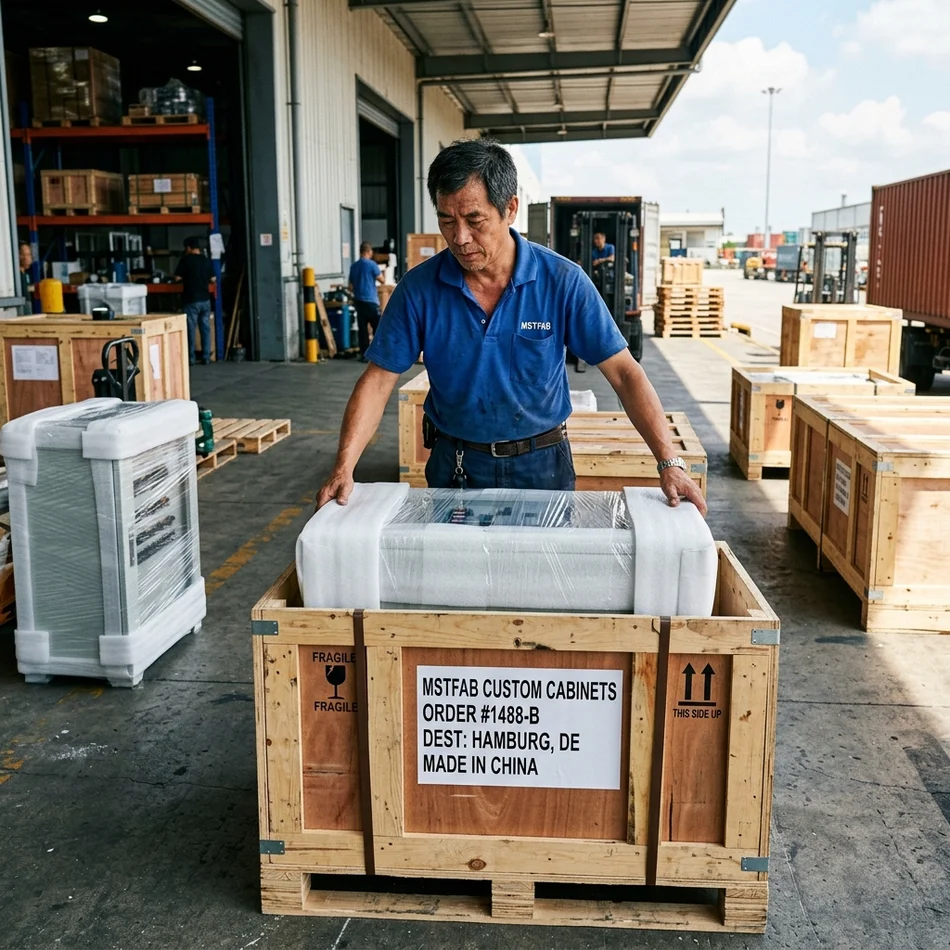
Packaging is part of manufacturing quality. Finished sheet metal parts can be scratched, dented, or deformed during transportation if packaging is not controlled. Packaging is especially important for powder coated parts, stainless steel panels, aluminum covers, large cabinets, welded assemblies, visible surfaces, and export shipments. Packaging may include protective films, foam, corner protection, layer separation, cartons, pallets, wooden crates, moisture protection, hardware protection, batch labels, part labels, and assembly labels. A perfect part that arrives scratched is no longer perfect—it is a customer complaint with forklift marks. Packaging is not decoration; it is the last manufacturing process before the buyer receives the parts. As an experienced export sheet metal fabrication factory, we ensure custom enclosures are packed in heavy-duty wooden crates.
First Article and Batch Production from STEP/STP Files
After prototype approval, STEP/STP-based projects move to first article review and batch production. First article reviews help confirm that the part matches approved files before repeat production. We run complete quality audits as an iso certified sheet metal fabrication company. Batch production focuses on repeatability. Before batch production, we confirm the approved STEP/STP revision, approved PDF drawing revision, approved DXF/DWG revision, approved sample status, material grade, process route, bend sequence, welding method, hardware control, powder coating masking, inspection plan, packaging standard, and batch labeling. The prototype proves the design; production proves the process. The 200th part should still match the approved version. We function as a dedicated sheet metal fabrication manufacturer for OEM equipment, delivering consistent quality to overseas buyers.
Quality Inspection for STEP/STP Sheet Metal Projects
Sheet metal parts made from STEP and STP files require inspection because they must fit and function inside the buyer’s equipment. Inspection may include material confirmation, sheet thickness checks, cut dimension inspections, hole position inspections, bend angle inspections, flatness checks, squareness checks, weld inspections, hardware installation checks, powder coating inspections, door fit checks, assembly fit checks, and packaging inspections. Inspection is not paperwork; it is how buyers avoid turning their assembly line into the final quality department. Critical dimensions should be clearly marked on the PDF drawing. A STEP file gives shape; a drawing defines which dimensions must be controlled. For details on standard tolerances, please check our sheet metal fabrication tolerance guide.
What Files Should You Send with STEP or STP Files?
For accurate quotation, please send:
- 3D STEP or STP files
- 2D PDF drawings
- DXF or DWG files (if available)
- Flat pattern files (if available)
- Assembly drawings (if applicable)
- BOM (if the project is an assembly)
- Material grades & sheet thicknesses
- Quotation quantities & prototype quantities
- Surface finish requirements & powder coating color (RAL code)
- Masking areas & grounding points
- Inspection & packaging requirements
- Shipping destination & target lead time
Why Choose MSTFAB as Your Sheet Metal Fabrication Supplier for STEP and STP Files?
MSTFAB is a sheet metal fabrication supplier in Guangzhou, China, supporting overseas OEM and industrial buyers with STEP/STP-based fabrication and practical DFM review. By choosing a reliable custom metal parts manufacturing partner and direct custom sheet metal parts manufacturer, you eliminate communication gaps between design and final shipment. MSTFAB serves as a direct sheet metal fabrication factory for OEM projects and a precision metal parts fabrication manufacturer, utilizing advanced CNC machinery. We are a trusted industrial sheet metal component manufacturer and engineered sheet metal parts manufacturer supplying global industrial OEMs.
Request a Sheet Metal Fabrication Quote from STEP or STP Files
Eliminate quotation guesswork. Send MSTFAB your STEP or STP files along with PDF drawings for custom sheet metal fabrication review. Our engineering team will review the designs, check bend clearances, and deliver a reliable custom metal parts manufacturing quote within 24 hours.
Upload STEP/STP Files & Get a QuoteFAQ: STEP & STP Sheet Metal Fabrication
Can MSTFAB quote sheet metal parts from STEP or STP files?
Yes. MSTFAB can review STEP and STP files for custom sheet metal fabrication quotation. For accurate pricing, it is best to also send PDF drawings, material, thickness, finish, quantity and other manufacturing requirements.
Are STEP and STP files the same?
For most sheet metal RFQ purposes, STEP and STP are used to describe the same type of neutral 3D CAD file format. Both can help the supplier review part geometry and assembly structure.
Is a STEP file enough for a sheet metal fabrication quote?
A STEP file is helpful, but it is often not enough for a complete production quote. A PDF drawing should define material, thickness, tolerances, welding, hardware, surface finish, inspection and packaging requirements.
MSTFAB manufactures custom sheet metal enclosures, electrical cabinets, control boxes and industrial metal housings for OEM buyers.
 WeChat Contact
 WhatsApp Me Directly