
Sheet Metal Parts Manufacturer Using 6061 Aluminum
A sheet metal parts manufacturer using 6061 aluminum helps OEM buyers, engineering teams and industrial purchasing departments produce lightweight, strong and corrosion-aware aluminum components from approved drawings.
6061 aluminum is widely used when buyers need higher strength than many general forming aluminum grades, better machining performance and practical corrosion resistance.
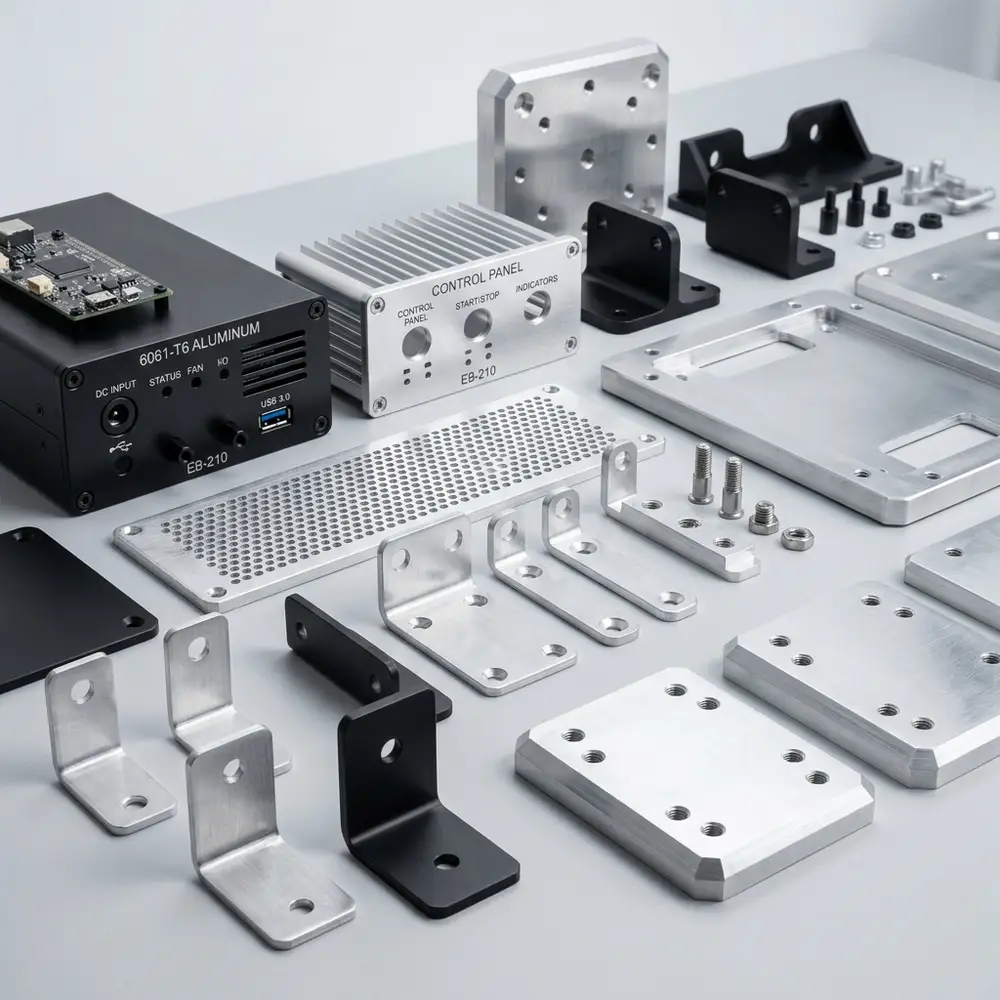
6061 aluminum has its own manufacturing behavior. It can be strong and useful, but it also needs careful review before cutting, bending, welding, finishing and assembly. 6061 aluminum is not lightweight steel. It is also not the same as 5052 aluminum. It bends differently, scratches easily, may crack if the bend radius is too tight, may lose strength near weld zones, may show color variation after anodizing, and needs correct hardware and thread design. That is why 6061 aluminum sheet metal fabrication should start with a practical DFM review before production.
MSTFAB manufactures custom 6061 aluminum sheet metal parts from customer STEP files, STP files, PDF drawings, DXF files, DWG files, assembly drawings and BOMs. We support 6061 aluminum sheet metal brackets, mounting plates, panels, covers, equipment housings, enclosure parts, machine guards, and parts with PEM hardware or threaded inserts.
What Is 6061 Aluminum in Sheet Metal Fabrication?
6061 aluminum is a heat-treatable aluminum alloy commonly selected for strength, machinability, corrosion resistance and general industrial use. It is often used in industrial equipment parts, lightweight brackets, mounting plates, electronic equipment housings, and structural aluminum components.
6061 aluminum can be supplied in different tempers, such as 6061-T6, depending on the customer’s material requirement. The temper is important. A drawing that only says “6061 aluminum” may not be complete. 6061-T6 may provide good strength, but it may not be ideal for tight bending. If the part requires heavy forming, the bend radius and material condition must be reviewed carefully. A strong material is not automatically a good bending material. Material selection should match the drawing, function, load, bend structure, surface finish and final application.
Why Buyers Choose 6061 Aluminum Sheet Metal Parts
- Higher Strength Than General Forming Alloys: 6061 aluminum is often selected when buyers need stronger parts than basic lightweight covers or decorative panels, making it useful for mounting brackets, support plates, and load-related components.
- Good Machining Performance: 6061 aluminum is commonly used when the part requires CNC machining, countersinks, tapped holes, slots, milled features or precision mounting surfaces, making it useful for hybrid parts.
- Lightweight Design: 6061 aluminum helps reduce weight compared with steel, which is useful for portable equipment, wall-mounted enclosures, and automation systems.
- Corrosion Resistance: Has practical corrosion resistance for many applications. However, corrosion performance still depends on surface finish, environment, fastener compatibility and design details.
6061 Aluminum vs. 5052 Aluminum
One important buyer question is whether the part should use 6061 aluminum or 5052 aluminum. The answer depends on the part design.
| Feature | 6061 Aluminum | 5052 Aluminum |
|---|---|---|
| Primary Benefit | High strength, excellent machinability, and heat-treatable structural properties. | Excellent forming/bending capability, high fatigue strength, and marine-grade corrosion resistance. |
| Bending & Forming | Brittle in T6 temper; prone to cracking if bent with a tight bend radius. | Highly ductile; bends easily to tight radii without cracking or surface tearing. |
| CNC Machining | Excellent; chips break easily, making it perfect for milled pockets, countersinks, and threads. | Gummy when machined; chips stick to tooling, making precision tapping or milling more difficult. |
| Tapped Holes | Excellent thread strength; supports direct tapped threads for low-load mounting. | Lower thread strength; direct threads are easily stripped, often requiring inserts. |
| Common Uses | Structural brackets, flat mounting plates, machined blocks, and automation components. | Formed enclosure bodies, covers, panels, and highly bent bracket shapes. |
6061-T6 Bending Risk and DFM
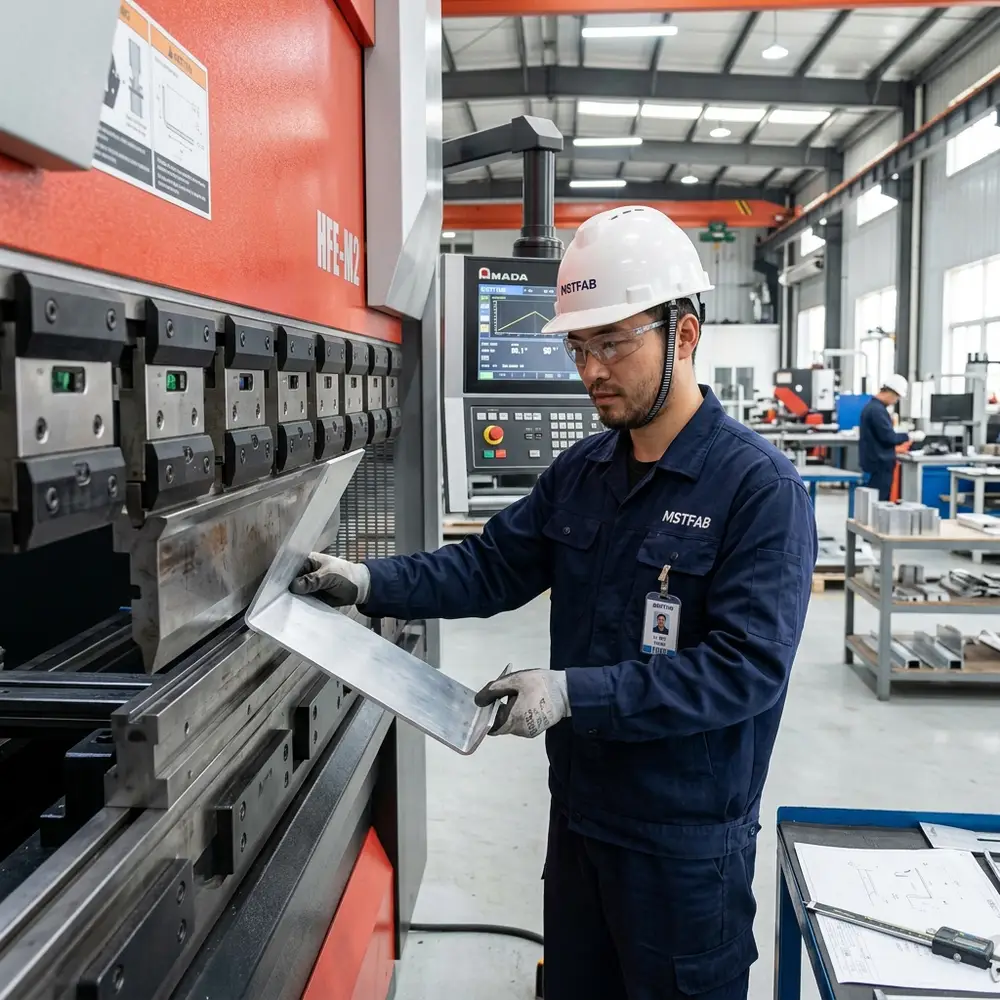
6061-T6 is a common material condition, but buyers should understand its bending risk. 6061-T6 may crack if the bend radius is too tight, especially in thicker sheets or demanding bend directions. A sharp corner in CAD may not be practical in 6061 aluminum. CAD has no cracking. Real aluminum does.
If the drawing requires tight bends, the supplier should review whether a larger bend radius is needed, a different aluminum grade or temper should be considered, or the design should be modified. Good DFM review prevents bending failure before production starts. A cracked bend discovered after batch production is a review failure.
CNC Machining Features in 6061 Aluminum Parts
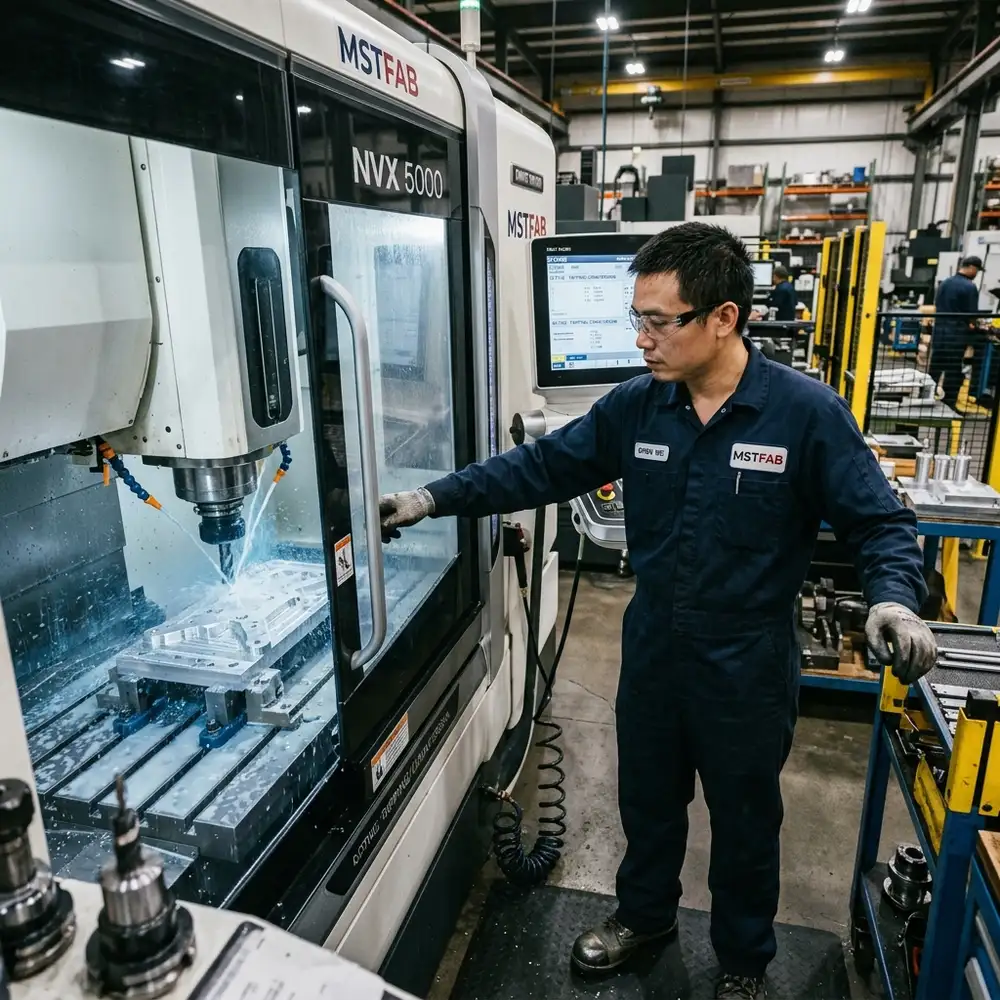
6061 aluminum is often chosen because it supports machining well. Some parts may need sheet metal cutting and bending, plus machining features such as countersunk holes, counterbored holes, tapped holes, milled slots, flat mounting surfaces, and chamfers. This makes 6061 suitable for hybrid parts that need both sheet metal fabrication and CNC machining support. The drawing should specify hole type, thread size, depth, countersink angle, and tolerance. A hole is not always just a laser-cut hole; sometimes it is a precision mounting feature, which affects cost and process.
Hole-to-Bend Distance for 6061 Aluminum
Hole-to-bend distance is important in 6061 aluminum sheet metal fabrication. If holes, slots or cutouts are too close to the bend line, they may deform during bending. This can affect hole roundness, slot shape, screw fit, and PEM hardware installation. A CAD model may show a perfect hole, but real bending may pull or distort it. DFM review helps identify these risks before cutting and bending. A design issue found before production is a question; a design issue found after 500 parts are bent is rework. That is not cost saving. That is cost relocation.
Threaded Inserts and PEM Hardware in 6061 Aluminum
6061 aluminum sheet metal parts often require installed hardware: PEM nuts, PEM studs, PEM standoffs, or rivet nuts and threaded inserts. Hardware installation in 6061 aluminum must be reviewed carefully. Thin aluminum sheet may not provide enough thread engagement by tapping alone, so threaded inserts or PEM hardware may be needed. A wrong insert is not a small mistake. It is a hidden failure point. A threaded insert that spins is not a threaded point; it is a round problem with a screw inside it.
Deburring and Edge Smoothing for 6061 Aluminum
6061 aluminum parts need good edge control, especially when parts are handled, assembled or used near cables, seals or visible surfaces. Burrs and sharp edges can cause worker injury, cable damage, poor assembly fit, and coating/anodizing defects. CAD has no burrs; real cut aluminum does. A burr under coating is still a burr; it is just a coated burr. Edge finishing should match the application, from practical deburring on internal brackets to premium edge smoothing on visible panels.
For high-strength structural parts requiring aesthetic colors, read our guide on powder coated aluminum sheet metal parts.
Surface Finishing for 6061 Aluminum Parts
6061 aluminum is commonly anodized when buyers need appearance, corrosion resistance or surface protection. Anodizing requirements should define color, thickness expectation, visible surfaces, masking areas, thread protection, and electrical contact areas. Anodizing color can vary due to material condition, surface preparation, thickness and batch conditions. If color matching is critical, sample approval should be required before batch production. A beautiful anodized finish that arrives scratched is not a premium finish; it is a packaging failure.
Welding 6061 Aluminum Sheet Metal Parts
6061 aluminum can be welded in some projects, but welding must be reviewed carefully. 6061 welding can affect strength around the heat-affected zone and cause distortion. Welding adds heat. Heat moves metal. That is physics sending an invoice. For welded 6061 parts, drawings should define weld locations, post-weld grinding requirements, and strength requirements. A welded part can be strong and still be wrong. Strong but crooked is not engineering; it is a heavy problem. For load-bearing parts, the customer’s engineering team should validate strength and safety factors.
Trust Comparison: Standard Metal Shop vs. MSTFAB Integrated Manufacturing
| Feature | Standard Metal Shop | MSTFAB Integrated Manufacturing |
|---|---|---|
| Bending Review | Bends 6061-T6 with tight standard dies; parts crack at the radius, causing structural failure. | Performs DFM review; calculates proper bend radius (typically 1.5x-2x thickness) to prevent cracks. |
| Machined Details | Laser-cuts all holes; ignores countersink tolerances or thread depths, leading to loose assembly. | Integrates sheet metal and CNC machining; mills pocket depths, counterbores, and taps to print. |
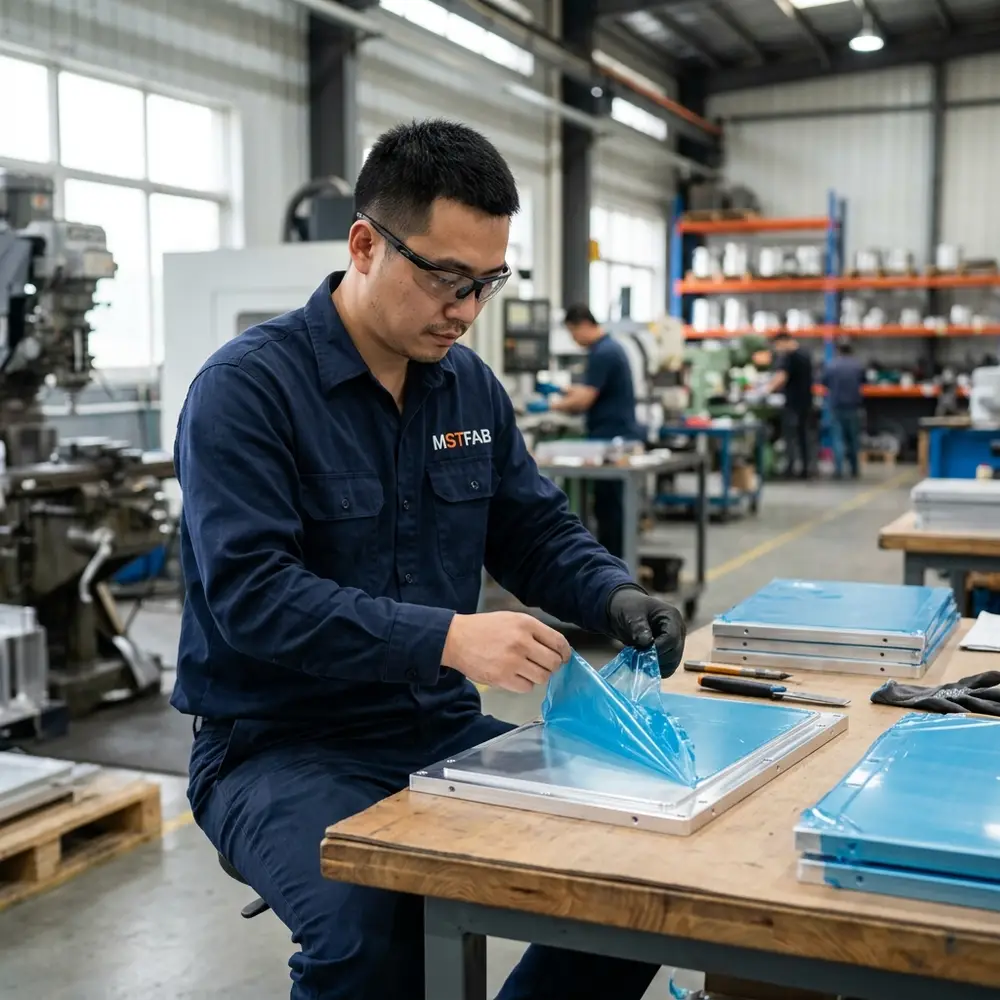
| Surface Protection | Handles parts raw; metal-on-metal friction creates deep surface scratches before finishing. | Applies double-sided PE protective film during cutting/forming; handles cosmetic panels with gloves. |
| Anodizing Quality | Uncontrolled dye batches; large color variations and unmasked grounding threads. | Maintains consistent anodizing bath controls; masks ground threads and contact areas precisely. |
| Hole-to-Bend Relief | Pulls close holes into the bend zone; deforms mounting holes, requiring field re-drilling. | Identifies close holes; recommends relief cuts, hole movement, or custom bending relief options. |
| Hardware Fitting | Presses PEM hardware without sheet thickness checks; inserts spin or crack the aluminum sheet. | Selects and installs genuine PEM hardware matched to 6061 aluminum hardness. |
| Welding Control | Heavy manual welding without fixtures; parts warp and lose 30-50% strength in heat zones. | Reviews welding stress; uses custom clamping fixtures and controls heat input to minimize distortion. |
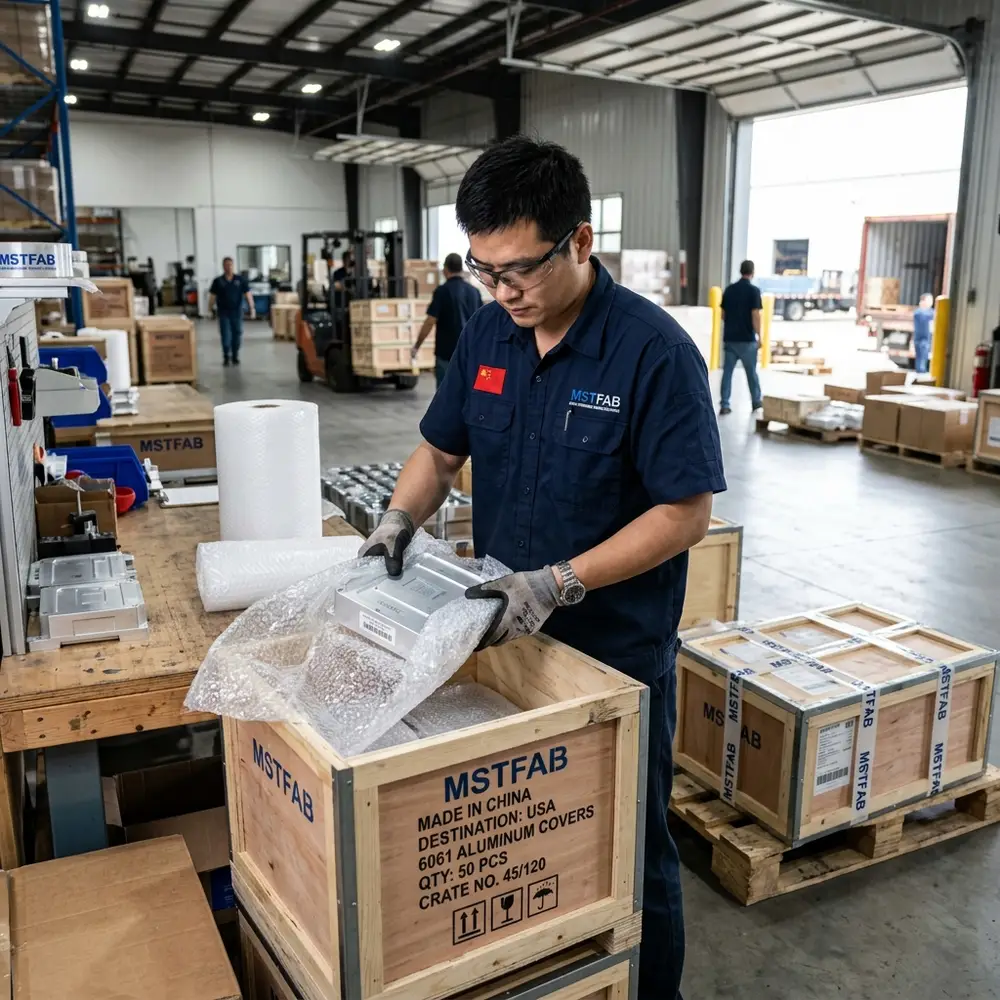
| Packaging Standards | Stacks finished aluminum parts loose; anodized or powder-coated surfaces arrive scratched. | Uses bubble wrap, foam separators, and sturdy wooden crates for complete transit protection. |
Quality Inspection for 6061 Aluminum Parts
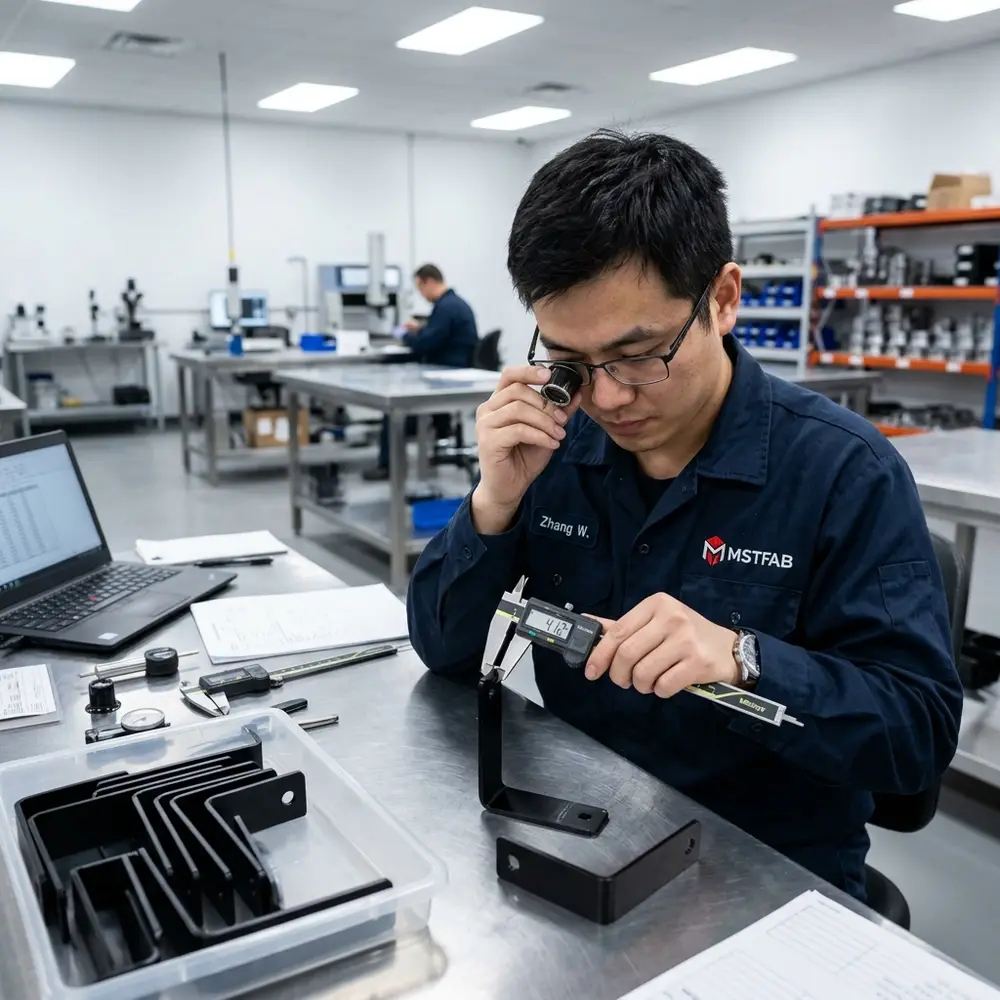
Quality inspection is important because 6061 aluminum parts often have functional, surface and assembly requirements. Inspection may include material confirmation, sheet thickness check, overall dimensions, hole positions, bend angles, flatness, surface scratches, burrs, machining features, thread checks, and hardware installation. Inspection is not paperwork; it is how buyers avoid turning their assembly line into the final quality department. Critical dimensions and visible surfaces should be clearly marked on drawings.
Prototype and Batch Production
MSTFAB supports prototype and batch production for custom 6061 aluminum sheet metal parts. Prototype production helps confirm material grade, thickness, laser profile, hole positions, bend feasibility, machining features, hardware fit, anodizing or coating result, and assembly fit. Batch production focuses on repeatability. A sample made with heroic manual correction is not manufacturing. It is a magic trick. Magic tricks do not scale. The goal is not one lucky 6061 aluminum sample; the goal is a stable manufacturing route. The 500th part should still match the approved version.
Request a 6061 Aluminum Sheet Metal Parts Quote
Send MSTFAB your drawings and 6061 aluminum specifications. We will review sheet thickness, bend radius, machining features, threaded inserts, hardware integration, anodizing/coating, and packaging to prepare a practical fabrication quote.
Upload 6061 Aluminum Drawings →Frequently Asked Questions
Can 6061 aluminum be used for sheet metal parts?
Yes. 6061 aluminum can be used for sheet metal parts such as brackets, mounting plates, panels, covers and equipment components. Bend radius, material temper and part geometry should be reviewed carefully.
Is 6061 aluminum good for bending?
6061 aluminum can be bent in some designs, but 6061-T6 may crack if the bend radius is too tight. For heavy forming or tight bends, 5052 aluminum may sometimes be more suitable. Learn more about aluminum sheet metal parts manufacturer capabilities.
What is 6061 aluminum used for?
6061 aluminum is commonly used for stronger aluminum brackets, mounting plates, machined components, equipment parts, structural panels and OEM aluminum parts.
What is the difference between 6061 and 5052 aluminum?
6061 is often selected for higher strength and machining. 5052 is often selected for better sheet metal forming and bending. The correct choice depends on the drawing and application.
Can 6061 aluminum be laser cut?
Yes. 6061 aluminum can be laser cut for profiles, holes, slots, brackets, panels, mounting plates and OEM components according to customer drawings. Learn more about laser cut sheet metal parts manufacturer.
Can 6061 aluminum be welded?
6061 aluminum can be welded in some projects, but welding may affect strength near the heat-affected zone and may cause distortion. Welding requirements should be reviewed carefully.
Can 6061 aluminum be anodized?
Yes. 6061 aluminum is commonly anodized. Color, surface finish, masking areas and sample approval should be confirmed before batch production.
Can 6061 aluminum be powder coated?
Yes. 6061 aluminum can be powder coated with proper surface preparation and masking. Coating thickness may affect holes, threads and assembly areas. Learn more about powder coated metal parts manufacturer.
Can 6061 aluminum parts use threaded inserts?
Yes. 6061 aluminum parts can use PEM nuts, rivet nuts, threaded inserts, studs and standoffs when sheet thickness, hole size, installation side and assembly requirements are properly reviewed.
What files are needed for a 6061 aluminum sheet metal quote?
The best RFQ includes STEP or STP files, PDF drawings, DXF or DWG files, 6061 temper, sheet thickness, quantity, bend radius, machining features, hardware notes, finish requirements, inspection requirements and packaging requirements.
MSTFAB provides CNC press brake bending services for precision sheet metal parts, enclosures, brackets and OEM assemblies.
 WeChat Contact
 WhatsApp Me Directly