
SS304 Sheet Metal Fabrication Supplier
An SS304 sheet metal fabrication supplier manufactures custom 304 stainless steel sheet metal parts according to customer drawings, 3D models and project requirements.
SS304, also called 304 stainless steel, is one of the most widely used stainless steel materials for industrial sheet metal fabrication. It is commonly selected when buyers need corrosion resistance, clean appearance, good durability and practical fabrication performance.
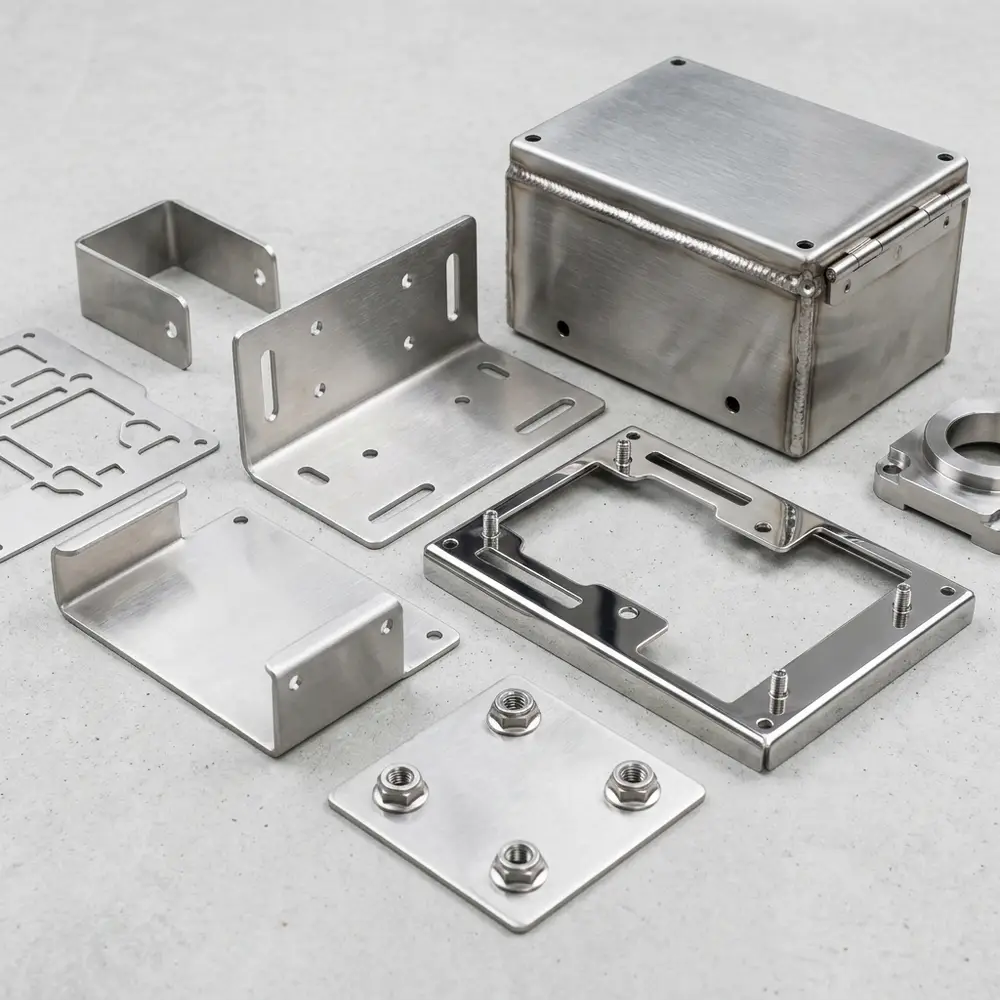
It is corrosion-resistant, not scratch-proof. It is strong, but it can still warp during welding. It looks clean, but brushing direction and weld cleanup still matter. It can be fabricated, but holes, bends, threads and surface finish must be controlled. CAD has no scratches. CAD has no heat tint. CAD has no welding distortion. CAD has no polishing marks. CAD has no packaging dents. Real manufacturing does. That is why SS304 sheet metal fabrication needs practical DFM review before production starts.
MSTFAB manufactures custom SS304 sheet metal parts from customer STEP files, STP files, PDF drawings, DXF files, DWG files, assembly drawings and BOMs. We support SS304 sheet metal enclosures, electrical boxes, control box parts, equipment housings, brackets, mounting plates, panels, covers, and machine guards.
When appearance matters, we operate as a precision brushed stainless sheet metal panels manufacturer.
What Is SS304 Sheet Metal?
SS304 is a common austenitic stainless steel grade widely used for sheet metal parts, enclosures, brackets, panels, covers and industrial components. Buyers may describe the material as SS304, SUS304, 304 stainless steel, AISI 304, or 304 stainless sheet metal.
SS304 is popular because it offers a good balance of corrosion resistance, strength, appearance and availability. However, the correct result still depends on drawings, process control and surface protection. Common fabrication processes include laser cutting, CNC bending, hole processing, deburring, welding, grinding, brushing, polishing, passivation, and PEM hardware or threaded insert installation.
Why Buyers Choose SS304 for Sheet Metal Parts
- Corrosion Resistance: SS304 provides better corrosion resistance than cold rolled steel or ordinary carbon steel. It is commonly used when parts face humidity, cleaning, or light outdoor exposure.
- Clean Appearance: SS304 provides a clean, professional stainless steel appearance, especially for visible panels, covers and equipment housings. It can be brushed, polished or finished according to requirements.
- Strength and Durability: SS304 is stronger than aluminum in many applications and more durable than untreated steel.
- Practical Fabrication: SS304 can be laser cut, bent, welded, brushed, polished and assembled into many custom configurations. The key is process planning; it becomes expensive when welding distortion and surface rework are not controlled.
SS304 vs. SS316: Which Material Should Buyers Choose?
SS304 and SS316 are both stainless steels, but they are not the same choice. Choosing the correct grade is critical to prevent premature corrosion while managing material cost.
For marine-grade applications, salt air, or harsh chemical environments, we operate as a specialized SS316 metal fabrication manufacturer.
| Feature | SS304 Stainless Steel | SS316 Stainless Steel |
|---|---|---|
| Chemical Composition | Contains Chromium (18%) and Nickel (8%). No Molybdenum. | Contains Chromium (16%), Nickel (10%), and Molybdenum (2%). |
| Corrosion Resistance | Excellent for general indoor, cleanroom, and mild outdoor environments. Prone to pitting in high-salt environments. | Superior corrosion resistance; resists chloride pitting, salt spray, and harsh chemical cleaning. |
| Common Applications | Industrial covers, electrical enclosures, mounting brackets, internal frames, and medical housings. | Marine-related equipment, coastal outdoor cabinets, chemical washdown boxes, and food processing machinery. |
| Material Cost | Practical and highly cost-effective; widely available in various sheet thicknesses. | Higher cost (typically 20% to 40% premium over SS304) due to Nickel and Molybdenum content. |
Laser Cutting SS304 Sheet Metal Parts
Laser cutting is commonly used to produce SS304 profiles, holes, slots and cutouts. It provides clean cuts, but surface protection is crucial to prevent scratching during handling.
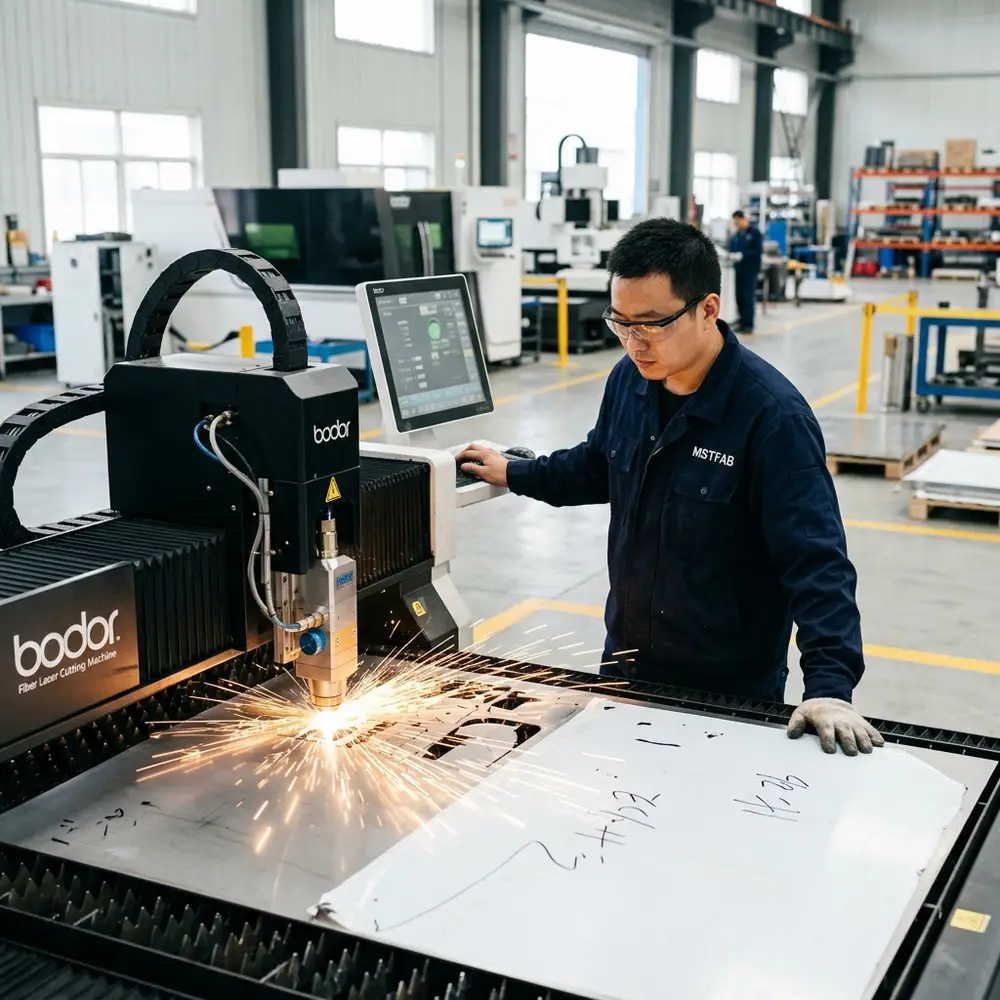
CNC Bending and Springback Review
CNC bending forms flat SS304 blanks into brackets, covers, panels, and enclosures. SS304 usually has more springback than mild steel, meaning the metal attempts to return to its original shape after the bending die releases. The bending process must compensate for this springback to achieve accurate angles. Important bending review points include sheet thickness, bend radius, springback, minimum flange length, and hole-to-bend distance. A sharp corner in CAD is not practical; a suitable bend radius prevents surface stress fractures and ensures dimensional repeatability.
Hole-to-Bend Distance for SS304 Parts
Hole-to-bend distance is important in SS304 sheet metal fabrication. If holes, slots or cutouts are too close to the bend line, they may deform during bending, affecting hole roundness, slot shape, screw fit, and hardware installation. A CAD model may show a perfect hole, but real bending may pull or distort it. DFM review identifies these risks early. A design issue found before cutting is a question; a design issue found after 500 stainless steel parts are bent is rework. That is not cost saving. That is cost relocation.
Welding SS304 Sheet Metal Parts
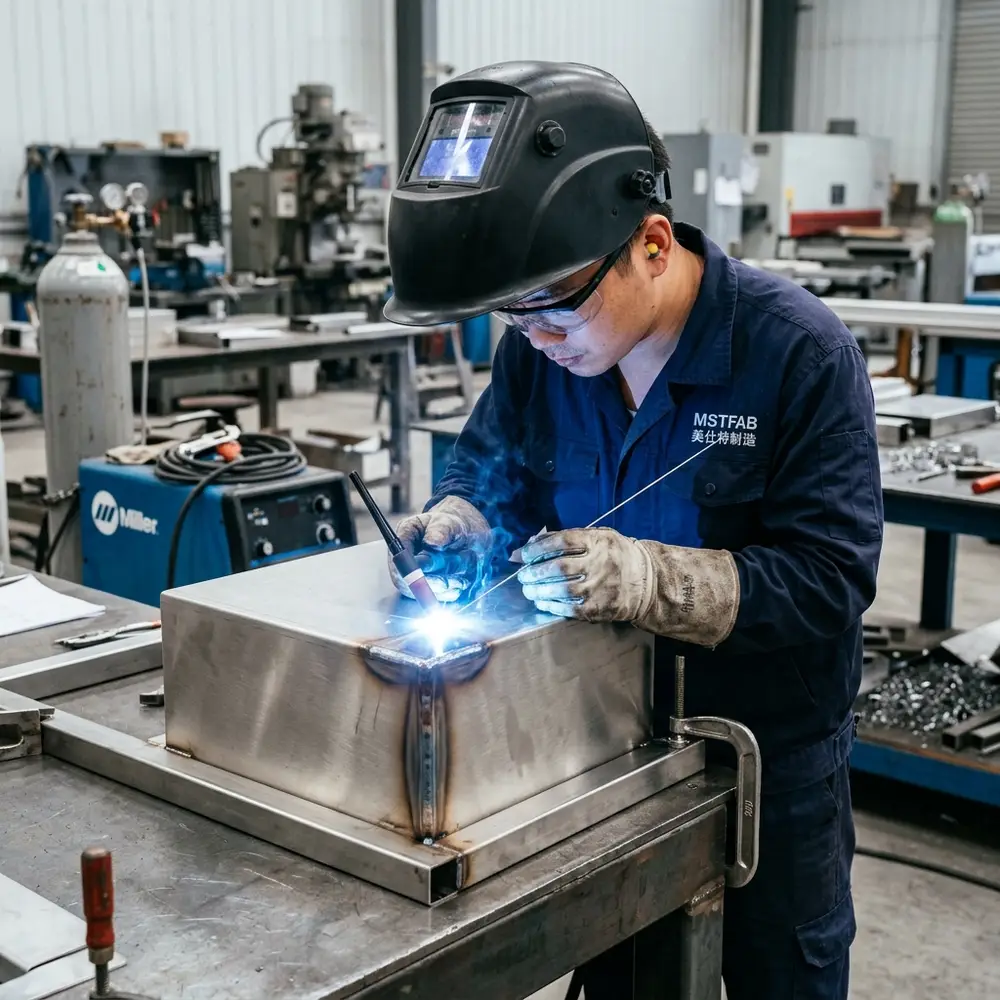
SS304 is commonly TIG or MIG welded for enclosures, housings, frames, brackets and sheet metal assemblies. Welding adds heat. Heat moves metal. That is physics sending an invoice. Welding SS304 may create heat tint, surface discoloration, distortion, warping, and loss of squareness. For welded SS304 parts, drawings should define weld locations, visible weld areas, and post-weld grinding and brushing requirements. A welded stainless steel part can be strong and still be wrong. Strong but crooked is not engineering; it is a heavy problem.
Grinding, Brushing and Polishing SS304 Parts
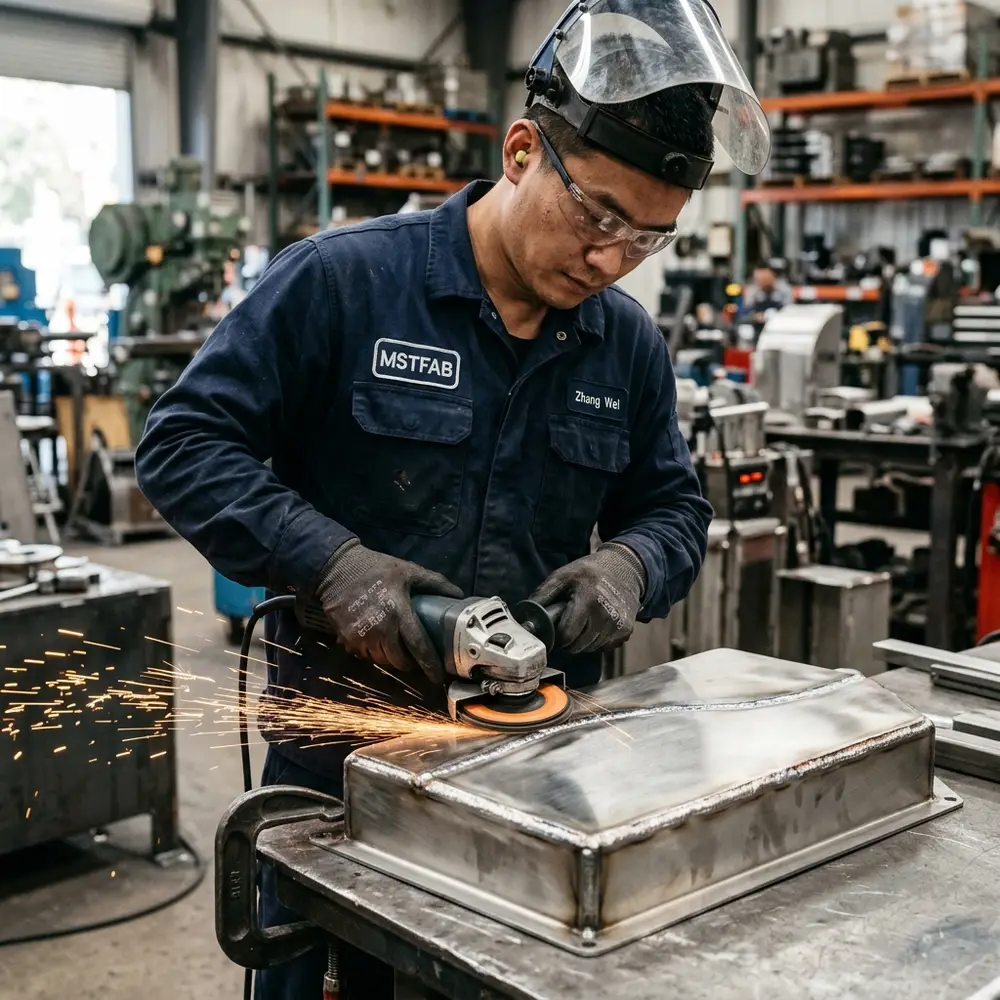
SS304 parts often require surface finishing after cutting, bending or welding. Operations include deburring, weld seam grinding, heat tint cleaning, corner blending, brushing, and polishing. Brushed SS304 is commonly used for visible panels, covers, doors and equipment housings. Buyers should define the brushing grain direction, visible surfaces, and weld blending requirements. Grain direction matters. If one panel is brushed vertically and another is brushed horizontally, the final assembly will look inconsistent. Polished SS304 requires clear callouts regarding polishing area and surface standard to avoid guesswork.
Hardware Installation in SS304 Sheet Metal Parts
SS304 sheet metal parts often require installed hardware: PEM nuts, PEM studs, PEM standoffs, or rivet nuts and threaded inserts. Hardware installation in SS304 must be reviewed carefully because stainless steel’s work-hardening behavior and hardness affect self-clinching performance. Specialized high-hardness stainless steel fasteners (such as PEM SP series) must be used, and pressing parameters must be controlled to prevent insert spin-out or sheet cracking.
Trust Comparison: Standard Sheet Metal Shop vs. MSTFAB SS304 Manufacturing
| Feature | Standard Sheet Metal Shop | MSTFAB SS304 Manufacturing |
|---|---|---|
| Weld Distortion Control | Welds without fixtures; causes heavy warping, bowing, and out-of-square cabinet frames. | Uses custom weld clamping fixtures and heat-sink blocks to keep flat panels straight. |
| Weld Cleanup & Brushing | Leaves dark heat tint and coarse grind marks; weld joints look messy and inconsistent. | Performs professional weld grinding and blends the surface back to match the original brushed grain. |
| Surface Scratch Protection | Handles raw sheets without film; parts arrive with deep handling scratches and scuffs. | Utilizes double-sided PE protective film during laser cutting and bending to safeguard the metal. |
| Bending & Springback | Ignores stainless springback; parts have wide angle variations that prevent proper door fit. | Uses CNC press brakes with active angle sensors to compensate for SS304 springback. |
| Hardware Pressing | Installs standard carbon steel PEM hardware; fasteners strip or fail under normal assembly load. | Installs high-hardness stainless steel clinching fasteners (PEM SP series) matched to SS304 sheet. |
| Grain Direction Alignment | Brushes parts in random directions; adjacent panels look mismatched on final assembly. | Controls brushing grain direction according to drawing specifications for cosmetic consistency. |
| Passivation Treatment | Skips passivation; surface iron contamination from carbon steel tooling causes tea-staining rust. | Reviews passivation requirements; coordinates chemical passivation to restore the oxide layer. |
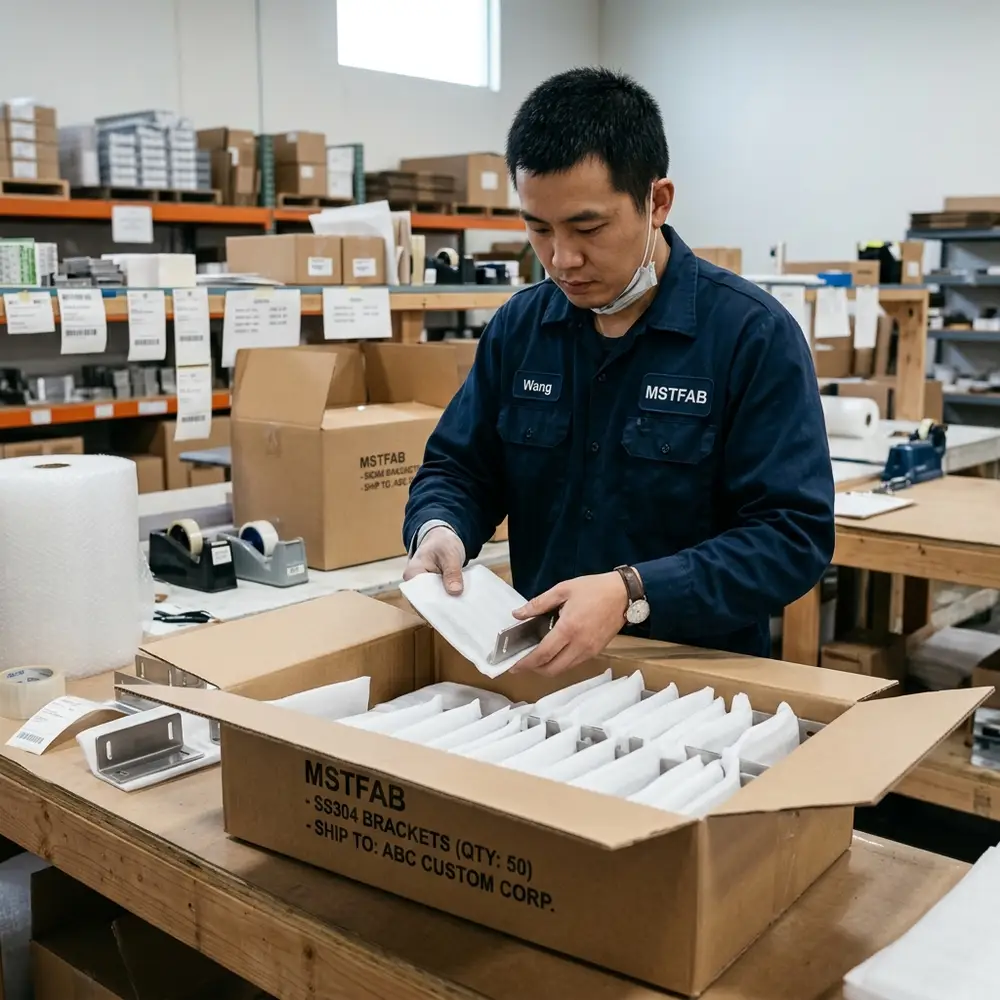
| Export Packaging | Stacks heavy parts loose in boxes; corners dent and polished faces scratch during transit. | Wraps individual parts in foam sleeves and packs them in custom heavy-duty export crates. |
Quality Inspection for SS304 Sheet Metal Parts
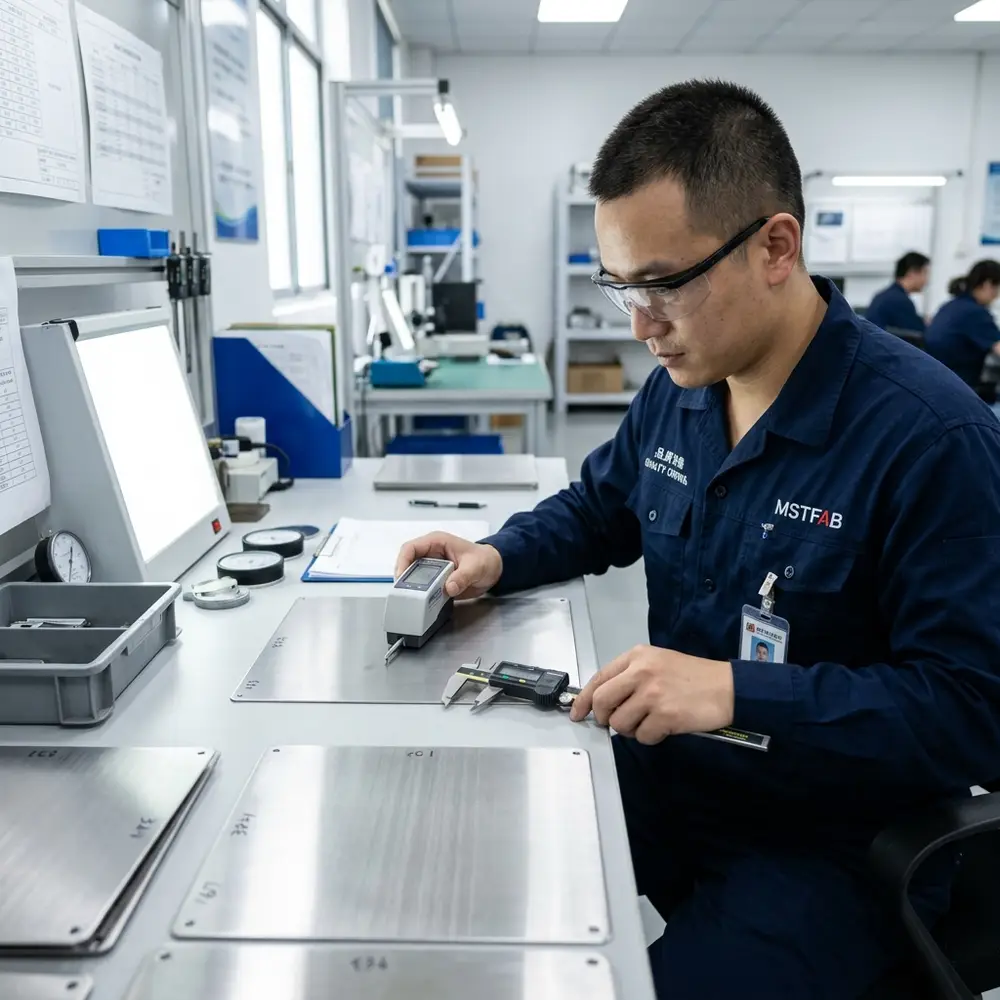
Quality inspection is important because SS304 parts often have both functional and appearance requirements. Inspection may include material confirmation, sheet thickness check, dimensions, hole positions, bend angles, flatness, surface scratches, burrs, weld quality, brushing direction, and hardware installation. Inspection is not paperwork; it is how buyers avoid turning their assembly line into the final quality department. Critical dimensions and visible surfaces should be clearly marked on drawings.
Prototype and Batch Production
MSTFAB supports prototype and batch production for custom SS304 sheet metal parts. Prototype production helps confirm material grade, thickness, laser profile, hole positions, bend feasibility, weld warping, hardware fit, brushing texture, and assembly fit. Batch production focuses on repeatability. A sample made with heroic manual correction is not manufacturing. It is a magic trick. Magic tricks do not scale. The goal is not one lucky SS304 sample; the goal is a stable manufacturing route. The 500th part should still match the approved version.
Request an SS304 Sheet Metal Fabrication Quote
Send MSTFAB your drawings and SS304 specifications. We will review sheet thickness, bend parameters, welding requirements, brushing direction, hardware integration, and packaging to prepare a practical fabrication quote.
Upload SS304 Drawings →Frequently Asked Questions
What is an SS304 sheet metal fabrication supplier?
An SS304 sheet metal fabrication supplier manufactures custom 304 stainless steel components using laser cutting, CNC bending, welding, grinding, brushing, polishing, hardware installation, inspection and packaging.
Is SS304 the same as 304 stainless steel?
Yes. SS304 usually refers to 304 stainless steel. Buyers may also call it SUS304 or AISI 304 depending on market and drawing standards. Learn more about stainless steel metal parts fabrication supplier capabilities.
What SS304 parts can MSTFAB manufacture?
MSTFAB can manufacture SS304 brackets, panels, covers, enclosures, housings, mounting plates, cable entry plates, ventilation panels, guards and OEM sheet metal components according to customer drawings.
Is SS304 suitable for outdoor use?
SS304 may be suitable for some general environments, but for coastal, marine, chloride-rich or highly corrosive environments, SS316 or SS316L may need review. Learn more about 316 stainless steel sheet metal fabrication capabilities.
Can SS304 sheet metal be welded?
Yes. SS304 can be welded, but welding may create heat tint, distortion and surface cleanup requirements. Weld locations and post-weld finish should be defined on the drawing. Learn more about custom sheet metal cutting bending welding.
Can SS304 parts be brushed or polished?
Yes. SS304 parts can be brushed or polished according to customer requirements. Brushing direction, visible surfaces and packaging protection should be specified. Learn more about sheet metal grinding and polishing service.
Does SS304 need passivation?
Passivation may be required depending on the application, welding, corrosion requirement and customer specification. It should be clearly requested if needed.
Can SS304 parts use PEM nuts or rivet nuts?
Yes. SS304 parts can use PEM nuts, rivet nuts, threaded inserts, studs and standoffs when sheet thickness, hole size and hardware compatibility are properly reviewed.
What files are needed for an SS304 sheet metal quote?
The best RFQ includes STEP or STP files, PDF drawings, DXF or DWG files, SS304 material requirement, sheet thickness, quantity, bend radius, weld notes, surface finish, hardware notes, inspection requirements and packaging requirements.
Does MSTFAB provide final product certification?
MSTFAB focuses on physical SS304 sheet metal fabrication according to customer drawings. Final product design, corrosion validation, safety testing and certification are outside standard scope unless separately agreed.
MSTFAB provides CNC press brake bending services for precision sheet metal parts, enclosures, brackets and OEM assemblies.
 WeChat Contact
 WhatsApp Me Directly