
Three quotes land in your inbox for the same powder-coated CRS bracket. One is 30% cheaper. Two months later, that bargain arrives with masked threads that were not masked, a flange that is 2° open, and a carton that was apparently packed by gravity. The steel was cheap. The bracket was not.
Cold-rolled steel (CRS) is one of the most cost-effective materials for OEM sheet metal parts, which is exactly why quotations for it are so easy to compare badly. This guide explains how to evaluate a cold-rolled steel sheet metal fabrication supplier on what actually reaches your assembly line.
Quick answer: A cold-rolled steel sheet metal fabrication supplier should be evaluated on total finished-part cost, not raw steel price alone. OEM buyers should confirm material grade, cutting and bending scope, welding, coating, functional inspection and export packaging before comparing quotations.
CRS is a practical choice for equipment panels, brackets, covers, chassis parts and empty enclosure shells that need good surface quality, reliable forming and competitive cost. The real question: can the supplier deliver finished CRS parts that fit the equipment, meet the approved finish and stay consistent across repeat orders?
Scope note: MSTFAB manufactures drawing-based cold-rolled steel mechanical components and empty enclosure shells. We do not supply finished electrical equipment, complete machines, wiring or electronics, and we do not validate outdoor corrosion performance. You define the service conditions; we manufacture the approved sheet metal components.
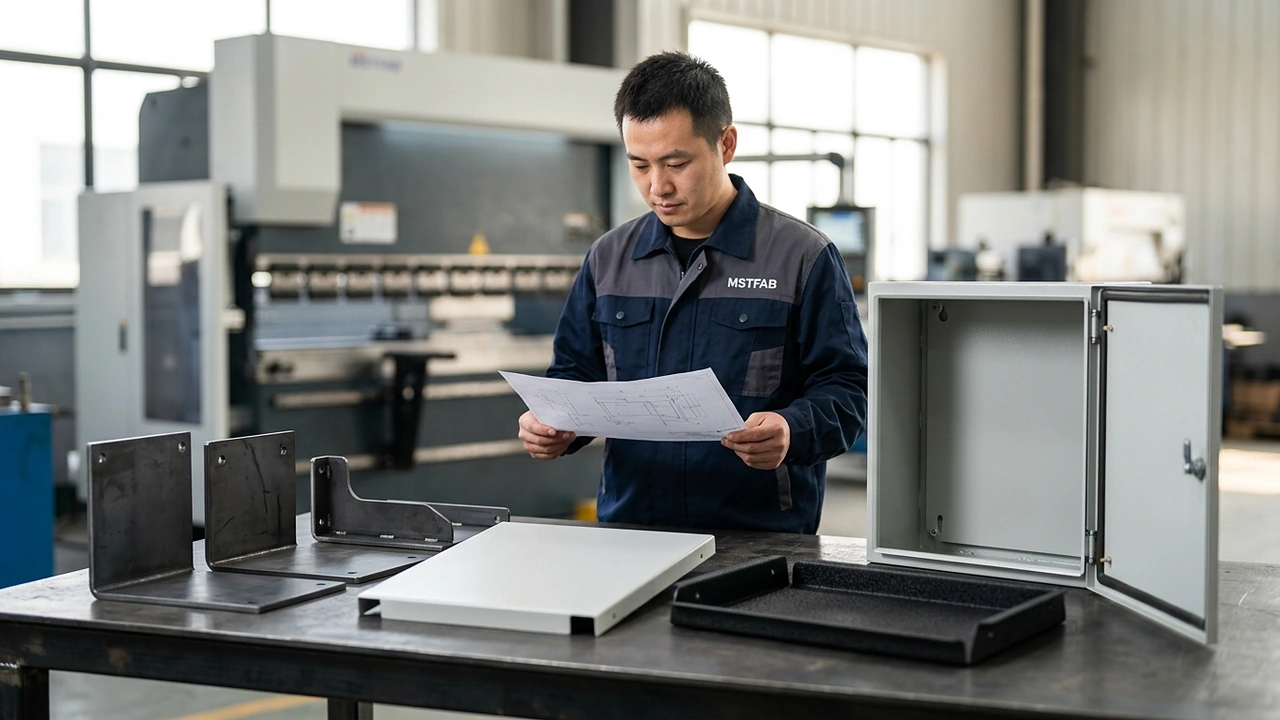
Why OEM Buyers Choose Cold-Rolled Steel
Cold-rolled steel generally offers a smoother surface and more controlled thickness than conventional hot-rolled sheet, which makes it attractive for formed and painted equipment components. Common applications include:
- industrial equipment panels and covers;
- mounting brackets and support plates;
- control cabinet and enclosure shells (empty, mechanical only);
- machinery guards and chassis parts;
- welded mechanical assemblies.
One important caveat: cold-rolled steel is not inherently corrosion-resistant. Surface protection should be selected for the actual operating environment. For grade-level detail, see our SPCC sheet metal fabrication guide.
7 Checks Before You Approve a CRS Supplier
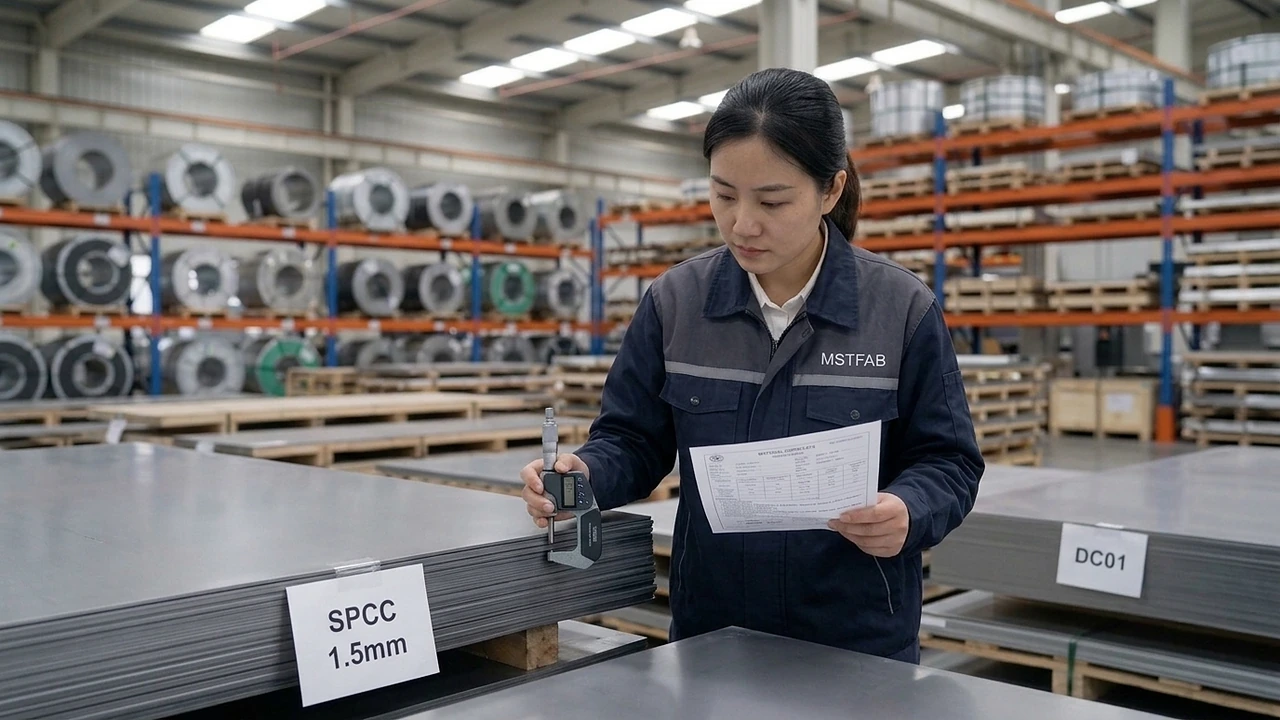
1. Specify SPCC, DC01 or the Approved Grade
An RFQ that says only “CRS” leaves a lot to interpretation. SPCC (JIS) and DC01 (EN) are both common in different purchasing markets, but they should not be treated as automatically interchangeable without reviewing the applicable specification.
- Put on the RFQ: grade, thickness, material condition and any permitted equivalents.
- Ask for evidence: grade confirmed in the quotation; material certificates or batch traceability where you require them.
- Red flag: “cold-rolled steel, equivalent.” The supplier should not silently substitute whatever steel happens to be on the rack.
2. Compare Finished-Part Cost, Not Raw Material Price
CRS can be very economical for indoor OEM equipment, but the delivered cost depends on the part, the operations and the quantity.
| Cost driver | What buyers should check |
|---|---|
| Material | Grade, thickness and sheet utilization |
| Laser cutting | Geometry, cut length and number of openings |
| CNC bending | Number of bends and setup complexity |
| Welding | Joints, fixtures and distortion control |
| Hardware | PEM nuts, studs and inserts |
| Finish | Preparation, coating and masking |
| Inspection | Critical dimensions and reporting |
| Packaging | Surface protection and export requirements |
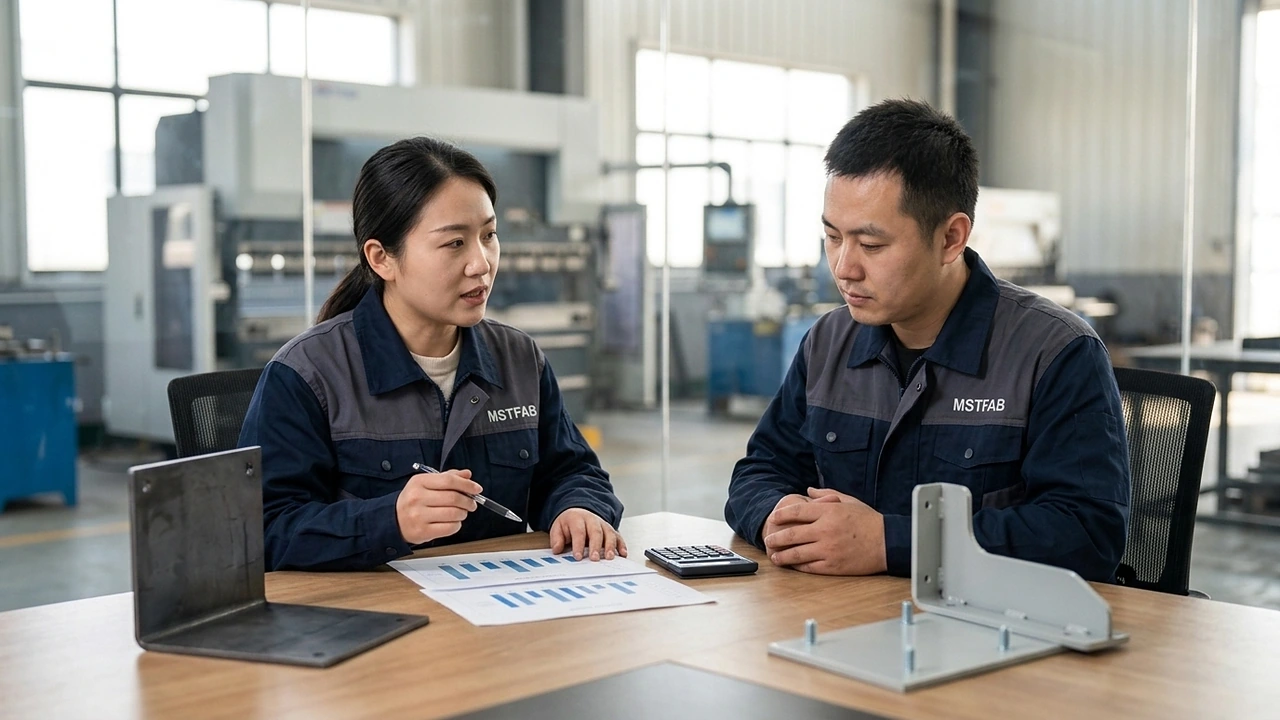
A simple 100-piece bracket order has very different economics from 100 welded, powder-coated brackets with installed hardware. Ask every supplier to quote the same manufacturing scope and realistic quantity breaks.
A low material price is useful. It does not pay for the other seven operations.
3. Treat Surface Finish as Part of the Purchase Decision
The relatively smooth surface of cold-rolled steel suits painted and powder-coated parts, but it still needs proper cleaning and pretreatment. Depending on the project, define the coating system, color, texture, appearance requirements, masking and corrosion-performance expectations.
- Put on the drawing: which faces are cosmetic, and which threads, locating surfaces or contact areas must stay uncoated.
- Ask for evidence: an approved color and texture sample before batch production.
- Red flag: “powder coating will hide it.” Powder coating is not a repair method for incorrect fabrication geometry.
For masking, film build and fit-after-coating checks, see our powder coating quality plan for sheet metal parts.

4. Check the Finished Bent and Welded Geometry
A correct flat blank does not guarantee correct assembly dimensions. For formed CRS parts, key features may include flange height, bend angle, hole-to-bend position and mounting-hole relationships. For welded parts, check flatness, squareness and bracket positions after welding.
Focus inspection on the features that determine real equipment fit. Tight tolerances everywhere add setup and inspection cost without making the part work any better; they mostly make the quote look worse.

5. Choose CRS for the Right Operating Environment
With an appropriate finish, cold-rolled steel suits many indoor, protected equipment applications. For outdoor, wet, coastal or chemically aggressive environments, the OEM should compare alternative materials or protective systems.
| Environment | Typical starting point to review |
|---|---|
| Indoor, dry, protected | CRS with a specified paint or powder coat |
| Humid or occasional condensation | CRS with a validated coating system, or galvanized steel |
| Outdoor or coastal | Galvanized steel, aluminum or stainless, per OEM validation |
| Washdown or chemical exposure | Stainless steel or another OEM-validated material |
Do not assume powder coating automatically makes any CRS component suitable for every outdoor environment. The OEM defines the service conditions; the fabrication supplier follows the approved material and finish specification.
6. Approve the First Article Before Repeat Orders
A useful first-article review checks the delivered condition, in this order:
For recurring orders, retain the approved drawing revision, material, CTQs, hardware and coating requirements. A sample that fits today is useful. A controlled process that reproduces the same fit next year is more useful.
7. Compare Suppliers Beyond the Unit Price
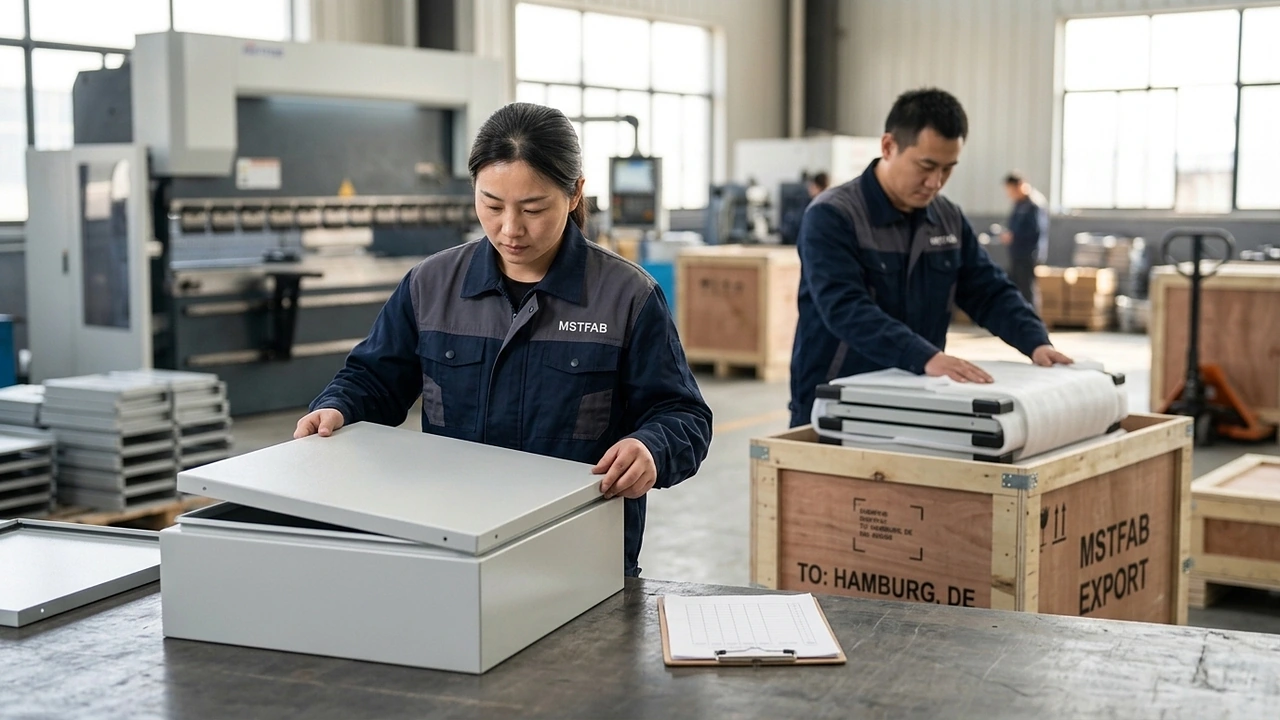
Confirm whether each quotation includes the required cutting, forming, welding, finishing, inspection and packing, and ask how visible powder-coated surfaces and formed edges will be protected for international shipment. Two suppliers can quote the identical part number with very different finishing or packing scopes.
Compare delivered manufacturing scope, not just unit price.
Trust Table: What a CRS Supplier Should Prove
Every supplier says “good quality, good price.” Here is what MSTFAB controls on a cold-rolled steel project, what you can ask to see, and who owns each decision.
| Item | MSTFAB controls | Evidence you can request | Owner |
|---|---|---|---|
| Grade & thickness | Uses the specified SPCC, DC01 or approved grade; no substitution without written approval | Quote confirmation; certificates or batch traceability where specified | MSTFAB |
| Quoted scope | Itemizes cutting, bending, welding, hardware, finish, inspection and packing | Line-item quotation with quantity breaks | MSTFAB |
| Formed & welded geometry | CTQs measured on the finished part, after welding where relevant | First-article inspection report | MSTFAB |
| Coating & masking | Coordinates the approved coating with finishing partners; masks drawing-defined features | Color/texture sample; batch photos | MSTFAB to OEM spec |
| Hardware | Installs specified part numbers on the correct side | FAI hardware check | MSTFAB |
| Export packing | Protects coated faces and formed edges for international shipment | Pre-shipment packing photos | MSTFAB |
| Service environment & corrosion validation | Not in fabricator scope | — | OEM |
What MSTFAB Manufactures
MSTFAB provides custom sheet metal fabrication services for overseas OEM equipment manufacturers. Our drawing-based scope includes CRS brackets, panels, covers, chassis components, mounting plates and empty equipment enclosure shells. Depending on the project, production can include:
Some surface finishing is handled through established finishing partners according to the approved order scope.
MSTFAB manufactures the buyer-defined sheet metal components, not finished electrical equipment or complete machines.
Frequently Asked Questions
Is cold-rolled steel cheaper than stainless steel?
Cold-rolled carbon steel often has a lower raw-material cost, but the delivered price depends on fabrication, finish, inspection, quantity and packaging. A coated CRS part is not automatically cheaper than an uncoated stainless one; compare the full scope.
Is SPCC the same as CRS?
SPCC refers to a specific material specification, while CRS is a broader purchasing term for cold-rolled steel. Confirm the exact grade before production.
Can cold-rolled steel be powder coated?
Yes. Appropriate cleaning, surface preparation, coating compatibility and masking are important.
Is CRS suitable for outdoor equipment?
It may be suitable with an appropriately designed and validated protective system, but raw CRS is vulnerable to corrosion. The OEM should define the actual environmental requirements.
Can MSTFAB make custom CRS parts from drawings?
Yes. MSTFAB manufactures drawing-defined cold-rolled steel mechanical components, including brackets, panels, covers, chassis parts and enclosure shells.
What should I send for a quotation?
Send STEP/STP and controlled PDF drawings, material grade, thickness, quantity, functional tolerances, hardware, finish and inspection requirements.
Request a Cold-Rolled Steel Fabrication Quote
Need SPCC or DC01 parts for your next OEM project? Send your drawings, material, quantity and finish requirements. We will review fabrication feasibility and clarify the full manufacturing scope before quoting, so the price you compare is the price you pay.
- Email: [email protected]
- WhatsApp: +86 173 2831 6456
- Website: mstfab.com
Send your drawings for a custom sheet metal fabrication quote.
 WeChat Contact
 WhatsApp Me Directly