
What are the essential elements of a powder coating quality control plan for precision sheet metal?
A comprehensive powder coating quality plan for precision sheet metal integrates five critical quality gates: (1) Substrate-specific multi-stage chemical pretreatment (alkaline degreasing, acid etching, and zinc/zirconium conversion coating to ensure corrosion resistance and paint bonding), (2) Engineered masking protocols using high-temperature silicone plugs and polyimide tape to protect internal threads, PEM studs, and electrical grounding points, (3) Precise application controls maintaining uniform dry-film thickness (DFT between 60 μm and 100 μm) and strict oven curing temperature profiles (200° C for 10–15 minutes), (4) Destructive and non-destructive quality testing including cross-hatch adhesion (ASTM D3359 Class 4B/5B), pencil hardness (2H), and 500-to-1000 hour salt spray testing (ASTM B117), and (5) Post-coating trial assembly checks verifying that door gaps, hinge swings, and fastener threads engage smoothly without paint buildup interference.
In custom sheet metal fabrication, powder coating is far more than an aesthetic topcoat—it is an engineered barrier against industrial corrosion, chemical exposure, and electrical interference. However, improper coating execution can quickly turn precision-fabricated enclosures into scrapped assemblies: paint ingress clogging threaded PEM inserts, poor adhesion flaking along sharp bend lines, or excessive film build preventing mating panels from sliding into place. Implementing a rigorous powder coating quality assurance plan guarantees flawless fit and finish.
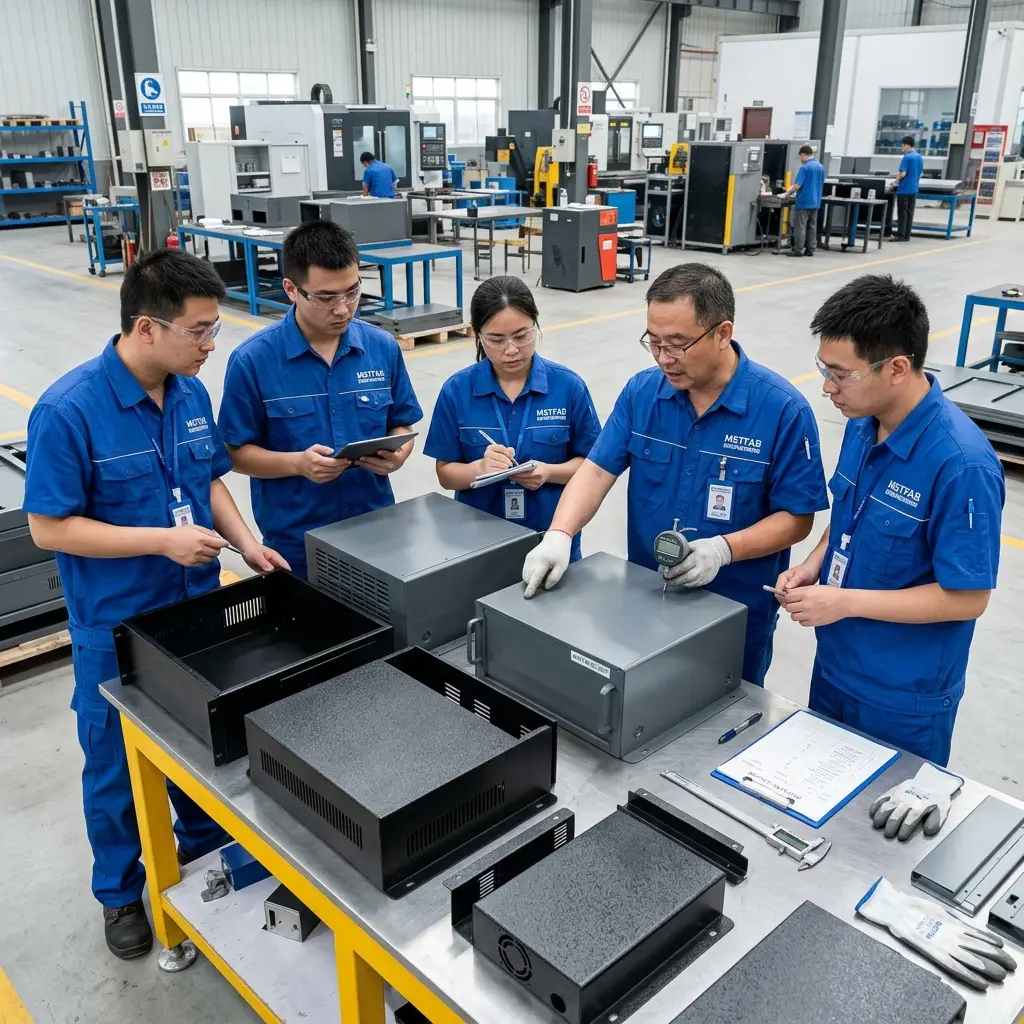
The 5 Quality Gates of Precision Powder Coating
Gate 1: Multi-Stage Chemical Pretreatment
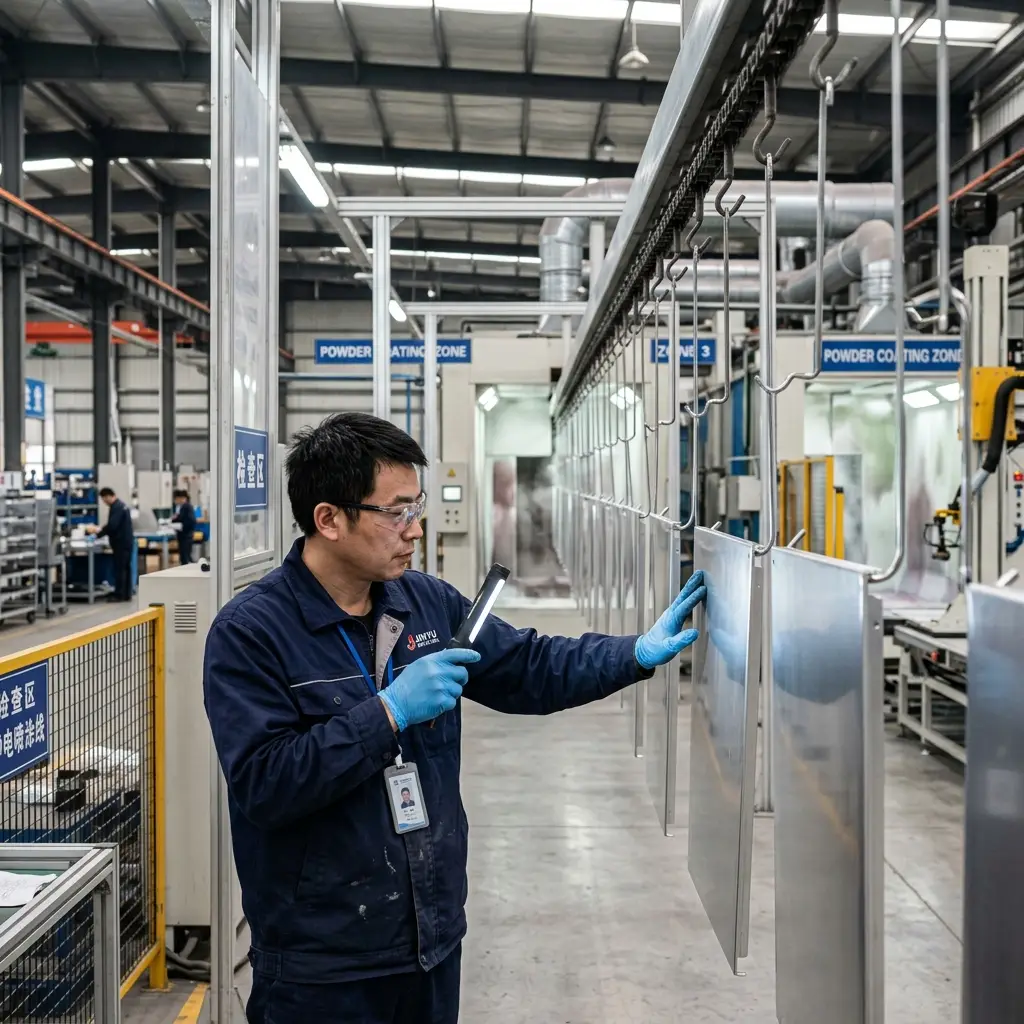
Coating adhesion failures almost always originate before the part enters the spray booth. Uncleaned rolling oils, laser cutting oxide films, and shop dust create microscopic barriers that cause paint blistering. Parts undergo an automated 5-stage immersion or spray pretreatment process: alkaline degreasing, water rinse, acid deoxidation (for aluminum) or iron/zinc phosphating (for carbon steel), deionized water halo rinse, and a hot-air dry-off oven pass to guarantee zero moisture retention.
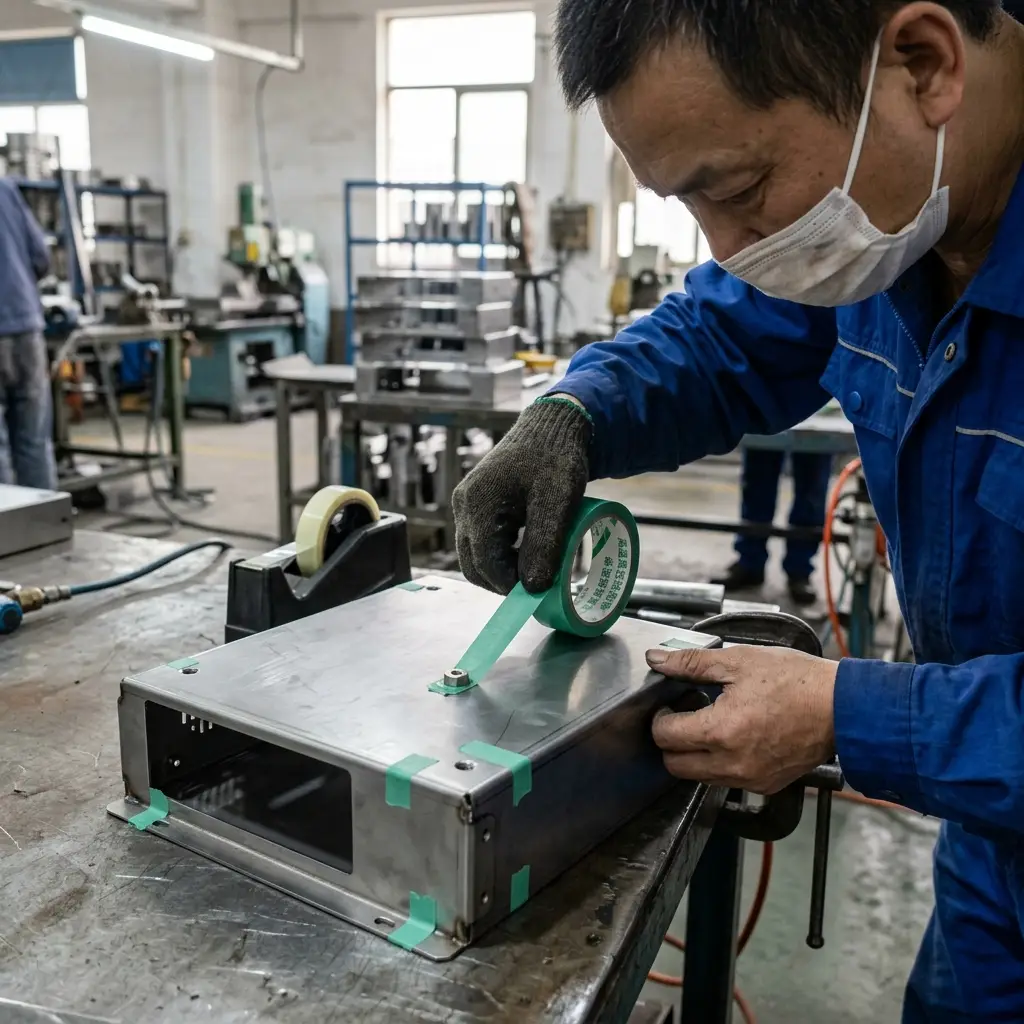
Gate 2: Precision Engineering Masking
Masking must be treated as an explicit engineering requirement, not an afterthought. Quality operators use custom-molded high-temperature silicone tapered plugs (rated to 260° C) for blind threaded holes and through-holes, caps for threaded studs, and die-cut polyimide (Kapton) tape disks to protect bare metal electrical grounding zones and EMI shielding contact flanges.
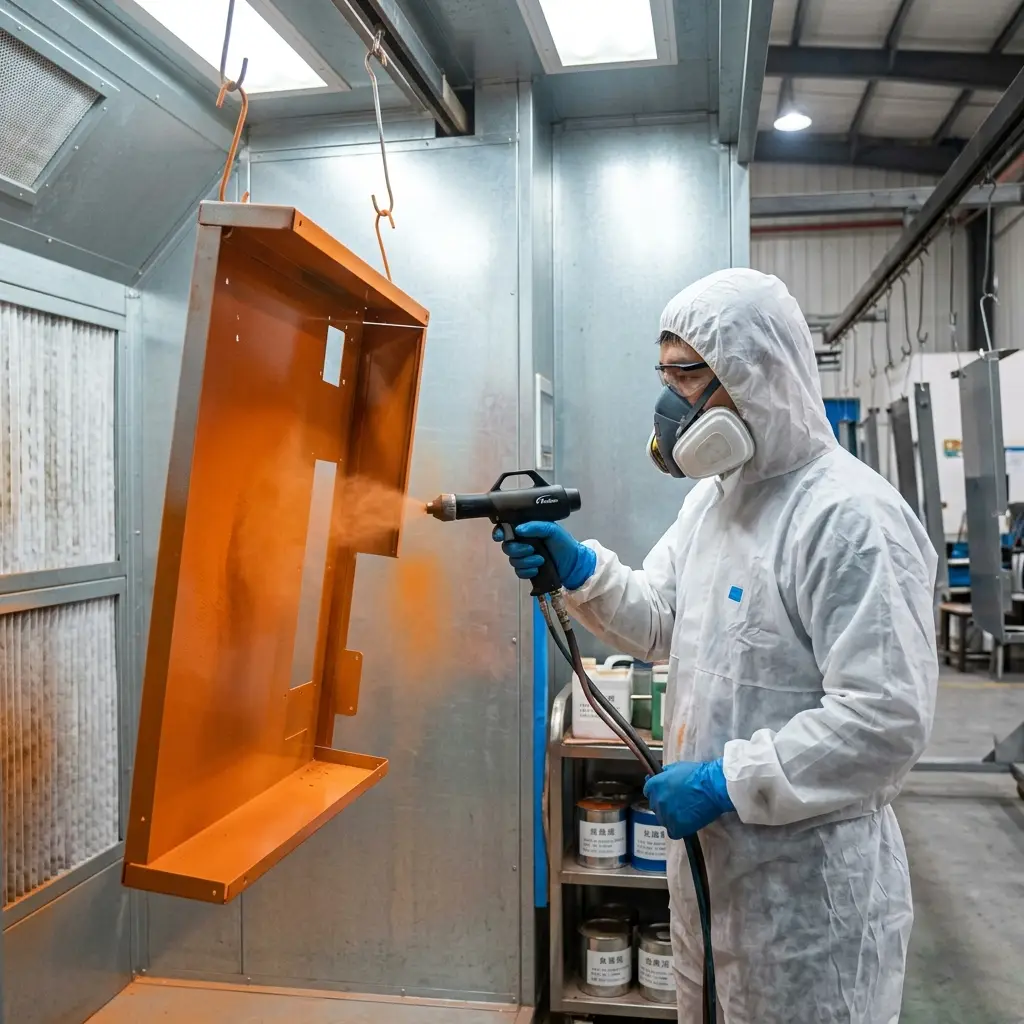
Gate 3: Electrostatic Application & Curing Control
Automated reciprocating spray guns deliver an even cloud of negatively charged dry powder onto grounded metal parts. Operators monitor Faraday cage effects in deep enclosure corners, applying manual touch-up where electrostatic field lines can cause thin coverage. Parts then travel through an indirect gas-fired convection oven maintained at 200° C metal temperature for 10 to 15 minutes, allowing powder thermosetting polymers to melt, flow, and cross-link completely.
Gate 4: Metrology Testing (Thickness, Adhesion, Gloss)
After cooling, quality technicians execute comprehensive metrology audits:
- Dry Film Thickness (DFT): Measured via magnetic induction/eddy current gauges per ASTM D7091 (Target: 60–90 μm).
- Cross-Hatch Adhesion: Tested per ASTM D3359 Method B (lattice grid cross-cut taped and pulled; zero flake detachment achieves 5B rating).
- Gloss & Color Match: Checked under standardized D65 lighting with digital spectrophotometers (ΔE ≤ 1.0 against master RAL color chips).

Gate 5: Post-Coating Trial Assembly Verification
The ultimate test of powder coating quality is physical fitment. Even a uniform 80 μm coating adds 0.16 mm to overall panel thickness. Technicians assemble sample enclosures with mating doors, slide rails, and latches, verifying that door gaps maintain uniform 1.5–2.0 mm clearances, hinges swing freely through 120°, and screws thread into PEM nuts without binding.
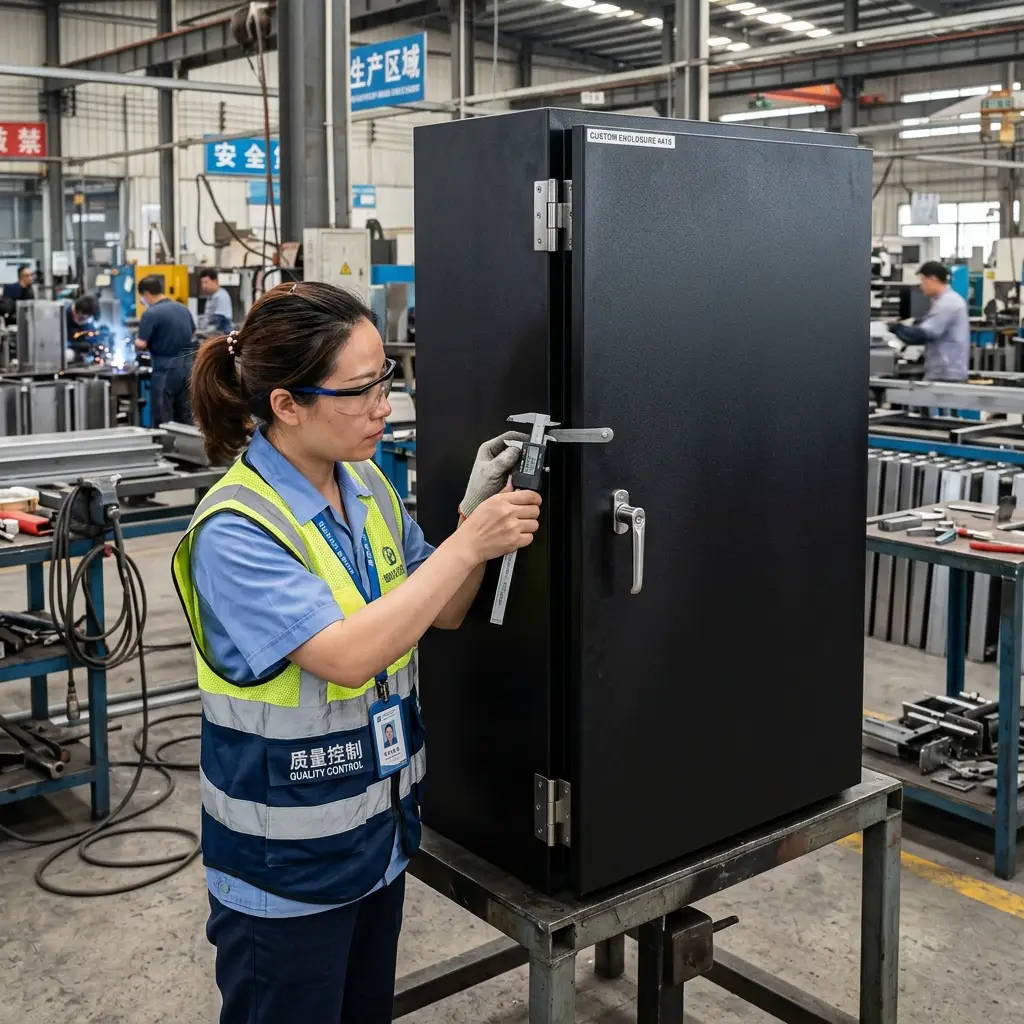
Powder Coating Inspection Standards & Acceptance Criteria
The quality control matrix below defines test methods, target specifications, and non-conformance action limits:
| Inspection Dimension | Testing Standard | Acceptable Target Value | Rejection Action Limit | Inspection Frequency |
|---|---|---|---|---|
| Dry Film Thickness (DFT) | ASTM D7091 / ISO 2808 | 60 – 100 μm | < 50 μm (thin) or > 120 μm (orange peel) | 5 points per panel, 100% first article |
| Cross-Hatch Adhesion | ASTM D3359 Method B | Class 4B / 5B (0% flaking) | ≤ Class 3B (> 5% paint detachment) | 1 coupon per shift curing cycle |
| Pencil Hardness | ASTM D3363 | ≥ 2H scratch resistance | < H (under-cured polymer matrix) | 1 test coupon per production batch |
| Salt Spray Resistance | ASTM B117 (5% NaCl) | 500 – 1000 hours with creep < 1 mm | Blistering or rust creep > 2.0 mm | Quarterly validation audit |
| Color & Gloss Consistency | ASTM D523 (60° glossmeter) | ±5 gloss units; ΔE ≤ 1.0 | Visible color shift under D65 illuminant | Every batch setup changeover |
Partner with MSTFAB for Precision Powder Coated Sheet Metal
MSTFAB operates an automated conveyorized powder coating line paired with rigorous masking engineering and CMM metrology testing. From medical consoles to industrial outdoor electrical cabinets, we guarantee uniform film thickness, robust cross-hatch adhesion, and flawless trial assembly. Contact our engineering team for a project review.
 WeChat Contact
 WhatsApp Me Directly