
Sheet Metal Grinding and Polishing Service
Sheet metal fabrication doesn’t end when the laser stops cutting or the welder finishes the seam. In reality, a fabricated part is often covered in sharp burrs, weld spatter, and rough edges. If you skip proper surface finishing, your assembly team will have to deal with cut cables, poor paint adhesion, and safety risks. Our sheet metal grinding and polishing service bridges the gap between raw fabrication and final cosmetic perfection, ensuring your enclosures, panels, and welded frames are smooth, safe, and ready for assembly.
Grinding and polishing are critical when working with stainless steel. Learn how we manage weld seam blending as an SS304 sheet metal fabrication supplier.
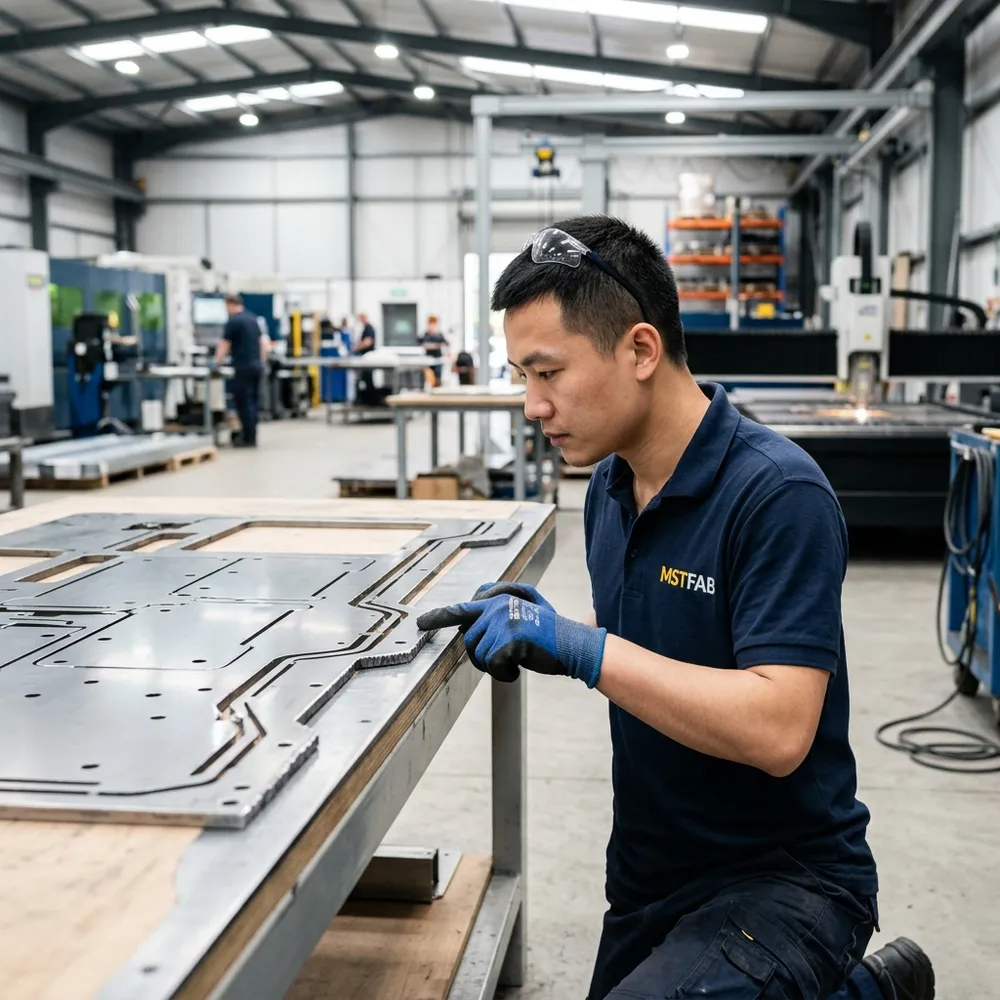
1. Deburring and Edge Smoothing
Laser cutting and punching inevitably leave micro-burrs along the part’s profile. For internal brackets, this might just be an annoyance. But for cable entry glands, enclosure doors, and machine guards, a sharp edge is an active hazard. Sharp edges also cause a problem known as “edge pull” during powder coating, where the paint thins out over the sharp corner, leading to premature rust.
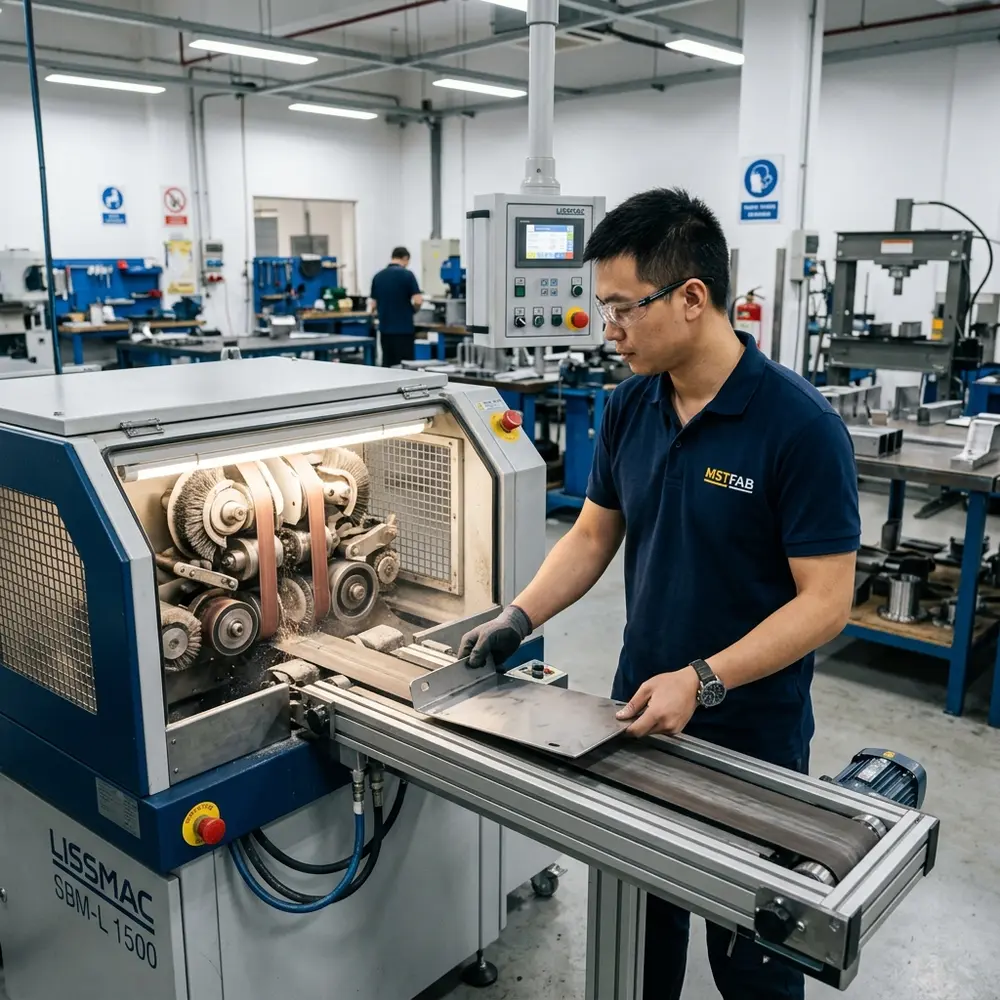
We use automated edge-rounding and manual deburring tools to smooth out cut profiles. This ensures your parts are safe to handle, won’t strip electrical wires, and hold a consistent, durable powder coat layer.
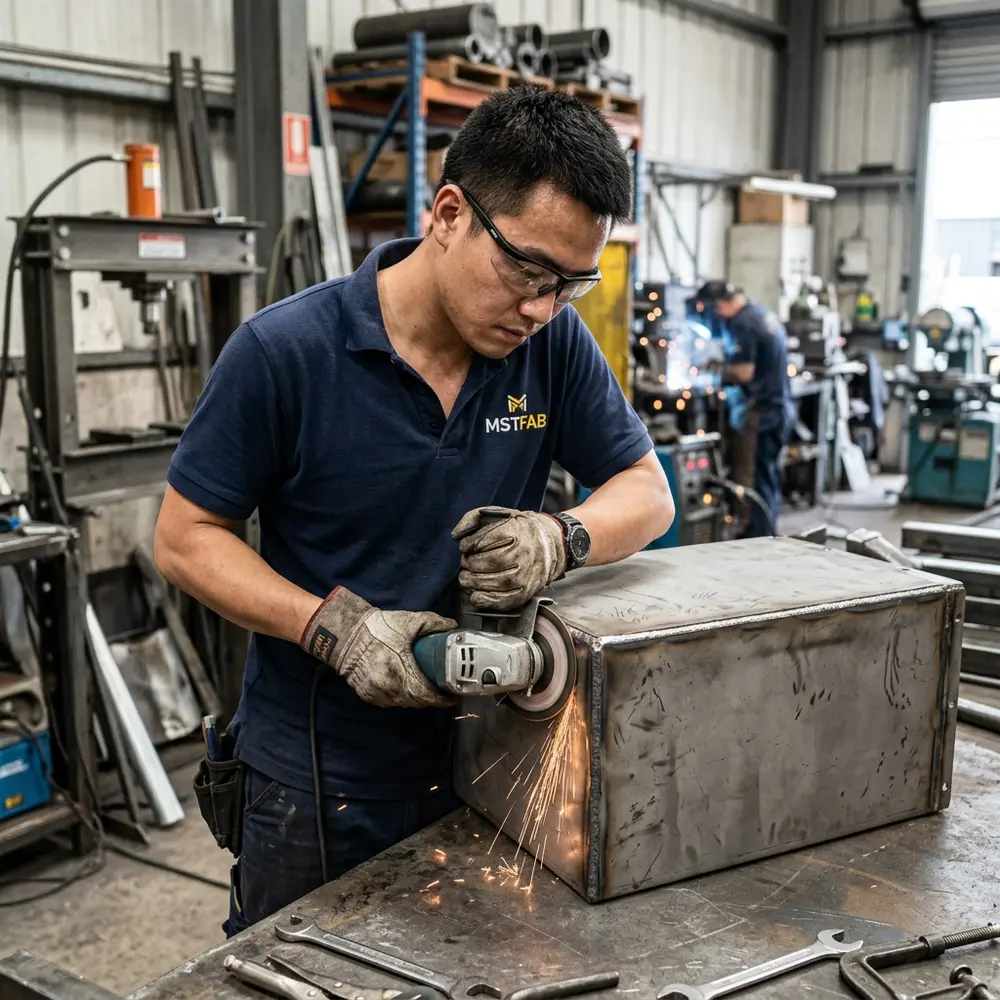
2. Weld Grinding: Balancing Strength and Aesthetics
When two pieces of metal are welded together, the joint is rarely flat. For visible exterior seams on electrical cabinets or medical equipment housings, the weld bead must be ground flush. However, weld grinding requires skill. Grinding too aggressively will thin out the base material and destroy the structural integrity of the joint.
Our technicians are trained to blend weld seams and remove spatter without hollowing out the structural steel. We leave the metal flat and level, preparing it for a seamless cosmetic finish.
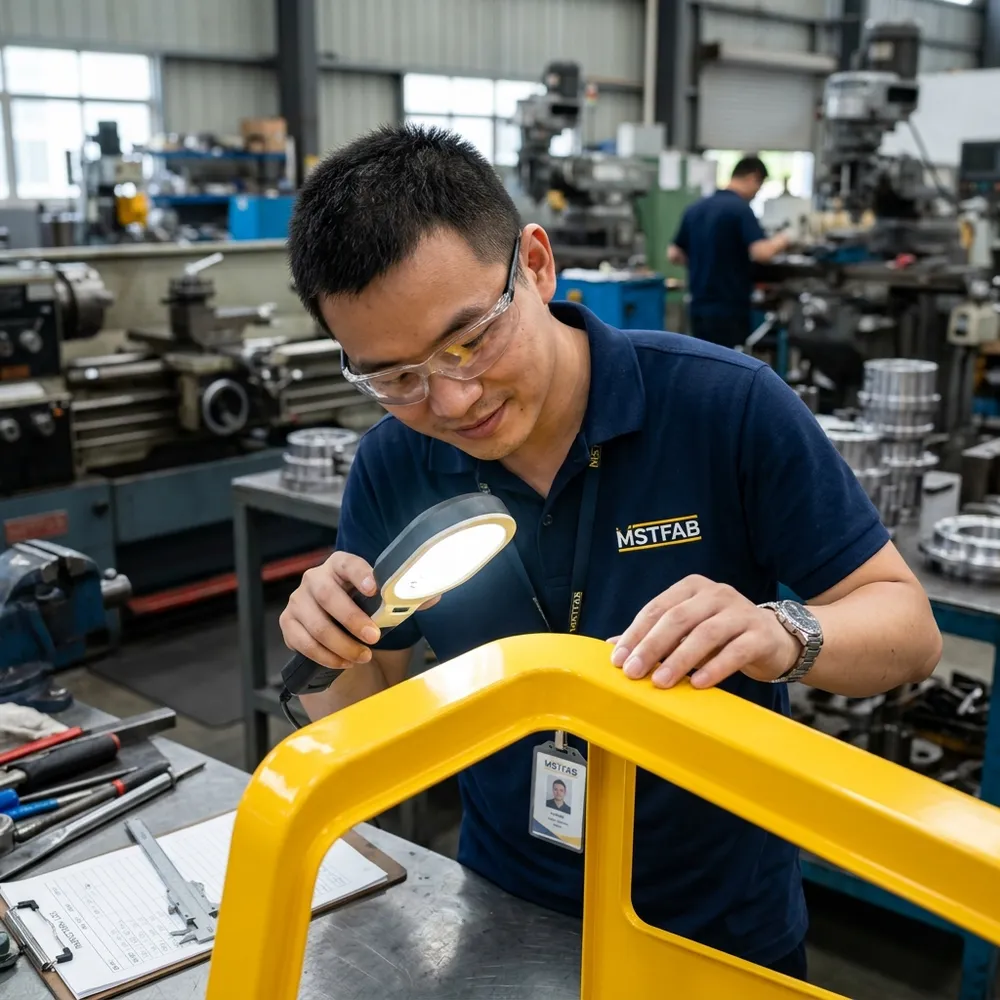
3. Pre-Coating Surface Preparation
Powder coating can look beautiful, but it is terrible at hiding secrets. If a surface is covered in deep grinder gouges or uneven sanding marks, those defects will “telegraph” straight through the paint. We perform a secondary surface leveling and conditioning step on all ground areas to ensure the metal is perfectly smooth before it enters the spray booth.
4. Trust Comparison: Standard Finishing Shop vs. MSTFAB Standards
| Evaluation Metric | Traditional Metal Finishing Shop | MSTFAB Grinding & Polishing Standard |
|---|---|---|
| Edge Deburring | Ships parts with sharp laser-cut burrs that cut into cables and peel coating. | Performs mechanical deburring and edge smoothing on all exposed profiles and holes. |
| Weld Grinding Control | Grinds weld seams aggressively, making the joint look clean but structurally weak. | Removes weld spatter and high spots without thinning the base structural material. |
| Pre-Coating Prep | Sprays powder coating directly over rough grinding marks and uneven seams. | Inspects and levels ground surfaces specifically to prevent ‘telegraphing’ under thin coats. |
| Brushing Consistency | Brushing direction varies between parts; panels look mismatched during assembly. | Controls grain direction and applies consistent burnishing across matching components. |
| Thread Protection | Grinds over or paints over internal threads and grounding contact pads. | Masks off critical grounding points and protects internal threads with silicone plugs. |
| Polished Packaging | Packages polished parts loosely in cardboard; surfaces arrive scratched by friction. | Applies protective PE film to visible faces and uses custom foam layers in export boxes. |
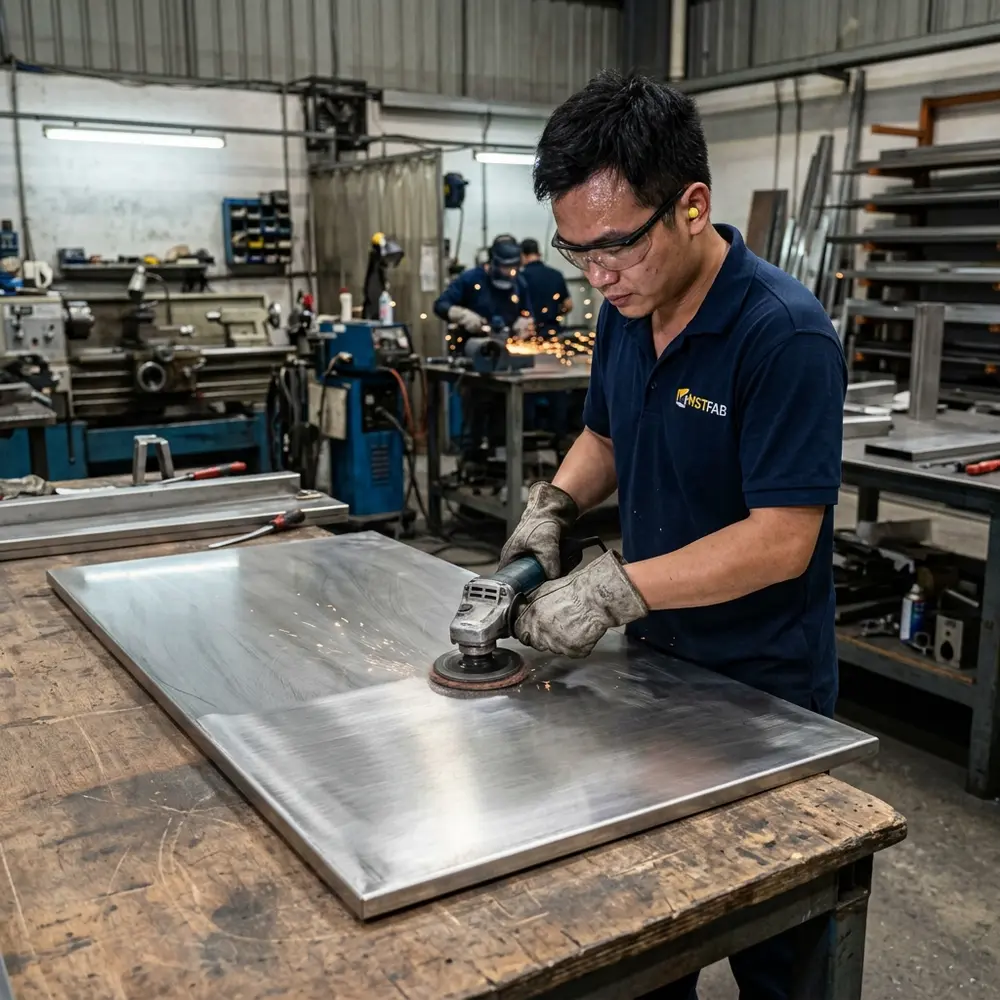
5. Brushed and Polished Stainless Steel
For high-end visible components like medical panels, food-grade equipment covers, and premium display housings, stainless steel is often left unpainted. Instead, it requires a brushed or polished finish.
Our grinding and sanding lines support high-end aesthetics. Read how we operate as a brushed stainless sheet metal panels manufacturer.
For stainless steel parts requiring integrated fabrication with brushing and polishing, learn more about our stainless steel metal parts fabrication capabilities.
Consistency is the biggest challenge here. If a front panel is brushed vertically, and the side door is brushed horizontally, the final assembly will look terrible. We control the grain direction and use specialized burnishing tools to guarantee a uniform, premium appearance across all your stainless steel components.
6. Export Packaging for Finished Parts
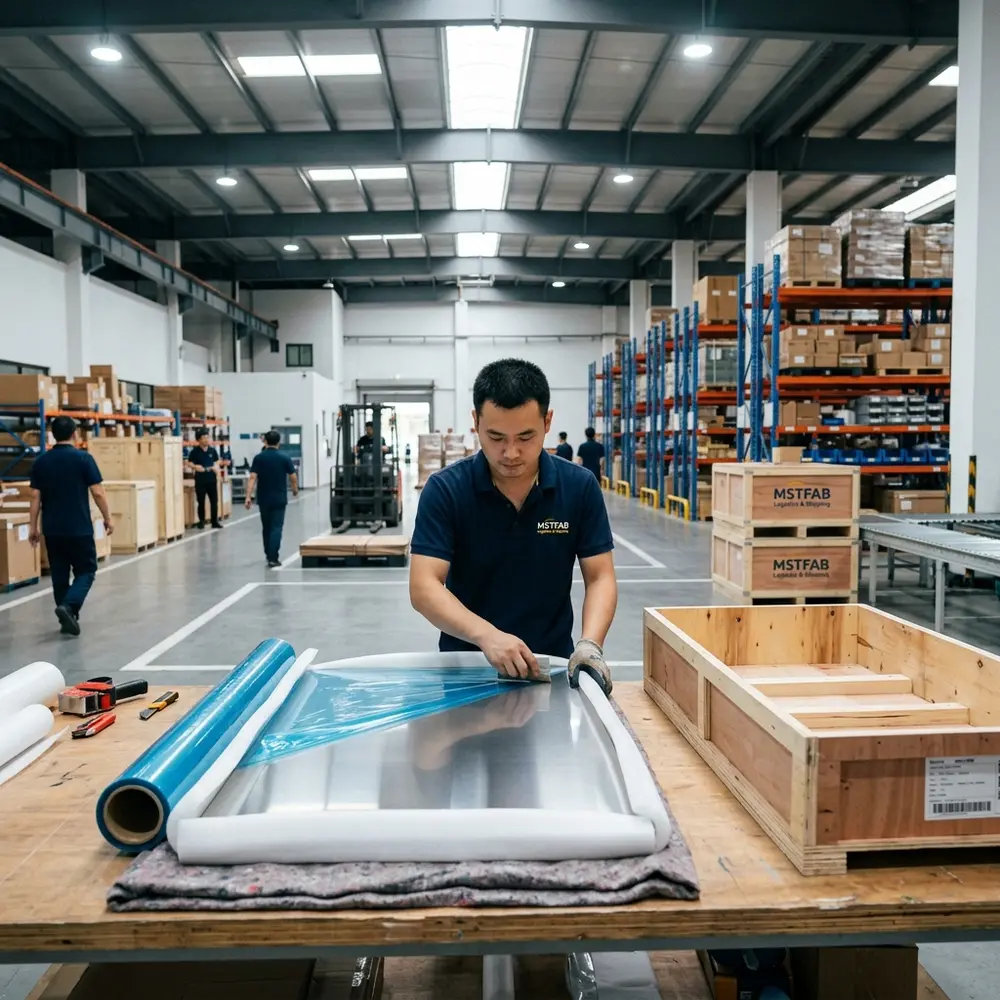
A perfectly polished stainless steel panel is worthless if it gets scratched by a forklift or rubs against another part inside a cardboard box. Finishing isn’t just about making the part look good; it’s about making sure it stays looking good until it reaches your assembly line.
We apply protective PE film directly to all highly polished and brushed visible surfaces. Then, we use custom foam separators and reinforced plywood export crates to completely eliminate friction and impact damage during international freight.
Frequently Asked Questions
Q: What files do you need to quote grinding and polishing?
A: We need your 3D STEP/STP files and 2D PDF drawings. Crucially, the PDF must call out which surfaces are visible, the required brushing direction (if applicable), and any specific cosmetic standards.
Q: Can you do mirror polishing?
A: High-grade mirror polishing depends heavily on the base material and geometry. It is a highly specialized process. Please provide sample photos and your acceptance criteria for a customized feasibility review.
Q: Does deburring affect part dimensions?
A: No. Proper edge-rounding removes the micro-burr and creates a safe radius without altering the functional profile or hole diameters specified in your drawing.
Q: How do you protect grounding points during finishing?
A: We use high-temperature masking tape or silicone plugs to ensure that electrical grounding pads remain bare metal, providing true continuity even after the rest of the part is powder coated.
Submit your 3D STEP files and PDF drawings with clear cosmetic requirements for a practical review and quotation.
MSTFAB provides TIG and MIG sheet metal welding services for structural assemblies, cabinets, frames and OEM metal components.
 WeChat Contact
 WhatsApp Me Directly