
Brushed Stainless Sheet Metal Panels Manufacturer
A brushed stainless sheet metal panels manufacturer produces custom stainless steel panels with a controlled brushed surface finish for industrial equipment, electrical cabinets, control boxes, medical device housings, machinery covers, and OEM products. Brushed stainless steel panels are chosen when buyers need both functional durability and a premium visible appearance.
When looking for custom materials, shapes, and complex cutout options, read about our capabilities as a leading custom sheet metal panel manufacturer.
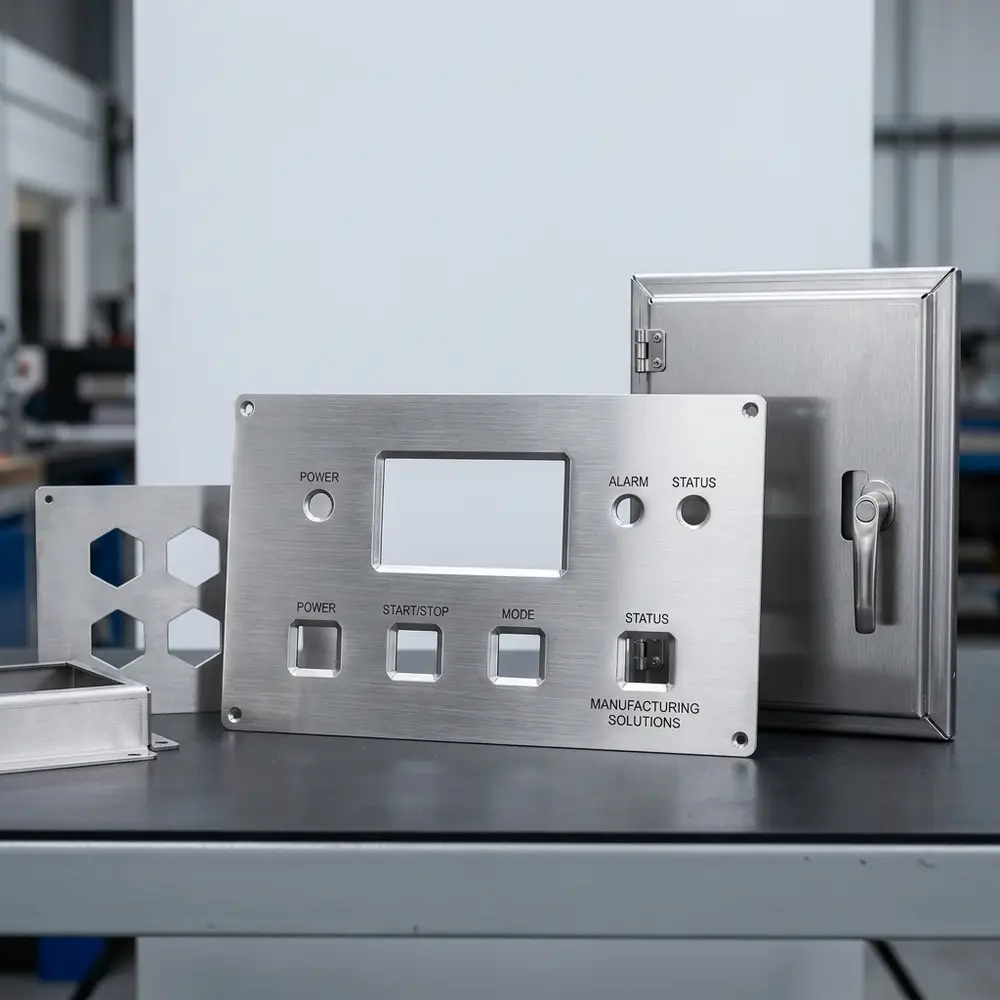
Issues like surface scratches, mismatched brushing direction, heavy burrs, weld heat discoloration, uneven polishing repair marks, and protective film damage can ruin a cosmetic part. CAD has no scratches, but real manufacturing does. That is why brushed stainless sheet metal panels require strict process controls and practical Design for Manufacturability (DFM) review.
MSTFAB manufactures custom brushed stainless sheet metal panels from customer STEP/STP files, PDF drawings, and DXF/DWG files. We support custom stainless front panels, equipment panels, cabinet doors, access covers, control interfaces, and electrical boxes.
Why Buyers Choose Brushed Stainless Panels
- Clean Industrial Appearance: The linear brushed texture gives equipment a modern, professional, and high-end cosmetic finish suitable for visible front plates.
- Corrosion Resistance: Stainless steel provides exceptional protection against rust, moisture, and chemical washes, outperforming carbon steel and aluminum in aggressive environments.
- Defect Camouflage: A brushed surface masks fingerprints, light handling marks, and minor dust scratches much better than mirror-polished surfaces.
- OEM Customization: Panels are built to order with precise laser-cut openings, button arrays, display slots, PEM hardware, and bent mounting flanges.
304 vs. 316 Stainless Steel for Brushed Panels
Selecting the correct stainless steel alloy is the first step. SS304 is the standard grade for general applications, while SS316 offers superior protection against pitting in salt air or chemical environments.
| Material Grade | Common Applications | Corrosion Environment suitability | Relative Material Cost |
|---|---|---|---|
| SS304 Stainless Steel | Control box panels, general machine covers, cabinet doors, medical housings, indoor equipment faceplates. | Excellent for indoor and standard outdoor environments; prone to corrosion in high-salinity or chlorine zones. | Standard (Baseline) |
| SS316 Stainless Steel | Marine equipment panels, coastal telecom doors, chemical washdown covers, high-humidity enclosures. | Superior; contains molybdenum to prevent pitting in salty coastal air, acid washdowns, or chlorinated water. | Higher (typically 20% to 40% premium) |
Using SS316 when SS304 is sufficient unnecessarily inflates project costs. Conversely, using SS304 where SS316 is required creates a long-term corrosion liability. Clear environmental and material specifications on the engineering drawing prevent these costly errors.
Laser Cutting Brushed Panels
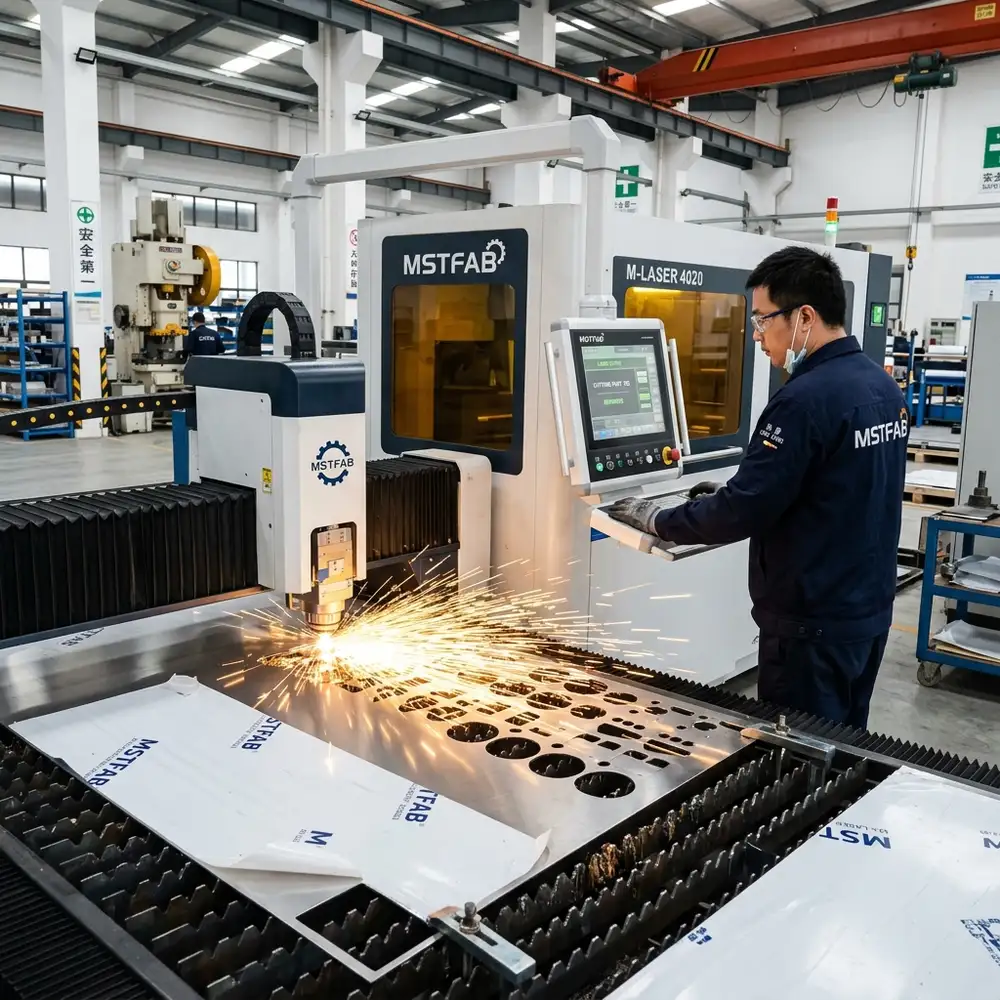
Laser cutting forms the panel outline and cuts holes for buttons, screens, and connectors. Because brushed surfaces are highly sensitive to scratches, MSTFAB processes sheets coated with high-quality laser-guard white PE protective film. The laser cuts through the film and metal simultaneously, ensuring the brushed surface is never exposed to tooling or slag contact.
CNC Bending Brushed Stainless Panels
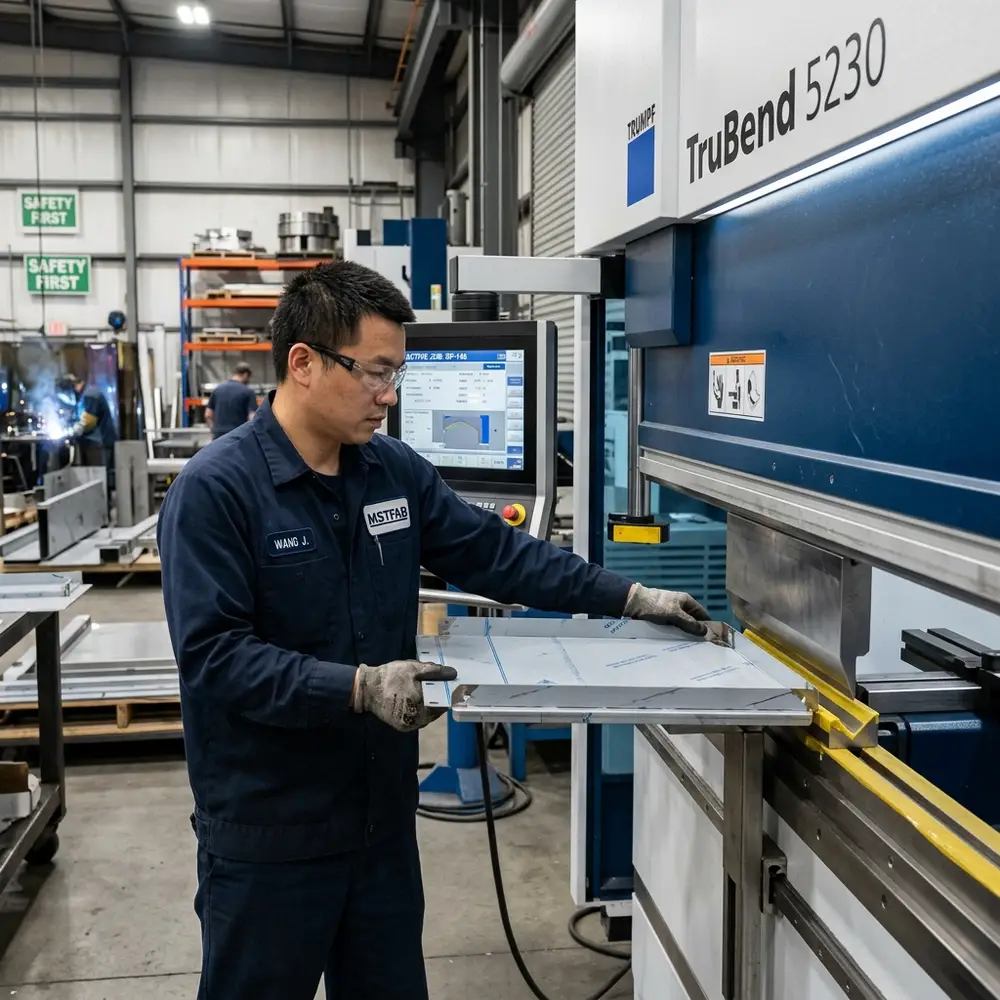
Flat stainless panels often require CNC bending to form flanges, return lips, or cabinet doors. Because stainless steel is stiff and has high tensile strength, it experiences significant springback during bending. Additionally, metal-to-metal contact with the bending die can leave unsightly scoring marks on the brushed surface. To prevent this, MSTFAB uses specialized polyurethane bending films and protective tape over the press brake dies, ensuring a clean, mark-free bend.
Controlling Brushing Grain Direction
For visible multi-panel assemblies, the grain direction must match. If one panel has vertical brushing while an adjacent panel is brushed horizontally, the finished assembly will look mismatched and unprofessional. MSTFAB controls brushing direction during cutting and shearing, aligning the metal grain with the panel length or cabinet height as specified on the customer’s drawings. If the finish requires localized touch-ups after welding or grinding, technicians use hand-held linear burnishing machines to restore the grain.
Deburring and Hand-Safe Edge Finishing
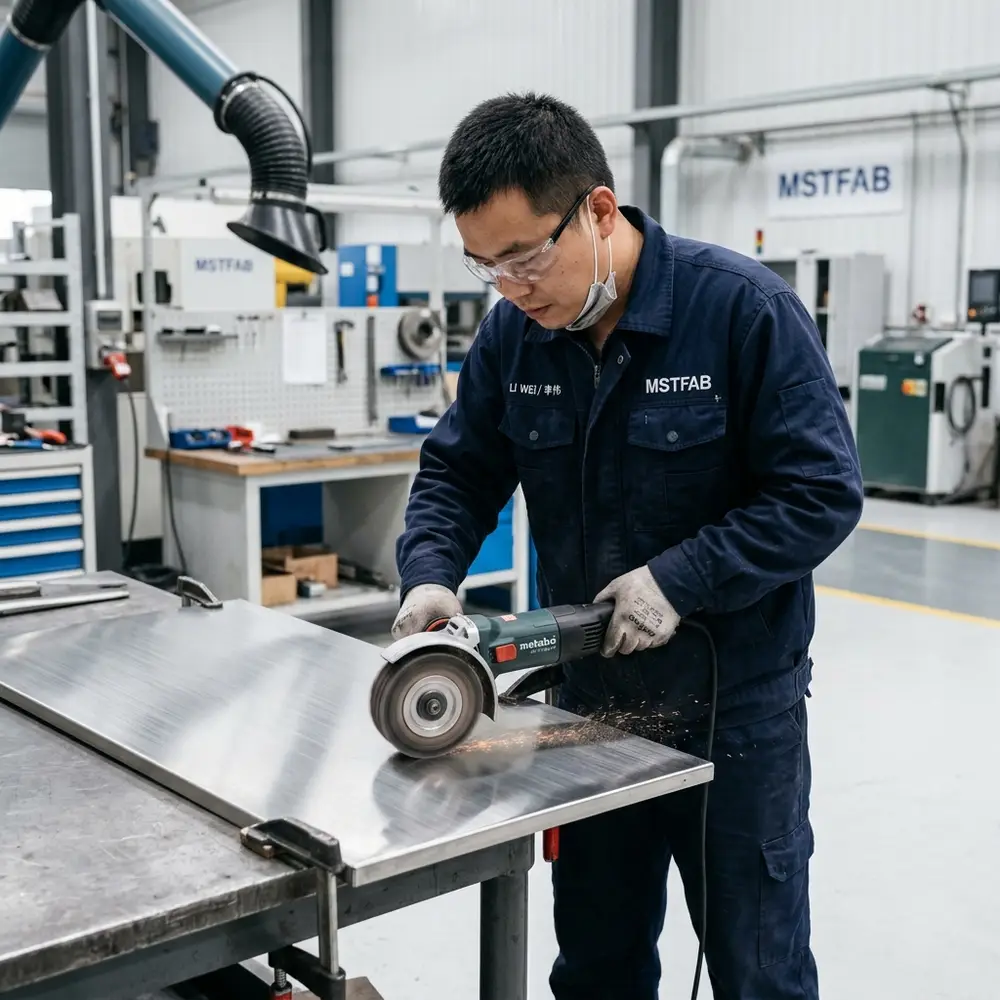
Laser cutting stainless steel can leave sharp dross and micro-burrs along the cut edges. For visible faceplates or doors that operators touch, these sharp edges pose a safety hazard. Standard deburring removes loose slag, but cosmetic panels require edge smoothing, corner softening, and hand-safe deburring. MSTFAB deburrs panel profiles, button cutouts, and cable entries to ensure they are safe to handle before final packaging.
PEM Nuts, Studs, and Threaded Hardware
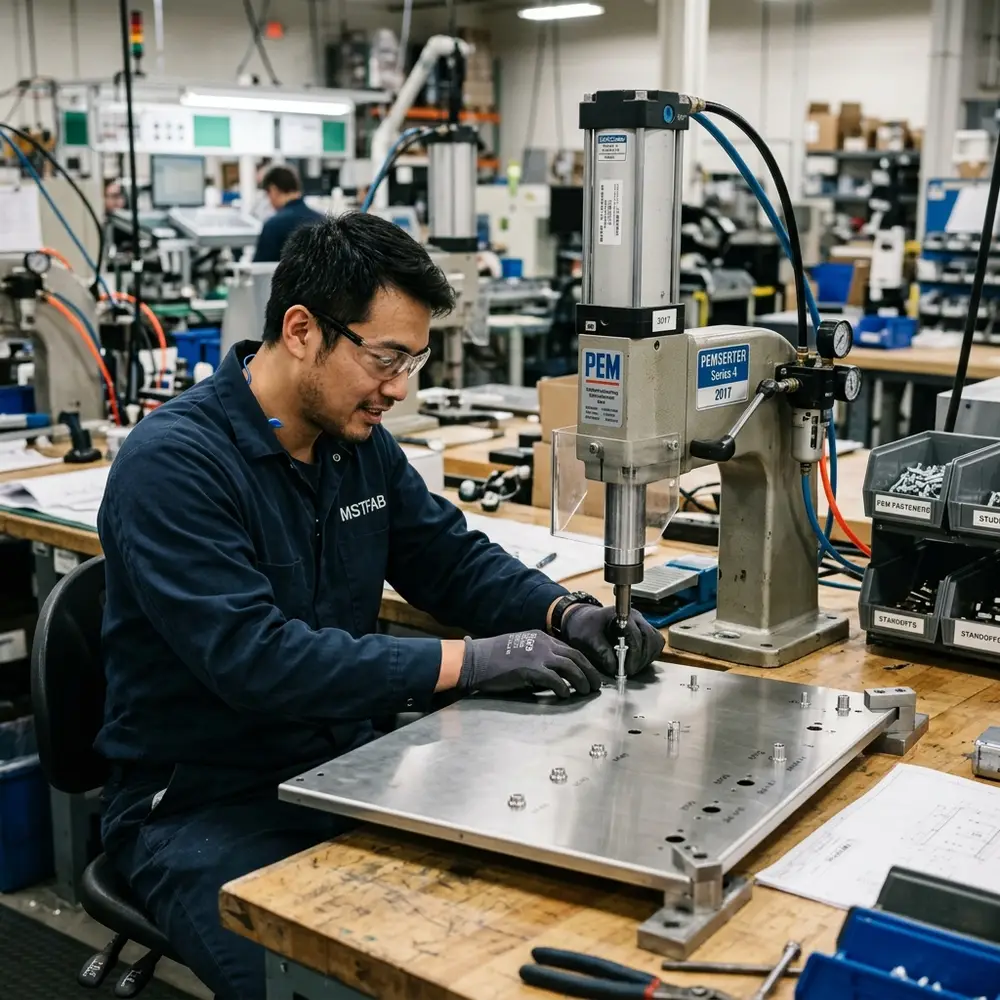
Brushed stainless panels often feature self-clinching studs (PEM hardware) or threaded inserts on the back side to mount PCBs, brackets, or components. Installing clinching hardware in stainless steel requires careful pressure control and correct hardness selection. Since stainless steel is harder than mild steel or aluminum, standard carbon steel PEM hardware will not clinch properly and may spin. MSTFAB uses high-hardness stainless steel clinching studs (such as PEM FH4 or FHP series) to guarantee a secure, spin-free installation.
Trust Comparison: Standard Sheet Metal Shop vs. MSTFAB Panels
| Feature | Standard Sheet Metal Shop | MSTFAB Panel Manufacturing |
|---|---|---|
| Brushing Grain Alignment | Ignores sheet orientation; panels in the same batch are cut in random directions, resulting in mismatched grains. | Controls sheet nesting and cutting layout to ensure all panels share the exact same brushing direction. |
| Bending Mark Protection | Bends sheets directly on raw steel dies; leaves deep scoring marks and tool scars along every bend line. | Uses polyurethane protection film over press brake dies to prevent any metal-to-metal tooling marks. |
| Scratch Control | Slides raw stainless panels across steel worktables, creating deep scratches on the visible face. | Maintains PE protective film throughout laser cutting, bending, and hardware insertion processes. | Leaves heat tint and weld scale on corners; covers discoloration with basic chemical pastes, leaving stains. | Grinds and electrochemically cleans weld seams, followed by brushing restoration to blend corners. |
| Hardware Integration | Uses incorrect clinching studs that fail to bite into hard stainless; hardware spins out during assembly. | Selects high-hardness stainless clinching studs (e.g., FH4/FHP) and monitors insertion tonnage. |
| Edge Safety | Performs basic deburring; cutouts and cable entry slots remain sharp enough to cut wires or fingers. | Applies hand-safe deburring to all outer profiles, button holes, display cutouts, and interior slots. |
| Export Packaging | Stacks panels together with minimal wrap; panels rub against each other during transit, ruining the brushed finish. | Wraps each panel in individual foam sleeves and packs them tightly inside heavy, structured wooden crates. |
Quality Inspection and Surface Verification
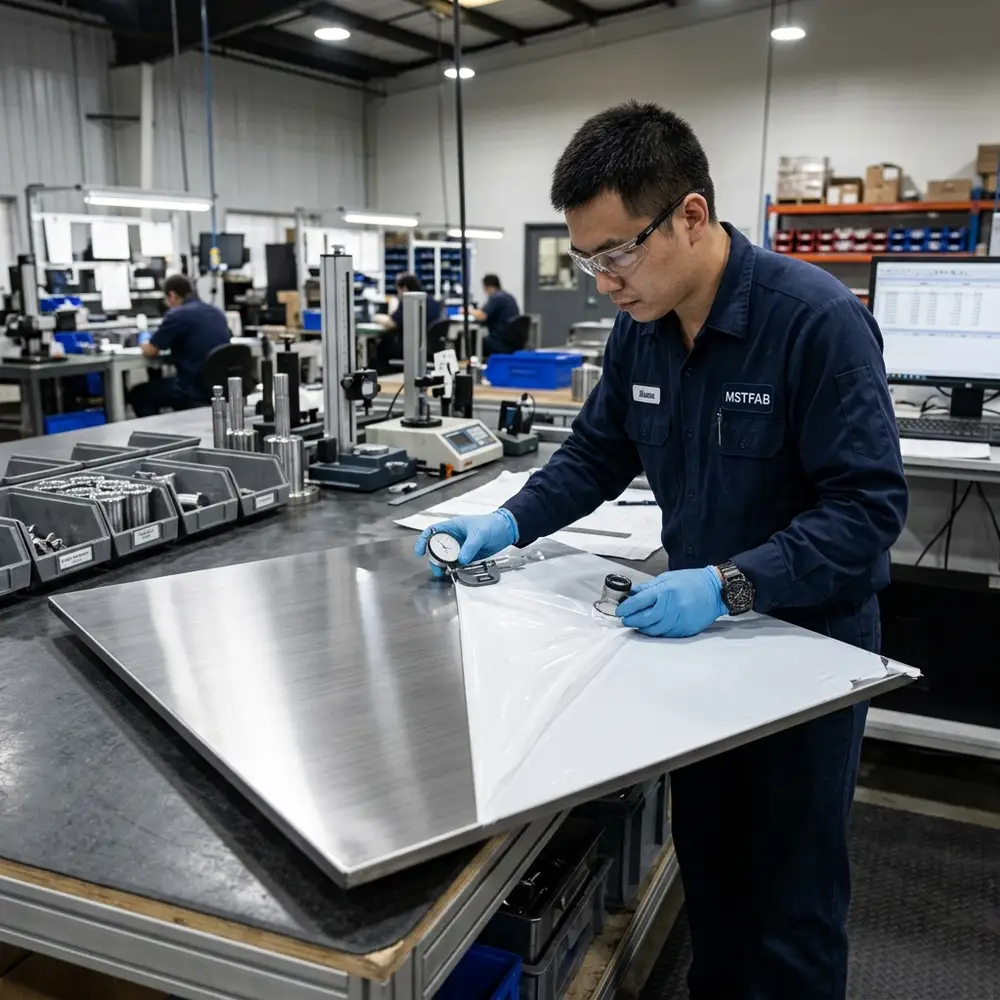
Quality inspection ensures both dimensional accuracy and surface cosmetic quality. Inspectors verify flatness, hole diameter tolerances, flange angles, and stud torque strength. For the surface finish, the panel is inspected under controlled lighting to check for grain uniformity, scratch defects, and weld discoloration. The protective film is partially peeled back on sample units to verify the brushed grain meets the approved cosmetic standard before final packing.
Prototype and Batch Repeatability
MSTFAB supports prototype and batch production. Prototypes allow the customer to check the cosmetic finish, verify button hole tolerances, and confirm the clinching hardware strength. Once approved, the manufacturing route is locked. The same laser cut settings, press brake programs, grain brushing direction, and packaging standards are applied to batch production to ensure the 500th panel matches the approved sample.
Request a Brushed Stainless Panel Quote
Send MSTFAB your drawings and specifications. We will review sheet thickness, bend parameters, grain direction, visible surfaces, hardware requirements, and packaging to prepare a practical fabrication quote.
Upload Stainless Drawings →Frequently Asked Questions
What is a brushed stainless sheet metal panel?
A brushed stainless sheet metal panel is a stainless steel panel with a directional, linear brushed surface finish. It is commonly used for visible equipment surfaces, cabinet doors, front plates, and control panels. Learn more about our brushed stainless steel sheet metal fabrication capabilities.
What stainless steel grades are used for brushed panels?
Common grades include SS304 and SS316. SS304 is used for general indoor and standard outdoor applications, while SS316 is selected for marine, coastal, chemical, or washdown environments. Learn more about SS304 sheet metal fabrication supplier services.
Why is brushing direction important?
Brushing direction affects the cosmetic look. If adjacent panels on an equipment cabinet have different grain directions, the product will look inconsistent. Brushing direction must be controlled during nesting and cutting.
Can brushed stainless panels be laser cut?
Yes. Brushed stainless panels are laser cut through a protective PE film to create precise outer profiles, button holes, display windows, and ventilation slots. Learn more about CNC laser cut sheet metal parts manufacturer services.
Can brushed stainless panels be bent?
Yes. They can be CNC bent on press brakes. MSTFAB uses protective polyurethane film over the dies to eliminate tooling marks on the brushed face. Learn more about CNC press brake metal parts fabrication.
Can brushed stainless panels use PEM nuts or rivet nuts?
Yes. Brushed stainless panels can support self-clinching PEM nuts, studs, standoffs, and rivet nuts. Because stainless steel is hard, specialized high-hardness studs must be used. Learn more about PEM hardware installation and threaded inserts.
How do you prevent scratches during manufacturing?
We use double-sided PE protective film on the raw stainless sheets, apply protective die tape during bending, and handle panels on clean, padded workstations. Learn more about our sheet metal grinding and polishing service.
Can brushed stainless panels be welded?
Yes, but welding creates heat discoloration (heat tint) and weld seams. The weld area must be ground flat, chemically cleaned, and re-brushed to restore the linear grain finish. Learn more about custom sheet metal cutting, bending, and welding.
What files are needed for a brushed stainless panel quote?
The best RFQ includes STEP or STP files for 3D geometry, PDF drawings for tolerances, grain direction, and hardware specifications, and DXF files for laser cutting. Learn more about sheet metal fabrication drawing requirements.
Does MSTFAB provide final product certification?
MSTFAB focuses on physical sheet metal fabrication according to customer drawings. Complete product certification, electrical safety, NEMA testing, or cleanroom validation must be conducted by the customer or certified third parties.
MSTFAB provides CNC press brake bending services for precision sheet metal parts, enclosures, brackets and OEM assemblies.
 WeChat Contact
 WhatsApp Me Directly