
Powder Coating Options for Custom Sheet Metal Parts: OEM Specification Checklist
When specifying powder coating options for custom sheet metal enclosures, brackets, and panels, OEM engineers should define the resin chemistry (outdoor UV-stable polyester vs. indoor epoxy/hybrid), RAL color and gloss level, surface texture (smooth, fine sand texture, or wrinkle), film thickness range, and thread/grounding masking zones on the 2D drawing.
- Pretreatment & Adhesion: Substrate cleaning and conversion pretreatment matched to cold-rolled steel, galvanized steel, stainless steel, or aluminum.
- Masking & Fit Allowance: Account for 60–120 μm coating build-up on mating door flanges, hinge pins, PEM threads, and bare-metal EMI/grounding pads.
- Coordinated Finishing Scope: Powder coating is coordinated to your approved drawing specification—including with qualified long-term finishing partners where required—and verified during final inspection.
Powder Coated Aluminum Sheet Metal Parts
Powder coated aluminum sheet metal parts are widely used when buyers need lightweight metal components with a durable colored surface finish. Aluminum provides low weight and practical corrosion resistance, while powder coating provides color, finished appearance, and additional surface protection.
Together, they are a strong choice for industrial equipment, electrical enclosures, telecom products, EV charger components, battery cabinet parts, medical housings, machine covers, brackets, and OEM assemblies.
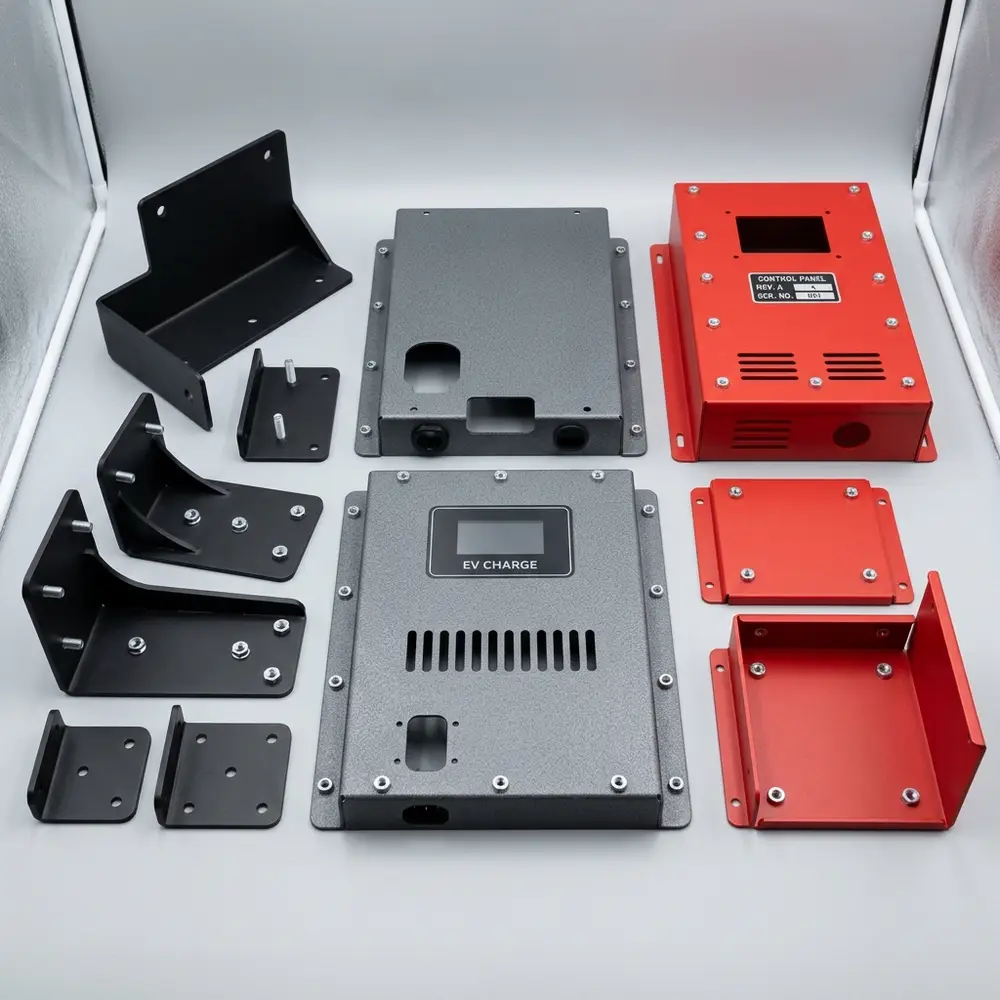
It needs correct aluminum grade selection, bending review, surface cleaning, chemical pretreatment, coating adhesion review, masking, thread protection, grounding protection, inspection, and export packaging. A beautiful coating that peels, chips, or blocks assembly is not a finish; it is a delayed complaint. That is why powder coated aluminum fabrication requires practical engineering review before production.
MSTFAB manufactures custom powder coated aluminum sheet metal parts from customer STEP/STP files, PDF drawings, and DXF/DWG files. We support custom aluminum brackets, mounting plates, panels, covers, enclosures, equipment housings, control boxes, cable entry plates, and ventilation panels.
Why Buyers Choose Powder Coated Aluminum Parts
- Lightweight Design: Aluminum is approximately one-third the weight of steel. This makes it ideal for wall-mounted cabinets, telecom cabinets, EV charger components, medical enclosures, and portable equipment, reducing transport and installation costs.
- Premium Finished Appearance: Powder coating provides a uniform, consistent colored surface. Buyers can specify RAL colors, gloss levels (matte, semi-gloss, high-gloss), and textured finishes to align with their brand identity.
- Corrosion Protection: Aluminum naturally forms a protective oxide layer, but powder coating adds a durable physical barrier that shields the metal from moisture, dust, salt air, and chemical cleaning agents.
- OEM Customization: Parts are custom fabricated to specific dimensions, hole patterns, cutouts, hardware requirements, and assembly clearance tolerances.
Aluminum Grade Selection Before Powder Coating
Selecting the correct aluminum alloy is critical because material properties affect laser cutting, bending, strength, and powder coat adhesion. The two most common alloys are 5052 and 6061 aluminum.
| Feature | 5052 Aluminum | 6061 Aluminum |
|---|---|---|
| Bending & Forming | Excellent bending performance; high ductility prevents cracking on standard bend radii. | Stiff; prone to cracking along bend lines if the bend radius is too tight (requires larger radius). |
| Tensile Strength | Moderate strength (approx. 190-230 MPa); suitable for enclosures, covers, and general brackets. | High strength (approx. 270-310 MPa); ideal for structural plates, mounting frames, and loaded brackets. |
| Machining & Tapping | Gummy; not ideal for extensive machining or tapped threads. | Excellent machinability; ideal for precision machined features and clean tapped threads. |
| Common Sheet Applications | Enclosure bodies, bent doors, curved covers, lightweight brackets, and panels. | Thick mounting plates, structural structural frames, machined mounting blocks, and heavy brackets. |
A drawing that only says “aluminum, powder coated” is incomplete. The buyer should specify the exact grade (e.g., 5052-H32 or 6061-T6) and sheet thickness to ensure correct tool setup and avoid cracking during the CNC press brake operation.
Laser Cutting Aluminum Before Coating
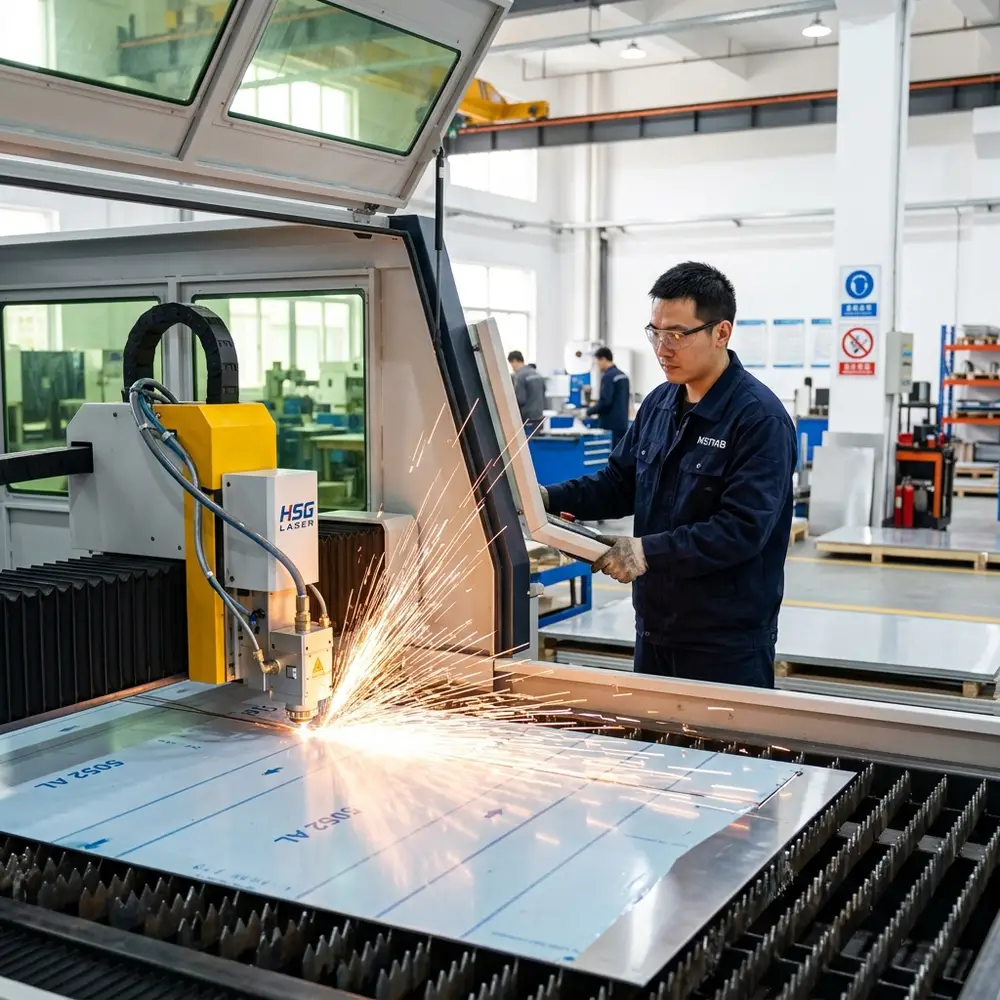
Laser cutting creates the flat blanks, mounting holes, cable entries, and ventilation slots. Because raw aluminum sheets scratch easily during handling, MSTFAB utilizes double-sided PE protective film during laser cutting and bending to safeguard the metal until it is ready for pretreatment.
CNC Bending Aluminum Sheets
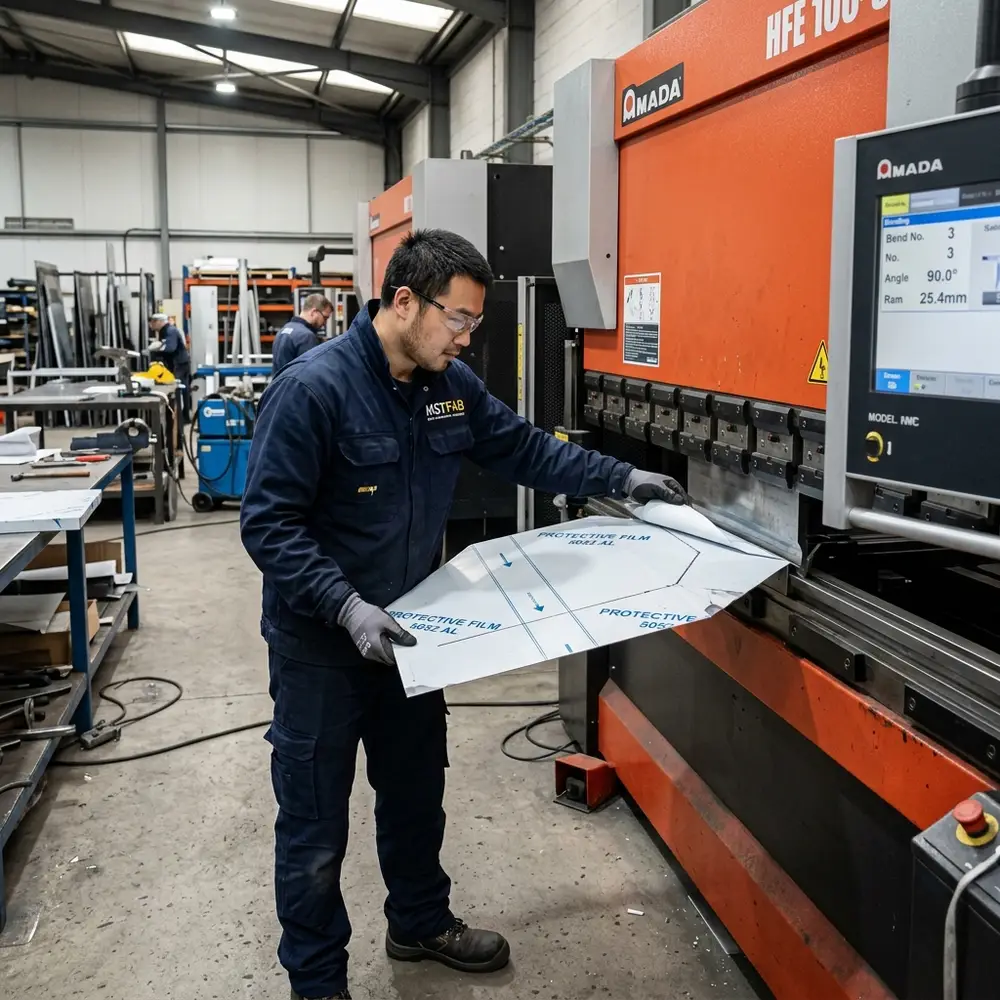
CNC press brakes form flat aluminum blanks into brackets, covers, and enclosures. Because aluminum is softer than steel, tools must be clean to avoid marking the surface, and bend radii must be set correctly. 6061-T6 aluminum requires a larger bend radius (typically 1.5x to 2x sheet thickness) to prevent micro-cracks on the outer bend radius. If cracks develop, the powder coating will not hide them; it will seep into the cracks and eventually flake off. All bending must be completed and inspected before the coating process.
Surface Preparation and Pretreatment
The primary concern with powder coating aluminum is adhesion. Aluminum surfaces can harbor oils, natural oxides, and contaminants. If the powder is sprayed directly onto an unprepared surface, the coating will peel, chip, or bubble under stress or humidity. Surface preparation includes oil removal, acid cleaning, chemical conversion coating (chromate-free pretreatment), and drying. Proper pretreatment creates a micro-rough surface that chemically bonds with the powder particles, ensuring long-term adhesion.
Masking Threads, Grounding Points, and Critical Holes
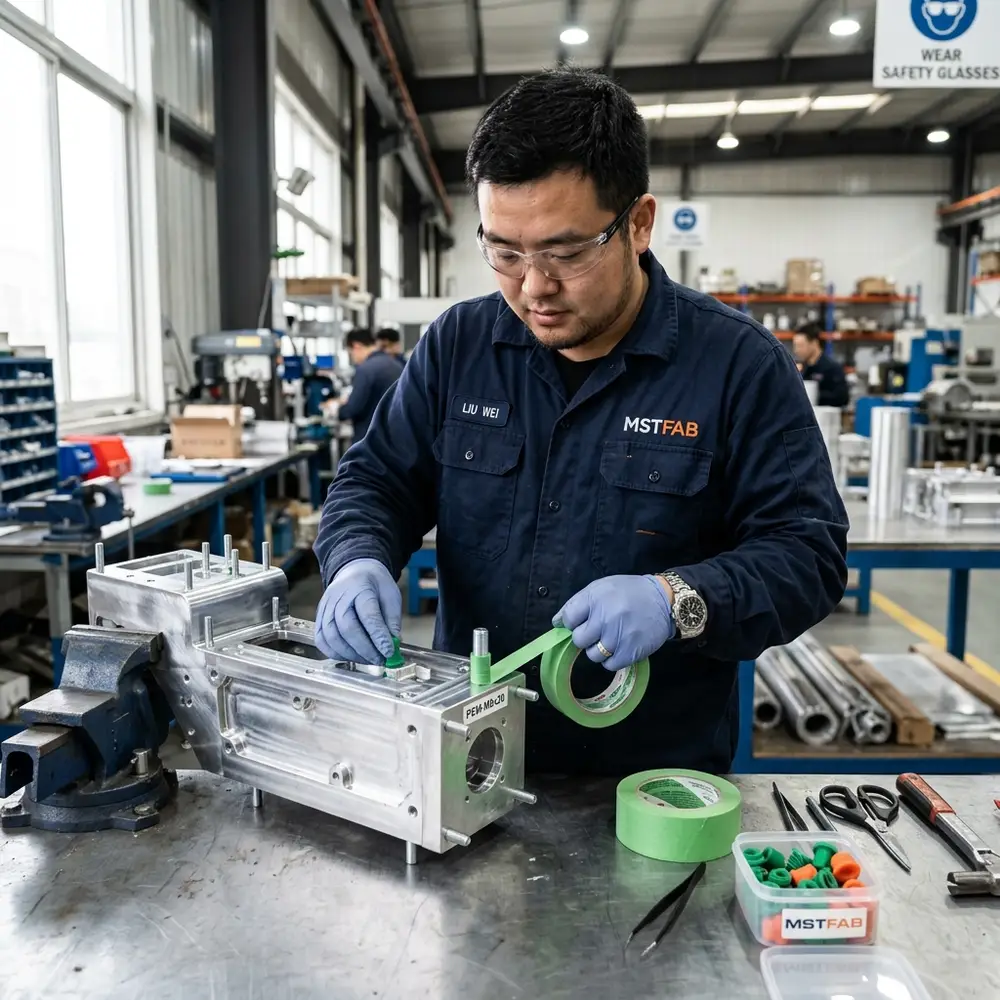
Powder coating adds thickness (typically 60 to 120 microns). If threads, grounding areas, and mating surfaces are not protected, the coating will block screws, prevent doors from sealing, and isolate electrical grounding contact. Grounding points covered with paint are useless decorative features. MSTFAB reviews drawings to apply high-temperature masking tape, silicone plugs, and custom caps to keep critical zones paint-free. Tapped threads, self-clinching studs, and grounding surfaces remain clean and conductive.
Powder Coating Application and Thickness Control
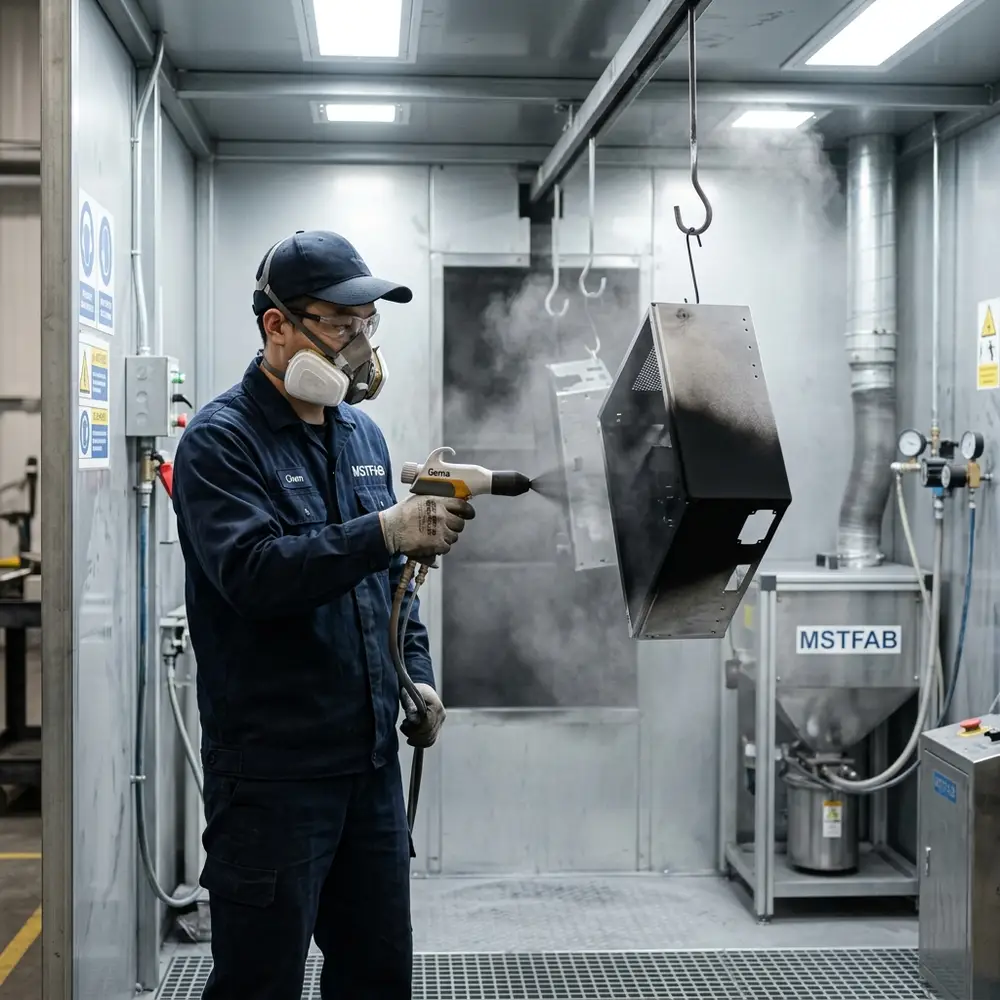
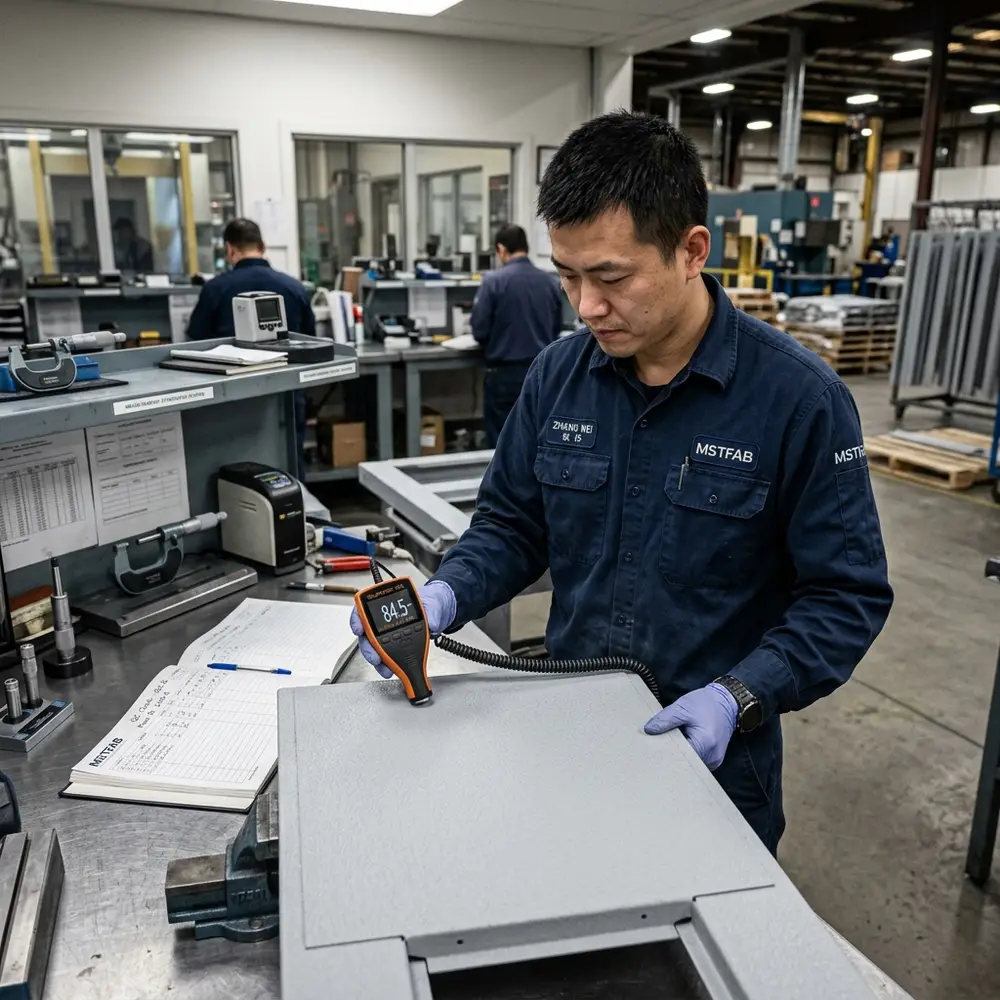
After masking, parts are hung on conveyor racks and grounded. The powder coating is applied using an electrostatic spray gun, charging the powder particles so they attract uniformly to the aluminum part. The parts then enter a baking oven (typically at 180° C to 200° C) where the powder melts, flows, and cross-links into a continuous, durable coat. Coating thickness is monitored using a digital DFT (dry film thickness) gauge to verify it meets the project specifications without impacting assembly clearances.
Trust Comparison: Standard Sheet Metal Shop vs. MSTFAB Aluminum Coating
| Feature | Standard Sheet Metal Shop | MSTFAB Aluminum Coating |
|---|---|---|
| Pretreatment Process | Skips acid cleaning; sprays powder directly onto natural aluminum oxides, leading to peeling. | Performs professional oil removal and chemical pretreatment to guarantee coating adhesion. |
| Bending Crack Control | Uses tight steel dies on 6061 sheets; causes deep cracking that is covered up with paint. | Reviews bend radii for 6061-T6 to prevent cracking, ensuring structural integrity before painting. |
| Scratch Prevention | Slides raw aluminum sheets on metal workbenches; parts arrive coated over deep handling scratches. | Applies double-sided PE protective film during laser cutting and bending to safeguard the metal. |
| Thread & Stud Protection | Coats directly over threads; screws seize during assembly, causing hardware to strip. | Uses high-temperature silicone plugs and masking tape to protect all threads and grounding studs. |
| Grounding Conductivity | Sprays coating over grounding areas; forces assembly workers to scrape paint manually. | Masks grounding holes and conductive contact points according to drawing callouts. |
| Coating Thickness Control | Applies uneven paint coats; door panels warp or fail to fit into cabinet frames due to paint build-up. | Monitors dry film thickness (DFT) with digital gauges to ensure parts remain within assembly limits. |
| Packaging Protection | Stacks painted parts directly in boxes; vibration causes parts to scratch and paint to chip. | Wraps individual coated parts in protective foam sleeves and packs them in custom crates. |
Quality Inspection and Thickness Verification
Quality control includes checking the dimensions, hole locations, bend angles, color match, gloss levels, paint thickness, and adhesion quality. Adhesion is verified using cross-hatch tape tests on sample coupons. DFT gauges verify that the paint thickness remains within the requested tolerance (e.g., 60-90 microns) so that mounting brackets, electrical locks, and gaskets fit correctly on the final assembly line.
Prototype and Batch Production Repeatability
MSTFAB supports prototype and batch production. Prototypes confirm the aluminum grade, bend feasibility, coating color, texture, masking areas, and hardware fit. Once approved, batch production utilizes the exact same CAD programs, bend sequences, masking templates, and powder parameters to ensure the 500th part matches the approved sample. A sample made with heroic manual correction is not manufacturing; it is a magic trick. The goal is a stable, repeatable manufacturing route.
Request a Powder Coated Aluminum Fabrication Quote
Send MSTFAB your drawings and powder coating specifications. We will review sheet thickness, bend parameters, masking requirements, grounding zones, hardware integration, and packaging to prepare a practical fabrication quote.
Upload Aluminum Drawings →Frequently Asked Questions
Can aluminum sheet metal parts be powder coated?
Yes. Aluminum sheet metal parts can be powder coated, but surface cleaning, chemical pretreatment, adhesion review, masking, grounding protection, and thread protection should be considered before production. Learn more about sheet metal fabrication with powder coating capabilities.
What aluminum grades are used for powder coated sheet metal parts?
Common grades include 5052 and 6061. 5052 is often used for bent sheet metal parts because of its ductility, while 6061 may be selected for higher strength or machined features. Learn more about sheet metal parts manufacturer using 6061 aluminum.
Is 6061 aluminum suitable for powder coated sheet metal parts?
Yes, 6061 aluminum can be powder coated, but the bend radius and cracking risk should be reviewed carefully if the part requires bending, as it is less ductile than 5052. Learn more about CNC press brake metal parts fabrication.
Is 5052 aluminum good for powder coated enclosures?
Yes. 5052 aluminum is the standard choice for formed aluminum enclosures, panels, brackets, and covers because it has good bending performance and corrosion resistance. Learn more about custom sheet metal enclosure fabrication.
Why does powder coating peel from aluminum?
Peeling usually happens due to poor surface cleaning, lack of proper chemical pretreatment, or paint curing issues. Without removing natural aluminum oxides and handling oils, the paint cannot form a strong bond. Learn more about powder coated metal parts manufacturer services.
Does powder coating affect holes and threads?
Yes. Powder coating adds thickness (60-120 microns) and can block threads, slots, and tight holes. Masking tape and silicone plugs should be applied to protect these features. Learn more about PEM hardware installation and threaded inserts.
Should grounding areas be masked before powder coating?
Yes. Powder coating is an electrical insulator. Grounding points, conductive contact surfaces, and no-coating areas should be marked clearly on the drawings so they can be masked prior to spraying.
Can powder coated aluminum parts be used outdoors?
Yes, they can be used outdoors, but the pretreatments and powder systems (such as polyester or fluoropolymer powders) must be matched to the environment, especially for EV chargers, telecom cabinets, or marine equipment. Learn more about EV charger enclosures and telecom cabinets.
What files are needed for a powder coated aluminum sheet metal quote?
The best RFQ includes STEP or STP files, PDF drawings, DXF or DWG files, aluminum grade, thickness, quantity, bend radius, powder coating color (RAL code), gloss, texture, masking areas, grounding points, hardware notes, inspection requirements, and packaging requirements.
Does MSTFAB provide coating certification?
MSTFAB focuses on physical sheet metal fabrication and powder coated parts according to customer drawings. Certified coating validation, salt spray testing, or final product certification must be reviewed and agreed separately.
MSTFAB provides CNC press brake bending services for precision sheet metal parts, enclosures, brackets and OEM assemblies.
 WeChat Contact
 WhatsApp Me Directly