
Requesting a quote for custom sheet metal parts often reveals significant price differences between suppliers. Why does one quote seem incredibly cheap while another is twice as expensive? To navigate these differences, OEM buyers must understand the primary sheet metal fabrication cost factors that determine the final pricing of custom brackets, panels, cabinets, and enclosures.

If you want to dive deeper into specific pricing guides, make sure to read our companion guides on how much does sheet metal fabrication cost, sheet metal fabrication cost per part, and request a detailed custom sheet metal fabrication quote. In this overview, we will cover the key design, material, and processing factors that directly influence your unit price, and how a dedicated sheet metal fabrication RFQ supplier evaluates your design files.
The True Makeup of a Sheet Metal Quote
A sheet metal quote is not just a calculation of raw material weight. Custom fabrication is a highly specialized service that involves multiple manufacturing steps. An accurate, production-ready quote is composed of several key components, including raw metal stock, laser cutting run time, CNC bending, manual welding, surface prep, hardware, assembly, and protective packaging. Ignoring these factors can lead to unexpected surcharges. Working with an experienced precision sheet metal fabrication services provider ensures that all factors are reviewed and agreed upon upfront.
Primary Cost Factors Explained
1. Raw Material Type
Your choice of raw metal sets the foundation for your quote. MSTFAB provides specialized services across multiple material types to match your performance requirements and budget:
- Carbon Steel & Mild Steel: Robust and economical. Perfect for indoor brackets and guards. Our mild steel sheet metal fabrication services provide solid structural parts with high strength.
- SPCC (Cold Rolled Steel): Smooth surface finish. As an established SPCC sheet metal fabrication manufacturer, we use this for high-precision brackets and electrical cabinets.
- SGCC (Galvanized Steel): Zinc-coated for corrosion resistance. Sourcing from a professional SGCC sheet metal fabrication supplier is ideal for internal structural brackets and cable plates.
- Stainless Steel (304 & 316): Outstanding corrosion protection. We provide high-quality stainless steel sheet metal fabrication for food processing, medical, and marine applications.
- Aluminum (5052, 6061, 6063): Lightweight and rust-resistant. Our aluminum sheet metal fabrication services are optimized for weight-sensitive electronics housings.
2. Sheet Thickness
Thicker steel sheets increase raw material costs and make laser cutting slower. However, thinning out your parts just to reduce raw costs can backfire. If a bracket is too thin, it vibrates; if a cabinet door is too thin, it flexes and feels cheap. The key is to design parts with the correct thickness to ensure structural stiffness and durability.
3. Laser Cutting Complexity
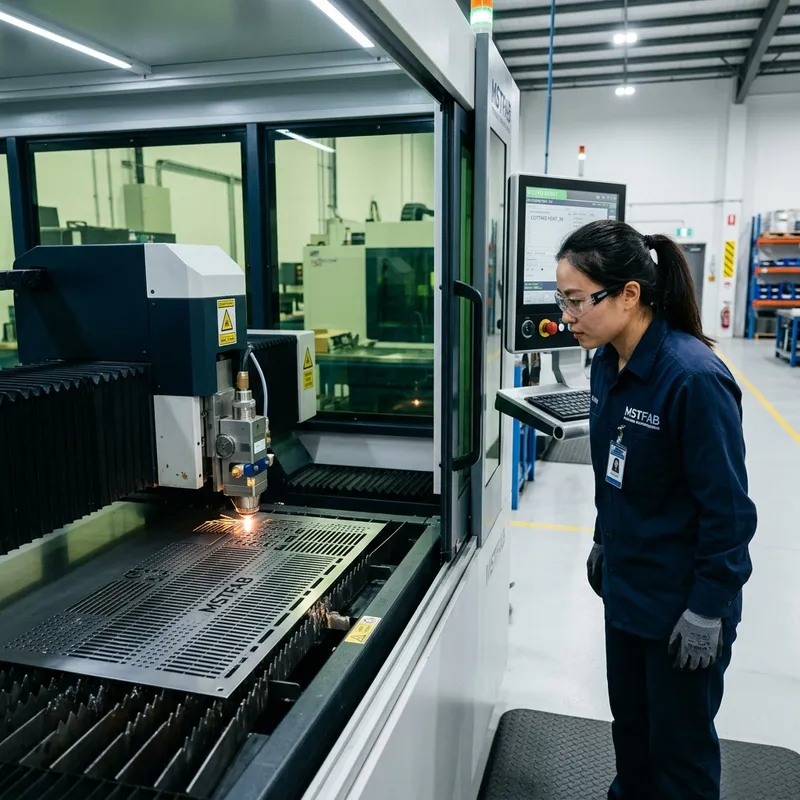
Laser cutting cost is determined by cutting time and the number of pierces. A simple rectangular sheet with four mounting holes is fast and cheap to cut. A complex ventilation grille with hundreds of small slots or honeycomb patterns requires the laser head to pierce and move thousands of times, which increases cutting time. Choosing an experienced laser cut sheet metal parts manufacturer ensures that parts are nested efficiently to reduce scrap and cut time.
4. CNC Bending Complexity

Every fold on a part adds setup and manual handling time. Simple parts with standard 90-degree bends are quick to produce. But if your design has complex return flanges, offset bends, or tight clearances that require special gooseneck punches, the operator must spend more time setting up the machine. We combine advanced sheet metal laser cutting and bending services to optimize this workflow. Consistent bend radii throughout your design allow for a single press brake setup, which lowers the cost of CNC bending sheet metal fabrication.
5. Welding and Post-Weld finishing
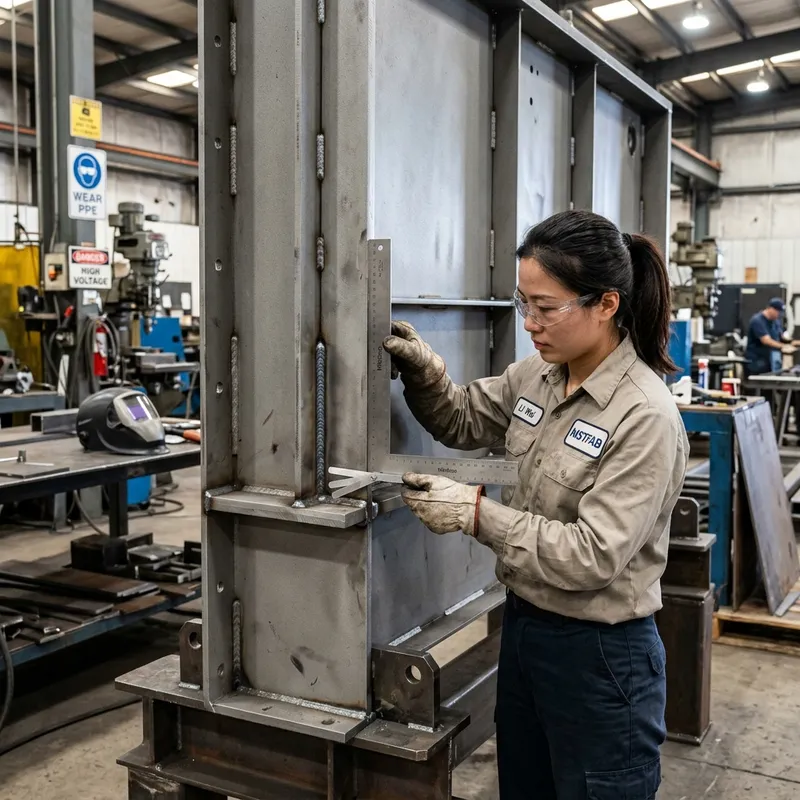
Welding requires manual, highly skilled labor. Tack welding a bracket is quick, but fully seam-welding a waterproof enclosure takes time and adds heat warp risk. If your parts require smooth seams, the welder must grind down the weld beads and polish the corners. We provide robust welded sheet metal fabrication services and meticulous sheet metal welding and finishing services to ensure welds are structurally sound and clean.
6. Surface Treatment and Powder Coating

We provide durable sheet metal fabrication with powder coating. During the quotation review, we look for key areas that must be masked, such as grounding studs, internal weld nuts, or hinges. Clearly marking these areas on your PDF drawings prevents paint from contaminating threads and ensures electrical conductivity during final assembly.
7. Hardware Insertion and Multi-Part Assembly
If your sheet metal parts require hinges, locks, handles, or pressed-in hardware (like PEM standoffs and rivet nuts), we offer integrated sheet metal fabrication and assembly services. It is generally more cost-effective to have your fabrication supplier install standard hardware and pre-assemble structural components rather than shipping loose parts and assembling them at your own facility. To keep quotes accurate, always specify standard hardware sizes on your drawings.
8. Export Packaging and Shipping Preparation
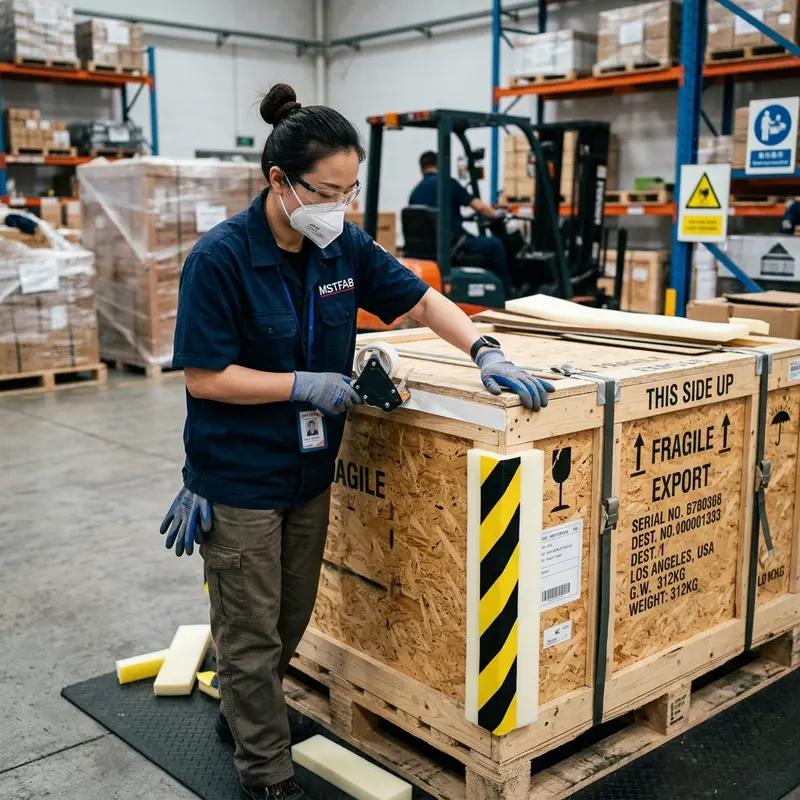
Export packaging is crucial for international orders. Custom wooden crates, foam padding, and moisture-proof plastic film are calculated in the quote to ensure your items arrive without forklift damage or scratches. Large, lightweight cabinets may have high volume-based shipping costs, while heavy welded parts may have high freight costs by weight. The quote should clearly define whether freight is included or quoted separately.
Cost Factors by Product Type
The key cost factors for sheet metal parts vary depending on what is being fabricated. Sourcing from a specialized sheet metal fabrication manufacturer for OEM equipment helps you optimize costs based on your product category:
- Machinery Components: Heavy-gauge panels and guard structures. Our sheet metal fabrication for machinery parts focuses on structural safety and cost-effective surface finishes.
- Electrical Enclosures: Waterproof gaskets, lock cutouts, and seam welding. We provide precision sheet metal fabrication for electrical enclosures designed to meet NEMA and IP standards.
- Control Cabinets: Heavy-duty doors, mounting channels, and complex ventilation patterns. We specialize in sheet metal fabrication for control cabinets.
- Telecom & Network Racks: Clean cooling louvers, standard 19-inch spacing, and square alignment. We offer specialized sheet metal fabrication for telecom cabinets and sheet metal fabrication for network cabinets.
- Green Energy & Battery Storage: High load-bearing brackets and weather-proof seals. We provide specialized sheet metal fabrication for EV charger enclosures and sheet metal fabrication for battery storage cabinets.
- Machinery & Automation: Guards, covers, and panels. We offer sheet metal fabrication for industrial automation and sheet metal fabrication for machinery parts.
- Medical Devices: Brushed finishes, blended corners, and hygienic stainless materials. We offer high-aesthetic sheet metal fabrication for medical equipment.
Practical Steps to Optimize Your Budget
If you want to optimize your budget, keep these guidelines in mind during your design phase:
- Use standard sheet gauges: Design your assemblies around standard thicknesses (like 1.0mm, 1.5mm, or 2.0mm) to simplify material buying.
- Simplify your bends: Avoid compound angles or tiny flanges that require special tooling. Simple, standard bends reduce press brake setup times.
- Minimize welding: If a part can be folded from a single sheet or joined with self-clinching rivets, it will be cheaper than a welded part.
- Keep holes away from bends: Placing holes too close to a bend causes hole distortion, which requires post-bend manual correction.
- Consolidate your hardware: Using standard, widely available PEM hardware reduces purchase costs and tooling changes on the assembly line.
By streamlining your design for manufacturing (DFM), you can remove unnecessary processing steps. MSTFAB offers complete custom sheet metal cutting, bending, and welding services, and our engineering team provides a full DFM review with every quote to help you optimize your sheet metal fabrication cost factors.
Ready to Get an Accurate Custom Sheet Metal Quote?
Fill out the form below, upload your 3D STEP files and 2D PDF drawings, and our engineering team will get back to you with a detailed, manufacturability-reviewed quote. Sourcing from a reliable custom sheet metal parts manufacturer has never been easier.
MSTFAB provides precision sheet metal laser cutting services for OEM panels, brackets, enclosures and custom metal parts.
 WeChat Contact
 WhatsApp Me Directly