
Sheet Metal Fabrication for Machinery Parts and OEM Equipment Components
Sheet metal fabrication for machinery parts is used when OEM buyers need custom metal covers, guards, brackets, panels, frames, plates, and welded structures for machines, production equipment, mechanical systems, and industrial devices. Machinery sheet metal parts are not just metal pieces. They must fit real assemblies, protect moving components, and withstand continuous vibration and load.
For industrial machinery manufacturers and B2B OEM buyers, acquiring custom sheet metal components that line up exactly with design specifications is critical. A minor misalignment in a mounting rail or an out-of-tolerance bend on a protective cover can halt an entire production line assembly. Partnering with a dedicated manufacturing facility that understands Design for Manufacturing (DFM) is key to eliminating field installation errors.
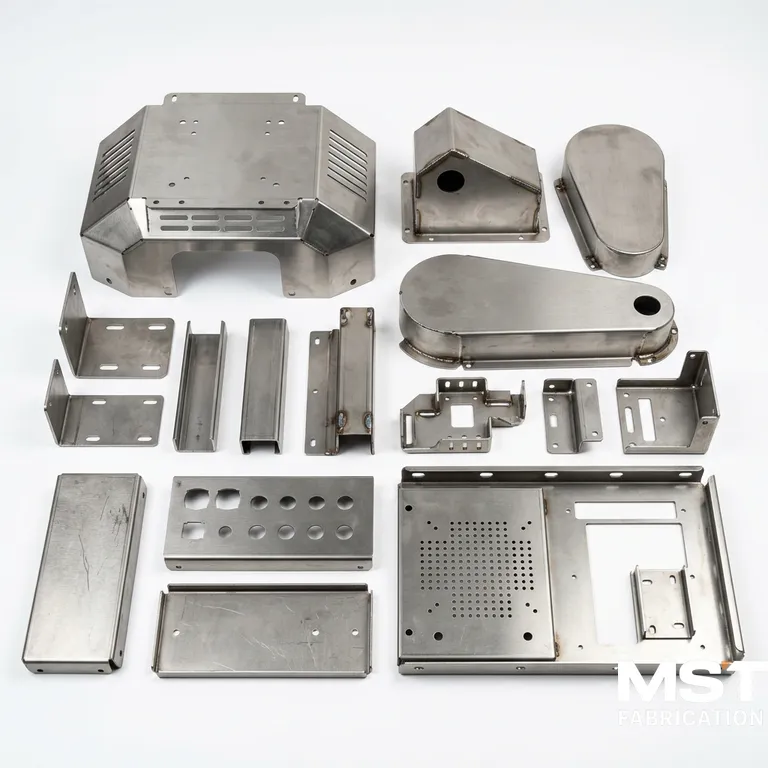
As a leading industrial sheet metal component manufacturer, MSTFAB supports global industrial buyers with precision enclosures, brackets, and welded panels.
For custom production requirements, working with a reliable precision metal parts fabrication manufacturer ensures that all components align correctly with your target tolerances.
To reduce risk on precision parts, choosing a certified iso certified sheet metal fabrication company guarantees that raw materials, bending angles, and final tolerances are verified at every manufacturing step.
1. What Is Sheet Metal Fabrication for Machinery Parts?
Sheet metal fabrication for machinery parts is the manufacturing process of cutting, forming, welding, and finishing sheet metal into functional components for machinery. Unlike standard metal stampings or simple brackets, machinery parts must withstand mechanical loads, vibration, thermal cycles, and demanding industrial environments.
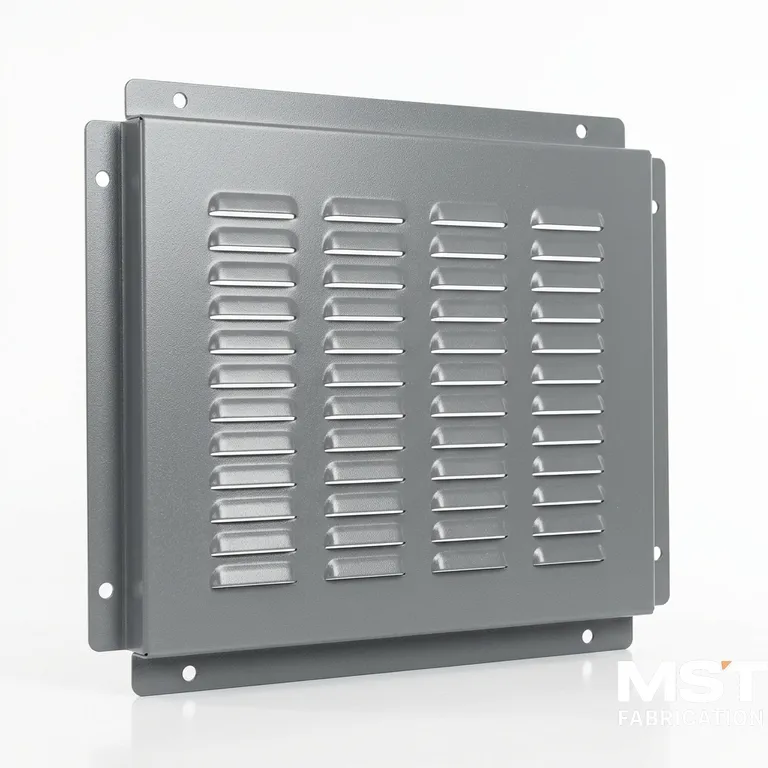
These custom components include machine covers, rotating guards, mounting brackets, structural base frames, access doors, ventilation panels, and structural mounting plates. They must be manufactured with strict dimensional control to integrate directly into complex mechanical assemblies without modification.
2. Why B2B OEM Buyers Need a DFM-Led Sourcing Partner
Buying machinery parts from a general-purpose sheet metal job shop often leads to fitment issues. Custom machinery parts contain multiple bends, hardware inserts, and tight tolerances that require a deep understanding of metal behavior during fabrication.
DFM (Design for Manufacturing) review ensures that the mechanical drawings are optimized for laser cutting, bending, and welding. This catches design errors—such as placing holes too close to bend lines or specifying unrealistic bend radii—before production starts.
| Fabrication Aspect | Standard Job Shop Reality | MSTFAB DFM-Led Process |
|---|---|---|
| Bend Tolerances | Variances lead to parts not fitting into machinery frames. | Strict bending calibration matches calculated springback. |
| Weld Distortions | Uncontrolled heat warps mounting plates and flanges. | Precision fixtures and TIG welding control heat input. |
| Hole Alignment | Holes drift during forming, requiring on-site filing. | CMM-verified hole positions ensure perfect bolt alignment. |
| Finishing Quality | Powder coat flakes off under industrial vibration. | Pre-treatment and high-durability chemical powder coatings. |
3. Material Selection for Industrial Machinery Components
Choosing the correct metal alloy is crucial for ensuring the durability and functionality of machinery parts in their specific operating environment.
- Carbon Steel (SPCC / SPHC / Q235 / Q355): The most common choice for heavy-duty machine guards, brackets, and structural plates. It offers excellent strength and weldability, but requires powder coating or zinc plating to prevent rust.
- Stainless Steel (SUS304 / SUS316): Essential for food processing machinery, medical devices, and chemical processing equipment where corrosion resistance and sanitation are mandatory.
- Aluminum (5052-H32 / 6061-T6): Used when weight reduction is critical, such as in moving machine arms or transport systems. Aluminum provides good corrosion resistance and high strength-to-weight ratios.
4. Vibration Resistance & Fatigue Prevention in Machine Frames
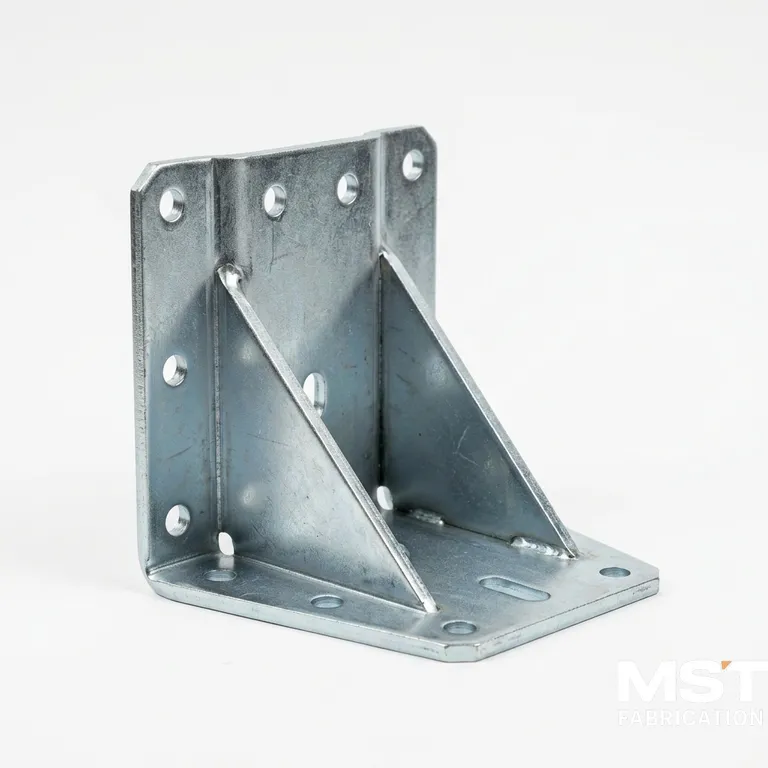
Industrial machines are subject to constant mechanical vibration and load cycles. Over time, these dynamic forces can cause structural fatigue, cracking in welded joints, and loosening of mounting bolts.
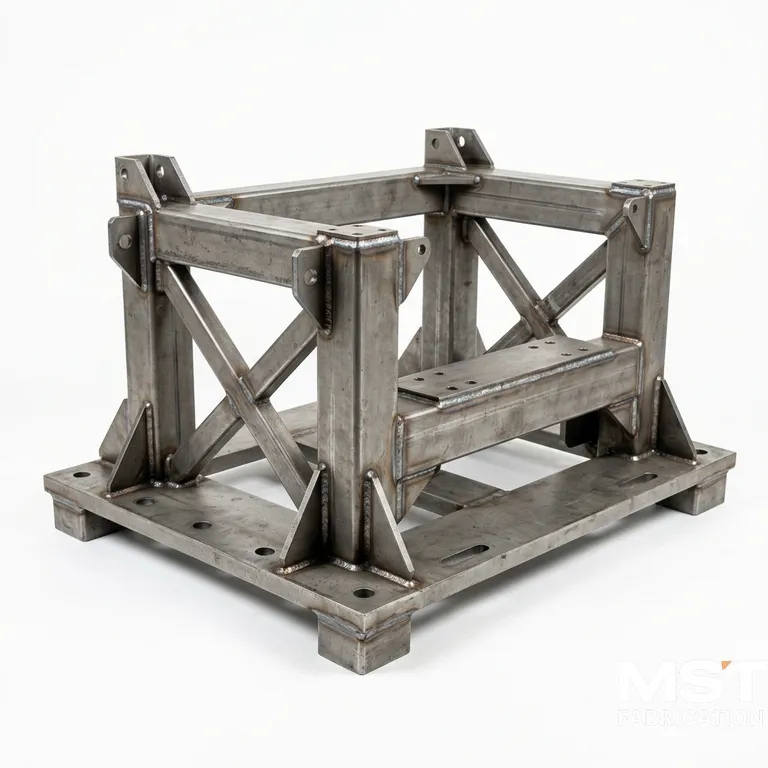
To prevent fatigue, MSTFAB incorporates structural reinforcement techniques like gussets, ribbing, and return flanges on panels. Correct weld penetration and stress-relieving geometries are carefully reviewed during our DFM process to ensure long-term structural integrity under load.
5. Precision Tolerances for Moving Parts & Alignment
When custom sheet metal parts interface with moving mechanisms, linear rails, or bearings, precision tolerances are non-negotiable. MSTFAB maintains tolerances down to ±0.1mm for critical mounting patterns and alignment holes.
We utilize advanced CNC machinery and coordinate measuring machines (CMM) to verify that features remain aligned. This ensures that when a technician bolts a linear guide rail to a custom mounting bracket, the rail remains parallel and bind-free.
6. Safety Guarding & Compliance Standards (ISO 14120 / OSHA)
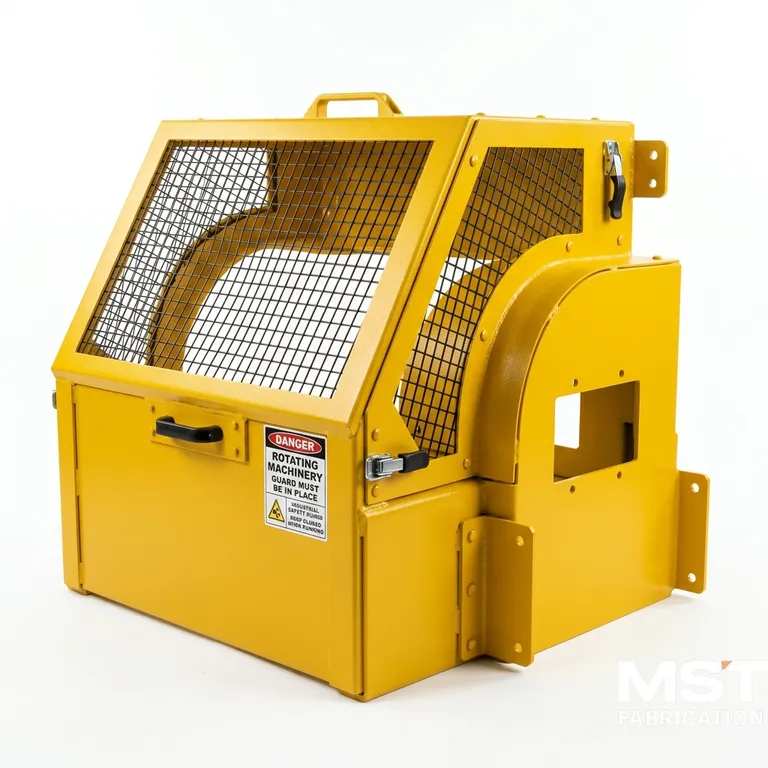
Machine safety guards protect operators from rotating shafts, belts, gears, and electrical hazards. Under standards like ISO 14120 and OSHA, safety guarding must be robust, secure, and correctly positioned.
MSTFAB fabricates heavy-duty steel and aluminum guards with integrated mounting flanges, mesh inserts for airflow, and interlock switch cutouts. We ensure all edges are fully deburred to prevent worker injury during routine maintenance and operation.
7. Ergonomic Access Doors & Servicing Hatches
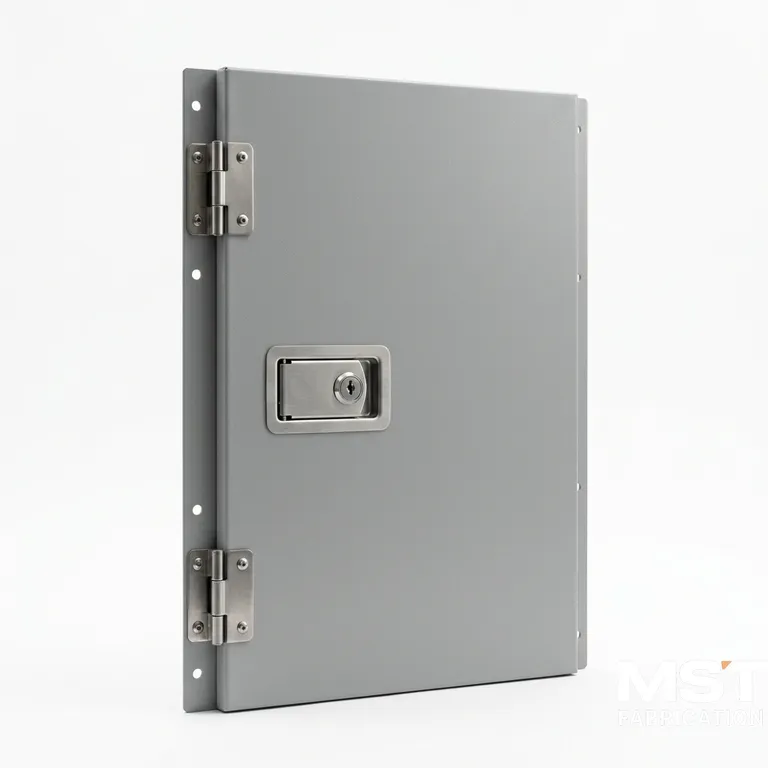
Industrial machinery housings require access doors, windows, and service hatches to allow routine maintenance. These doors must close securely to protect internal components but open easily for technicians.
We fabricate custom access panels fitted with heavy-duty continuous hinges, flush latches, gas spring brackets, and view windows. Precision cutouts ensure that locks and hinges line up smoothly and close without rattling.
8. Ingress Protection (IP Ratings) for Machinery Enclosures
If machinery parts enclose sensitive electronics or hydraulic systems, they must protect against environmental dust, water, and oil. MSTFAB manufactures enclosures designed to meet specific IP ratings (such as IP54, IP65, or IP66).
This includes fabricating continuous gasket channels, installing liquid-tight cable glands, and designing rain hoods to deflect water spray and prevent ingress in harsh outdoor or washdown environments.
9. Surface Pretreatment & Industrial Powder Coating
A high-quality finish is essential to protect carbon steel machinery parts from rust and chemical wear. MSTFAB utilizes an automated multi-stage pretreatment washing process to clean and degrease metal parts before powder coating.
We apply industrial-grade powder coatings (such as epoxy-polyester or pure polyester) that provide excellent impact resistance, UV protection, and chemical resistance. This ensures the finish does not chip, crack, or peel under heavy industrial use.
10. Laser Cutting for Intricate Profiles & Cutouts
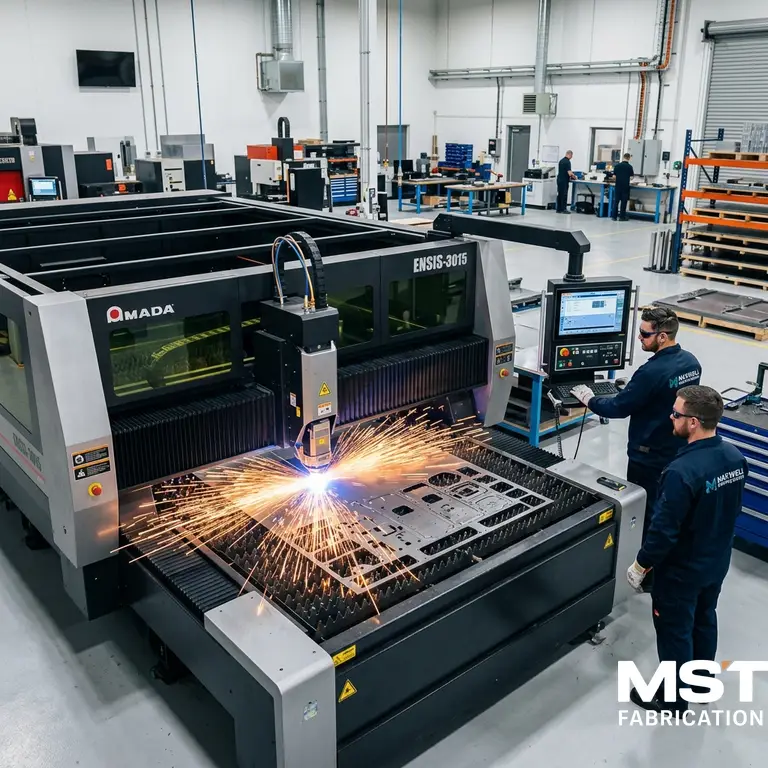
Precision begins with cutting. We use state-of-the-art CNC fiber laser cutting systems to cut sheet metal up to 20mm thick. Laser cutting provides highly accurate hole patterns, slots, and complex profiles that match your CAD data exactly.
Laser cutting ensures minimal heat-affected zones, reducing the risk of edge warping and leaving a clean, burr-free edge that is ready for bending and assembly.
11. CNC Bending & Bend Radius Control
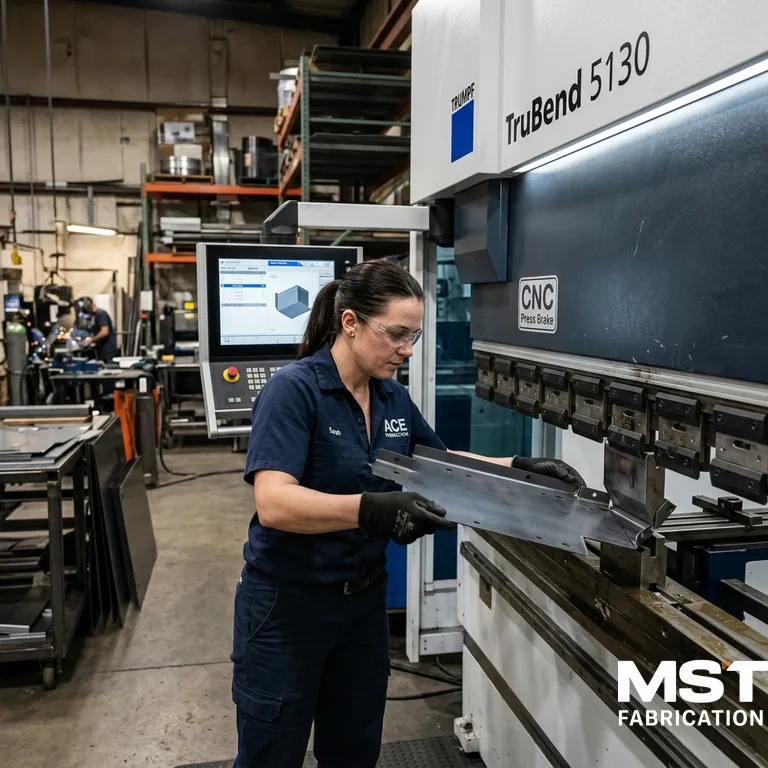
Bending sheet metal requires precise calculations to account for material springback and bend allowances. Out-of-spec bending results in misalignment when panels are bolted together.
Using advanced CNC press brakes and precision tooling, we ensure that every bend angle and flange length is formed accurately. This guarantees that large multi-bend machine covers maintain flat mating faces and square alignments.
12. High-Strength TIG & MIG Welding for Structural Integrity
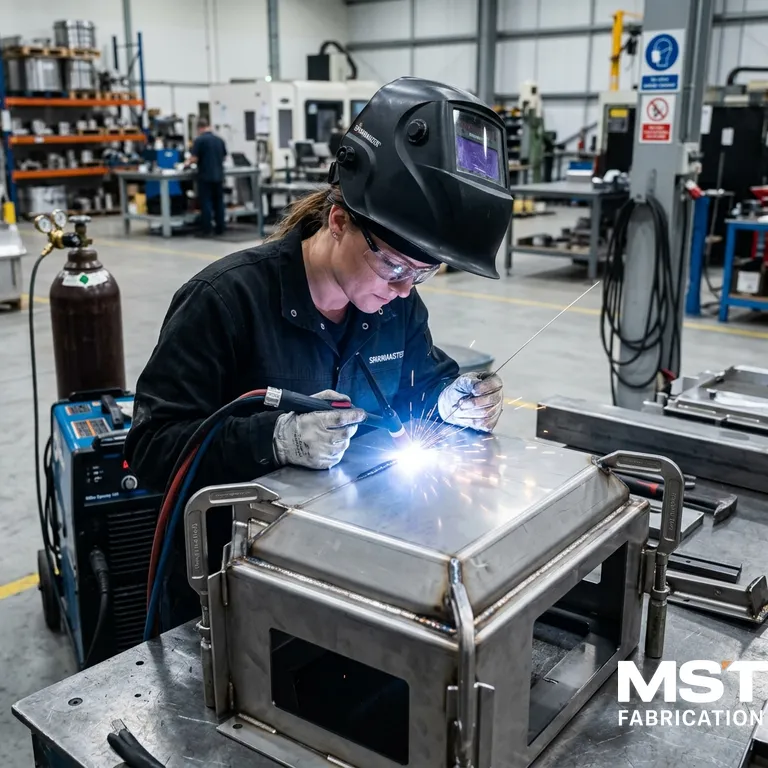
Machinery frames, base plates, and heavy-duty brackets require welding to join components permanently. We offer certified MIG and TIG welding services to ensure clean, high-strength joints.
Our experienced welders utilize custom welding fixtures to prevent weld distortion and warping. After welding, joints are ground smooth and cleaned to prepare the part for a flawless powder-coated finish.
13. PEM Fastener & Hardware Insertion
To facilitate rapid machinery assembly in the field, we install self-clinching PEM fasteners, including nuts, threaded studs, standoffs, and captive panel screws.
Our pneumatic insertion presses ensure correct press force, preventing fastener stripping or push-out during assembly. This allows you to bolt mating plates and electronic components directly onto the sheet metal housing.
14. Mechanical Assembly & Sub-Assembly Kitting
MSTFAB offers complete mechanical assembly services, saving OEM buyers time on their own production lines. We can install hinges, latches, locks, window panes, rubber seals, gaskets, and cable channels.
By delivering sub-assembled machinery covers and housings directly to your facility, we reduce your handling, inventory overhead, and final assembly times.
15. Quality Control & Thickness Gauge Verification
Quality assurance is embedded in every stage of our fabrication process. We perform first-article inspection (FAI) and in-process dimensional audits using calipers, height gauges, and CMM equipment.
For coated parts, we use electronic coating thickness gauges to ensure the powder coat meets the specified dry film thickness (DFT) requirement, guaranteeing long-lasting corrosion protection.
16. Prototyping & First Article Inspection (FAI)
Before launching batch production for custom machinery parts, we recommend creating a physical prototype. Prototyping allows engineers to verify clearances, test tolerances, and check assembly fitment in the real world.
MSTFAB provides rapid prototyping services, followed by a detailed First Article Inspection Report (FAIR), ensuring all features match the 3D model before hard tooling or batch fabrication begins.
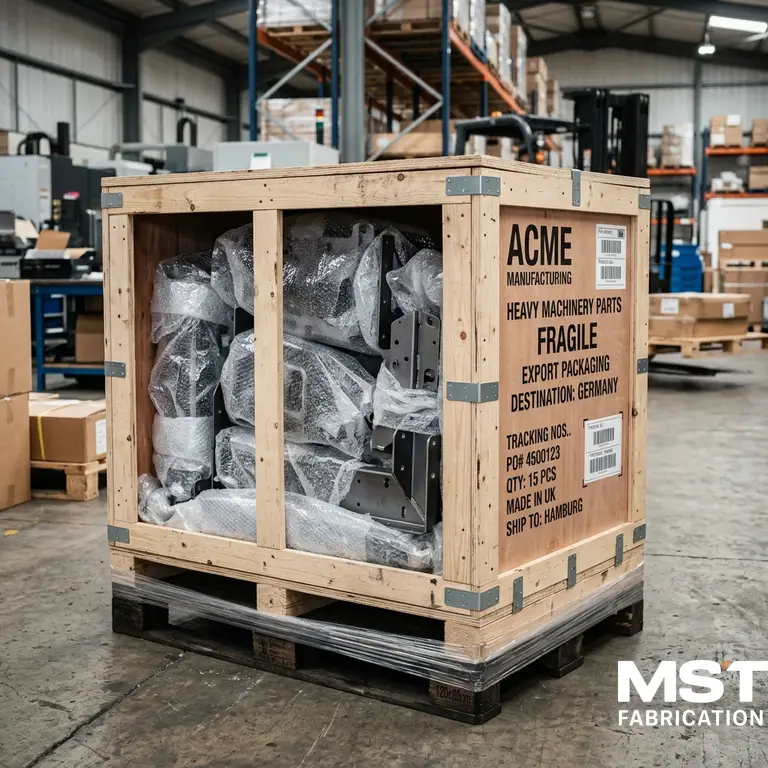
17. Heavy-Duty Export Packaging & Pallet Logistics
Custom sheet metal parts can be heavy and bulky. Without proper packaging, they can sustain scratches or bending during international transit. MSTFAB packages all completed machinery parts in heavy-duty wooden crates, bubble wrap, and foam edge guards.
Our wood crates are heat-treated and fumigated to meet international customs regulations. We secure all crates to pallets for safe forklift handling, ensuring your order arrives at your warehouse in perfect condition.
18. RFQs & What OEM Buyers Should Provide for Sourcing
To request a fast and accurate quote for machinery sheet metal parts, OEM buyers should provide:
- 3D CAD Files: STEP, IGES, or SolidWorks files for dimensional and shape verification.
- 2D Engineering Drawings: PDF or DWG files detailing critical tolerance callouts, thread sizes, and hardware specifications.
- Material Specifications: Material type, grade, and thickness (e.g., SUS304 2.0mm, SPCC 3.0mm).
- Surface Finish: Powder coat color (RAL code), texture, coating thickness, or plating type.
- Order Volume: Prototype quantity and expected annual batch sizes.
Request a Custom Machinery Parts Quote
If you need custom machine covers, guards, brackets, frames, panels, access doors, or mounting plates fabricated to your drawings, send your STEP and PDF files to MSTFAB for a professional quote and DFM review.
FAQ
What machinery parts do you fabricate?
We fabricate machine covers, belt/gear safety guards, mounting brackets, structural base frames, access doors, mounting plates, ventilation panels, and structural chassis components based on custom drawings.
Which materials are best for machine guards?
Carbon steel (SPCC) with powder coating is cost-effective and strong. Stainless steel (SUS304) is preferred for food or chemical industries, and aluminum is used when weight reduction is required.
What is your standard tolerance for machinery parts?
Our standard tolerance is ±0.15mm for laser cutting and ±0.2mm for bending. For critical mounting holes and linear rail alignments, we can achieve tolerances down to ±0.1mm.
Do you support low-volume prototype orders?
Yes. We support prototyping and low-volume production runs, allowing you to test assembly fitment and perform First Article Inspection (FAI) before committing to batch manufacturing.
Can you install PEM fasteners and mechanical hardware?
Yes. We have dedicated PEM hardware insertion equipment and can install self-clinching nuts, studs, standoffs, hinges, latches, locks, and rubber gaskets to deliver sub-assembled kits.
Suggested Further Reading
sheet metal welding services
MSTFAB provides TIG and MIG sheet metal welding services for structural assemblies, cabinets, frames and OEM metal components.
 WeChat Contact
 WhatsApp Me Directly