
Sourcing custom sheet metal components can feel like a guessing game. One buyer orders a bracket and gets a unit price of 2.50; another orders a slightly different bracket and ≥ ts quoted15.00. Understanding how the sheet metal fabrication cost per part is calculated is the first step toward optimizing your procurement budget and avoiding expensive design traps.
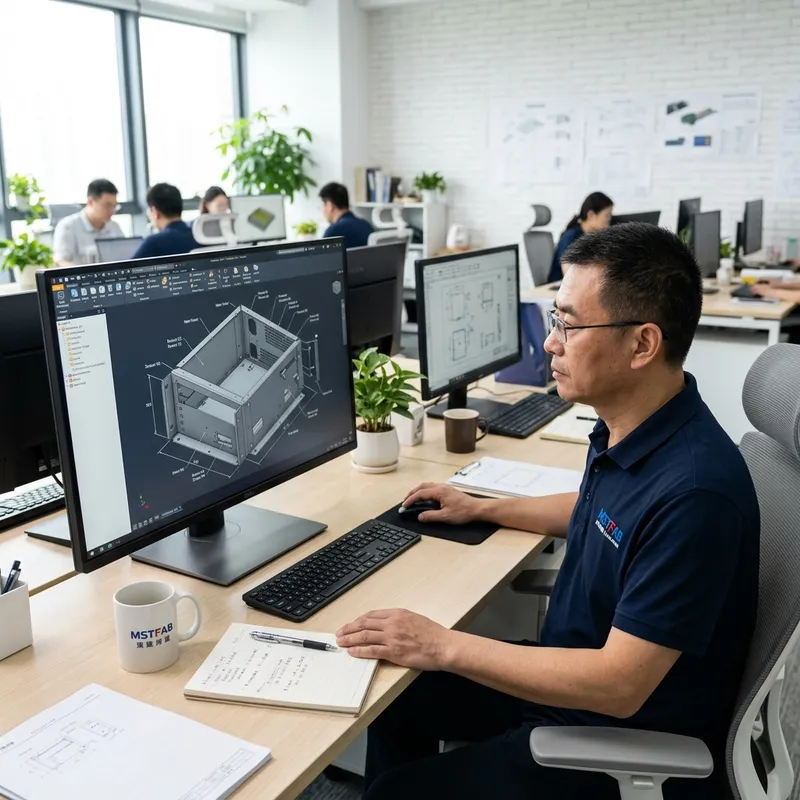
If you want to understand the bigger picture of fabrication costs first, check out our companion guide on how much does sheet metal fabrication cost. In this article, we will zoom in on the exact micro-factors that shape the unit price of individual parts, and how you can work with a custom sheet metal parts manufacturer to lower your per-part costs without compromising quality.
A Simple Formula for Sheet Metal Fabrication Cost Per Part
In custom manufacturing, the unit price of a part is not just the cost of raw metal. It is a combination of processes, setup overheads, and manual labor. A practical way to look at it is through this basic equation:
Cost Per Part = Material Cost + Processing Cost + Finishing Cost + Hardware Cost + Assembly Cost + Quality Check Cost + (Total Setup Cost / Order Quantity)
Let’s break down the basic components that make up this unit price:
| Cost Component | What Is Included |
|---|---|
| Material Cost | Raw metal sheets, thickness overheads, blank nesting efficiency, scrap allowance. |
| Setup Cost | Engineering drawing review, DFM programming, laser nesting, press brake tool setups. |
| Processing Cost | Fiber laser cutting run time, pierce points, CNC bending manual handling. |
| Finishing Cost | Edge deburring, weld grinding, sandblasting, powder coating, zinc plating. |
| Hardware Cost | Pressed-in PEM studs, rivet nuts, captive screws, grounding hardware, hinges, locks. |
| Assembly Cost | Manual labor for fitting multi-part chassis, installing doors, mounting internal plates. |
| Inspection & Pack | Dimensional inspection, scratch protection wrap, export pallets, or wooden crating. |
When reviewing a quote, always confirm what is included in the unit price. A low quote that excludes surface finishing, PEM hardware, or custom packaging may end up being far more expensive when those invoices arrive later. Choosing a trusted sheet metal fabrication RFQ supplier protects you from hidden add-ons and ensures you receive a comprehensive, ready-to-use part.
Why Quantity is the Ultimate Unit Price Controller
In sheet metal work, setting up the machinery takes time. A programmer must review the CAD files, nest the parts to minimize scrap, and transfer the files to the laser. Next, the press brake operator must select the correct punches and dies, install them, and run a test bend. This setup process can take anywhere from 30 minutes to 2 hours per part number.
If you order 1 prototype part, that single part must carry 100% of the engineering and machine setup costs. If the setup overhead is 150 and the material and cutting cost is10, your prototype unit price is $160.
If you order 500 production parts, the same 150 setup cost is shared among all 500 units—which is just 0.30 per part. Combined with the 10 material/cutting cost, your production unit price drops to 10.30.
Understanding this curve helps you plan your inventory. Ordering small, monthly batches of 10 parts can be much more expensive than ordering a single batch of 100 and scheduling shipments. While quantity reduces setup overhead, it does not remove the complexity of the part. A highly complex cabinet will never become as cheap as a simple flat washer, but larger batches make the manufacturing process highly repeatable and stable.
Key Manufacturing Factors Influencing Per-Part Costs
1. Raw Material Type and Thickness

Raw metal selection sets the baseline unit price. MSTFAB offers specialized precision sheet metal fabrication services across multiple metal types, each suited to different budgets and environments:
- Mild Steel: High strength and very cost-effective. We offer competitive mild steel sheet metal fabrication services, which are the standard for indoor machinery components.
- SPCC (Cold Rolled Steel): Smooth and precise. As an experienced SPCC sheet metal fabrication manufacturer, we use SPCC for high-quality electronics panels and consumer-facing enclosures.
- SGCC (Galvanized Steel): Zinc-coated for rust resistance. Working with a reliable SGCC sheet metal fabrication supplier is a smart choice for interior cabinet plates where cost control is paramount.
- Stainless Steel (304/316): Premium corrosion resistance. We provide professional stainless steel sheet metal fabrication for food processing, chemical, and medical environments.
- Aluminum (5052/6061): Lightweight and non-magnetic. Our aluminum sheet metal fabrication services are tailored for aerospace, marine, and electronic heat-sink panels.
2. Flat Pattern Nesting and Material Utilization
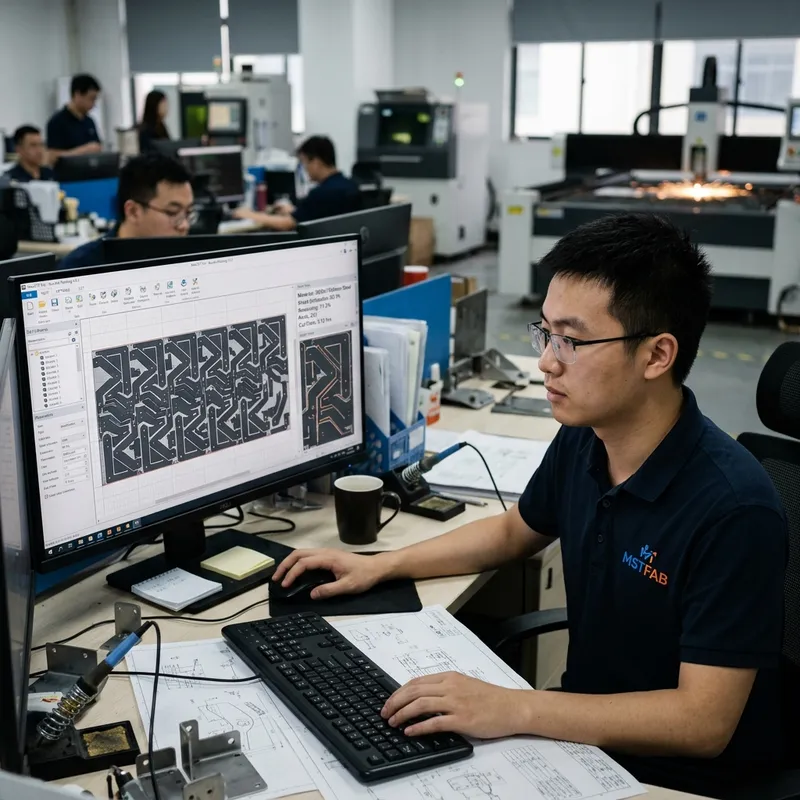
When a part is designed, its 3D shape is unfolded into a 2D flat pattern. If the flat pattern has an irregular shape (like a large L-shape or a hollow ring), it will leave large areas of scrap metal that cannot be used. Our nesting engineers work to minimize this waste. Sourcing from a specialized laser cut sheet metal parts manufacturer ensures that parts are nested tightly on standard-sized sheets to maximize utilization and keep material costs per part low.
3. Fiber Laser Cutting Time
Fiber lasers cut by the second. A part’s cutting cost is directly related to its cut path length and the number of pierces required. A simple bracket with four mounting holes is fast and cheap to cut. However, a server cabinet door with hundreds of hexagonal ventilation slots requires the laser head to stop, pierce, and cut repeatedly. We combine advanced sheet metal laser cutting and bending services to streamline this workflow and reduce overall processing times.
4. Bending Complexity and Press Brake Setup
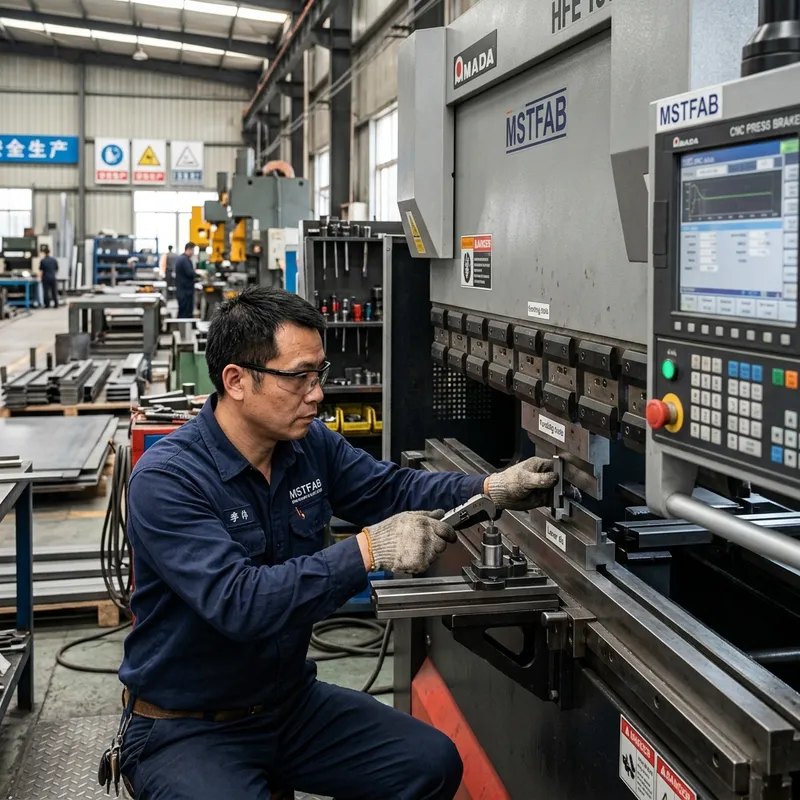
Each fold on a part adds labor and machine setup time. Simple L-shaped brackets require one bend and are highly repeatable. Complex enclosures with multiple return flanges, hems, and different bend angles require multiple press brake setups or specialized multi-stage tooling. Keeping all bend radii consistent throughout the design allows us to run the part on a single CNC press brake setup, which significantly reduces the cost of CNC bending sheet metal fabrication.
5. Welding, Grinding, and Finishing Seams
Welding requires manual, highly skilled labor. Tack welding a bracket is quick, but fully seam-welding a waterproof enclosure takes time and adds heat warp risk. If your parts require smooth seams, the welder must grind down the weld beads and polish the corners. We provide robust welded sheet metal fabrication services and meticulous sheet metal welding and finishing services to ensure welds are structurally sound and cosmetically clean without blowing your budget.
6. Edge Deburring and Safety Handling
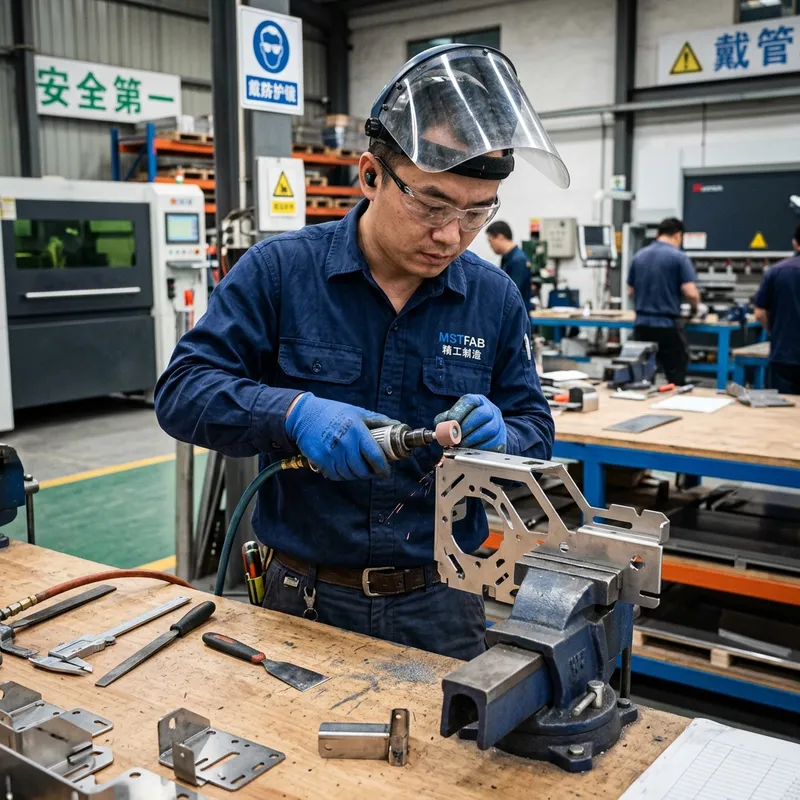
Laser cutting leaves sharp edges and tiny micro-burrs. For safety and quality, these burrs must be removed. Deburring is crucial for parts that house wiring or are touched by end-users. Proper edge rounding also ensures that powder coatings adhere well to the corners instead of peeling off. Designing parts with straight outer profiles makes deburring faster and more cost-efficient.
7. Powder Coating and Masking
Powder coating protects raw metal from corrosion while providing a clean appearance. Our integrated sheet metal fabrication with powder coating services are highly efficient. The cost per part increases if your design requires complex masking (applying high-temperature tape to protect grounding studs, internal weld nuts, or electrical contact areas from paint). Minimizing masking areas is an easy way to optimize your unit price.
8. Hardware Insertion and Multi-Part Assembly
If your sheet metal parts require hinges, locks, handles, or pressed-in hardware (like PEM standoffs and rivet nuts), we offer integrated sheet metal fabrication and assembly services. It is generally more cost-effective to have your fabrication supplier install standard hardware and pre-assemble structural components rather than shipping loose parts and assembling them at your own facility. To keep quotes accurate, always specify standard hardware sizes on your drawings.
9. Tolerance Standards and QC Inspection
Specifying tight tolerances (+/-0.05mm) across every dimension of a sheet metal part is a guaranteed way to double your unit price. Unlike CNC machined parts, sheet metal is bent and welded, which involves material springback and thermal expansion. For most enclosures and brackets, standard ISO 2768-m tolerances are highly practical. Tighter tolerances should only be specified where parts interface directly with other assemblies.
Unit Price Drivers by Product Type
The key cost factors for sheet metal parts vary depending on what is being fabricated. Sourcing from a specialized sheet metal fabrication manufacturer for OEM equipment helps you optimize costs based on your product category:
- Machinery Components: Heavy-gauge panels and guard structures. Our sheet metal fabrication for machinery parts focuses on structural safety and cost-effective surface finishes.
- Electrical Enclosures: Waterproof gaskets, lock cutouts, and seam welding. We provide precision sheet metal fabrication for electrical enclosures designed to meet NEMA and IP standards.
- Control Cabinets: Heavy-duty doors, mounting channels, and complex ventilation patterns. We specialize in sheet metal fabrication for control cabinets.
- Telecom Enclosures: Thermal management louvers and precise internal spacing. We offer specialized sheet metal fabrication for telecom cabinets.
- Network Cabinets: Squareness, slide rail mounting holes, and cable entry routing. Sourcing our sheet metal fabrication for network cabinets guarantees structural alignment.
- EV Charging Stations: Rainproof vents, anti-theft locks, and outdoor powder coatings. We support green energy brands with specialized sheet metal fabrication for EV charger enclosures.
- Energy Storage: Tonnage strength to support heavy battery cells and integrated grounding. We offer specialized sheet metal fabrication for battery storage cabinets.
- Medical Devices: Brushed finishes, blended corners, and hygienic stainless materials. We offer high-aesthetic sheet metal fabrication for medical equipment.
Practical Steps to Reduce Per-Part Costs

If you want to optimize your budget, keep these guidelines in mind during your design phase:
- Use standard sheet gauges: Design your assemblies around standard thicknesses (like 1.0mm, 1.5mm, or 2.0mm) to simplify material buying.
- Simplify your bends: Avoid compound angles or tiny flanges that require special tooling. Simple, standard bends reduce press brake setup times.
- Minimize welding: If a part can be folded from a single sheet or joined with self-clinching rivets, it will be cheaper than a welded part.
- Keep holes away from bends: Placing holes too close to a bend causes hole distortion, which requires post-bend manual correction.
- Consolidate your hardware: Using standard, widely available PEM hardware reduces purchase costs and tooling changes on the assembly line.
By streamlining your design for manufacturing (DFM), you can remove unnecessary processing steps. MSTFAB offers complete custom sheet metal cutting, bending, and welding services, and our engineering team provides a full DFM review with every quote to help you optimize your sheet metal fabrication cost per part.
Need a Zero-Guesswork Unit Price Quote?
Submit your 3D STEP files and 2D PDF drawings below. Our engineers will review your files for material utilization, process flow, and assembly efficiency to provide a detailed, factory-direct sheet metal fabrication quote. Sourcing from a reliable custom metal fabrication services for industrial parts supplier has never been easier.
MSTFAB provides precision sheet metal laser cutting services for OEM panels, brackets, enclosures and custom metal parts.
 WeChat Contact
 WhatsApp Me Directly