
Drawing-based empty control cabinet shells for PLC, automation and machinery projects. MSTFAB fabricates the metalwork and coordinates specified finishes; the buyer installs electrical devices, wiring and controls final system testing.
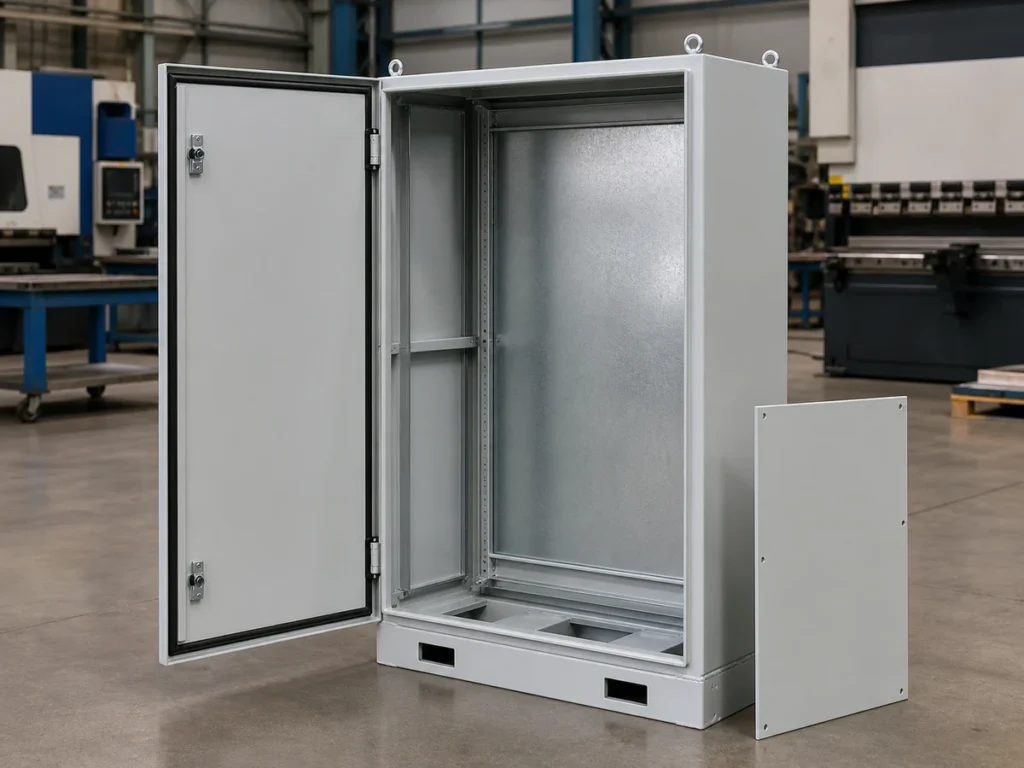
Illustrative empty control cabinet shell. Dimensions and cable entries follow the approved OEM drawing.
A useful control cabinet RFQ defines the component envelope, mounting plate, DIN rail positions, door swing, cable-entry zones, ventilation and finish. MSTFAB supplies drawing-based empty metal shells. The panel builder specifies electrical devices, wiring and final system testing.
| Buyer requirement | Mechanical review | Why it matters |
|---|---|---|
| Component fit | Mechanical reviewConfirm mounting plate, DIN rail zones and service clearance | Why it mattersAvoids relocating devices after the cabinet is made |
| Cable entry | Mechanical reviewRelease gland plates, cutouts and separation zones | Why it mattersKeeps field wiring accessible and protected |
| Door and thermal interfaces | Mechanical reviewDefine swing, latches, gaskets and buyer-specified cooling openings | Why it mattersProtects assembly fit without implying a tested enclosure rating |
| Repeat orders | Mechanical reviewApprove the first article and control drawing revisions | Why it mattersKeeps cutouts and hardware positions consistent |
Standard cabinets may work for simple installations. Custom control cabinet enclosure fabrication is more useful when the enclosure must match specific equipment dimensions, thermal requirements, installation conditions, branding or export packaging standards.

Empty floor-standing or wall-mounted PLC cabinet shells with backplates, DIN rail mounting zones and controlled cable entries.

Cabinet shells with separate spaces for control and communication equipment, cable entries, ventilation and service access.
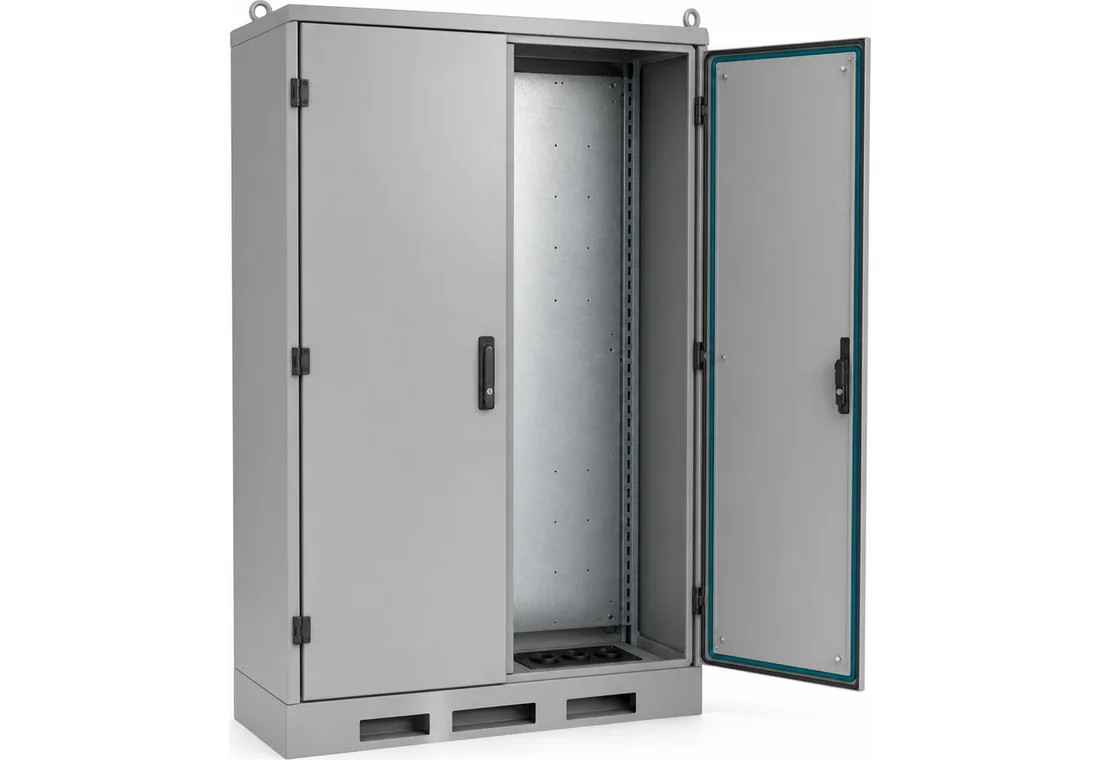
Compact enclosures with cable entries, hinge and lock hardware, ventilation and wall mounting details for field installation.
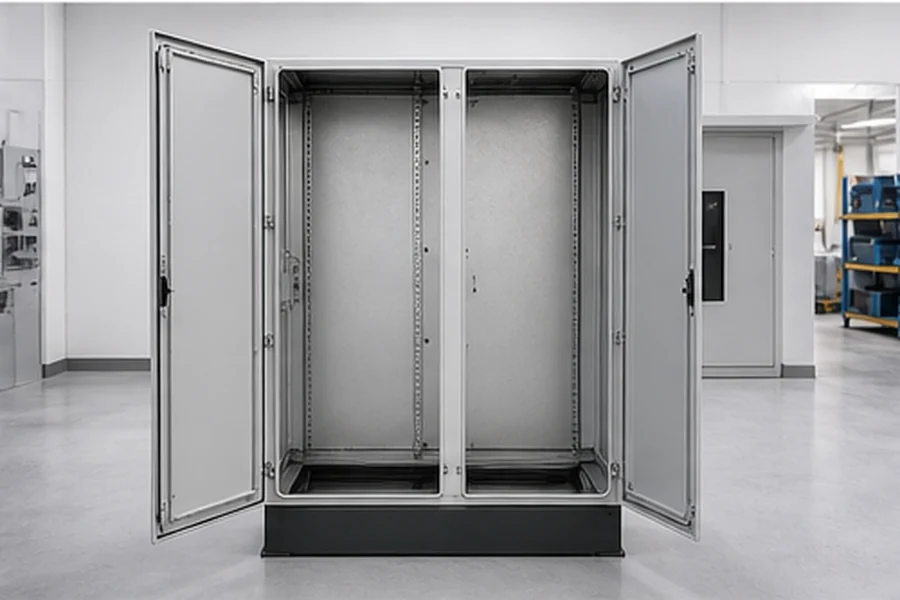
Formed and welded shells with defined mounting plates, control openings, door access and equipment clearance.
A high-quality cabinet depends on the accuracy and consistency of every fabrication step. Small errors in cutting, bending or welding can create alignment problems during final assembly.
| Process | What it controls | Control cabinet application |
|---|---|---|
| Fiber laser cutting | What it controlsPanel edges, HMI windows, gland entries and mounting holes | Control cabinet applicationDoors, gland plates, backplates and brackets |
| CNC bending | What it controlsBody geometry, flanges and door returns | Control cabinet applicationCabinet bodies, access panels and mounting structures |
| Welding and assembly | What it controlsFrame squareness, distortion and hardware fit | Control cabinet applicationReinforced shells and buyer-specified mounting points |
| Finish coordination | What it controlsApproved coating, masking and color requirements | Control cabinet applicationQualified partners may complete specified coating |
| Mechanical hardware | What it controlsHinges, latches, studs and grounding points | Control cabinet applicationEmpty shells ready for buyer-installed electrical components |
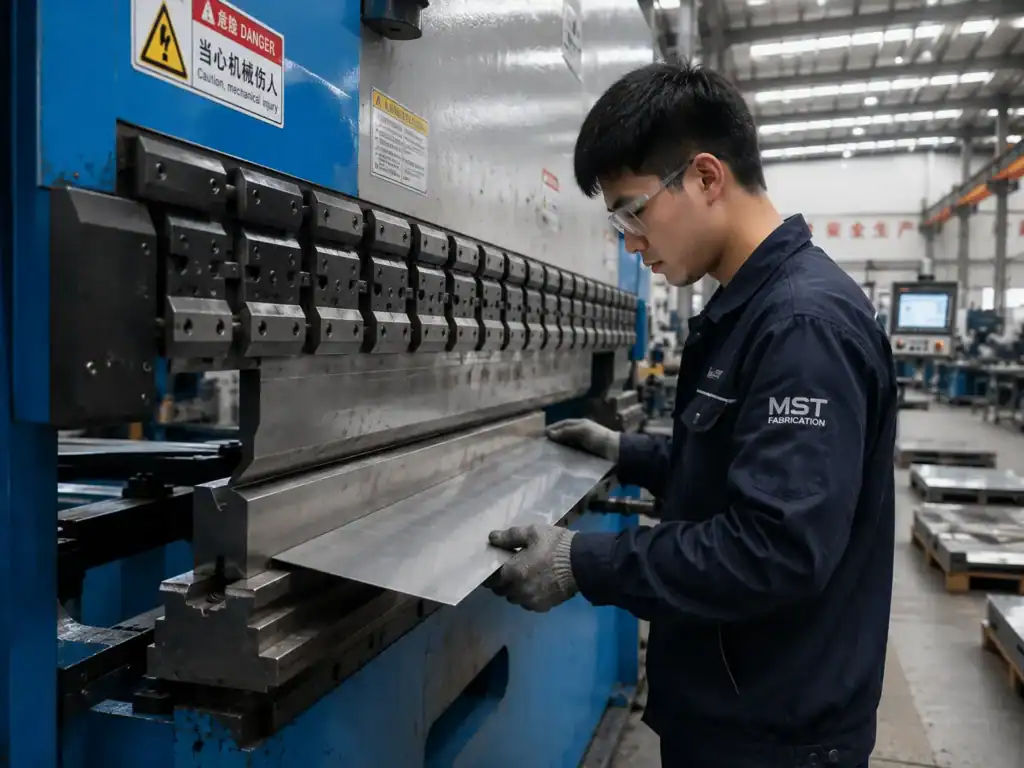
Material selection affects cabinet strength, corrosion resistance, weight, appearance and total cost. MSTFAB reviews the installation environment before recommending cold rolled steel, galvanized steel, stainless steel, aluminum or carbon steel.
| Material | Best-fit use | Buyer note |
|---|---|---|
| Cold rolled steel | Best-fit useIndoor control cabinet bodies, doors and mounting plates | Buyer noteGood flatness and appearance with powder coating |
| Galvanized steel / SECC | Best-fit useIndoor cabinets needing improved corrosion protection | Buyer noteBalanced cost and protection for controlled environments |
| Stainless steel 304 / 316 | Best-fit useOutdoor, high-humidity, coastal or corrosive environments | Buyer noteChoose 316 when chloride or marine exposure is a concern |
| Aluminum 5052 / 6061 | Best-fit useLightweight control cabinet panels and wall-mounted boxes | Buyer noteReduces transport and installation weight |
| Carbon steel | Best-fit useHeavy-duty frames, support structures and cost-sensitive industrial cabinets | Buyer noteNeeds suitable coating or anti-rust treatment |
Before requesting a quote, confirm component sizes, mounting datums, cable access, ventilation openings, door fit and packing protection. These details decide whether the shell accepts the buyer’s final electrical assembly.
| Engineering point | What buyers should confirm | Risk if ignored |
|---|---|---|
| Component envelope | What buyers should confirmMounting plate size, DIN rail positions and service clearance | Risk if ignoredDevices cannot be installed or maintained |
| Thermal interface | What buyers should confirmFan, filter, louver and airflow openings specified by the buyer | Risk if ignoredCooling hardware or airflow path does not fit |
| Cable entry | What buyers should confirmGland plate, power and signal cable zones, bend clearance | Risk if ignoredField wiring becomes difficult |
| Mounting and grounding | What buyers should confirmStuds, brackets, earth points and load requirements | Risk if ignoredElectrical assemblies need rework |
| Door and panel fit | What buyers should confirmHinges, latches, gasket lands and service access | Risk if ignoredPoor closure or assembly interference |
| Packing protection | What buyers should confirmCorner, door, coating and loose hardware protection | Risk if ignoredDamage or missing parts on arrival |
For export buyers, consistent quality is more important than one good sample. The goal is to make every cabinet in the batch fit the drawing, assemble correctly and arrive safely.

| QC stage | Inspection focus | Buyer benefit |
|---|---|---|
| Drawing and DFM review | Inspection focusHole spacing, bending feasibility, mounting layout, hardware and finish risks | Buyer benefitPrevents avoidable production mistakes before cutting metal |
| Material confirmation | Inspection focusGrade, thickness, surface condition and corrosion requirement | Buyer benefitReduces substitution and material mismatch risk |
| First article inspection | Inspection focusDimensions, mounting position, door fit, hardware and assembly sample | Buyer benefitConfirms production route before batch manufacturing |
| In-process checks | Inspection focusBending angle, welding deformation, coating coverage and visible surfaces | Buyer benefitKeeps repeat cabinets consistent across the order |
| Final inspection | Inspection focusAssembly fit, accessories, labels, surface finish and export packaging | Buyer benefitImproves arrival quality for overseas buyers |
Clear RFQ information helps the engineering team quote faster, reduce assumptions and provide useful manufacturability feedback before production.
| RFQ item | Recommended detail |
|---|---|
| Drawings | Recommended detail2D PDF, DXF, DWG and 3D STEP/STP files if available |
| Cabinet structure | Recommended detailSize, rack units, depth, doors, side panels, mounting plate and rail layout |
| Material and thickness | Recommended detailCold rolled steel, galvanized steel, stainless steel, aluminum or carbon steel |
| Surface finish | Recommended detailPowder coating, RAL color, texture, brushing, anodizing or anti-corrosion coating |
| Application environment | Recommended detailIndoor, data room, industrial floor, outdoor, high humidity or coastal use |
| Protection target | Recommended detailIP/NEMA requirement if applicable, ventilation, fan trays, filters and cable glands |
| Order information | Recommended detailPrototype, pilot batch, annual quantity, destination country and packaging requirement |
Control cabinet enclosures are large, finish-sensitive and easy to deform if packaging is weak. Export packaging should protect cabinet corners, doors, powder coating, mounting rails, hardware and accessories during sea freight or long-distance transportation.

MSTFAB fabricates empty control cabinet bodies, doors, mounting plates, gland plates and specified mechanical hardware from approved drawings. Electrical devices, wiring and final system testing remain with the buyer.
The drawing can specify empty bodies, doors, backplates, DIN rail supports, gland plates, brackets, hinges, latches, studs and grounding points.
Common materials include cold rolled steel, galvanized steel, stainless steel, aluminum and carbon steel. The best material depends on indoor or outdoor use, strength, corrosion resistance, weight and cost requirements.
Yes. Outdoor control cabinet enclosures can be designed with sealing, drainage, ventilation, anti-corrosion coating and weather-resistant structure depending on project requirements.
Send STEP or STP models and PDF, DWG or DXF drawings when available, plus the revision, material, quantity and critical interface notes.
Powder coating and other specified finishes can be coordinated to the approved drawing. Qualified partners may complete coating; masking, color and availability are confirmed per order.
Please send drawings, material, thickness, quantity, finish requirement, application environment and any assembly or packaging requirements.
Upload your drawings, component layout, material, thickness, finish and quantity requirements. Our engineering team will review your project and provide manufacturing feedback.
Attach one file, up to 10 MB (STEP/STP, DXF/DWG, PDF, ZIP, or an image). Include material, quantity, and finish details for an accurate quote.
 WeChat Contact
Scan to connect with MSTFAB for OEM sheet metal fabrication support.
[email protected]
 WhatsApp Me Directly
Scan or click for sheet metal fabrication quotes and drawing review.
+86 173 2831 6456