
How much does sheet metal fabrication cost? If you ask any manufacturer this question, the most honest answer you will get is: it depends on the drawing. There is no universal weight-to-price formula or catalog pricing because every custom metal project has its own unique DNA.
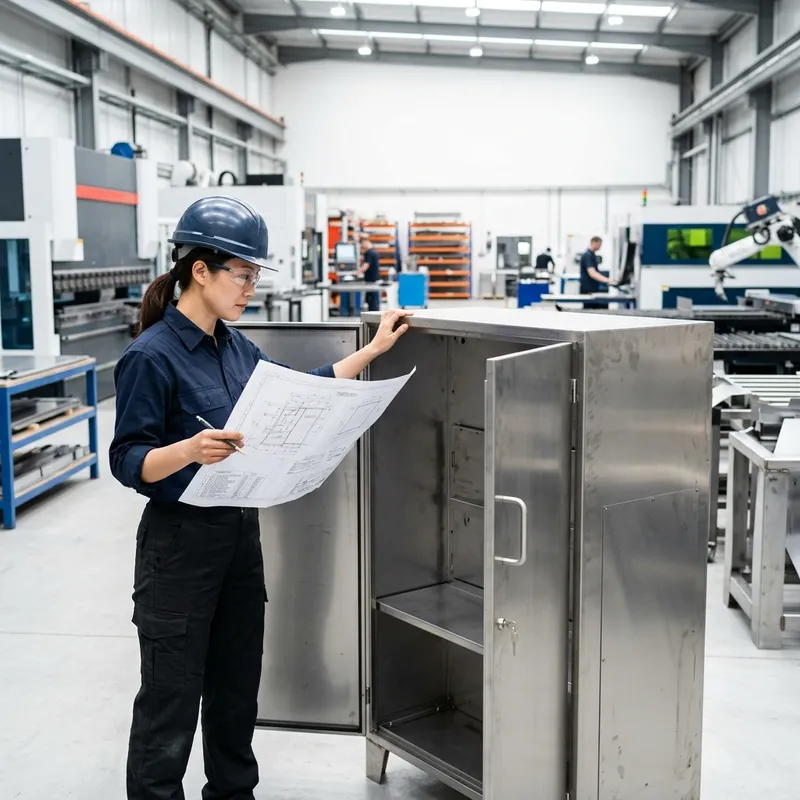
If a supplier throws a number at you without looking at your CAD files, they are not quoting—they are guessing. And in manufacturing, guesses usually end up as invoices for “unexpected rework” or “material adjustments” later on. To help you navigate the process, we have compiled this comprehensive guide on how custom sheet metal costs are actually calculated, and how you can get a competitive custom sheet metal fabrication quote without the headache.
Why Weight Alone is a Dangerous Metric for Custom Parts
We often get RFQs from buyers asking for a “price per kilogram” for sheet metal work. While that works fine when you are buying raw structural beams or steel coils, it fails completely for custom parts. Why? Because sheet metal fabrication is a service, not just a material transaction.
Consider four different parts that all weigh exactly 2 kg:
- A simple flat plate: Laser cut and deburred. Simple, fast, minimal labor.
- A small bracket: Requires laser cutting, 4 bends on a press brake, and 2 pressed-in PEM nuts. More setups, more processing.
- A welded sensor cover: Laser cut, bent, TIG welded at the corners, ground flat, and powder-coated. Multiple manual operations and finishing time.
- A precision door: Multiple return bends, welded grounding studs, masked hinge tabs, and clean cosmetic powder coating.
All four weigh 2 kg, but their manufacturing paths, setups, and labor requirements are completely different. If you try to price them by weight alone, you will either overpay for simple parts or get rejected by suppliers for complex ones. Working with a professional sheet metal fabrication RFQ supplier helps ensure your quote reflects the actual manufacturing steps required.
The Core Cost Drivers in Custom Fabrication
To understand where your money goes, it helps to break down the production line into its primary stages. Each step adds setup time, run time, and quality control steps.
1. Material Selection
Material is the baseline cost of any part. MSTFAB provides specialized services including precision sheet metal fabrication services across multiple material types. The choice of metal impacts not just raw cost, but how easily it can be cut, formed, or welded:
- Mild Steel: The workhorse of industrial enclosures. Our mild steel sheet metal fabrication services are highly cost-effective and perfect for parts that will receive powder coating.
- SPCC (Cold Rolled Steel): Highly popular for indoor enclosures, brackets, and panels. As a leading SPCC sheet metal fabrication manufacturer, we recommend this for parts requiring smooth surface finishes.
- SGCC (Galvanized Steel): Zinc-coated for rust resistance. Sourcing from an SGCC sheet metal fabrication supplier is ideal for outdoor brackets or internal panels where painting is optional.
- Stainless Steel (304/316): Costs more upfront but offers outstanding corrosion resistance. We offer premium stainless steel sheet metal fabrication for food, medical, and marine applications.
- Aluminum (5052/6061): Lightweight and naturally corrosion-resistant. Our aluminum sheet metal fabrication services are tailored for weight-sensitive structures and electronics housings.
2. Material Thickness
Thicker metal means more weight and more raw material cost. It also requires higher tonnage CNC press brakes and slower laser cutting speeds. However, thinning out your parts just to save a few cents can backfire. If a bracket is too thin, it vibrates; if a cabinet door is too thin, it flexes and feels cheap. The goal is to design parts that are strong enough, not just thin enough.
3. Laser Cutting Complexity
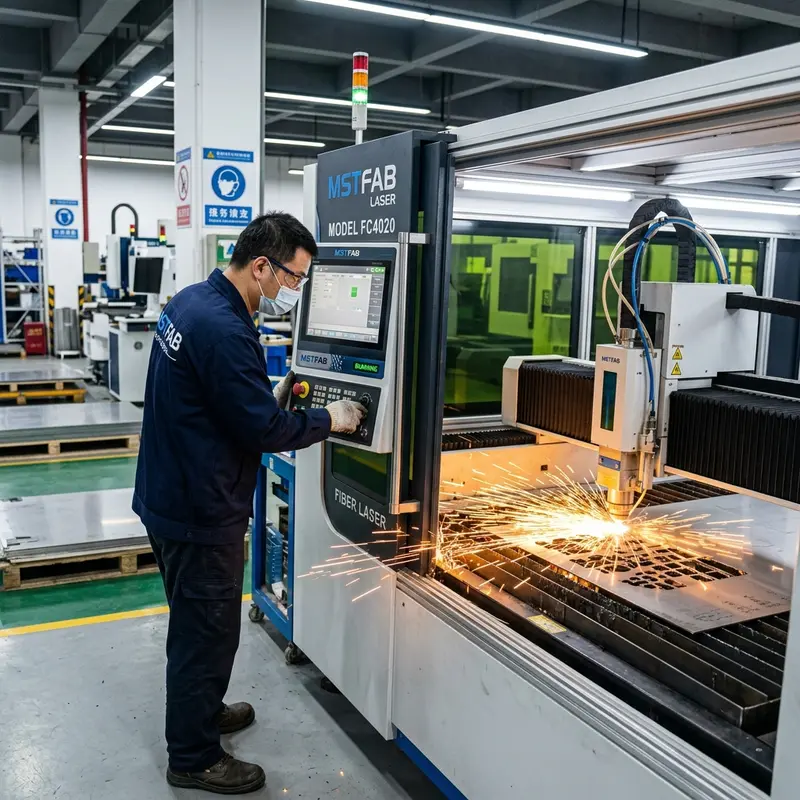
Modern laser cutting is fast, but it is not free. Laser cutting cost is calculated by machine run time and gas consumption. A simple rectangular sheet with four corner mounting holes is extremely fast to cut. A complex ventilation grille with hundreds of small slots or honeycomb patterns requires the laser head to pierce and move thousands of times, which increases cutting time significantly. Choosing a reliable custom sheet metal parts manufacturer ensures that cutting paths are optimized during nesting to reduce wastage and run time.
4. CNC Bending and Tooling
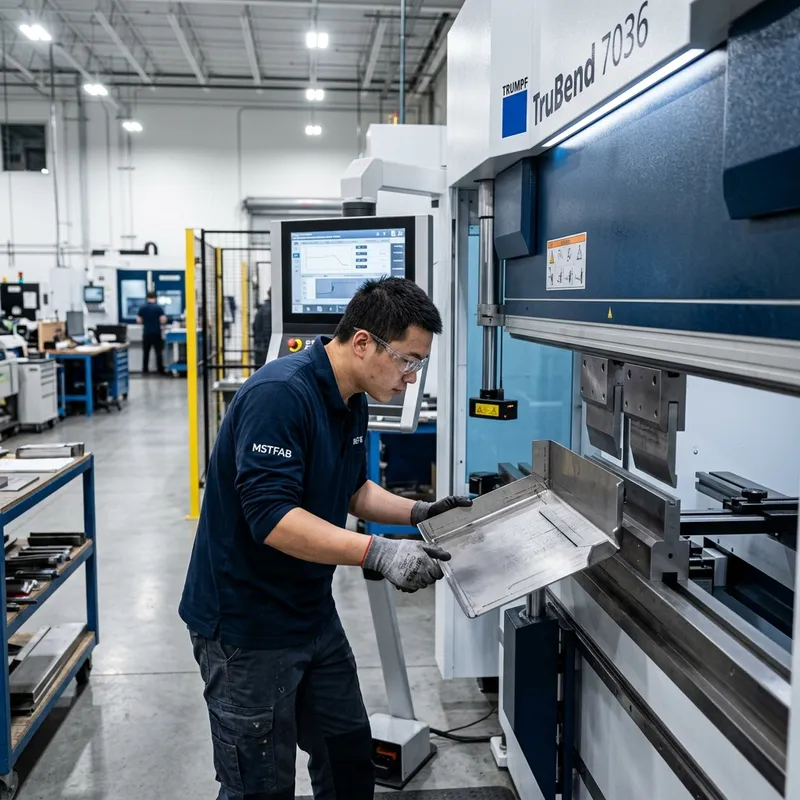
Every bend on a press brake requires setup, tooling check, and manual handling. Our facility specializes in CNC bending sheet metal fabrication. Simple parts with 2 or 3 standard 90-degree bends are quick to produce. But if your design has complex return flanges, offset bends, or tight clearances that require special gooseneck punches, the operator has to spend more time setting up the machine. The best way to optimize bending cost is to use standard bend radii and keep the bend sequence as straightforward as possible.
5. Welding and Post-Weld Finishing
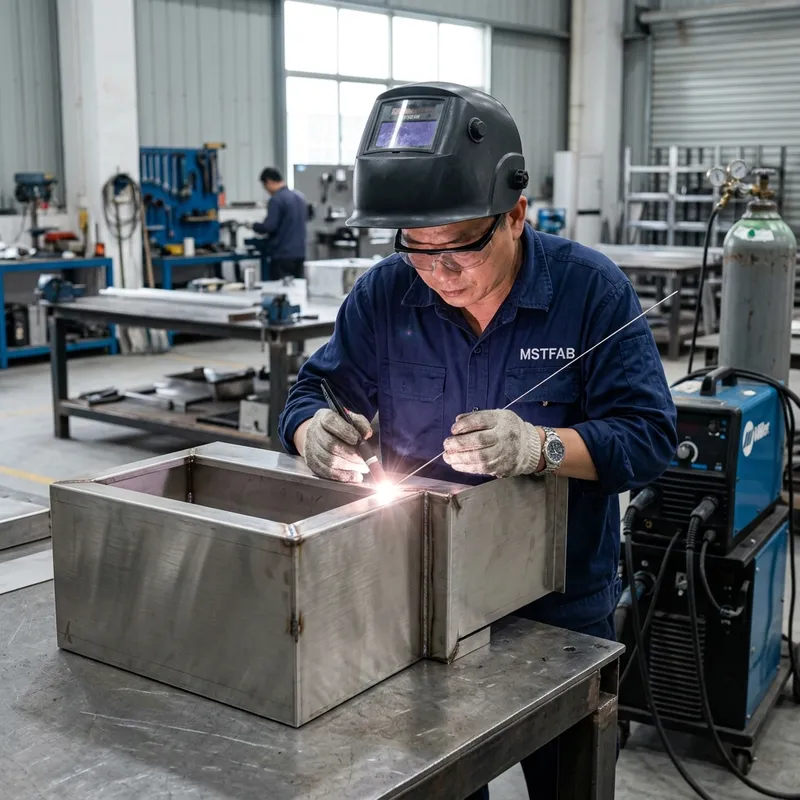
Welding is one of the most labor-intensive processes in sheet metal fabrication. If you need a fully sealed box, a welder has to manually run seams, which adds substantial labor time. Furthermore, welding introduces intense heat, which can warp thin panels. Controlling this distortion requires fixtures and skilled operators. MSTFAB provides professional welded sheet metal fabrication services alongside precise sheet metal welding and finishing services to ensure welds are structurally sound, ground smooth, and cosmetically clean where visible.
6. Surface Finishing and Powder Coating
For outdoor use or cosmetic parts, surface protection is essential. We offer high-quality sheet metal fabrication with powder coating. The cost of powder coating depends on part size, pretreatment requirements, and masking complexity. If your enclosure has threaded grounding studs or internal mating flanges that must remain free of paint, workers must manually apply high-temperature masking tape before spraying. Minimizing complex masking zones is an easy way to lower your finishing costs.
7. Assembly and Hardware Insertion
OEM projects rarely consist of a single sheet of metal. Most require threaded inserts, rivets, hinges, gaskets, or locks. Integrating sheet metal fabrication and assembly services under one roof saves you time and logistics costs. However, inserting 50 PEM standoffs on a mounting plate takes more assembly time and hardware cost than inserting 4 rivet nuts. Always specify the exact hardware part numbers on your drawings to avoid quoting delays.
8. Tolerances and Quality Inspection
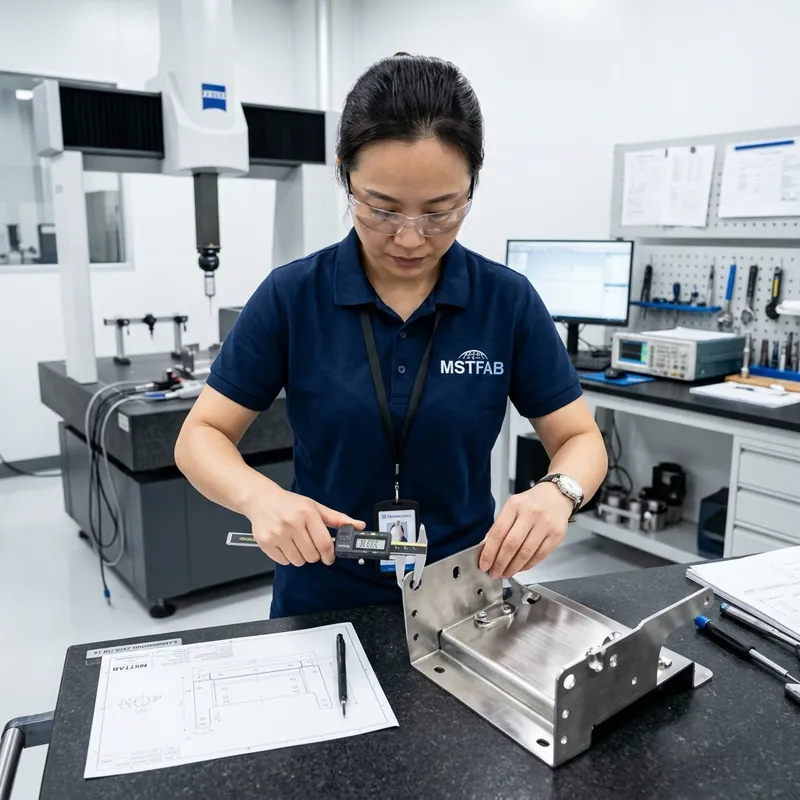
In engineering, tolerances are like fine spices: a little bit makes the assembly perfect, but too much makes it incredibly expensive. If you specify a general tolerance of +/-0.1mm on a large welded cabinet frame, you are forcing the factory to build expensive welding jigs, slow down production, and inspect every single unit with specialized coordinate measuring machines. For most sheet metal parts, standard ISO 2768-m tolerances are perfectly adequate. Apply tight tolerances only where components actually mate.
9. Quantity and Setup Cost
Why is a single prototype so expensive compared to a production run? Because setting up a manufacturing run takes the same amount of programming, laser nesting, and press brake adjustment whether you make 1 part or 1,000 parts. When you order a prototype, that single part has to carry 100% of the engineering and setup costs. When you order a batch of 500, those setup costs are divided by 500, dropping the unit price significantly.
10. Export Packaging and Shipping
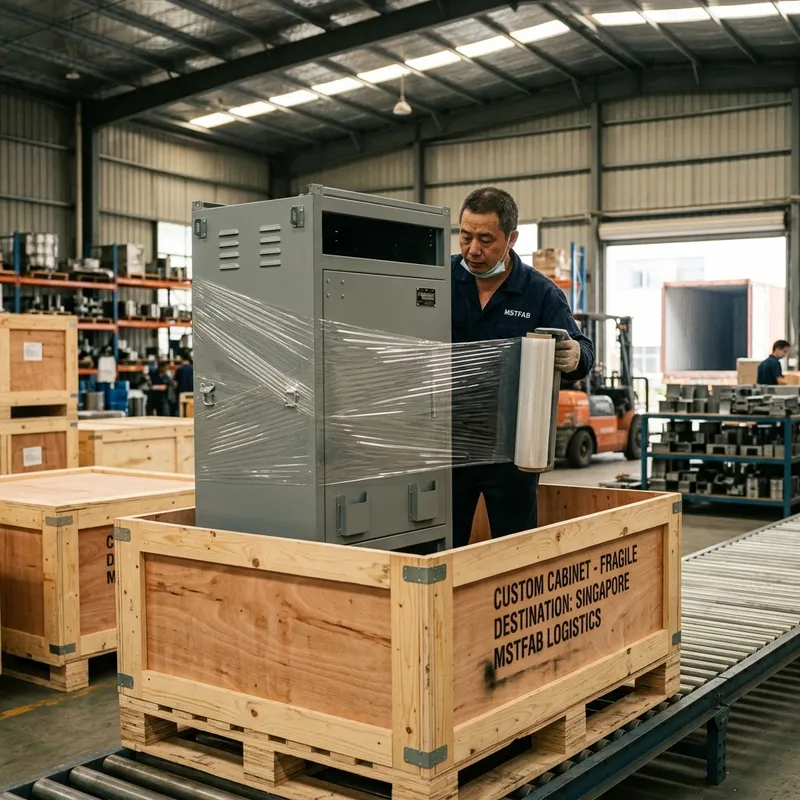
A beautifully fabricated, flawlessly powder-coated enclosure is worth zero dollars if it arrives at your warehouse with forklift scratches or bent corners. For export shipments, packaging is a critical step in the manufacturing process. Large, heavy cabinets must be packed in sturdy wooden crates with foam corner protectors and moisture barriers. Factor in packaging style and transport volume early to avoid surprises on your freight bill.
Cost Drivers by Product Type
Depending on what you are building, different cost components will dominate the quote. Here is what to watch out for across common product categories:
- Machinery Parts: Guard clearances, structural integrity, and edge safety are crucial. Our sheet metal fabrication for machinery parts focuses on weld strength and durable powder coating.
- Electrical Enclosures: IP ratings, gasket seals, and door fitment dominate the design. We specialize in sheet metal fabrication for electrical enclosures, ensuring tight water and dust protection.
- Control Cabinets: Cable entry routing, component mounting plates, and venting are key. Our sheet metal fabrication for control cabinets ensures all internal structures line up for quick wiring.
- Telecom Cabinets: Thermal management (louvers/fans) and standard 19-inch rack spacing drive costs. We provide precision sheet metal fabrication for telecom cabinets.
- Network Cabinets: Structural squareness and door alignment are critical for server slide rails. We offer tailored sheet metal fabrication for network cabinets.
- EV Charger Enclosures: Outdoor weather resistance, rainproofing, and anti-vandalism lock setups are essential. We support brands with sheet metal fabrication for EV charger enclosures.
- Battery Storage Cabinets: Structural integrity to support heavy battery packs, combined with fire-retardant seals. We provide heavy-duty sheet metal fabrication for battery storage cabinets.
- Medical Equipment: Hygiene, visible weld blending, scratch-free finishes, and stainless steel materials dominate the cost. We support medical OEMs with specialized sheet metal fabrication for medical equipment.
How to Keep Your Fabrication Costs Down
If you want to optimize your project budget without sacrificing the quality of your parts, follow these practical tips during the design phase:
- Standardize material thickness: Try to use common sheet gauges. Mixing 1.2mm, 1.5mm, and 2.0mm steel in a single assembly means the factory has to buy and load three different sheets, which increases handling costs.
- Avoid unnecessary welding: If you can replace a welded corner with a folded flange or a rivet joint, do it. It reduces labor time and removes heat distortion risk.
- Keep holes away from bend lines: Placing a hole too close to a bend causes the hole to deform during bending. Correcting this requires extra lasers or manual drilling. Keeping holes at least 3x material thickness away from bend lines prevents this.
- Use general tolerances: Don’t over-specify. Only apply tight tolerances where components fit together.
- Provide clear drawings: Clear engineering drawings reduce quoting risks. A complete drawing package includes both 3D STEP files (for geometry) and 2D PDF files (for material callouts, thread sizes, tolerances, and finishes).
By optimizing your designs for manufacturing (DFM), you can streamline the production workflow, which naturally reduces costs. MSTFAB offers complete custom sheet metal cutting, bending, and welding services. Our engineers review your drawings before quoting to suggest cost-saving DFM improvements.
Ready to Get an Accurate, Zero-Guesswork Sheet Metal Quote?
Fill out the form below, upload your 3D STEP files and 2D PDF drawings, and our engineering team will get back to you with a detailed, manufacturability-reviewed quote. Sourcing from a reliable custom sheet metal parts manufacturer has never been easier.
MSTFAB provides TIG and MIG sheet metal welding services for structural assemblies, cabinets, frames and OEM metal components.
 WeChat Contact
 WhatsApp Me Directly