
Let’s be honest: OEM equipment needs sheet metal parts that do more than look correct on a drawing. They need to fit the product. They need to protect components. They need to support assembly. They need to survive handling, installation, vibration, weather, maintenance, and shipping. They need to repeat in batch production without turning the buyer’s assembly line into a repair station, which highlights the importance of choosing a low volume sheet metal fabrication supplier early on.
MSTFAB is a custom sheet metal fabrication manufacturer and OEM sheet metal enclosure manufacturer in Guangzhou, China, providing custom metal fabrication services for industrial parts and supporting OEM equipment buyers with drawing-based manufacturing for enclosures, cabinets, machine guards, covers, brackets, panels, mounting plates, frames, chassis parts, and welded assemblies. We act as a dedicated custom sheet metal parts manufacturer from CAD drawings and a professional OEM sheet metal fabrication supplier.
We manufacture sheet metal parts according to customer STEP files, PDF drawings, DXF files, samples, and project specifications. Our fabrication support includes:
- Laser cutting
- CNC bending
- Welding
- Grinding
- Deburring
- Hardware insertion
- Rivet nut and PEM hardware installation
- Stainless steel fabrication
- Aluminum fabrication
- Galvanized steel fabrication
- Powder coating
- Surface finishing
- Assembly
- Inspection
- Export packaging
For OEM equipment, a sheet metal part is rarely “just a metal part.” A cabinet affects wiring and installation. An enclosure affects component protection and brand appearance. A guard affects clearance and service access. A bracket affects assembly speed. One wrong hole can stop assembly. One twisted frame can delay shipment. That is why OEM sheet metal fabrication must be controlled from drawing review to packaging.
As a leading industrial sheet metal component manufacturer, MSTFAB supports global industrial buyers with precision enclosures, brackets, and welded panels.
For custom production requirements, working with a reliable precision metal parts fabrication manufacturer ensures that all components align correctly with your target tolerances.
To reduce risk on precision parts, choosing a certified iso certified sheet metal fabrication company guarantees that raw materials, bending angles, and final tolerances are verified at every manufacturing step.
For custom engineering projects, working with a direct custom metal parts manufacturing partner ensures that drawing details, material selections, and tolerances are reviewed before production starts.
To reduce sourcing risks for customized projects, working with an experienced offshore sheet metal job shop for industrial buyers provides the flexible manufacturing capacity and DFM review required to launch components smoothly.
What Does an OEM Equipment Sheet Metal Manufacturer Do?
A sheet metal fabrication manufacturer for OEM equipment produces custom metal parts that become part of the buyer’s finished equipment or machine. If you want to understand the foundational definitions behind this setup, read our guide on what is OEM sheet metal fabrication. For general custom options, check what is custom sheet metal fabrication.
These parts are commonly used for:
- Protection
- Mounting
- Structural support
- Electrical component housing
- Cable routing
- Machine safety guarding
- Outdoor equipment protection
- Ventilation support
- Service access
- Product appearance
- Long-term equipment assembly
Common OEM equipment sheet metal parts include:
- Custom custom sheet metal enclosures (including dedicated custom sheet metal enclosure fabrication services)
- Electrical cabinets
- Control cabinets
- Telecom cabinets
- EV charger enclosures
- Battery storage cabinets
- Machine guards
- Belt guards
- Chain guards
- Fan guards
- Conveyor covers
- Motor covers
- Access panels
- Door panels
- Metal covers
- Mounting brackets
- Support plates
- Internal mounting plates
- Cable entry plates
- Ventilation panels
- Chassis parts
- Base plates
- Welded frames
- Equipment housings
- Outdoor equipment cabinets
- Custom welded assemblies
OEM buyers do not need a supplier who only says, “We can make it.” They need a supplier who understands what “make it” really includes. Can the holes align? Can the bends repeat? Can the welded part stay square? Can the powder coating avoid blocking threads? Can the door close after coating? Can the visible surface survive export shipping? Can the approved sample be repeated in the full batch?
Why OEM Equipment Buyers Need Custom Sheet Metal Fabrication
Standard metal parts may work for simple applications. OEM equipment often needs custom sheet metal fabrication because the metal parts must match a specific product design, internal component layout, installation method, surface finish, and production plan. To learn more about precision standards, review what is precision sheet metal fabrication. For an overview of the industry, read what is sheet metal fabrication.
Custom fabrication allows OEM buyers to control size, metal thickness, hole locations, bend angles, mounting points, cable entries, ventilation openings, door direction, hinge and lock positions, internal mounting plates, guard clearance, bracket strength, surface finish, powder coating color, corrosion protection, packaging method, and batch repeatability.
For OEM equipment, “almost fits” is not acceptable. Almost fits means drilling, grinding, delayed assembly, and extra inspection. That is not cost saving. That is cost relocation. The buyer pays twice. Knowing how to choose a custom sheet metal manufacturer helps prevent these costly surprises.
OEM Equipment Industries We Support
Industrial Equipment
Industrial equipment often needs enclosures, guards, covers, brackets, panels, frames, and welded assemblies. Common parts include industrial control cabinets, machine guards, equipment covers, access panels, motor covers, belt guards, conveyor covers, mounting brackets, welded frames, and chassis parts. Industrial environments are not gentle. There may be vibration, dust, oil, cables, motors, technicians, forklifts, and maintenance schedules. CAD has no vibration. CAD has no forklift damage. Industrial sheet metal parts must be practical, strong, serviceable, and repeatable.
Electrical Equipment
Electrical equipment needs sheet metal parts that support wiring, grounding, installation, and service access. Common parts include electrical enclosures, control cabinets, power distribution cabinets, junction boxes, PLC enclosures, HMI enclosures, cable entry plates, internal mounting plates, door panels, and grounding plates. Enclosure fabrication requires attention to cable entry accuracy, mounting holes, grounding areas, and powder coating masking. A grounding point covered beautifully with powder coating is not useful. It is a decorative problem.
Telecom and Network Equipment
Telecom and network equipment requires cabinets, racks, outdoor enclosures, power cabinets, and support structures. Common products include telecom cabinets, network cabinets, server rack cabinets, outdoor telecom enclosures, wall-mounted network cabinets, UPS battery cabinets, rectifier cabinets, and power distribution cabinets. Telecom equipment needs rack structure accuracy, cable routing space, ventilation openings, door and lock alignment, mounting rails, outdoor coating protection, and export packaging protection.
EV Charging Equipment
EV charging equipment needs enclosures and cabinets that are both functional and visible to the end user. Common parts include EV charger enclosures, outdoor charger cabinets, wall-mounted charger housings, pedestal charger cabinets, cable management covers, display cutout panels, internal mounting plates, ventilation panels, and door panels. EV charger enclosure fabrication requires outdoor powder coating, cable entry accuracy, door sealing surfaces, lock and hinge control, ventilation openings, internal mounting accuracy, visible surface protection, and scratch-resistant packaging.
Battery Storage and Energy Equipment
Battery storage and energy equipment often need sheet metal cabinets, mounting structures, cable entry plates, access panels, and ventilation structures. Common parts include battery storage enclosures, solar battery cabinets, energy storage cabinets, power backup cabinets, internal support plates, cable entry panels, ventilation panels, door assemblies, and welded cabinet frames. MSTFAB manufactures the physical sheet metal enclosure or cabinet according to customer drawings. Battery system design, BMS design, thermal calculation, electrical safety, and final certification must be confirmed by the customer.
Agricultural and Outdoor Equipment
Agricultural and outdoor OEM equipment needs strong, corrosion-resistant, serviceable sheet metal parts. Common parts include farm equipment guards, grain handling parts, agricultural brackets, trailer panels, hoppers, chutes, silo components, outdoor covers, machine guards, and support structures. Agricultural equipment may face mud, dust, rain, crop residue, fertilizer exposure, vibration, outdoor storage, and rough handling. Good agricultural sheet metal fabrication must consider material, thickness, corrosion resistance, mounting accuracy, edge safety, and service access.
Medical and Commercial Equipment
Medical equipment housings and commercial equipment parts often need cleaner appearance, controlled finish, accurate cutouts, and careful packaging. Common parts include equipment housings, stainless steel covers, aluminum panels, door panels, access covers, brackets, mounting plates, and powder coated shells. For visible equipment, surface quality matters. A perfect part that arrives scratched is no longer perfect. It is a complaint with forklift marks.
Custom Sheet Metal Products for OEM Equipment
Custom Sheet Metal Enclosures
Custom sheet metal enclosures protect electrical, electronic, telecom, industrial, EV charging, battery storage, automation, and outdoor equipment components. Enclosure parts may include enclosure bodies, door panels, side panels, top covers, bottom plates, internal mounting plates, cable entry plates, ventilation panels, fan guard panels, display cutout panels, hinge brackets, lock mounting plates, grounding plates, gasket contact surfaces, and welded enclosure frames. An enclosure is not just a box. It is the part everyone sees, touches, installs, opens, closes, and judges. A bad enclosure makes the whole product look cheap.
Custom Metal Cabinets
OEM equipment cabinets require more than basic cutting and bending. We support custom metal cabinet fabrication for electrical cabinets, control cabinets, telecom cabinets, network cabinets, server rack cabinets, EV charger cabinets, battery storage cabinets, power distribution cabinets, industrial equipment cabinets, and outdoor cabinets. Cabinet fabrication requires careful control of cabinet squareness, door gaps, hinge positions, lock areas, cable entry plates, internal mounting plates, ventilation openings, welding distortion, powder coating, and export packaging.
Machine Guards and Protective Covers
OEM equipment often needs custom guards and covers for moving parts, belts, chains, gears, fans, motors, pulleys, conveyors, and service areas. We can fabricate machine guards, belt guards, chain guards, fan guards, conveyor guards, motor covers, drive covers, hinged guards, removable guard panels, perforated guards, and ventilated guards. Machine guards require moving part clearance, accurate mounting holes, safe edges, ventilation openings, service access, hinge and latch alignment, powder coating, and vibration-resistant structure. A guard that rubs a belt is not a guard. It is a problem with a nice finish.
Brackets, Mounting Plates and Support Parts
Custom brackets and plates are used in almost every OEM equipment category. We can manufacture mounting brackets, support plates, sensor brackets, motor brackets, control box brackets, guard mounting brackets, reinforcement plates, wall mounting plates, base plates, internal mounting plates, and custom adapter plates. Brackets look simple. That is why they are dangerous. A bracket with wrong holes is just an expensive drilling template. And nobody orders drilling templates by accident.
Welded Sheet Metal Assemblies
OEM equipment projects often require welded sheet metal assemblies. We support fabrication for cabinet frames, enclosure frames, machine guard frames, support structures, chassis parts, reinforced brackets, base frames, hoppers, chutes, agricultural machinery parts, and industrial equipment housings. Welding adds strength. Welding also adds heat. Heat moves metal. That is not a surprise. That is physics sending an invoice. A strong welded frame that is crooked is not engineering. It is a heavy problem.
Materials for OEM Equipment Sheet Metal Fabrication
Carbon Steel
Carbon steel is strong, cost-effective, and widely used for cabinets, enclosures, guards, covers, brackets, frames, and powder coated assemblies. It is suitable for electrical cabinets, control cabinets, industrial enclosures, machine guards, brackets, support plates, and welded frames. Carbon steel usually needs powder coating or another protective finish for outdoor, humid, or corrosive environments. Raw steel and outdoor weather are not friends. They are the beginning of a rust story.
Galvanized Steel
Galvanized steel offers better corrosion resistance than plain carbon steel and is often used for outdoor, semi-outdoor, agricultural, electrical, and industrial sheet metal parts. It is suitable for mounting plates, outdoor cabinet parts, agricultural guards, ventilation covers, electrical cabinet panels, support plates, and semi-exposed panels. Galvanized steel is useful. It is not magic. If exposed edges are ignored, corrosion can still find them.
Stainless Steel
Stainless steel is used when corrosion resistance, washdown use, premium appearance, chemical exposure, medical equipment, food-adjacent equipment, or fertilizer-related applications matter. Common options include stainless steel 304 and stainless steel 316. It is suitable for stainless steel enclosures, stainless steel cabinets, washdown covers, medical equipment housings, agricultural hoppers, stainless steel guards, and corrosion-sensitive brackets. Stainless steel is corrosion-resistant. It is not invincible. Poor weld cleanup, trapped moisture, contaminated surfaces, aggressive environments, and bad packaging can still create problems.
Aluminum
Aluminum is useful when lightweight construction, corrosion resistance, or easier installation is important. It is suitable for aluminum enclosures, lightweight covers, wall-mounted boxes, outdoor panels, aluminum brackets, portable equipment parts, and equipment housings. Aluminum is not lightweight steel. It bends differently. It welds differently. It scratches more easily. It needs careful forming review. Treating aluminum like steel is how nice CAD becomes annoying samples.
Surface Finishing for OEM Equipment Parts
OEM equipment sheet metal parts often need surface finishing for corrosion resistance, appearance, brand consistency, and product protection. Common finishes include powder coating, outdoor-grade powder coating, wet painting, galvanizing, brushed stainless steel, polished stainless steel, passivation, aluminum surface treatment review, sandblasting, and grinding and polishing. Finish selection should match the real application. “Black powder coating” is not a complete specification. Guessing finish details is how suppliers quote different products under the same part name.
Manufacturing Process for OEM Equipment Sheet Metal Parts
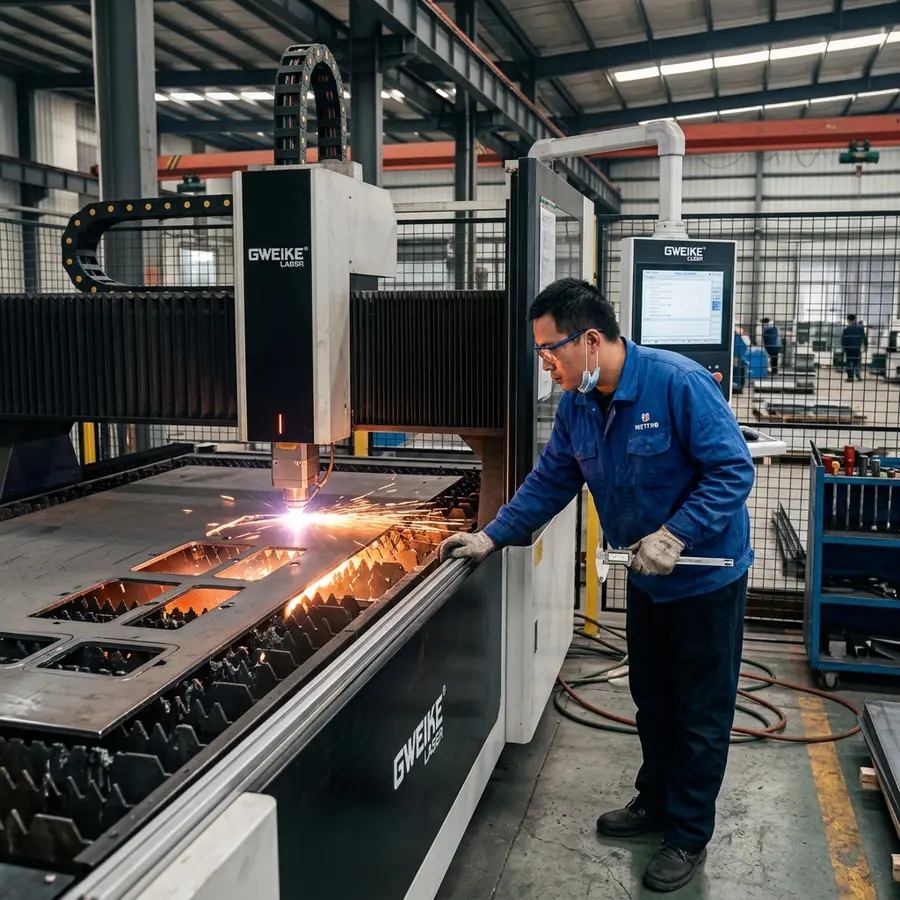
A typical OEM equipment sheet metal fabrication project follows a strict process from RFQ and drawing review, DFM review, material and finish confirmation, to prototype or first article production, laser cutting, deburring, CNC bending, welding, hardware insertion, powder coating, quality inspection, and export packaging. Each step affects the next step. OEM equipment sheet metal fabrication is a chain. One weak link can make the whole order painful.
DFM Review Before Production
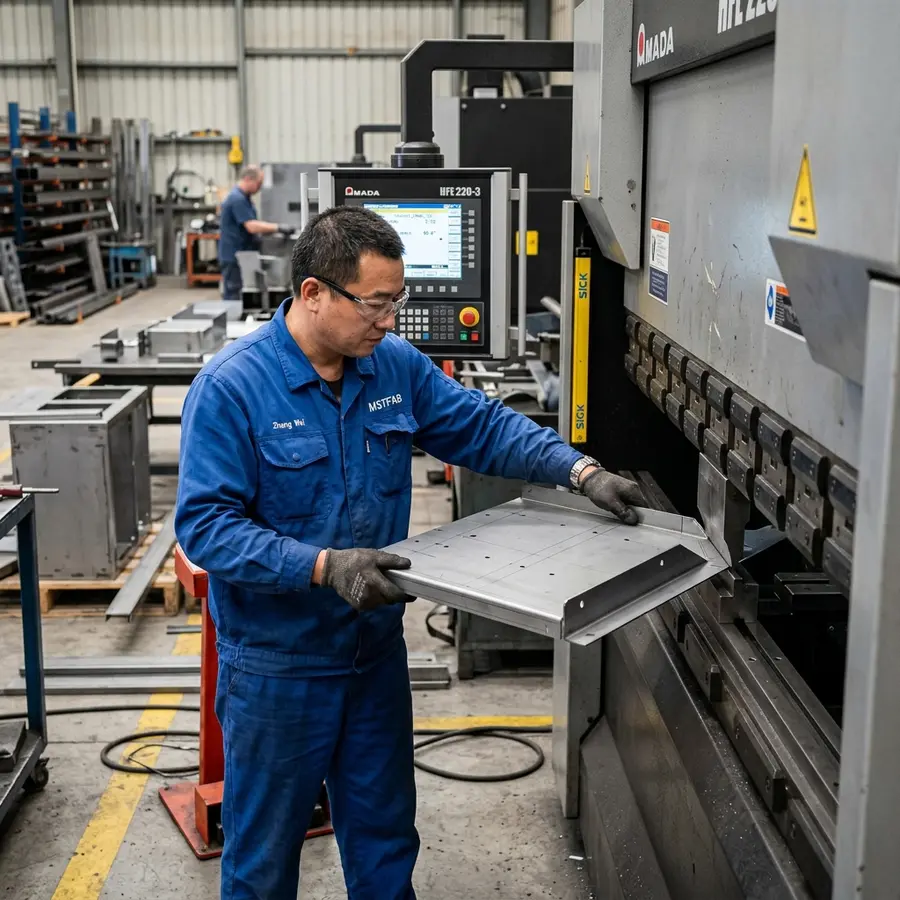
DFM means Design for Manufacturability. For OEM equipment sheet metal parts, DFM review helps identify manufacturing and assembly risks before production starts. A design issue found before cutting is a drawing update. A design issue found after coating is rework, delay, and cost.
Prototype to Batch Production
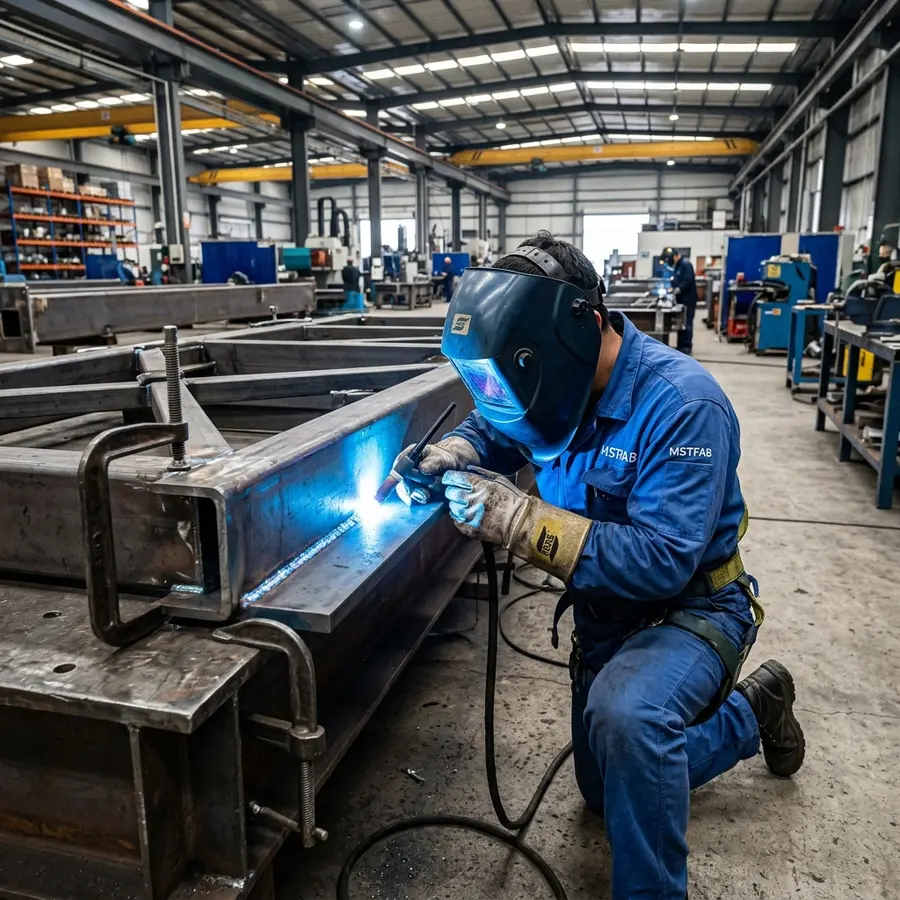
OEM equipment projects often start with prototypes or first articles before batch production, which requires partnering with a sheet metal fabrication company for prototypes and production. A prototype helps confirm overall dimensions, mounting hole positions, bend angles, door fit, guard clearance, welding distortion, and packaging method. One good sample is useful. But the real goal is stable repeat production. For OEM equipment buyers, quality is not proven by one beautiful sample. Quality is proven when the full batch still fits.
Quality Control for OEM Equipment Sheet Metal Parts
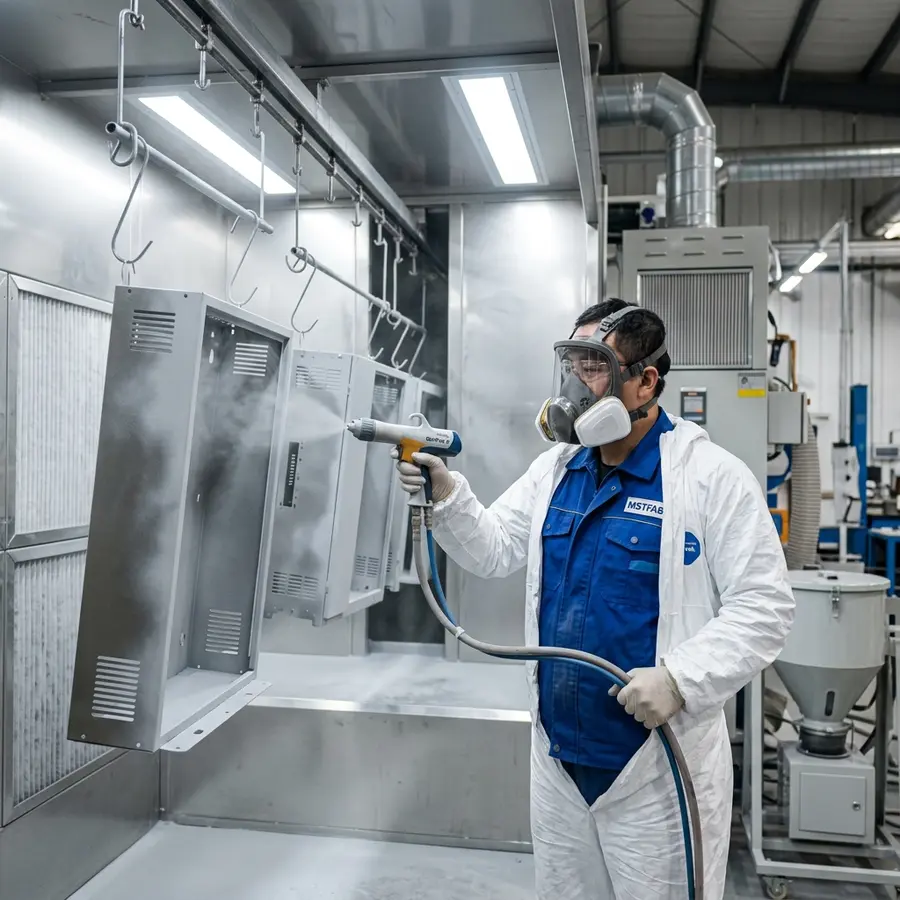
Inspection should verify that finished sheet metal parts match drawings and agreed requirements. Typical inspection items include material confirmation, sheet thickness check, laser cutting dimension inspection, hole position inspection, slot dimension inspection, bend angle inspection, flatness review, welding quality inspection, hardware position check, assembly fit check, surface finish inspection, powder coating appearance review, coating damage review, and packaging inspection. Quality should be checked before shipment. Not discovered after arrival.
Export Packaging for OEM Equipment Parts
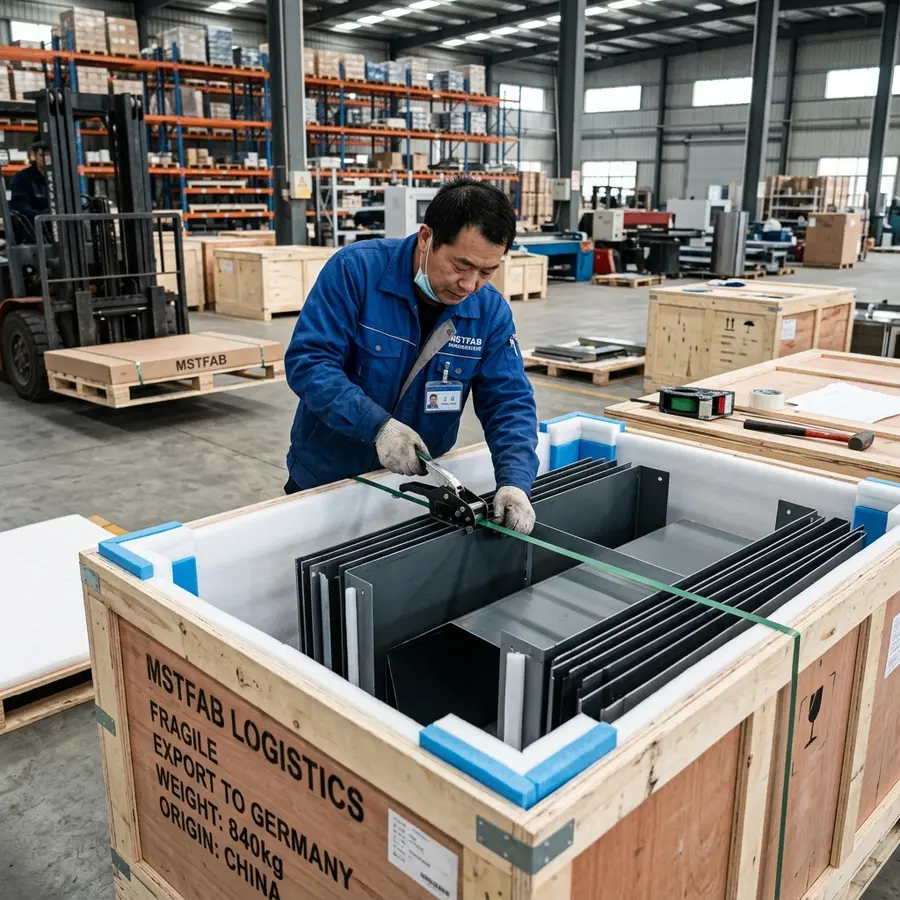
OEM equipment sheet metal parts may have powder coated surfaces, stainless steel brushing, aluminum surfaces, large panels, welded structures, sharp edges, heavy weight, irregular shapes, and visible cosmetic surfaces. Poor packaging can damage finished parts before they reach the buyer’s assembly facility. Packaging should protect finished parts during export shipping. Export packaging may include protective film, foam protection, layer separation, corner protection, pallets, wooden crates, moisture protection, batch labeling, and hardware protection. A perfect OEM sheet metal part that arrives scratched, bent, or chipped is no longer perfect. Packaging is not an afterthought. It is the last quality process before the buyer receives the parts.
Sourcing Comparison Matrix: Red Flag Factory vs. Reliable Partner
Before sending your RFQ to a sheet metal fabrication RFQ supplier, evaluate your potential sheet metal manufacturer using this direct verification table:
| Evaluation Parameter | Red Flag Factory | Reliable Partner (Like MSTFAB) |
|---|---|---|
| RFQ & Drawing Analysis | Quotes in minutes without looking at 2D drawings or asking about tolerances. | Conducts DFM review, requests 2D PDFs for critical tolerances, and queries application environment. |
| Drawing Review | Tells you “no problem” for everything, then blames your CAD file when assembly fails. | Proactively suggests minor adjustments (e.g., bend radius, hole offsets) to avoid cracking or warping. |
| Tooling & Bending | Uses legacy manual press brakes and structural welders that warp thin panels. | Uses high-precision CNC press brakes and TIG welders with dedicated fixtures to maintain squareness. |
| Coating Prep | Applies powder directly to raw metal without degreasing. Paint peels off in sheets. | Multi-stage chemical washing and phosphate treatment to ensure long-term powder coating adhesion. |
| Quality Control | “Squint inspection” right before packing. Zero metrology reports or FAI documents. | Provides FAI reports, checks dimensions with calipers, measures coating thickness, and performs test-fitting. |
| Export Packaging | Wrap in thin plastic, toss in single-wall cartons, and pray. | Uses double-walled boxes, heavy corner foam inserts, wooden crates, and moisture barriers. |
FAQs: Sheet Metal Fabrication Manufacturer for OEM Equipment
What files do sheet metal manufacturers prefer for a quote?
You should always send a 3D STEP file (which shows the exact 3D geometry) and a 2D PDF drawing. The PDF is critical because it specifies tolerances, thread types, material grade, surface finish, and cosmetic requirements that the 3D file doesn’t contain.
How do I know if a factory can achieve my tolerance requirements?
Ask them about their standard tolerance class (e.g., ISO 2768-m or ISO 2768-f). A professional sheet metal shop should have no problem holding ±0.2mm on CNC laser cuts and ±0.5mm on standard bent parts without charging a premium.
Why is TIG welding preferred over MIG welding for cosmetic enclosures?
TIG welding offers much tighter control over the heat input, resulting in cleaner, smaller weld beads that don’t warp the metal. It requires less grinding and finishing, which makes the corners of your enclosures look seamless after powder coating.
What is the most common mistake buyers make when sending an RFQ?
Failing to specify the exact environment (indoor vs. outdoor). An outdoor enclosure requires galvanized steel or aluminum, stainless steel hardware, and UV-resistant powder coating, whereas an indoor enclosure can use cold-rolled steel.
custom sheet metal enclosure fabrication
MSTFAB manufactures custom sheet metal enclosures, electrical cabinets, control boxes and industrial metal housings for OEM buyers.
 WeChat Contact
 WhatsApp Me Directly