
Galvanized Steel Brackets Fabrication
Galvanized steel brackets fabrication is used when buyers need custom zinc-coated steel brackets for mounting, supporting, fixing, reinforcing or assembling industrial equipment.
When looking for options in steel, stainless steel, or aluminum materials, read about our capabilities as a specialized metal mounting bracket fabrication manufacturer.
Galvanized steel brackets are widely used in electrical cabinets, control boxes, telecom cabinets, network cabinets, power distribution equipment, machinery, industrial automation systems, cable management structures and OEM sheet metal assemblies.
Inside industrial enclosures, mounting hardware must align. For cable routing interfaces, see our detailed guide on galvanized cable entry plates manufacturer capabilities.
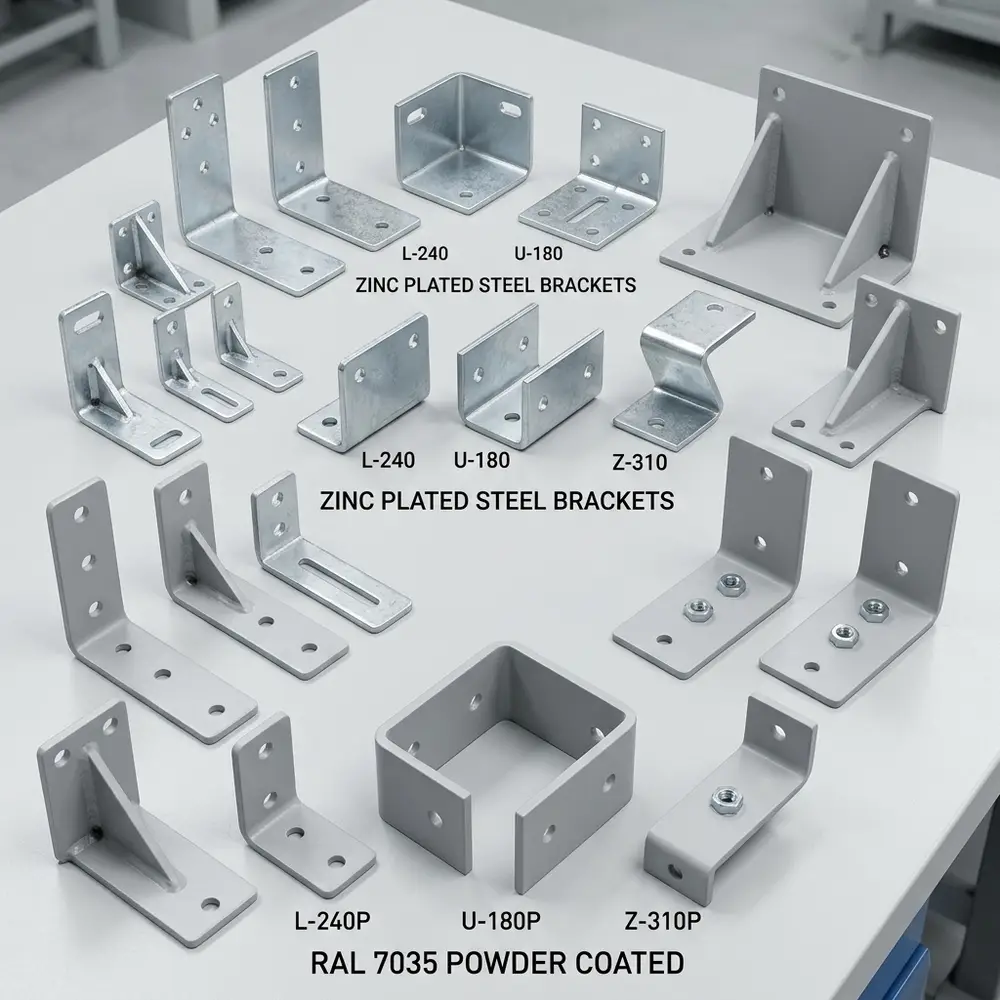
But in real manufacturing, brackets control position, alignment, load direction, assembly speed and product reliability. A bracket with wrong holes is just an expensive drilling template. And nobody orders drilling templates by accident. That is why galvanized steel brackets should be reviewed for material grade, thickness, hole position, bend angle, load direction, hardware installation, surface finish and packaging before production starts.
MSTFAB manufactures custom galvanized steel brackets according to customer STEP files, STP files, PDF drawings, DXF files, DWG files, assembly drawings and BOMs. We support galvanized L-brackets, U-brackets, Z-brackets, wall mounting brackets, support brackets, cabinet brackets, cable support brackets, DIN rail brackets, equipment mounting brackets, machine brackets, brackets with PEM nuts or rivet nuts, and powder coated galvanized brackets.
What Are Galvanized Steel Brackets?
Galvanized steel brackets are sheet metal brackets made from zinc-coated steel sheet. The material may be called SGCC, GI steel, galvanized steel sheet, zinc-coated steel sheet, DX51D galvanized steel, hot-dip galvanized steel sheet, or electro-galvanized steel sheet.
Galvanized brackets are often used when buyers need better corrosion resistance than untreated cold rolled steel while keeping cost lower than stainless steel or aluminum.
A galvanized steel bracket is not only a bent piece of metal. It is a functional support part. If the hole position is wrong, assembly fails. If the bend angle is wrong, the mounted component tilts. If the edge is sharp, it can damage cables or operators. If the coating blocks threads, the bracket becomes rework. If the bracket bends during shipping, the buyer receives a problem instead of a part.
Why Buyers Choose Galvanized Steel Brackets
- Better Corrosion Resistance Than Raw Steel: Raw cold rolled steel can rust quickly if exposed to moisture. Raw steel and moisture are not friends. They are the beginning of a rust story. Galvanized steel has a zinc-coated surface that helps improve corrosion resistance for many indoor and selected semi-exposed applications.
- Cost Control: Galvanized steel brackets can be more cost-effective than stainless steel brackets in many industrial projects. When the application does not require stainless steel, galvanized steel can provide practical corrosion protection at a more controlled cost.
- Good for Cabinet and Equipment Assembly: Commonly used inside electrical cabinets, control boxes, telecom cabinets and machinery to support DIN rails, terminal blocks, cable clamps, mounting plates and control modules.
- Practical Sheet Metal Forming: Galvanized steel can be laser cut, bent, drilled, punched, deburred and assembled into many bracket shapes. The value is receiving brackets that fit, hold, align and assemble correctly.
Galvanized Steel Is Useful, But Not Magic
Galvanized steel has a zinc-coated surface, but buyers should not treat it as a universal corrosion-proof material. Galvanized steel is useful. It is not magic. Important risk areas include laser cut edges, punched holes, drilled holes, bend areas, scratched surfaces, weld zones, ground areas and threaded insert areas.
The zinc coating protects the sheet surface, but cut edges and processed areas may expose steel. For many indoor cabinet brackets, this may be acceptable depending on the design and environment. For outdoor, coastal, chemical, marine or high-humidity environments, the material and coating system should be reviewed more carefully. Material should follow the real application. Not habit. Not guesswork.
Edge Quality and Deburring
Galvanized steel brackets often have sharp edges after laser cutting or punching. Deburring and edge smoothing are critical. A sharp bracket edge can cut cable insulation. A sharp slot can damage a strap or wire. A sharp corner can injure an installer. A burr under powder coating is still a burr. It is just a painted burr.
Edge treatment should be based on part function. A hidden internal support bracket may need practical deburring. A visible bracket may need better edge and surface appearance. A bracket used near cables may need stronger edge smoothing requirements.
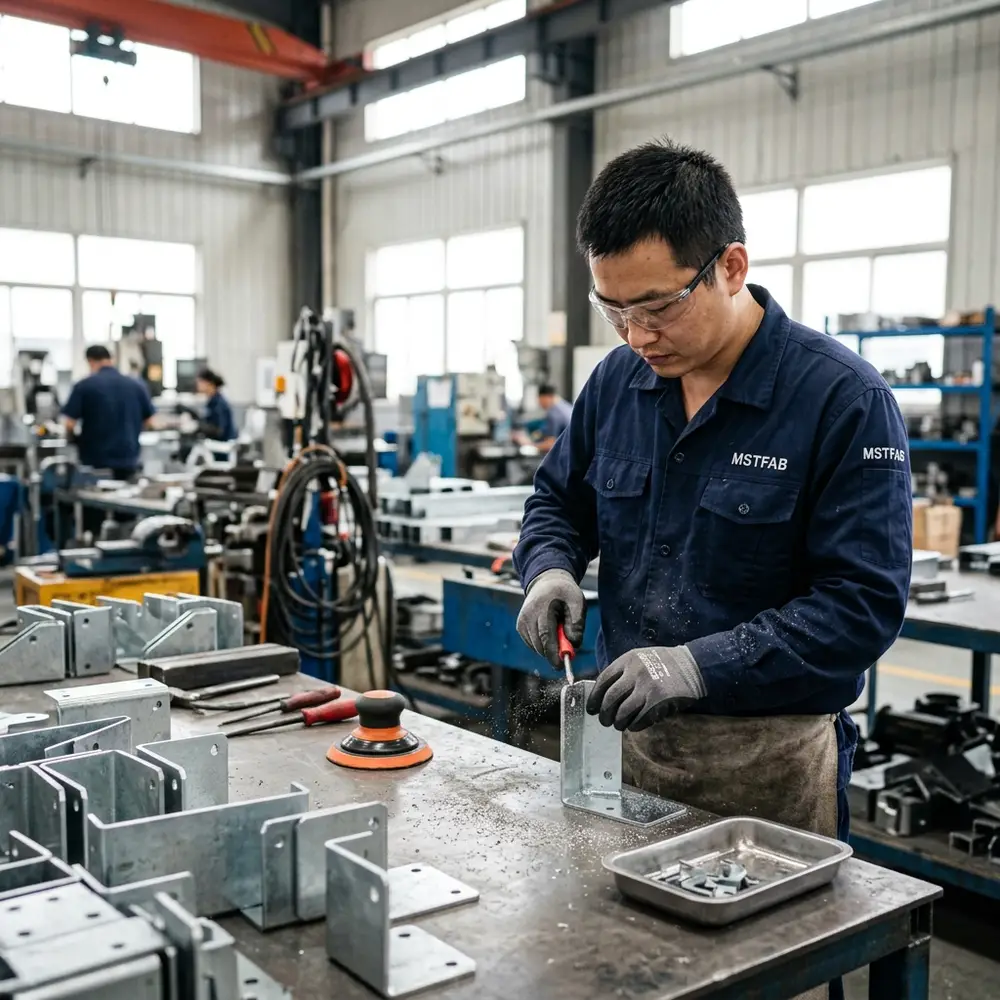
CNC Bending Galvanized Steel Brackets
CNC bending turns laser-cut galvanized steel blanks into formed brackets. Bending may affect the zinc-coated surface at the bend area. Important bending review points include sheet thickness, bend radius, bend angle, bend direction, bend sequence, zinc coating behavior, springback, minimum flange length, hole-to-bend distance, tooling access and critical dimensions after bending.
Good bending looks boring. That is exactly why engineers like it. Boring means holes line up, faces sit flat, the bracket mounts correctly and the assembly team does not need a hammer. Force is not an assembly method. It is a warning sign. If the bracket needs force to fit, the drawing, bend angle or hole position should be reviewed.

Hole Position Accuracy for Galvanized Brackets
Hole position is one of the most important features in bracket manufacturing. If holes are inaccurate, the bracket may not assemble. Common risks include hole position shift, wrong hole diameter, slot too narrow, hole too close to bend line, hole too close to edge, powder coating buildup, threaded insert mismatch and assembly interference. For bracket parts, hole accuracy often matters more than the outside shape, because holes control assembly.
Hole-to-Bend Distance for Galvanized Brackets
If holes or slots are too close to the bend line, they may deform during bending. This can affect hole roundness, slot shape, screw fit, PEM nut installation and rivet nut installation. A CAD model may show a perfect hole near a bend, but real bending may pull or distort it. DFM review helps identify these risks before cutting and bending. A design issue found before production is a question. A design issue found after 1,000 brackets are bent is rework. That is not cost saving. That is cost relocation.
Hardware Installation in Galvanized Brackets
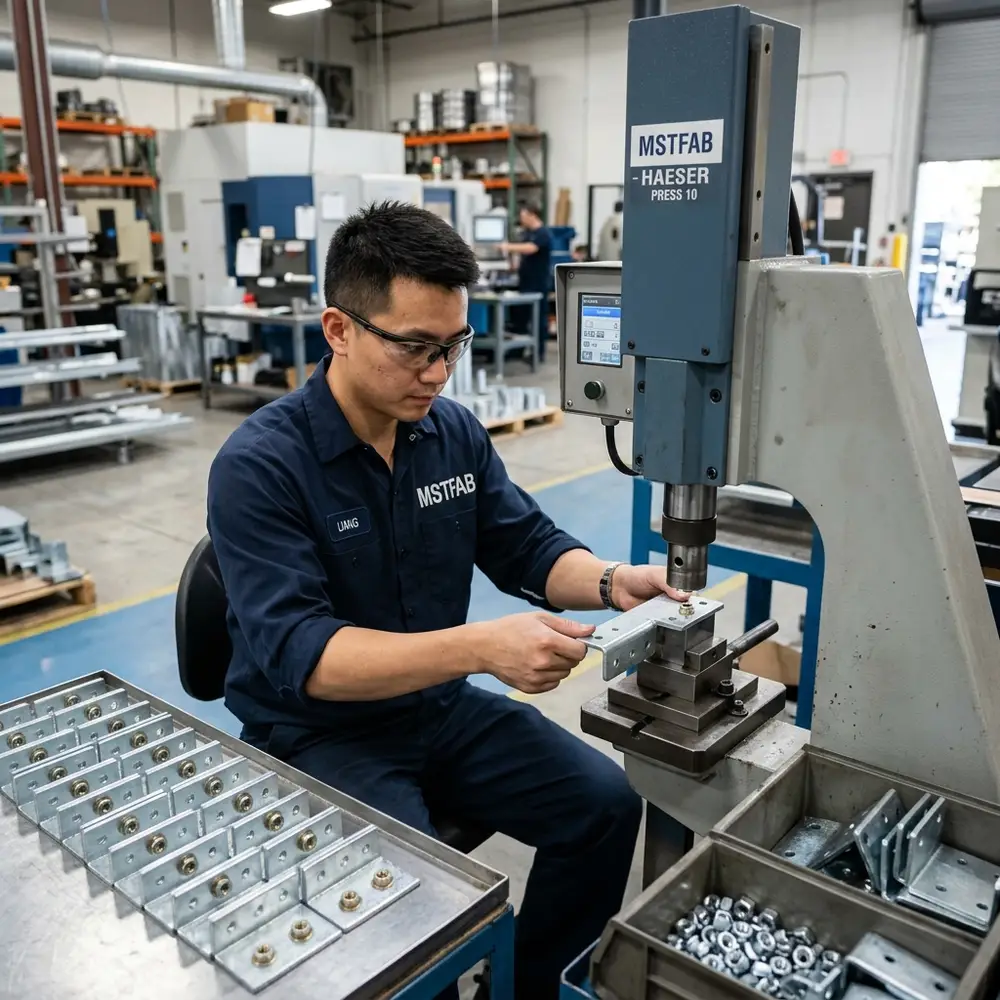
Galvanized steel brackets often require installed hardware: PEM nuts, PEM studs, PEM standoffs, rivet nuts or threaded inserts. Hardware installation should be reviewed with material thickness, hole diameter, installation side, edge distance, hole-to-bend distance and torque requirements. A wrong insert is not a small mistake. It is a hidden failure point. A threaded insert that spins is not a threaded point. It is a round problem with a screw inside it.
Grounding Brackets and Conductive Contact Areas
Some galvanized brackets are used in electrical equipment and may need grounding contact. Grounding brackets may require grounding holes, grounding studs, conductive contact surfaces and masked zones. Powder coating, paint, oil or contamination can block electrical contact. A grounding point covered beautifully with powder coating is not useful. It is a decorative problem. Buyers should clearly mark grounding locations, masking areas, and conductive contact surfaces on drawings.
Trust Comparison: Standard Bracket Shop vs. MSTFAB Integrated Manufacturing
| Feature | Standard Bracket Shop | MSTFAB Integrated Manufacturing |
|---|---|---|
| Hole Accuracy | Low precision punching; holes shift or deform, causing assembly alignment issues. | Controls laser cutting tolerances and bend allowances; ensures mounting holes align. |
| Bend Angle Control | Manual setup without springback check; brackets tilt or sit unevenly during assembly. | CNC bending with angle monitoring; ensures precise angles for flat mounting contact. |
| Edge Deburring | Leaves sharp edges; damages cable insulation and risks worker injury during installation. | Performs deburring and edge smoothing on all profiles, slots and cutouts. |
| Hardware Integration | Uses incorrect insert types or sheet thickness matches; inserts spin or pull out under torque. | Selects and installs genuine PEM hardware or equivalent inserts matched to drawing specs. |
| Hole-to-Bend Relief | Bends directly through close holes, distorting them so screws or pins no longer fit. | Conducts DFM review; flags close holes and recommends relief cuts or position adjustments. |
| Grounding Contact | Coats grounding areas; requires field scraping or causes electrical test failures. | Identifies grounding studs and contact surfaces; applies precise masking tape or silicone caps. |
| Coating Thickness | Uneven powder coat; slots fill up, screws jam, and mating parts do not fit. | Monitors powder coating thickness; maintains assembly tolerances on mounting clearances. |
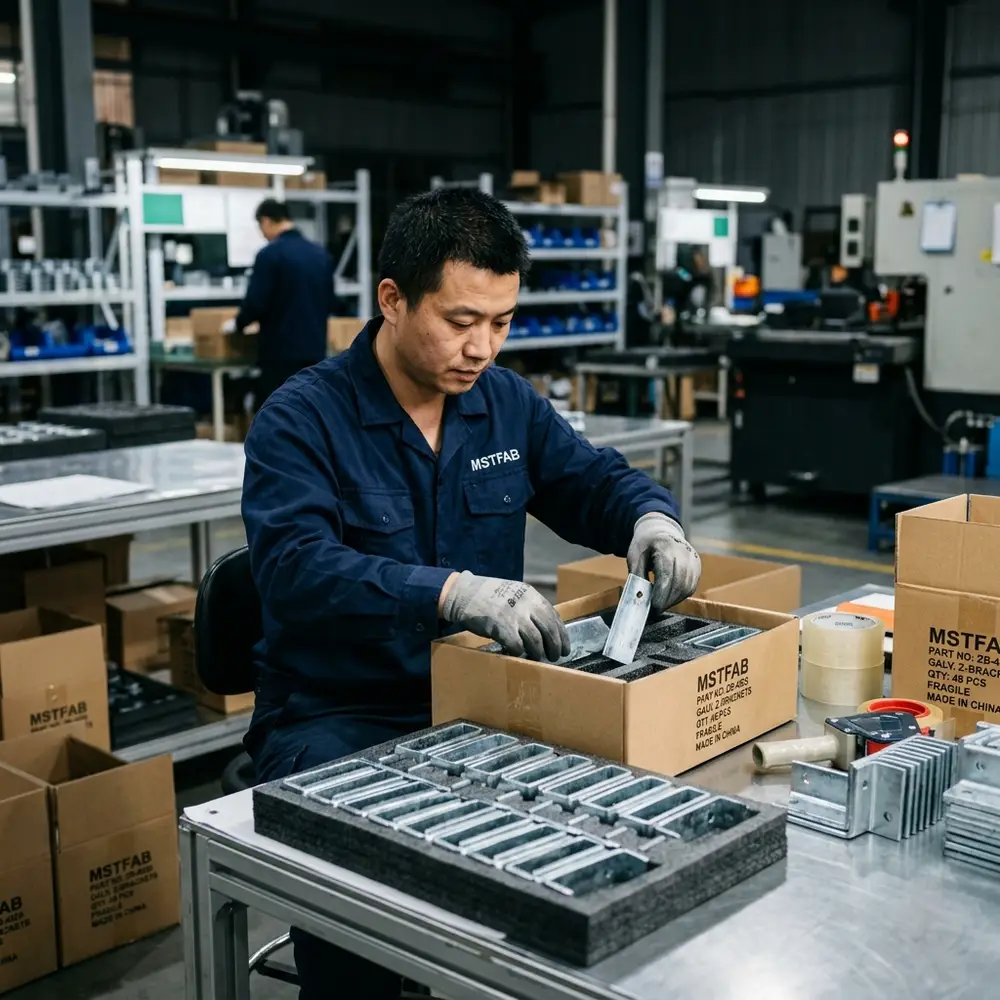
| Packaging Protection | Stacks brackets loose in bags; parts bend, scratch, or zinc chips off during transport. | Wraps brackets individually; uses custom foam separation and crates for export protection. |
Prototype and Batch Production
MSTFAB supports prototype and batch production for custom galvanized steel brackets. Prototype production helps confirm material grade, thickness, laser profile, hole positions, bend sequence, hardware fit and assembly tolerances. Batch production focuses on repeatability. A sample made with heroic manual correction is not manufacturing. It is a magic trick. Magic tricks do not scale. The goal is not one lucky bracket. The goal is a stable manufacturing route that can repeat in batch production.

Drawing Requirements for Galvanized Steel Brackets
For accurate quotation, buyers should provide STEP or STP files, PDF drawings, DXF or DWG files, galvanized steel grade (SGCC or GI), sheet thickness, quantity, bend radius, hole diameters, surface finish, hardware requirements, grounding points and packaging needs. A STEP file shows the shape. A PDF drawing defines the requirements. A screenshot is not a manufacturing file. A drawing that only says “galvanized bracket” is not enough for accurate quotation. A good quote starts with clear specifications, not guesswork.
Request a Galvanized Steel Bracket Quote
Send MSTFAB your drawings and bracket requirements. We will review SGCC/galvanized material, thickness, laser cutting, CNC bending, hole alignment, hardware integration and packaging to prepare a practical fabrication quote.
Upload Galvanized Bracket Drawings →Frequently Asked Questions
What is galvanized steel brackets fabrication?
Galvanized steel brackets fabrication means manufacturing custom zinc-coated steel brackets through processes such as laser cutting, CNC bending, hole processing, deburring, hardware installation, surface finishing review, inspection and packaging.
What galvanized steel bracket types can MSTFAB manufacture?
MSTFAB manufactures custom L-brackets, U-brackets, Z-brackets, wall mounting brackets, support brackets, cabinet brackets, cable support brackets, DIN rail brackets and custom OEM bracket components.
What materials are used for galvanized brackets?
Common materials include SGCC, GI steel, zinc-coated steel sheet, DX51D galvanized steel and other customer-specified galvanized steel grades.
Can galvanized steel brackets be powder coated?
Yes. Galvanized steel brackets can be powder coated, but surface cleaning, pretreatment, coating adhesion, masking, grounding protection and thread protection should be reviewed. Learn more about powder coated galvanized steel sheet metal parts.
Why is hole-to-bend distance important for brackets?
If holes are too close to bend lines, they may deform during bending. This can affect screw fit, hardware installation and assembly accuracy.
Can galvanized brackets use PEM nuts or rivet nuts?
Yes. Galvanized brackets can use PEM nuts, rivet nuts, threaded inserts, studs and standoffs when sheet thickness, hole size and installation sequence are properly planned.
Can galvanized brackets be welded?
They can be welded in some projects, but welding damages the zinc layer around the weld area and requires careful process, safety, cleanup and corrosion protection review.
What files are needed for a galvanized steel bracket quote?
The best RFQ includes STEP or STP files, PDF drawings, DXF or DWG files, material grade, sheet thickness, quantity, bend radius, hole positions, hardware notes, finish requirements, inspection requirements and packaging requirements.
MSTFAB manufactures custom sheet metal enclosures, electrical cabinets, control boxes and industrial metal housings for OEM buyers.
 WeChat Contact
 WhatsApp Me Directly