
Galvanized Cable Entry Plates Manufacturer
A galvanized cable entry plates manufacturer produces custom zinc-coated sheet metal plates used for cable routing, cable gland mounting, wire entry, cabinet access and enclosure assembly.
Cable entry plates are widely used in electrical cabinets, control cabinets, power distribution cabinets, telecom cabinets, network cabinet cable-routing guide, EV charger enclosures, battery storage cabinets, industrial control boxes, automation equipment, machinery enclosures, outdoor equipment housings and OEM sheet metal assemblies.
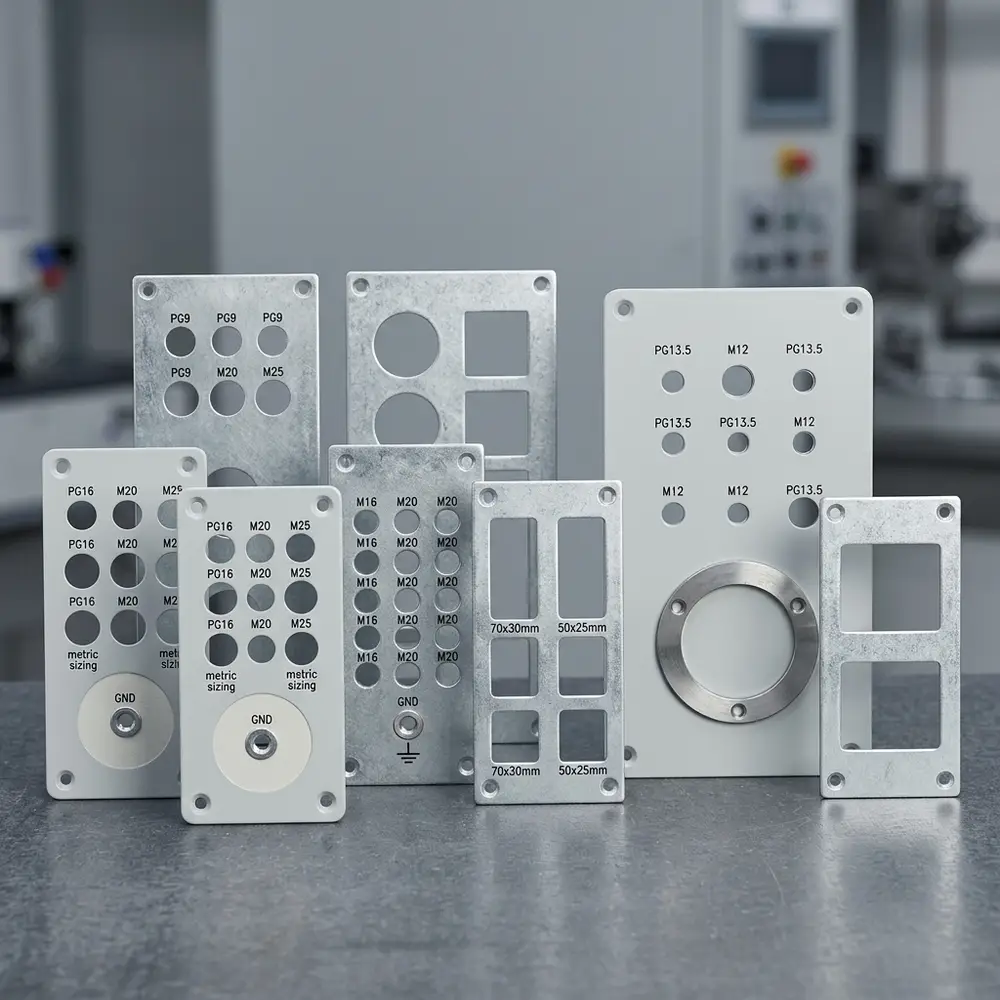
But for real electrical cabinet and enclosure manufacturing, this part controls cable routing, cable gland fit, sealing, grounding, installation speed and long-term reliability. A sharp cable hole is not a small defect. It is a future cable damage problem. A cable entry plate must protect the cable, not cut it.
MSTFAB manufactures custom galvanized cable entry plates according to customer STEP files, STP files, PDF drawings, DXF files, DWG files, assembly drawings and BOMs. We support galvanized cable entry plates, SGCC cable gland plates, zinc-coated steel cable entry panels, and powder coated galvanized cable entry plates with PEM nuts or rivet nuts.
What Is a Galvanized Cable Entry Plate?
A galvanized cable entry plate is a sheet metal plate made from zinc-coated steel, usually installed on an enclosure, cabinet or equipment housing to allow cables to enter or exit through controlled openings.
The material may be called SGCC, GI steel, galvanized steel sheet, zinc-coated steel sheet, DX51D galvanized steel, hot-dip galvanized sheet, or electro-galvanized sheet. The plate may include cable gland holes, circular cable holes, rectangular cutouts, slot holes, mounting holes, grounding holes, PEM nut holes, rivet nut holes, and gasket contact surfaces.
A cable entry plate is not only a cover. It is an interface between the cabinet and the cable system. If the hole size is wrong, the cable gland may not fit. If the edge has burrs, the cable may be damaged. If the plate is not flat, sealing may fail. If coating blocks holes or threads, assembly becomes rework.
CAD has no burrs. CAD has no sealing gap. CAD has no cut-edge corrosion. CAD has no coating buildup. CAD has no scratched finish. CAD has no packaging deformation. Real manufacturing does. That is why cable entry plates need practical manufacturing review before production starts.
Why Buyers Need Custom Galvanized Cable Entry Plates
Many equipment manufacturers cannot use standard off-the-shelf cable entry plates because their cabinet layout, cable routing and gland requirements are specific. Buyers may need custom cable entry plates for different cable gland sizes, hole quantities, spacing, custom enclosure layouts, gasket requirements, and grounding requirements.
A standard plate may not match the cabinet. A wrong hole pattern may delay final assembly. A rough edge may damage cable insulation. A poorly packed plate may arrive bent and fail sealing. For industrial buyers, the cable entry plate is small, but the risk is not small. If the installer needs a drill, grinder, and emotional support, the part was not ready.
Why Galvanized Steel Is Used for Cable Entry Plates
- Zinc-Coated Surface Protection: Galvanized steel has a zinc-coated surface that provides better corrosion resistance than untreated cold rolled steel in many indoor and selected semi-exposed applications. Raw steel and moisture are not friends. They are the beginning of a rust story.
- Practical Cost: Galvanized steel is often more cost-effective than stainless steel or aluminum for many cabinet internal parts, mounting plates and cable entry plates.
- Good Fabrication Performance: SGCC and GI sheet can be cut, punched, bent, deburred and assembled into custom cable entry plates.
However, galvanized steel is useful. It is not magic. Cut edges, holes, slots, bends, weld zones and scratched areas still need review. Laser cutting exposes raw steel at the cut edges. For indoor cabinet parts, cut-edge exposure may be acceptable depending on the environment. For outdoor, humid, or corrosive environments, cut-edge corrosion risk should be reviewed, and powder coating or alternative materials like stainless steel or aluminum should be considered.
Laser Cutting Cable Gland Holes
Laser cutting is commonly used to produce galvanized steel cable entry plate blanks. It can create precise Metric or PG gland holes, rectangular cutouts, and custom mounting slots.
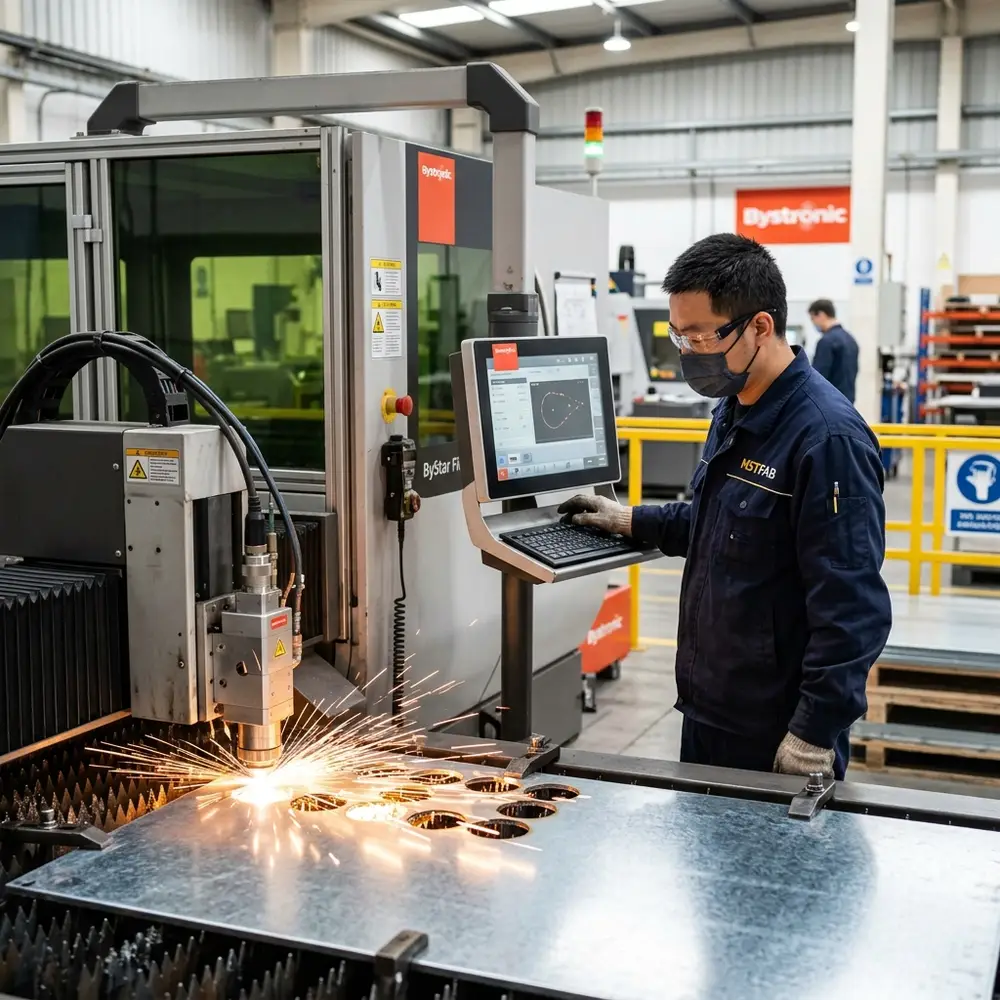
Cable Gland Hole Accuracy
Cable gland hole size is one of the most important details in cable entry plate manufacturing. Holes may need to match Metric cable glands, PG cable glands, NPT threaded adapters, or rubber grommets. If the hole is too small, the gland cannot be installed. If the hole is too large, sealing or locking may fail. If hole spacing is wrong, glands may interfere with each other. If holes are too close to the edge, the plate may deform or become weak.
A hole is not just a hole when it holds a cable gland. It is a functional interface. A cable entry plate with wrong holes is just an expensive drilling template. And nobody orders drilling templates by accident.
Burr Control and Edge Smoothing
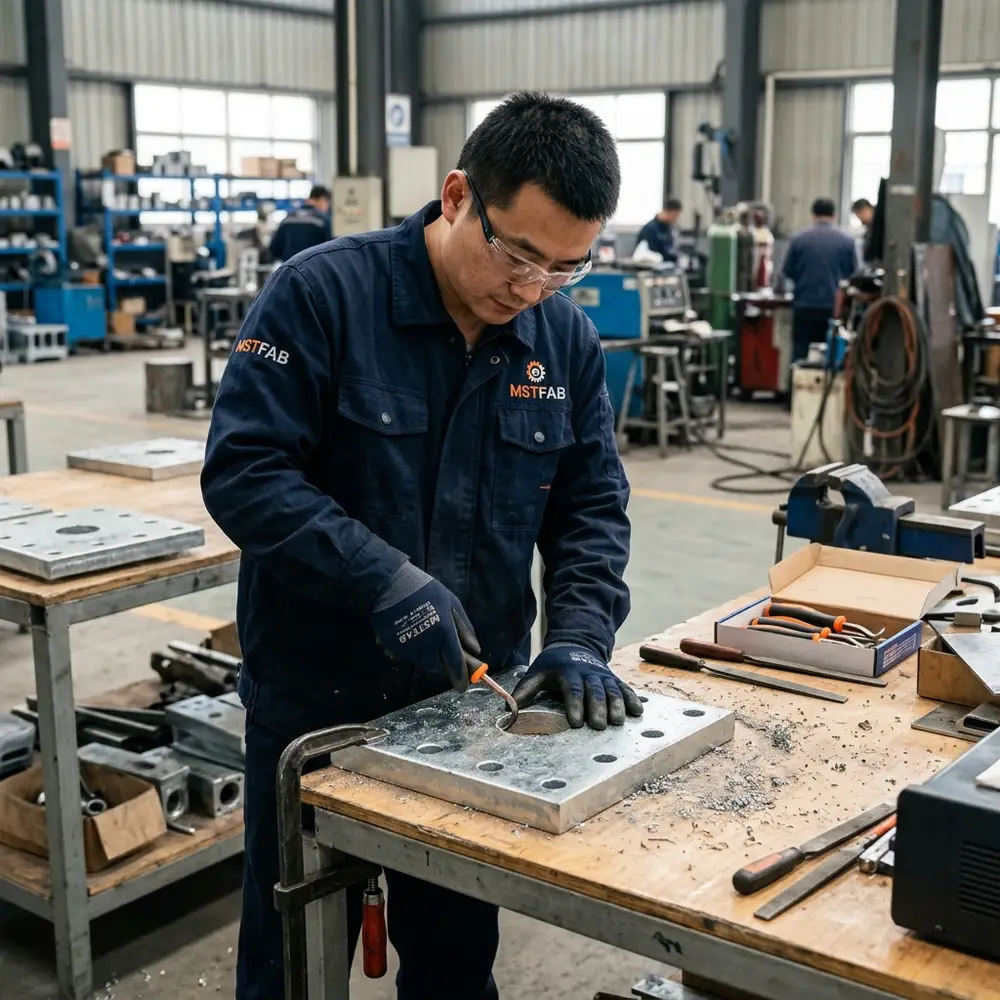
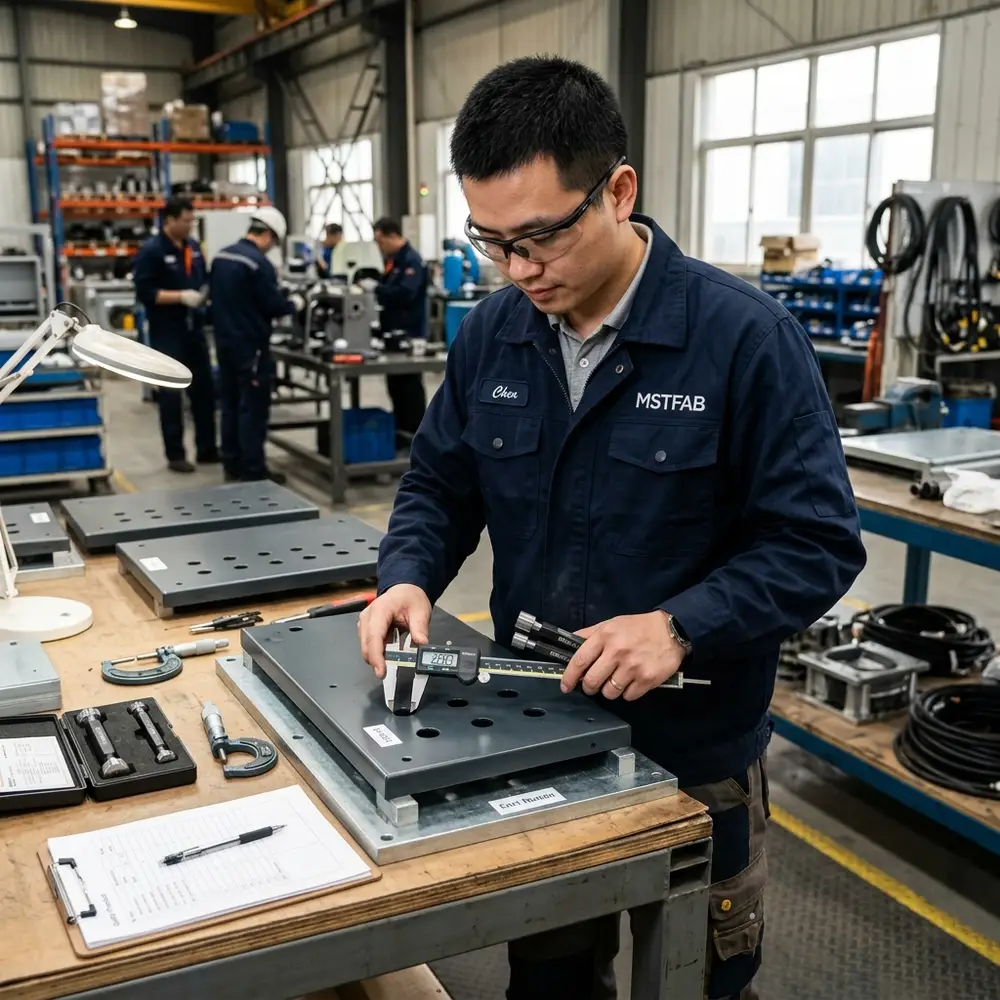
Burr control is critical for cable entry plates because cable holes and slots may directly contact cable jackets, wire harnesses, rubber seals, and installer hands. Burrs and sharp edges can cause cable insulation damage, poor gland fit, gasket damage, worker injury, and assembly difficulty.
CAD has no burrs. Real laser-cut and punched holes do. That is why cable entry plates often require hole deburring, edge smoothing, burr removal, corner cleaning, and hand-safe edge review. A sharp cable entry edge is not acceptable. It is a future failure point. For cable entry plates, edge quality protects the cable and the installer.
Flatness and Sealing Surface
Many cable entry plates are installed with a gasket, seal, foam strip or cabinet mating surface. If the plate is not flat, sealing may be affected. Important review points include plate flatness, hole distortion, burrs on gasket surfaces, powder coating buildup, and plate deformation during shipping. If the plate is warped or twisted, the gasket may not compress evenly, creating a sealing risk.
Hardware Installation for Cable Entry Plates
Galvanized cable entry plates may require installed hardware depending on the enclosure design. Common hardware includes PEM nuts, PEM studs, PEM standoffs, rivet nuts or threaded inserts. A wrong insert is not a small mistake. It is a hidden failure point. A threaded insert that spins is not a threaded point. It is a round problem with a screw inside it. If cable entry plates need PEM nuts or rivet nuts, drawings should define the hardware part numbers or thread specs.
Powder Coated Galvanized Cable Entry Plates
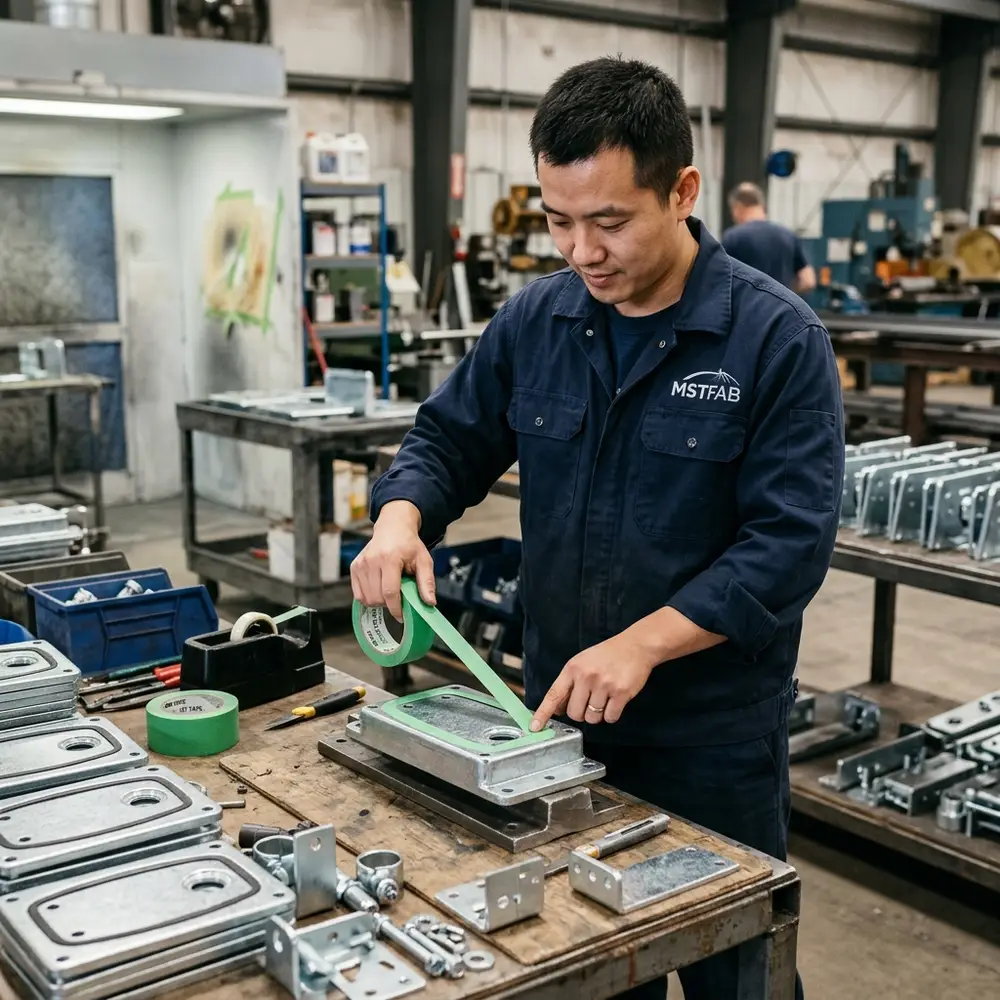
Some galvanized cable entry plates require powder coating for color, additional surface protection or cabinet appearance. Powder coating is not just color. It changes the part geometry and function. A hole that fits before coating may become too tight after coating. A cable gland hole with too much coating buildup may create assembly problems. A grounding point covered beautifully with powder coating is not useful. It is a decorative problem. Drawings should define color or RAL codes, gloss levels, masking areas, grounding points, thread protection, and gasket contact surfaces.
Grounding Points and Conductive Areas
Cable entry plates may need grounding points or conductive contact areas, especially in electrical cabinets and power equipment. Grounding features may include grounding holes, grounding studs, grounding symbols, and no-coating areas. Powder coating, paint, oil or contamination can block electrical contact. A grounding point covered beautifully with powder coating is not useful. It is a decorative problem. Buyers should clearly mark grounding locations, masking areas, and conductive contact surfaces on drawings.
Trust Comparison: Standard Plate Shop vs. MSTFAB Integrated Manufacturing
| Feature | Standard Plate Shop | MSTFAB Integrated Manufacturing |
|---|---|---|
| Gland Hole Accuracy | Inaccurate hole diameter; glands do not fit, threads bind, or sealing nuts fail to lock. | Precision laser cuts/punches; checks tolerances against PG/Metric/NPT gland standards. |
| Edge Deburring | Leaves micro-burrs; cuts wire jackets during cable pulling and causes electrical shorts. | Ensures 100% deburred and smoothed inner and outer edges on all cable holes and slots. |
| Plate Flatness | Warped plates from heat or punching; causes uneven gasket compression and IP rating leaks. | Maintains strict flatness; performs stress-relieving and inspection on flat layout plates. |
| Coating Buildup | Thick powder coat in holes; gland threads get jammed, requiring manual scraping in the field. | Applies clean, controlled powder coating; uses plugs or masking on critical gland holes when needed. |
| Grounding Masking | Coats grounding studs or contact rings; blocks electrical continuity, causing QC test failures. | Applies precise high-temperature masking tape or silicone caps over grounding areas. |
| Hardware Integration | Uses incorrect PEM nut sizes or press force; studs loosen, spin, or fall off during installation. | Selects and installs genuine PEM hardware matched to sheet thickness. |
| Cut Edge Protection | Exposes raw edges in coastal applications; rust creeps under the powder coat, causing peeling. | Reviews application environment; recommends proper coating coverage or alternative materials. |
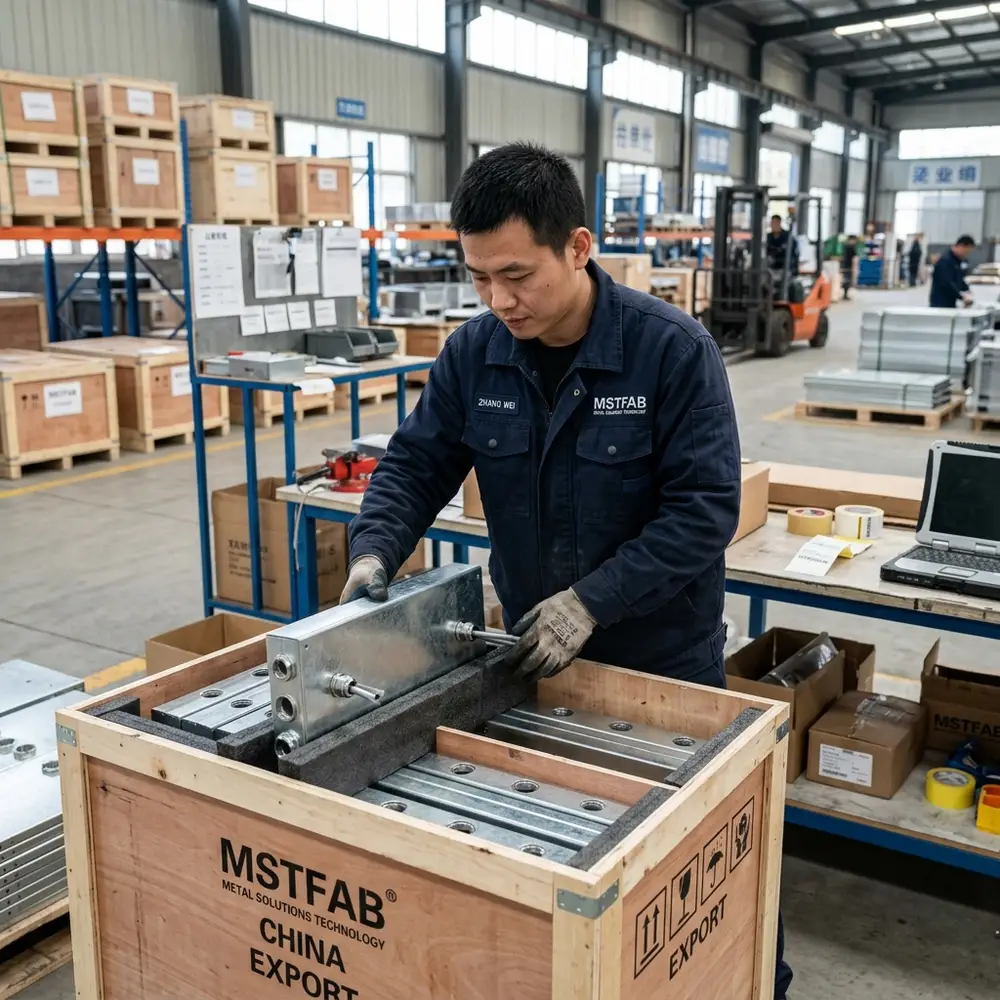
| Packaging Protection | Stacks plates loose; corners bend, surfaces scratch, and gasket sealing faces get damaged. | Packages plates with layer separation, custom foam spacers, and heavy export crates. |
Prototype and Batch Production
MSTFAB supports prototype and batch production for custom galvanized cable entry plates. Prototype production helps confirm material grade, thickness, hole size, hole spacing, cable gland fit, burr control, edge smoothing, gasket surface, hardware installation, and assembly fit. Batch production focuses on repeatability. A sample made with heroic manual correction is not manufacturing. It is a magic trick. Magic tricks do not scale. The goal is not one lucky cable entry plate. The goal is a stable manufacturing route that can repeat in batch production.
Drawing Requirements for Galvanized Cable Entry Plates
For accurate quotation, buyers should provide STEP or STP files, PDF drawings, DXF or DWG files, galvanized steel grade (SGCC or GI), sheet thickness, quantity, cable gland hole sizes, spacing, mounting hole details, gasket surfaces, powder coating requirements, masking areas, grounding points, and packaging requirements. A STEP file shows the shape. A PDF drawing defines the requirements. A screenshot is not a manufacturing file. A drawing that only says “cable entry plate” is not enough for accurate quotation.
Request a Galvanized Cable Entry Plate Quote
Send MSTFAB your drawings and cable entry panel specifications. We will review SGCC/galvanized material, hole dimensions, deburring, hardware integration, masking, and packaging to prepare a practical fabrication quote.
Upload Cable Entry Plate Drawings →Frequently Asked Questions
What is a galvanized cable entry plate?
A galvanized cable entry plate is a zinc-coated sheet metal plate used on electrical cabinets, control boxes, enclosures and equipment housings to allow cables to enter through controlled holes or openings.
What material is used for galvanized cable entry plates?
Common materials include SGCC, GI steel, zinc-coated steel sheet, DX51D galvanized steel and other customer-specified galvanized steel grades.
Can MSTFAB manufacture custom cable gland plates?
Yes. MSTFAB manufactures custom cable gland plates according to customer drawings, hole sizes, hole spacing, material thickness, finish requirements and quantity.
Why is deburring important for cable entry plates?
Deburring is critical because cable holes and slots may contact cable jackets, wire harnesses, or installer hands. Sharp edges can damage cable insulation or create handling hazards.
Can galvanized cable entry plates be powder coated?
Yes. Galvanized cable entry plates can be powder coated, but surface cleaning, pretreatment, coating adhesion, masking, grounding protection, and thread protection should be reviewed. Learn more about powder coated galvanized steel sheet metal parts.
Does laser cutting affect galvanized steel corrosion resistance?
Laser cutting exposes raw steel at the cut edges. Cut-edge protection should be reviewed depending on the application environment and coating requirements.
Can cable entry plates include PEM nuts or rivet nuts?
Yes. Cable entry plates can include PEM nuts, rivet nuts, threaded inserts, studs and standoffs when the drawing and BOM define the requirements.
Are galvanized cable entry plates suitable for outdoor enclosures?
It depends on the galvanized material, cut-edge protection, coating system, sealing design and environment. Outdoor, coastal or corrosive applications should be reviewed carefully.
Can MSTFAB guarantee IP ratings for cable entry plates?
MSTFAB manufactures the physical sheet metal parts according to customer drawings. Final IP rating, sealing performance, gasket design, and enclosure validation should be confirmed by the customer or qualified engineering party unless separately agreed.
What files are needed for a galvanized cable entry plate quote?
The best RFQ includes STEP or STP files, PDF drawings, DXF or DWG files, material grade, sheet thickness, hole sizes, hole spacing, cable gland type, finish requirements, grounding notes, hardware notes, inspection requirements and packaging requirements.
MSTFAB manufactures custom sheet metal enclosures, electrical cabinets, control boxes and industrial metal housings for OEM buyers.
 WeChat Contact
 WhatsApp Me Directly