Use this page for galvanized material selection
This article focuses on galvanized material and coating selection, not broad manufacturer evaluation. That clearer intent helps buyers and search engines understand why the page exists.
This page has been separated from the factory audit checklist so Google and buyers can see the job of this article clearly. The useful question here is not “can someone make metal parts?” It is: what should a buyer check before sending drawings, approving a quote or moving into production?
- Choose galvanized sheet when corrosion resistance is needed with controlled cost.
- Confirm zinc coating and powder coating compatibility.
- Review bending and welding areas for coating damage.
- Specify exposed edges and outdoor use conditions.
- Ask for finish inspection and packing evidence.
| 1 | Choose galvanized sheet when corrosion resistance is needed with controlled cost. |
| 2 | Confirm zinc coating and powder coating compatibility. |
| 3 | Review bending and welding areas for coating damage. |
| 4 | Specify exposed edges and outdoor use conditions. |
| 5 | Ask for finish inspection and packing evidence. |
Cost-Effective Corrosion Protection for OEM Assemblies
Galvanized steel (such as SGCC grade) provides an excellent balance of corrosion resistance, structural strength, and cost-efficiency. It is widely used for electrical enclosures, internal mounting panels, industrial cabinets, and outdoor equipment components. By coating carbon steel with a protective layer of zinc, galvanized sheet metal prevents oxidation under normal operating conditions. However, processes like laser cutting and welding expose the underlying steel, requiring targeted corrosion protection. MSTFAB is a professional, drawing-based precision sheet metal fabrication manufacturer specializing in custom galvanized steel parts and assemblies.
Our custom galvanized sheet metal fabrication services support a wide range of OEM products:
- Custom sheet metal enclosures & terminal boxes
- Custom electrical enclosures & junction boxes
- Industrial control cabinets & modular enclosures
- Telecom & network enclosures
- EV charger enclosures & public charging stations
- Battery storage enclosures & power modules
- Machine guards, covers, & belt shields
- Welded frames, support structures, and equipment bases
During the design phase, our team conducts a thorough DFM review to evaluate raw edge exposure, welding zones, powder coating compatibility, and hardware requirements. This ensures the components assemble correctly and perform reliably in the field.
Material Comparison: Galvanized Steel vs. Stainless Steel vs. Aluminum
Selecting the right material involves balancing environmental requirements, weight, and budget. Galvanized steel serves as a practical option between standard carbon steel and premium metals:
| Material Type | Corrosion Resistance | Weight & Strength | Cost Profile | Best Application |
|---|---|---|---|---|
| Galvanized Steel (SGCC) | Moderate (Zinc-Coated Protection) | High Weight, High Strength | Cost-Effective | Indoor/semi-outdoor cabinets, brackets, mounting plates |
| Stainless Steel (304/316) | Excellent (Self-Passivating) | High Weight, Very High Strength | Premium Cost | Washdown areas, marine exposure, exposed cosmetic panels |
| Aluminum (5052/6061) | High (Natural Oxide Film) | Light Weight, Moderate Strength | Medium-High Cost | Wall-mounted enclosures, aviation parts, weight-sensitive frames |
Custom Galvanized OEM Components We Manufacture
Galvanized Enclosures and Control Junction Boxes
We fabricate galvanized electrical enclosures and junction boxes. Using fiber lasers, we cut precise profiles for knockouts and cable entries. For enclosures that require powder coating, we follow a multi-stage chemical pretreatment process to ensure coating adhesion on the zinc-coated surface.

Industrial Equipment Cabinets and Chassis
Modular cabinets and control chassis require structural rigidity. We manufacture galvanized cabinet components, including internal mounting plates, side panels, and gland plates. We maintain squareness and door alignments by utilizing mechanical riveting instead of welding, preserving the protective zinc coating.

Precision Mounting Brackets and Base Plates
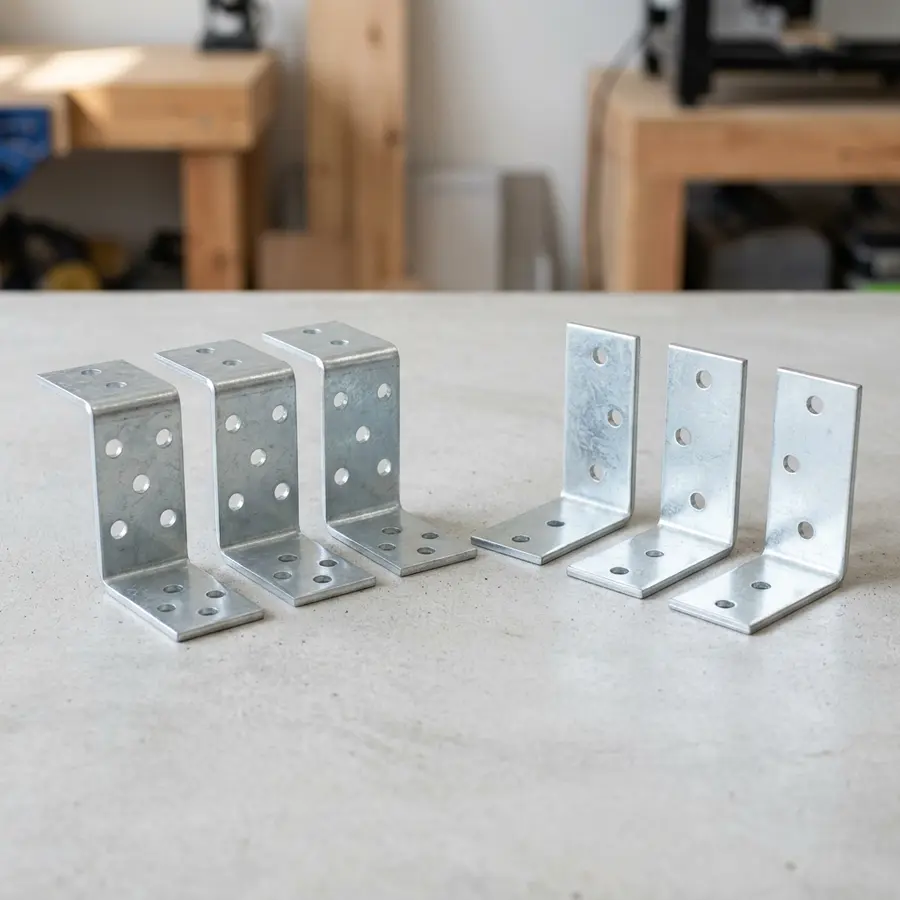
We manufacture L, U, and Z brackets from various galvanized steel thicknesses. We use non-marking press brake tooling to prevent the zinc layer from flaking during bending. High-hardness clinch nuts are installed to provide durable threads in the sheet metal panels.
Machinery Guards, Access Panels, and Airflow Covers
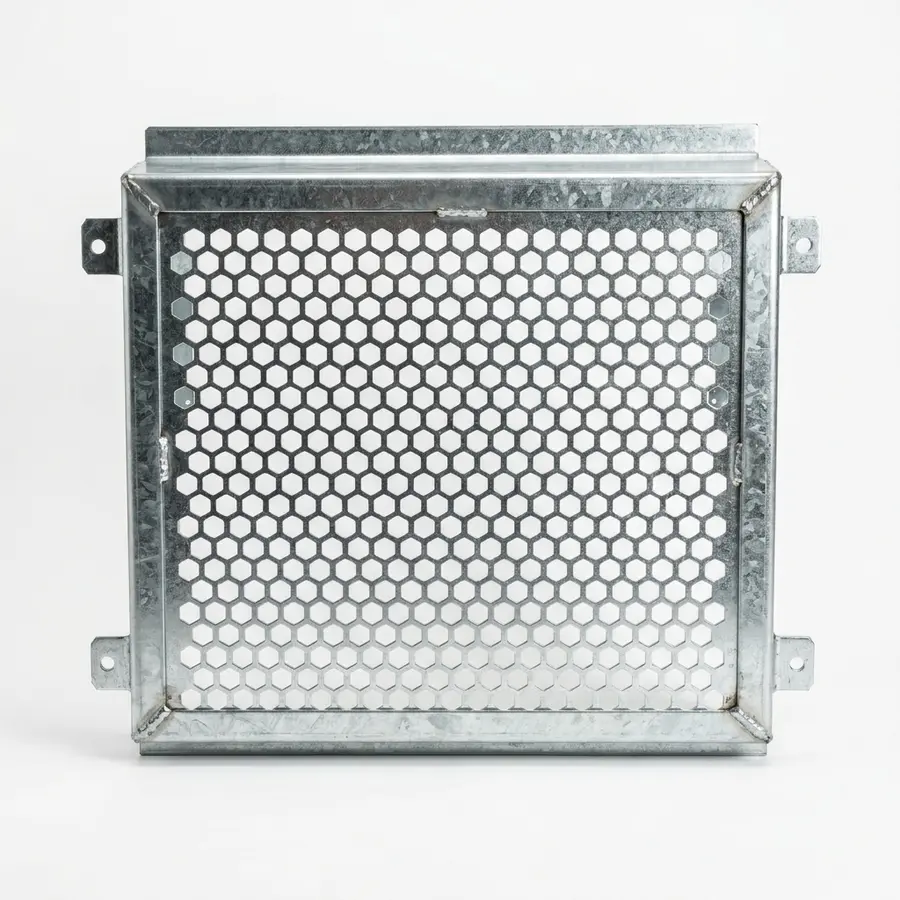
Guards and airflow covers protect internal components while allowing ventilation. We cut custom louvers and hexagonal mesh patterns into galvanized sheets. All cut edges are run through deburring machines to remove sharp burrs.
Welded Assemblies and Heavy Chassis Bases
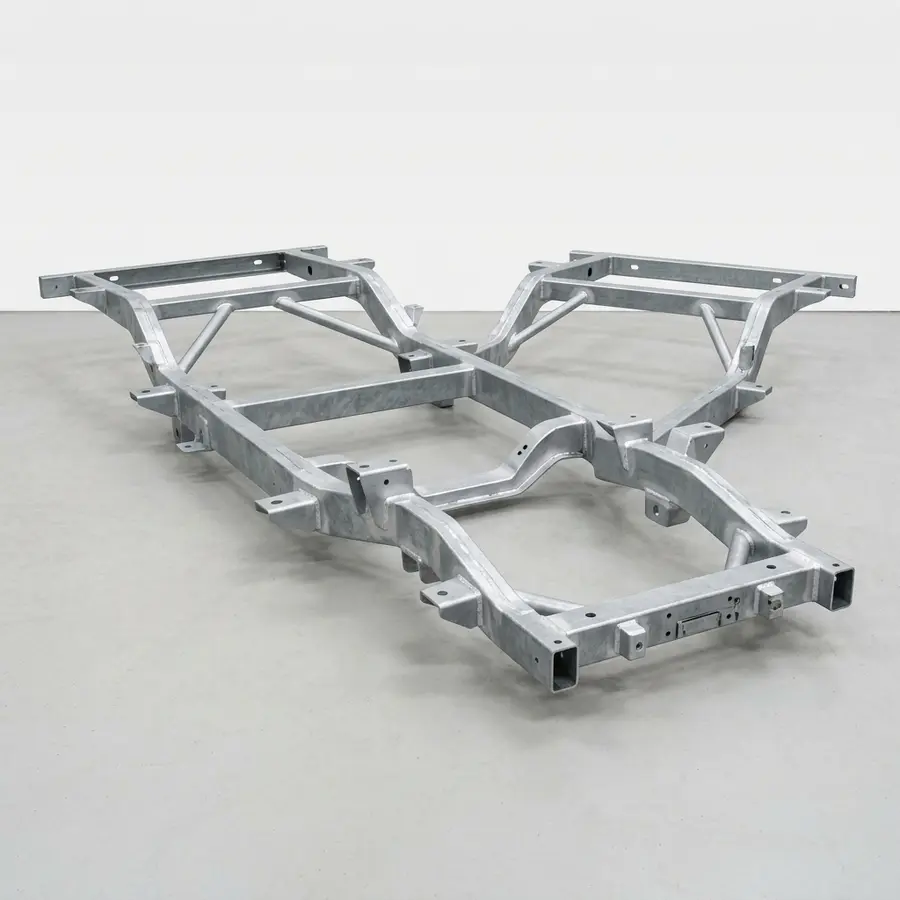
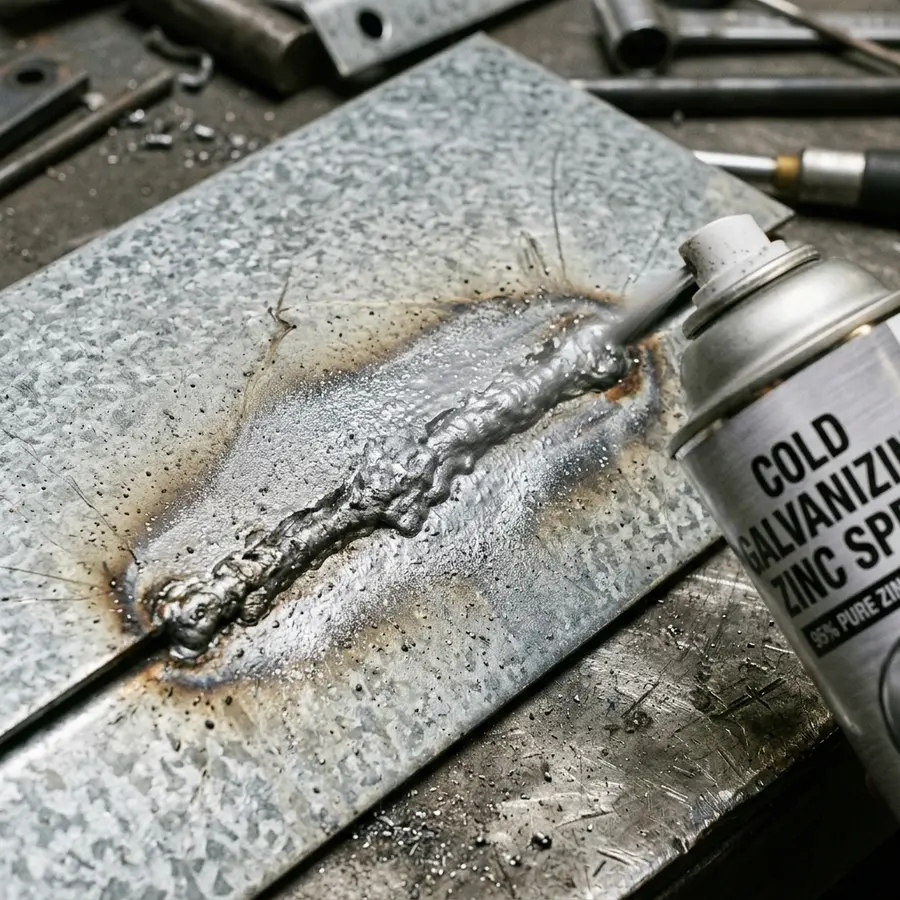
For assemblies that require structural welding, we use MIG or TIG processes. Because welding burns away the zinc layer, we clean the weld zones and apply a zinc-rich cold-galvanizing coating to restore corrosion resistance.
Core Fabrication Processes for Galvanized Steel
Laser Cutting and Edge Exposure
Fiber lasers cut galvanized steel sheets with high precision. However, laser cutting exposes the raw steel edge. For indoor or powder-coated applications, this exposed edge is protected by the surrounding zinc. For outdoor environments, we apply edge coatings to prevent rust.

CNC Bending and Coating Integrity
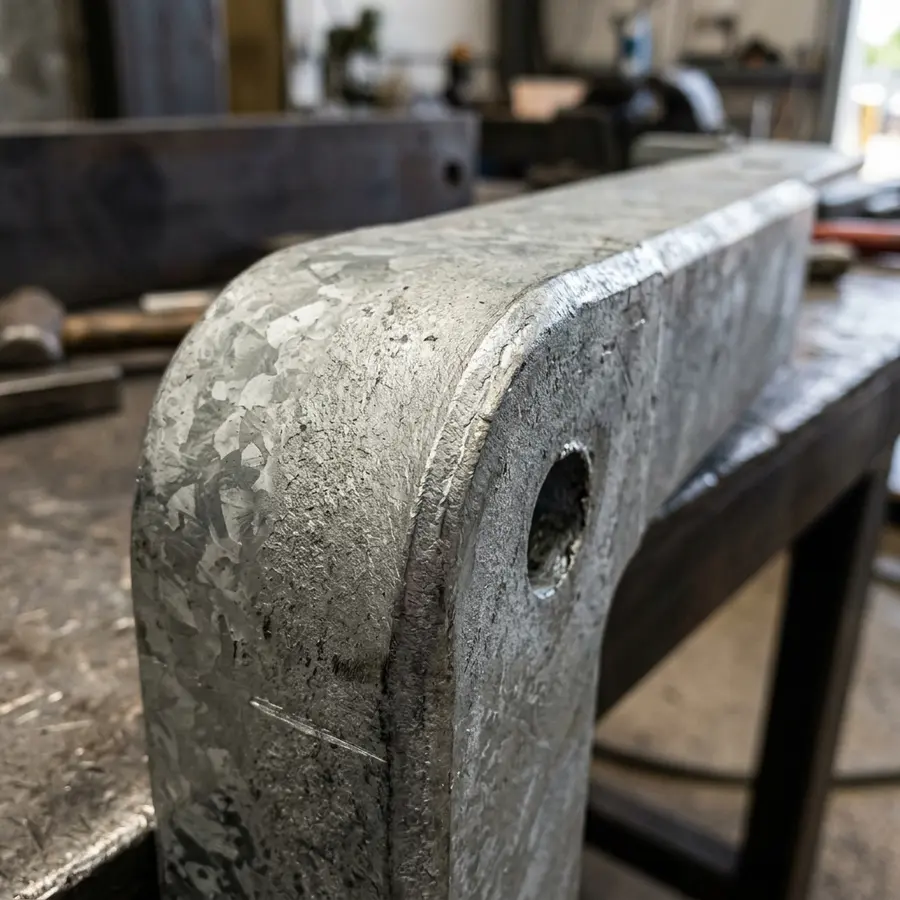
Bending galvanized steel requires selecting the proper bend radius to prevent the zinc coating from micro-cracking. We adjust bending parameters and use specialized tooling to keep the zinc layer intact along the bend line.
Weld Seam Rust Prevention
Welding vaporizes the zinc coating, creating welding fumes and exposing the weld zone to rust. We grind the welded area to remove slag and apply a high-zinc paint layer to protect the joint from corrosion.
Powder Coating Pretreatment
For colored finishes, galvanized steel must be powder coated. To prevent the coating from peeling, we run the parts through an acid etch wash and chemical conversion pretreatment, ensuring a strong bond between the paint and the zinc layer.

Export Packaging for International Shipping
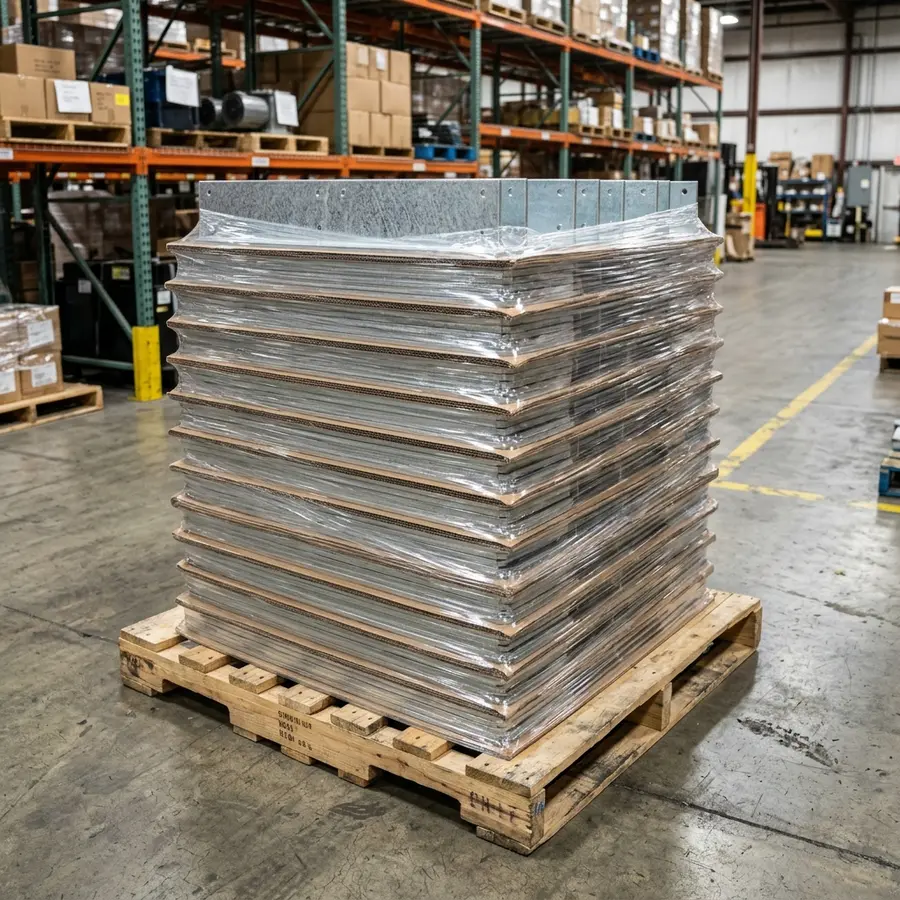
Moisture trapped between galvanized sheets during transport can cause white rust (zinc hydroxide). We prevent this by separating parts with foam liners, adding desiccants to the packaging, wrapping the stacks in shrink film, and securing them inside reinforced wooden crates.
Why Choose MSTFAB as Your Galvanized Fabrication Partner?
MSTFAB is a custom sheet metal fabrication manufacturer in Guangzhou, China, supporting overseas OEM buyers with drawing-based cutting, bending, welding, finishing, assembly, inspection, and packaging.
- Drawing-Based Fabrication: We work directly from 3D STEP files and detailed 2D PDF drawings to meet your specifications.
- Integrated Processing: We handle the entire process from raw sheet laser cutting to final powder coating and assembly, reducing coordination risks.
- DFM Support: We review joint design, distortion risks, and masking requirements prior to production.
- Reliable Repeatability: We utilize precise fixtures and standardized inspection to ensure consistent quality from the first article to repeat batch runs.
Request a Galvanized Sheet Metal Quote
If you need custom enclosures, cabinets, brackets, guards, frames, or sheet metal assemblies, send us your STEP and PDF drawings. Our engineering team will review the design for manufacturing feasibility, joint alignment, grinding needs, and masking requirements.
Frequently Asked Questions (FAQ)
What is the difference between hot-dip galvanized and electro-galvanized steel?
Hot-dip galvanized steel (like SGCC) is submerged in molten zinc, creating a thicker coating with a spangled appearance suitable for outdoor corrosion protection. Electro-galvanized steel (like SECC) has a thinner, smoother zinc layer applied electronically, providing a clean surface that is highly compatible with powder coating.
Does laser cutting rust the edges of galvanized sheet metal?
Laser cutting exposes the raw steel at the cut edge. For indoor applications, the zinc adjacent to the cut edge provides sacrificial protection to help prevent rust. For outdoor or high-humidity environments, we recommend applying edge sealers or powder coating to protect the exposed edges.
How do you weld galvanized steel without compromising corrosion resistance?
Welding burns away the zinc coating in the heat-affected zone. We grind the weld area clean, weld using TIG or MIG, and then apply a zinc-rich primer or cold-galvanizing compound to restore corrosion resistance at the joint.
How do you ensure powder coating adheres to galvanized steel?
Galvanized surfaces are naturally slick and can contain zinc oxides that prevent paint adhesion. We run the parts through an acid etch wash and chemical conversion pretreatment to clean the surface and create a rough texture, allowing the powder coating to bond securely.
What files do you need to provide a fabrication quote?
We require a 3D STEP file for geometric verification and a 2D PDF drawing detailing critical tolerances, galvanized steel grades (SGCC/SECC), powder coating requirements, and grounding locations.
sheet metal welding services
MSTFAB provides TIG and MIG sheet metal welding services for structural assemblies, cabinets, frames and OEM metal components.
 WeChat Contact
 WhatsApp Me Directly