
OEM procurement guide / drawing-based guard metalwork
Short answer: a useful machine guard RFQ defines the hazard-side geometry, mounting interface, material, openings, access method, finish, critical dimensions and inspection evidence. “Make it safe” is an important objective, but it is not enough information to cut metal. A controlled drawing is much less dramatic and considerably more quotable.

Scope boundary
What MSTFAB fabricates and what remains with the equipment integrator
MSTFAB supplies drawing-defined, non-energized sheet metal machine guard components. Typical work includes perforated panels, belt and chain covers, hinged access panels, fixed covers, welded support frames, mounting brackets, removable panels and drawing-specified mechanical hardware.
- Laser-cut and formed guard panels
- Perforated or ventilated sheet metal covers
- Welded frames, brackets and supports
- Hinges, PEM hardware and captive fasteners when specified
- Powder coating and drawing-defined masking
- Mechanical trial fit and dimensional inspection
- Protected export packing for fabricated parts
- Machine hazard analysis and risk assessment
- Required safety distance and opening size
- Interlocks, electrical logic and control circuits
- Complete guard-system integration
- Machine testing, commissioning and maintenance procedures
- Final CE, OSHA, ISO or market-specific compliance decisions
- Approval of the complete machine for use
Important responsibility line: MSTFAB fabricates the mechanical guard parts to the released drawing. We do not supply a finished machine or certify the complete safety system. ISO 14120 and ISO 13857 may be useful buyer-controlled design references, but the equipment designer must select the applicable requirements and validate the assembled machine.
Project workflow
Five steps from a guard drawing to repeatable production
A practical project moves through drawing review, quotation, DFM clarification, first-article manufacture, mechanical fit confirmation, evidence approval and batch release. A prototype that fits only after somebody leans on it is not a successful trial fit. It is a warning with powder coating.
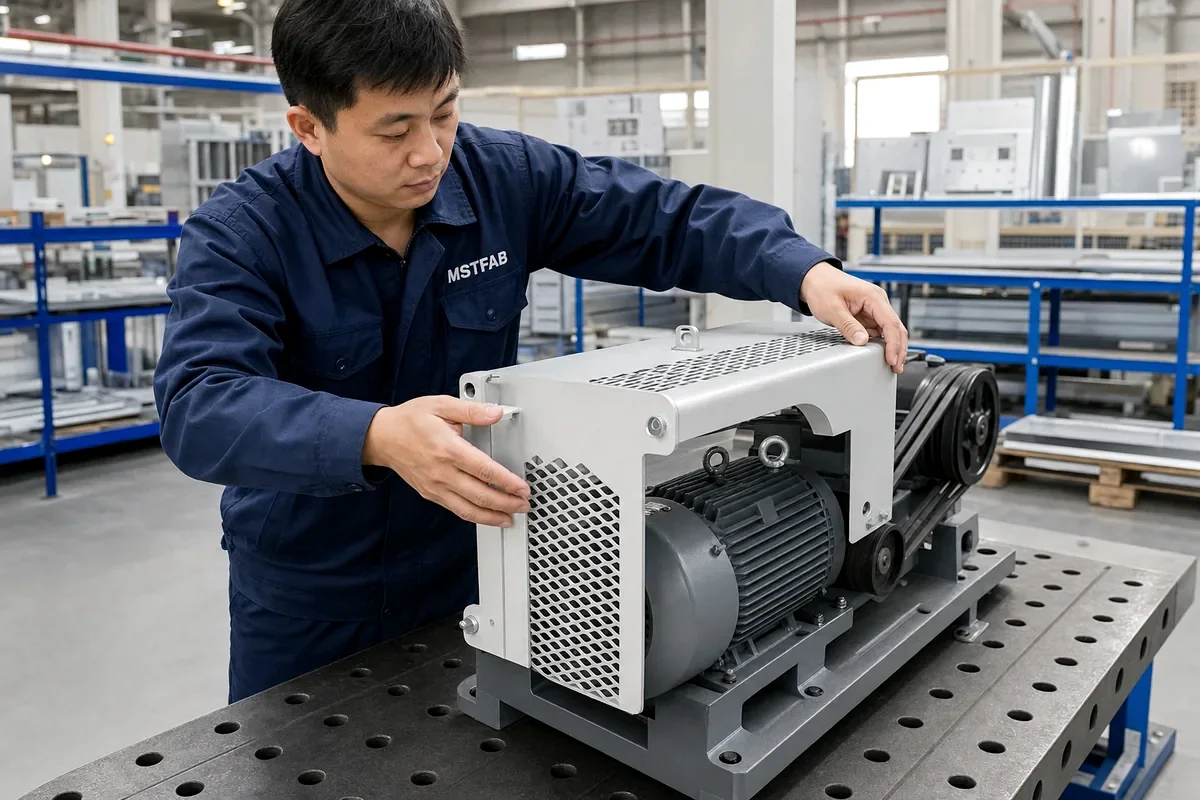
What should a machine guard RFQ include?
Send a STEP model for assembly geometry, a dimensioned PDF for material, tolerances and notes, DXF files when the buyer controls flat patterns, and a bill of materials that separates fabricated parts from purchased hardware. Identify the current revision on every file and explain what the guard mates with.
| RFQ input | What it controls | Buyer clarification |
|---|---|---|
| STEP or native 3D model | Overall geometry, panel relationships and removal path | Revision, units and whether formed geometry is authoritative |
| Dimensioned 2D PDF | Material, thickness, tolerances and special notes | Mark the dimensions that control fit and safety-related interfaces |
| Hazard-side information | Which side faces moving, hot or exposed components | Buyer defines safety distance, opening limit and required coverage |
| Mounting interface | Hole patterns, slots, brackets, datums and mating surfaces | Provide mating geometry or an approved fixture where practical |
| Access method | Fixed, removable or hinged panel construction | Fastener type, tool access, captive hardware and removal direction |
| Finish specification | Color, texture, pretreatment and protected areas | Appearance zones, film thickness, masking and approved sample |
| Quantity and release plan | Nesting, fixtures, inspection effort and unit price | Prototype quantity, batch size and expected annual demand |
| Inspection and packing | Approval records and shipment protection | Report format, critical dimensions, labels and surface protection |
Use the laser cutting RFQ checklist for file and quantity preparation. For the complete manufacturing route, see our sheet metal fabrication capability.
Guard types MSTFAB can fabricate to drawing
The part may be simple or complicated, but it remains build-to-print metalwork. MSTFAB does not choose the buyer’s hazard boundary or decide where an interlock must be installed.
Laser cutting: openings affect strength, access and later forming
Laser cutting creates ventilation patterns, viewing openings, mounting slots, cable clearances and service access. The cutting drawing should leave enough solid material around bends, hardware and load paths. Dense perforation can reduce panel stiffness and may change how the part behaves during forming.
During DFM review, we check minimum web width, heat concentration, feature-to-edge distance, small holes, cutout corners and whether the flat pattern supports the required bend sequence. The buyer still defines any opening-size or reach-prevention requirement that comes from the machine safety assessment.
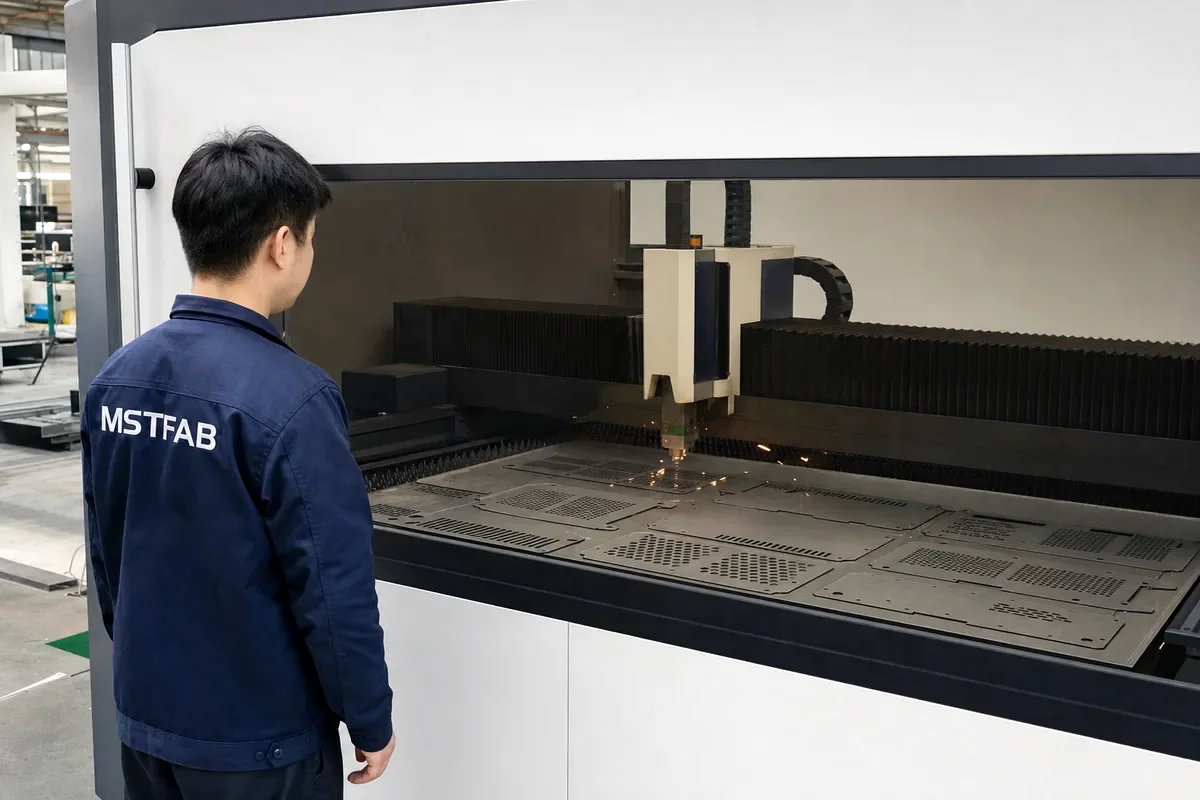
Production cutting is supported through our laser cutting services page.
CNC bending: a flat panel must become the intended guard
Bend radius, grain direction, flange length, tooling access and springback affect the final geometry. Holes or perforations placed too close to a bend can stretch, distort or move relative to the mounting datum. Tall narrow returns may also need special tooling or a revised bend sequence.
Use consistent bend radii where the design allows, dimension critical mounting features from a stable datum and avoid applying close tolerances to every non-functional edge. Tight tolerances everywhere do not make a drawing more precise; they mostly make the quotation more expensive.
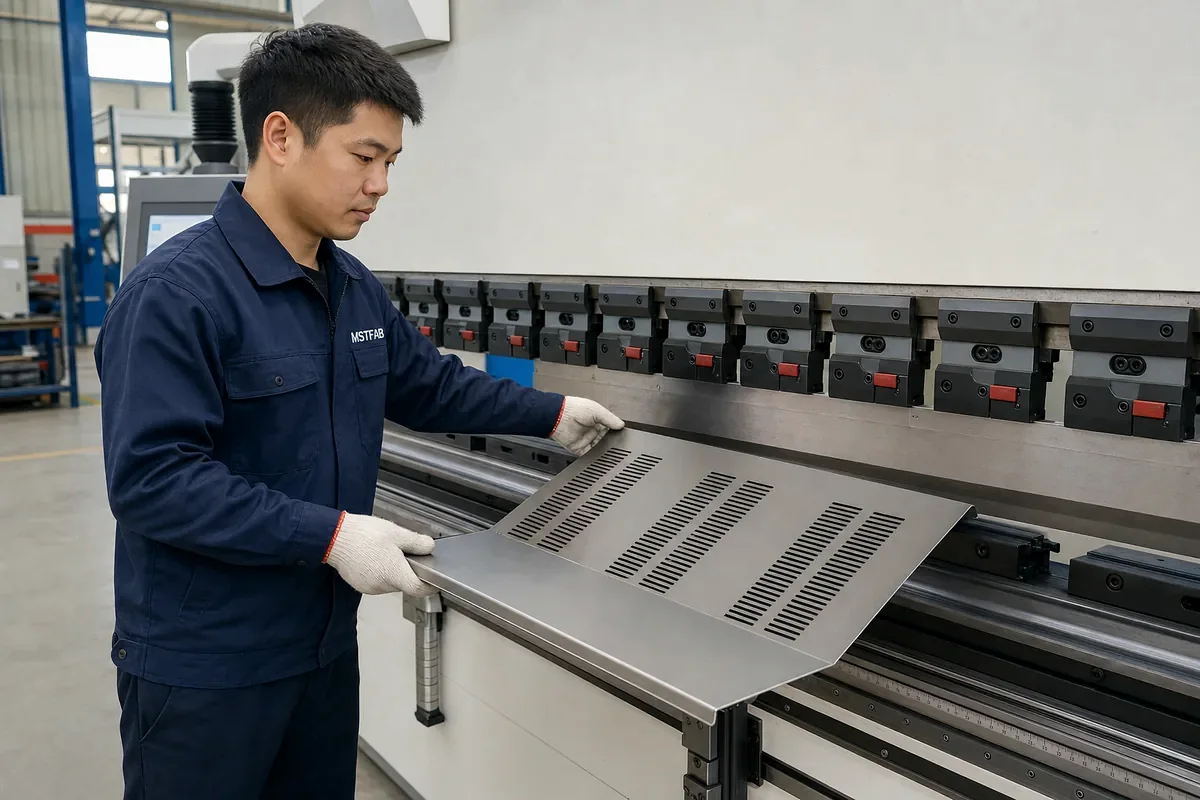
See our sheet metal bending capability for press-brake process information.
Fixture welding: hold the mounting geometry while heat moves the metal
Welded guard frames and reinforced panels can distort if joint sequence, clamping and heat input are left to improvisation. We review joint access, weld size, fixture datums, cosmetic zones and post-weld finishing before production. The objective is a structure that matches the drawing and accepts its panels without persuasion.
Where a bolted or tab-and-slot joint meets the buyer’s structural need, it may reduce welding time and distortion. Where welding is required, first-article evidence should check the dimensions most affected by heat: diagonals, mounting faces, hinge position and panel openings.
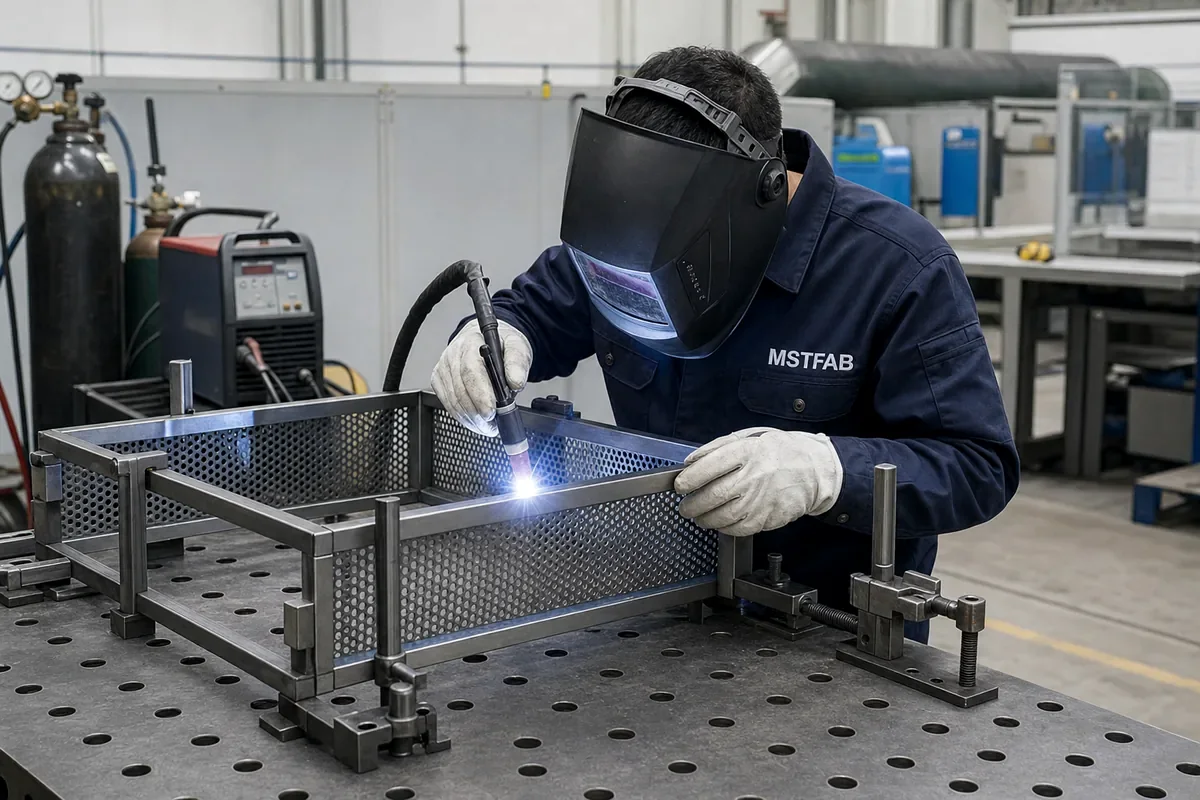
Process details are available on our sheet metal welding services page.
Hardware and access: design for the person who must remove the guard
A removable or hinged guard needs enough room for the tool, hand and fastener. Define hinge orientation, latch position, captive-fastener requirements, thread type, installation direction and any hardware that must remain attached during service. If a screw is visible but cannot be reached, it is decorative hardware.
PEM nuts, studs and standoffs should be selected with material thickness, edge distance, installation side and coating clearance in mind. Grounding studs or electrical bonding decisions remain part of the buyer’s complete machine design, even when MSTFAB installs the specified mechanical stud.
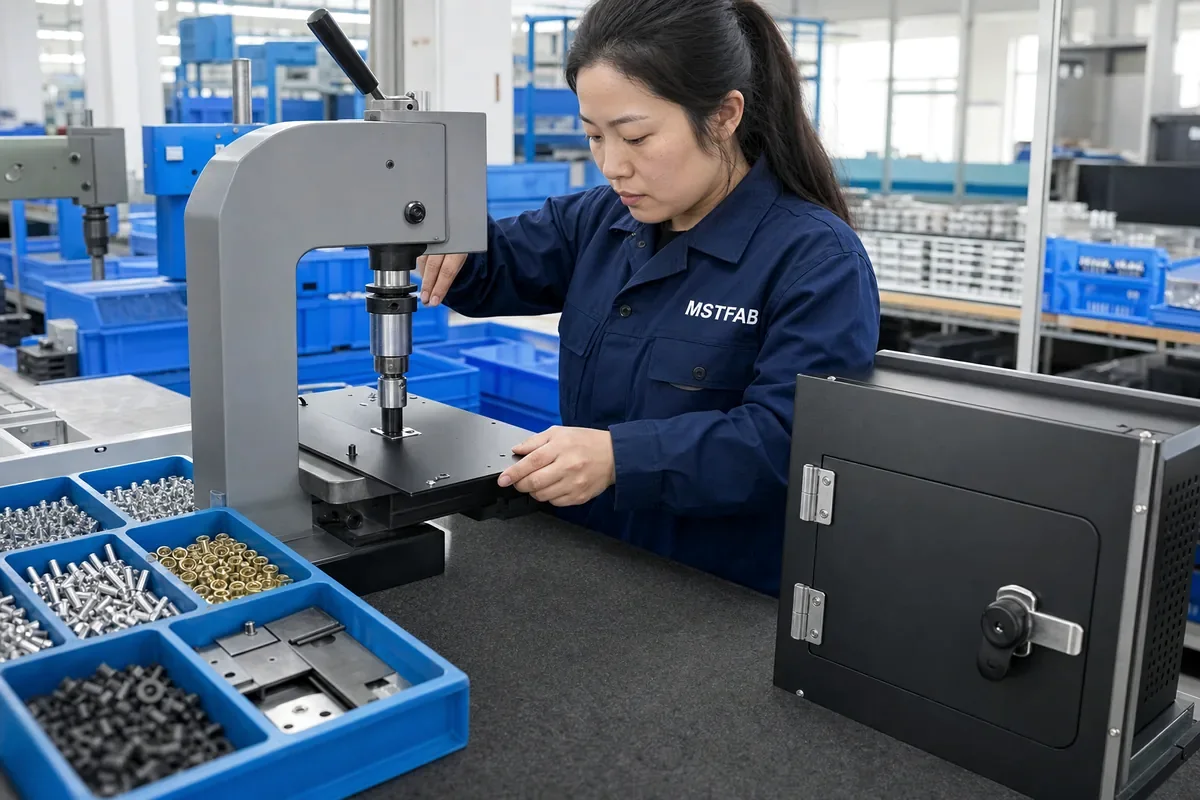
Material and finish selection should follow the operating environment
Coating can change slot width, hinge movement, thread fit and close-clearance interfaces. Mark masking areas and acceptance zones on the drawing. Our surface treatment capability explains the available finishing route.

First-article inspection should measure what can stop assembly
An inspection report is most useful when it follows the buyer’s risk. For a machine guard, critical checks may include mounting-hole position, frame diagonals, panel flatness, opening size, hinge alignment, latch engagement, clearance to a supplied fixture, fastener installation and coating on functional interfaces.
Overall length and width are easy to measure, but they may not explain why a guard refuses to fit. Agree the datum scheme, critical dimensions, gauges, sample quantity and report format before quotation. That lets inspection time enter the price honestly rather than appearing as a surprise after the first batch.
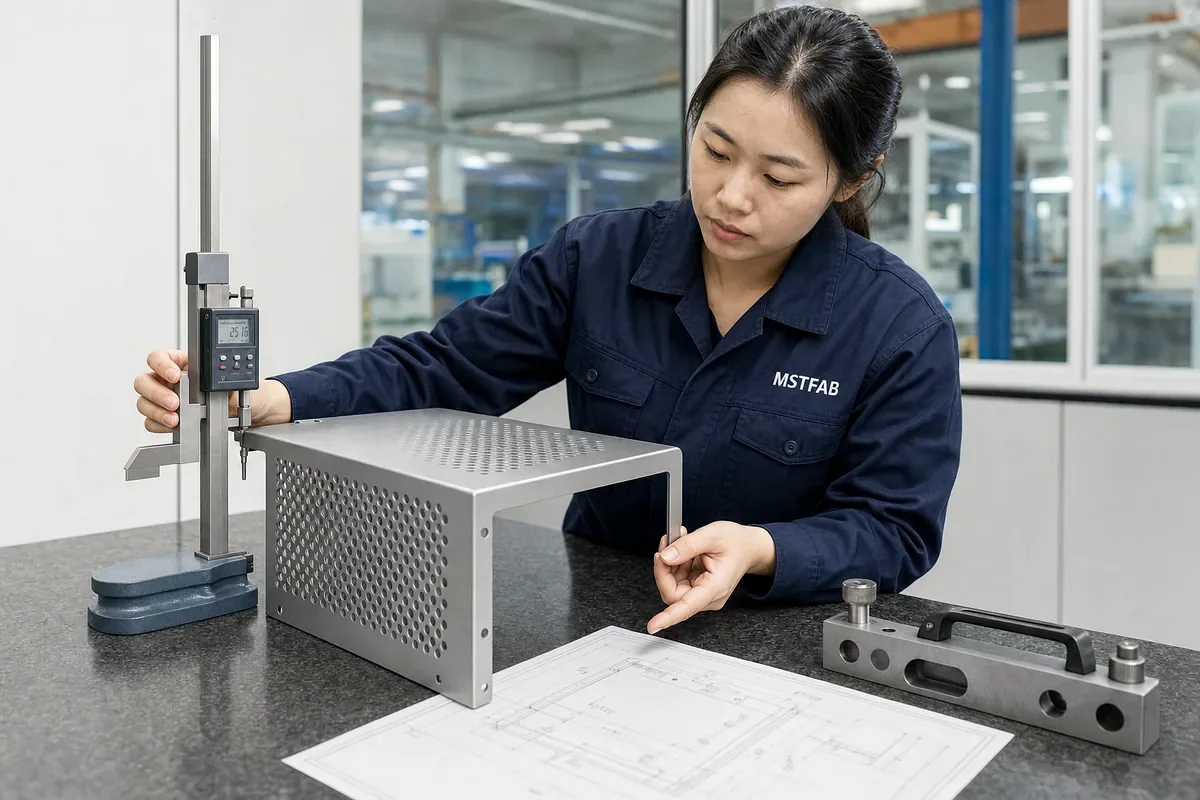
Evidence a buyer can request before batch release
| Evidence | What it demonstrates | Typical owner | Best time to agree |
|---|---|---|---|
| DFM review record | Manufacturing risks and proposed clarifications were reviewed | MSTFAB and buyer | Before quotation or first article |
| Material certificate | Supplied material matches the purchase requirement | MSTFAB supply chain | At purchase-order review |
| First-article dimensional report | Critical guard and mounting features match the drawing | MSTFAB quality team | Before batch release |
| Mechanical trial-fit photographs | Specified panels and hardware fit the buyer-defined fixture or mating geometry | MSTFAB and buyer | During first-article approval |
| Coating and masking record | Finish thickness and protected functional areas were checked | MSTFAB finishing and quality teams | Before shipment |
| Packing photographs | Edges, finished faces and loose parts are protected for export | MSTFAB shipping team | Before the first shipment |
| Complete machine safety validation | The assembled guarding system controls the identified hazard | Buyer or system integrator | Before machine release for use |
Buyers can define a dimensional inspection report, a first-article inspection plan and export packaging for sheet metal parts before production.
Common procurement mistakes and the quieter alternative
Related fabrication resources
These pages show the production capabilities and evidence behind a drawing-based guard project:
Frequently asked questions
What files help MSTFAB quote machine guard sheet metal parts?
A STEP model and controlled 2D PDF are best. Include material, thickness, finish, quantity, critical tolerances, hardware, mounting interfaces, revision and the inspection records required for approval.
Does MSTFAB supply a complete machine safety system?
No. MSTFAB fabricates drawing-defined mechanical guard panels, covers, frames, brackets and specified hardware. Hazard analysis, interlock logic, complete machine integration, validation and regulatory compliance remain with the buyer or system integrator.
Can MSTFAB fabricate perforated or ventilated guards?
Yes, when the opening pattern, solid zones, material and tolerances are defined in the buyer’s drawing. The buyer is responsible for selecting opening size and safety distance based on the machine risk assessment.
Can a guard be supplied welded, hinged or removable?
Yes. Construction can be welded, bolted, hinged or removable according to the released design. The RFQ should define access frequency, fastener type, hinge orientation, removal path and mating interface.
Can machine guard parts be powder coated?
Yes. Specify pretreatment, color, texture, gloss, film thickness, cosmetic zones and masking. Close-fit slots, hinges, threads and contact surfaces may need coating allowance or masking.
What should be checked on the first article?
Prioritize mounting holes, frame diagonals, panel flatness, opening geometry, hinges, latches, hardware, clearances, finish and any dimension that controls the buyer’s assembly. Agree the report before production.
Drawing review
Have a machine guard drawing ready for fabrication?
Send the STEP file, 2D drawing, material, finish, quantity and critical inspection points. MSTFAB will review the manufacturing route for the sheet metal parts while your team retains control of the complete machine safety design.
 WeChat Contact
 WhatsApp Me Directly