
The Short Answer
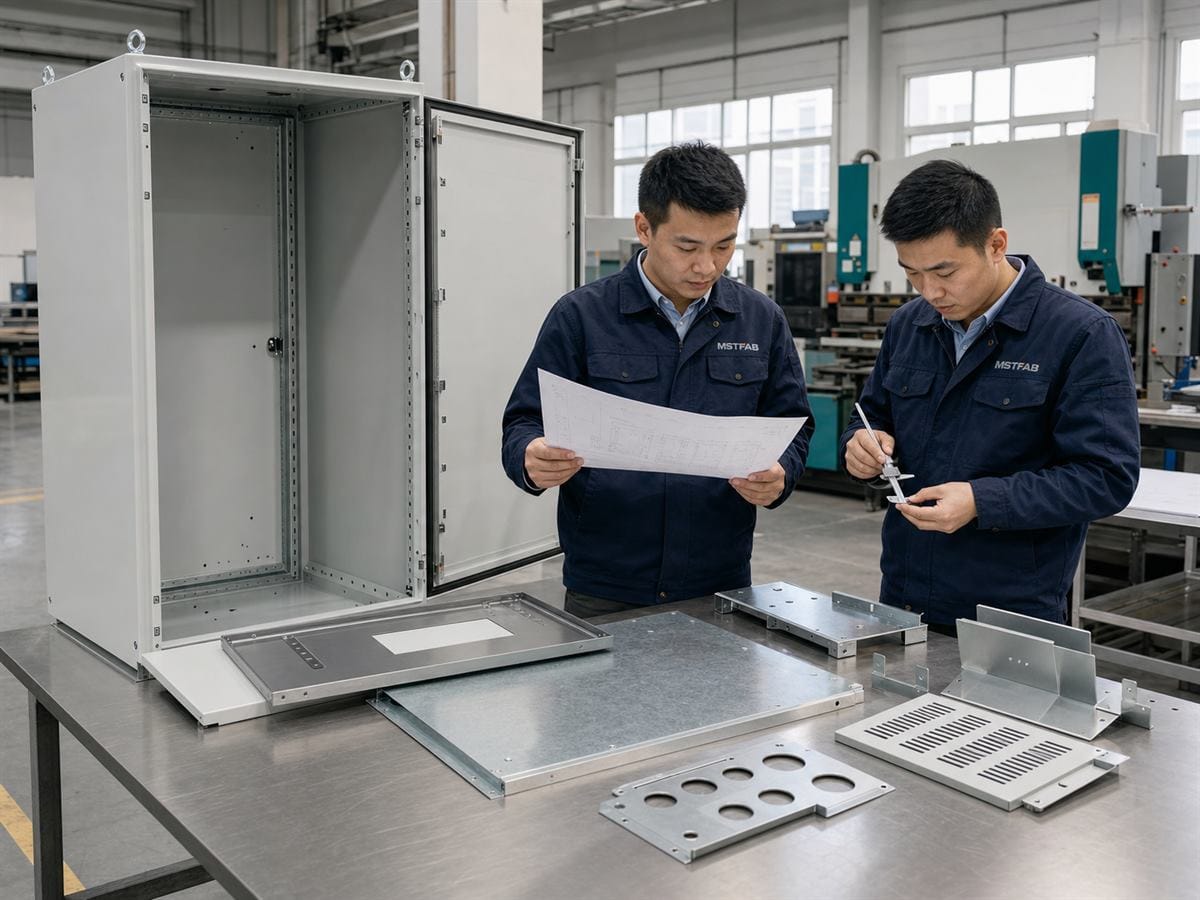
Reliable sheet metal fabrication for power distribution cabinets requires square structural frames, reinforced zero-sag door panels, unpainted or masked copper/galvanized grounding continuity paths, and burr-free cable gland plates. MSTFAB manufactures build-to-print empty cabinet shells, internal breaker mounting subplates, busbar brackets, and louvered panels to your CAD drawings—leaving switchgear installation, active wiring, and final system certification to the OEM.
Explore this guide
01 / Mechanical Supply Scope and Cabinet Architecture
Source precision empty cabinet shells and internal metalwork built strictly to your drawings.
Power distribution equipment OEMs, panel builders, and energy infrastructure integrators often need custom enclosure geometries, heavy-gauge busbar support brackets, or specialized breaker faceplates that off-the-shelf catalog boxes cannot accommodate. At the same time, sourcing custom metalwork requires crystal-clear boundaries between mechanical sheet metal fabrication and electrical system integration.
MSTFAB specializes in custom sheet metal enclosure fabrication, supplying empty power distribution cabinet shells and mechanical sub-components engineered alongside our industrial automation enclosure fabrication and telecom cabinet fabrication programs.
Welded cabinet bodies & frames
Floor-standing and wall-mount outer shells, multi-bay modular frames, rainwater sloped roofs, and heavy-gauge forklift base plinths fabricated from 1.5 mm to 5.0 mm steel.
Reinforced doors & dead-front panels
Outer cabinet door panel assemblies with stiffener hat-channels, polycarbonate viewing window frames, and hinged internal dead-front breaker escutcheons.
Subplates, gland plates & brackets
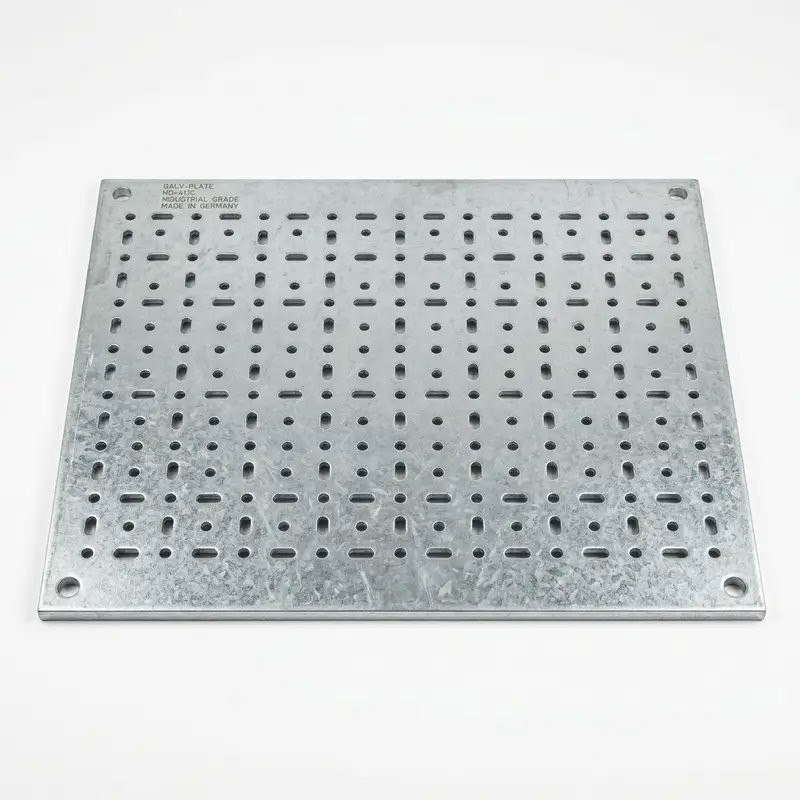
Galvanized backplanes, removable top/bottom cable gland entry plates, stamped louver ventilation covers, and heavy structural support brackets.
Clear supply boundary: We fabricate custom mechanical cabinet shells, subplates, and pre-installed mechanical hardware (hinges, locks, PEM fasteners, grounding studs). We do not supply active circuit breakers, transformers, copper wiring harnesses, or powered electrical testing.
02 / Laser Cutting, Subplates and Cable Entry
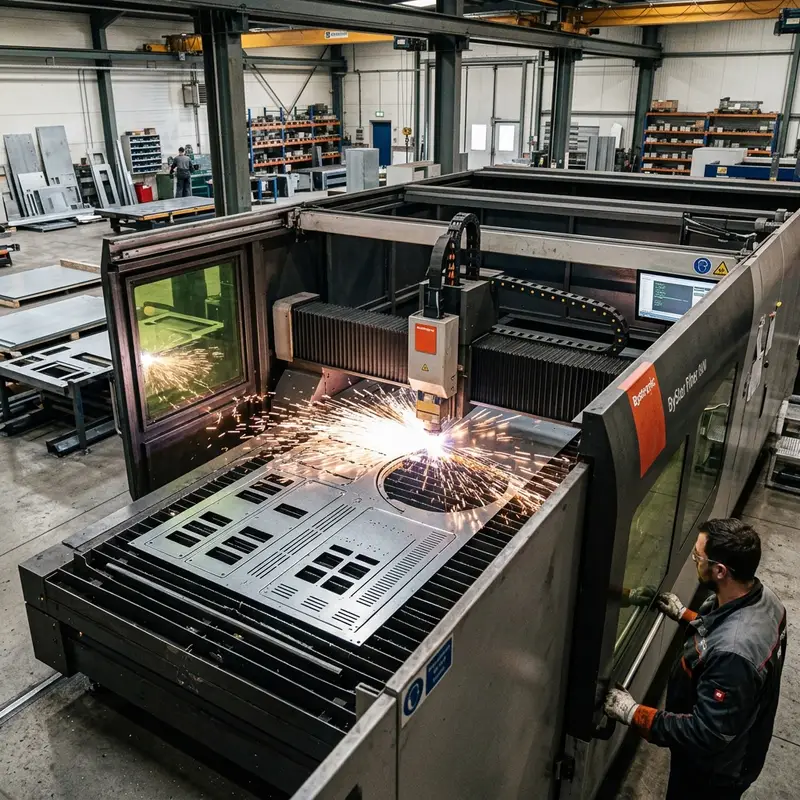
Hold tight cutout accuracy on breaker faceplates, subplates, and cable gland plates.
Inside a power distribution cabinet, hundreds of molded-case circuit breakers (MCCBs), DIN rails, current transformers, and busbar insulators must align across multi-tier mounting plates without cumulative pitch error. Simultaneously, high-voltage power cables passing through bottom gland plates require completely smooth, burr-free edges so cable insulation is never nicked under vibration.
- Zero-accumulation cutout grids: Our high-speed fiber laser cutting service cuts breaker handle slots, meter cutouts, and subplate mounting hole arrays in a single clamping setup directly from your 3D CAD model.
- Deburred cable gland and knockout plates: Removable top, bottom, and side cable entry plates undergo mandatory rotary-brush deburring and edge rounding so PG/metric cable glands seal flat and jacket insulation remains protected.
- Stamped louvers and filter cutouts: For heat-dissipating power cabinets, we combine laser perimeter cutting with CNC turret punch louver forming and welded mesh screens to balance airflow and ingress protection.
Review our dedicated distribution board enclosure manufacturing page to see typical subplate, dead-front cover, and gland-plate configurations.
03 / Press Brake Forming and Frame Squareness
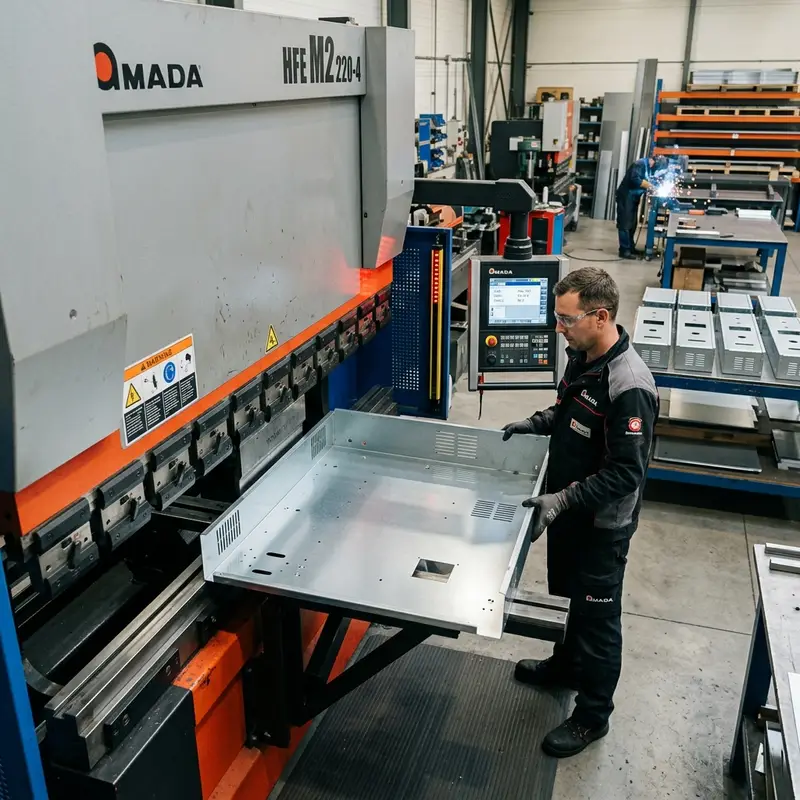
Control diagonal frame squareness, rain-channel bends, and door gap alignment.
A power distribution cabinet shell fails incoming assembly inspection the moment a door sags against its latch or an internal mounting plate binds against the side rails. Maintaining diagonal squareness across large welded cabinets requires synchronized press brake forming and fixture-clamped welding.
- Multi-axis CNC sheet metal bending forms folded gutter edges and double-returned lip channels around the cabinet opening, strengthening the frame while providing a smooth knife-edge seat for EPDM or PU foam gaskets.
- Welded box-section stiffener rails and hat-channels are integrated inside wide doors to prevent torsional sag when heavy HMI displays, meters, or rotary disconnect handles are mounted on the door.
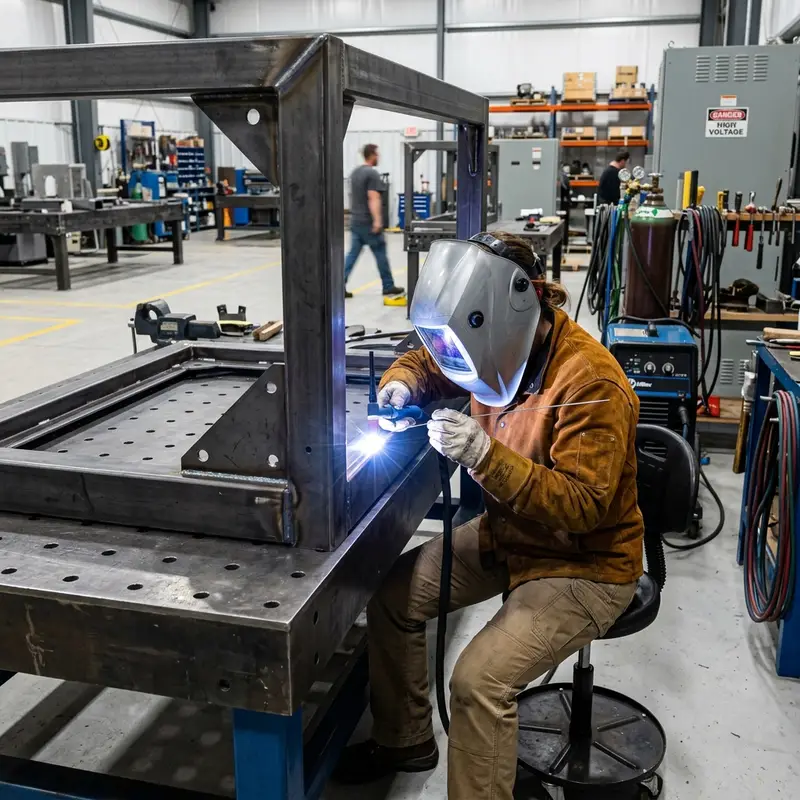
- Corner joints, plinth bases, and lifting-eyebolt gussets are TIG or pulse-MIG welded inside rigid squaring fixtures to hold diagonal dimensions within tolerance.
- Exterior cosmetic corner seams are ground flush and blended prior to surface treatment so powder coating lays uniformly without pinholes or weld spatter.
Accounting for press-brake bend deductions and weld shrinkage during pre-production DFM ensures removable doors, dead-front panels, and gland plates interchange cleanly across production lots.
Explore our CNC press brake bending capabilities for heavy enclosures →
04 / Materials, Powder Coating and Grounding Continuity
Match base metals, powder film thickness, and masked earth-bonding pads.
Power distribution cabinets must resist corrosion in factory floors, utility rooms, or outdoor substations while maintaining low-resistance protective earth (PE) bonding across every removable door, subplate, and frame member.
- Cold-rolled and hot-rolled structural steel (SPCC, SPHC, Q235B): Used for 1.5 mm to 3.0 mm cabinet shells and 3.0 mm to 6.0 mm base plinths, paired with multi-stage degreasing, phosphating, and durable powder coating.
- Pre-galvanized steel (SGCC / DX51D+Z) for internal subplates: Leaving internal breaker mounting plates in unpainted galvanized steel provides a continuous conductive bonding plane for DIN rails and chassis grounds without scraping paint.
- Stainless steel (304 / 316L) and aluminum (5052-H32): Selected for outdoor utility pad-mount shells, coastal solar/wind distribution boxes, and washdown industrial power panels.
- Masked grounding studs and paint film allowance: Copper-plated M6/M8 earth weld studs and surrounding bare-metal bonding pads are capped with high-temperature silicone masks before powder coating so insulating paint never blocks continuity.
We also compensate hinge pin holes, quarter-turn lock cutouts, and mating flange clearances for the 60 to 100 micron powder coat film buildup so doors close smoothly without chipping paint.
05 / Cabinet Metalwork Control Matrix
Confirm five mechanical controls before releasing power cabinet drawings.
Use this engineering checklist during DFM review to lock critical mechanical interfaces on custom power distribution cabinet shells.
06 / Trial Assembly and Quality Inspection
Verify door alignment, breaker cutout grids, and coating adhesion before shipment.
Shipping multi-part power cabinet kits without pre-shipment trial assembly risks misalignment between outer shells, inner dead-front panels, and removable subplates once the parts reach your wiring shop.
Under our ISO 9001 quality management system, our inspection team checks laser-cut breaker and meter cutouts on the first flat blank, verifies welded frame diagonals and door reveal uniformity on assembled shells, tests powder-coat film thickness (microns) and cross-hatch adhesion, and inspects all PEM fasteners and grounding studs.
When working directly from your 3D assembly via fabrication from STEP files, we validate every mating hole pattern across the complete cabinet BOM before cutting the batch.
See how 3D STEP assemblies prevent multi-part cabinet fit-up errors →
07 / Export Packaging and Scope Clarity
Prevent corner dents and powder-coat chafing during international freight.
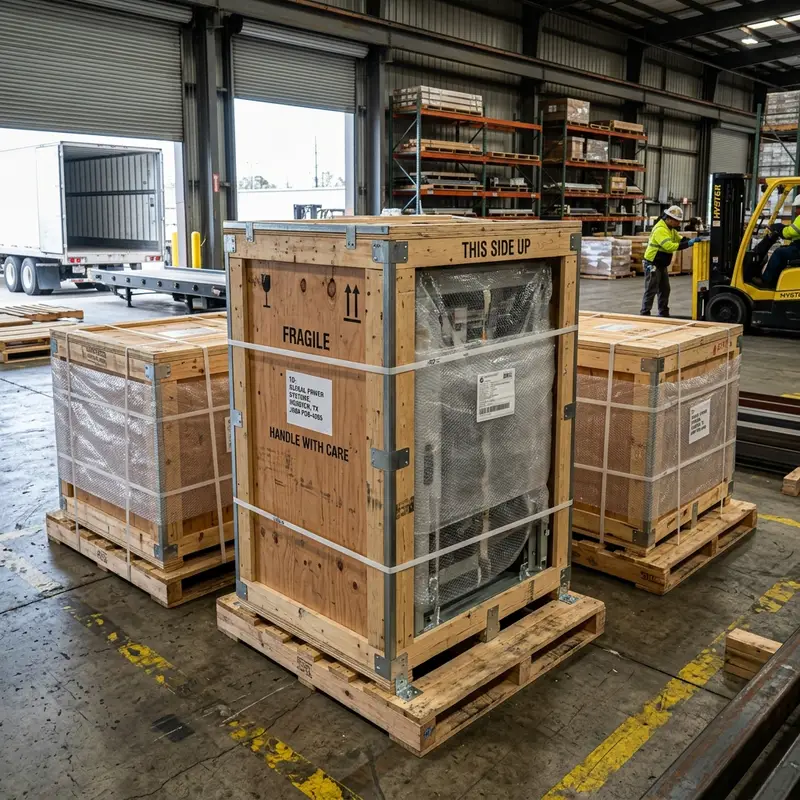
Large empty sheet metal cabinets are vulnerable to forklift tine impacts, stacking crush loads, and vibration rub marks between doors and frames during ocean transit.
We protect every finished cabinet and subplate kit with EPE foam corner guards, stretch film, moisture-absorbing desiccant packs, and reinforced ISPM-15 fumigation-free plywood crates or heavy-duty export pallets. Ready to review your drawing package? Send Cabinet Drawings for Review to lock your packaging and delivery specification.
Manufacturing scope: MSTFAB manufactures custom build-to-print empty power distribution cabinet shells, doors, mounting subplates, gland plates, and mechanical brackets under ISO 9001, IATF 16949, and ISO 14001 quality systems. Electrical switchgear installation, busbar wiring, dielectric testing, and final powered equipment certification remain the responsibility of the OEM.
08 / Ready-to-Review RFQ
Include eight engineering details in your power cabinet sheet metal RFQ.
- 3D STEP assembly + part filesInclude the full cabinet 3D STEP (.stp/.step) assembly plus individual part models for shell, doors, subplates, and brackets.
- 2D PDF drawings with tolerancesSpecify overall frame tolerances, critical breaker cutout grids, weld symbols, and grounding stud callouts.
- Structured BOM by part numberList every sheet metal component, quantity per cabinet, material grade, and sheet thickness (mm).
- Surface treatment & RAL codesDefine indoor vs. outdoor powder coating, exact RAL color (e.g., RAL 7035), texture, and unpainted galvanized parts.
- Grounding & masking mapHighlight earth studs, busbar standoff pads, and conductive flanges that must remain free of powder coat.
- Mechanical hardware scopeClarify whether MSTFAB supplies hinges, swing-handle locks, eye bolts, and gaskets or only cuts the mounting holes.
- Assembled vs. flat-pack deliveryIndicate whether cabinets ship fully welded/assembled or as bolt-together knock-down kits to save container space.
- Prototype & batch quantitiesState initial first-article prototype quantity and recurring production release volume.
Not sure how to organize your multi-part cabinet package? Review our guide on files needed for a sheet metal fabrication quote before uploading your BOM.
Power distribution cabinet sheet metal questions from OEM buyers
Do you supply wired power distribution panels or only the empty sheet metal cabinet shells?
MSTFAB is strictly a custom mechanical sheet metal manufacturer. We fabricate build-to-print empty cabinet shells, structural frames, hinged doors, dead-front panels, galvanized mounting subplates, cable gland plates, and busbar support brackets—along with pre-installed mechanical hardware (PEM nuts, weld studs, hinges, latches, and gaskets). All electrical components, wiring, and final system certifications are completed by the OEM or panel builder.
How do you ensure grounding continuity across powder-coated cabinet doors and frames?
We capacitive-discharge or TIG weld copper-plated M6 or M8 grounding studs onto the inside of the main shell, doors, dead-front panels, and removable gland plates prior to pretreatment. During powder coating, the stud threads and a surrounding bare-metal contact pad are protected with high-temperature silicone masking caps so your assembly crew can attach braided earth straps directly to clean metal.
What sheet thicknesses are typically used for power distribution cabinet components?
Wall-mount distribution boxes typically use 1.2 mm to 1.5 mm cold-rolled steel for the body and door with a 2.0 mm mounting plate. Floor-standing power distribution cabinets generally use 1.5 mm to 2.0 mm for side/rear panels and doors, 2.0 mm to 3.0 mm for the structural frame and internal breaker mounting subplate, and 3.0 mm to 5.0 mm for the base plinth and transformer support brackets.
Why should internal breaker mounting plates be made from pre-galvanized steel (SGCC) instead of painted steel?
Unpainted pre-galvanized steel (SGCC / DX51D+Z) provides durable corrosion protection while keeping the entire subplate surface electrically conductive for EMC grounding of DIN rails and switchgear chassis. It also eliminates the risk of thick powder coat flaking off when self-drilling screws or heavy breakers are torqued down during panel wiring.
How do you prevent wide cabinet doors and dead-front panels from sagging or flexing?
For wide doors or doors carrying heavy HMI screens and disconnect handles, we form multi-bend box return flanges around the perimeter and spot- or TIG-weld hat-channel stiffener rails and corner hinge reinforcement plates onto the inside face of the door prior to powder coating.
Can you fabricate spare internal mounting plates, gland plates, or replacement doors separately?
Yes. Because every part number in your cabinet BOM is programmed as an independent CAD/CAM item in our ERP system, you can order complete empty cabinet assemblies or order batches of pre-punched mounting subplates, dead-front escutcheon covers, and cable gland plates separately.
Technical references
Reference these international mechanical and enclosure standards when specifying empty cabinet shell tolerances, impact resistance, and protective coating quality.
- IEC 62208 — Empty Enclosures for Low-Voltage Switchgear and Controlgear Assemblies: General Requirements
- IEC 62262 — Degrees of Protection Provided by Enclosures for Electrical Equipment Against External Mechanical Impacts (IK Code)
- ISO 2768-1 / 2768-2 — General Tolerances for Linear, Angular and Geometrical Dimensions
Send your power distribution cabinet STEP, DXF, and PDF drawings for review.
Upload your empty cabinet shell drawings, subplate BOM, and finish requirements. MSTFAB will verify mechanical tolerances and return a detailed quotation.
Request a Cabinet Metalwork Quote →
Have a question first? caroline@mstfab.com
 WeChat Contact
 WhatsApp Me Directly