Use this page for galvanized coating risk, not a factory overview
Galvanized steel is not magic rust armor. It works well when the drawing, bend sequence, finish and packing respect the coating. This page helps buyers check those details before the part goes outdoors.
This page has been separated from the galvanized steel manufacturer page so Google and buyers can see the job of this article clearly. The useful question here is not “can someone make metal parts?” It is: what should a buyer check before sending drawings, approving a quote or moving into production?
- Confirm the galvanized grade and sheet thickness before quoting.
- Check whether cut edges or welded areas need extra corrosion protection.
- Clarify powder coating adhesion and pretreatment requirements.
- Avoid tight bends that damage coating in critical exposure zones.
- Request packing photos so coated parts do not rub each other in transit.
| 1 | Confirm the galvanized grade and sheet thickness before quoting. |
| 2 | Check whether cut edges or welded areas need extra corrosion protection. |
| 3 | Clarify powder coating adhesion and pretreatment requirements. |
| 4 | Avoid tight bends that damage coating in critical exposure zones. |
| 5 | Request packing photos so coated parts do not rub each other in transit. |
Galvanized Sheet Metal Parts: Corrosion and Coating Checklist
A galvanized steel sheet metal parts factory manufactures custom zinc coated steel components for industrial equipment, electrical enclosures, control cabinets, mounting plates, brackets, panels, covers, cable entry plates and OEM sheet metal assemblies.
For routing and gland interfaces, we provide custom galvanized cable entry plates manufacturer services, ensuring safe edge smoothing and correct hole tolerances.
For component mounting and industrial equipment assembly, see our guide on galvanized steel brackets fabrication covering hole accuracy, bend angles, load direction, and PEM hardware installation.
Galvanized steel is often selected when buyers need better corrosion resistance than ordinary cold rolled steel while still controlling cost. MSTFAB manufactures custom galvanized steel sheet metal parts according to customer STEP files, STP files, PDF drawings, DXF files, DWG files, assembly drawings and BOMs.
For indoor parts where zinc coating is not required and the part will be powder coated, cold rolled steel sheet metal fabrication may be a more cost-effective material choice.

We support galvanized steel parts such as enclosures, SGCC parts, brackets, mounting plates, control cabinet panels, cable entry plates, ventilation panels, electrical box parts, telecom cabinet parts, network cabinet parts, machine covers, guards, door panels, welded assemblies when suitable, powder coated galvanized parts and OEM components.
For buyers specifying SGCC material grade directly, see our dedicated guide on SGCC sheet metal parts manufacturing covering material verification, cut-edge review, cabinet mounting plates, cable entry plates and grounding protection.
Cut edges, holes, bends, weld zones and ground areas still need review. A zinc coated sheet can help improve corrosion resistance, but it does not remove the need for correct material selection, proper design, suitable surface treatment and controlled packaging. CAD has no cut-edge corrosion, no zinc layer damage, no welding fumes, no powder coating adhesion problems, no scratched surfaces and no packaging damage. Real manufacturing does.
Why Buyers Choose Galvanized Steel Sheet Metal Parts
Buyers choose galvanized steel for several practical reasons:
- Better Corrosion Resistance Than Raw Steel: Raw steel and moisture are not friends. They are the beginning of a rust story. Galvanized steel provides a zinc coating that helps improve corrosion resistance for many industrial applications.
- Cost Control: Compared with stainless steel or aluminum, galvanized steel can be a cost-effective material for selected parts.
- Good for Internal Cabinet Parts: Mounting plates, internal brackets, cable entry plates, grounding plates, electrical cabinet panels and power distribution cabinet components.
- Can Be Powder Coated: Galvanized steel can be powder coated, but it requires correct surface cleaning and pretreatment. A beautiful coating that peels is not a finish. It is a delayed complaint.
Common Galvanized Steel Materials
Different markets and drawings may use different names: SGCC, GI steel, zinc coated steel, hot-dip galvanized, electro-galvanized, DX51D or zinc-magnesium coated steel. The correct material should be confirmed by the drawing.
Buyers should confirm material standard, steel grade, zinc coating type, sheet thickness, indoor or outdoor application, whether powder coating is required, whether welding is required and whether grounding contact is needed. Different galvanized materials may have different surface behavior, corrosion resistance, forming performance and coating compatibility. Material should not be guessed.
Galvanized Steel Is Useful, But Not Always the Best Choice
Galvanized steel is a strong option for many projects, but it is not always the correct material:
- For high-corrosion coastal environments, stainless steel 316 or aluminum may need review.
- For visible premium surfaces, stainless steel or aluminum may be better.
- For heavy welding, plain carbon steel plus suitable coating may be more practical.
- For internal mounting plates, galvanized steel may be very practical.
Material selection should follow function, not habit.
Laser Cutting Galvanized Steel Sheet Metal Parts
Laser cutting is commonly used to create galvanized steel blanks, holes, slots and profiles for mounting plates, brackets, cable entry plates, ventilation panels, control cabinet parts, equipment covers and OEM components.
One important issue is cut-edge protection. Laser cutting exposes steel at the cut edge. The zinc coating protects the sheet surface, but the cut edge still needs review depending on the environment and finishing plan. For indoor parts, this may be acceptable. For outdoor or humid environments, cut-edge corrosion risk should be reviewed carefully.

CNC Bending Galvanized Steel Parts
CNC bending turns galvanized steel blanks into formed parts for mounting plates, brackets, cabinet panels, cable entry plates, covers and internal support parts. Bending may affect the zinc coating at the bend area — if the bend is too tight or the coating is not suitable, surface cracking or coating stress may occur.
Important bending review points include sheet thickness, bend radius, bend angle, bend sequence, zinc coating behavior, springback, minimum flange length, hole-to-bend distance and tooling access.
Good bending looks boring. That is exactly why engineers like it. Boring means the holes line up, the flange sits correctly and the assembly team does not need a hammer.

Welding Galvanized Steel: Must Be Reviewed Carefully
Galvanized steel can be welded in some projects, but welding burns or damages the zinc coating around the weld area. This can create zinc coating damage, weld fumes, local corrosion risk, poor surface appearance and coating repair requirements.
For welded structures, the project may need to review whether it is better to use galvanized steel with controlled welding and post-treatment, plain carbon steel followed by powder coating, stainless steel for higher corrosion requirements, or aluminum for lightweight corrosion-aware applications.
Welding adds heat. Heat moves metal. That is physics sending an invoice. A welded part can be strong and still be wrong. Strong but crooked is not engineering. It is a heavy problem.
Powder Coating Galvanized Steel Parts
Galvanized steel can be powder coated, but surface preparation is critical. Some buyers think galvanized steel does not need coating. Some buyers think it can be coated directly. Both assumptions can create problems.
Powder coating on galvanized steel should review surface oil, zinc layer condition, passivation layer, oxidation, cleaning method and pretreatment method. Powder coating is not just color. It changes the part geometry. A hole that fits before coating may become too tight after coating. A threaded insert filled with powder coating is not a finished feature. It is a delayed assembly complaint.
Hardware Installation in Galvanized Steel Parts
Galvanized steel sheet metal parts often require installed hardware. Common hardware includes PEM nuts, PEM studs, standoffs, rivet nuts, threaded inserts, grounding studs, hinges, locks, handles and fasteners.
For galvanized parts, grounding studs and conductive contact areas should be clearly marked if electrical contact is required. A wrong insert is not a small mistake. It is a hidden failure point. A threaded insert that spins is not a threaded point. It is a round problem with a screw inside it.
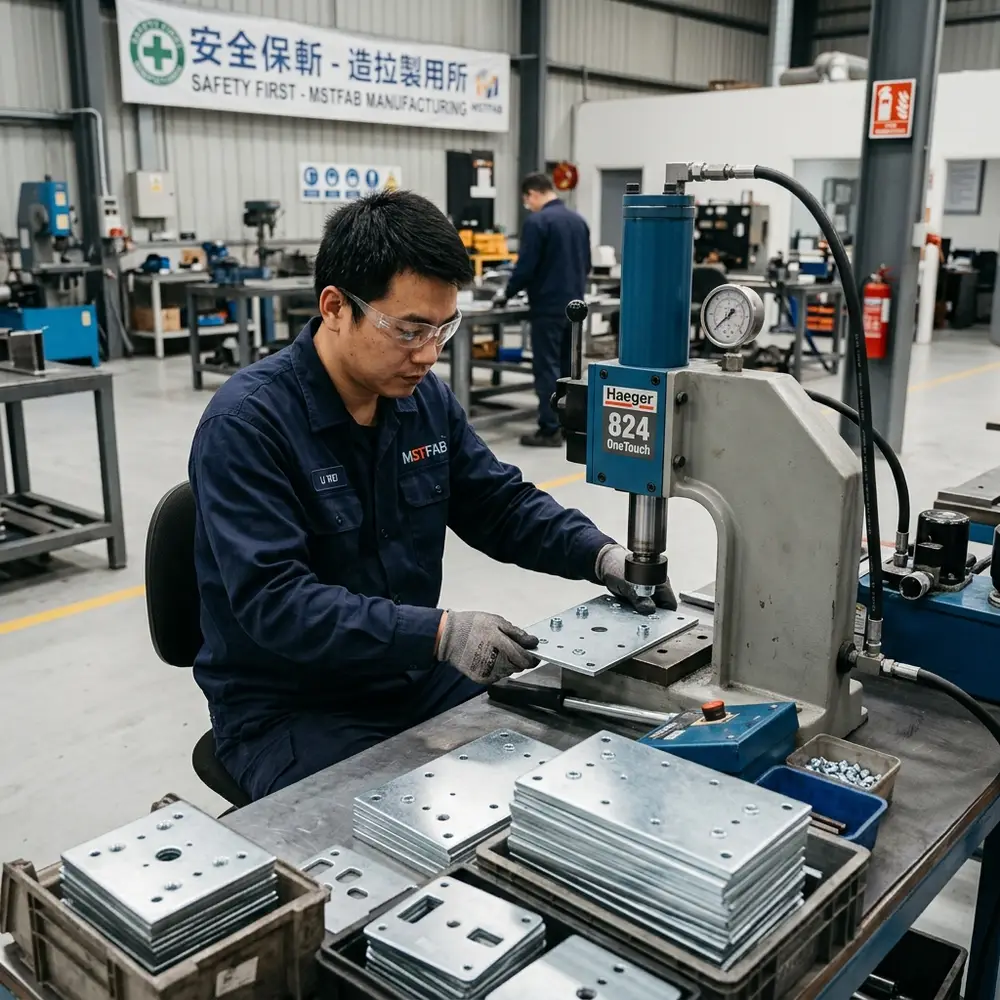
Trust Comparison: Standard Galvanized Steel Job Shop vs. MSTFAB Integrated Manufacturing
| Feature | Standard Galvanized Job Shop | MSTFAB Integrated Manufacturing |
|---|---|---|
| Material Verification | Uses whatever galvanized stock is available; does not confirm if SGCC, DX51D or coating weight matches the drawing. | Verifies galvanized steel grade, zinc coating type and sheet thickness against drawing requirements. |
| Cut-Edge Review | Cuts parts without reviewing edge exposure; cut edges rust in humid environments. | Reviews cut-edge corrosion risk based on application environment; flags need for coating or edge treatment. |
| Bend Coating Check | Bends galvanized sheet to tight radius; zinc coating cracks or flakes at bend zone. | Reviews bend radius against zinc coating behavior; adjusts to maintain coating integrity at bends. |
| Welding Review | Welds galvanized steel without reviewing zinc damage; fumes and local corrosion ignored. | Reviews whether welding is suitable; suggests alternative material or post-treatment if zinc damage is critical. |
| Powder Coating Prep | Sprays powder coating on galvanized surface without pretreatment; coating peels in weeks. | Reviews powder coating pretreatment, surface cleaning, oil removal and zinc layer compatibility. |
| Grounding Points | Coats entire part; grounding areas covered. Electrician scrapes coating at assembly site. | Marks and masks grounding contact areas before coating; ensures electrical conductivity where required. |
| Hardware Fit | Presses standard inserts without checking zinc layer impact; hardware loosens after coating. | Selects PEM hardware and threaded inserts compatible with galvanized sheet thickness and coating. |
| Export Packaging | Stacks galvanized parts loose; zinc surfaces scratch and white rust appears from moisture. | Uses protective film, foam separation, moisture protection and reinforced crates for export packaging. |
Galvanized Steel for Electrical and Control Cabinets
Galvanized steel is commonly used in electrical and control cabinet manufacturing: mounting plates, internal brackets, cable entry plates, grounding plates, cable management parts, ventilation panels, power distribution cabinet components and network cabinet parts.
An enclosure is not just a box. It must protect, mount, open, close, wire, ventilate, ground, assemble and ship correctly. The final design should define which surfaces remain galvanized, which surfaces are coated and which areas must remain conductive.
Galvanized Steel vs. Stainless Steel vs. Aluminum
| Factor | Galvanized Steel | Stainless Steel | Aluminum |
|---|---|---|---|
| Cost | Lowest material cost for corrosion-aware parts | Higher material cost, especially 316 | Mid-range; may offset with surface treatment |
| Corrosion | Zinc layer protection; cut edges need review | Strong inherent corrosion resistance | Natural oxide layer; anodizing optional |
| Weight | Standard steel weight | Similar to galvanized steel | Lightest option — ~1/3 steel weight |
| Welding | Possible but zinc damage must be reviewed | TIG welding common; heat tint removal needed | Requires specific filler; distortion sensitive |
| Surface | Spangled zinc appearance; usually powder coated | Brushed or polished finish common | Anodizing or powder coating common |
| Best For | Internal cabinet parts, mounting plates, cost-sensitive enclosures | Corrosive, outdoor, medical, visible industrial | Lightweight, portable, anodized appearance |
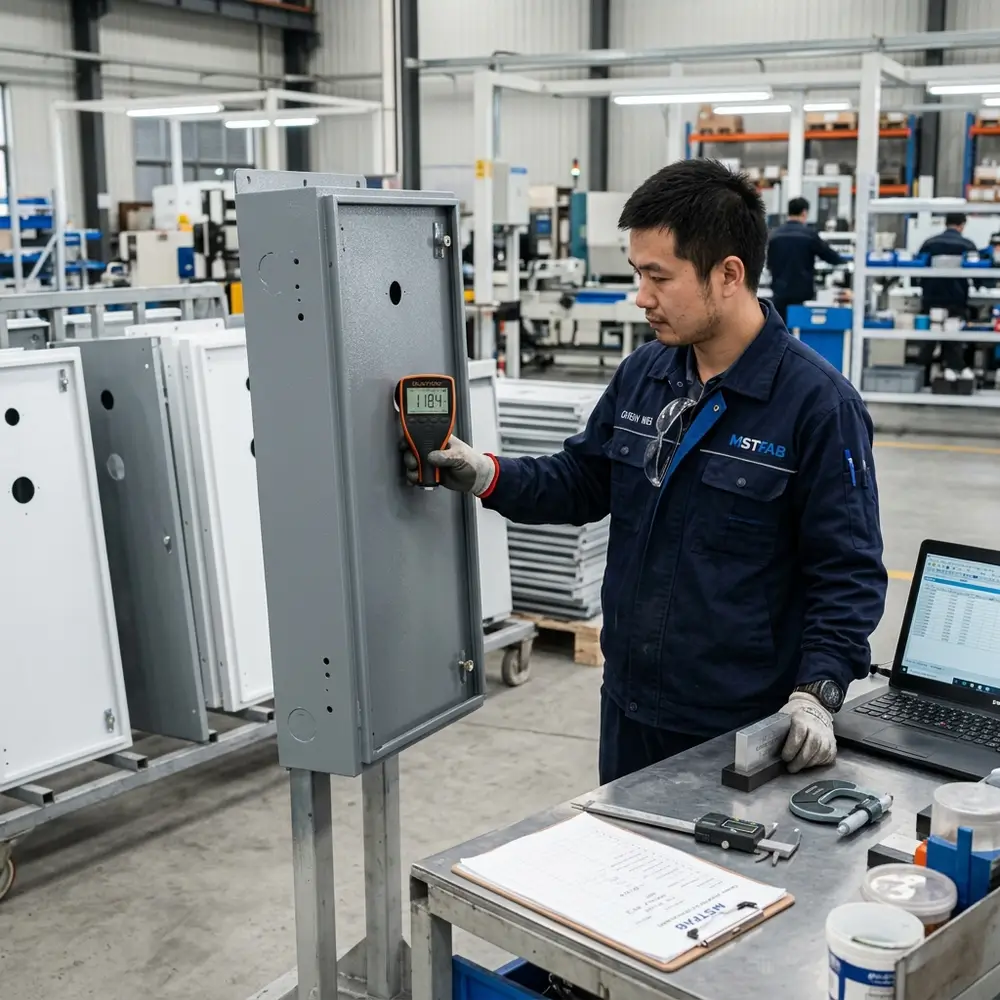
DFM Review for Galvanized Steel Sheet Metal Parts
DFM review for galvanized steel may check grade, sheet thickness, zinc coating requirement, laser cutting profile, cut-edge exposure, bend radius, hole-to-bend distance, welding feasibility, powder coating feasibility, pretreatment, grounding points, thread protection, hardware installation, assembly fit, packaging protection and batch repeatability.
For projects combining zinc-coated material with a colored finish, see our detailed guide on powder coated galvanized steel sheet metal parts covering surface preparation, coating adhesion, grounding masking and thread protection.
A design issue found before cutting is a question. A design issue found after cutting, bending, welding, coating and packaging becomes rework, delay and cost. That is not cost saving. That is cost relocation.
Drawing Requirements for Quotation
For accurate quotation, buyers should provide STEP or STP files, PDF drawings, DXF or DWG files, galvanized steel grade, zinc coating requirement, sheet thickness, quantity, bend radius, critical dimensions, powder coating requirement, masking areas, grounding points, thread protection, hardware requirement, welding requirement, inspection requirement, packaging requirement and shipping destination.
A STEP file shows the shape. A PDF drawing defines the requirements. A screenshot is not a manufacturing file. A drawing that only says “galvanized steel” is not complete. A good quote starts with clear material, thickness, finish and quantity. Not guesswork.
Packaging Protection for Galvanized Steel Parts
Galvanized steel parts still need proper packaging. Finished parts can be damaged by scratches, moisture, metal-to-metal contact, poor stacking, loose hardware, unprotected corners and freight vibration. White rust can appear on galvanized surfaces exposed to moisture during shipping.

A galvanized steel part that arrives scratched, bent or contaminated is no longer a clean manufactured part. It is a packaging failure. Packaging is not decoration. It is part of manufacturing quality.
Why Choose MSTFAB as Your Galvanized Steel Sheet Metal Parts Factory?
- Galvanized Steel Parts Made to Drawings: We manufacture from STEP files, PDF drawings, DXF/DWG files, assembly drawings and BOMs.
- Laser Cutting and CNC Bending: We support brackets, mounting plates, cabinet parts, panels, covers, guards and OEM components.
- Powder Coating Review: We review whether galvanized steel should remain uncoated or receive coating based on application, pretreatment and masking requirements.
- Hardware and Assembly Support: We install rivet nuts, threaded inserts, PEM hardware, studs, standoffs, hinges, locks and handles.
- Prototype to Batch: We support sample production, prototype fabrication, first article review and repeat batch manufacturing.
- Export Packaging: We protect galvanized surfaces, powder coated parts, installed hardware and finished components with moisture protection during shipment.
Request a Galvanized Steel Sheet Metal Parts Quote
Send MSTFAB your drawings and project requirements. We can review galvanized steel grade, zinc coating, sheet thickness, laser cutting, CNC bending, powder coating feasibility, hardware installation, grounding points, inspection and packaging for your project.
Upload Galvanized Steel Drawings →Frequently Asked Questions
What is a galvanized steel sheet metal parts factory?
A factory that manufactures custom zinc coated steel parts using laser cutting, CNC bending, hole processing, deburring, hardware installation, surface finishing review, inspection and packaging.
What galvanized steel parts can MSTFAB manufacture?
Galvanized brackets, mounting plates, cable entry plates, ventilation panels, cabinet parts, covers, guards, internal support parts and OEM components according to customer drawings.
Is galvanized steel suitable for outdoor use?
It depends on the environment, zinc coating, cut edges, design and finishing system. For harsh outdoor or coastal environments, stainless steel, aluminum or a reviewed coating system may be more suitable.
Can galvanized steel be powder coated?
Yes. Galvanized steel can be powder coated, but proper cleaning and pretreatment are important for coating adhesion and surface quality.
Can galvanized steel be welded?
It can be welded in some projects, but welding damages the zinc coating around the weld area and requires careful process, safety and post-treatment review.
What is the difference between SGCC and ordinary steel?
SGCC is galvanized steel with a zinc coating. Ordinary cold rolled steel (SPCC) does not have the same zinc protective layer. The correct material should be selected based on application and drawing requirements.
Does laser cutting affect galvanized steel corrosion resistance?
Laser cutting exposes cut edges where steel may be less protected than the zinc coated surface. Cut-edge protection should be reviewed depending on the application environment.
Can galvanized steel parts use PEM nuts or rivet nuts?
Yes. Galvanized steel parts can use PEM nuts, rivet nuts, threaded inserts, studs and standoffs when material thickness, hole size and assembly requirements are properly reviewed.
What files are needed for a galvanized steel quote?
The best RFQ includes STEP or STP files, PDF drawings, DXF or DWG files, galvanized steel grade, sheet thickness, quantity, bend radius, surface finish, hardware notes, inspection and packaging requirements.
How does galvanized steel compare to stainless steel and aluminum?
Galvanized steel is the most cost-effective corrosion-aware option. Stainless steel offers stronger corrosion resistance for demanding environments. Aluminum is lightest. The choice depends on application, environment, weight, surface finish and budget.
MSTFAB provides CNC press brake bending services for precision sheet metal parts, enclosures, brackets and OEM assemblies.
 WeChat Contact
 WhatsApp Me Directly