
Custom Control Enclosures for Industrial and Roadside Equipment
Operator console enclosures and traffic control cabinets have one thing in common: They protect the control system that people rely on when something important needs to work.
In a factory, the operator console controls machines, production lines, robotic systems, conveyors, and industrial automation equipment.
On the roadside, the traffic control cabinet protects signal controllers, power modules, communication devices, CCTV equipment, terminal blocks, and field wiring.
Different environments. Different users. Same painful truth:
If the enclosure is poorly fabricated, the whole system feels unreliable.
- The touchscreen opening is off.
- The cabinet door does not close evenly.
- The cable entry is in the wrong place.
- The ventilation design invites rain, dust, or overheating.
- The powder coating scratches during shipping.
- The technician starts drilling into finished coated metal.
That is not custom control enclosure manufacturing. That is a very expensive way to make engineers angry.
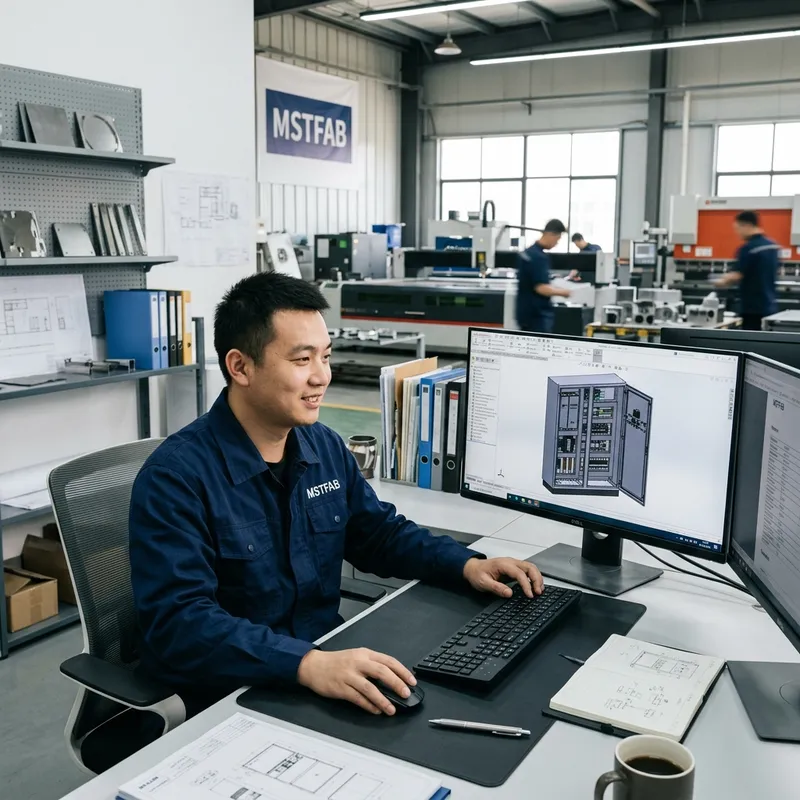
MSTFAB manufactures custom operator console enclosures and traffic control cabinets based on customer STEP files, 2D PDF drawings, DXF files, CAD files, samples, or project requirements. Our sheet metal fabrication process can include DFM review, laser cutting, CNC bending, welding, grinding, powder coating, stainless steel finishing, hardware installation, cable entry support, ventilation review, inspection, and export-ready packaging.
Why These Enclosures Need Custom Fabrication
Standard boxes work for simple applications. But operator consoles and traffic control cabinets are rarely simple boxes.
They usually need to match the real equipment layout, control interface, installation environment, wiring route, service access, heat load, door structure, surface finish, and maintenance process.
Custom fabrication helps solve practical problems such as:
- HMI touchscreen cutouts & Push button openings
- Sloped operator panels
- Cable entry and conduit plate design
- Internal mounting plates and brackets
- Ventilation louvers, fan openings, and filter frames
- Door, hinge, lock, gasket, and handle integration
- Grounding and bonding points
- Reinforced base or pedestal structures
- Outdoor weatherproof cabinet geometry
- Powder coating or stainless steel finishing
- Prototype to batch production consistency
A good control enclosure should arrive ready for assembly or field installation. It should not arrive as a “nearly correct” cabinet that your technicians must fix with drills, files, silicone sealant, and very creative language.
Operator Console Enclosures
Operator console enclosures are used where people directly control machines or equipment.
Common applications include machine control consoles, industrial operator stations, HMI control desks, PLC operator consoles, robotic system control stations, packaging machine consoles, conveyor control stations, and OEM machinery control panels.
An operator console enclosure must feel solid, look professional, and support the real operator workflow.
If the front panel flexes every time someone presses a button, the machine feels cheap. Even if the automation system inside is brilliant. People judge the technology inside by the metal outside. Unfair? Maybe. Real? Absolutely.
Traffic Control Cabinets
Traffic control cabinets are usually installed outdoors or in roadside environments.
Common applications include traffic signal controller cabinets, ITS roadside cabinets, CCTV traffic monitoring cabinets, street lighting control cabinets, highway monitoring enclosures, toll system equipment cabinets, pedestrian crossing control boxes, and outdoor transportation equipment enclosures.
A traffic control cabinet must survive weather, dust, UV exposure, temperature changes, roadside vibration, field wiring, repeated maintenance, and sometimes public abuse.
A roadside cabinet does not care how nice the quotation looked. It cares about rain, heat, corrosion, and whether the door still closes after six months outdoors.
Which shell belongs in your RFQ?
The same fabrication shop can make both, but the design brief should not be interchangeable. One is built around a person; the other is built around outdoor equipment and field service.
| Decision | Operator console shell | Traffic control cabinet shell |
|---|---|---|
| First fit check | Screen opening, control reach, panel angle and operator sightline | Controller rack or backplate, conduit entry and roadside mounting |
| Service access | Door swing, wiring clearance and safe access around the operator | Field-technician access, lock location, removable gland plates and drainage |
| Environment | Indoor machinery conditions unless the drawing specifies otherwise | Rain, sun, corrosion exposure, temperature and site-specific protection target |
| Buyer-owned system work | HMI, controls, wiring, software and completed-system safety validation | Traffic controller, electronics, wiring, field installation and final rating verification |
For a console-focused RFQ, include operator geometry and control interfaces. For a roadside cabinet, send installation and environmental requirements with the mechanical drawings. Neither empty shell automatically carries a completed-system IP or NEMA claim.
The Real Cost of a Bad Control Enclosure
A cheap enclosure quote can look attractive during sourcing. Then the sample arrives.
| Enclosure Manufacturing Flaw | The Result on Your Assembly Floor or Roadside |
|---|---|
| Misaligned HMI Cutouts | The premium touchscreen sits crooked on the console. The entire $50k machine now looks cheap. |
| Poor Gasket Compression | Water enters the traffic cabinet during the first rainstorm, destroying the signal controller. |
| Missing Conduit Plates | Field technicians are forced to use hole saws on a finished powder-coated cabinet, inviting immediate rust. |
| Weak Door Hinges | The heavy outdoor service door sags within a month, making it impossible to close and lock securely. |
The enclosure price is one number. The rework cost is another number. And that second number usually arrives later, louder, and with more people copied in the email chain.
Built Around the Real Control Layout
A control enclosure should be designed around the real equipment inside and the real user outside.
- For operator console enclosures: Review HMI screen size, viewing angle, button layout, front panel stiffness, operator reach distance, and cable entry direction.
- For traffic control cabinets: Review controller layout, terminal block position, power cable entry, conduit plate location, ventilation path, base mounting holes, and outdoor sealing structure.
A control enclosure that looks good outside but fights the internal layout is not premium manufacturing. It is expensive decoration with a lock.
Cable Entry and Conduit Plate Design
Cable entry is one of the biggest pain points in both operator consoles and traffic control cabinets.
Control systems may need to manage power cables, signal cables, fiber optic cables, sensor cables, grounding cables, large-diameter cable glands, and conduit connections.
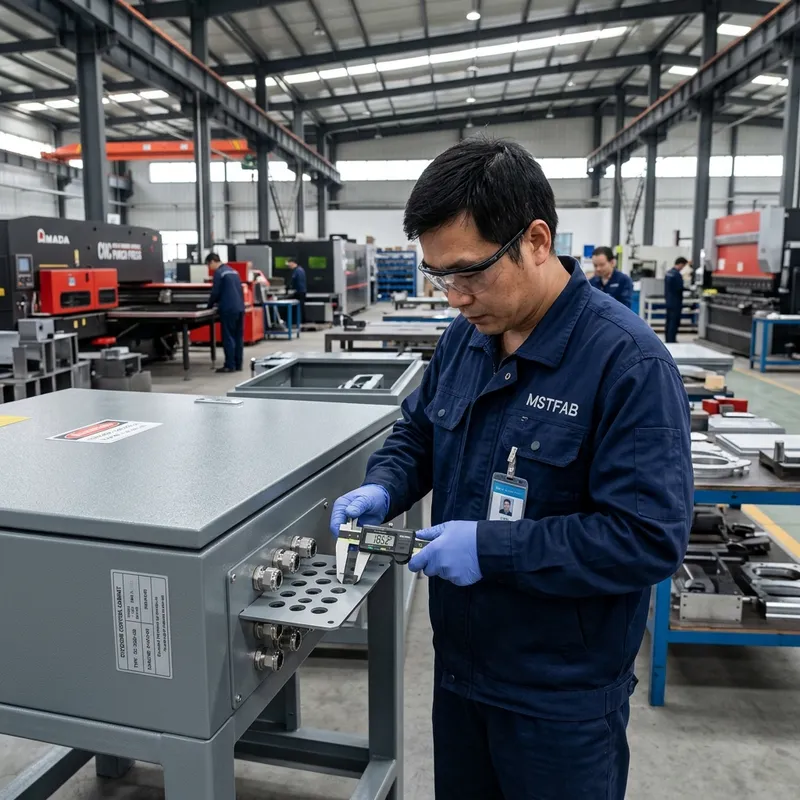
Custom sheet metal fabrication can support bottom cable gland plates, rear cable entry panels, side cable openings, removable gland plates, conduit entry plates, and protected cable entry zones.
Ventilation and Thermal Management
Control equipment generates heat. Custom fabrication can support ventilation louvers, fan openings, filter frames, air inlet and outlet paths, heat exchanger cutouts, and rain-protected ventilation structures.
But random holes are not thermal engineering. They are invitations for dust, water, insects, and regret.
A sealed cabinet with no thermal plan can cook electronics. A ventilated outdoor cabinet with no water protection can flood electronics. Both are bad. One is just wetter.
Door, Hinges, Locks, and Service Access
A door that sags after installation is not a small problem. For an operator console, it makes the machine feel cheap. For a traffic cabinet, it may break the seal.
Nobody wants a control enclosure door that behaves like an old kitchen cabinet after one month in service.
Sloped Panels and Ergonomics for Operator Consoles
Operator console enclosures are used by people, not robots. That means ergonomics matter.
A flat metal box may be easy to fabricate, but it may create glare, awkward reach, poor visibility, or operator fatigue. Bad ergonomics become daily frustration. Daily frustration eventually becomes a purchasing complaint.
Weatherproof Design for Traffic Control Cabinets
Traffic control cabinets often live outdoors. Useful outdoor design details include sloped top surfaces, rain lips, drip edges, protected door seams, gasketed doors, bottom cable entry, protected ventilation, and outdoor-grade powder coating.
A flat-top roadside cabinet can become a small swimming pool. That is not a feature. That is how corrosion gets comfortable.
Material Options
| Material Type | Application Environment |
|---|---|
| Cold-Rolled Steel | Indoor operator consoles, machine control stations. Cost-effective, but raw steel and water are not friends. |
| Galvanized Steel | Traffic control cabinets, semi-outdoor enclosures. Cut edges and weld zones still need protection. It is useful, not magic. |
| Stainless Steel (304/316) | Harsh environment traffic cabinets, washdown operator stations. It costs more, but replacing corroded cabinets in the field costs more than that. |
| Aluminum | Lightweight HMI consoles, wall-mounted boxes. Aluminum is not soft steel. Treating it like steel is how nice CAD becomes annoying samples. |
Surface Finishing and Powder Coating
For operator consoles, visible faces are touched every day. For traffic cabinets, the buyer must specify the exposure and finish requirements. Selected finishing processes may be completed by qualified long-term partners; finish, masking and inspection acceptance should be confirmed in the approved order scope.
IP and NEMA Design Support
Operator consoles and traffic cabinets may need different protection targets (IP54, IP65, NEMA 3R, NEMA 4X).
Important note: MSTFAB can fabricate enclosures designed to support customer IP or NEMA requirements based on drawings. If formal testing or third-party certification is required, the scope must be confirmed before quotation. Do not assume certification. Assumptions are where compliance projects go to get expensive.
Laser Cutting and Welding
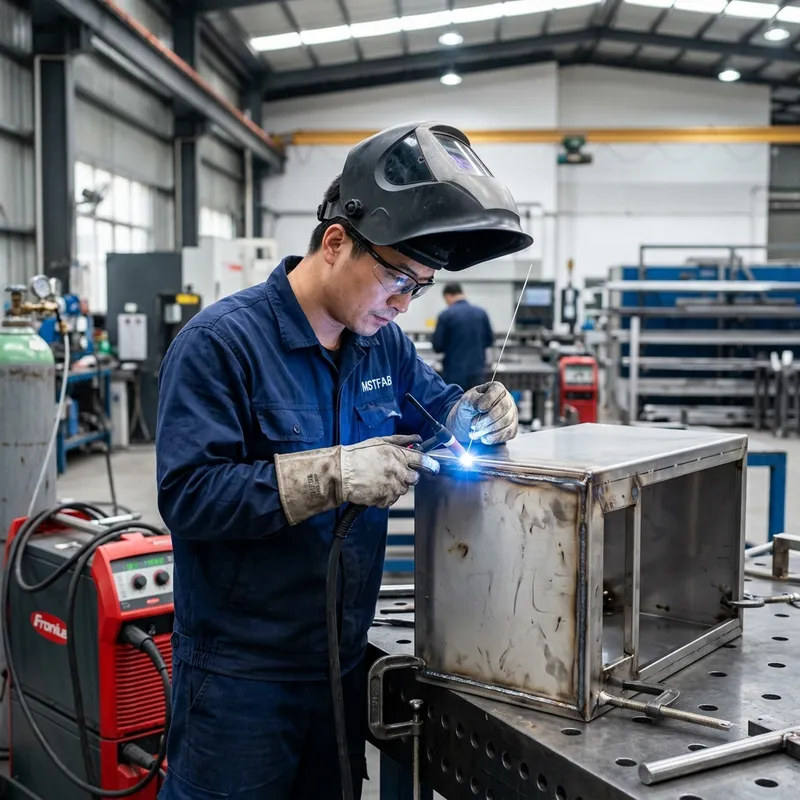
Laser cutting is used for console panels, cabinet doors, HMI touchscreen openings, conduit plate openings, and ventilation patterns.
Operator consoles and traffic control cabinets also require welding for frames, bases, and outdoor cabinet bodies. Welding adds heat. Heat moves metal. If welding is not controlled, the cabinet may look square in CAD and crooked in real life.
DFM Review Before Production
A 3D CAD model can look perfect on screen and still create production problems. Sheet metal has thickness. It bends. It warps during welding. Powder coating adds thickness.
A design issue found before production is a drawing update. A design issue found after production is a rejected sample, delayed installation, and a meeting nobody wants to attend. DFM review is not extra paperwork. It is risk control.
Prototype to Batch Production
For OEM buyers, one good sample is not the finish line. The real goal is stable repeat production. A sample made with heroic manual correction is not a manufacturing process. It is a magic trick. Magic tricks do not scale.
Export Packaging
Operator console enclosures and traffic control cabinets are often coated, fitted with hardware, and shipped internationally.
Good packaging is part of quality control. A perfectly powder-coated control cabinet that arrives scratched is no longer perfect. It is a customer complaint with forklift marks.
Why Choose MSTFAB
MSTFAB is the international brand of Guangzhou Maisituo Sheet Metal Manufacturing Co., Ltd., a custom sheet metal fabrication company in Guangzhou, China. We support overseas OEM buyers with drawing-based enclosure manufacturing.
- Fast Quotation Support: With complete STEP and PDF drawings, our team can review operator console and traffic cabinet projects faster and provide practical quotation support.
- DFM Review Before Production: We can review bending risks, welding distortion, HMI cutouts, cable entry, conduit plates, ventilation, and outdoor weatherproof sealing.
- Clear Manufacturing Scope: We manufacture the physical metal enclosure. We do not write HMI software or design traffic signal systems. You bring the control intelligence. We build the cabinet that protects it.
Send the right enclosure drawing package
Include the STEP or STP assembly, controlled 2D PDF and buyer-controlled DXF or DWG data when available. Mark the mounting, cable-entry, service and environmental interfaces; include quantity, finish, inspection needs and destination.
FAQ
What are operator console enclosures?
Operator console enclosures are custom metal housings or control desks used to mount HMI screens, buttons, switches, emergency stops, control panels, wiring, and internal components for industrial operator stations.
What are traffic control cabinets?
Traffic control cabinets are outdoor metal cabinets used to protect traffic signal controllers, power modules, terminal blocks, communication equipment, CCTV control systems, and roadside ITS equipment.
Can operator console enclosures and traffic control cabinets be customized?
Yes. Size, material, thickness, doors, locks, hinges, gaskets, HMI openings, button holes, cable entries, conduit plates, ventilation, mounting plates, brackets, surface finish, and packaging can be customized according to drawings.
What materials are used?
Common materials include cold-rolled steel, galvanized steel, stainless steel, aluminum, and coated carbon steel depending on indoor or outdoor use, corrosion requirements, strength, weight, appearance, and budget.
Can you make outdoor traffic control cabinets?
Yes. Outdoor traffic control cabinets can be fabricated with weatherproof structure design, gasketed doors, protected cable entry, conduit plates, ventilation review, corrosion-resistant materials, powder coating, and export packaging.
Does MSTFAB provide control software or internal electronics?
No. MSTFAB focuses on custom sheet metal fabrication. We manufacture the physical enclosure, cabinet, panel, bracket, chassis, mounting plate, cable entry plate, conduit plate, and metal parts. HMI software, PLC programming, traffic control software, circuitry, wiring, and internal electronics are outside our standard scope.
Suggested Further Reading
- Operator Console Enclosure Manufacturer
- Traffic Control Cabinet Fabrication
- HMI Enclosures
- PLC Control Cabinets
- Industrial Automation Enclosure Manufacturer
- OEM Electrical Control Cabinet Manufacturer
- Custom Electrical Control Enclosure Fabrication
- Outdoor Electrical Enclosure Fabrication
- Weatherproof Metal Enclosure Manufacturer
- IP65 Sheet Metal Enclosure Manufacturer
- IP66 Metal Enclosure Fabrication
- Custom NEMA Enclosure Manufacturer
- NEMA vs IP Rating for Metal Enclosures
- DFM for Sheet Metal Enclosures
- Custom Sheet Metal Enclosure Design Guide
- Sheet Metal Enclosure Manufacturing Process
- Powder Coating for Sheet Metal Enclosures
- Custom Laser Cutting Service
- CNC Sheet Metal Bending
custom sheet metal enclosure fabrication
MSTFAB manufactures custom sheet metal enclosures, electrical cabinets, control boxes and industrial metal housings for OEM buyers.
 WeChat Contact
 WhatsApp Me Directly