
OEM ENCLOSURE DESIGN GUIDE
A custom sheet metal enclosure must be designed as an assembly, not just a box. Define door movement, mounting interfaces, cable access, bend feasibility and finished surfaces before release. Use this OEM checklist to connect the 3D housing model with the 2D drawing requirements that control fabrication and acceptance of the empty metal shell.
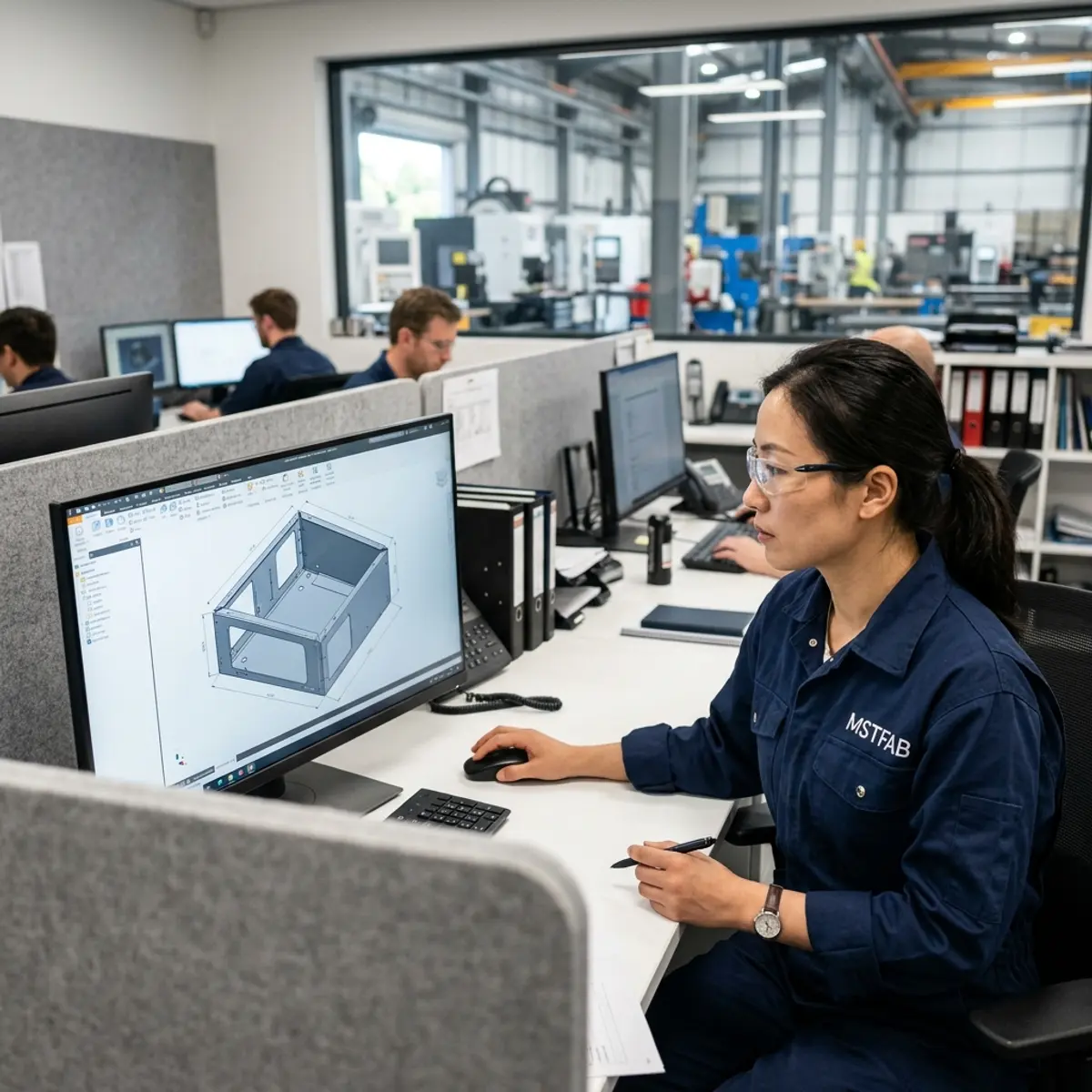
Start with the Real Application
Before designing the metal box, define what it must actually do. A telecom cabinet, medical device housing, EV charger enclosure, PLC control box, and battery storage cabinet face completely different environmental realities.
Indoor, outdoor, rain, dust, UV exposure, salt air, or washdown cleaning determines material and sealing.
Will operators touch it daily? Does the door carry heavy hardware or an HMI screen?
Where will cables enter? Does it need dedicated ventilation or thermal management?
How will technicians install components and perform future maintenance safely?
Choose the Right Material
Material selection affects cost, strength, corrosion resistance, weight, bending behavior, and surface finish. Writing “metal enclosure” on a drawing is not enough.
| Material | Best For | Main Consideration |
|---|---|---|
| Cold-Rolled Steel | Indoor electrical enclosures, PLC boxes, cost-sensitive OEM cabinets. | Requires strong powder coating to prevent rust. |
| Galvanized Steel | Semi-outdoor panels, telecom cabinets, power distribution boxes. | Cut edges and welds still need protection. |
| Stainless Steel (304/316) | Applications where the specified grade and surface condition suit the service exposure. | Confirm corrosion and cleaning conditions; alloy selection alone does not establish an enclosure rating. |
| Aluminum | EV charger panels, lightweight housings, premium OEM enclosures. | Review bend radius and galvanic corrosion risks. |
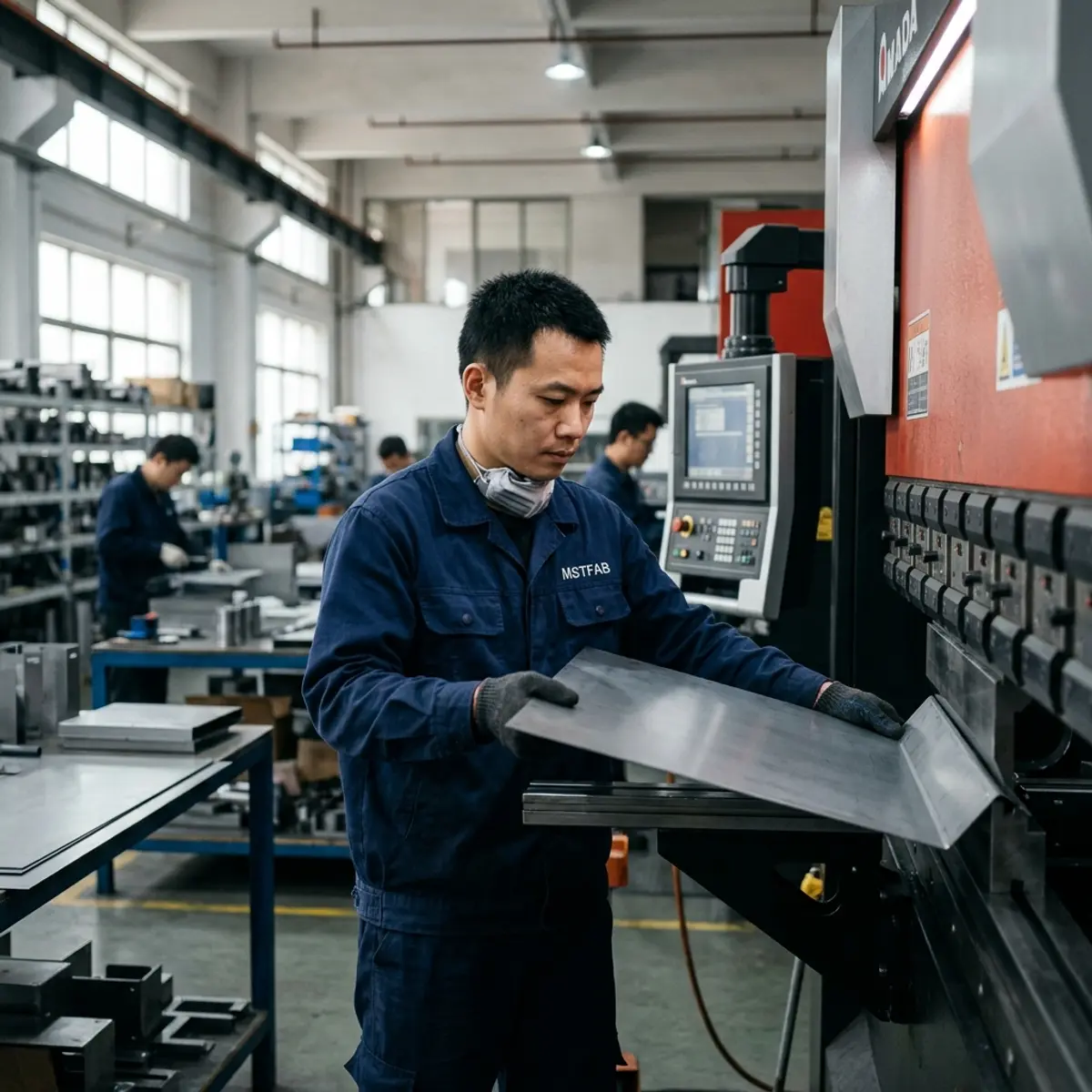
Avoid Holes Too Close to Bend Lines
Holes, cutouts and hardware near bends need a manufacturability review for the selected material, thickness, radius and tooling. Identify the functional feature and its finished tolerance before proposing a move or relief. Protolabs’ sheet metal design toolkit illustrates these dependencies; its tooling tables are not MSTFAB manufacturing limits.
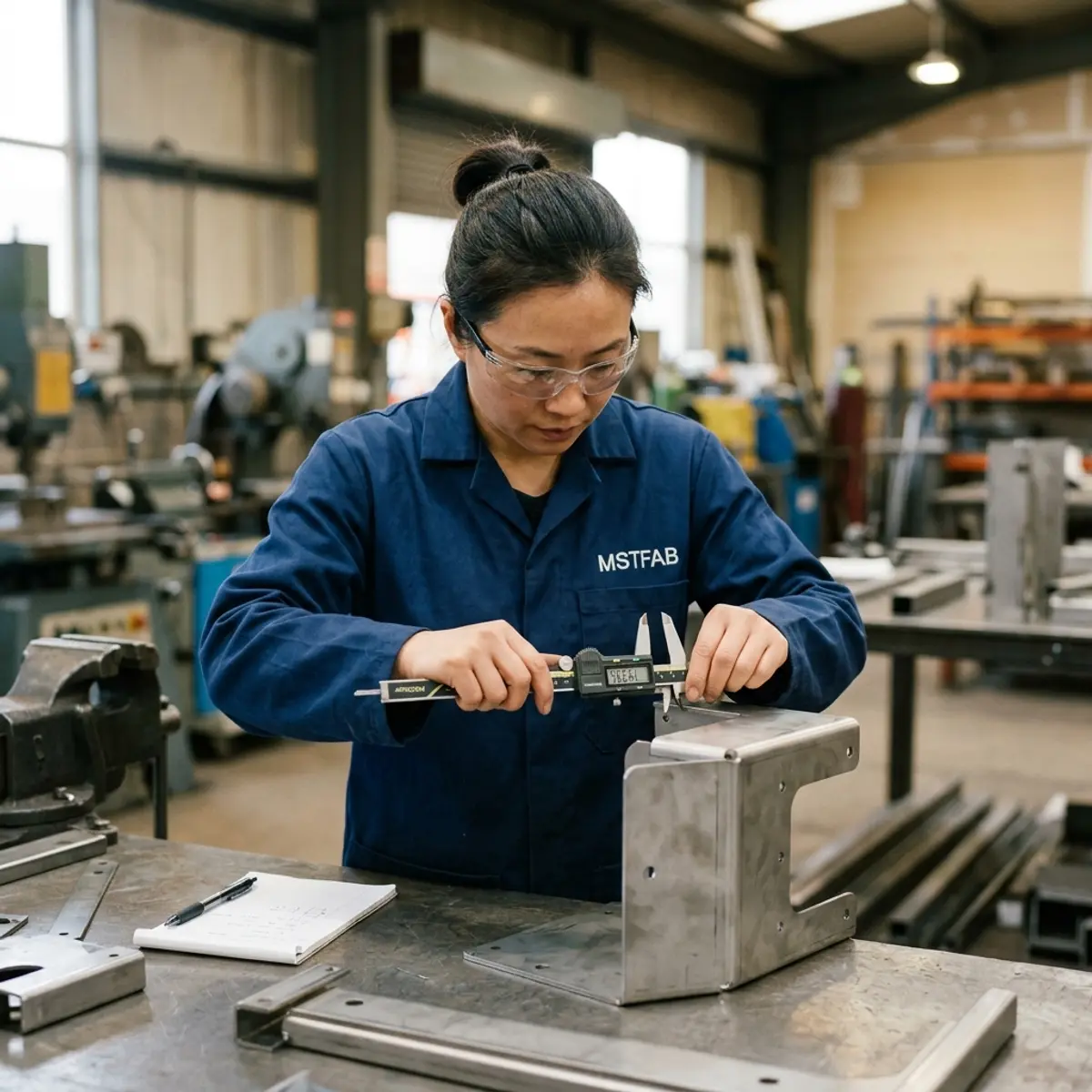
Plan Sealing and Cable Entry Early
Review the door, gasket land, hinges, latches and cable-entry components together. The metal shell must support the specified seal geometry and service access. Any requested ingress-protection or enclosure classification needs an agreed validation scope for the finished configuration; a material choice, shell photo or gasket specification alone does not establish a rating.
Design a flat contact surface and ensure door stiffness supports even latch pressure.
Control heat during welding to prevent warped doors and twisted frames that break the seal.
Use removable bottom gland plates and design for correct bend radii and connector clearance.
Random holes are not thermal engineering. Balance heat exhaust with splash protection.
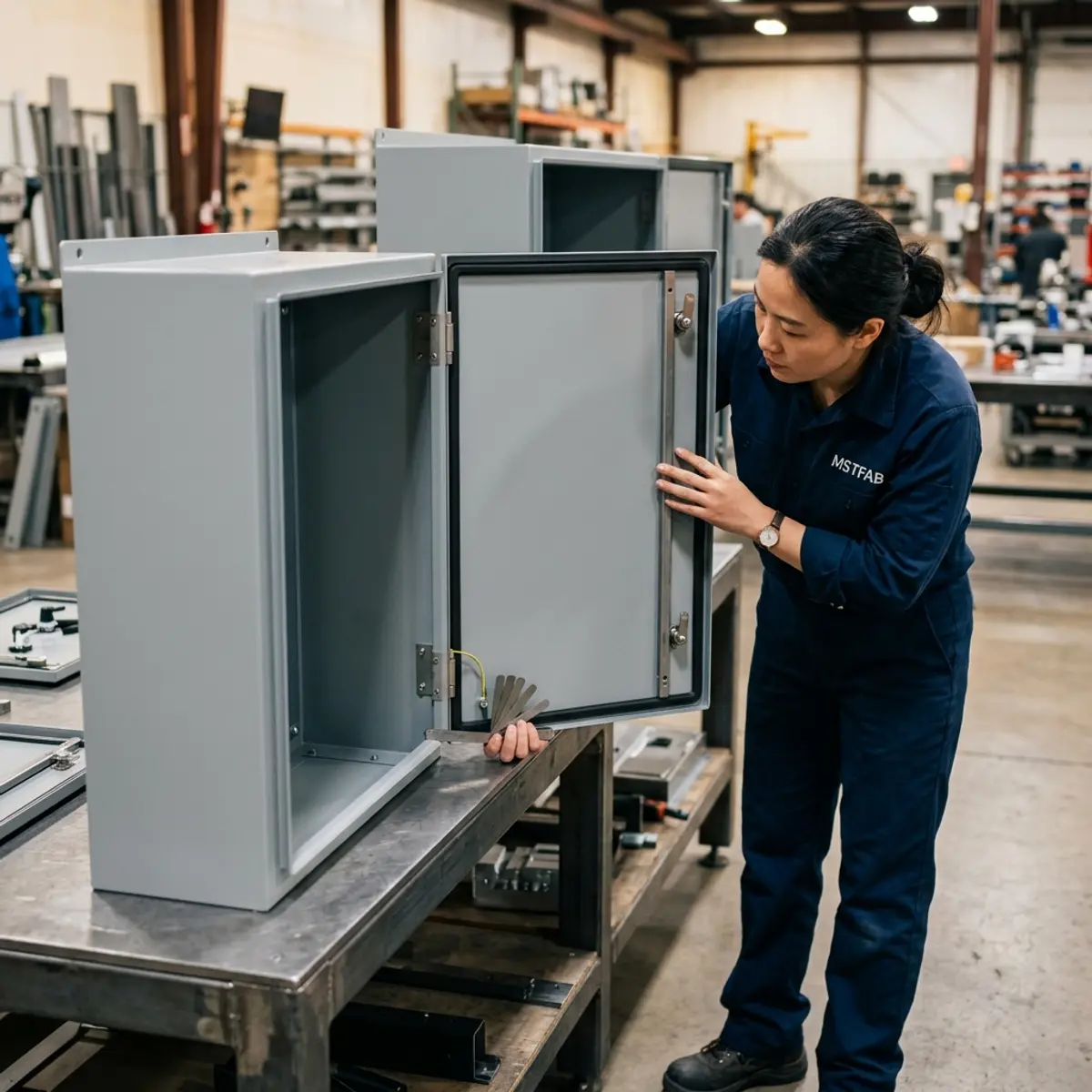
Design for Assembly and Finishing
Define internal mounting plates, rails, fasteners and contact surfaces with the enclosure assembly. Confirm the installation sequence for each hardware item rather than assuming all parts are fitted before coating. Check tool access, panel removal, mating clearances and inspection datums in the finished condition, including any coating buildup and masked areas.

What to include in your RFQ
For custom metal housings, 2D drawings should define requirements not unambiguously controlled by the model: part number and revision, units, functional datums, tolerances, threads, hardware, welds, finish and acceptance state. Identify the controlling document when files conflict. A 3D assembly model explains spatial relationships, but it does not automatically define every manufacturing requirement.
- 3D STEP assembly or part model and matching 2D PDF drawing, with units and revision.
- Material grade and sheet thickness.
- Indoor or outdoor application environment.
- IP or NEMA design target, if any.
- Surface finish (RAL color, texture).
- Masking and grounding zones.
- PEM fastener locations.
- Cable entry and ventilation details.
- Functional datums, critical tolerances and whether dimensions apply before or after finishing.
- Prototype and batch quantity.
- Export packaging requirements.
Frequently asked questions
What files should I send for a custom enclosure quote?
A 3D STEP file and 2D PDF drawing are recommended. Include material, thickness, finish, quantity, hardware, welding, tolerances, application environment, and packaging requirements.
Why is bend radius important?
Bend radius affects cracking risk, dimensional accuracy, appearance, and manufacturability. Very sharp bends may not be realistic for thicker materials or certain alloys.
How do I design a weatherproof enclosure?
Start with a clear IP or NEMA target. Review gasket compression, door flatness, hinge pressure, cable entry sealing, protected ventilation, material selection, and outdoor powder coating.
Does MSTFAB design internal electronics?
No. MSTFAB focuses purely on custom sheet metal fabrication. We manufacture the physical empty enclosure, panel, bracket, chassis, and metal parts. Electronics, software, and internal systems are outside our scope.
Need your enclosure design reviewed before production?
Send your drawings and project requirements. Our manufacturing engineering team can review the structure, bending, welding, cable entry, ventilation, surface finish, and production risks before quotation.
Related enclosure DFM: See the hidden-hinge design guide for hinge-axis clearance, door gaps, weld distortion and first-article fit checks.
 WeChat Contact
 WhatsApp Me Directly