An OEM electrical control cabinet is not just a metal box with a door.
It is the mechanical protection system around PLCs, relays, terminals, power supplies, circuit breakers, DIN rails, wiring ducts, cable glands, grounding points, mounting plates, fans, filters, switches, and service access areas.
If the cabinet is poorly fabricated, the electrical design may be perfect, but the assembly floor still suffers.
- The mounting plate does not fit.
- The DIN rail holes are off.
- The cable entry is in the wrong location.
- The HMI cutout looks slightly crooked.
- The door does not close evenly.
- The powder coating blocks threaded holes.
- The technician starts drilling into finished coated metal.
That is not OEM electrical control cabinet manufacturing.
That is a control system trapped inside a sheet metal problem.
MSTFAB provides custom sheet metal enclosure fabrication for OEM electrical control cabinets based on customer STEP files, 2D PDF drawings, CAD files, samples, or project requirements. Our process can include laser cutting, CNC bending, welding, grinding, powder coating, stainless steel finishing, hardware installation, mounting plate fabrication, cable entry design support, ventilation review, DFM review, inspection, and export-ready packaging.
Need production capability? This article focuses on electrical control cabinet dfm checklist for oem integrators. For manufacturing scope, process capability and drawing-based quotation support, review MSTFAB’s control cabinet enclosure fabrication.
Why OEM Control Cabinets Need Custom Fabrication
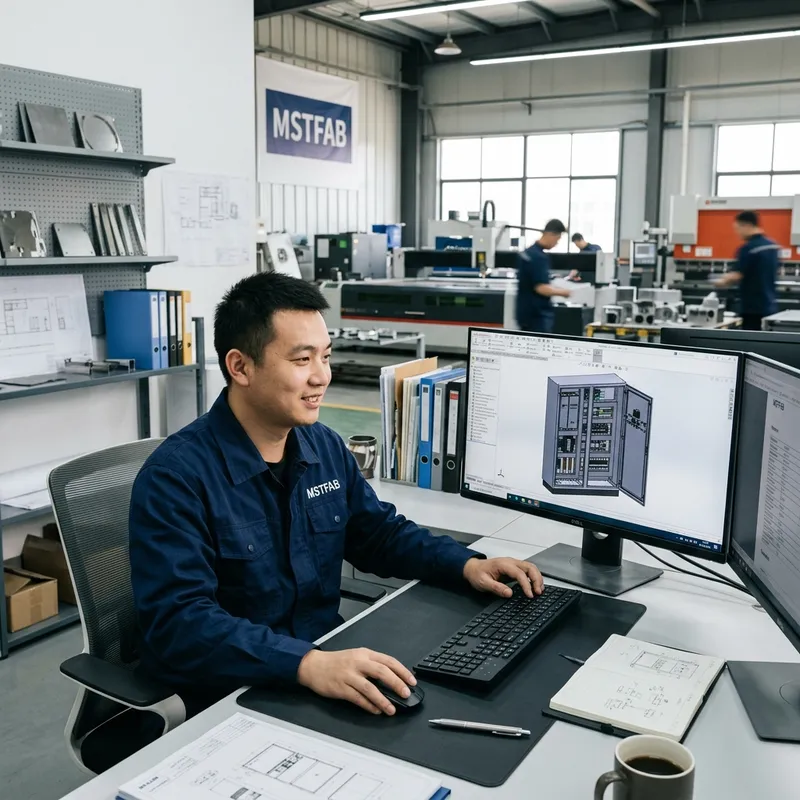
Standard catalog cabinets are useful for simple electrical projects. But OEM equipment often needs a cabinet designed around the actual product layout, assembly process, installation environment, service access, and brand appearance.
Custom fabrication helps solve practical problems such as:
- PLC and relay mounting layout
- DIN rail and wire duct support
- Removable mounting plates
- HMI screen and button cutouts
- Cable gland plate design
- Bottom, side, rear, or top cable entry
- Ventilation louvers and fan openings
- Grounding and bonding points
- Strong doors, hinges, locks, and handles
- Gasketed sealing when required
- Powder coating or stainless steel finishing
- Prototype to batch production consistency
A good OEM electrical control cabinet should arrive ready for assembly.
It should not arrive as a “nearly correct” enclosure that your technicians must finish with drills, grinders, and very creative language.
Common Applications
Custom OEM electrical control cabinets are used for:
- PLC control cabinets
- Industrial automation cabinets
- Machine control cabinets
- Electrical control panels
- Power control boxes
- Motor control cabinets
- HMI control enclosures
- VFD control cabinets
- Factory automation systems
- Packaging machine control cabinets
- Robotic control cabinets
- Conveyor control panels
- Outdoor electrical cabinets
- OEM machinery enclosures
- Industrial equipment control boxes
Each project has different priorities. That is why electrical control cabinet fabrication should start with the real control layout, not only the outside cabinet dimensions.
The Real Cost of a Bad Control Cabinet
A cheap control cabinet quote can look attractive during sourcing. Then the cabinet reaches final assembly.
A poor cabinet may cause slow wiring assembly, mounting plate mismatch, cable entry rework, powder coating damage, blocked threaded holes, extra drilling, and delayed equipment delivery.
The cabinet price is one number. The rework cost is another number. And that second number usually arrives late, angry, and not included in the quotation spreadsheet.
Built Around the Electrical Layout
An OEM control cabinet should be designed around the actual internal electrical architecture.
If the internal layout is ignored, the cabinet may look good outside but become painful during wiring.
A beautiful powder-coated cabinet that blocks cable routing is not premium manufacturing. It is expensive decoration with a lock.
Mounting Plate, DIN Rail, and Internal Bracket Design
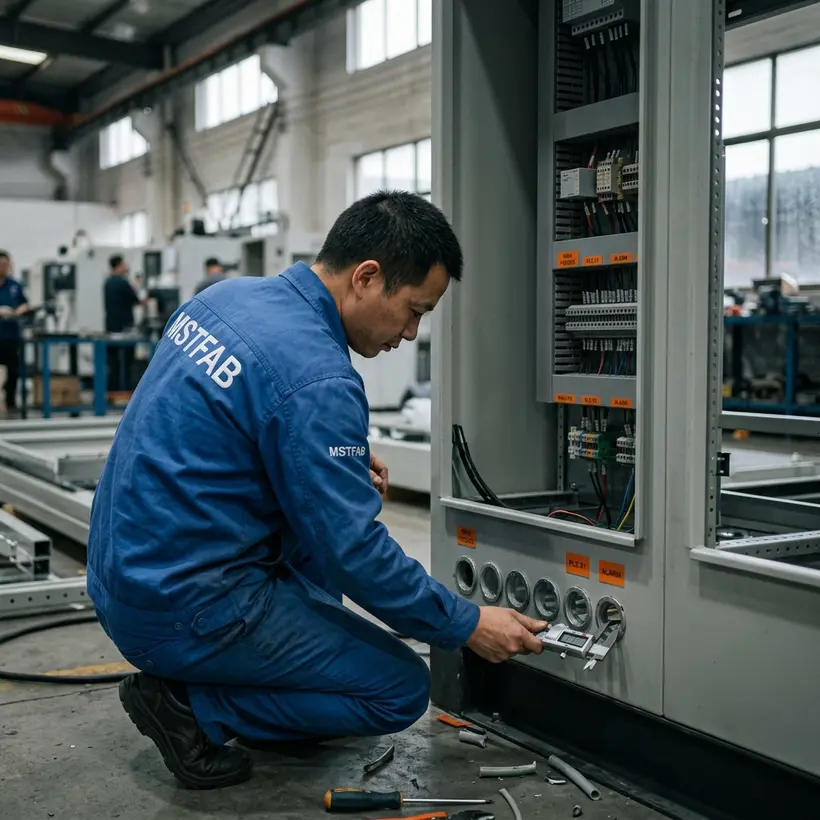
The mounting plate is one of the most important parts of an electrical control cabinet.
A weak or inaccurate mounting plate slows assembly and creates wiring problems. A cabinet body may look strong from outside, but if the internal mounting structure is wrong, your assembly team will know immediately. They always know.
Cable Entry and Wiring Support
Cable entry is one of the most common pain points in electrical control cabinet projects.
Cable entry should be planned before fabrication.
Cutting holes into a finished electrical control cabinet is not engineering. It is panic with a hole saw.
Ventilation and Thermal Management
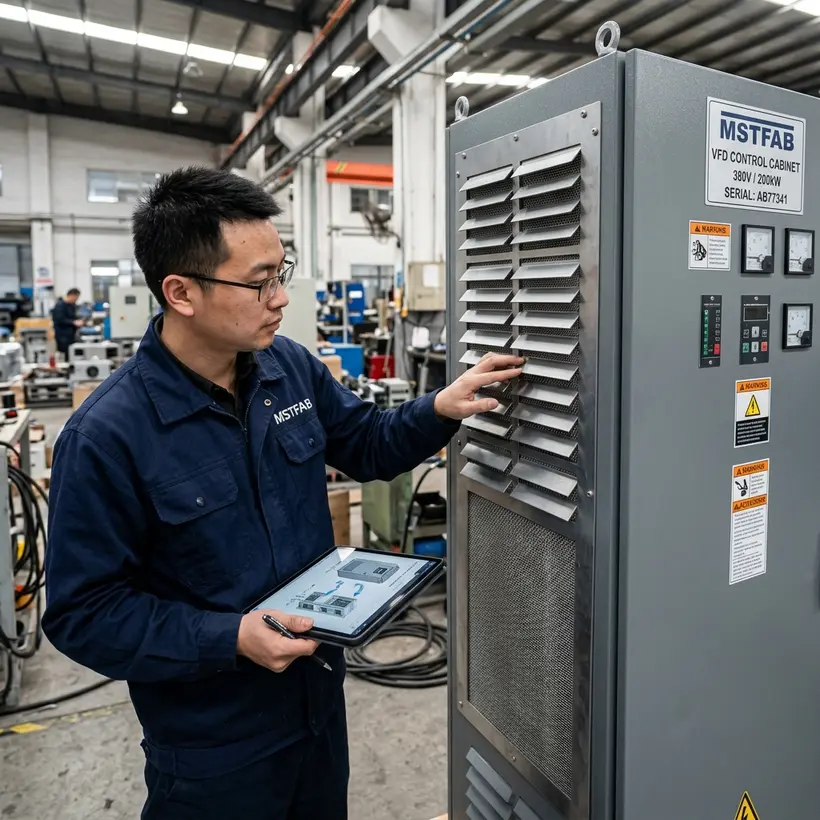
Electrical control cabinets often contain heat-generating components like Power supplies, VFDs, and Transformers.
But random holes are not thermal engineering. They are invitations for dust, water, insects, and regret.
A sealed cabinet with no thermal plan can cook electronics. A ventilated cabinet with no protection can flood electronics. Both are bad. One is just wetter.
Material Options
Cold-Rolled Steel
Cold-rolled steel is commonly used for indoor electrical control cabinets, PLC cabinets, machine control boxes, and powder-coated OEM enclosures.
Galvanized Steel
Galvanized steel provides better corrosion resistance than standard cold-rolled steel. Cut edges, drilled holes, and weld zones still need protection. Galvanized steel is useful. It is not magic.
Stainless Steel
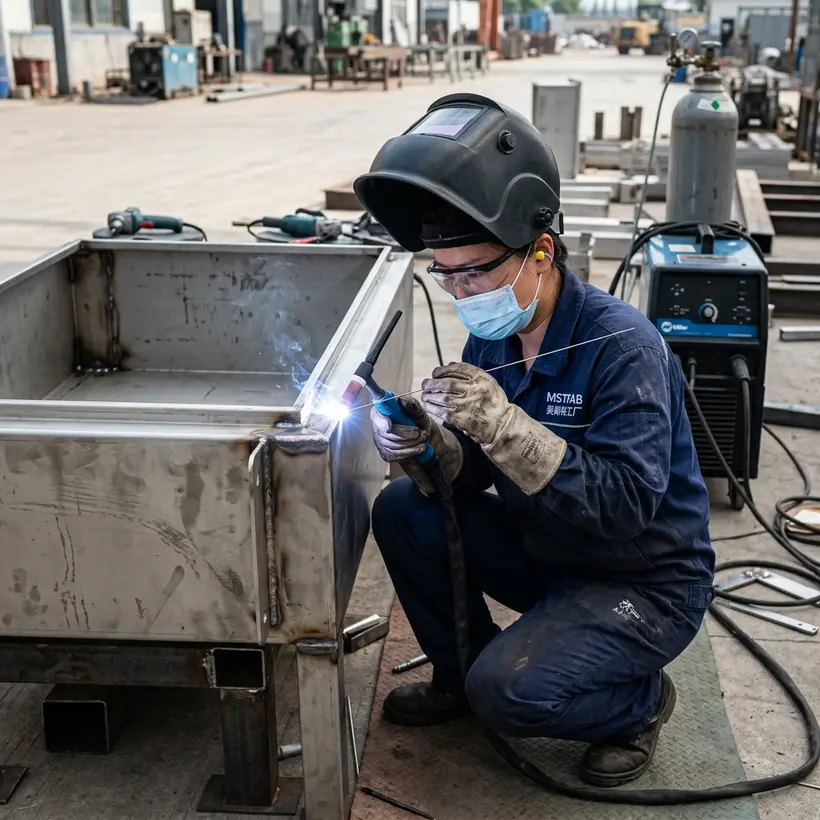
Stainless steel is used when corrosion resistance, washdown resistance, durability, or premium appearance matters.
Stainless steel costs more. Field corrosion usually costs more than that.
Aluminum
Aluminum is lightweight and naturally corrosion-resistant. Aluminum is not soft steel. Treating it like steel is how nice CAD becomes annoying samples.
Surface Finishing for OEM Electrical Cabinets

Powder coating is not just color. For outdoor electrical cabinets, it is part of the protection system.
OEM Trust Table: How MSTFAB Engineers Control Cabinets
| Critical Evaluation Area | Standard Fabrication Shop | MSTFAB Professional Approach |
|---|---|---|
| Mounting Plate Accuracy | Drills holes randomly, forcing technicians to re-measure and re-drill during assembly. | Laser-cuts precise mounting and DIN rail holes based on your exact electrical layout. |
| Cable Entry & Wiring | Leaves sharp edges and poor gland clearance, slowing down field wiring. | Pre-plans smooth, laser-cut bottom/top gland plates for fast, safe cable routing. |
| Thermal Management | Punches random holes that allow dust and water to damage sensitive PLCs. | Engineers calculated louver and fan cutouts that balance cooling with IP65/IP66/NEMA protection. |
| Powder Coating Clearance | Paints over threaded holes and grounding studs, causing massive assembly delays. | Uses precise masking protocols to keep threads clean and ensure solid electrical grounding. |
| Export Packaging | Wraps heavy cabinets in thin plastic, resulting in bent doors and scratched paint. | Designs reinforced wooden crates with foam blocking to protect large control cabinets globally. |
DFM Review Before Production
A 3D CAD model can look perfect on screen and still create production problems.
A design issue found before production is a drawing update. A design issue found after production is a rejected sample, delayed assembly, and a meeting nobody wants to attend.
DFM review is not extra paperwork. It is risk control.
For a complete drawing-to-delivery view, review the custom cabinet enclosure fabrication buyer guide.
Clear Manufacturing Scope and IP Protection
We do not design electrical schematics. We do not wire control cabinets. We do not write PLC programs. We do not design automation logic.
Our scope is the physical metal cabinet based on customer drawings. This keeps the manufacturing boundary clear and helps protect customer intellectual property.
Export Packaging
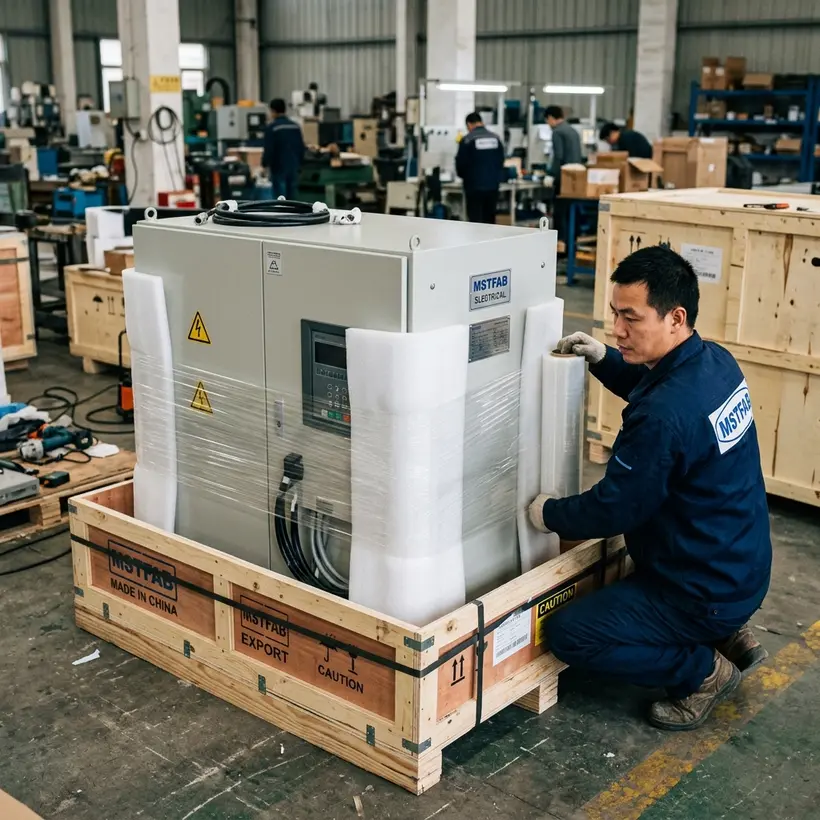
A perfect cabinet that arrives scratched is no longer perfect. It is a customer complaint with forklift marks.
Related engineering resource: If your project involves EV charging infrastructure, review our custom EV charger enclosure fabrication capabilities for outdoor sheet metal cabinet design, powder coating, and export-ready manufacturing.
Related factory capability: For OEM buyers comparing a sheet metal enclosure factory, review how MSTFAB handles final assembly, protective packaging, export packing checks, and shipment-ready enclosure delivery.
For large floor-mounted projects, review the floor-standing industrial control cabinet RFQ guide before releasing loads, plinths, door interfaces and handling details.
FAQ
What is an OEM electrical control cabinet manufacturer?
An OEM electrical control cabinet manufacturer produces custom metal cabinets, enclosures, doors, panels, mounting plates, cable entry plates, brackets, and chassis structures for electrical control systems and industrial equipment.
Can electrical control cabinets be customized?
Yes. Size, material, thickness, doors, locks, hinges, mounting plates, cable entries, ventilation, gaskets, brackets, surface finish, and hardware can be customized according to drawings.
Can you make PLC and HMI control cabinets?
Yes. PLC cabinets, HMI control boxes, touchscreen enclosures, button panels, machine control cabinets, and automation equipment enclosures can be fabricated according to customer drawings.
Do you provide wiring or electrical design?
No. MSTFAB focuses on custom sheet metal fabrication. We manufacture the physical cabinet, enclosure, panel, bracket, chassis, mounting plate, and metal parts. Wiring, electrical design, PLC programming, software, circuitry, and internal components are outside our standard scope.
custom sheet metal enclosure fabrication
MSTFAB manufactures custom sheet metal enclosures, electrical cabinets, control boxes and industrial metal housings for OEM buyers.
 WeChat Contact
 WhatsApp Me Directly