
An HMI enclosure looks harmless until the touchscreen cutout is 1 mm off, the door seal does not compress, or the operator panel flexes every time someone presses a button. Guangzhou Maisituo Sheet Metal Manufacturing Co., Ltd., operating as MSTFAB, does not build the HMI screen or the finished control station. We build the metal shell that lets your HMI parts fit without a daily argument.
Quick Answer: What Is HMI Enclosure Sheet Metal Fabrication?
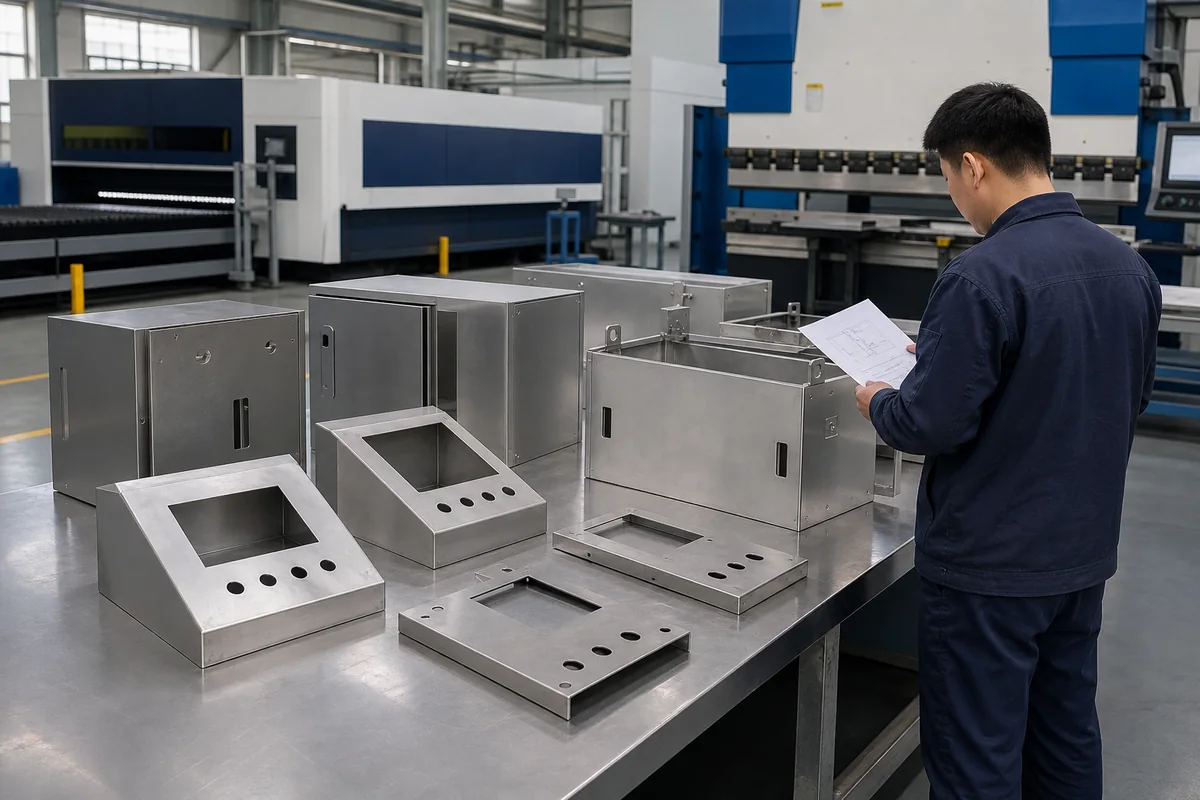
HMI enclosure sheet metal fabrication means manufacturing the empty metal housing around an operator interface: front panels with screen openings, button-hole layouts, sloped console shells, access doors, hinge plates, lock cutouts, gasket flanges, mounting brackets and protective packing. MSTFAB does not supply touchscreens, buttons, PLCs, controllers, wiring harnesses, software, electronics, batteries, complete control panels or finished machines.
Clear Scope: Metal Enclosure Only
This is the part buyers must lock down first. If the RFQ says “HMI enclosure” but the team expects a powered control product, the quote is already wearing the wrong shoes.
| Buyer Requirement | MSTFAB Scope | Not Included |
|---|---|---|
| HMI front panel | Laser cut screen openings, button holes, mounting holes, PEM hardware and finish | Touchscreen, display glass, membrane keypad, buttons or wiring |
| Operator console shell | Bent and welded sloped metal shell, access door, hinge and lock preparation | PLC, controller, power supply, software or installed electronics |
| Sealing and access features | Gasket flange, door frame, hinge plates, lock holes and inspection of fit-critical features | Final IP/NEMA certification of an assembled electrical system |
| Export-ready metal parts | Inspection photos, protective foam, cartons and pallet support for metal enclosures | Retail packaging or completed branded HMI products |
What Buyers Should Lock Before Quoting
Screen Cutout Size
Send the exact screen model drawing or mounting template. A “roughly 10 inch screen” is not a specification. It is a future rework invoice in casual clothing.
Button and Cable Layout
Mark every hole, slot and cable entry clearly. MSTFAB cuts the openings; your team installs the electrical components.
Door, Hinge and Lock Side
Confirm swing direction, service access and gasket compression before production. Doors are simple until they open into the wrong thing.
Finish and Cosmetic Face
The front panel is usually the part people see and touch. Define cosmetic side, coating color, texture, masking and scratch protection.
Laser Cutting: Where HMI Fit Begins
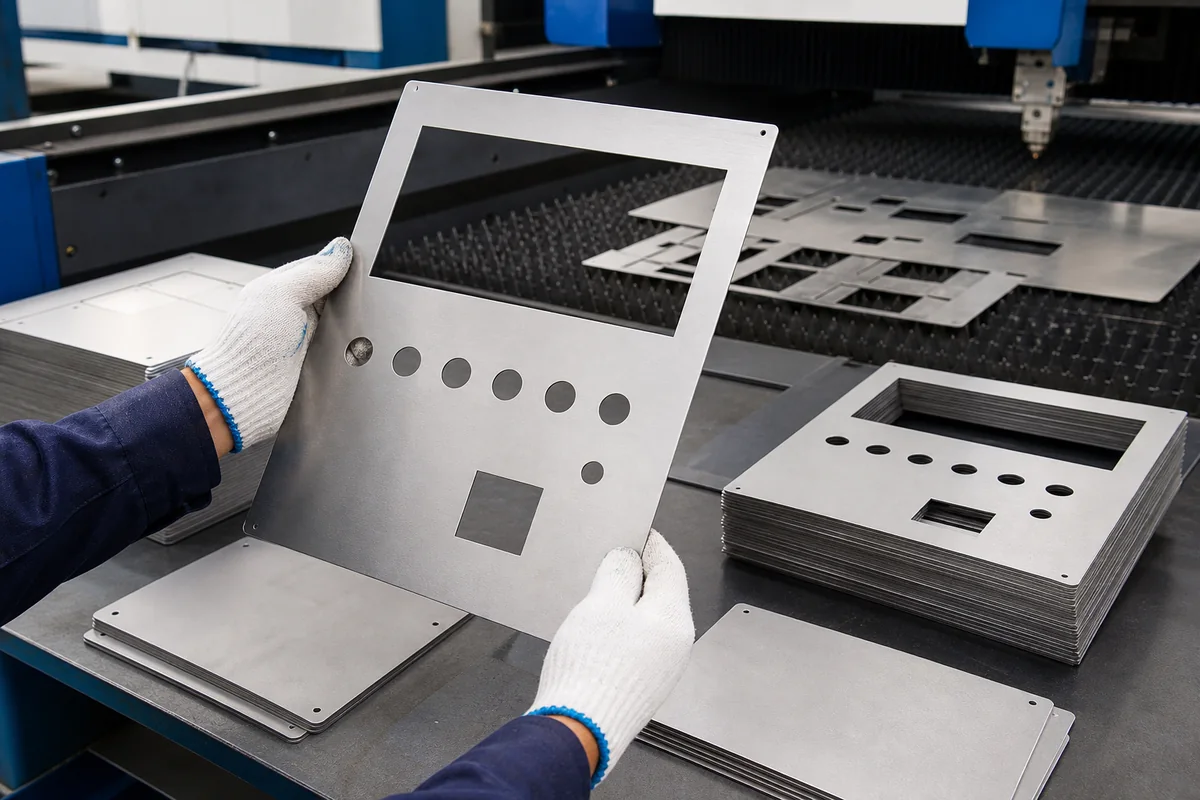
The HMI front panel is unforgiving. Screen openings, button-hole patterns and mounting slots must match the approved drawing, not the version someone found in an email thread from last Tuesday. For tighter cutouts, define the tolerance and inspection method instead of simply writing “precise” and hoping the metal understands.
Bending: Viewing Angle, Rigidity and Mounting Fit
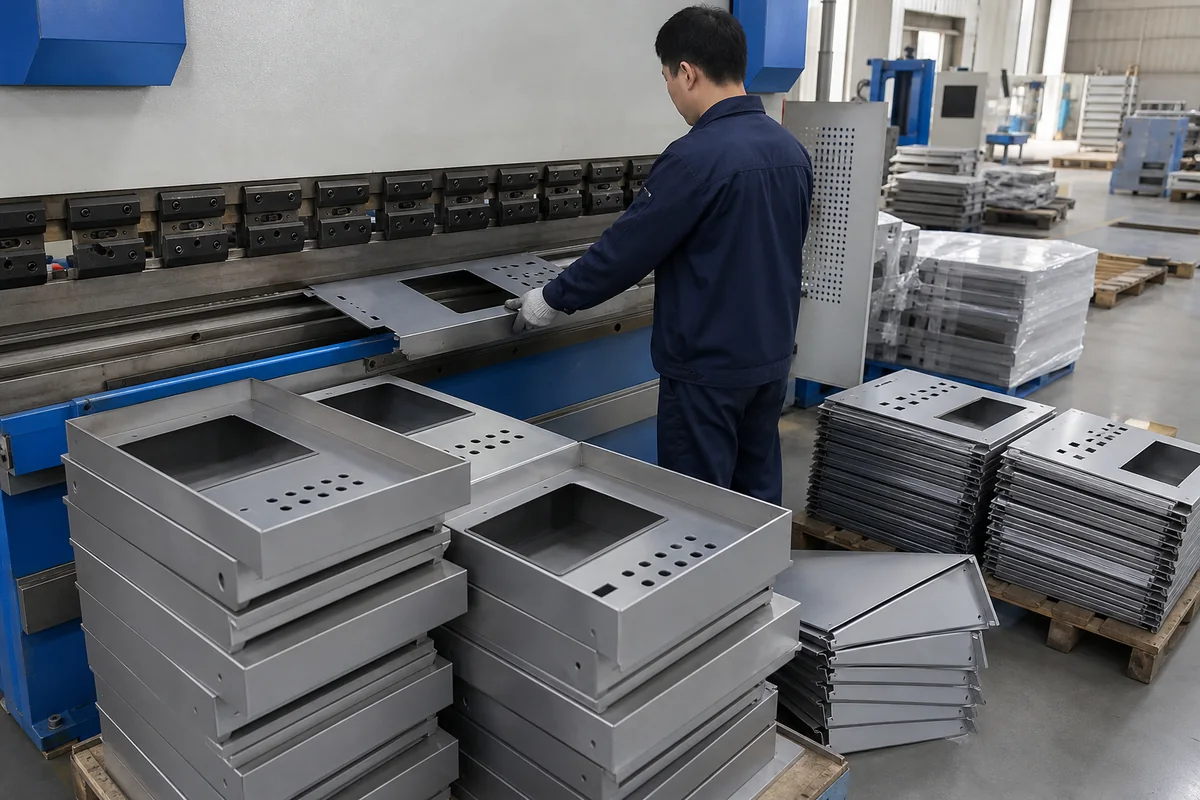
Sloped HMI consoles need the right viewing angle, enough stiffness around the opening and mounting geometry that actually matches the machine. Large front cutouts weaken panels, so flange design, bend sequence and material thickness matter. If an operator presses the panel and it flexes like a snack tray, nobody will thank the buyer for saving 0.3 mm of steel.
Welding and Door Frames: Keep the Box Square
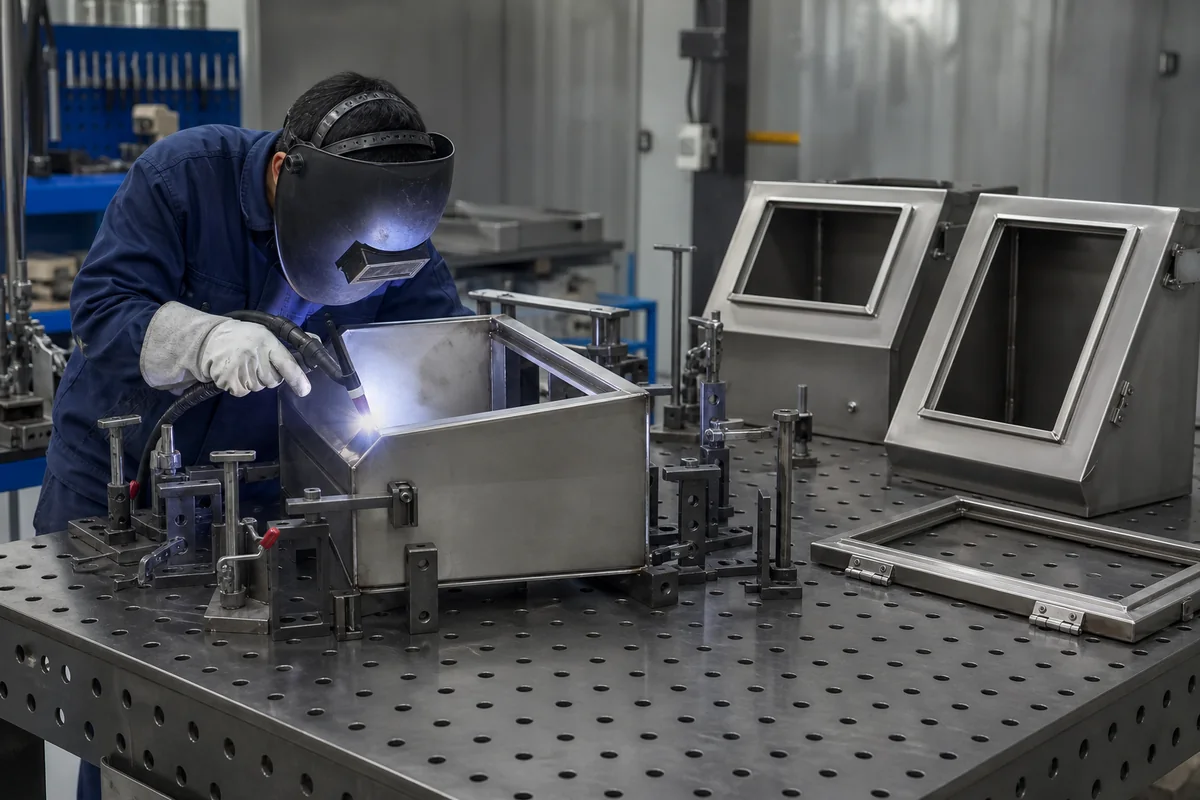
HMI enclosure shells often need welded corners, door frames, hinge plates and mounting flanges. Welding heat can pull the shell out of square, which then makes hinges, locks and gaskets misbehave. Fixture-controlled welding and first article inspection are not “extra paperwork.” They are how the door closes without drama.
Gaskets, Hinges and Hardware Features
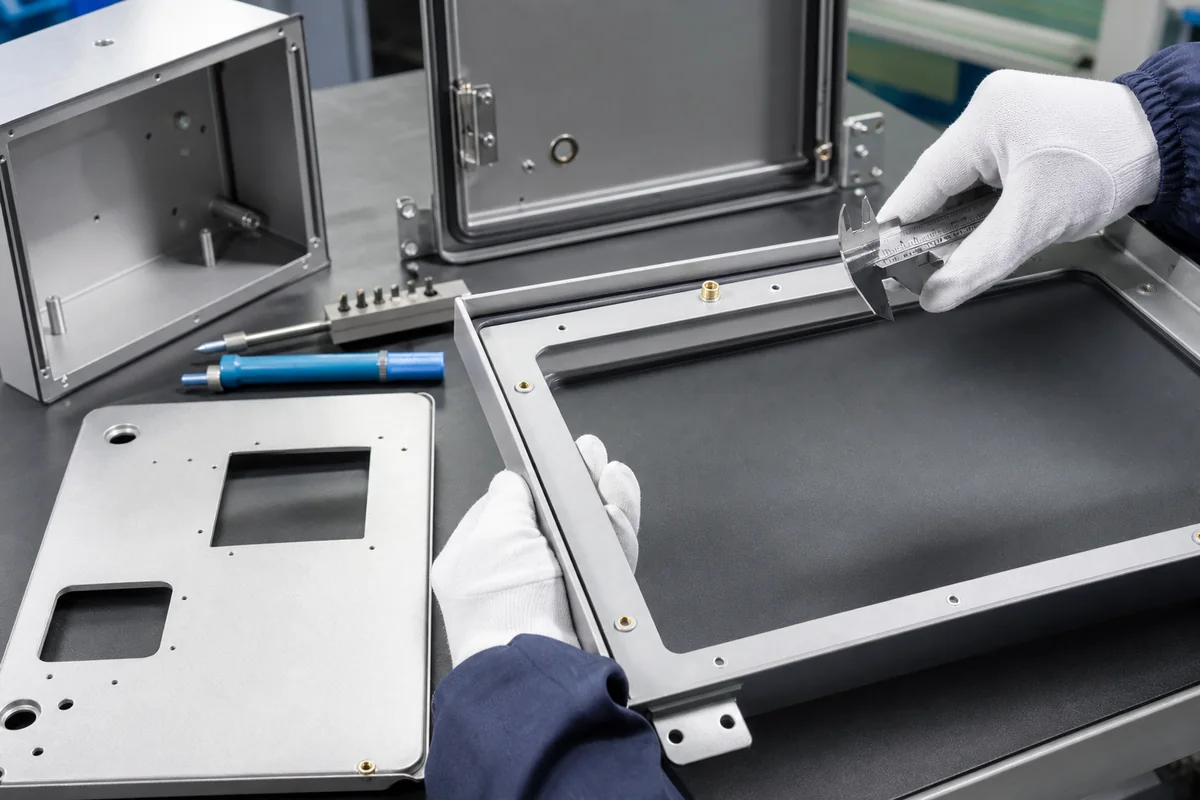
Even when MSTFAB is not supplying the finished HMI product, the sheet metal shell must support your chosen hardware. That means accurate PEM nuts, clean lock cutouts, reliable hinge plates, flat gasket flanges and enough clearance after coating. If coating fills a threaded hole or a gasket flange is wavy, assembly teams develop strong opinions very quickly.
Trust Table: What OEM Buyers Should Ask For
| Risk | What to Ask the Supplier | Why It Protects You |
|---|---|---|
| Scope confusion | Confirm the quote is for empty sheet metal enclosure parts only. | Prevents surprise arguments over screens, buttons, PLCs, wiring and finished products. |
| Screen cutout mismatch | Provide the screen template and request cutout inspection photos or measurements. | The display will not forgive a wrong opening. |
| Wrong revision | Freeze drawing number, revision, material, finish and quantity before production. | Stops a correct part being made from the wrong file. |
| Door/seal failure | Ask how gasket flanges, hinge side and lock cutouts will be checked. | Sealing depends on metal geometry before your team installs the gasket. |
| Coating interference | Define masking, threaded holes, PEM hardware and coating thickness expectations. | Powder coat can close tight holes and make assembly painful. |
| Cosmetic damage | Request front-panel protection, foam separators and packing photos. | A scratched HMI faceplate looks bad even if every dimension passes. |
Inspection and Packing Before Shipment
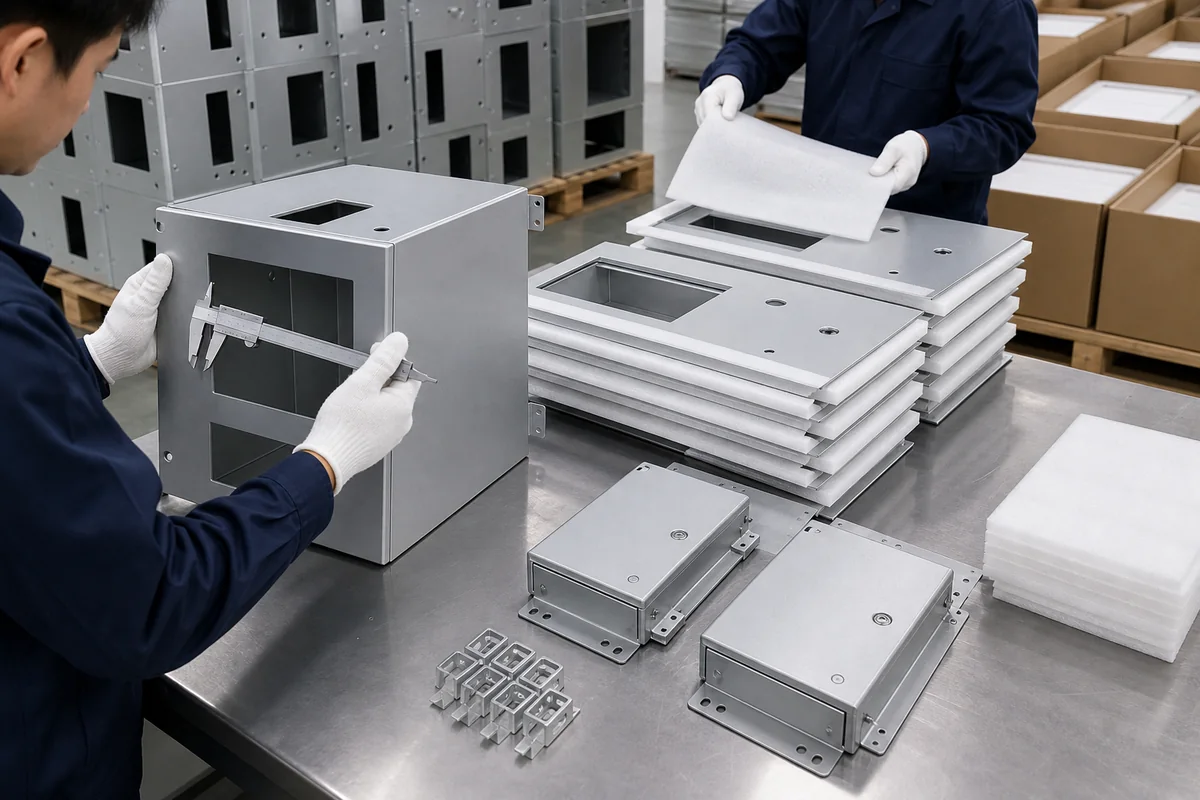
Inspection should cover cutout size, hole position, enclosure squareness, door fit, hinge location, lock cutouts, PEM hardware, finish quality and cosmetic surfaces. Packing should protect the front panel and corners. HMI shells are often visible to operators, so scratches and dents are not “small shipping stories.” They are customer-visible defects.
How to Send a Better RFQ
- Send 2D drawings and 3D files with the same revision.
- Include screen model drawings, cutout dimensions and mounting-hole patterns.
- Mark cosmetic face, gasket surface, hinge side and service-door swing direction.
- State material, thickness, finish, quantity and annual forecast.
- List which components your team will install so the metal scope stays clear.
- Ask for inspection, packaging and Incoterm as visible quote items.
For design rules, review our sheet metal DFM guide. For cutout and bend expectations, see the sheet metal tolerance guide. For quote clarity, use how to read a sheet metal quote. Useful links, not a keyword buffet.
Common Mistakes to Avoid
- Calling the RFQ an HMI enclosure when the buyer actually expects a finished control panel.
- Sending a screen size but not the actual screen mounting drawing.
- Forgetting coating thickness around cutouts, PEM nuts and threaded holes.
- Leaving gasket flange flatness and door fit undefined.
- Not marking the cosmetic side before powder coating or brushing.
- Using the old drawing revision because it was easier to find. Very relatable, very expensive.
Frequently Asked Questions
What HMI enclosure parts can MSTFAB fabricate?
MSTFAB can fabricate empty HMI enclosure shells, front panels, sloped console housings, access doors, hinge plates, lock cutouts, gasket flanges, mounting brackets and PEM hardware features.
Does MSTFAB supply the touchscreen or finished HMI panel?
No. MSTFAB supplies the sheet metal enclosure parts only. Touchscreens, buttons, PLCs, controllers, wiring, software and finished control panels are not included.
What should I send for an HMI enclosure quote?
Send 2D drawings, 3D files, screen model drawings, cutout dimensions, hole patterns, material, thickness, finish, quantity, cosmetic-side notes and packaging requirements.
Can MSTFAB support IP or NEMA enclosure design?
MSTFAB can fabricate metal features that support sealing, such as gasket flanges, door frames and lock cutouts. Final IP or NEMA performance depends on the fully assembled product and components chosen by the buyer.
Why are HMI front panel tolerances important?
The screen opening, button holes and mounting points must match purchased components. Small errors can stop installation or create cosmetic gaps that are visible to operators.
Need Empty HMI Sheet Metal Enclosures?
Send MSTFAB your drawings, screen cutout details, material, finish and quantity. We will quote the metal enclosure fabrication scope clearly, without pretending to supply the finished HMI product.
 WeChat Contact
 WhatsApp Me Directly