Need production capability? This article focuses on outdoor electrical enclosures. For manufacturing scope, process capability and drawing-based quotation support, review MSTFAB’s outdoor sheet metal enclosure fabrication.
Custom Outdoor Electrical Enclosures for OEM Equipment
An outdoor electrical enclosure is not just an indoor cabinet with tougher paint.
That is how field failures begin.
Outdoor enclosures must deal with rain, dust, UV exposure, humidity, temperature changes, wind, cable entry sealing, corrosion, vibration, and sometimes curious installers with drills. If the cabinet is poorly designed or poorly fabricated, the problem usually does not appear in the factory photo.
It appears later, outside, when the equipment is already installed.
Then the buyer discovers the painful truth:
- Water leaks through the door seam
- Cable entries become the first failure point
- Vents let rain in instead of heat out
- Hinges rust before the cabinet reaches service life
- The door warps and stops sealing evenly
- Powder coating fails at sharp edges
- Internal mounting plates do not fit
- The enclosure arrives scratched after export shipping
That is not outdoor electrical enclosure fabrication.
That is a warranty claim with a nice RAL color.
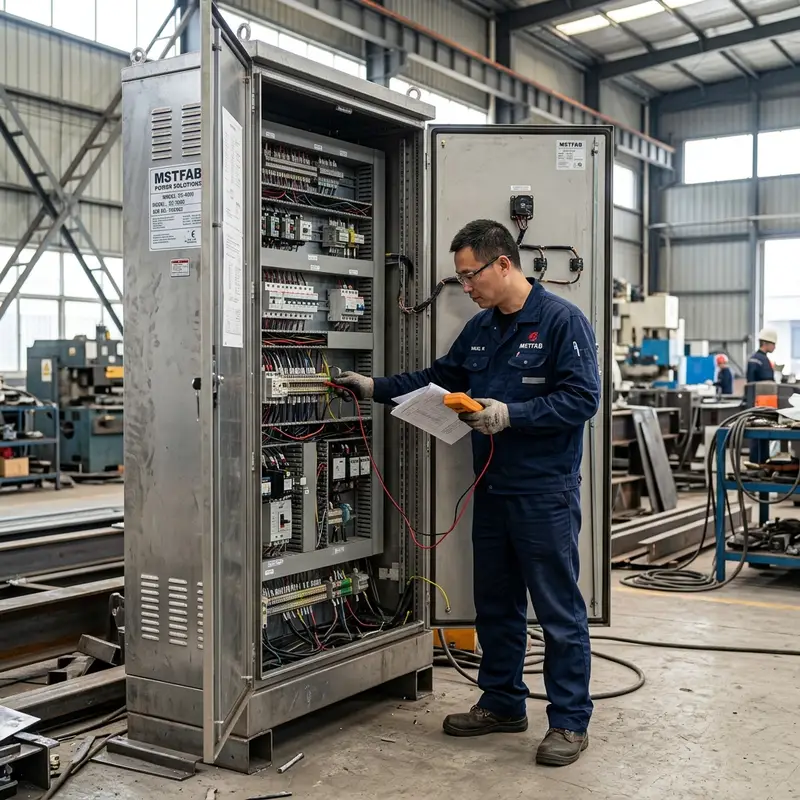
MSTFAB provides custom outdoor electrical enclosure fabrication based on customer drawings, STEP files, CAD files, PDF drawings, samples, or project requirements. Our process can include laser cutting, CNC bending, welding, grinding, surface finishing, gasket structure review, hardware installation, inspection, export packaging, and prototype-to-batch production support.
Why Outdoor Electrical Enclosures Need Custom Fabrication
Standard catalog boxes can work for simple indoor applications.
Outdoor OEM equipment is different.
A custom outdoor electrical enclosure may need:
- Weather-resistant structure
- Gasketed doors
- Rain lips or drip edges
- Bottom cable entry design
- Ventilation or cooling openings
- Corrosion-resistant material
- Outdoor-grade powder coating
- Strong hinges, locks, and handles
- Internal mounting plates
- Reinforced wall-mount or floor-standing structure
- Export packaging for coated cabinet surfaces
The enclosure must protect the electrical system while still allowing installation, wiring, maintenance, and heat management.
That balance is not automatic.
A sealed cabinet with no thermal plan can cook the electronics.
A ventilated cabinet with poor water protection can flood the electronics.
Both are bad. One is just wetter.
Common Outdoor Electrical Enclosure Applications
Outdoor electrical enclosures are used across many industrial and OEM projects, including:
- Telecom power cabinets
- Network equipment enclosures
- EV charger cabinets
- Battery storage cabinets
- Solar power electrical boxes
- Industrial control cabinets
- PLC control boxes
- HMI operator enclosures
- Power distribution cabinets
- Utility control boxes
- Renewable energy equipment enclosures
- Outdoor monitoring equipment
- Machine control cabinets
- OEM electrical systems
Each application has different risks.
A telecom cabinet may need cable routing and ventilation.
An EV charger enclosure may need display cutouts, cable holder brackets, and public-facing appearance.
A battery storage cabinet may need reinforced structure and thermal planning.
A power distribution cabinet may need safe cable entry and grounding points.
That is why outdoor electrical enclosure fabrication should start with the real application, not just cabinet dimensions.
The Real Cost of a Poor Outdoor Enclosure
A cheap outdoor cabinet can look attractive during sourcing.
Then the field environment starts testing it for free.
A poorly fabricated outdoor electrical enclosure may cause:
- Water ingress
- Dust contamination
- Electrical short circuits
- Rust around cable entries
- Door alignment problems
- Gasket compression failure
- Coating delamination
- Ventilation failure
- Field service costs
- Warranty replacement
- Delayed installation
- Customer complaints
The enclosure price is one number.
The field failure cost is the number nobody wanted to calculate.
If water enters the cabinet, the customer will not care that the first quote was cheaper. They will remember downtime, service calls, replacement cost, and damaged trust.
A reliable outdoor electrical enclosure manufacturer helps reduce those risks before production begins.
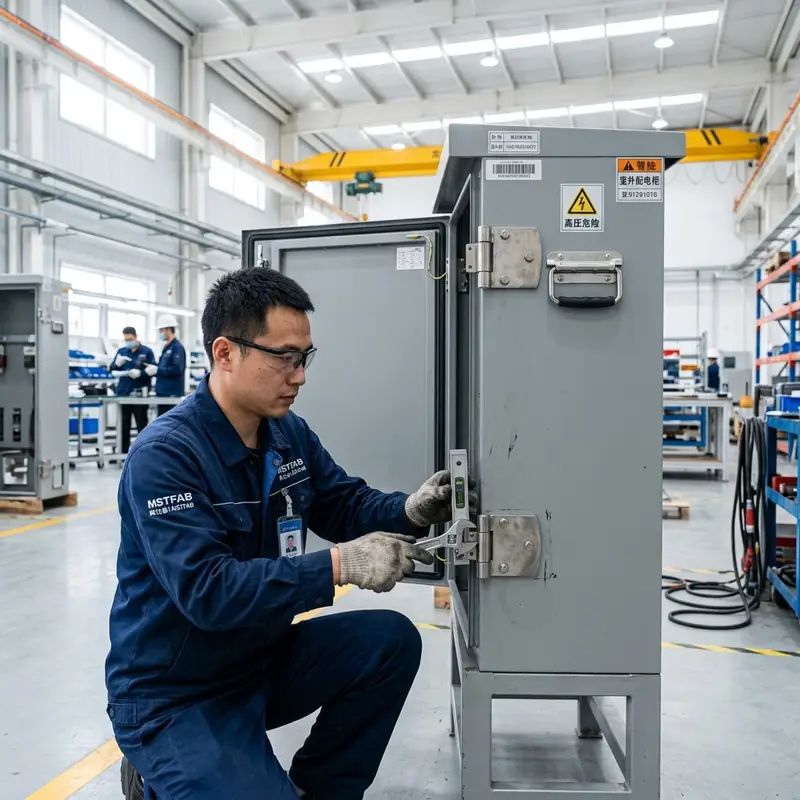
Design Starts with the Outdoor Environment
Before fabrication, the working environment should be clearly understood.
Important questions include:
- Is the enclosure used outdoors full-time?
- Will it face rain, snow, wind, dust, or sand?
- Is the site coastal, humid, or chemically exposed?
- Does the enclosure require IP65, IP66, NEMA 3R, NEMA 4, or NEMA 4X design support?
- Does the cabinet need ventilation or active cooling?
- Where will cables enter the enclosure?
- Is it wall-mounted or floor-standing?
- Will the door carry HMI screens, switches, or indicators?
- Does the project require formal testing or certification?
- What surface finish and color are required?
- How will the enclosure be shipped and installed?
An outdoor cabinet installed in a mild inland location and one installed near coastal salt air are not the same project.
Dutch projects illustrate that distinction well. The weather-resistant sheet metal guide for Netherlands OEM buyers shows how installation location, corrosion exposure, service life, water management and inspection should be stated before quotation.
Treating them the same is how corrosion gets invited to the party.
Corrosion is a terrible guest. It arrives quietly, spreads everywhere, and sends the invoice later.
IP and NEMA Design Targets
Many buyers use general terms like “waterproof” or “weatherproof.”
That is understandable.
But for engineering and procurement, the protection target should be more specific.
Outdoor electrical enclosures may be designed around requirements such as:
These are not the same.
IP65 and IP66 focus on dust and water ingress protection.
NEMA 3R is commonly used for outdoor weather protection such as rain, sleet, and snow.
NEMA 4 provides stronger water protection.
NEMA 4X adds corrosion resistance requirements.
The right choice depends on the environment.
A professional supplier should not simply say, “Yes, waterproof, no problem.”
That answer is too easy.
The better question is: what exact outdoor protection does the project require?
If formal IP or NEMA certification, testing, or third-party reports are required, that must be confirmed before quotation.
Fabrication can be designed to support customer IP or NEMA requirements, but certification scope should be defined project by project.
Material Selection for Outdoor Electrical Enclosures
Material choice affects strength, corrosion resistance, weight, bending behavior, welding quality, surface finish, and cost.
Writing only “metal enclosure” on a drawing is not enough.
Galvanized Steel
Galvanized steel provides better corrosion resistance than standard cold-rolled steel and is commonly used for outdoor or semi-outdoor electrical cabinets.
Cut edges, weld zones, and coating compatibility still need careful review. Galvanized steel is useful, but it is not magic.
Stainless Steel
Stainless steel is often selected when corrosion resistance, durability, cleanliness, or premium appearance is important.

SUS304 may be suitable for many general corrosion-resistant applications. SUS316 may be considered for coastal, marine, chemical, or more aggressive environments.
Stainless steel is not the cheapest option. But field corrosion is usually more expensive.
Aluminum
Aluminum is lightweight and naturally corrosion-resistant.
It can be used for outdoor equipment housings, telecom enclosures, HMI boxes, EV charger panels, and OEM products where weight reduction matters.
Cold-Rolled Steel with Protective Coating
Cold-rolled steel may be used for protected outdoor or indoor/outdoor applications when the coating system and environment are suitable.
Cold-rolled steel requires proper pretreatment, coating, and edge protection if moisture exposure is expected. Raw steel and rain are not friends.
Carbon Steel with Protective Coating
Carbon steel may be used for reinforced bases, support frames, heavy-duty brackets, and structural cabinet parts.
For outdoor projects, the protection system must be planned carefully.
Gasket Design and Door Sealing
A gasket does not make a bad enclosure weatherproof.
It can only work when the metal structure supports it.
For outdoor electrical enclosures, gasket design should consider flat gasket contact surfaces, correct door alignment, suitable gasket material, even compression, strong hinge structure, proper latch or lock pressure, door stiffness, clean corner design, controlled coating buildup on sealing surfaces, and avoiding weld distortion near gasket areas.
Water does not need a large opening.
It only needs one lazy sealing surface.
If the door is warped, the frame is twisted, or the latch pressure is weak, the gasket becomes an expensive decoration.
Door, Hinges, Locks, and Handles
The door is one of the most important parts of an outdoor electrical enclosure.
It must open smoothly, close cleanly, compress the gasket evenly, and remain aligned after repeated use.
A custom outdoor enclosure door may include heavy-duty hinges, locks, handles, multi-point locking, continuous gasket, door stiffeners, grounding connection, HMI or display cutouts, push button holes, and internal brackets.
A door that sags after hardware installation is not a small problem.
If the door sags, the seal fails.
If the seal fails, the enclosure fails.
Nobody wants an outdoor cabinet door that behaves like an old kitchen cabinet after one month outside.
Cable Entry: The Classic Outdoor Failure Point
Cable entry is one of the most common leak points in outdoor electrical enclosure projects.
Poor cable entry design can cause water ingress, dust entry, cable bending stress, poor sealing, difficult wiring, corrosion around cut edges, extra drilling after coating, and field service problems.
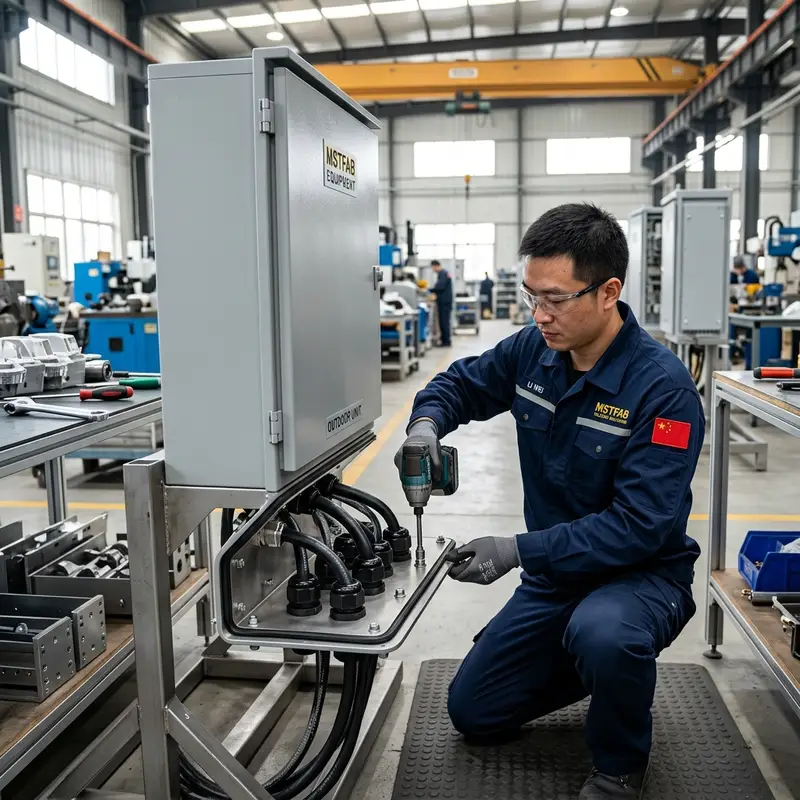
For outdoor cabinets, bottom cable entry is often safer than top entry, depending on the design.
Cutting holes into a finished outdoor enclosure is not engineering.
It is a leak waiting for weather.
Ventilation Without Letting Rain Inside
Outdoor electrical enclosures often need ventilation because internal components generate heat.
But random holes are not thermal engineering.
They are an invitation for water, dust, insects, and regret.
Depending on the project, ventilation may require rain-resistant louvers, filtered vents, fan openings with protective covers, heat exchanger cutouts, airflow separation, internal clearance for hot components, drainage-aware geometry, or sealed accessory mounting areas.
The enclosure needs to breathe without drowning the electronics.
That sounds simple.
It is very easy to get wrong.
Water-Shedding Geometry
Outdoor enclosure design should help water move away from critical areas.
Useful design details may include sloped top surfaces, drip edges, rain lips, protected door seams, avoiding water traps, protected cable entries, sealed fastener areas, smooth welded corners, controlled drainage paths, and avoiding exposed raw edges.
A flat-top outdoor cabinet can become a small swimming pool.
That is not a design feature.
That is how corrosion gets comfortable.
Surface Finishing and Corrosion Protection
Surface finish is not just appearance.
For outdoor electrical enclosures, surface finishing supports durability, corrosion resistance, and long-term performance.
A cabinet can be dimensionally correct and still fail if the coating peels, rust bleeds through, or the visible surface arrives scratched.
That is not cosmetic drama.
That is quality control.
Welding Control for Outdoor Cabinets
Welding may be required for cabinet bodies, frames, internal supports, reinforced corners, mounting structures, and sealed seams.
For outdoor electrical enclosure fabrication, welding must be reviewed carefully because weld distortion can affect door alignment, gasket contact, and water-shedding geometry.
Welding adds heat, and heat moves metal.
If welding is not controlled, the enclosure may warp, the door may misalign, and the gasket may stop sealing evenly.
A sealed outdoor cabinet should not come out of welding looking like a banana.
Laser Cutting for Accurate Outdoor Enclosure Parts
Laser cutting is used for enclosure panels, doors, covers, mounting plates, cable entry plates, ventilation panels, base parts, and brackets.
These features should be cut before finishing.
Cutting finished metal later damages surface protection, exposes raw edges, and increases corrosion risk.
It also makes a precision enclosure look like someone attacked it with a drill and a deadline.
CNC Bending for Structure and Protection
CNC bending forms flat sheet metal into enclosure bodies, doors, covers, flanges, rain lips, mounting structures, and internal supports.
Bending quality affects cabinet body fit, door alignment, panel flatness, gasket contact surfaces, mounting flange accuracy, assembly clearance, final appearance, and water-shedding geometry.
For outdoor electrical enclosures, bend radius and bend sequence should be reviewed before production.
If the bending process twists the door or frame, sealing performance may suffer.
Good bending is not dramatic.
That is exactly why engineers like it.
Wall-Mounted and Floor-Standing Outdoor Enclosures
Wall-Mounted Outdoor Enclosures
Wall-mounted enclosures are often used for control boxes, PLC enclosures, HMI panels, telecom devices, utility boxes, and outdoor power units.
A wall-mounted enclosure should not flex like a cheap cookie tray when the installer tightens the screws.
Floor-Standing Outdoor Cabinets
Floor-standing designs are used for larger control cabinets, power equipment, telecom systems, EV charger cabinets, battery storage cabinets, and outdoor electrical systems.
Large outdoor cabinets do not forgive weak structures or weak packaging.
DFM Review Before Production
A 3D CAD model can look perfect on screen and still create production problems.
Sheet metal has thickness. It bends. It springs back. It warps during welding. Coating adds thickness. Hinges need alignment. Gaskets need flat surfaces. Hardware needs clearance. Outdoor cabinets need drainage, corrosion protection, and packaging planning.
A Design for Manufacturability review helps identify risks before production.
A design issue found before production is a drawing update.
A design issue found after production is a leaking cabinet, a field service ticket, and a conversation nobody wants to have.
DFM review is not extra paperwork.
It is risk control.
Prototype, Pilot Run, and Batch Production
For outdoor electrical enclosure projects, prototype or first-article production is often useful before batch manufacturing.
For OEM buyers, one good sample is not the finish line.
The real goal is stable repeat production.
A sample made with heroic manual correction is not a manufacturing process.
It is a magic trick.
Magic tricks do not scale.
Quality Control for Outdoor Electrical Enclosures
Quality control should focus on both fabrication accuracy and outdoor protection details.
For outdoor-related projects, inspection should also review gasket surfaces, cable entry areas, exposed edges, weld zones, hinges and locks, ventilation openings, outdoor-facing surfaces, coating damage risk, and packaging protection.
If formal IP, NEMA, or third-party testing is required, that requirement should be defined before quotation.
Do not assume.
Assumptions are where compliance projects go to get expensive.
Export Packaging for Outdoor Electrical Cabinets
Outdoor electrical enclosures are often coated, fitted with hardware, and shipped internationally.
Poor packaging can damage the enclosure before installation.
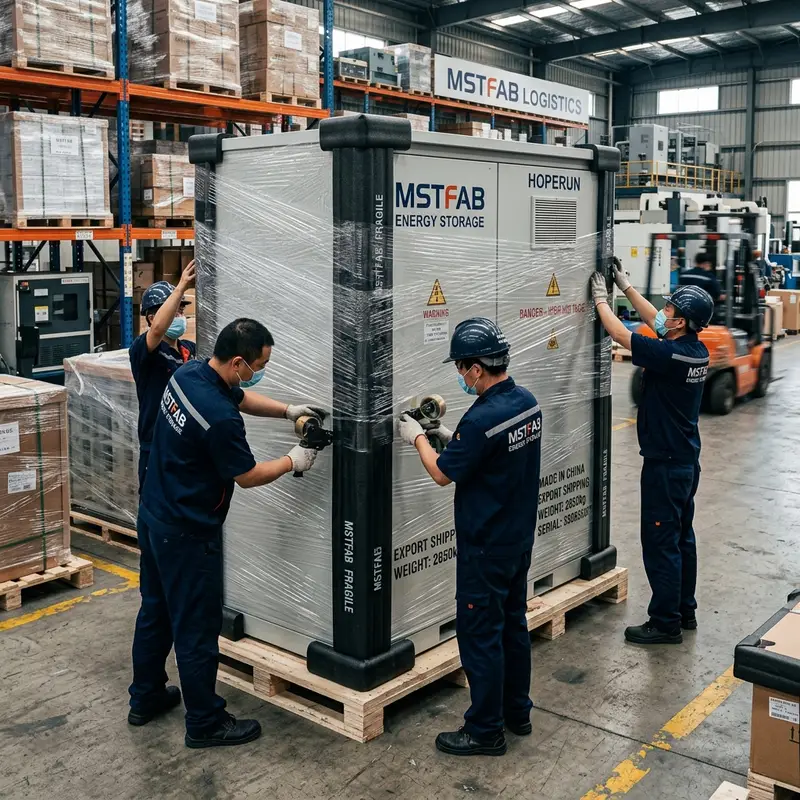
Good packaging is part of quality control.
A weather-resistant enclosure that arrives scratched, bent, or with damaged hardware is no longer ready for installation.
Outdoor cabinets do not forgive weak packaging.
Clear Manufacturing Scope and Compliance Notes
MSTFAB focuses on custom sheet metal fabrication and metal structure manufacturing.
We do not design electrical schematics.
We do not write PLC programs.
We do not design circuitry.
Our scope is the physical metal enclosure, cabinet, panel, bracket, chassis, frame, or structural component based on customer drawings and project requirements.
Important note: if the project requires formal IP rating certification, NEMA certification, laboratory testing, third-party validation, or specific compliance documentation, those requirements should be stated clearly before quotation. Fabrication can be designed to support customer outdoor, IP, or NEMA requirements, but certification scope must be confirmed project by project.
What to Send for a Quote
To quote outdoor electrical enclosures accurately, please provide:
- Required IP or NEMA design target
- 3D STEP file and 2D PDF drawing
- Material requirement and sheet thickness
- Quantity
- Indoor, outdoor, dusty, wet, coastal, washdown, or chemical exposure notes
Request an Outdoor Electrical Enclosure Quote
If you need outdoor electrical enclosure fabrication for telecom equipment, EV chargers, battery storage, industrial controls, PLC cabinets, HMI boxes, power distribution, renewable energy equipment, or OEM systems, send us your drawings and project requirements.
A good outdoor electrical enclosure should protect the equipment from weather exposure, support clean assembly, and perform reliably in the real installation environment.
That starts with clear drawings, practical DFM review, controlled fabrication, and honest compliance scope.
FAQ
What is outdoor electrical enclosure fabrication?
Outdoor electrical enclosure fabrication is the process of manufacturing custom metal cabinets, boxes, panels, doors, mounting plates, brackets, cable entry plates, and structural parts designed to protect electrical equipment in outdoor environments.
What are outdoor electrical enclosures used for?
Outdoor electrical enclosures are used for telecom systems, EV chargers, battery storage cabinets, power distribution, PLC control boxes, HMI panels, industrial automation, renewable energy systems, utility boxes, and OEM equipment.
Are outdoor electrical enclosures waterproof?
Outdoor enclosures can be designed for specific protection targets such as IP65, IP66, NEMA 3R, NEMA 4, or NEMA 4X. “Waterproof” should be defined according to the actual application, water exposure, and required testing or certification.
What materials are used for outdoor electrical enclosures?
Common materials include galvanized steel, stainless steel, aluminum, cold-rolled steel with protective coating, and coated carbon steel depending on corrosion requirements, strength, weight, appearance, and budget.
Can outdoor electrical enclosures be customized?
Yes. Size, material, thickness, doors, gaskets, hinges, locks, mounting plates, cable entries, ventilation, internal brackets, surface finish, and hardware can be customized according to drawings and project requirements.
What drawings are needed for quotation?
A 3D STEP file and 2D PDF drawing are recommended. DXF or DWG files can also help with flat laser-cut parts. The drawing package should include material, thickness, finish, gasket, hardware, cable entry, ventilation, and inspection requirements.
MSTFAB Capabilities
- Outdoor Electrical Cabinet Support
- IP65 / IP66 / NEMA Design Support
- Gasket, Cable Entry and Ventilation Review
- Steel / Stainless Steel / Aluminum
Related engineering resource: If your project involves EV charging infrastructure, review our custom EV charger enclosure fabrication capabilities for outdoor sheet metal cabinet design, powder coating, and export-ready manufacturing.
Related factory capability: For OEM buyers comparing a custom sheet metal enclosure factory, review how MSTFAB handles final assembly, protective packaging, export packing checks, and shipment-ready enclosure delivery.
custom sheet metal enclosure fabrication
MSTFAB manufactures custom sheet metal enclosures, electrical cabinets, control boxes and industrial metal housings for OEM buyers.
Traffic projects can use the more focused traffic control cabinet enclosure checklist for roadside access and equipment interfaces.
 WeChat Contact
 WhatsApp Me Directly