

Short answer: NEMA Type 3R addresses protection for a complete, properly installed enclosure against falling dirt and weather conditions including rain, sleet and snow. MSTFAB can fabricate the buyer-defined empty sheet metal shell, including the body, blank door, rain hood, drip edges, protected louvers, mounting plates, gland plates and brackets. We do not supply a wired or energized electrical cabinet or assign the final enclosure type.
NEMA 3R is about how a complete, properly installed enclosure protects its contents in the specified environment. A metal shell alone does not earn the finished product a rating by looking outdoorsy. Final type selection, component installation, verification and certification remain with the buyer, product owner or qualified integrator under the current controlled specification.
What MSTFAB can fabricate
- Empty outdoor cabinet body and blank door shells
- Rain hoods, drip edges and door-overlap features
- Protected louver and drainage sheet metal panels
- Blank mounting plates, gland plates and brackets
- Drawing-defined hinges, locks, studs and PEM hardware
- Welding, powder coating, mechanical inspection and export packing
What remains outside our scope
- Breakers, PLCs, relays and terminal blocks
- DIN-rail device installation and electrical wiring
- Power supplies, batteries and control electronics
- Electrical functional, continuity or energized testing
- Finished-product NEMA marking or certification
- Field installation, commissioning and system validation
What NEMA 3R means for a sheet metal shell RFQ
The National Electrical Manufacturers Association describes Type 3R enclosures for indoor or outdoor use with protection considerations that include falling dirt and rain, sleet and snow, when completely and properly installed. NEMA also notes that Type 3R enclosures may be ventilated. Buyers should consult the official NEMA enclosure-type overview and the current project standard rather than treating a supplier photograph as compliance evidence.
For fabrication, that translates into a drawing package with deliberate rain-shedding geometry. The cabinet shell must guide water away from openings, avoid traps and preserve the clearances needed for later component integration. MSTFAB reviews whether those mechanical features can be cut, bent, welded, coated and inspected repeatably.
| RFQ decision | What to define on the drawing | Why buyers care |
|---|---|---|
| Rain hood and drip edge | Projection, slope, return flange, corner treatment and body interface | Water needs a clear route away from the door opening. |
| Door overlap | Overlap dimension, gap, hinge location, latch pressure and opening direction | Uneven gaps can defeat a sensible rain-shedding concept. |
| Ventilation | Louver orientation, shielding, internal baffle envelope and drain path | Ventilation should not create a straight line for wind-driven rain. |
| Cable entry | Blank gland plate size, position, fasteners and future cutout zones | Keeps raw field-drilled edges away from the finished cabinet body. |
| Mounting method | Wall brackets, pole frame, floor base or equipment interface | Installation loads and clearances affect shell stiffness and access. |
| Finish and evidence | Material, pretreatment, coating, cosmetic faces and inspection records | Turns “outdoor use” into a controlled manufacturing requirement. |

Rain hoods and door overlap are functional sheet metal geometry
A rain hood is not a fashionable hat for a cabinet. Its projection, slope and return flanges must work with the door overlap and cabinet opening. The DFM review checks bend access, weld sequence, corner closure, drainage and whether the hood blocks later door or mounting access.
Door gaps should be specified as mechanical interfaces. Hinge stack-up, latch position, body squareness and coating build can all shift the final gap. MSTFAB can inspect the empty shell; the integrator validates the complete installed system.
Protected ventilation needs a drainage plan
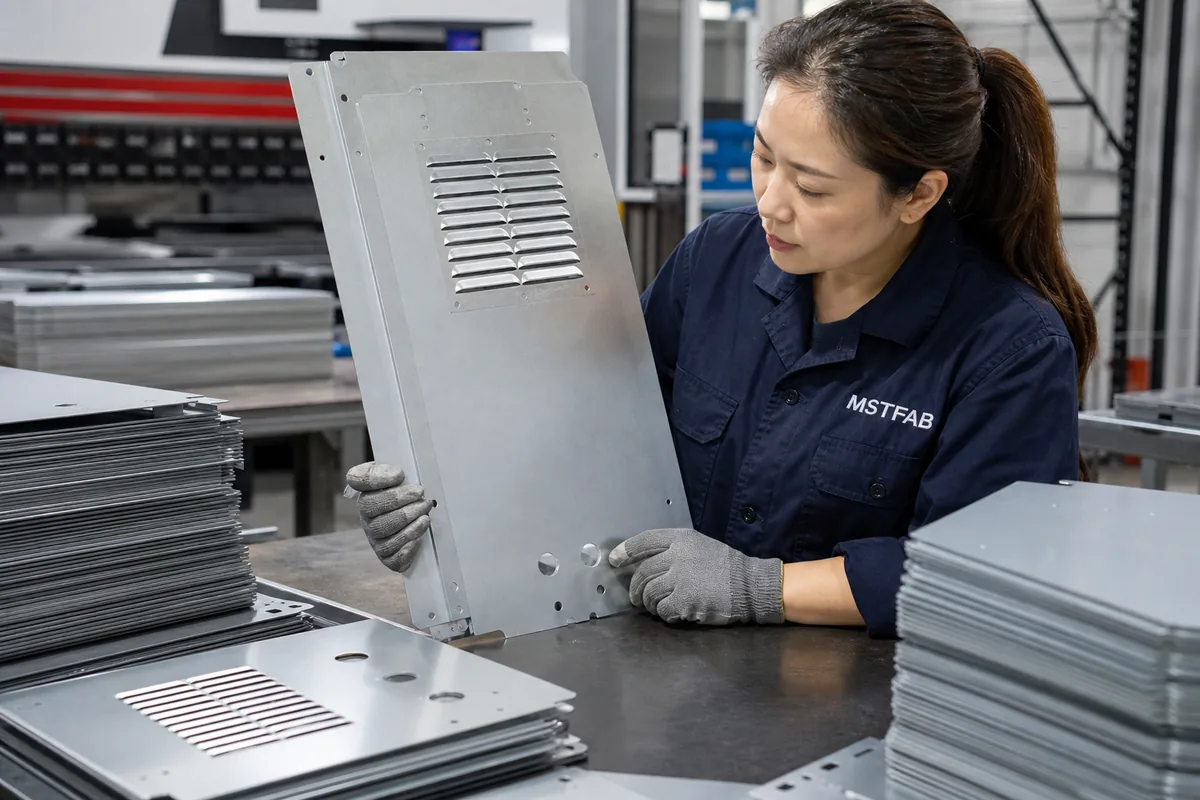
NEMA’s overview notes that Type 3R enclosures may be ventilated, but “ventilated” is not permission to punch random slots in the weather side. Protected louvers, offsets, baffle envelopes and drain paths should be shown on the controlled drawing. The design owner remains responsible for confirming that the complete assembly meets the required environmental performance.
Laser-cut openings and formed louvers should also leave enough material around edges and fasteners. MSTFAB’s laser cutting services support blank cabinet panels before bending and finishing.
CNC bending controls the rain lip, return flanges and cabinet depth
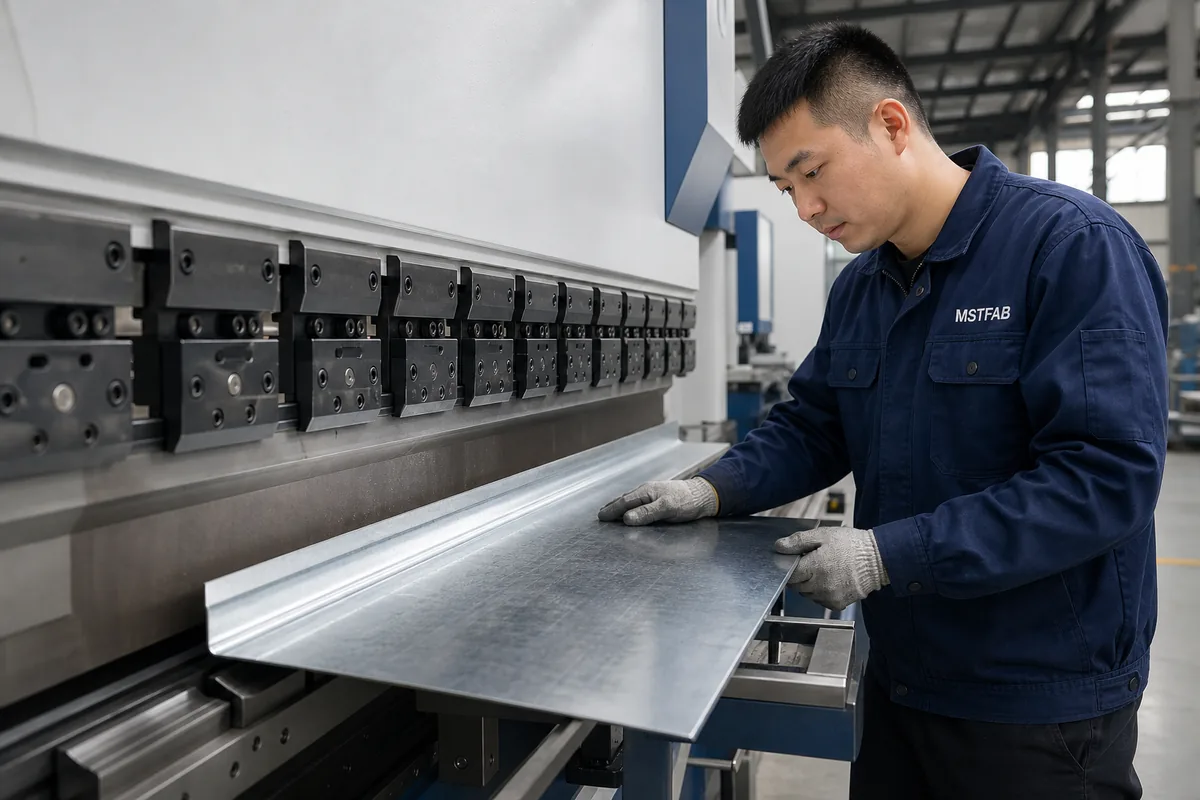
Rain-shedding features often add short flanges and multiple bends near the cabinet opening. Our sheet metal bending review checks bend radius, minimum flange length, tooling access, reliefs and the order in which the body can actually be formed.
Consistent bend geometry supports door overlap and panel fit. Extremely tight tolerances everywhere mostly buy extra inspection; critical interfaces should be identified so the fabrication plan focuses where the next assembly step truly depends on them.
Material and surface finish for outdoor enclosure shells
| Material route | Typical shell use | Buyer decision |
|---|---|---|
| Galvanized steel | Outdoor cabinet bodies, doors and protected panels | Review formed surfaces, cut edges, welded areas and finish compatibility. |
| Cold-rolled steel plus coating | Cost-conscious shells with a defined pretreatment and coating system | Confirm environment, edge protection, masking and maintenance expectations. |
| Stainless steel 304/316 | Corrosion-sensitive outdoor metalwork | Define grade, grain direction, weld appearance and protected cosmetic faces. |
| Aluminum 5052 | Lightweight cabinet shells, doors and covers | Confirm stiffness, bend radius, welding route and finish. |
The enclosure type alone does not select a material. Corrosion exposure, structural load, cosmetic requirements, cost and the buyer’s controlled specification still matter. Use the sheet metal material selection guide as a starting point, then approve the actual grade and thickness in the RFQ.
Mechanical inspection should verify the rain-shedding interfaces
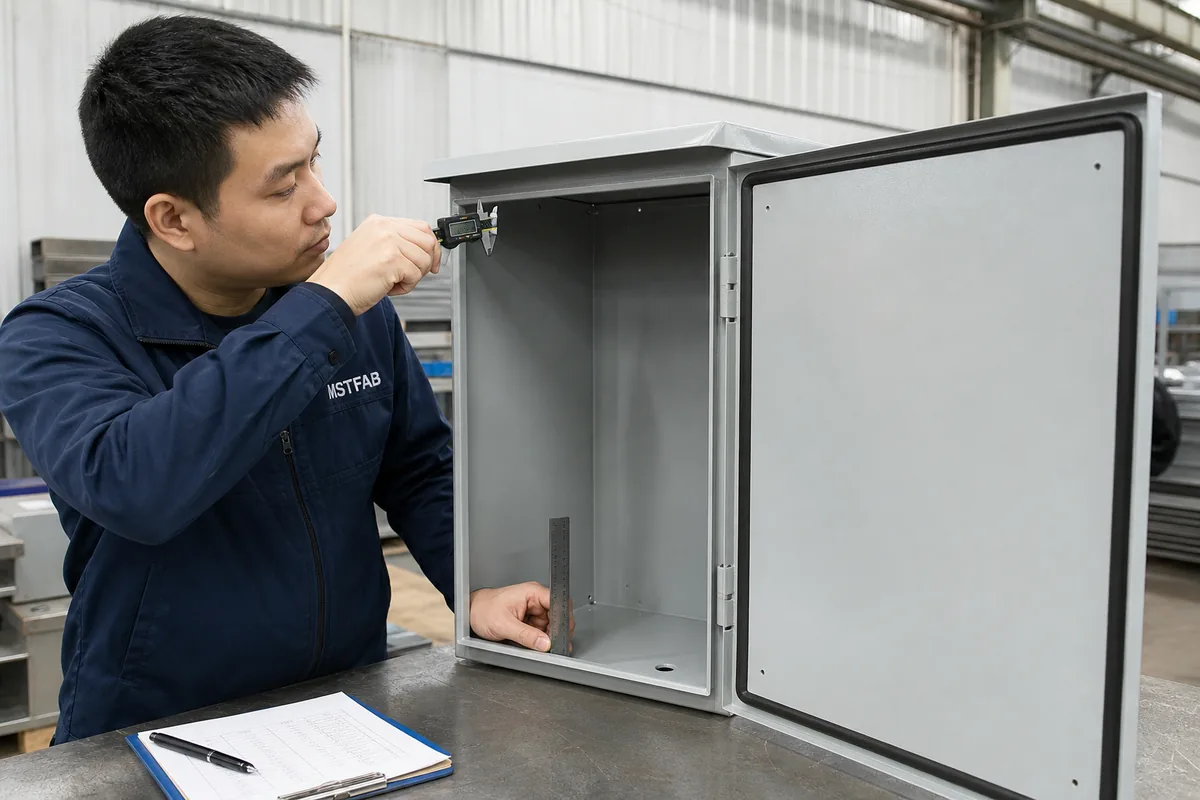
Inspection can cover overall size, diagonals, hood projection, door gap, overlap, louver direction, drainage clearance, mounting-hole position, gland-plate fit, hardware presence and coating appearance. Project-specific dimensional reports and photos can be agreed before quotation.
Powder coating must respect gaps, threads and mounting interfaces
Outdoor finish planning should include substrate preparation, coating system, color, gloss, cosmetic faces, masking and handling protection. Coating build on a door return, hinge interface or threaded feature can turn a correct drawing into an annoying assembly. Our surface treatment services review those mechanical risks before batch release.

Export packing for empty outdoor cabinet shells
Doors, hoods and loose panels can scratch one another or bend at corners during international shipping. Protective film, foam separators, edge guards, blocking and crate design should match cabinet size and finish. MSTFAB’s mechanical assembly and export packaging scope protects fabricated metalwork without implying that a wired cabinet is being shipped.
Related manufacturing resources
Buyer questions
Does MSTFAB supply a complete NEMA 3R electrical cabinet?
No. MSTFAB supplies the empty sheet metal enclosure shell and drawing-defined mechanical parts. Electrical devices, wiring, energized testing and final product compliance remain with the buyer or qualified integrator.
Can you manufacture rain hoods, drip edges and protected louvers?
Yes. These sheet metal features can be laser cut, formed, welded or fastened and inspected to the approved drawing.
Can an enclosure shell be called NEMA 3R without final testing?
The shell can be manufactured to support buyer-defined NEMA 3R design requirements, but final enclosure type verification applies to the complete installed configuration and the applicable controlled standard.
What should buyers send for quotation?
Send STEP plus dimensioned PDF/DWG files, material, thickness, rain-shedding details, mounting method, finish, hardware, tolerance, inspection evidence, quantity and packing requirements.
Can MSTFAB install hinges, locks, studs and blank mounting plates?
Yes, when the exact mechanical hardware, orientation and acceptance criteria are defined on the drawing or BOM.
Send the outdoor cabinet shell drawings before rain finds the missing detail
MSTFAB will review rain-shedding geometry, fabrication risk, finish, mechanical inspection and export packing before quotation. Electrical integration and final compliance stay with the team qualified to own them.
Send Drawings for Engineering Review WeChat Contact
 WhatsApp Me Directly